






















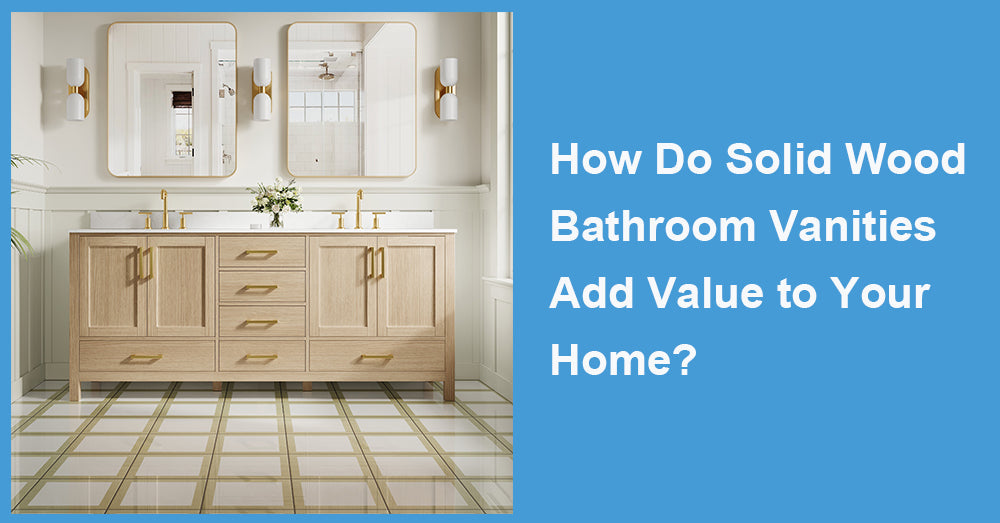
In today's renovation cycle, solid wood bathroom vanities are being treated less like a simple cabinet purchase and more like an "anchor" upgrade that can lift the look, function, and perceived quality of the entire bathroom. That matters because renovation activity remains elevated, and buyers are increasingly sensitive to condition and finish quality when comparing homes. Harvard's Joint Center for Housing Studies projects annual homeowner spending on improvements will reach $518 billion by the end of 2026, even as growth moderates later in the year.
Renovation Momentum Makes High-Visibility Upgrades More Valuable
Bathrooms consistently rank among the most scrutinized spaces during resale, and they are also among the most-used rooms day to day. The National Association of REALTORS® 2025 Remodeling Impact Report notes an estimated $603 billion spent on remodeling in 2024 and highlights that 46% of home buyers are less willing to compromise on home condition.
A vanity sits at eye level, controls storage, and visually ties together the countertop, sink, mirror, lighting, and hardware. When that centerpiece reads as "premium," the entire bathroom tends to feel newer and better maintained, even if other elements are unchanged.
Data Shows Solid Wood Is the Clear Preference in Vanity Materials
One reason solid wood vanities add value is simple: they align with what renovation shoppers are actively choosing. In the Houzz Bathroom Trends Study, nearly three-quarters (74%) of renovating homeowners chose solid wood for their vanity, far ahead of alternatives like MDF (10%), plywood (6%), particleboard (4%), and veneer (3%).
The same dataset also points to the specific look people associate with "quality wood," with maple (29%) and white oak (23%) ranking as the most commonly selected solid-wood types for upgraded vanities. This preference matters because market value is influenced not only by cost, but by what most buyers recognize as durable, classic, and worth paying for.
Solid Wood Signals Durability, Repairability, and Long-Term Use
Solid wood tends to hold its value because it is easier to refinish or repair over time than many engineered panels. A scratched door, a worn edge, or a small ding can often be sanded and resealed rather than requiring a full replacement. In humid environments, construction details matter, but solid wood components (paired with proper sealing, ventilation, and moisture-resistant finishes) generally support a longer service life and a better "ownership story" when the home is shown.
That durability has a practical resale implication: buyers notice when drawers glide smoothly, doors hang straight, and cabinet edges are not swollen or crumbling. Even if they do not ask what the vanity is made of, the tactile experience and visual condition communicate quality instantly.
Premium Functionality Often Comes Bundled with Better Vanity Builds
Value is not only material-deep. Solid wood vanities are frequently sold with higher-grade functional features that improve daily use, which helps both owner satisfaction and buyer appeal. In the Houzz Bathroom Trends Study, 78% of renovating homeowners chose soft-close drawers, and 75% chose soft-close doors when upgrading vanities.
These features reduce noise, help protect cabinet alignment over time, and create a more "built" feel. The same study also notes that built-in vanity add-ons remain less common: 29% added an electrical outlet, 22% added a drawer organizer, and 13% added a hair-tool organizer. For value-minded renovations, this suggests a clear hierarchy: buyers and homeowners prioritize core construction and daily mechanics first, then consider convenience add-ons.
Right-Sizing the Vanity Improves Layout, Storage, and Buyer Fit
A vanity upgrade adds more value when it improves room usability, not just looks. The Houzz data shows nearly half of renovators (47%) choose vanities 48 inches or less, while larger sizes remain significant: 60 inches (19%), 72 inches (14%), and more than 72 inches (13%).
Those numbers mirror how households balance space and storage. In a compact bath, a 24-inch to 36-inch W vanity can open up clear floor area and improve traffic flow. In a primary bath, a 60-inch to 72-inch W vanity can reduce countertop clutter by adding drawer capacity, especially when paired with organizers. Even the mounting style connects to perceived value: built-in vanities are most common (58%), followed by freestanding (30%) and floating (11%). A well-proportioned vanity that looks intentional tends to photograph better, show better, and feel more expensive.

Bathroom ROI Data Supports Investing in the "Core Package."
While no single component guarantees a specific resale premium, bathroom renovation ROI data support the idea that thoughtful bathroom upgrades are financially meaningful. In the National Association of REALTORS® 2025 Remodeling Impact Report, bathroom renovations show a 74% recovered project cost in the cost recovery chart.
Journal of Light Construction's 2025 Cost vs. Value Report provides a similar reality check using modeled project costs: a midrange bath remodel shows a job cost of $ 26,138, a resale value of $20,915, and 80% cost recouped.
A vanity is one of the most visible and frequently replaced elements inside that remodel scope. Choosing a solid-wood vanity can help the bathroom look "well executed," which is exactly the kind of signal buyers rely on when comparing homes with similar layouts.
Buyers' "Condition Sensitivity" Makes Material Choice More Important
As buyer expectations tighten, finishes that read as builder-basic can become a negotiation point. The NAR report explicitly notes that 46% of buyers are less willing to compromise on home condition. In practice, that can mean buyers pay closer attention to signs of swelling, peeling finishes, warped doors, or shaky drawer boxes. A solid-wood vanity, especially one with a stable frame, quality joinery, and durable hardware, reduces the odds of those red flags showing up during showings.
Just as important, it can reduce the chance that a buyer mentally "budgets" for a replacement immediately after move-in. Even when the math isn't written down, that perception can still influence offers.
How to Choose a Solid Wood Vanity That Truly Adds Value
To capture the value upside, the words "solid wood" should align with the build's reality. Look for solid wood where it counts: a solid wood frame, solid wood doors, and solid wood drawer boxes typically perform better than products that use only a thin surface layer of wood. Pay attention to drawer construction and hardware, because smooth alignment and long-term durability depend heavily on slides and hinge quality, not just the face material.
Also, match the vanity to the space with common, buyer-friendly sizing. A 36-inch to 48-inch W single vanity fits many secondary baths, while 60-inch and 72-inch W vanities are popular for primary baths. Finally, choose finishes that age well: paint and stain remain leading choices in the Houzz study, which signals that classic looks still dominate over trendy experiments for this category.
The Bottom Line: Solid Wood Is a "Visible Quality Upgrade."
Solid wood bathroom vanities add value because they combine three forces in one product: they align with what renovators are choosing, they improve daily experience through better construction and hardware, and they elevate perceived home condition at a glance. With remodeling spending remaining high and buyers paying closer attention to finish quality, a solid-wood vanity is a practical way to make a bathroom feel more premium without expanding the home's footprint.








































Leave a comment
This site is protected by hCaptcha and the hCaptcha Privacy Policy and Terms of Service apply.