














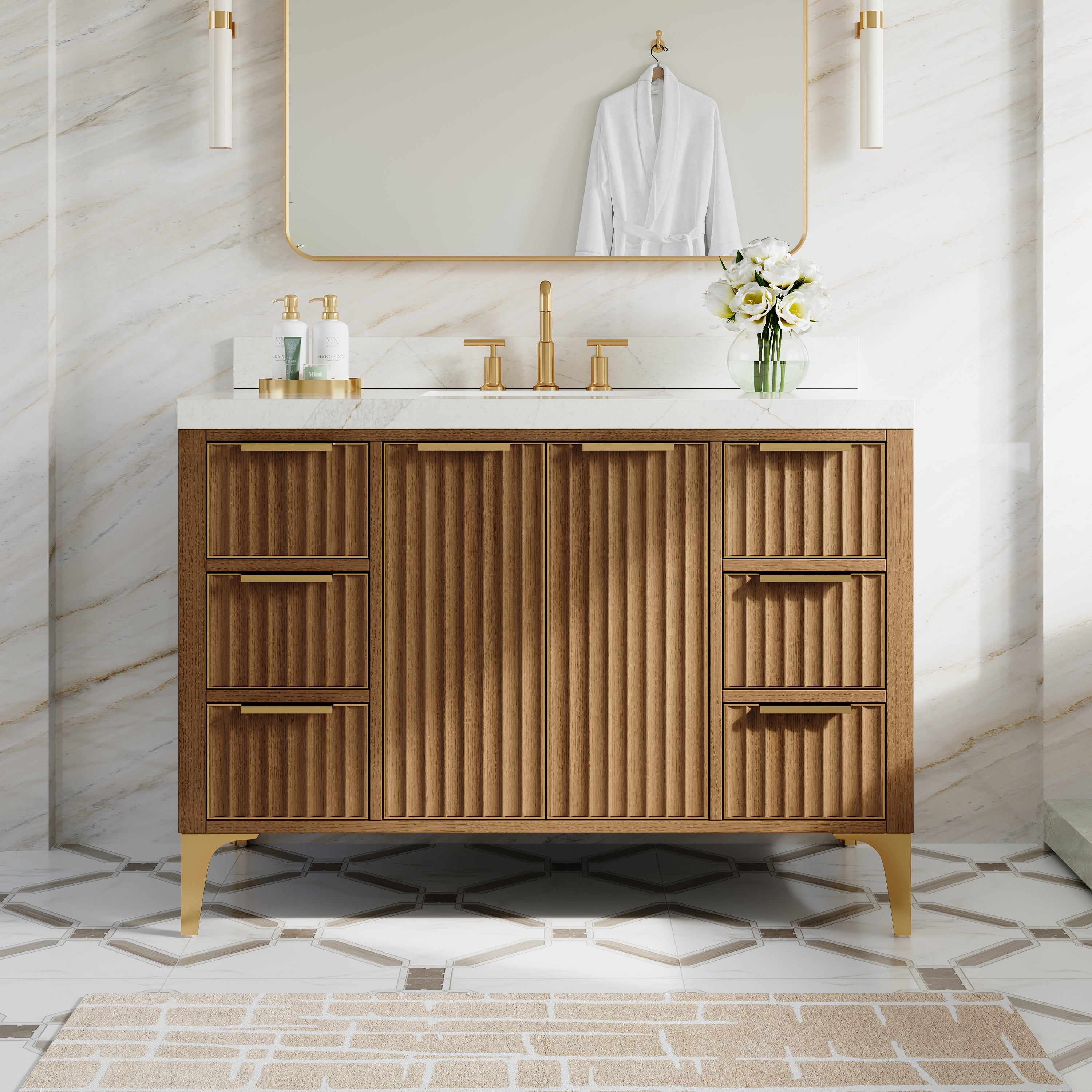


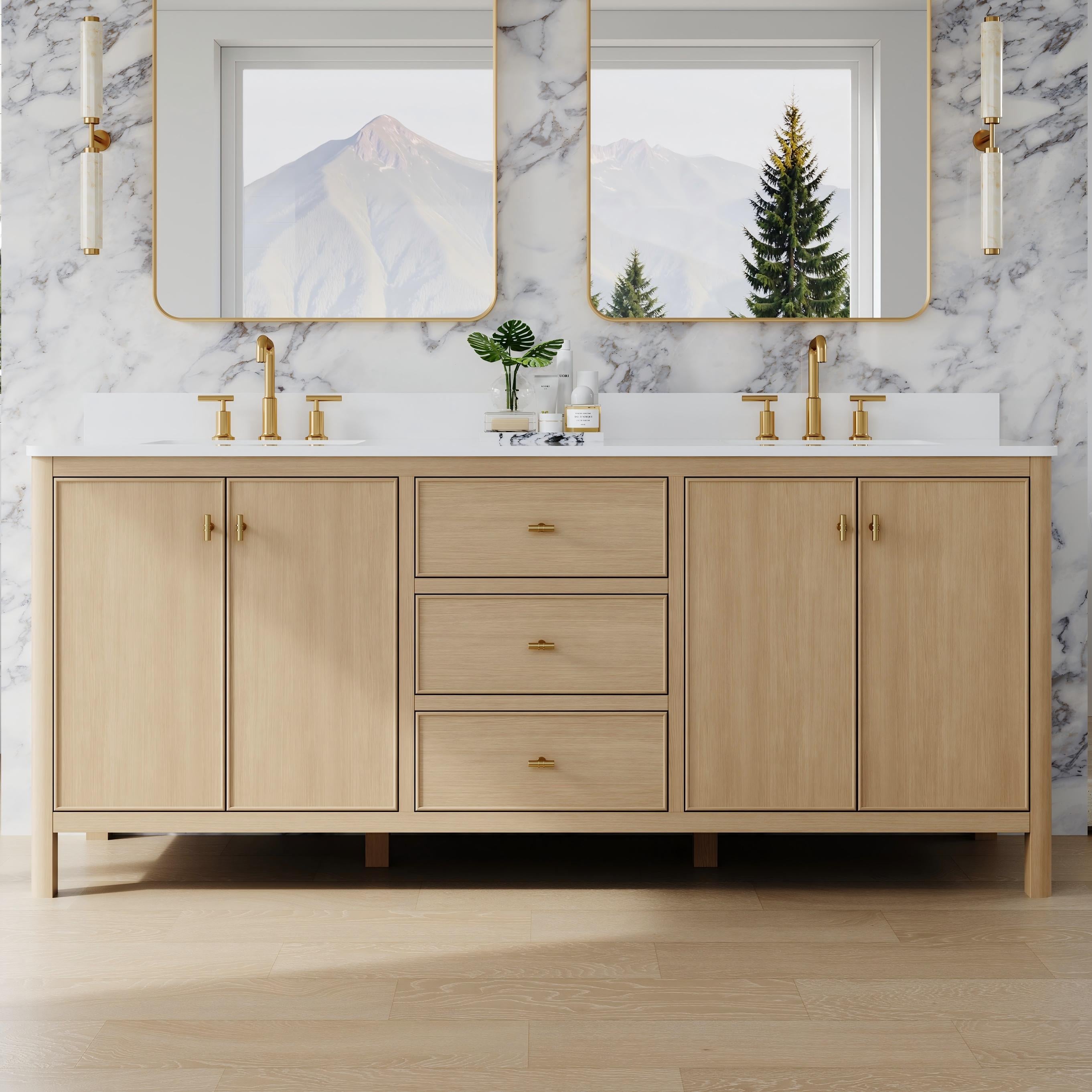
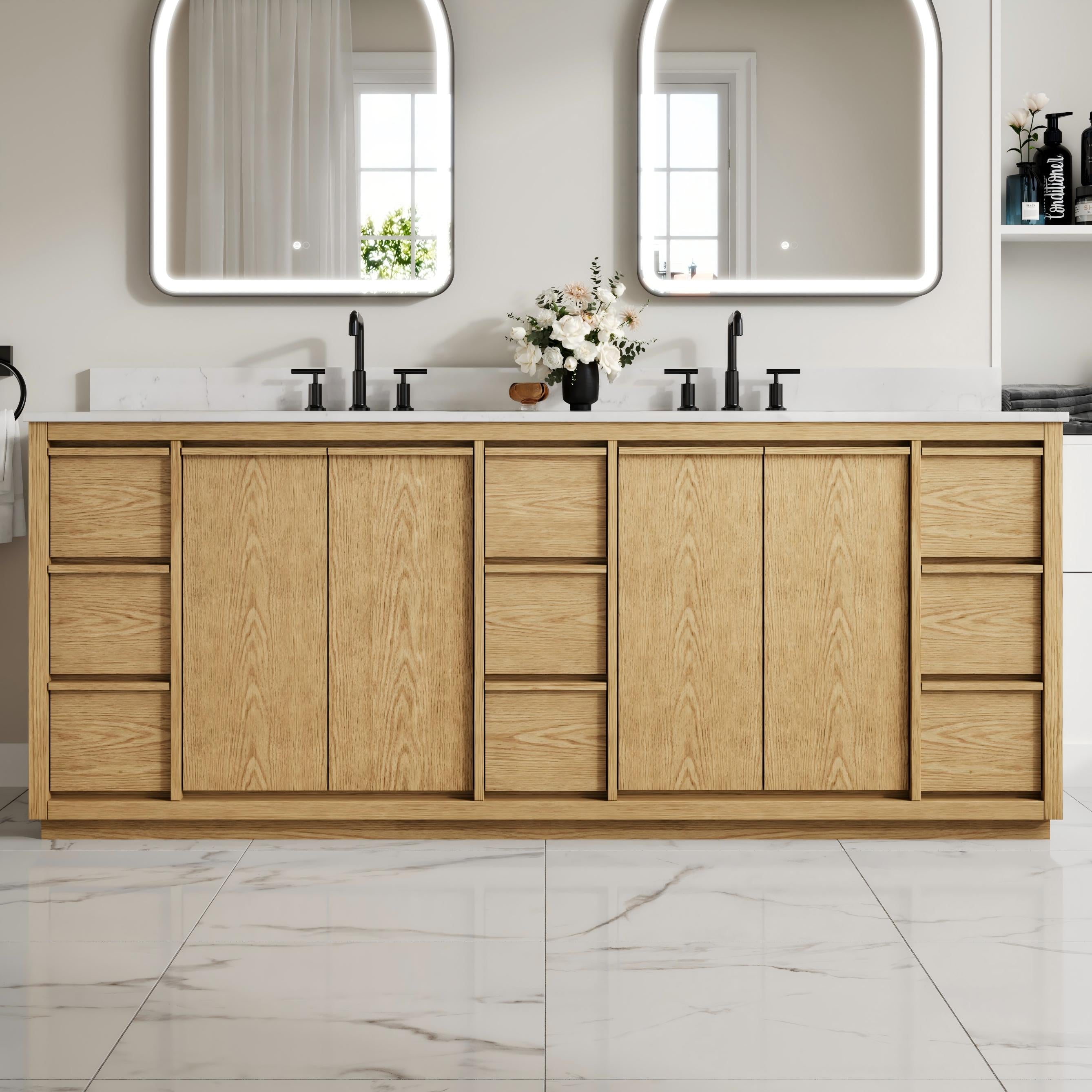
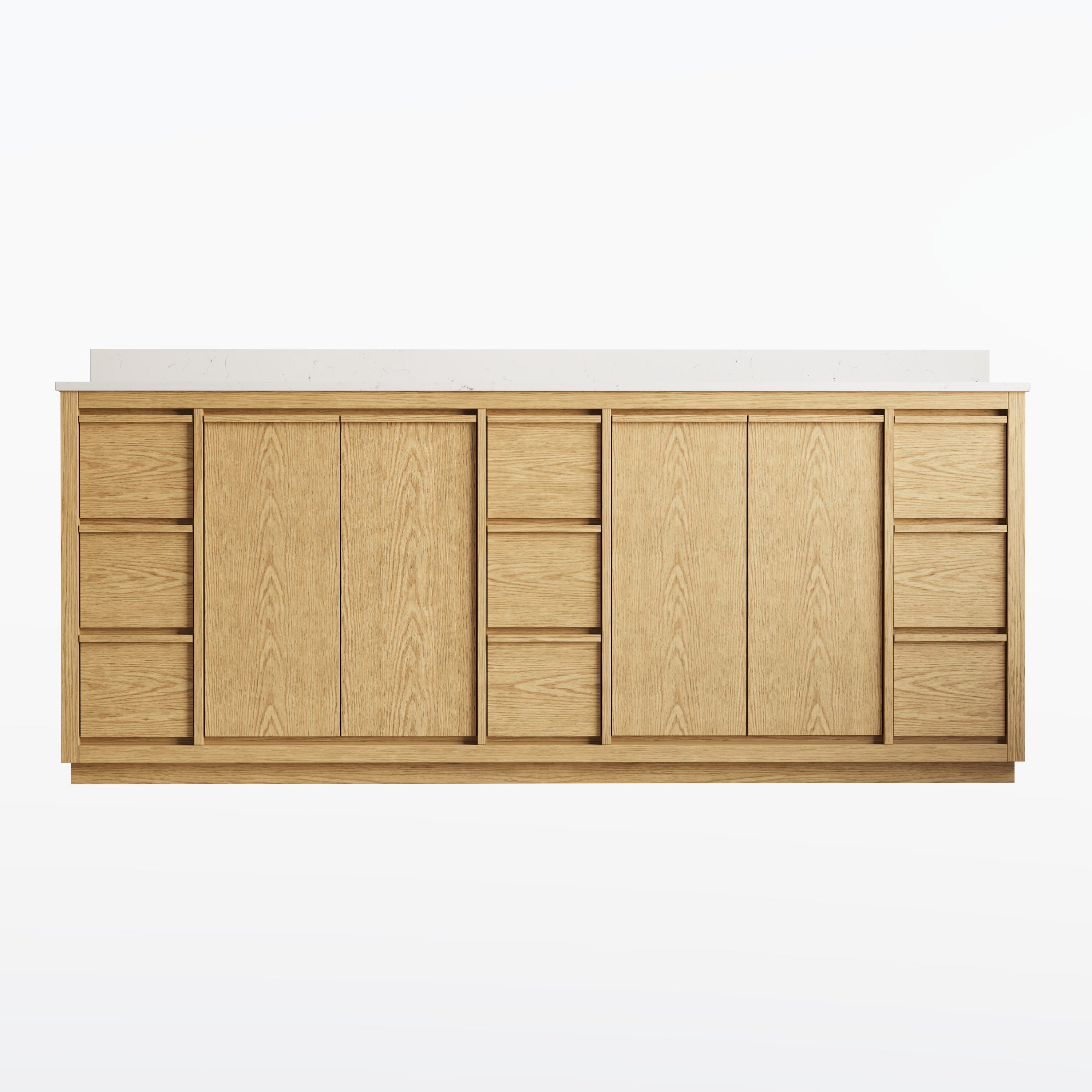

In bathroom spaces, a white bathroom vanity has always been regarded as the most classic and enduring choice. White is clean, transparent, and versatile, suitable for almost all tile and wall styles. However, many users will find a common problem after using it for two or three years: the originally pure white color begins to yellow and darken, the surface gloss decreases, and it looks "older than expected". This change is not simply aging, but the result of the combined effects of materials, environment, and usage methods. To truly delay yellowing, it is necessary to address multiple factors, including material selection, daily cleaning, lighting control, and usage habits.
1. Yellowing is not "dirty", but rather a chemical change in the material
Many people mistakenly believe that white turning yellow is just a buildup of stains. Still, in most cases, this is the result of oxidation reactions occurring in the coating or substrate.
Industry tests have shown that, under the combined effects of long-term humidity, high temperature, and ultraviolet radiation, the color difference of ordinary white coatings can reach a level visible to the naked eye within 3-5 years. Especially in areas near windows or under intense lighting, the cabinet surface is more prone to localized yellowing.
This means that even if the daily cleaning is very diligent, if the material itself lacks antioxidant capacity and turns yellow, it is almost a "time problem" rather than a "cleaning problem".
2. Different materials have significant differences in their ability to resist yellowing
Not all white bathroom cabinets have the same anti-yellowing performance; the key lies in the substrate and surface treatment method.
Solid wood veneer cabinets are more prone to color changes in long-term, humid, and hot environments due to the high lignin content in natural wood fibers. If the thickness of the surface paint film is insufficient or the anti-UV performance is weak, the yellowing speed will be significantly accelerated.
If ordinary PU paint is used for painted cabinets with multi-layer boards or MDF substrates, their resistance to yellowing is usually only moderate. In contrast, white cabinets with high-density UV paint or a multi-layer baking process can extend the anti-yellowing cycle by about 30%-40%.
Industry durability testing shows that, under the same humid, hot conditions, the color difference of high-grade UV coatings after 6 years is significantly lower than that of ordinary painted surfaces.
3. Light is the most overlooked "invisible killer"
The biggest fear of a white cabinet is not water, but "light".
The UV component of natural light will gradually degrade the paint film's molecular structure, causing the white color to shift from cold white to warm yellow. Especially near windows, skylights, or areas exposed to direct sunlight for a long time, the yellowing rate is significantly faster.
Test data show that under continuous high-brightness illumination, the yellowing index of the white coating increases about 1.5 times faster than in a typical lighting environment.
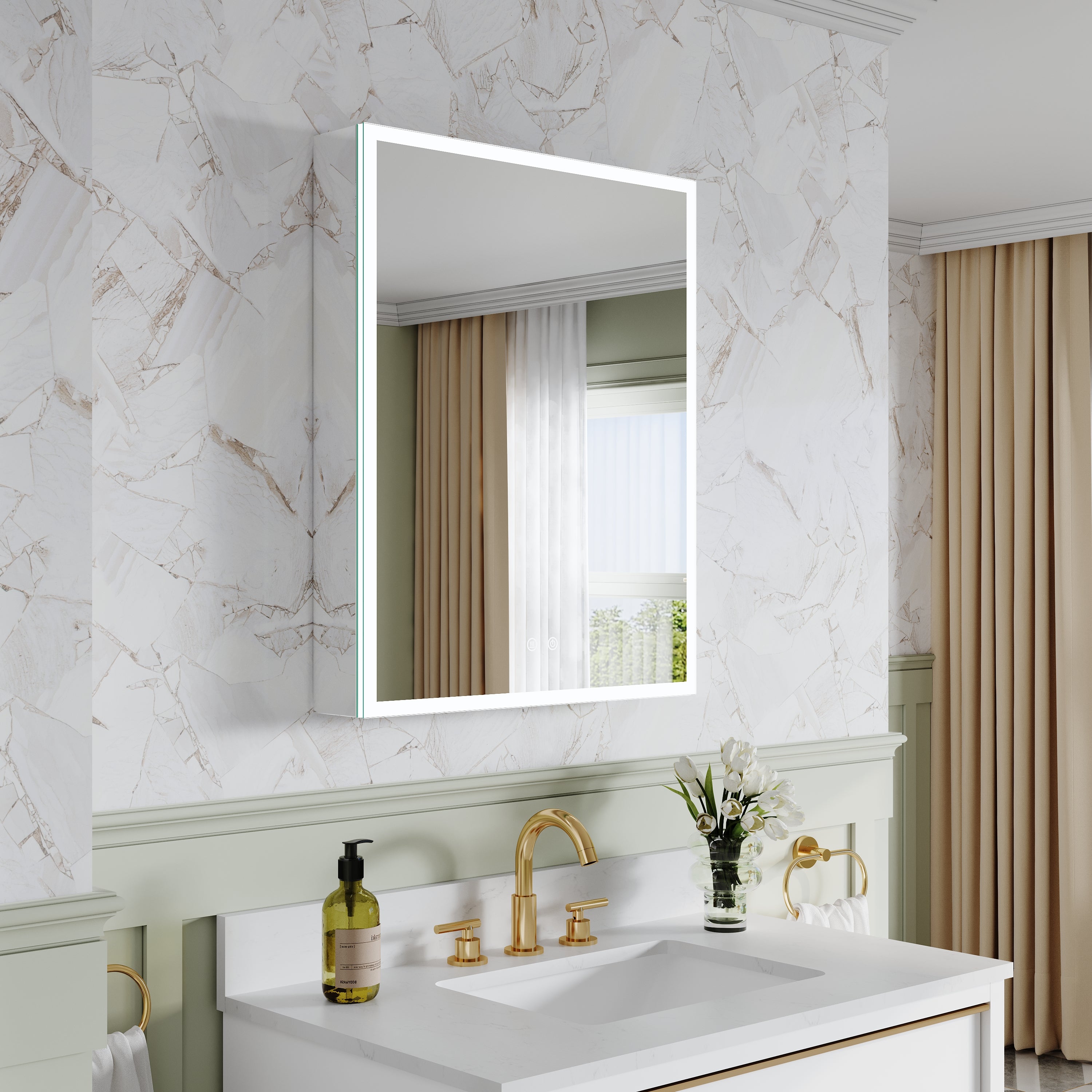
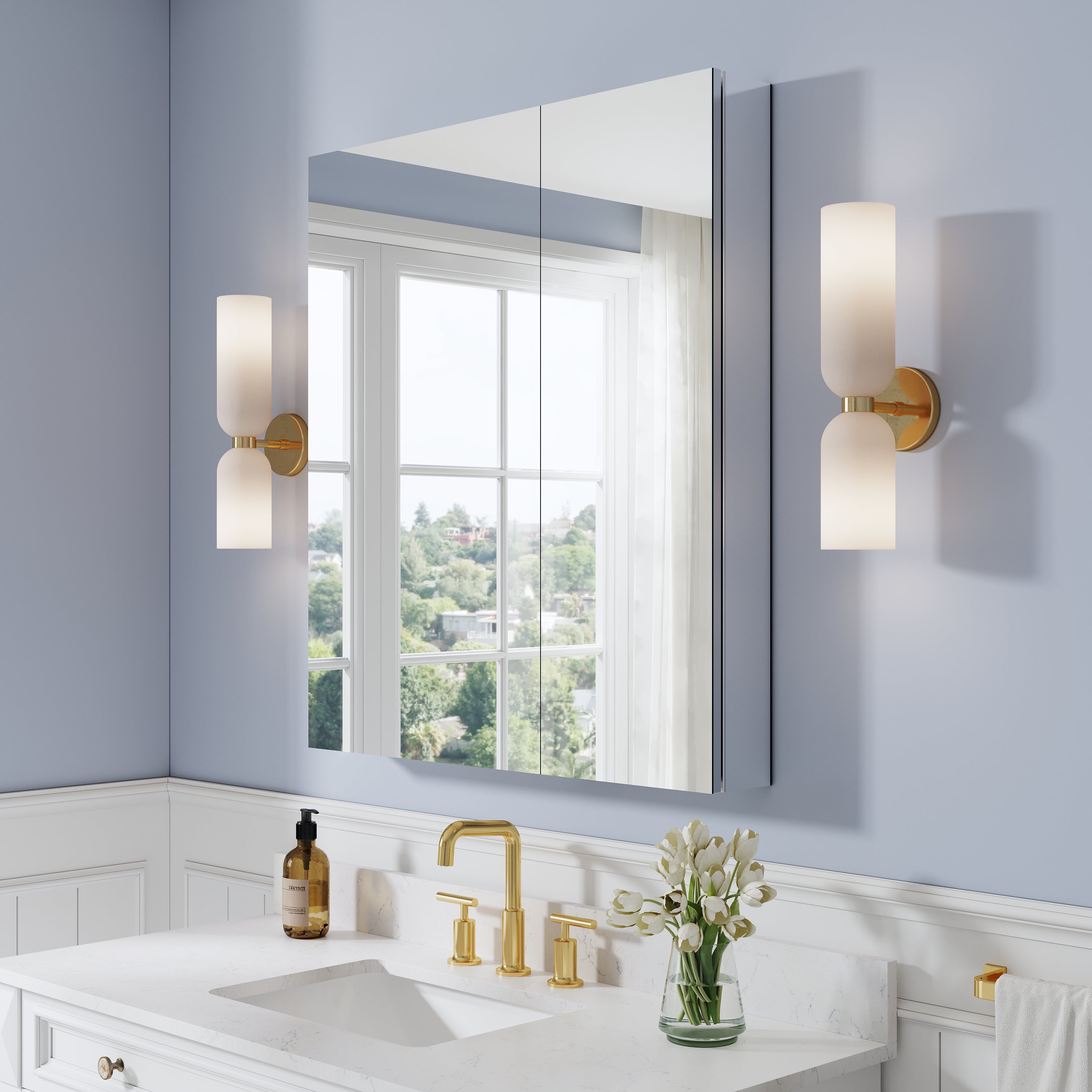
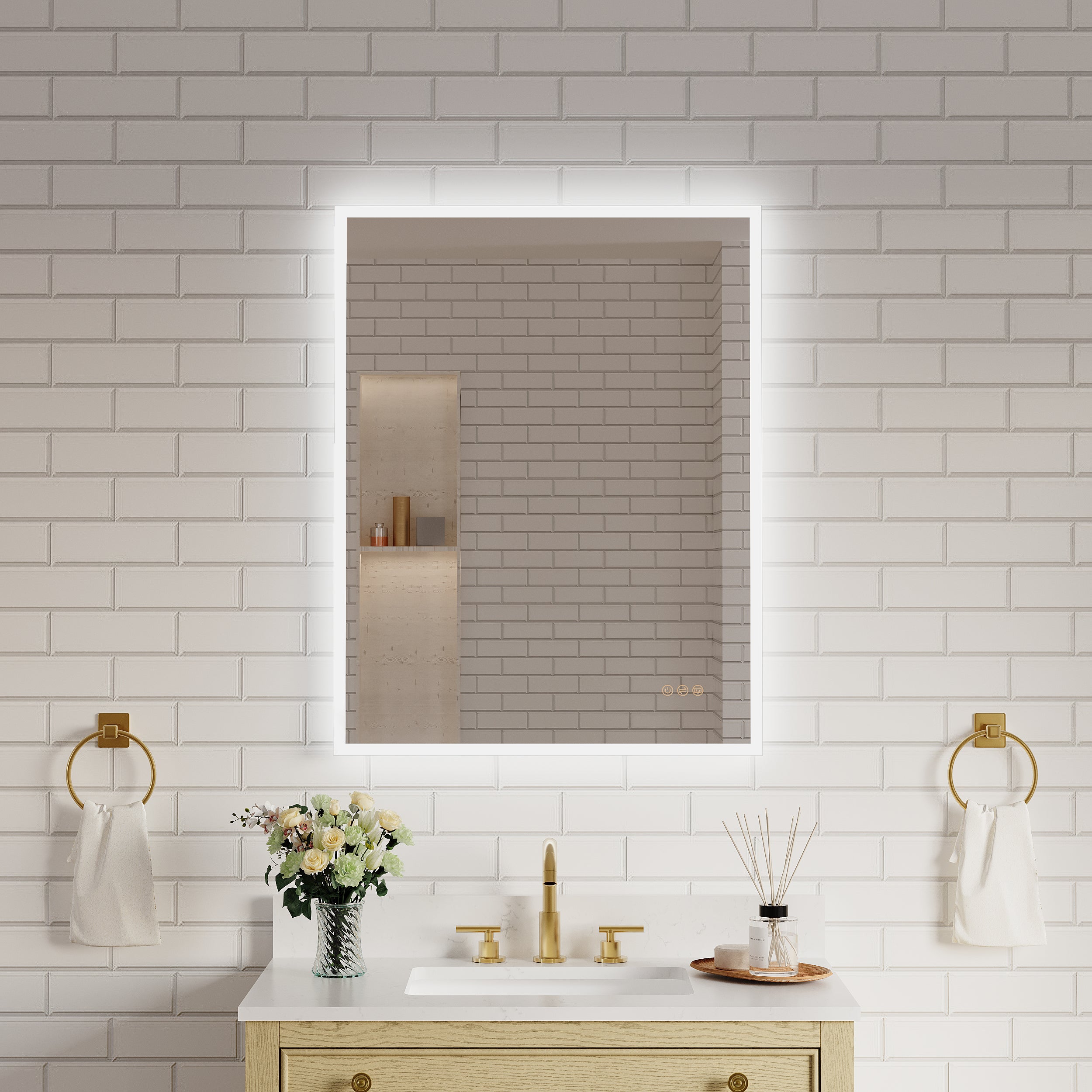
Therefore, if the bathroom has good lighting or the mirror headlights are on for a long time, it is recommended to prioritize cabinets with anti-UV coatings and avoid lighting fixtures that are too close to the cabinet surface. It is generally recommended to maintain a safe distance of at least 12-16 inches.
4. The cleaning method often gradually destroys the surface
The wrong cleaning method is one of the essential reasons for accelerating yellowing.
Chlorine bleach, strong alkaline cleaners, and abrasive cleaning powders can all damage the surface protective film in the short term. Although it appears "whiter and brighter" at present, it has actually weakened the coating's antioxidant capacity.
Long-term tracking data show that white cabinets used with strong alkaline or chlorine-containing cleaning agents lose their surface gloss and yellow at an average rate of about 1-2 years.
The correct approach is to use a neutral detergent or a diluted mild detergent and gently wipe with a soft cloth. Wipe off any water stains promptly after cleaning to prevent prolonged moisture retention at corners and edges.
5. Humidity control is more critical than imagined
The bathroom is a high-humidity environment, and the impact of water vapor on material aging is much more substantial than in daily environments.
In environments with relative humidity consistently above 70%, the aging rate of the white coating is significantly accelerated. Especially at the bottom of the cabinet, the junction between the back panel and the countertop, the color difference is most likely to occur first.
Industry advice: After using the bathroom, it is recommended to turn on the exhaust system for 20-30 minutes to restore the humidity to the normal range as soon as possible. For bathrooms without windows or with weak ventilation, long-term accumulation of moisture is one of the main environmental factors leading to yellowing.
6. Daily protective details determine the color status five years later
In addition to material and environment, details of use are equally important.
Firstly, avoid leaving cosmetics, hair dyes, or other care products with strong coloring properties directly on the counter for long periods. Once this type of liquid infiltrates the microporous structure, it is easy to form irreversible color spots.
Secondly, pay attention to the problem of water dripping from the faucet and water accumulation at the edge of the countertop. Long-term water marks will accelerate the aging of edge sealing, causing local yellowing first.
In high-end projects, a common practice is to perform a light maintenance treatment on the cabinet's surface every 12-18 months, using professional protective waxes or coating repair agents to restore surface sealing without altering the appearance.
7. The purchasing stage is the "first line of defense" to prevent yellowing
Yellowing problems are real dangers that arise during the purchasing stage.
Industry experience shows that choosing a coating system with high-level yellowing resistance certification often extends its stability period by 3-5 years compared to ordinary products. There is no absolute advantage between high gloss and matte, but the anti-aging ability of the multi-layer baking and UV curing process is significantly stronger.
In addition, the quality of cabinet edge sealing is equally critical. Products with loose edge sealing or significant material differences often begin to discolor from the edges and eventually spread throughout the entire facade.

8. Conclusion: White is not afraid of time, but scared of "wrong treatment"
White bathroom cabinets are not inherently prone to yellowing; the real problem lies in the combined effects of material grade, lighting conditions, humidity control, and cleaning methods.
Choosing the proper coating process is the foundation.
Controlling lighting and humidity is key.
Avoiding aggressive corrosion-cleaning methods is a prerequisite.
Detailed protection and regular maintenance are long-term and stable guarantees.
Under reasonable use and proper maintenance, high-quality white bathroom vanities can remain close to their original condition for 8-10 years.
The reason white is classic is not that it remains unchanged forever, but that when treated correctly, time only makes it appear gentler, not more outdated.
















Leave a comment
This site is protected by hCaptcha and the hCaptcha Privacy Policy and Terms of Service apply.