






















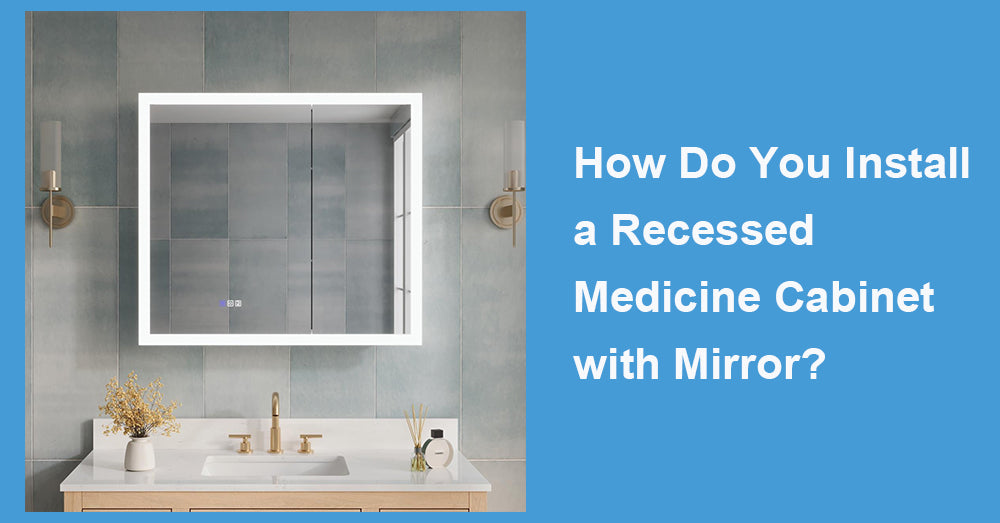
A surface mount medicine cabinet with mirror is generally easier to install than a recessed cabinet because it typically avoids cutting into drywall and framing a wall opening. That “easier,” though, depends on what you’re mounting to (painted drywall vs. tile), how heavy the cabinet is, and whether it includes lighting or outlets. With bathroom projects still drawing strong attention and spending, the installation question has shifted from “can it be done?” to “how predictable is the result?”
1. Why surface-mount usually wins on simplicity
Surface-mount cabinets are designed to fasten directly to the wall surface, ideally into studs or solid blocking. That means you typically skip the messiest parts of recessed installs: opening the wall, rerouting plumbing or wiring that might be in the cavity, and patching drywall edges. In practical terms, fewer steps mean fewer surprises—one reason surface-mount models remain a go-to choice when timelines are tight, or the wall behind the vanity is “unknown.”
This aligns with broader bathroom design direction: more emphasis on practical storage and everyday usability rather than purely decorative upgrades.
2. The “easy” part: a realistic time-and-effort picture
For a basic cabinet (mirror only, no electrical), the work is often straightforward: measure, level, locate studs, fasten the cabinet, adjust doors, and seal if needed. Many DIYers can handle it with standard tools.
Where “easy” starts to break:
· Drilling clean holes in tile without cracking it requires the right bit and technique.
· Uneven walls (older homes, plaster, wavy drywall): you may need shims to keep the cabinet square and doors aligned.
· Heavy or extra-wide cabinets: larger spans benefit from fastening into multiple studs or adding blocking.
· Two-person handling: anything bulky is safer with a helper, even if the instructions say it can be done by one person.
Industry outlooks also indicate that more projects are shifting toward professional execution rather than DIY, which aligns with what many homeowners experience once electrical, tile, or heavy wall-hung items enter the scope.
3. The wall type decides the difficulty more than the cabinet does
A quick “difficulty ranking” based on what installers run into most:
· Painted drywall over studs: easiest. Stud finder, level, and screws into studs (or high-quality anchors if needed).
· Drywall over plaster/lathe: doable but trickier. Stud finding can be unreliable; anchors and careful pilot holes matter.
· Large-format tile: moderate-to-hard. You’ll be drilling tile, managing dust, and avoiding chips; the layout must be exact.
· Stone or slab surfaces: often a pro job. Specialty bits and anchors, plus a higher risk if you slip.
If you want one rule that prevents most headaches, assume the cabinet must be supported by a structure, not just drywall. Use studs whenever possible.
4. The electrical add-ons are the real line between DIY and “call a pro.”
Many modern medicine cabinets include features like integrated LED lighting, defoggers, and outlets/USB ports. The moment wiring is involved, the project shifts categories.
Bathroom receptacles generally require GFCI protection under the National Electrical Code, and any built-in outlet function must be installed in accordance with applicable code and manufacturer instructions.
Practical guidance:
· Plug-in models (cord to a nearby GFCI receptacle) can be simpler if the cord management is clean and compliant.
· Hardwired models often look more seamless, but routing power safely is where many DIY installs go sideways.
· If you’re not entirely comfortable with electrical work, hiring a licensed electrician is usually the fastest way to avoid rework and inspection problems.

5. The most common installation mistakes (and how to avoid them)
These are the issues that generate the “it was harder than I thought” stories:
1. Hanging it too high or too low: A cabinet that’s only 1–2 in off can feel wrong daily. Mock it up with painter’s tape first.
2. Not verifying door swing and clearance: Surface-mount boxes protrude; make sure doors don’t hit sconces, a faucet, or a nearby wall.
3. Relying on weak anchors: If studs aren’t available, use anchors rated for the cabinet’s weight plus daily use loads.
4. Skipping shims on uneven walls: This leads to doors that don’t align or close smoothly.
5. Rushing measurements: One crooked cabinet in a bathroom reads “off” immediately because mirrors amplify visual lines.
6. Why cabinets are getting more attention right now
Bathroom renovation activity remains strong in the broader remodeling picture, and budgets are still meaningful. One widely cited bathroom trends study reported median spend rising from $13,500 to $15,000 year over year (2022 to 2023), with minor remodel spending also increasing.
At the same time, a major remodeling outlook projected that total homeowner remodeling spending would reach $524 billion in early 2026.
In that environment, people care more about upgrades that add daily function without turning into a multi-trade construction project. A surface-mount cabinet often fits that sweet spot: noticeable impact, controlled scope.
7. A simple “should I DIY this?” checklist
A surface-mount medicine cabinet is usually a good DIY project if:
· The wall is drywall (or you have experience drilling tile cleanly).
· You can fasten into at least one stud (or you can add solid backing).
· The cabinet is mirror-only (no hardwiring).
· You’re comfortable measuring precisely and keeping things level.
It’s smarter to hire help if:
· You need new wiring, hardwiring, or changes near a bathroom circuit.
· The cabinet is very large/heavy, or must span awkward stud spacing.
· The wall is tile/stone, and you can’t afford a cracked surface.
· You’re trying to hide imperfections in an uneven wall and want a flawless finish.
8. Bottom line
Yes—a surface-mount medicine cabinet is often easy to install, especially compared with recessed options. But “easy” is conditional: drywall and a mirror-only cabinet are straightforward, while tile and electrical features move the job into precision work. If you treat the wall structure and electrical requirements as the deciding factors, you’ll predict difficulty accurately—and avoid the common rework traps.









































Leave a comment
This site is protected by hCaptcha and the hCaptcha Privacy Policy and Terms of Service apply.