






















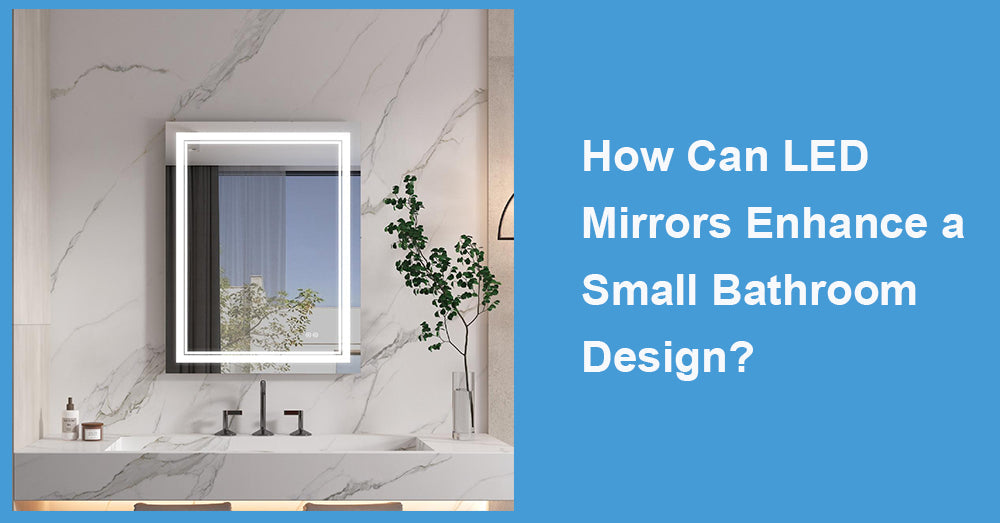
The conversation around led lights mirrors has shifted quickly: what used to be an afterthought (a vanity bar light plus a basic mirror) is now one of the most design-defining layers in the room, shaping mood, safety, and even how “premium” a bath feels at first glance.
1. Lighting is no longer one fixture; it is a system
Designers are treating bathrooms like small hospitality suites, built around layered light: ambient for the room, task for grooming, accent for atmosphere, and low-level night lighting for wayfinding. In forward-looking bath trend research, lighting quality is flagged as a top priority by 91% of respondents, and 92% agree that task lighting must always be included in primary bath design.
That framing matters because it changes the spec: dimmers, multiple circuits, glare control, and better color rendering become standard, not “nice to have.”
2. Mirrors have become lighting instruments, not just reflective surfaces
The mirror is increasingly expected to perform: it can deliver face-level task light, reduce shadows under eyes and chin, and visually expand tight layouts by bouncing illumination deeper into the space. Integrated mirror lighting also simplifies the wall composition, replacing bulky fixtures with clean lines that read modern and architectural.
This is why manufacturers are pushing more integrated solutions (lighted mirrors, lighted medicine cabinets, perimeter-lit glass). At the same time, designers plan electrical rough-ins earlier to avoid visible cords, awkward switch placement, or last-minute compromises.
3. Wellness and safety are driving upgrades, and lighting is the gateway feature
In recent renovation research, upgraded lighting consistently ranks as the “high impact, low regret” choice because it affects every routine. In the 2025 Houzz Bathroom Trends Study, 36% of renovated bathrooms include wellness-oriented features, with upgraded lighting (30%) leading the list.
Lighting is also tied directly to safer bathrooms: among remodeling households adding aging-in-place elements, extra lighting (31%) appears alongside features like grab bars and low-curb showers.
The design implication is simple: brighter, better-placed, better-controlled light is becoming part of “universal luxury,” not a separate category.
4. LEDs make “more lighting” compatible with efficiency and intelligent control
The LED shift is now mature enough that the conversation is less “Should we go LED?” and more “How do we design with LED well?” A market characterization model estimates 2024 LED saturation at 60% (fixtures in the field) and projects that the market will be dominated by LED technologies by 2030.
On the energy side, DOE’s SSL forecast projects LED energy savings could exceed 569 TWh annually by 2035, and it highlights that connected lighting accounts for a meaningful share of the savings potential (not just the diodes themselves).
Translated into bathroom design: more layers (mirror lighting, shower niche glow, toe-kick night lights) are easier to justify when controls, sensors, and efficient sources keep the whole system sensible.

5. Practical sizing rules in inches that make the design look intentional
Good mirror-and-light design is mostly about proportion and placement. These rules of thumb keep you out of trouble:
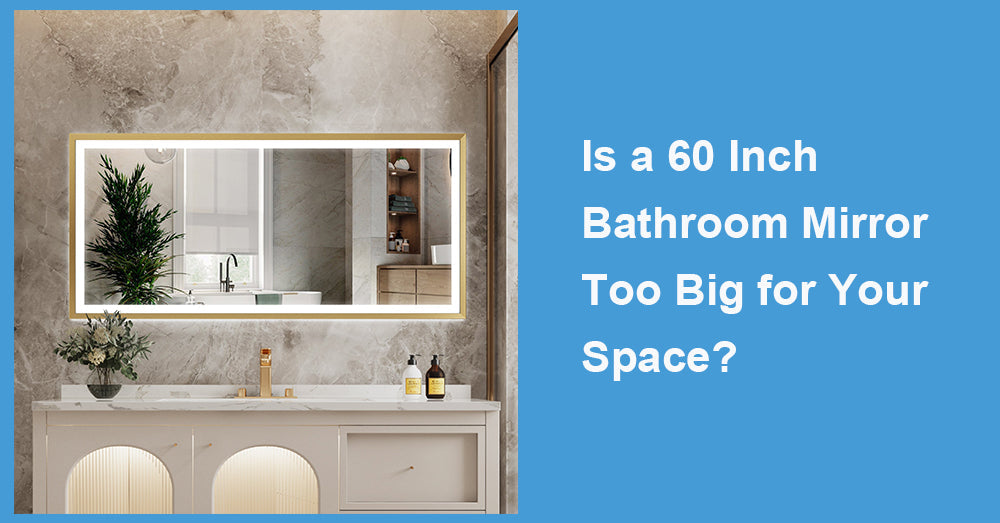
1. Mirror width vs. vanity: keep the mirror about 2" to 4" narrower than the vanity for a clean margin, or go full-vanity-width for a more expansive, hotel-like look (especially on 48" to 72" double vanities).
2. Mirror height: tall mirrors (often 30" to 40"+ high) feel more architectural and help bounce light; shorter mirrors can look “undersized” once layered lighting is introduced.
3. Face lighting placement: if using side lights, place them roughly at face height so light hits from both sides, reducing shadows. If using an integrated lighted mirror, prioritize even edge diffusion and avoid hotspots that create glare in the glass.
4. Clearances and symmetry: align mirror edges with faucet centers or vanity drawer lines; even a 1" misalignment reads “off” when LED lines are perfectly straight.
6. Feature expectations are rising, and the mirror is where they concentrate
Once the mirror becomes the lighting hub, buyers start expecting a short checklist of upgrades to come with it. Common spec targets include:
1. Dimming plus memory so the mirror returns to the last setting.
2. Selectable color temperature (often spanning warm-to-cool ranges) to match morning routines, evening wind-down, and makeup accuracy.
3. High color quality (designers frequently ask for higher CRI because cheap LEDs can make skin tones look flat or gray).
4. Anti-fog/defog zones that quickly clear the center viewing area.
5. Integrated convenience like outlets/USB or discreet storage when the product is a medicine cabinet.
This is also why the category is splitting: some products aim for “minimal glass + perfect light,” while others push “mirror as a smart station.”
7. What this means for bathroom design in 2026
If you are shaping a bath concept for the next cycle, the direction is clear:
1. Plan lighting around the mirror, not after it. Integrated mirror illumination changes wiring, switch zones, and wall layouts.
2. Treat upgraded lighting as a core wellness feature. It is consistently the most common wellness add-on and supports daily routines.
3. Use lighting to support safety without looking clinical. Extra lighting is increasingly selected for hazard visibility, and it can be delivered elegantly through layers and low-level night modes.
4. Assume LEDs are the baseline, then compete on execution. With high LED saturation and substantial projected savings, differentiation now lies in optics, diffusion, glare control, and control integration.
5. Make the mirror do more work visually. In compact baths, a well-scaled, well-lit mirror is one of the fastest ways to make the room feel brighter and larger without changing the footprint.







































Leave a comment
This site is protected by hCaptcha and the hCaptcha Privacy Policy and Terms of Service apply.