
















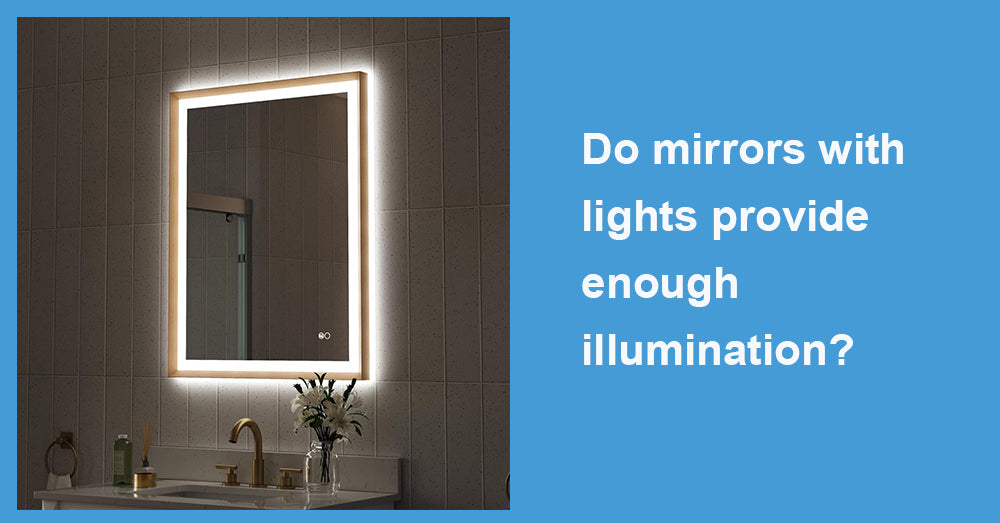
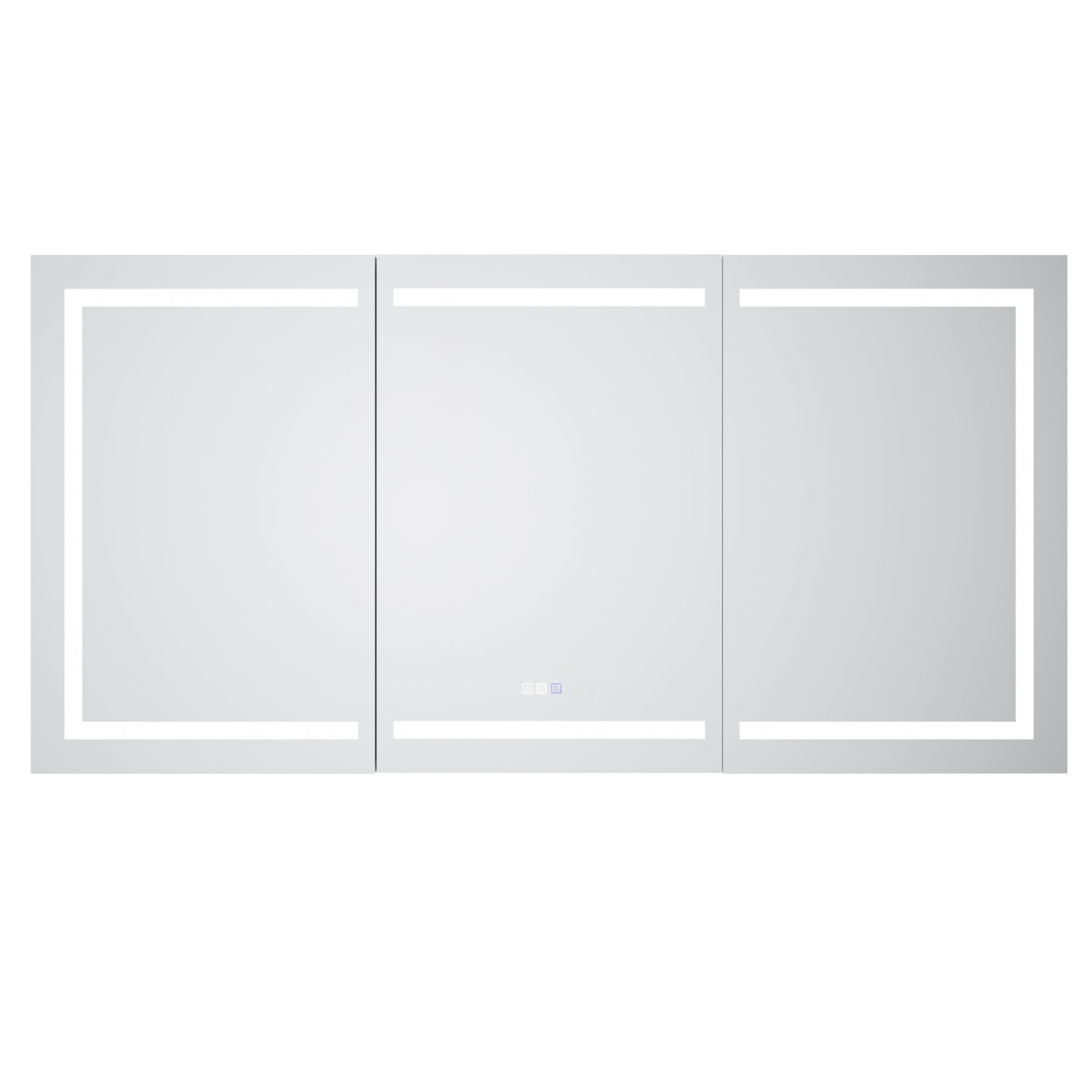
In line with the trend of upgrading bathroom lighting, mirror with lights have gradually become the mainstream choice to replace traditional mirror headlights. Unlike standalone wall lights or ceiling lights, with a mirror, the light source is directly integrated around the mirror surface, theoretically allowing it to be closer to the face and reducing shadows. But a core question always exists: can this mirror lighting really provide "enough brightness"? From the perspective of lighting engineering standards and actual usage data, the answer depends on brightness output, light-source layout, and overall spatial configuration, rather than whether there are lights.
1. What is considered "bright enough"? Industry benchmark for mirror illumination
In the lighting design system, the front of the washbasin mirror belongs to the delicate operation area. The industry generally recommends maintaining adequate illumination in this area at 300-500 lux to ensure precise, shadow-free shaving, makeup, and skincare operations.
The common usage conditions are:
Operating distance: 18 inches -24 inches
Mirror width: 24 inches -48 inches
When illuminance is below 250 lux, the contrast of facial contours decreases significantly; above 600 lux, glare and discomfort from reflections increase significantly. Therefore, the truly ideal mirror illumination is not about pursuing extremely high brightness, but about stability, uniformity, and the absence of shadows.
2. Basic brightness with light mirror: can it independently undertake the main lighting
At present, the power of mainstream mirror lights is mainly concentrated in the 20W-40W range, corresponding to a luminous flux of about 1200-2400 lumens. Under standard installation height and typical reflection environment, the facial area can obtain approximately 300-450 lux of illumination.
The industry testing conclusion generally shows that:
For daily grooming, shaving, and basic skincare, most glasses with lights are already sufficient
For scenes with high demand for high-precision makeup and color judgment, a single mirror light source may be a bit tight
In other words, the use of light mirrors in functional lighting has approached the "qualified standard", and whether additional lighting fixtures are needed depends more on the intensity of use rather than insufficient brightness.
3. The layout of the light source determines the effect more than the power
Whether the illuminated mirror is "bright enough" depends not on the wattage, but on the position of the light source.
Front illuminated structure
The light directly shines on the face, with minimal shadows. At the same power, the adequate illumination of the face can be increased by 20%-30%, which is most suitable for shaving and makeup.
Backlight structure
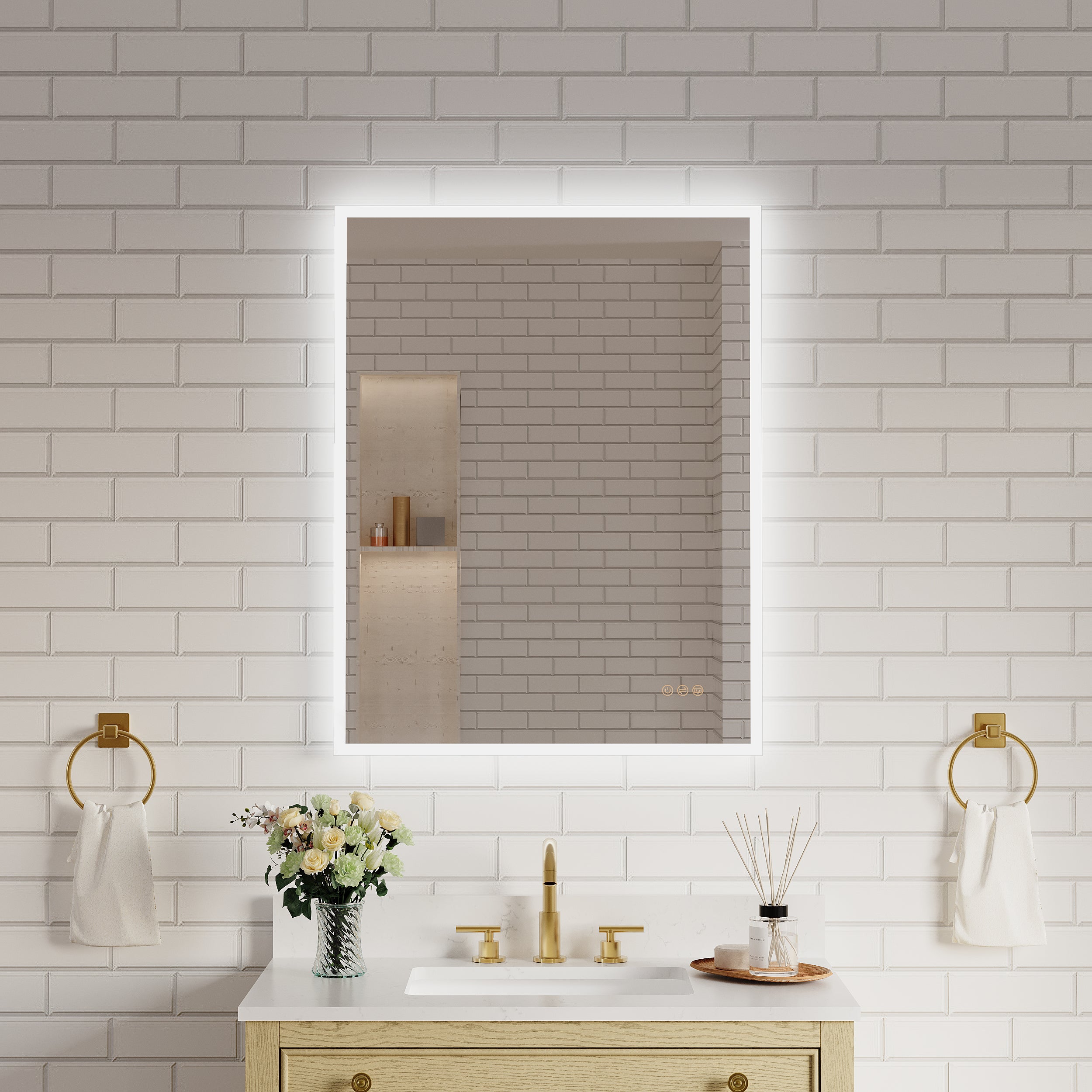
The light is mainly projected onto the wall to form ambient light, with a soft visual effect but significantly lower facial illumination. When used alone, it is usually insufficient to serve as the main lighting.
Front + backlight combination structure
Balancing functionality and atmosphere is currently the mainstream solution for high-end products. Stable coverage of functional requirements can be achieved at around 30W, while ensuring a sense of spatial hierarchy.
Industry lighting evaluations show that a well-designed 30W front or combination mirror has significantly better practical effects than a 40W pure backlight design.
4. Color rendering index and color temperature: determining whether one can see accurately or not
The brightness standard is only the foundation; color rendering ability determines authenticity.
The lighting standards generally agree that:
CRI ≥ 80 as the basis for use
CRI ≥ 90 is suitable for makeup and skin tone assessment
In low-color-rendering environments, skin tone deviation can be amplified by 20%-30%, which can easily lead to distorted makeup. High-quality mirrors with lights typically achieve a CRI in the 90-95 range, making skin tones closer to natural light conditions.
The color temperature adjustment range is mostly 3000K-6000K:
3000K -3500K is suitable for relaxing at night
4000K -4500K suitable for daily organization
5000K -6000K is suitable for delicate operation
When the color temperature matches the scene, subjective lighting satisfaction can be improved by more than 25%.
5. Matching relationship between size and brightness
The larger the mirror size, the brighter it does not necessarily mean. Common specifications include:
— 24 inch x 36 inch
— 30 inch x 40 inch
— 36 inch x 48 inch
Industry design experience shows that:
24-30 inch wide mirror: 20W-30W is basically sufficient
36-48 inch wide mirror: The power should be increased to 30W-40W to maintain uniformity
If the power of a large mirror is insufficient, the brightness in the central area will decrease significantly, and the proportion of the shaded regions will increase.
6. Do you need additional lighting? Depending on the usage scenario
Industry feedback shows:
Scenarios that can be satisfied by simply having a light mirror:
Single primary or secondary guard
Front or combination luminescent structure
Daily grooming and shaving are the primary focus
It is still recommended to pair it with ceiling lights or side lights in the following scenarios:
Two-person parallel use
High frequency makeup and styling needs
Pure backlight structure
High floor height or insufficient ambient light in the space
With the assistance of auxiliary lighting, the overall uniformity can be improved by about 30%-40%, and shadows can be significantly reduced.

7. Energy consumption and long-term use value
The power of LED mirror lighting is concentrated between 20W and 40W, and under the same illumination conditions, overall energy consumption is reduced by 40%-60% compared to traditional lighting combinations. The lifespan of the light source is usually between 30000 and 50000 hours. If used for 2 hours per day, it can operate stably for more than 20 years.
Industry maintenance data shows that the failure rate of integrated light source systems is significantly lower than that of split lighting fixtures, and long-term maintenance costs are lower.
8. Conclusion
Returning to the question itself: Do mirrors with lights provide enough illumination?
From the perspective of lighting standards and actual test results, a high-quality mirror with lighting can perform the primary illumination function in front of the mirror in the vast majority of daily scenes. What truly determines the effect is not whether there is a light or not, but rather:
Is the layout of the light source reasonable
Does the power match the size
Whether the color rendering and color temperature meet the standards
When these conditions are met simultaneously, a good illuminated mirror is not only "bright enough" but also provides a stable, realistic, and comfortable professional lighting environment. This is precisely the fundamental reason why it is gradually replacing traditional mirror headlights.










Leave a comment
This site is protected by hCaptcha and the hCaptcha Privacy Policy and Terms of Service apply.