






















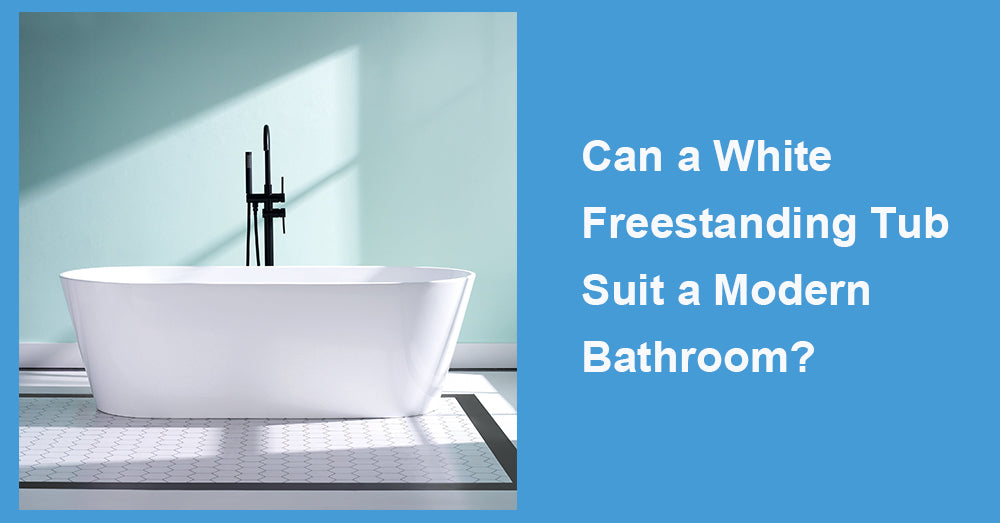
When people think of modern bathrooms, they often envision "cool grays, sleek blacks, and minimalist lines." But if you're considering a white freestanding tub, the answer is usually yes: white isn't "conservative," but rather a "negative space" that maximizes the room's texture. The key isn't whether the tub is white, but how you integrate it into a modern context through materials, proportions, lighting, and details.
Why does a white freestanding tub naturally complement modern style?
Modern style centers on restraint and clarity: clean volumes, defined functional zones, and minimal visual noise. A white freestanding tub acts like the spotlight in a space—it doesn't compete for attention but elevates the surrounding materials and lines. White offers three key advantages:
Expands space: White reflects light more softly, creating a sense of visual lightness that prevents even compact spaces from feeling oppressive.
Endures over time: Modern design values lasting aesthetics, and white maintains its appeal longer, resisting trends.
Versatile pairing: From microcement and stone slabs to wood veneers and metal accents, white consistently complements a wide range of finishes.
Choosing the correct "form" makes white truly modern.
The silhouette of a freestanding white basin determines whether it evokes "hotel-inspired modernity" or "traditional-leaning retro." For a more contemporary look, prioritize these contour features:
Oval or elongated oval shapes with cleaner lines: Thin edges and crisp transitions create a lighter feel.
Straight or slightly curved edges (slipper/modern slipper): Aligns with contemporary architectural geometry.
Low center of gravity proportions: Creates a more stable, "architectural" overall appearance.
Avoid excessive ornamentation: Complex skirting, carvings, or heavy flanges lean toward traditional styles.
For minimalist, light luxury, or modern wabi-sabi bathrooms, a white freestanding bathtub featuring "thin edges, clean curves, and low-noise details" is virtually foolproof.
Material defines texture: Don't just look at "white"—assess whether it's "the right kind of white."
Even within white, different materials convey entirely distinct "whiteness":
Acrylic: The mainstream choice, relatively lightweight with decent heat retention and a more pronounced glossy finish. Suits most modern interiors and pairs beautifully with black titanium or gunmetal gray accents.
Solid Surface: Offers a more refined matte texture with a "premium" feel, perfectly complementing contemporary materials like microcement, stone slabs, and wood veneers.
Cast Iron Enamel: Offers substantial heft but is heavier, leaning more towards classic styles and requiring stronger spatial control.
When selecting a white freestanding tub, don't rely solely on images. Pay attention to whether the surface is high-gloss or matte, whether the white leans cooler or warmer, and whether the texture feels "refined, not plastic-like."
Achieving Modernity Through Contrast: Five Reliable Pairing Formulas
To incorporate a freestanding white bathtub into a contemporary bathroom, the most effortless approach is to create "restrained contrast." These proven combinations deliver consistently strong results:
White Bathtub + Black Hardware (Matte Black/Gunmetal Gray): The quintessential modern pairing—clean and powerful.
White Bathtub + Wood Finishes (Light Oak/Walnut): A softer modern aesthetic, perfect for wabi-sabi or Nordic contemporary styles.
White Bathtub + Microcement/Limestone Slabs: Elevates "quiet sophistication" to its peak—ensure lighting remains soft.
White Bathtub + Brass Accents (Small Areas): The key to light luxury modern is "minimal metal"—avoid overwhelming gold.
White Bathtub + Large-Format Tiles: Minimizes visual noise from grout lines, instantly elevating the modern aesthetic.
If you fear a white tub feels "too cold," balance it with wood and warm lighting; if you worry it seems "too plain," use black accents and large-scale materials to create depth.
Layout and Proportions: Modern bathrooms prioritize "negative space" and flow.
For a white freestanding tub to look modern, placement logic is crucial:
Position the tub as a "free-standing block" whenever possible: Leave breathing space around it for a more sophisticated look than wall-hugging designs.
Prioritize natural light: Place near windows or well-lit areas to enhance the translucency of white.
Ensure smooth traffic flow: From shower to tub, prevent water trails from crossing dry zones.
Select size based on space: Common freestanding tub lengths range from 59 to 67 inches. Smaller spaces benefit from more compact models to avoid an "oversized tub, cramped space" discomfort.
For limited areas, choose slimmer tub designs to minimize visual footprint. Enhance depth with mirrors and lighting for an even firmer modern feel.

Lighting and Details: The Final 10% That Defines "Refined."
The sophistication of a modern bathroom often hinges on details:
Layered lighting: Ceiling lights provide foundational illumination, while linear lights or wall sconces create ambiance. White bathtubs appear creamier under soft, warm white light.
Floor slip resistance and drainage: Modern doesn't equate to "slippery"—prioritize safety near the bathtub.
Minimalist Accessories: A small side table, one bath towel, and a scented candle beside the tub suffice—less is more in modern design.
Unified Faucet Style: Whether wall-mounted, floor-standing, or tub-side, ensure faucets match the home's hardware series and color scheme.
Cleanability and Durability: White doesn't mean high maintenance.
Many fear white bathtubs show water stains, but the key lies in "surface quality" and "daily habits":
Rinsing thoroughly and wiping away edge water marks after use significantly reduces mineral buildup.
Avoid harsh acidic or alkaline cleaners; prioritize gentle cleaning agents.
In hard water areas, consider water softeners or regular descaling.
When selecting, check for a dense surface, scratch resistance, and susceptibility to yellowing (varies greatly by material).
With the right material and surface treatment, a white freestanding tub becomes one of those things that "just gets better with use."
Conclusion: Yes, and it often elevates the aesthetic of modern bathrooms.
A white freestanding bathtub not only complements modern bathrooms but is often the most reliable, timeless, and effortlessly sophisticated choice. Simply focus on four key points: clean lines, premium materials, restrained contrast, and cohesive details. Achieve these, and the white freestanding tub won't feel out of place—instead, it will become the standout "white protagonist" of the entire space.









































Leave a comment
This site is protected by hCaptcha and the hCaptcha Privacy Policy and Terms of Service apply.