






















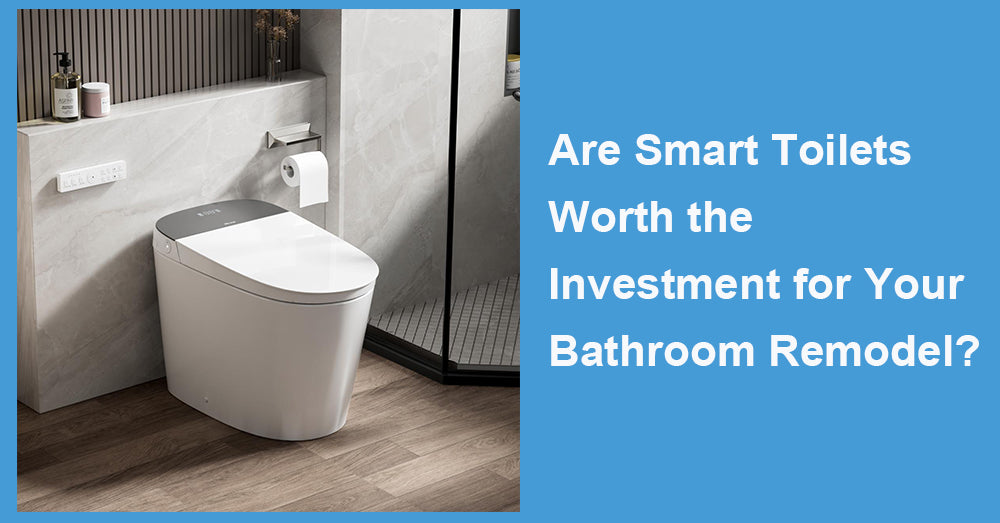
A smart toilet can be one of the most noticeable “daily-use” upgrades in a bathroom remodel because it changes the routine, not just the look. Features like bidet washing, heated seats, automatic flushing, deodorizing, and night lighting can make the bathroom feel cleaner and more comfortable—especially in shared households or for anyone who values hygiene and convenience. Whether it’s worth the investment comes down to four practical questions: water efficiency, flush performance, comfort/hygiene benefits, and long-term serviceability.
1. Start With the Basics: Water Use and Verified Efficiency
Toilets are a major driver of indoor water use, so efficiency is not a minor detail. EPA’s WaterSense program states that toilets account for nearly 30% of an average home’s indoor water consumption and notes that older, inefficient toilets can use as much as 6 gallons per flush (gpf). (Source: EPA WaterSense, “Residential Toilets.”)
If your remodel includes replacing an older toilet, the water savings alone can be meaningful. WaterSense-labeled high-efficiency toilets are commonly associated with an average flush volume that cannot exceed 1.28 gpf (Source: MaP Testing database notes WaterSense-certified requirements, including average flush not exceeding 1.28 gallons).
What this means in practice: If you’re moving from an old, high-gpf toilet to a modern high-efficiency model, you’re addressing one of the largest indoor water-use categories at the same time you’re upgrading comfort.
2. Flush Performance: “Smart” Isn’t Worth It If It Clogs
Many people assume premium toilets automatically flush better. That’s not always true—especially when you add complexity (sensors, specialized bowl geometry, additional plumbing for bidet functions). Flush performance should be evaluated with real metrics.
A widely referenced testing framework is MaP (Maximum Performance), which reports how many grams of test media a toilet clears in a single flush. MaP’s public database describes performance requirements and distinguishes WaterSense-certified performance from higher “Premium” thresholds. (Source: MaP database and definitions.)
Two useful benchmarks from MaP references:
· WaterSense-certified performance includes at least a 350 gram MaP score (Source: MaP database language describing WaterSense-certified requirements).
· MaP “Premium” toilets target at least 600 grams in one flush (Source: MaP Premium criteria).
Buying logic: If your household has frequent clogging issues, it’s rational to prioritize strong flush performance first (often closer to “Premium” territory), then choose smart features on top of that. A smart toilet that flushes inconsistently becomes a daily irritation, which defeats the purpose of the upgrade.
3. Comfort and Hygiene: Where Smart Toilets Can Feel Transformative
For many remodels, the true value is the routine change: a cleaner feel, less irritation, and less manual contact with surfaces.
Bidet washing (with correct use)
Bidet features can improve comfort and hygiene, but settings and technique matter. Recent clinician-guided advice emphasizes:
· start with low water pressure,
· use lukewarm water,
· avoid overuse that can irritate sensitive skin,
· and keep the nozzle clean. (Source: Health.com, doctor-approved bidet tips.)
This is where adjustable controls become more than “nice to have.” A smart toilet with bidet is most beneficial when multiple users can tailor pressure and position—because comfort needs vary.
Heated seat, deodorizing, and night lighting
These features don’t sound essential until you live with them. Heated seats improve comfort in colder seasons, deodorizing can make small bathrooms feel fresher, and night lighting reduces the need to turn on harsh overhead lights during late-night use. The upgrade is less about “tech” and more about reducing friction in the routine.
4. The Hidden Cost: Power, Installation, and Long-Term Serviceability
A smart toilet is typically an electrical appliance plus a plumbing fixture. That means you should plan for:
Power and placement
You may need a nearby outlet and a clean cable-routing plan so the installation looks intentional, not improvised. In a remodel, it’s easier to place power exactly where it needs to be and keep cords hidden.
Warranty and parts availability
This is the most overlooked “worth it” factor. A standard toilet can last decades with minimal parts. A smart toilet includes electronics, heaters, sensors, and control boards—components that can fail.
Before buying, check:
· warranty coverage for electronics vs. porcelain,
· replacement part availability (remote, seat components, filters),
· how service works (local service network vs. shipping components).
If the manufacturer cannot support parts reliably, the long-term ownership experience can be frustrating—even if the toilet is impressive at first.
5. Efficiency Without Regret: Pair Water Savings With Real Performance
The best value outcome is a smart toilet that combines:
1. verified efficient flushing (e.g., WaterSense-aligned volumes like 1.28 gpf average flush limits),
2. strong MaP performance (so you’re not trading efficiency for clogs), and
3. comfort features you’ll use every day.
MaP’s database explicitly ties WaterSense certification to requirements like the 350 gram MaP score and average flush volume not exceeding 1.28 gallons, while Premium criteria emphasizes higher performance (600g) and even lower flush volumes in some definitions. (Source: MaP database; MaP Premium criteria.)
Practical takeaway: Don’t buy “smart” first. Buy reliable + efficient first, then decide how much “smart” you want layered on top.
6. Remodel Value: When the Investment Makes the Most Sense
A smart toilet tends to feel most “worth it” when it’s part of a larger plan that upgrades the bathroom experience as a whole—better lighting, improved ventilation, good storage, and a layout that feels comfortable.
Bathroom remodels also have published resale benchmarks. The 2025 Cost vs. Value Report shows a midrange bath remodel with about 80% cost recouped in its national summary tables. (Source: JLC Cost vs. Value 2025.)
A smart toilet alone isn’t a full remodel, and resale value varies widely, but the broader point holds: bathroom upgrades are high-impact, and fixtures that improve daily comfort can support the “finished” feel that buyers notice—especially when the bathroom looks cohesive and modern.
7. A Quick “Worth It” Checklist
A smart toilet is more likely to be worth the investment if you can answer “yes” to most of these:
Performance
· Documented strong flush performance (at least 350g, and ideally closer to 600g if clogging is a concern). (Source: MaP database; MaP Premium.)
Efficiency
· Verified high-efficiency flushing behavior (e.g., average flush volume not exceeding 1.28 gpf for WaterSense-certified references). (Source: MaP database.)
Comfort you’ll actually use
· Adjustable bidet pressure/position and sensible temperature controls, plus nozzle hygiene features. (Source: Health.com bidet guidance.)
Installation readiness
· Power access planned cleanly (ideally during remodel), with cable management that keeps the look tidy.
Serviceability
· Clear warranty, replacement parts, and support you can realistically use.

Conclusion
Smart toilets are worth the investment when they improve the parts of bathroom life that happen every day: cleaner routines, more comfort, less manual contact, and more consistent performance. The smartest buying strategy is to anchor your choice in verified fundamentals—efficient flushing and strong performance—because toilets are a major source of indoor water use (nearly 30% per EPA WaterSense), and older models can waste up to 6 gpf. (Source: EPA WaterSense “Residential Toilets.”) Pair that with strong MaP performance targets (350g minimum; 600g premium) (Source: MaP database; MaP Premium) and bidet use best practices (low pressure, moderation, nozzle cleaning) (Source: Health.com). If those pieces line up—and you’re comfortable with power and long-term service needs—a smart toilet can be one of the most satisfying upgrades in a remodel.









































Leave a comment
This site is protected by hCaptcha and the hCaptcha Privacy Policy and Terms of Service apply.