
















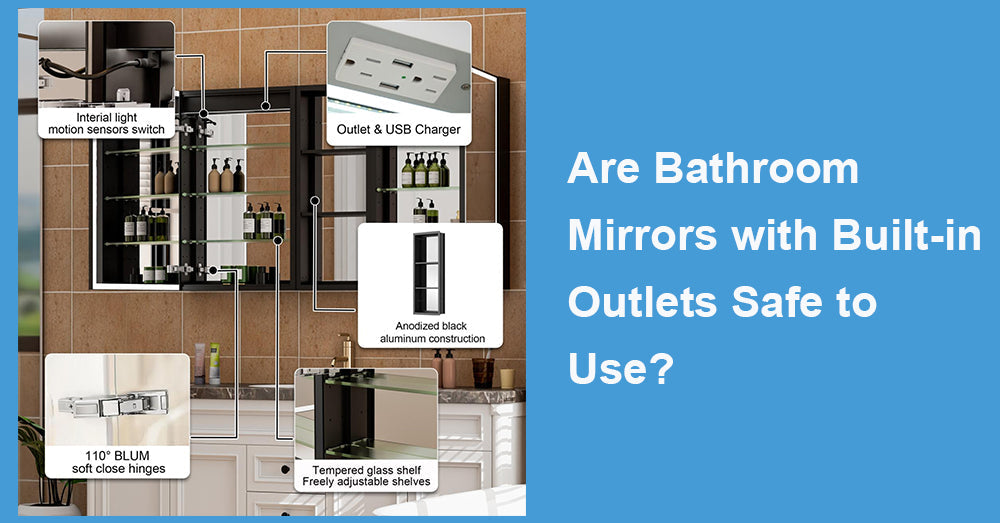
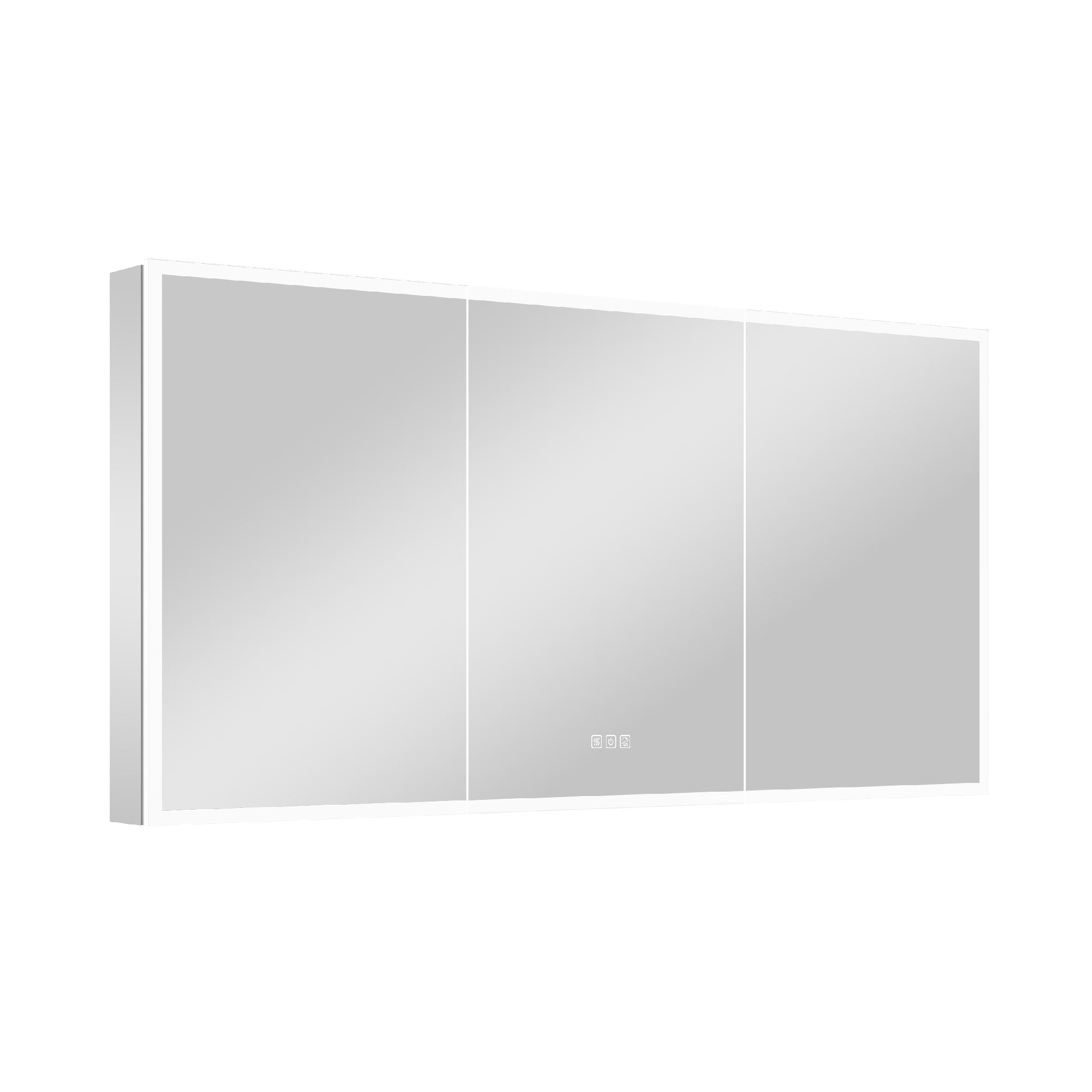
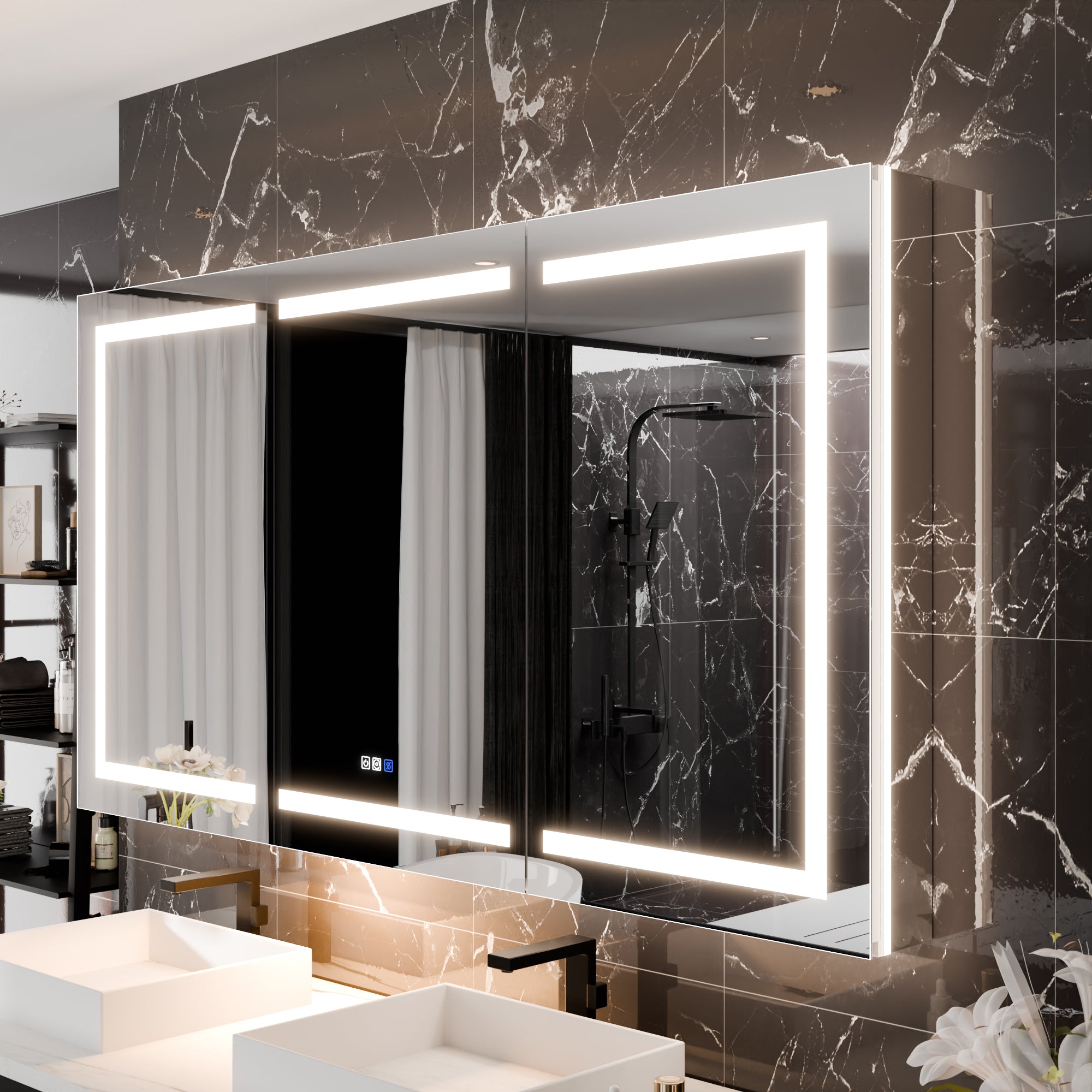
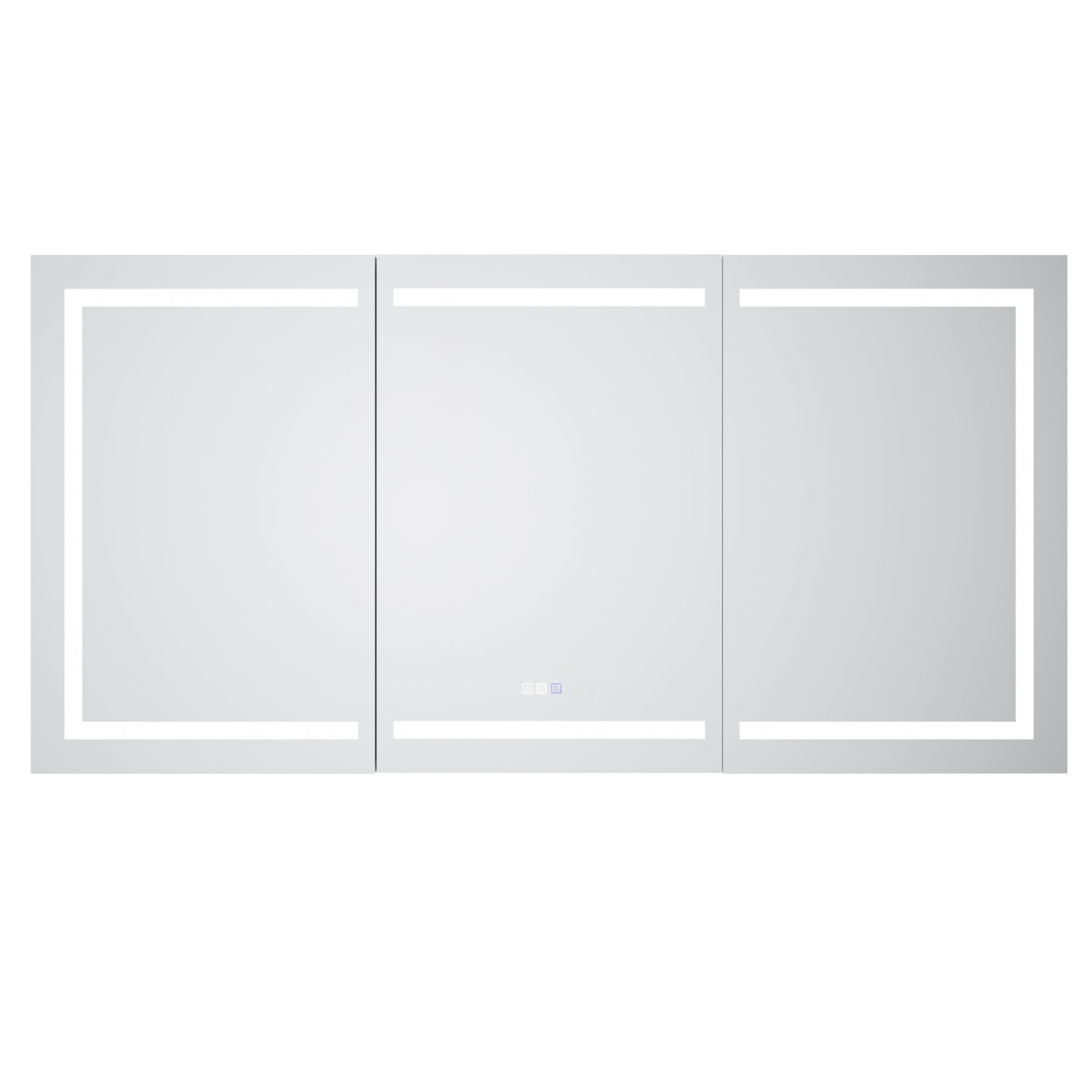
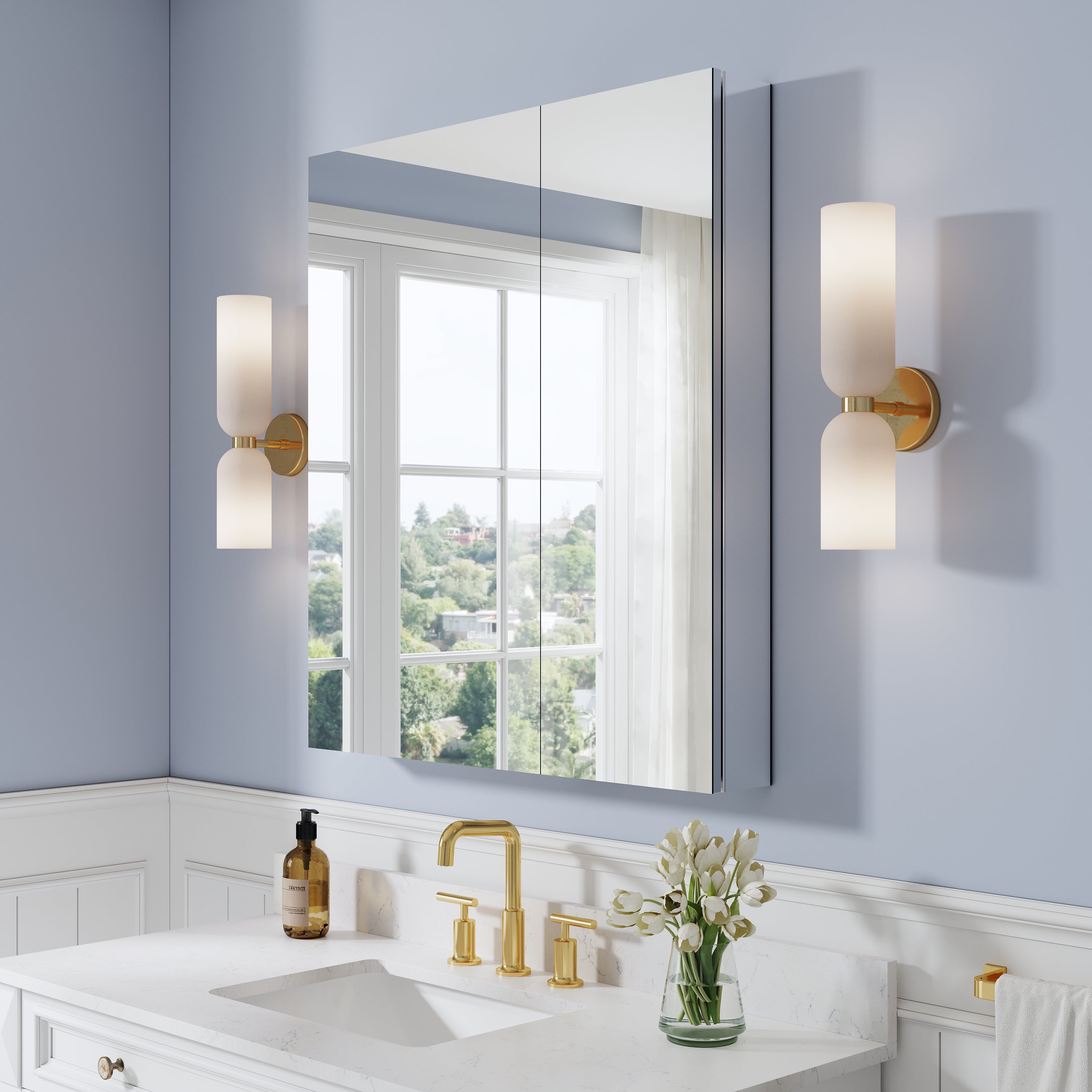
With the trend of continuous integration of bathroom functions, bathroom mirror with built in outlets are increasingly in people's vision. Mirrors are no longer just tools for illumination and reflection, but have begun to serve as temporary power sources for devices such as hair dryers, electric shavers, and electric toothbrushes. However, once the words "socket" and "bathroom" appear together, safety becomes an unavoidable core issue: Is it really reliable to directly install a socket in the mirror?
1. Why is bathroom electricity always highly concerning?
The particularity of the bathroom environment determines that its electrical standards are always higher than those of ordinary indoor spaces. High humidity, condensation of water vapor, and occasional splashing of water droplets require any electrical equipment to have a more comprehensive protective design.
In daily use, air humidity often rises above 80% within a short time after bathing, and the hand-washing area is one of the most concentrated areas for electrical appliances. This is also why the area around the mirror has always been regarded as a "key area" for bathroom electrical safety.
2. What needs does the built-in socket of the mirror essentially solve?
From a functional perspective, the built-in socket in the mirror is not intended to increase the power burden, but to optimize the usage path. In traditional bathrooms, the number of sockets is limited, and they are often fixed on the lower or farther side of the wall. When using devices such as hair dryers and curling irons, it is necessary to stretch the wires, which is inconvenient and prone to entanglement.
Integrating the socket into the mirror structure usually means placing it at a more reasonable height, commonly on the side or lower area of the mirror body, 40-50 inches above the ground, which is closer to the actual use.
3. The key to safety is not whether there is a socket
Many people's concerns about built-in sockets stem from an intuitive judgment: the fewer sockets in the bathroom, the safer it is. But from an engineering perspective, safety does not depend on the number of sockets, but on whether the design and protection are in place.
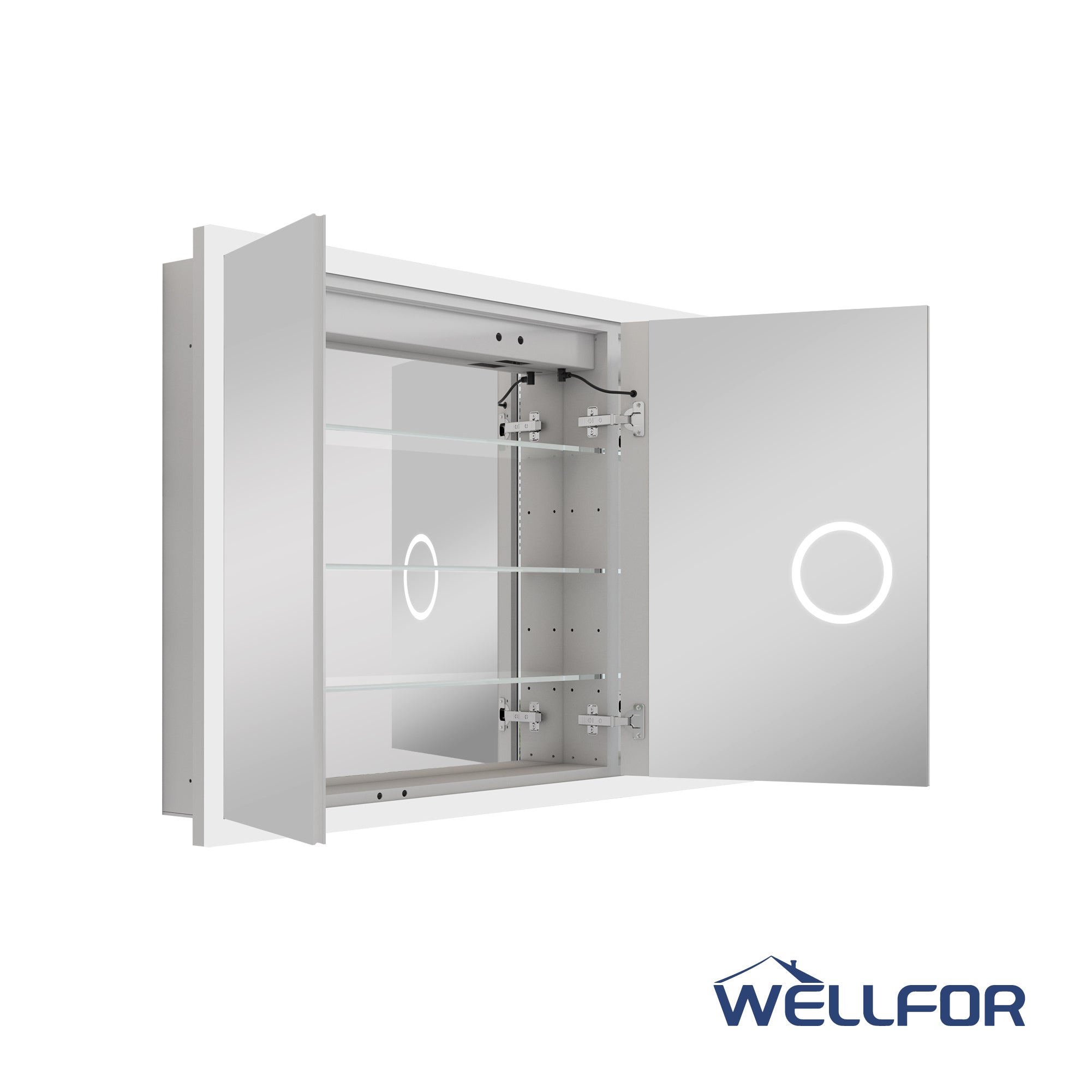
Compliant built-in sockets are not simply "digging a hole to connect power", but usually have multiple safety designs, such as splash-proof structures, independent module packaging, and physical isolation from mirror lighting systems. The purpose of these designs is to control electricity risks within a predictable range.
4. Protective design is the first threshold of safety
In practical products, the built-in socket for mirrors is often designed to open downwards or laterally, reducing the risk of water droplets entering directly. Meanwhile, enclosed frames or splash-proof structures are usually used around the socket to reduce the risk of condensation water seeping into the interior.
From the perspective of size and layout, a certain distance will also be maintained between the socket, mirror lighting, and power module to avoid the accumulation of heat and moisture in the same area. This "physical isolation" is an essential part of the built-in design.
5. Power and usage scenarios determine the upper limit of risk
Another often overlooked fact is that the use of built-in sockets in mirrors inherently limits the risk limit. They are usually not designed for high-power devices, but for short-term, low-power appliances.
For example, electric shavers, electric toothbrushes, styling tools, etc., the power range of these devices is relatively controllable, and the usage time is also relatively short. This usage feature ensures that the socket will not be in a long-term limit state under thermal load and current pressure.
6. On the data level, built-in sockets are not a new concept
From the perspective of industry development, the integration of mirror sockets is not a recent attempt, but a result of the gradual evolution of bathroom functional integration. Concentrating lighting, mirrors, and the basic power supply is a natural way to improve efficiency in high-frequency washbasin areas.
Under the premise of reasonable design and standardized installation, the safety performance of these integrated sockets is not inferior to that of traditional wall sockets.
7. Why do some people still feel 'unsafe'?
Doubts about built-in sockets stem more from psychological factors rather than actual risks.
On the one hand, the intuitive association of "electricity+water" can easily amplify anxiety; on the other hand, the insufficient protection details in some early products did indeed affect overall understanding. But with the maturity of manufacturing standards and structural design, such problems have significantly decreased.
8. The installation location is more important than the functionality itself
It should be emphasized that even well-designed built-in sockets are highly dependent on their installation location for safety. It is usually recommended to install the mirror as a whole in a location away from direct water flow, such as by avoiding the area facing the showerhead or bathtub water outlet.
In the sink area, as long as a safe distance of 24-36 inches is maintained from the direct water source, the built-in socket's use environment is relatively controllable.
9. From an industry perspective, integration is becoming mainstream
Bathroom design is moving from "functional decentralization" to "functional integration". Mirrors are no longer just visual elements; they are gradually assuming multiple roles, such as lighting, storage, defogging, and basic power supply.
In this trend, built-in sockets are not a risky attempt, but a systematic response to usage habits. The key is not whether it is integrated, but whether it follows security logic during the integration process.

10. So, are bathroom mirrors with built-in sockets safe?
From the perspective of whether it can be trusted for daily use, the answer depends on two prerequisites: whether the product design is standardized and whether the installation location is reasonable.
When these two conditions are met, a bathroom mirror with built-in outlets is not synonymous with security risks, but rather a more efficient and realistic evolution of functionality. What truly needs to be vigilant is never the functionality itself, but the neglect of the usage environment and standards.














Leave a comment
This site is protected by hCaptcha and the hCaptcha Privacy Policy and Terms of Service apply.