
















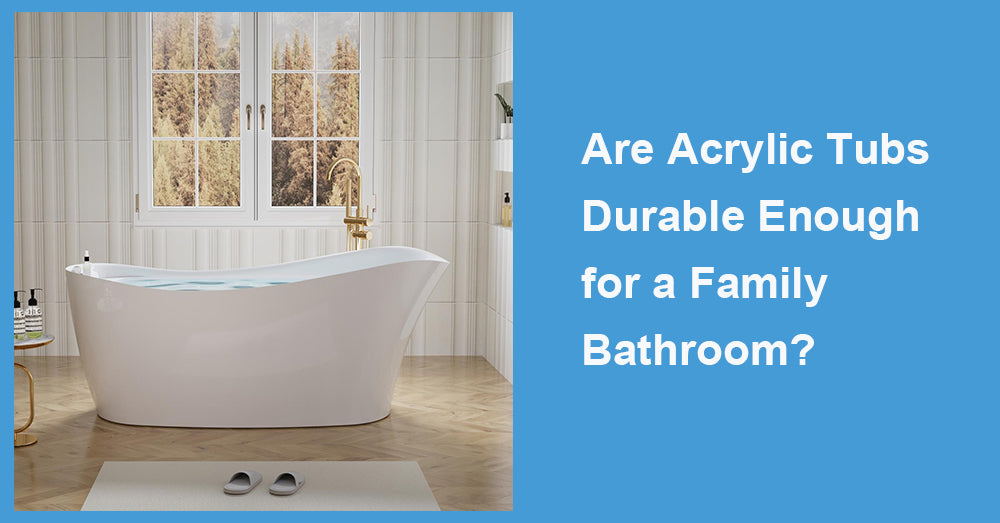
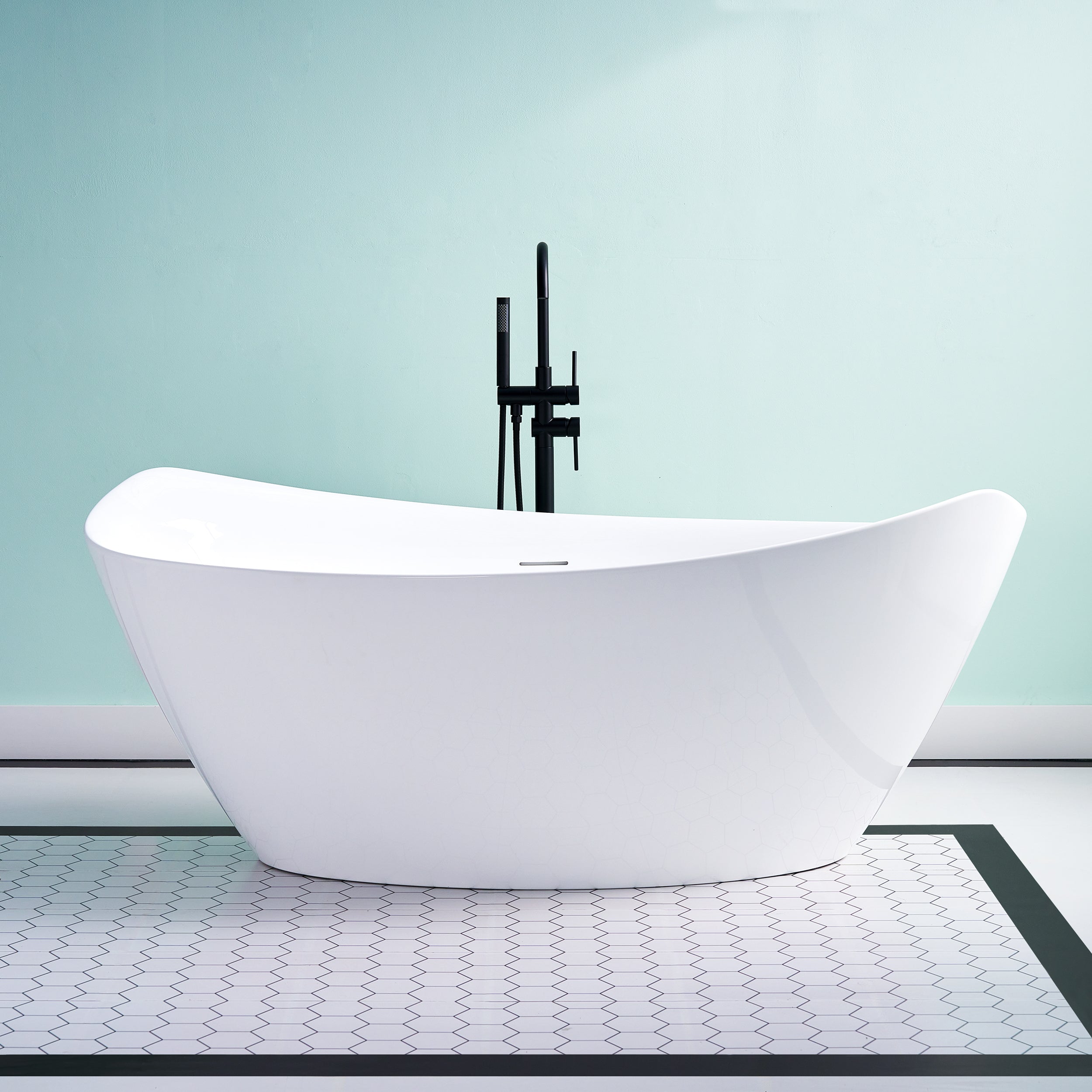
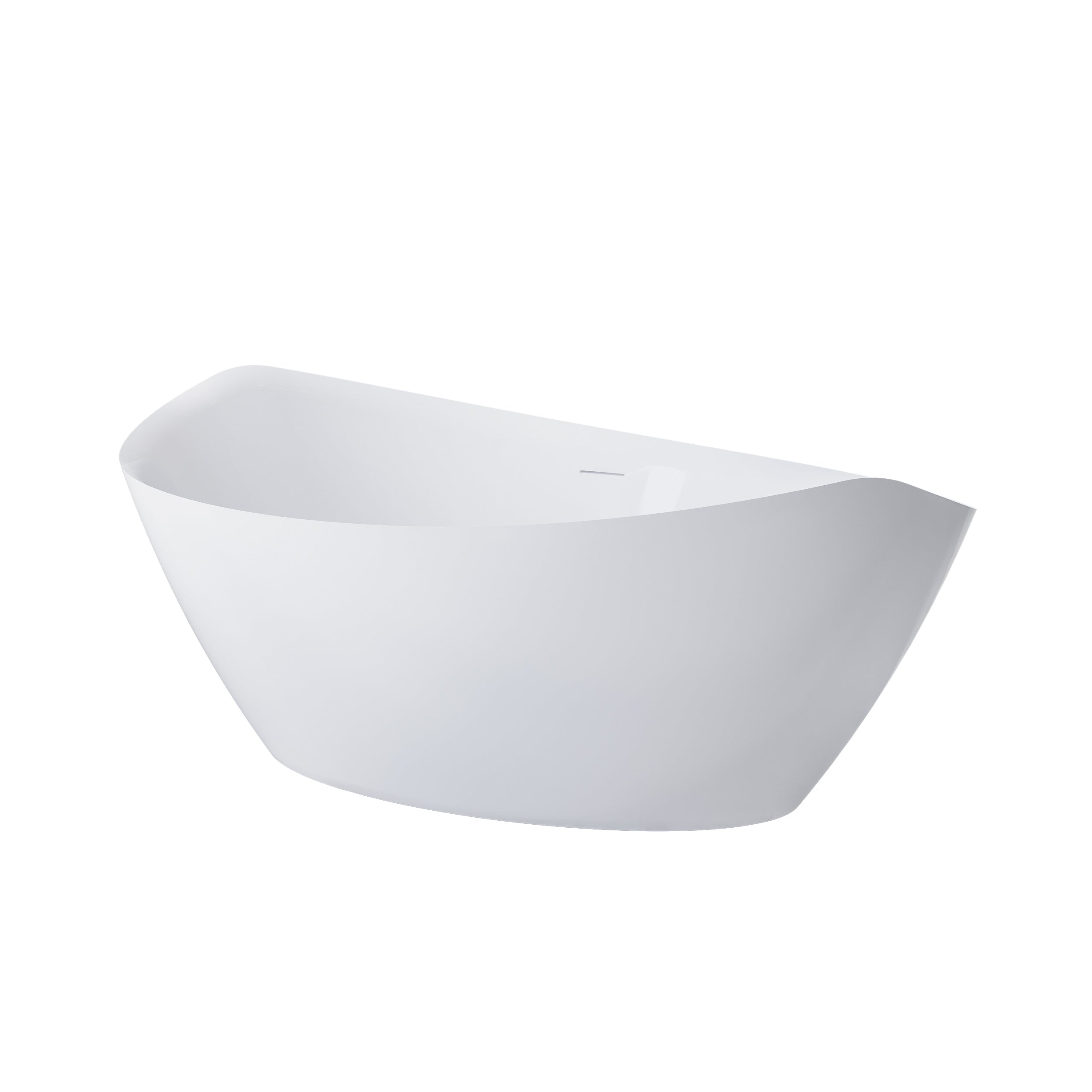
Acrylic tubes are almost always mentioned as a mainstream choice in discussions of home bathroom renovations and upgrades. Compared to cast iron, stone, or composite materials, acrylic tubs are often considered "lighter, cheaper, and easier to install". But in a household environment with extremely high usage frequency and complex member structure, durability is the core issue that truly determines its long-term value. From an industry perspective, whether acrylic bathtubs are durable enough cannot be judged solely by the material name; they need to be systematically evaluated across multiple dimensions, including structural layers, material properties, usage strength, and maintenance trajectory.
1. Real requirements for bathtub durability in home bathrooms
In home settings, the intensity of bathtub use is much higher than in single-person residences or guest bathrooms.
Typical family bathrooms often face the following characteristics:
Daily usage frequency exceeding 1.5 times.
Mixed use of adults and children.
Extensive water temperature range (repeated switching from cold water to hot water).
Toys and toiletries frequently collide with the cylinder body.
Industry surveys show that the average usage cycle of bathtubs in primary or secondary bathrooms typically exceeds 10 years, with some high-frequency households extending it to over 15 years. This means that a truly qualified home bathtub not only needs to be "sturdy", but also needs to maintain structural stability under long-term cold and hot cycles and repeated pressure.
2. Basic properties and structural logic of acrylic materials
Modern acrylic bathtubs are not single-layer thin shell structures, but are composed of multi-layer composite systems:
The surface is made of high-density acrylic board.
The middle is a glass-fiber or resin-reinforcement layer.
Add reinforcement support to the bottom and key stress areas.
In the mainstream 60-72 inch length bathtub specifications, the acrylic surface thickness of qualified products is usually concentrated in the range of 3-5 mm, supplemented by a multi-point support chassis structure.
Industry tests have shown that under standard bearing conditions (static load exceeding 600 lb), the deformation of high-quality acrylic cylinder bodies is significantly below the design safety threshold and can maintain the flatness of the cylinder bottom and a stable drainage slope for a long time.
3. Impact resistance performance: a key indicator in household scenarios
In the home environment, falling toys, collisions with metal shower heads, and children standing and stepping on them are everyday situations.
Unlike ceramic or enamel surfaces, acrylic materials have a certain degree of elastic cushioning.
Industry experimental data show that under the same impact energy conditions, the surface crack occurrence rate on acrylic is significantly lower than that on enamel cast iron structures.
In a conventional household bathtub with a width of 30-36 inches, a properly reinforced structure can withstand single-point instantaneous impact forces without producing through cracks.
This is also why acrylic bathtubs are widely regarded as a "safer and lower risk of damage" solution in families with children.
4. Cold and hot cycles and structural fatigue: the core test of long-term durability
One of the biggest challenges in a home bathroom is the repeated alternation of hot and cold water.
In daily use, the surface temperature of the bathtub can rise from below 60 °F to over 105 °F in a short period of time.
Long-term industry testing has shown that in high-quality acrylic composite structures, after tens of thousands of cold and hot cycles, the surface adhesion and substrate bonding strength can remain above 85% of the initial level.
In contrast, some low-grade acrylic sheets are prone to:
Surface microcracks.
Support layer peeling off.
Slight collapse at the bottom of the cylinder.
Therefore, the durability difference between acrylic bathtubs is more due to the level of structural craftsmanship than to the material itself.
5. Surface wear resistance and aging trajectory: real performance of long-term home use
In a home bathroom, cleaning brushes, cleaning agents, children's toys, and metal accessories all continue to act on the surface of the cylinder block.
High-quality acrylic surface has the following characteristics:
Surface hardness is higher than that of ordinary plastic.
Has a certain degree of self-healing ability (fine scratches can be polished and restored).
Uniform color layer, not easy to fade locally.
Industry surveys show that in household bathrooms that have been in use for over 10 years, acrylic bathtubs have a significantly higher "acceptable aging rating" than enamel steel plate products.
Its aging is often manifested as a gradual decrease in overall gloss rather than evident cracking or peeling of the glaze layer.
This is particularly important for home users who prioritize long-term stability over short-term appearance.
6. Structural support system: the invisible core that determines durability
The true determinant of whether acrylic bathtubs can withstand household use is often not the surface layer but the bottom structural system.
High-quality home-grade bathtubs typically have:
Multi-point support chassis.
Continuous bottom load-bearing plate.
Edge flanging and wall fixing system.
In the mainstream size range of 60-66 inches, a well-designed support structure can evenly distribute human weight and water pressure to the ground, reducing local stress at the bottom of the cylinder by about 40%.
Industry data shows that over 70% of "collapse-type bathtub complaints" are due to insufficient bottom support rather than material failure.
7. Repair and recoverability: hidden advantages in home environments
Compared to cast-iron or stone bathtubs, acrylic bathtubs offer significant advantages in maintenance.
Minor cracks can be repaired or filled through thermal treatment.
Surface scratches can be polished and restored.
Local discoloration can be locally refurbished.
In the long-term use cycle of the family, this "repairability" significantly extends the overall service life.
Industry statistics show that, under the same service-life conditions, the overall replacement rate for acrylic bathtubs is significantly lower than that for ceramic-glazed products.
8. Which family scenarios are not suitable for choosing acrylic bathtubs
Although acrylic bathtubs have good overall performance, caution should still be exercised in the following situations:
An extremely high-weight-carrying family, choosing thin-shell products without a reinforced chassis.
Commercial-grade high-frequency usage environment.
Long-term exposure to potent acidic cleaning agents.
Under these conditions, it is preferable to use reinforced composite materials or cast iron structures.

9. Conclusion: Is acrylic durable enough in home bathrooms
From the perspective of structural strength, impact resistance, thermal stability, surface aging trajectory, and repair recoverability, modern household-grade acrylic bathtubs are fully capable of supporting a household usage cycle of 10-15 years or more under correct design and reasonable installation conditions.
It is not the heaviest material, nor is it the most expensive. Still, in the complex environment of "high frequency, strong impact, and multi-member sharing" in home bathrooms, acrylic tubes offer a highly balanced durability solution with their elastic structure, stable performance, and maintainability.
What truly determines its lifespan is never whether it is acrylic or not, but rather:
Whether the structure is reasonable, the process is in place, the installation is standard, and the use is scientific.
















Leave a comment
This site is protected by hCaptcha and the hCaptcha Privacy Policy and Terms of Service apply.