














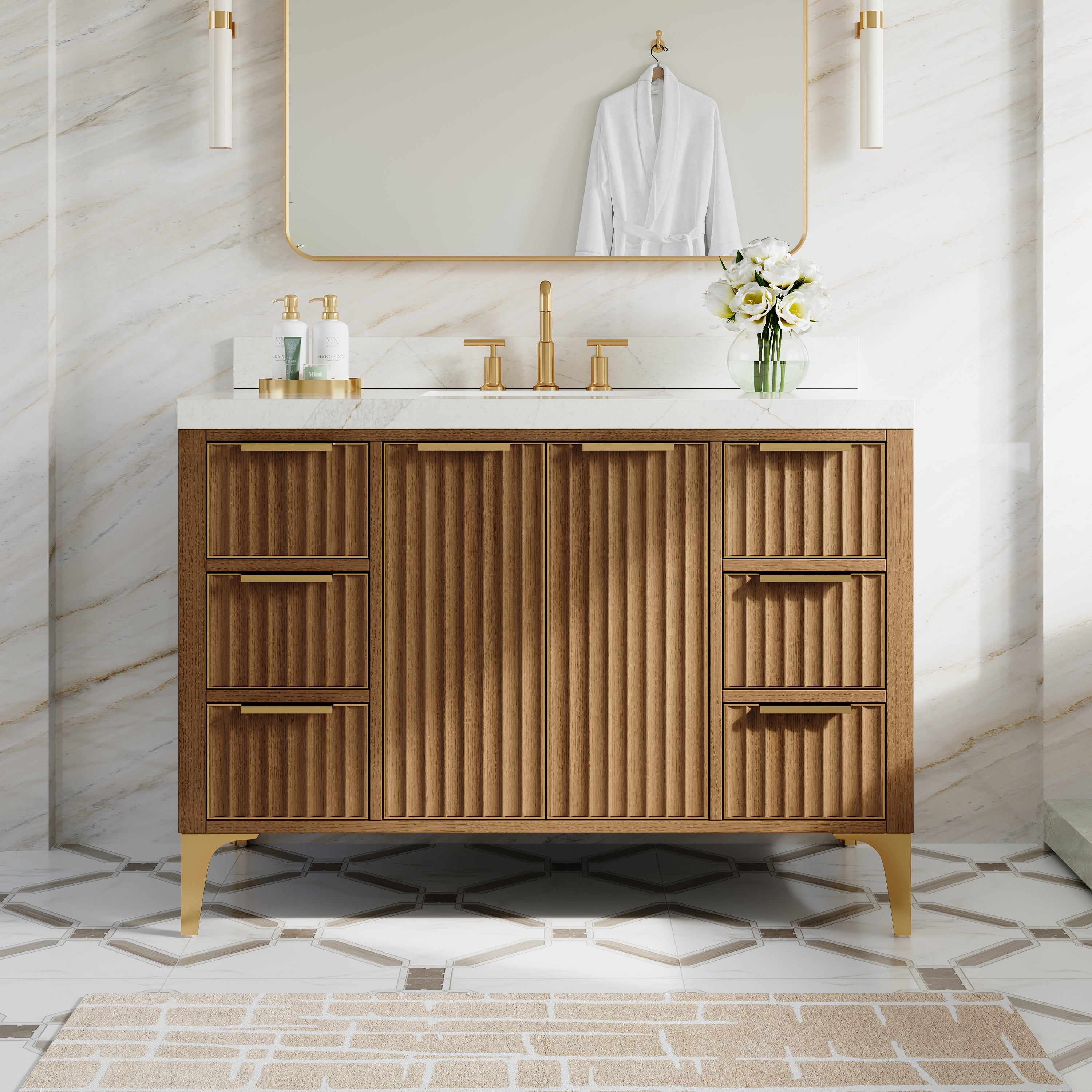


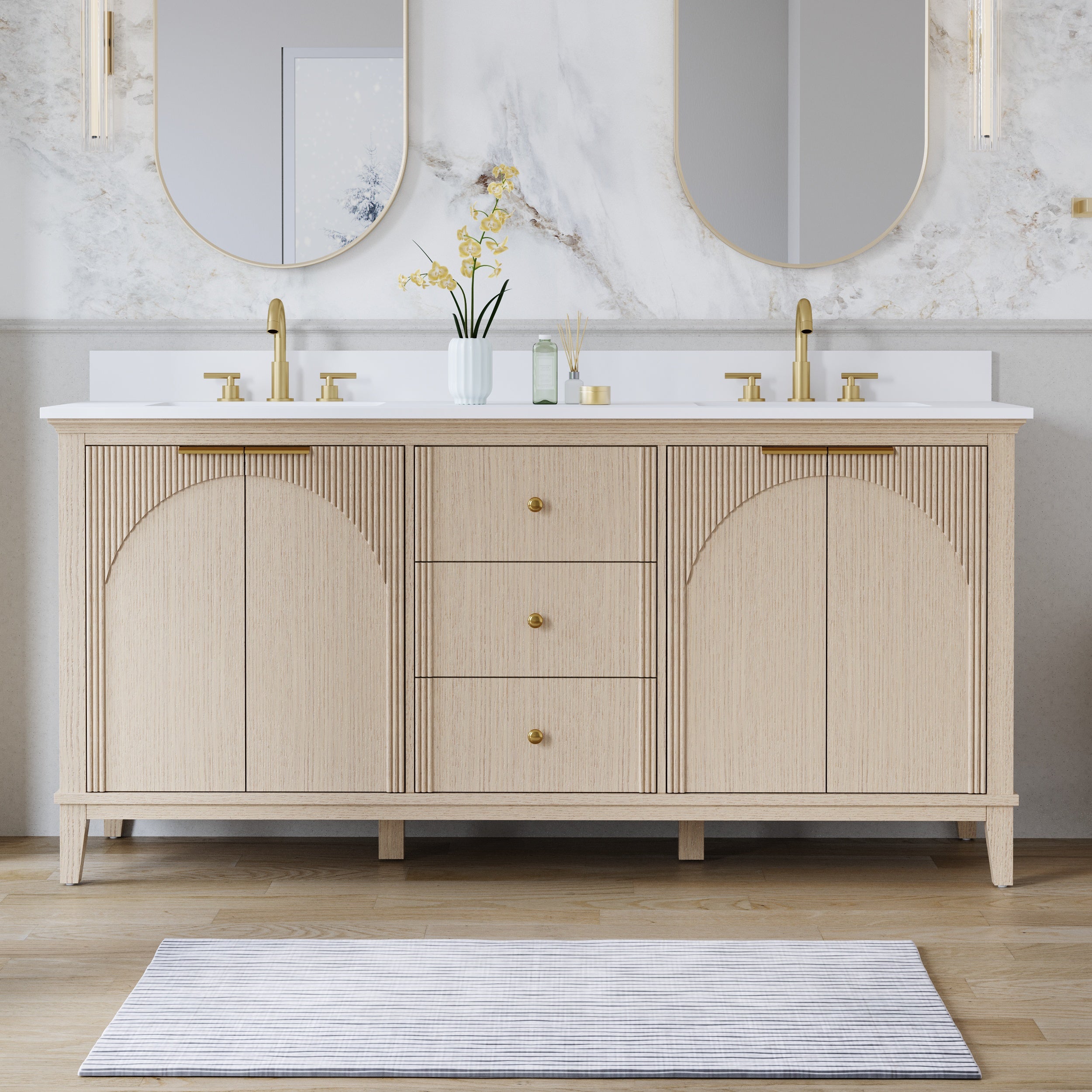
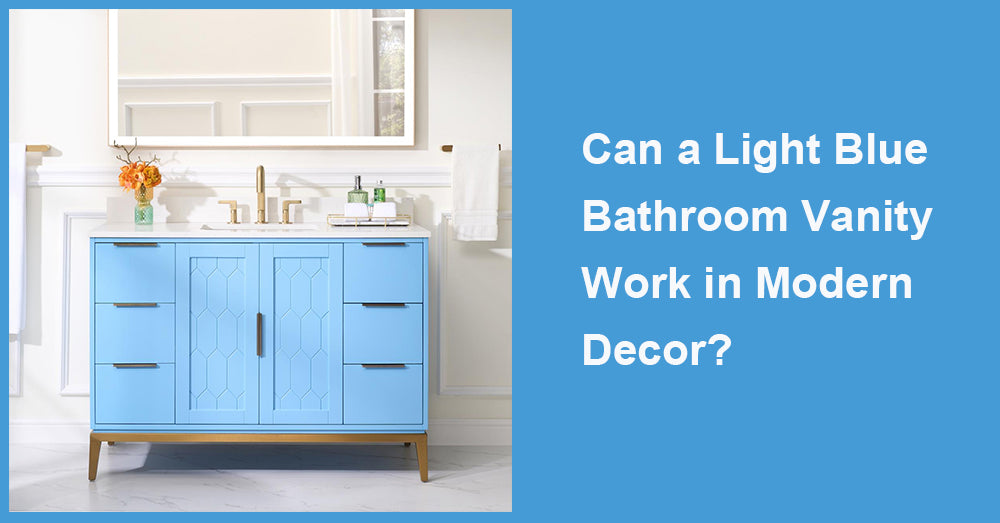
In recent years, the trend of bathroom design has gradually shifted from "personalized color matching" to one of the most promising mainstream options in modern spaces. Compared to traditional white, gray, or wood colors, light blue bathroom vanity offer unique advantages in visual temperature, spatial hierarchy, and emotional guidance. From an industry perspective, whether light blue is suitable for modern styles depends not only on the color itself but also on a comprehensive judgment of spatial proportion, lighting conditions, material selection, and long-term aesthetic stability.
1. The transformation of light blue characters from the perspective of modern style evolution
Modern bathroom design is gradually moving from "extreme neutrality" to "low saturation color neutrality".
The industry color trend report shows that, in residential bathroom projects over the past decade, the proportion of low-saturation blue colors has continued to rise, with light blue achieving a good balance between calmness and affinity.
Within the mainstream bathroom cabinet size range of 30-48 inches in width, light blue cabinets neither create visual pressure like deep blue cabinets do nor lack layers like white cabinets do. They are a neutral transitional color that balances stability and variation.
This trend reflects that modern style is no longer synonymous with "colorless", but emphasizes a soft color system with low contrast and high durability.
2. The advantages of light blue from the perspective of spatial scale and visual expansion
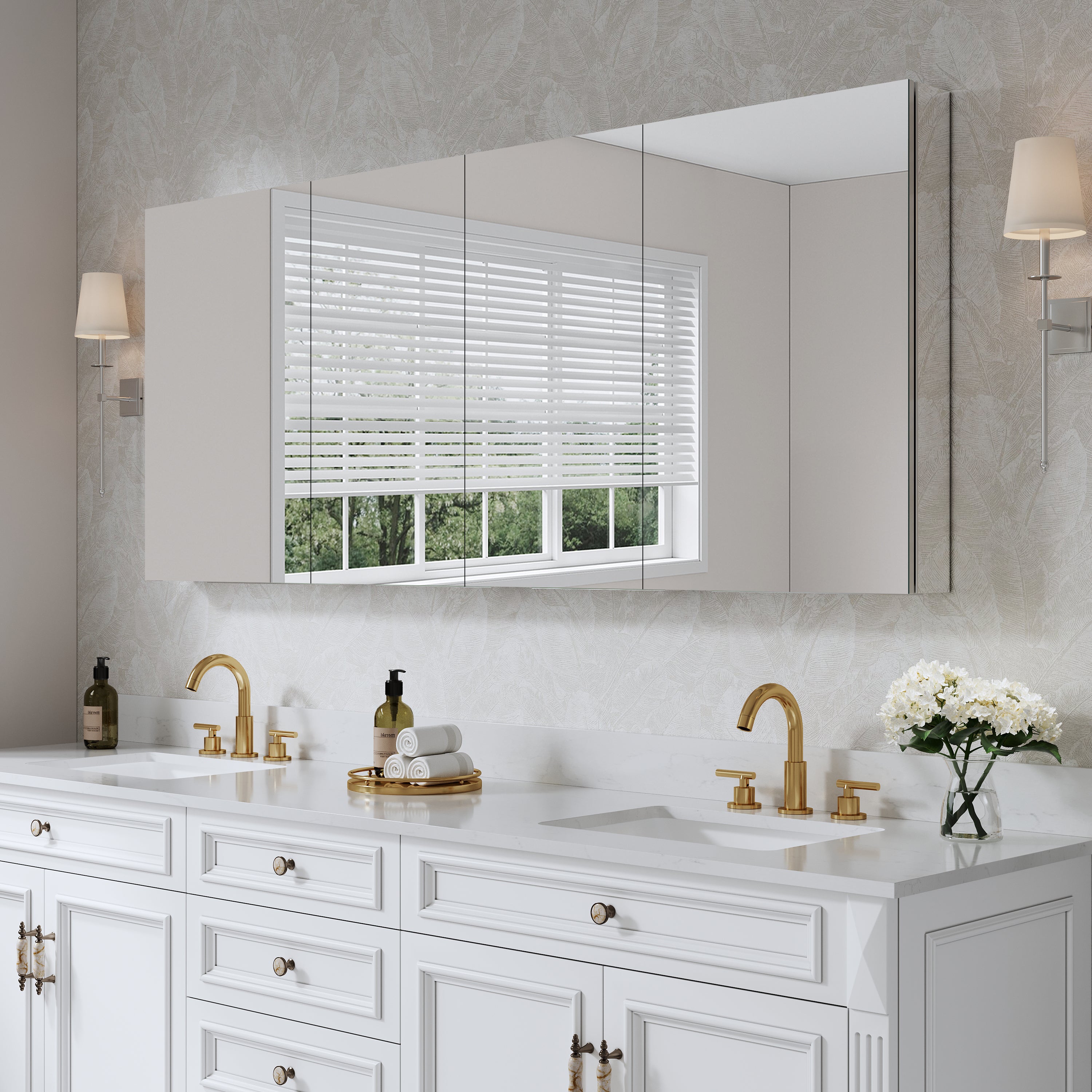
The bathroom space is generally limited in scale. The standard width of a single basin cabinet is between 30 and 36 inches, while a double basin can be extended to 48 or 72 inches.
Light blue has significant spatial modification ability within this scale range.
Industry visual research shows that under the same area conditions, a light blue surface can increase spatial depth by about 8%-12%, especially in bathrooms with insufficient natural lighting or low floor height, which can effectively alleviate the sense of oppression.
In the standard cabinet ratio of 34-36 inches in height, light blue can also visually weaken the volume boundary, making the cabinet more "lightweight", which is particularly evident in small and medium-sized primary and secondary bathroom spaces.
3. Daily practicality from the perspective of light reflection and color stability
Modern bathroom lighting is mainly LED, with mirror-front lighting and ceiling lighting combined as the standard configuration.
The light blue surface has a reflection efficiency between white and gray, maintaining sufficient brightness while effectively reducing glare and high reflection fatigue.
Industry data shows that under the same lighting conditions, the visual comfort score of light blue environments is significantly higher than that of pure white environments, which is particularly important for high-frequency use scenarios in the morning and evening.
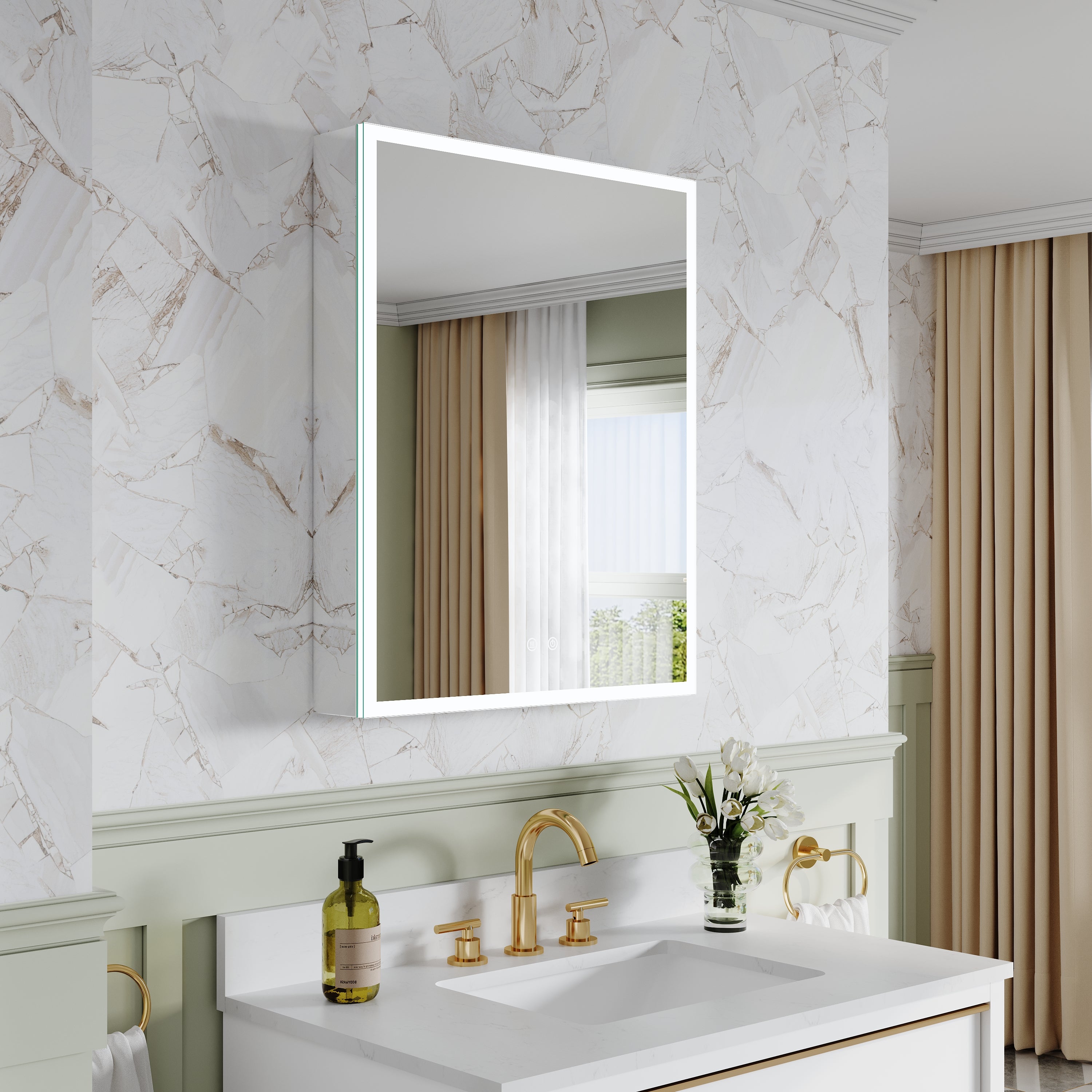
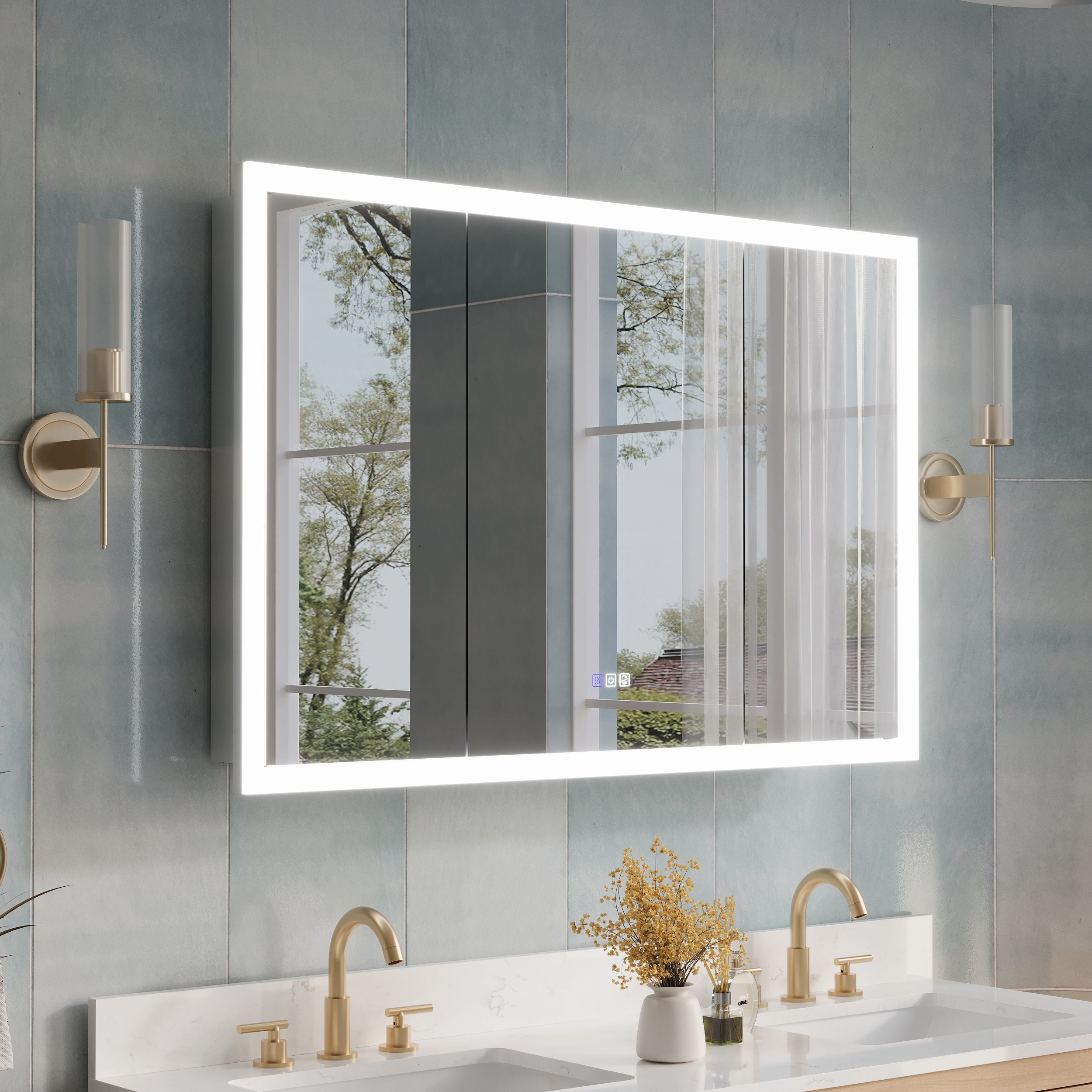
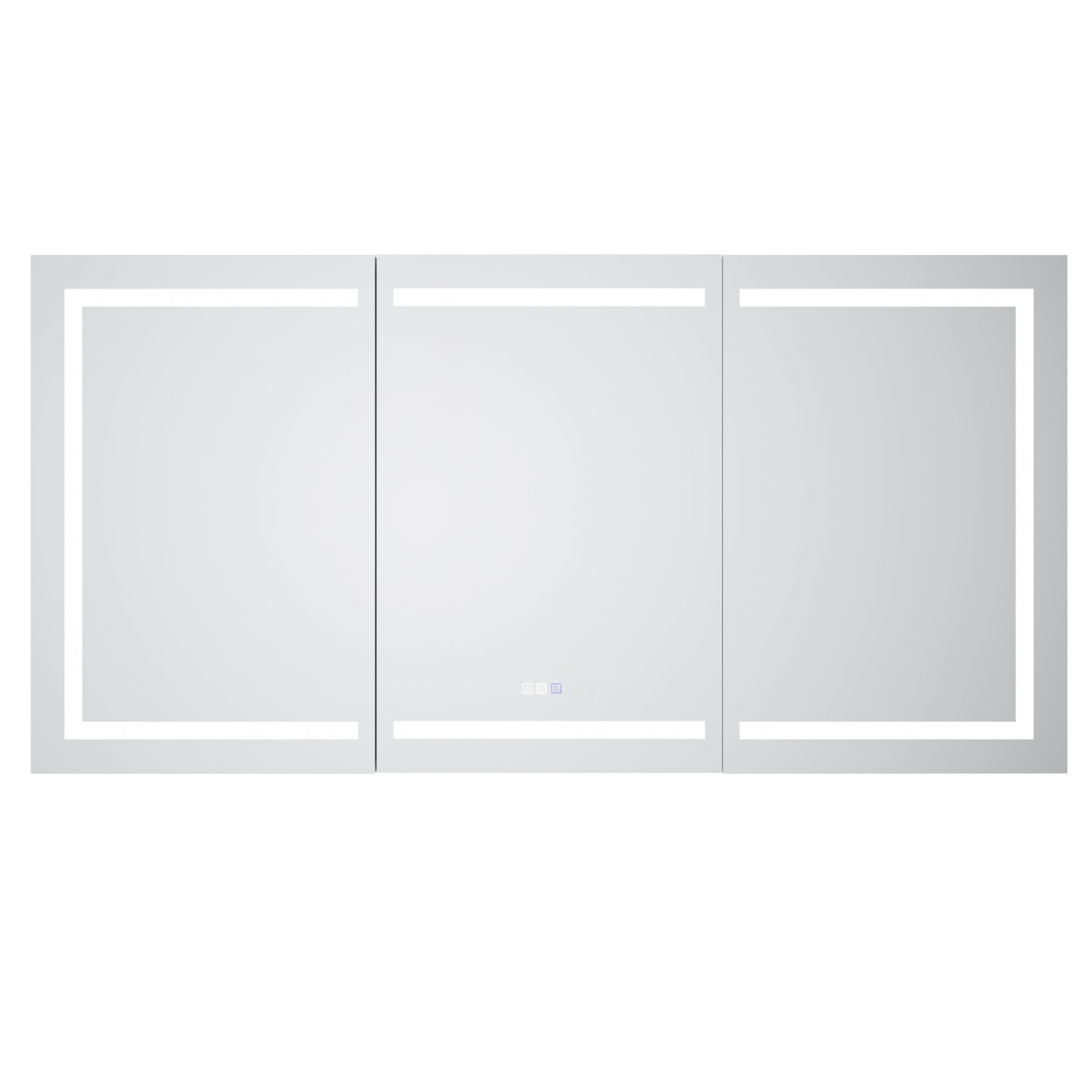
In the standard 48 x 36 inch mirror configuration, a light blue cabinet paired with a neutral light source helps maintain a stable skin tone and avoid excessive graying in cold-light environments.
4. Modern adaptability from the perspective of material and surface craftsmanship
Modern light blue bathroom cabinets are no longer limited to traditional spray painting systems, but are widely used:
Matte stain-resistant coating
Polymer-coated film
Fine-textured paint surface
In mainstream cabinet structures with a depth of 21-22 inches, this type of process can effectively reduce the visibility of fingerprints, water stains, and cleaning marks.
Industry maintenance data show that, under the same cleaning frequency conditions, the deep cleaning cycle for light blue matte surfaces is extended by an average of about 25%.
This gives it both aesthetic and maintenance advantages in high-frequency home environments.
5. Compatibility of modern space from the perspective of style fusion
The adaptability of light blue bathroom cabinets in modern systems far exceeds the traditional understanding of them.
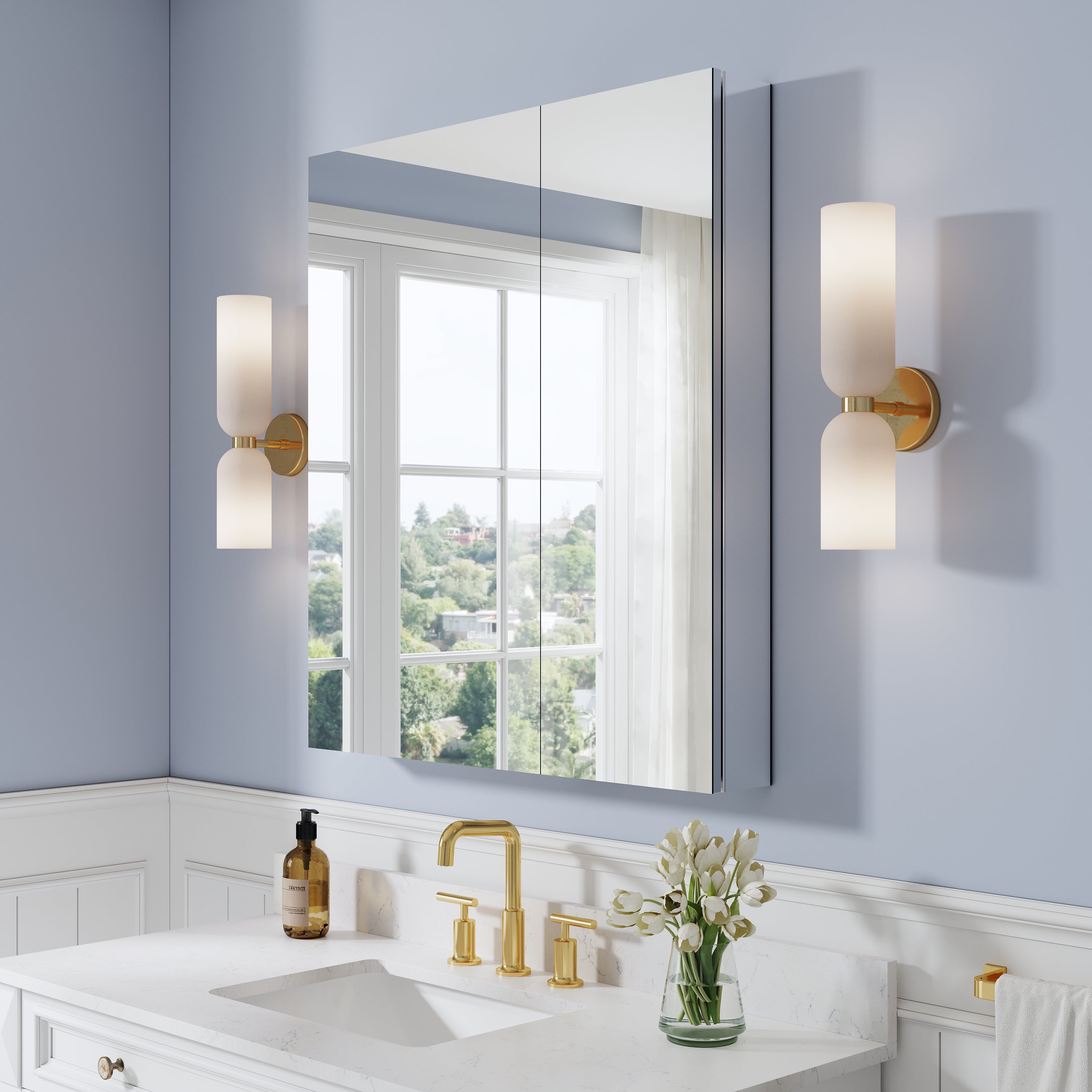
Combined with a white quartz countertop, it is suitable for minimalist and light modern styles.
Paired with gray cement-patterned walls, suitable for industrial and modern mixed styles.
Combined with brushed nickel or black hardware, suitable for light luxury and modern classic systems.
Combined with light wood grain flooring, suitable for Nordic and natural modern routes.
In the mainstream size range of 30-60 inches, light blue almost does not limit the form of mirror cabinets and lighting styles, and has exceptionally high compatibility for later upgrades.
This is also an essential reason for its gradual increase in proportion in high-end residential projects in recent years.
6. Hidden value from the perspective of emotional psychology and long-term residential experience
Color psychology research shows that low saturation blue has significant calming and stabilizing effects.
In the shared bathroom between the main bathroom and the children's bathroom, a light blue environment can effectively reduce visual tension and help create a smoother usage rhythm.
Industry surveys show that in bathroom spaces with light blue as the main color tone, satisfaction ratings are significantly higher than those for strong-contrast color schemes, especially for nighttime use.
This "emotional stability attribute" is an essential dimension that modern residential spaces are increasingly emphasizing.
7. Market acceptance from the perspective of property value and aesthetic durability
In residential transactions and rental markets, overly aggressive bathroom colors often narrow the potential audience.
Light blue, on the other hand, performs stably on the "universal acceptance" indicator due to its proximity to neutral colors.
Industry statistics show that, under the same area and configuration conditions, residential properties with low-saturation color bathroom solutions have an average resale cycle shortened by about 10%-15%.
Among them, light blue belongs to the highest acceptance level in the color series.
This means that it can bring design recognition without significantly increasing resale risk.
8. Which situations are not suitable for choosing a light blue bathroom cabinet
Although light blue has a wide range of adaptability, caution should still be exercised under the following conditions:
Extremely low lighting, no natural light, easy to appear cold.
Under a large area of dark stone background, the light blue layer is easily weakened.
Strong retro or heavily decorated spaces with a high risk of color conflict.
In these cases, it is more suitable to use local light blue accents rather than as the primary cabinet color.

9. Conclusion: Can light blue truly integrate into modern bathroom design
From the perspective of spatial scale, lighting performance, material craftsmanship, style compatibility, emotional value, and market acceptance, light blue bathroom cabinets are no longer a "risky choice" but have gradually become a mature color scheme in the modern style system.
It is not the safest neutral color, nor is it the strongest expression of personality. Still, it is this balance between reason and emotion that gives the light blue bathroom vanity a unique and lasting vitality in modern bathroom design.
In a core furniture category with an update cycle often exceeding 10 years, light blue offers not only a color change but also a softer, more durable, and more spacious modern choice.










Leave a comment
This site is protected by hCaptcha and the hCaptcha Privacy Policy and Terms of Service apply.