
















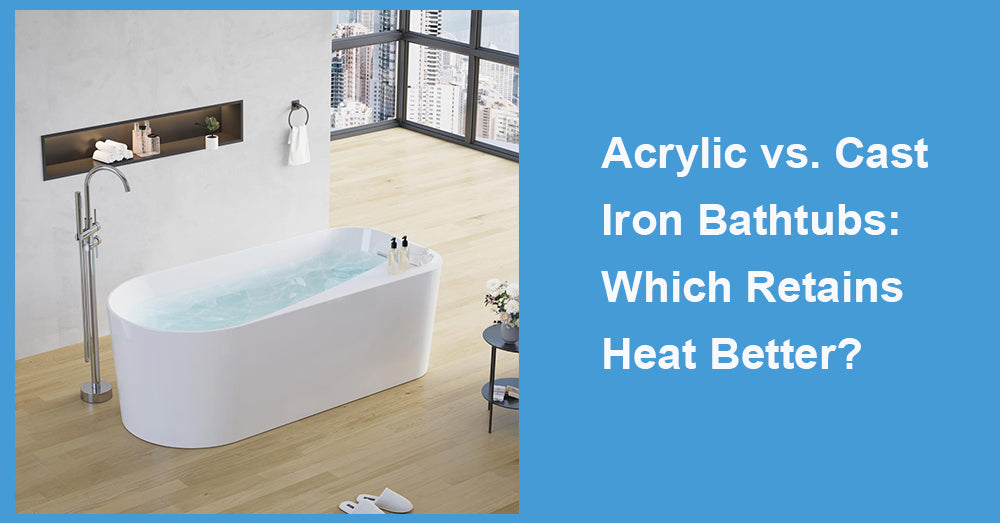
In the process of bathroom upgrades, the choice between acrylic bathtub and cast-iron bathtubs often comes down to a core question: which offers better insulation?
For people who prefer long-term soaking, the duration of water temperature maintenance directly affects comfort and water efficiency.
Especially in structures of different sizes, such as 60-inch, 67-inch, or 72-inch, the influence of material on heat dissipation rate is more pronounced.
Understanding the physical properties and actual test performance of two materials is the key to making a rational choice.
1. The material structure determines the thermal conductivity characteristics
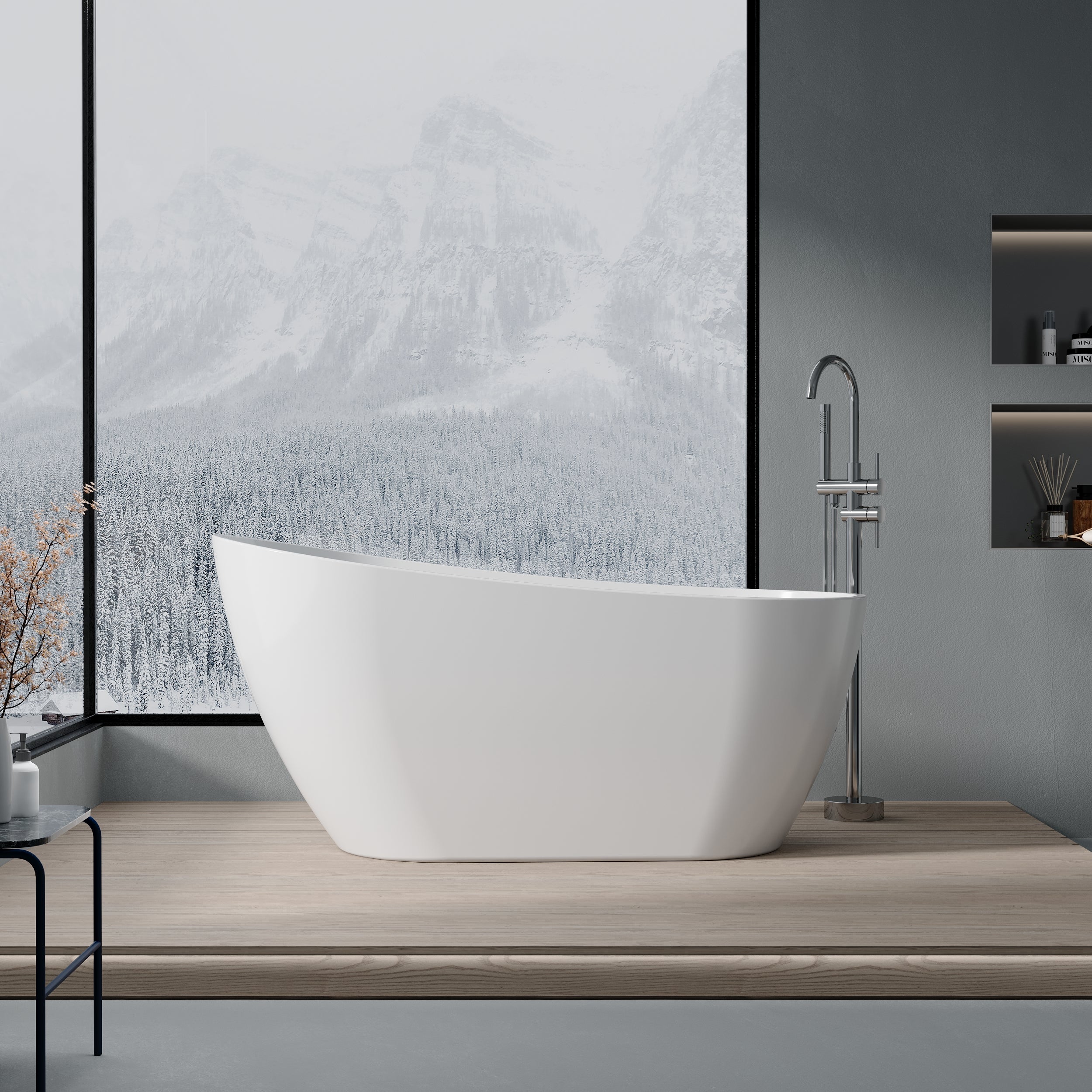
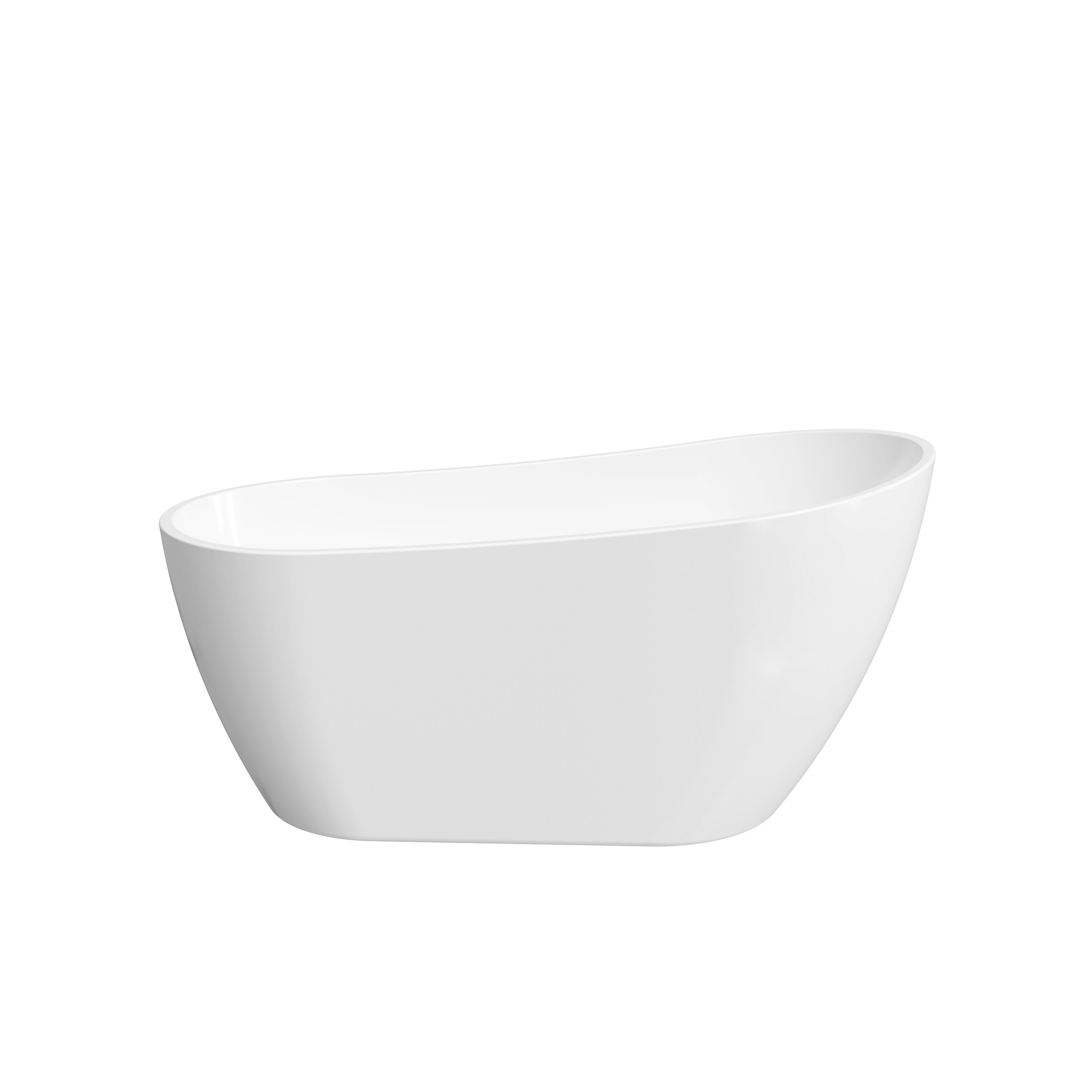
Acrylic bathtubs are usually composed of multiple layers of acrylic sheets and glass-fiber-reinforced structures, and the material itself has low thermal conductivity.
Acrylic is a plastic material with a thermal conductivity of about 0.2 W/m·K (significantly lower than that of metal materials when expressed in common thermal conductivity units).
This means that the rate of heat conduction at the surface of the material is slow, so the rate of water temperature loss is relatively mild.
The cast-iron bathtub features a thick body and a high-temperature-fired enamel coating.
The thermal conductivity of iron is significantly higher than that of acrylic, about 50 W/m · K.
In theory, this high thermal conductivity will accelerate the outward transfer of heat.
However, it should be noted that the cast iron body is of extremely high quality and has a much higher heat capacity than acrylic.
A 60-inch cast-iron bathtub typically weighs between 300 and 400 pounds, while acrylic tubs of the same size typically weigh only 70 to 100 pounds.
High quality means that the material itself can absorb and store a large amount of thermal energy.
2. Initial tactile sensation and heat absorption stage
When hot water is first injected, there is a significant difference in the tactile sensation between the two materials.
Acrylic bathtubs have a relatively gentle touch due to their low thermal conductivity.
A cast-iron bathtub will absorb some of the water temperature in the initial stage, causing a slight decrease in water temperature.
Test data shows that within the first 5 minutes after injecting 104 ° F hot water, the average water temperature in the cast iron bathtub drops by about 2-3 ° F, while the decrease in acrylic structure is about 1-2 ° F.
The reason is that the cast-iron body needs time to heat up.
But after this stage, the two performances will gradually tend towards different paths.
3. Comparison of insulation after 30 minutes and 60 minutes
Under test conditions at an ambient temperature of approximately 70 °F, the standard 60-inch60-inch bathtub has a water-filling capacity of approximately 40-50 gallons.
Experimental data show that:
Within 30 minutes of soaking, the average temperature of acrylic bathtubs drops by about 4-6 °F
Cast iron bathtubs typically drop by 3-4 °F within 30 minutes after initial heat absorption is complete
In the 60-minute test:
The total cooling amplitude of the acrylic structure is about 8-10 °F
The cast iron structure is usually controlled between 6-8 °F
This means that in long-term immersion scenarios, the insulation performance of cast iron structures in the stable stage is slightly better than that of acrylic.
4. The influence of size and wall thickness on insulation
Different sizes can also affect the test results.
72-inch freestanding bathtubs typically have a higher water filling capacity, reaching over 60 gallons.
An increase in water volume can, in itself, slow the rate of temperature drop, as water has a greater heat capacity.
Meanwhile, if acrylic bathtubs are designed with thickened bottom plates or additional insulation layers, their insulation performance can be improved by about 10% to 15%.
Some high-end models add foam insulation at the bottom to further reduce heat loss.
The wall thickness of cast iron bathtubs is usually greater than 1/4-inch, and the body's thermal capacity is extremely high.
Therefore, after complete preheating, the insulation is more stable.
5. User experience and energy efficiency
For a regular 15-20 minute soaking, the difference between the two materials is not significant.
Most users find it difficult to detect significant differences in water temperature.
But in deep relaxation scenarios lasting over 30 minutes, the stability of cast iron structures is more advantageous.
Data shows that after 45 minutes of immersion, the average water temperature in cast iron bathtubs is about 2 °F to 3 °F higher than in acrylic bathtubs.
From an energy perspective, if you pursue a long-term, constant-temperature experience, using a cast-iron bathtub may reduce the number of times you need to refill hot water midstream.
6. Comprehensive consideration of weight and installation factors
Although cast iron performs better in the later stages of insulation, its weight is also an important factor to consider.
A 72-inch cast iron bathtub may weigh over 800 pounds when filled with water and added to the user.
Before installation, the floor slab's load-bearing capacity must be confirmed.
In contrast, acrylic structures are lighter in weight and more suitable for two-layer or modified projects.
Therefore, when discussing "who is more insulated", structural safety and installation conditions cannot be ignored.
7. Long-term durability and thermal stability
The thermal properties of cast-iron bathtubs will change little over decades of use.
Acrylic materials may exhibit slight surface aging in long-term, high-temperature environments, but this has a limited impact on insulation performance.
In evaluating a usage cycle of more than 10 years, the difference in thermal retention between the two materials remains relatively stable.

8. Conclusion
The difference in insulation performance between acrylic bathtubs and cast iron bathtubs is not simply about "who is hotter", but depends on the time dimension and usage scenario.
Acrylic has a milder body feel in the initial stage, and there is not much difference in short-term use.
Cast iron exhibits a more stable long-term insulation ability after preheating is completed.
For those who prefer soaking for more than 30 minutes, cast iron has a slight advantage.
For those who prioritize lightweight, easy installation, acrylic remains a balanced choice.
Understanding thermal conductivity, heat capacity, and actual usage needs is necessary to make decisions that better align with lifestyle.



















Leave a comment
This site is protected by hCaptcha and the hCaptcha Privacy Policy and Terms of Service apply.