


















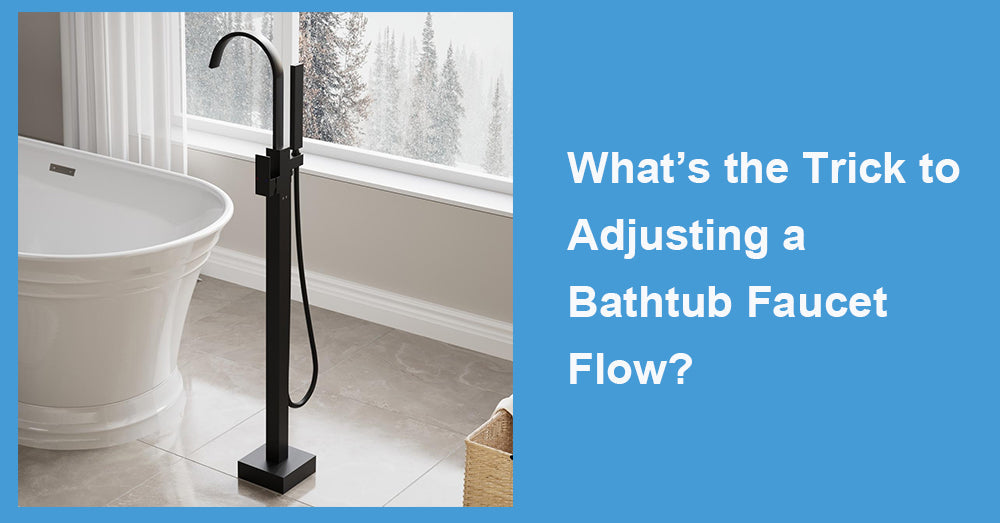
In our daily lives, abnormal water flow of bathtub faucets often becomes a headache. Too little water flow will significantly reduce the bathing experience and even increase the bathing time; too much water flow will not only waste precious water resources but may also cause a surge in water bills. When many people encounter water flow problems, their first reaction is to find a professional master to repair it. Little do they know that they can easily solve the trouble of abnormal water flow by mastering some simple skills. This article provides a detailed introduction to adjusting the water flow of a bathtub faucet from multiple aspects, helping you save time and money while enhancing your bathing comfort.
1. Common causes of abnormal water flow
To effectively adjust the water flow, you must first understand the common reasons behind abnormal water flow:
l Filter or aerator blockage
During long-term use, impurities and scale in the water will accumulate on the filter and aerator of the faucet, resulting in reduced water flow. This is one of the most common water flow problems.
l Unstable or insufficient water pressure
If the overall water supply pressure in the home is insufficient, regardless of the faucet's integrity, the water flow will be limited.
The valve is not fully opened.
Some users are unfamiliar with the faucet's structure, and the water inlet valve is not fully open, resulting in a limited water flow.
l Leaking or ageing of the pipe
Damage to the pipe or a loose interface will cause the water pressure to drop, which in turn affects the water flow.
Internal valve core wear or failure
The internal parts of the faucet are worn out or faulty, the valve is not closed tightly, or the opening is incorrect, which will cause abnormal water flow.
2. Detailed adjustment and repair methods
For the above problems, the following are several practical adjustment solutions:
n Clean the filter and aerator
Close the main water valve, remove the filter and aerator from the faucet outlet, and soak them in a solution of white vinegar for 15 minutes, using a small brush (such as an old toothbrush) to remove scale and sediment thoroughly. Rinse with clean water after cleaning and reinstall it. This method is simple but highly effective and can significantly restore the water flow.
n Check and adjust the water supply valve
Ensure that the main water valve and the bathtub water inlet valve are fully open. Often, low water flow is caused by a valve that is not fully opened, a detail that is frequently overlooked.
n Install a throttling device
If the water flow is too large and cannot be adjusted by the valve, consider installing a throttling valve or flow regulator. This device not only saves water but also improves the comfort of water use.
n Adjust the valve core
The valve core of the bathtub faucet is usually removable. Use a screwdriver to rotate the valve core to adjust the water flow. It is essential to be gentle when operating to prevent damage to the parts.
n Replace ageing or damaged internal parts
When the valve core or sealing ring is severely worn, resulting in abnormal water flow that cannot be corrected by simple cleaning, the relevant accessories should be replaced promptly to prevent leakage and further losses.

3. The importance of maintenance and prevention
In addition to solving problems when they occur, good maintenance can significantly reduce water flow problems:
u Clean the filter regularly; it is recommended to clean it every six months to prevent scale accumulation.
u To avoid aggravated corrosion and blockage in a complex water environment, consider installing a water softener.
u Keep the pipes unobstructed, inspect the condition of the pipes at home regularly, and address leaks and looseness promptly.
u Use valves reasonably to avoid losses caused by frequent switching.
4. Multiple benefits of water flow adjustment
Through the above adjustments, you will notice that the bathtub water flow becomes smoother and more comfortable, resulting in an improved bathing experience. At the same time, saving water and reducing waste can also help you reduce water bills. Additionally, it extends the service life of the faucet, reduces the frequency of maintenance, and saves the family a significant amount of money. More importantly, the sense of accomplishment and satisfaction that comes from solving problems on your own also makes life more fulfilling.
5. Common misunderstandings and avoidance methods
❌ Misunderstanding 1: A Small water flow must be a broken faucet
Often, it is caused by the filter being blocked or the valve not being fully open. First, check simple problems before deciding whether to replace the faucet.
❌ Misunderstanding 2: Large water flow is good
Excessive water flow not only wastes water but may also cause splashing, thereby reducing the user experience.
❌ Misunderstanding 3: The more complex and expensive the accessories, the better
More functions do not mean practicality. The key is whether it meets your own needs and the frequency of use.
6. Summary
Although adjusting the water flow of the bathtub faucet requires specific techniques and knowledge, it is a relatively straightforward process. As long as you master the basic methods, including cleaning the filter, adjusting the valve, and replacing accessories, most problems can be solved by yourself. A reasonable water flow not only enhances the comfort of bathing but also conserves water and reduces household expenses. I hope that through the detailed introduction of this article, everyone can easily master the tips of adjusting the faucet water flow and enjoy a better home life.






















Leave a comment
This site is protected by hCaptcha and the hCaptcha Privacy Policy and Terms of Service apply.