














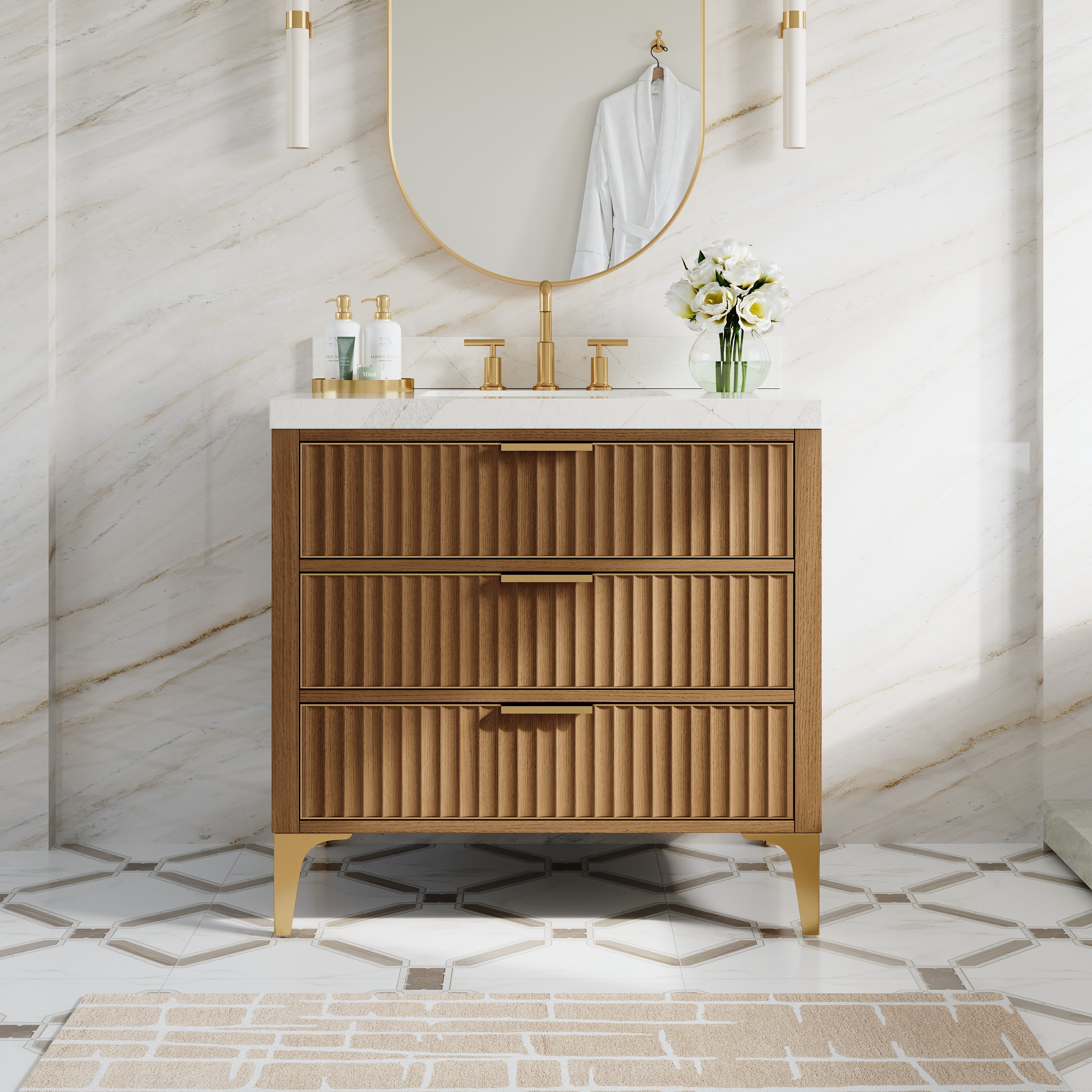
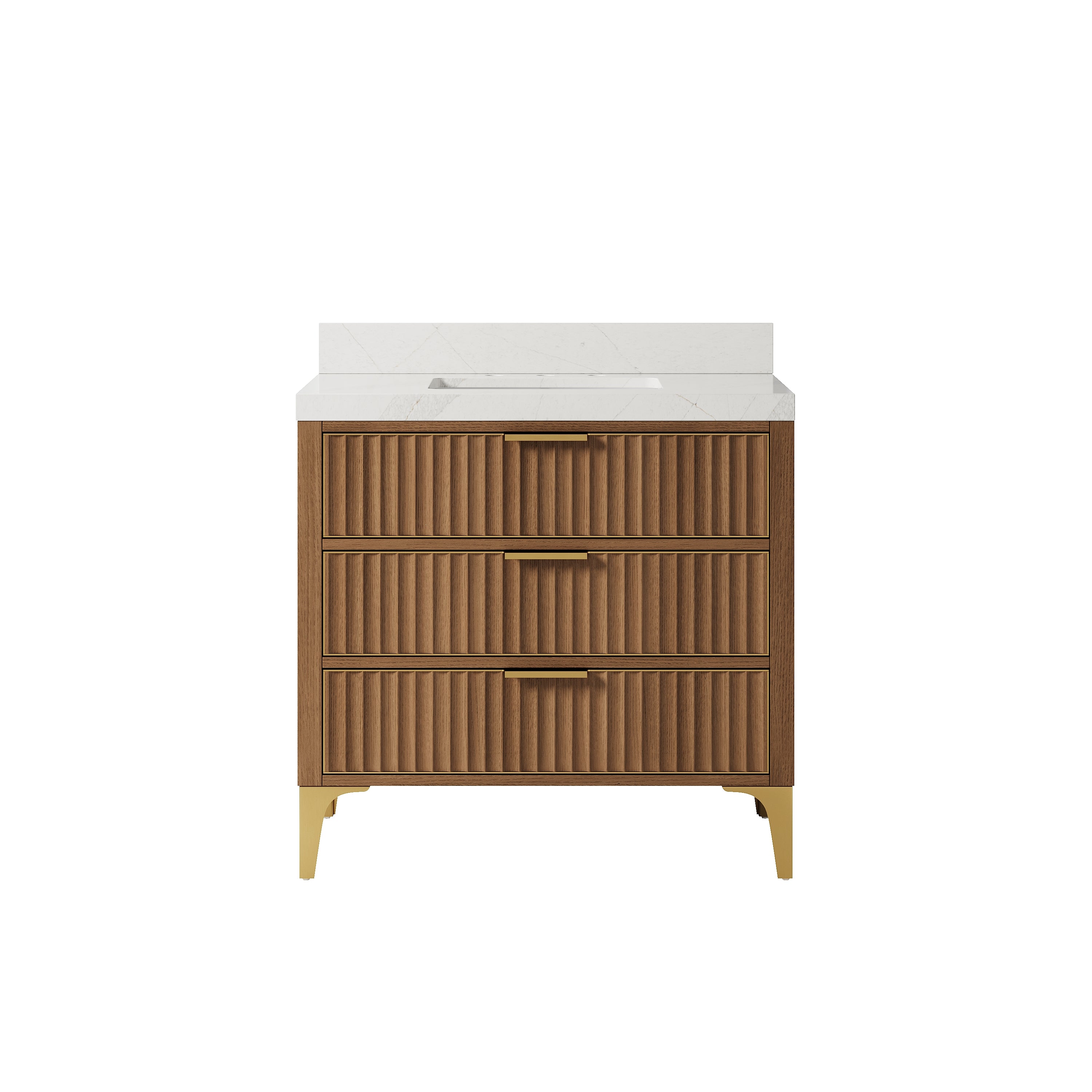
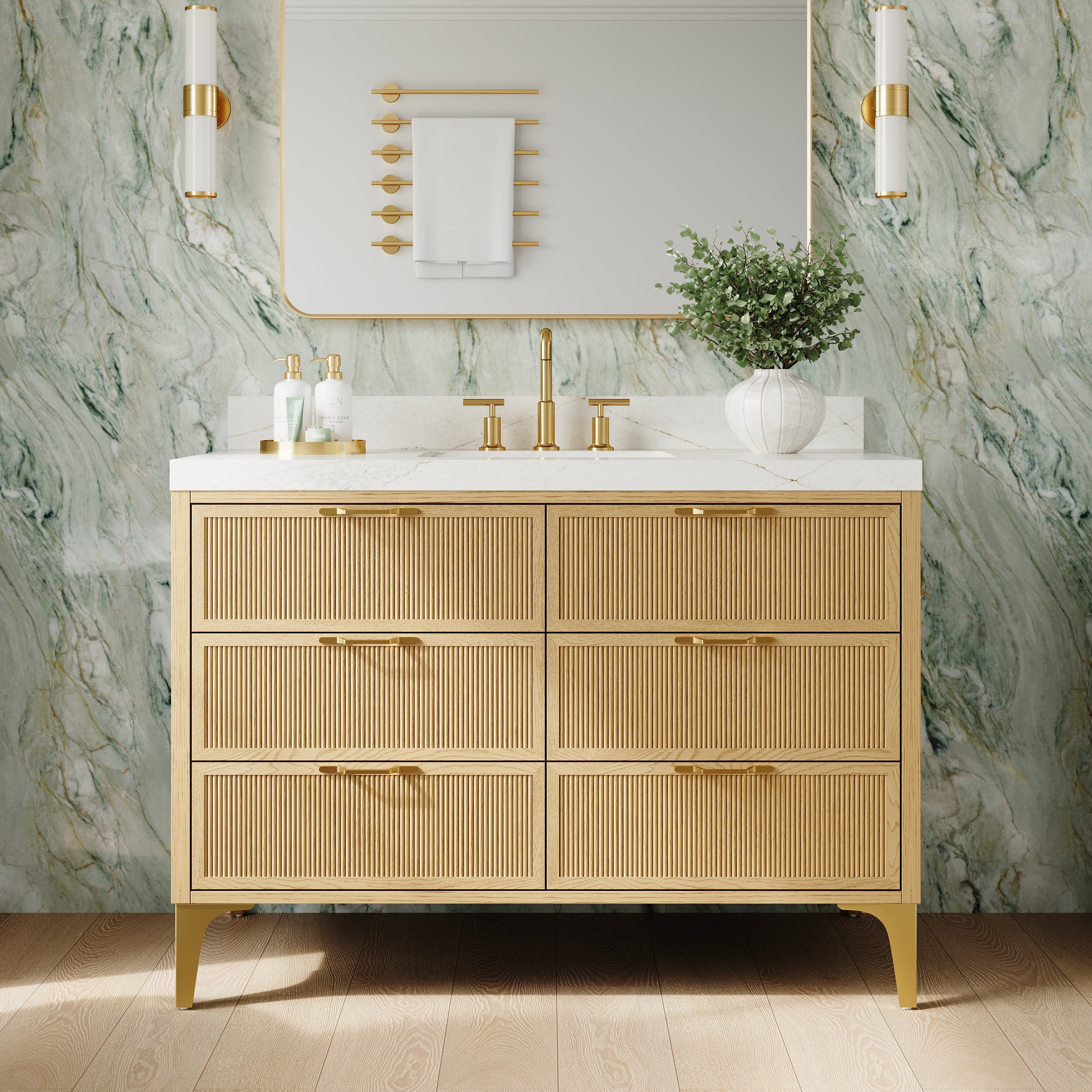
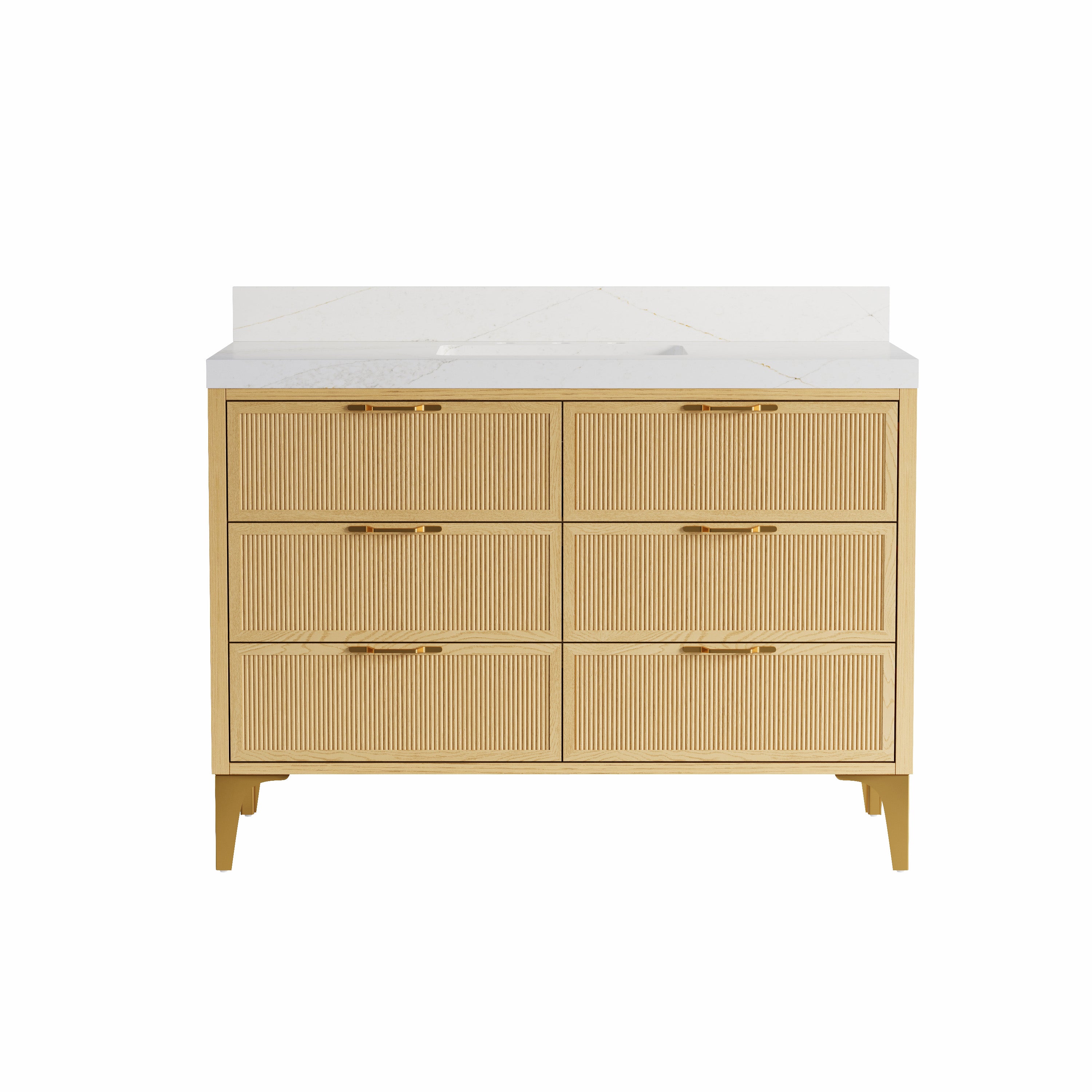


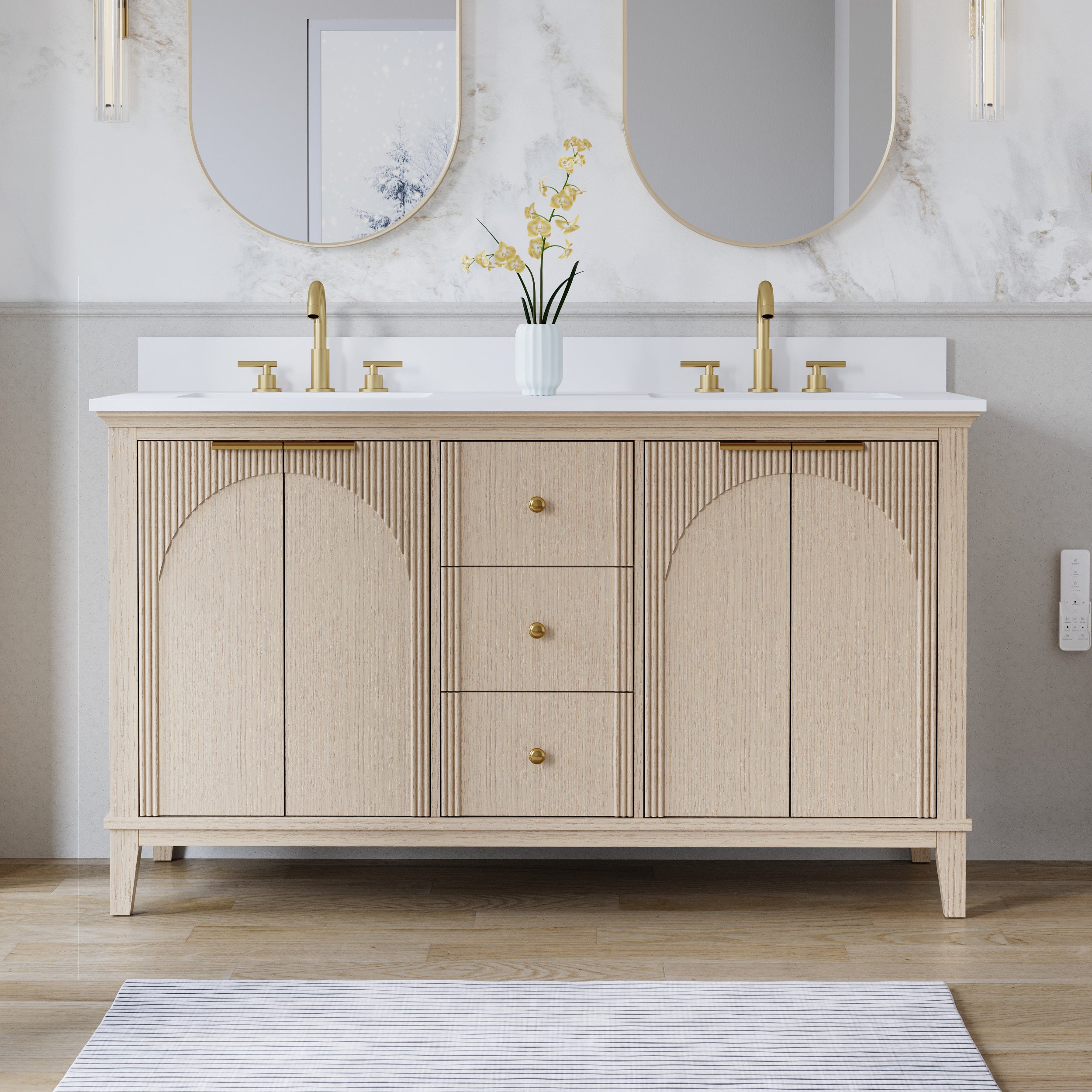
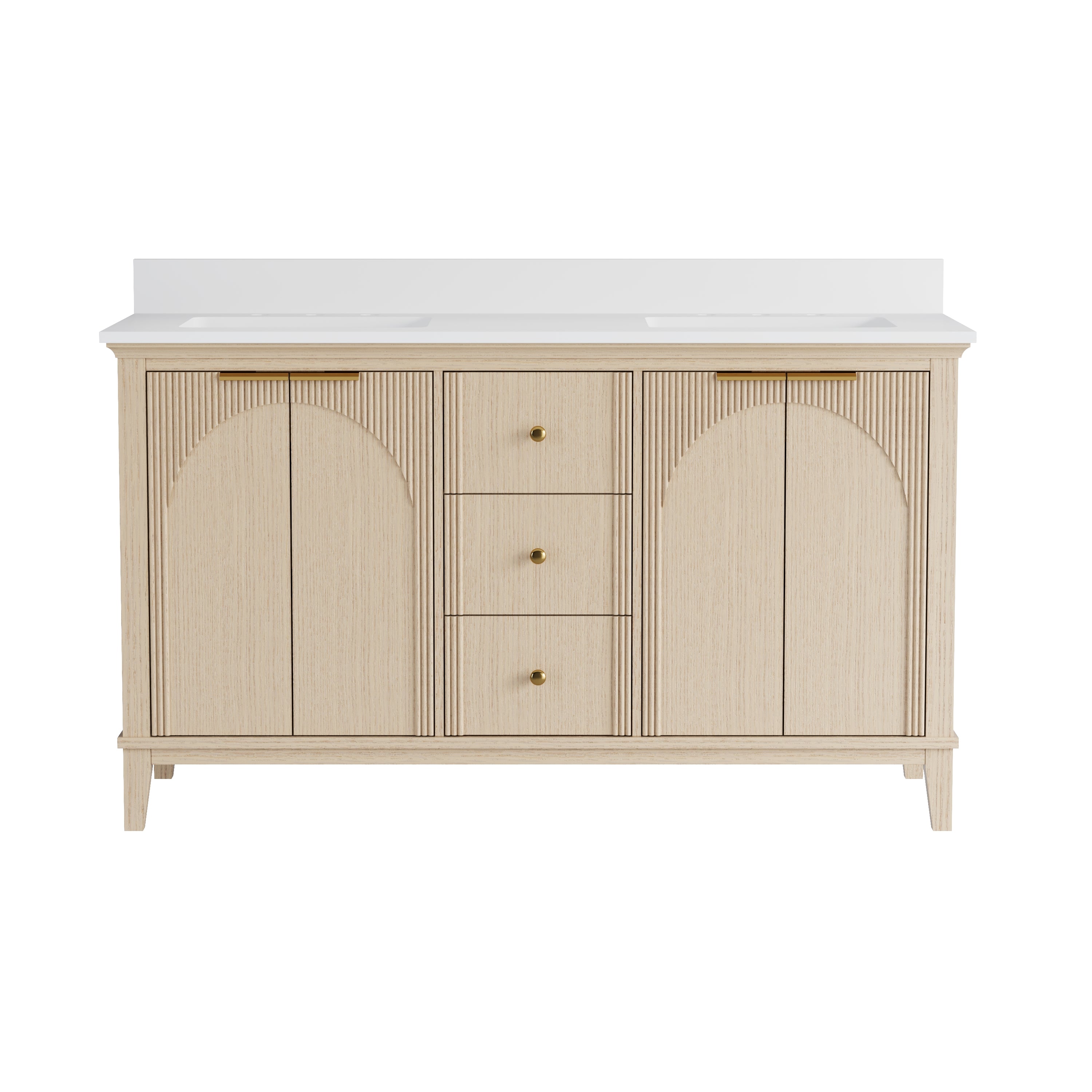
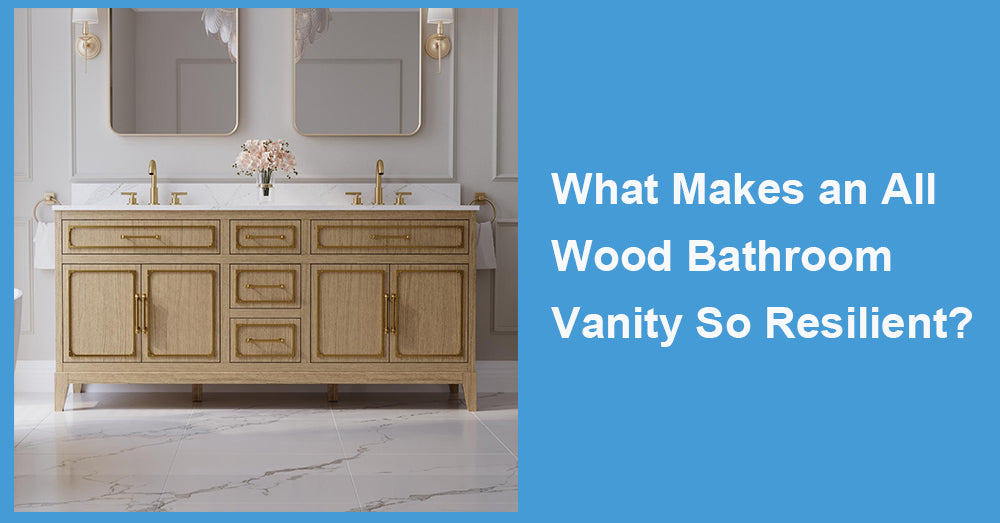
A bathroom is a harsh place for cabinetry. Steam, splashes, wet hands, cleaning products, and the occasional slow leak all test the materials every day. That is why an all wood bathroom vanity is often described as “resilient.” When it is built correctly and sealed well, wood can handle long-term use because it stays structurally strong, holds hardware securely, and can often be repaired or refinished instead of replaced. The key is understanding why wood performs well, and what construction details turn “wood” into real durability.
1. Resilience Starts With How Wood Responds to Moisture
Wood is a hygroscopic material, meaning it naturally exchanges moisture with the surrounding air. When humidity rises, wood can absorb moisture; when humidity drops, it releases moisture. This moisture relationship affects wood performance and is one reason design and finishing matter in humid spaces (Source: USDA Forest Service, Forest Products Laboratory, “Moisture Relations and Physical Properties of Wood”).
That might sound like a weakness, but it is also part of wood’s strength: wood does not “shatter” as conditions change, it gradually moves with its environment. Proper cabinet design anticipates that movement through joinery, panel construction, and finish systems.
A practical takeaway: an all-wood vanity is resilient not because it ignores moisture, but because it is predictable when moisture is managed.
2. Humidity Control Protects the Vanity, Not Just the Room
The strongest cabinet will still lose years of life in a bathroom that stays damp. Indoor air guidance commonly recommends keeping indoor humidity between 30% and 50%, and avoiding levels above 60%, because high humidity increases the likelihood of mold and moisture damage (Source: U.S. Environmental Protection Agency, “Care for Your Air”; Source: U.S. EPA Mold Course, Chapter 2; Source: U.S. EPA, Moisture Control guidance).
This range is not vanity-specific, but it is a powerful durability lever. When humidity is kept under control, the finish lasts longer, door alignment stays more consistent, and the cabinet interior is less likely to develop odor or mildew.
3. Wood Often Survives “Real Life” Better Than MDF After Water Exposure
Many budget vanities use MDF or particleboard in the box, panels, or toe-kick. These materials can look smooth and stable in dry conditions, but the durability gap becomes obvious after moisture intrusion.
A Composite Panel Association technical bulletin notes that when particleboard or MDF swells and expands beyond its original dimensions due to exposure to high humidity or water, that change is not reversible upon re-drying (Source: Composite Panel Association, Technical Bulletin on Dimensional Stability of Particleboard and MDF).
This is a major reason wood feels more resilient in bathrooms. Solid wood can also swell, but it is typically more serviceable. It can often be dried, stabilized, sanded, and refinished. MDF swelling at edges and seams frequently becomes permanent distortion.
4. Strong Fastener Holding Keeps Doors and Drawers Working Longer
A vanity can look fine but feel “worn out” when doors sag, hinges loosen, or drawers drift out of alignment. Hardware performance depends heavily on how well the cabinet material holds screws and stays square.
Solid wood is known for strong structural performance and can provide reliable fastening for hinges and slides when the frame and mounting points are designed well. This is one reason higher-quality vanities often use solid wood for face frames and door rails, where hinge stress concentrates. Wood’s moisture behavior is well documented, and controlling moisture content helps avoid major issues from dimensional change (Source: USDA Forest Service research chapter on drying and moisture control).
In day-to-day use, strong fastener holding means:
· Hinges stay adjustable instead of stripping out.
· Drawer slides remain secure under repeated opening and closing.
· Door gaps stay consistent because the cabinet box stays square.
5. The Finish System Is the “Armor,” Especially on Edges and Cutouts
Resilience is not only about the wood species. The finish system often matters more than people expect.
Most bathroom cabinet damage starts at vulnerable points:
· Sink and faucet cutouts under the countertop.
· Plumbing holes in the back panel.
· Bottom edges near wet floors.
· Door and drawer edges where water can sit.
A resilient all-wood vanity is usually the one with complete sealing in these areas, not just a good-looking exterior coat. A well-finished interior also helps reduce odor and moisture absorption during long steamy showers.
6. Smart Construction Details Multiply Durability
“All wood” can mean different things in marketing, but resilient construction tends to share the same fundamentals.
A good durability profile often looks like this:
A. Solid wood face frame and doors
These areas take the most physical contact and benefit from repairability.
B. Stable panel strategy
Quality cabinets often design panels and joints to accommodate natural wood movement, reducing the risk of cracking or warping as humidity shifts (Source: USDA Forest Service, Forest Products Laboratory, “Moisture Relations and Physical Properties of Wood”).
C. Proper moisture conditioning before assembly
Moisture content control and drying practices are widely recognized as essential for minimizing dimensional issues in wood products (Source: USDA Forest Service research chapter on drying and moisture control).
When these pieces come together, wood’s natural characteristics become an advantage rather than a liability.
7. Soft-Close Hardware Reduces Long-Term Wear and Tear
Repeated slamming is real damage, just delivered slowly. Soft-close hinges and slides reduce impact loads on doors, frames, and mounting screws, helping cabinetry stay tight and quiet.
Industry guidance for cabinetry commonly highlights that soft-close mechanisms reduce harsh impacts and wear on doors and frames over time (Source: Home Decorators Collection Cabinetry guide on soft-close cabinet hinges). This is not a substitute for good materials, but it supports resilience by lowering daily mechanical stress.
8. Resilience Also Means “Fixable,” Not Just “Hard to Damage”
One of the most practical benefits of all-wood construction is that it is often repairable:
· Light scratches can be buffed or touched up.
· Finish wear can be renewed in high-contact areas.
· Small dents can sometimes be steamed or filled, then refinished.
· Doors or drawer fronts can be replaced without rebuilding the entire cabinet.
That repair pathway is part of resilience. A vanity that can be maintained and restored stays in service longer and stays looking better over its lifespan.
9. A Quick Resilience Checklist Before You Buy
Use this checklist to avoid paying for “wood” without getting the durability benefits:
· Sealed edges and cutouts: look inside the cabinet, not just at the front.
· Stable structure: a strong frame and a cabinet box that feels rigid.
· Hardware quality: hinges and slides that feel smooth and solid.
· Moisture plan: keep indoor humidity ideally between 30% and 50%, and below 60% (Source: U.S. Environmental Protection Agency; Source: U.S. EPA Mold Course).
· Leak awareness: check plumbing connections periodically. One slow leak can defeat any material, but MDF swelling is often irreversible after moisture exposure (Source: Composite Panel Association).

Conclusion
An all wood bathroom vanity is resilient because wood is structurally strong, holds hardware well, and can often be repaired or refinished over time. Its real advantage shows up under bathroom stress: daily humidity swings, occasional splashes, and the long grind of repeated use. Control humidity to the recommended range, choose a vanity with thorough sealing and smart construction, and you get a cabinet that stays solid, stays aligned, and stays attractive for years (Source: U.S. Environmental Protection Agency; Source: USDA Forest Service, Forest Products Laboratory; Source: Composite Panel Association).









Leave a comment
This site is protected by hCaptcha and the hCaptcha Privacy Policy and Terms of Service apply.