














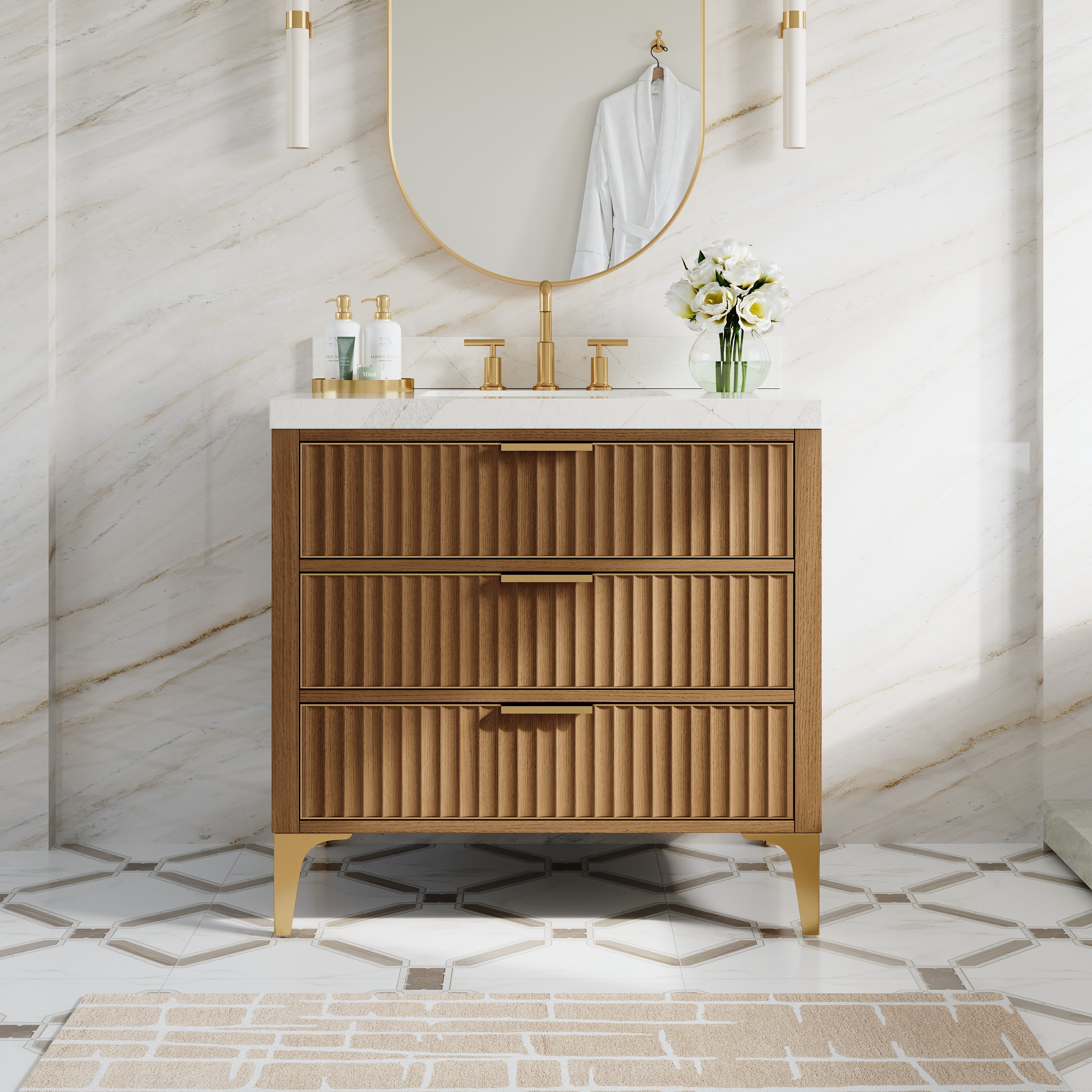
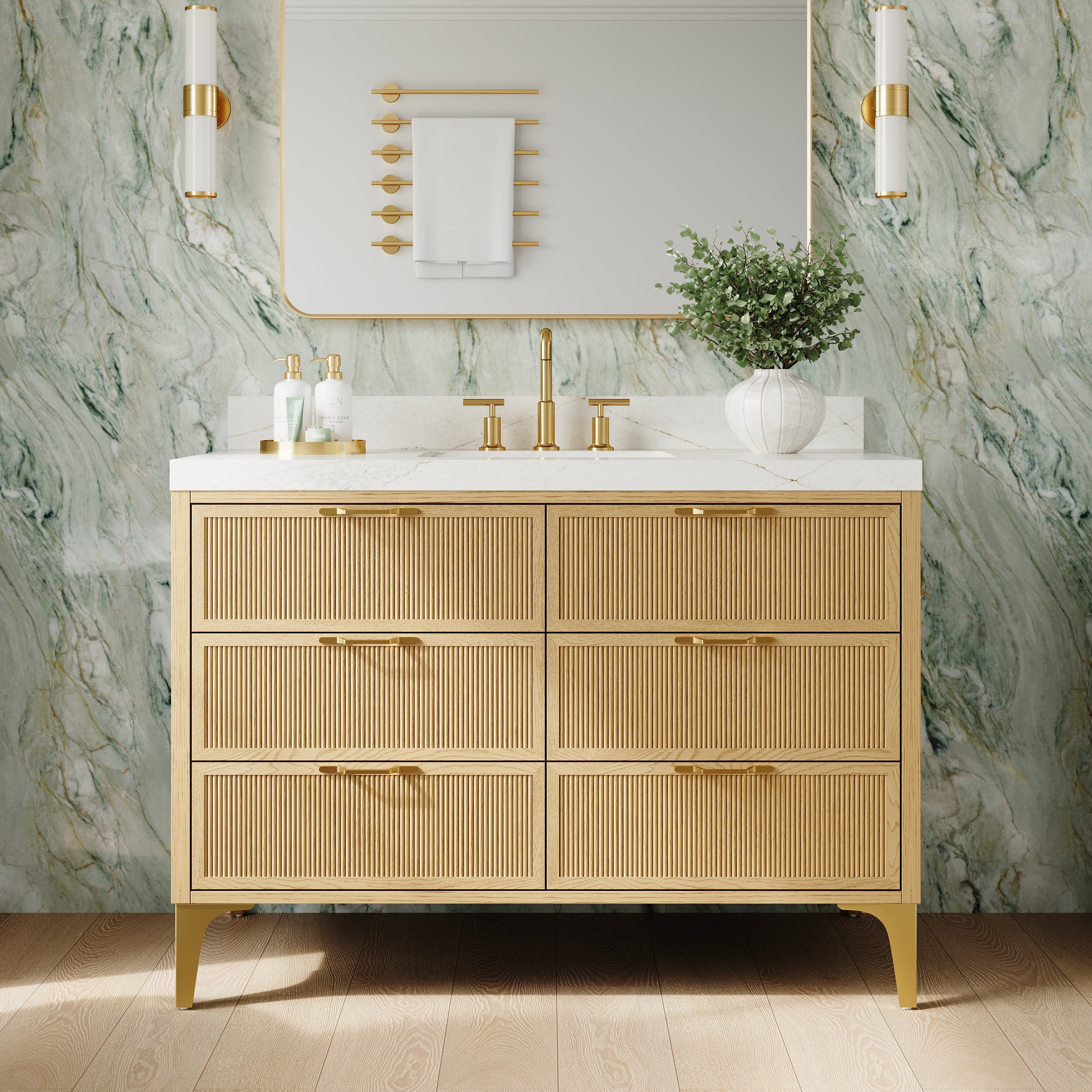


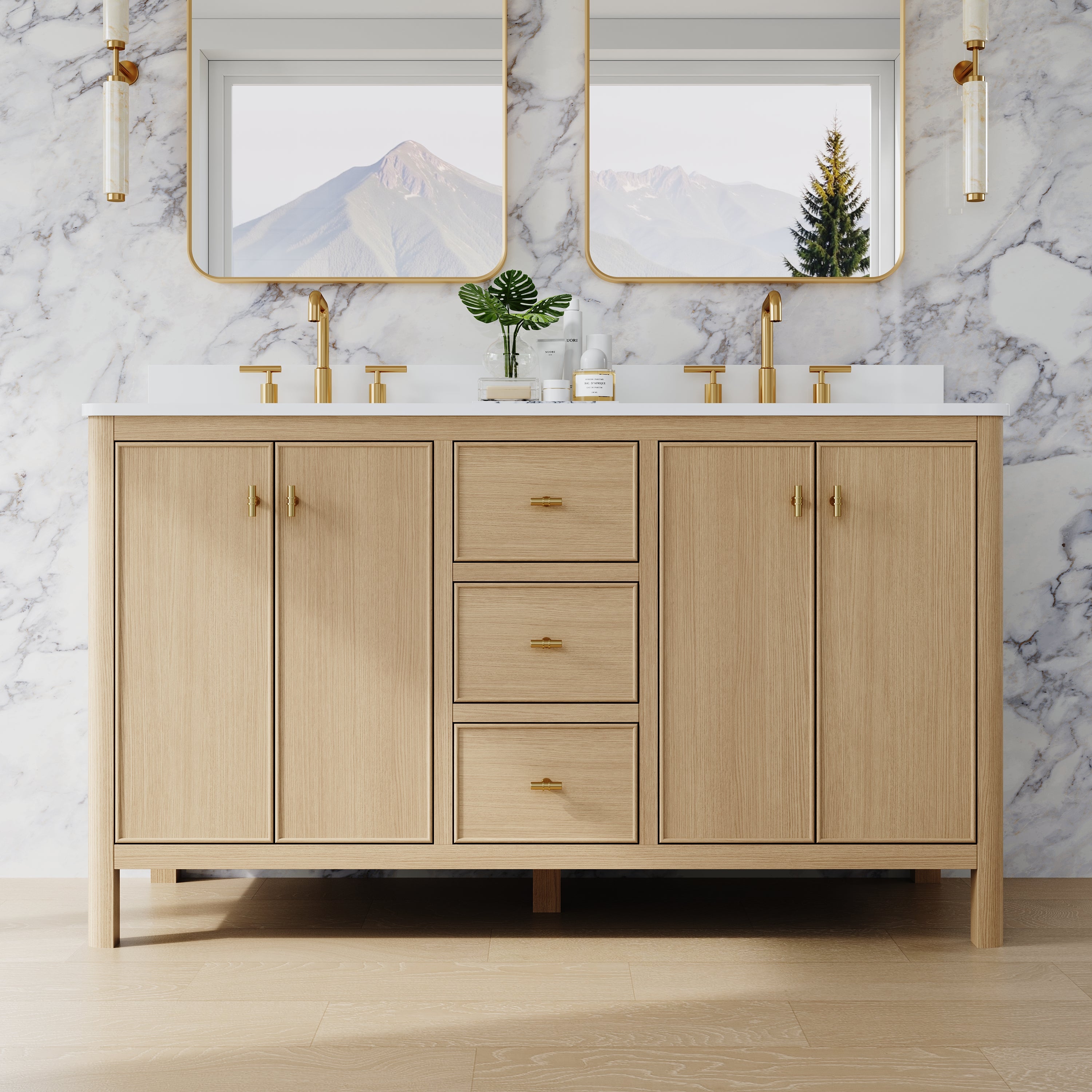
During bathroom installation, the height of the medicine cabinet height is often overlooked, but it directly affects the comfort and the space-to-use ratio. A mirror cabinet that is too low is prone to water stains, while one that is too high can affect the daily viewing experience. Whether it is a 24-inch single-basin space or a 60-inch double-basin layout, the appropriate height should be determined based on the table height, user height, and the floor-to-height ratio. Data shows that in bathroom renovation projects, over 25% of installation rework issues are related to height errors, so it is particularly important to clarify standards before construction.
1. Common countertop height as a basic reference
To determine the mirror cabinet's installation height, first understand the standard vanity height. The height of modern bathroom cabinets is usually between 34 and 36 inches, with 36 inches gradually becoming the mainstream.
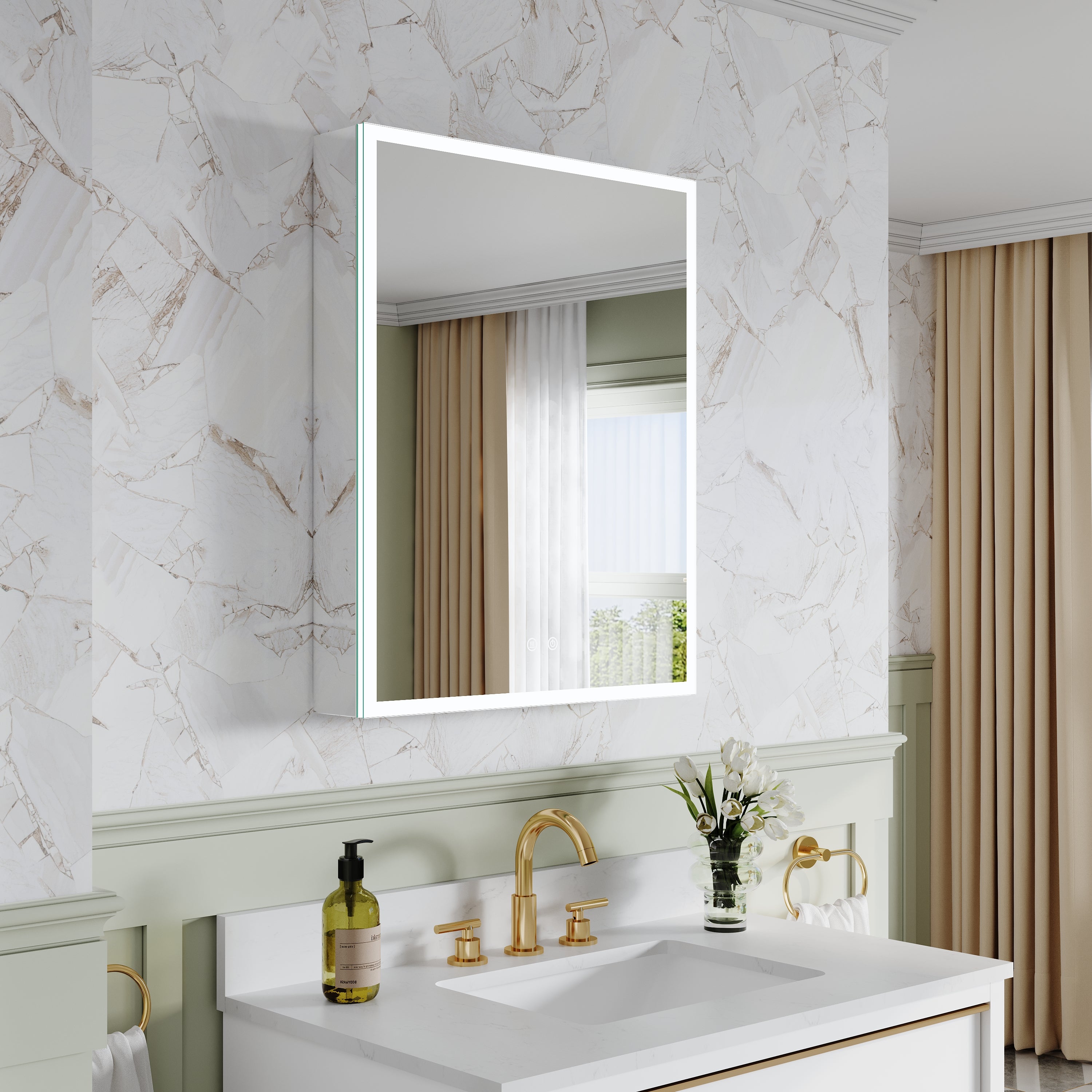
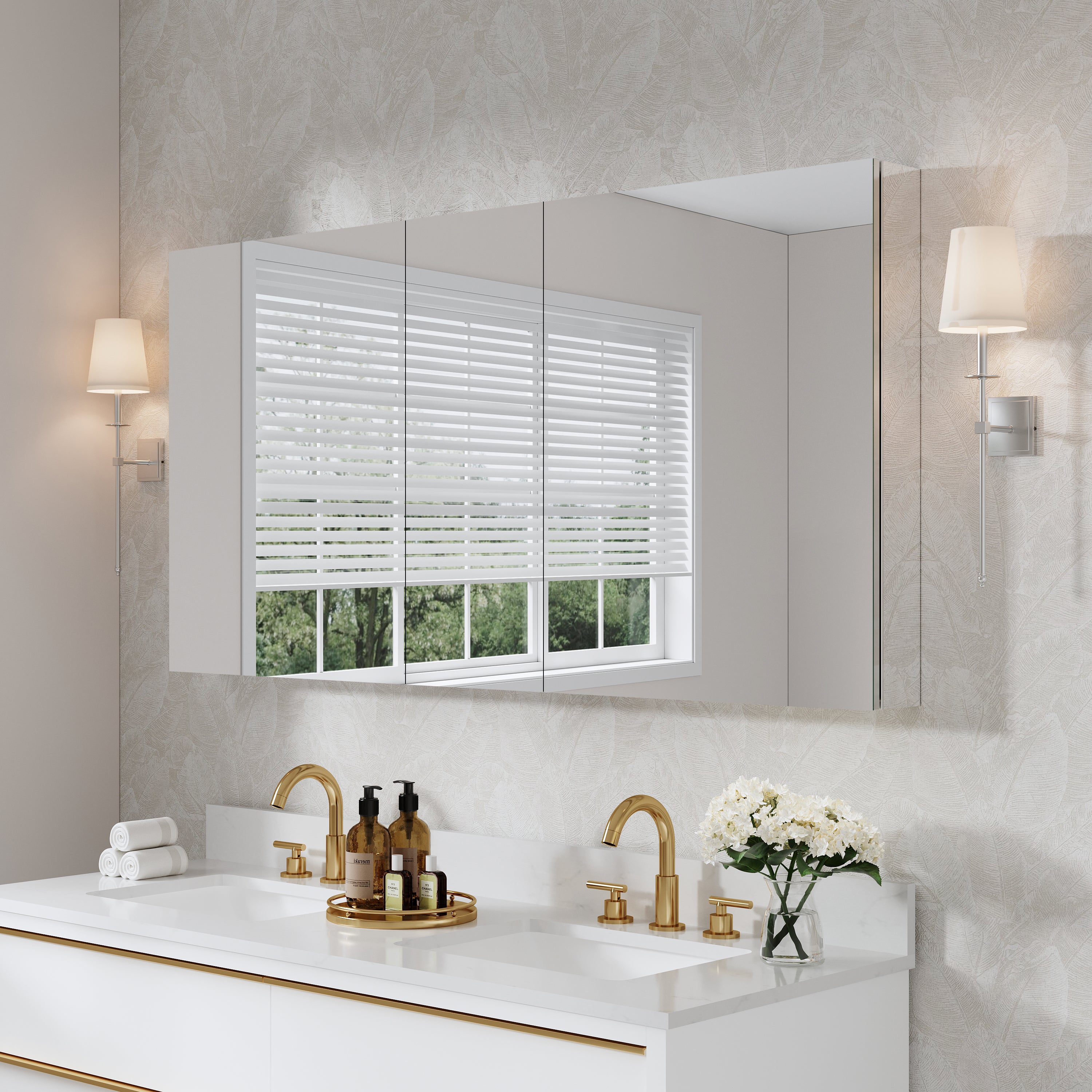
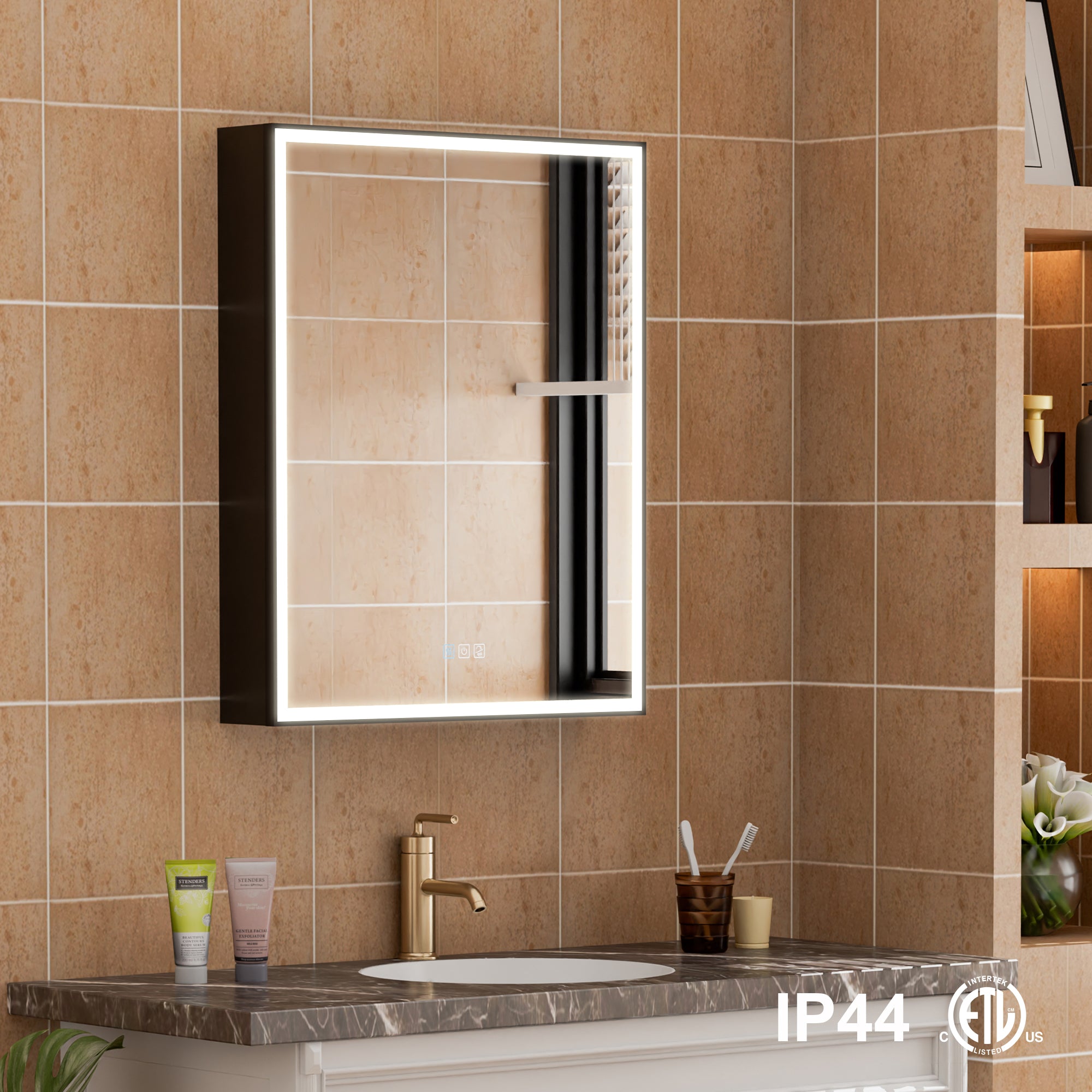
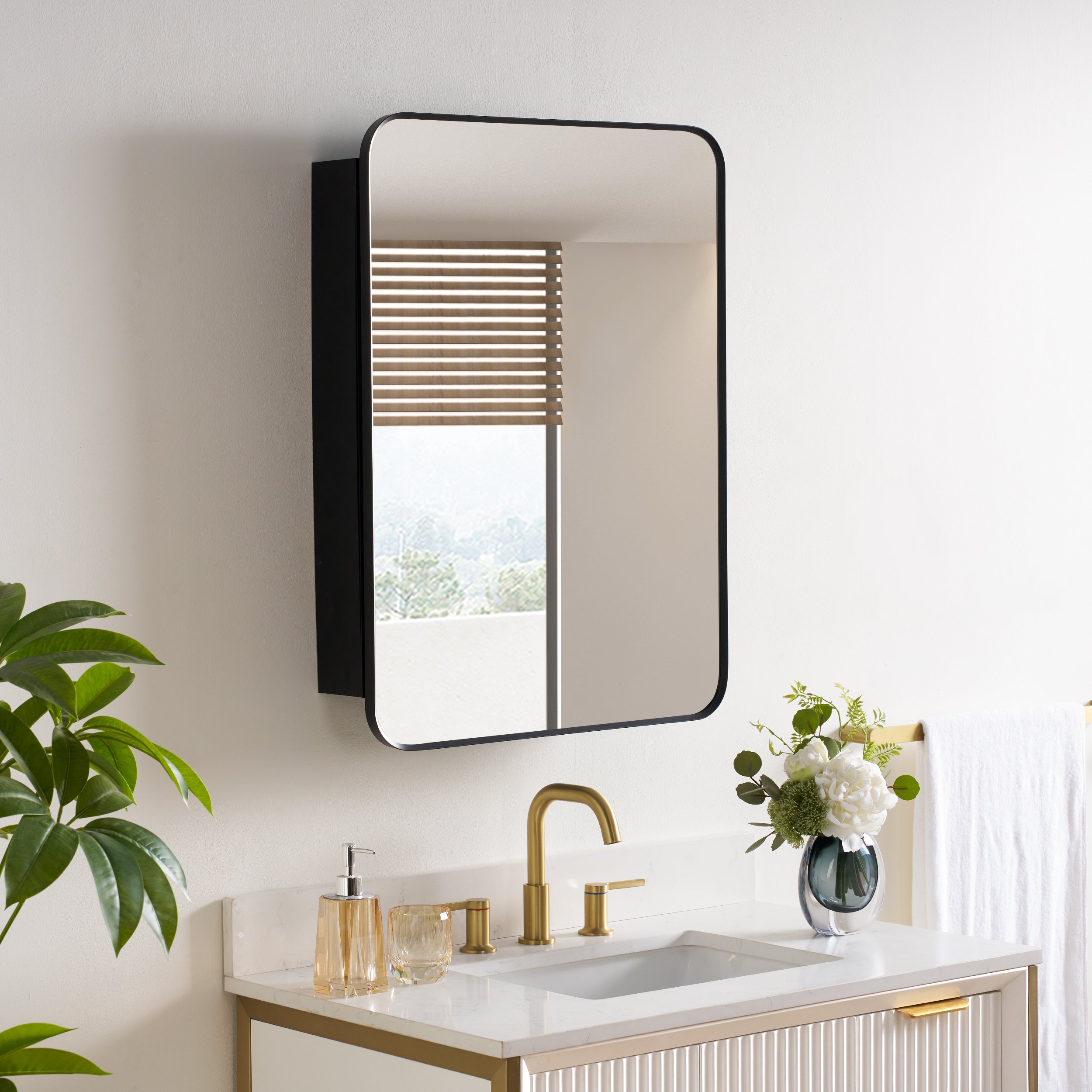
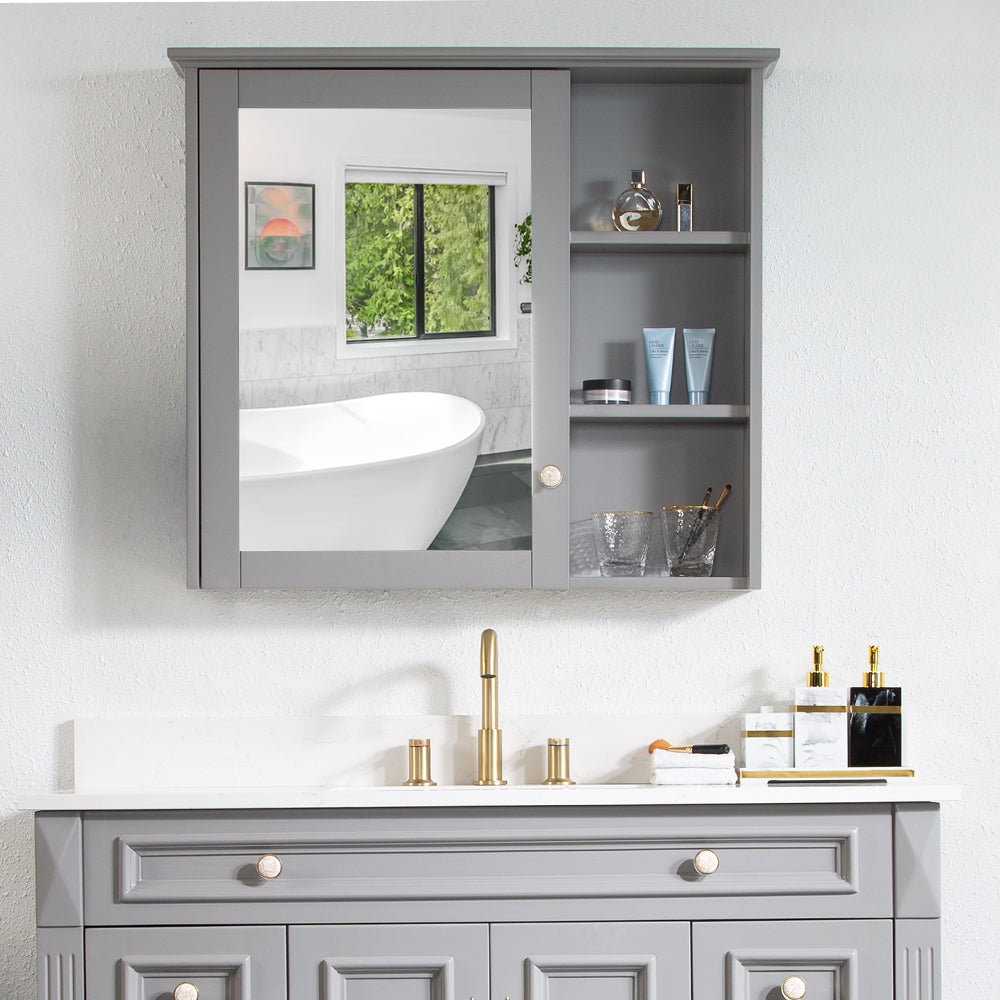
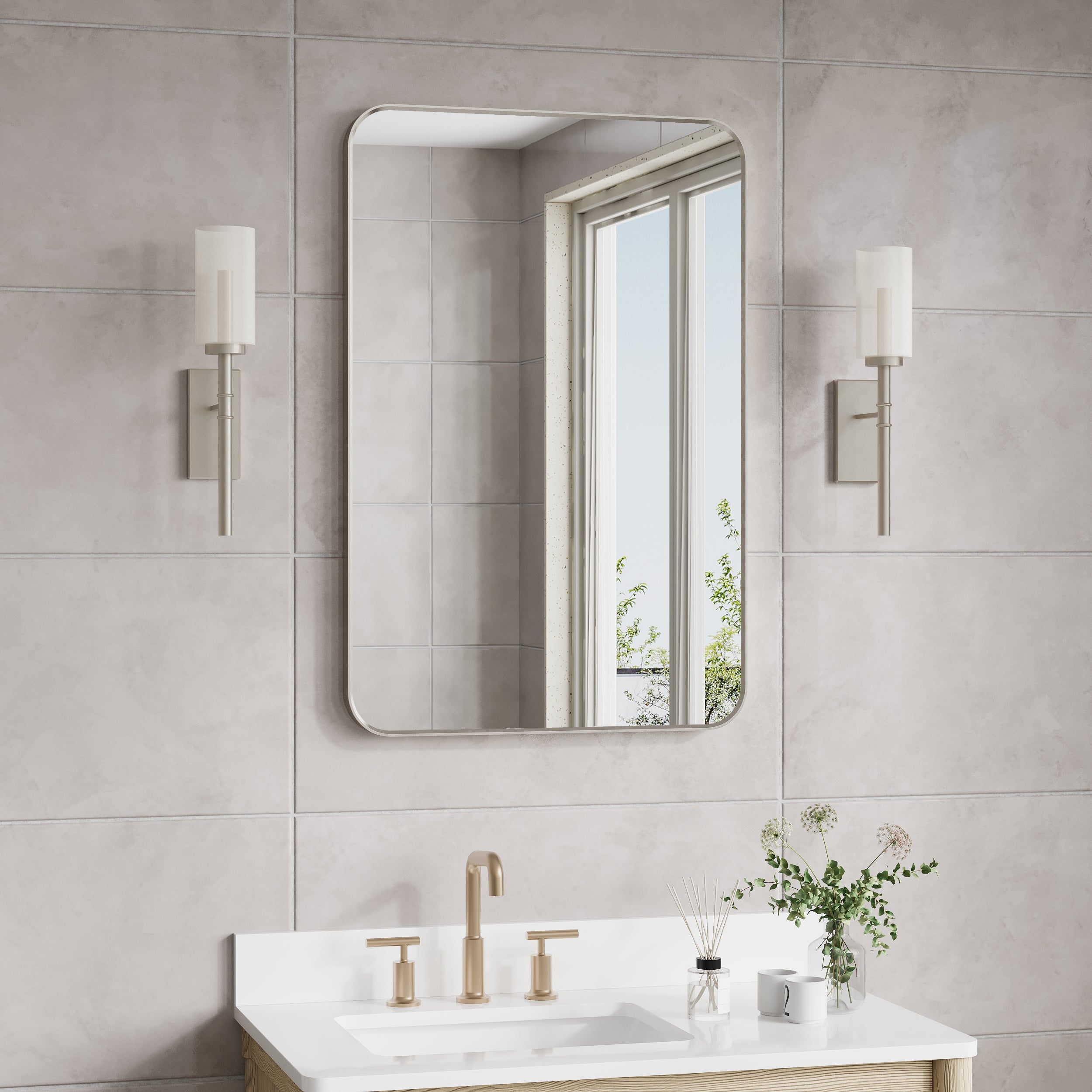
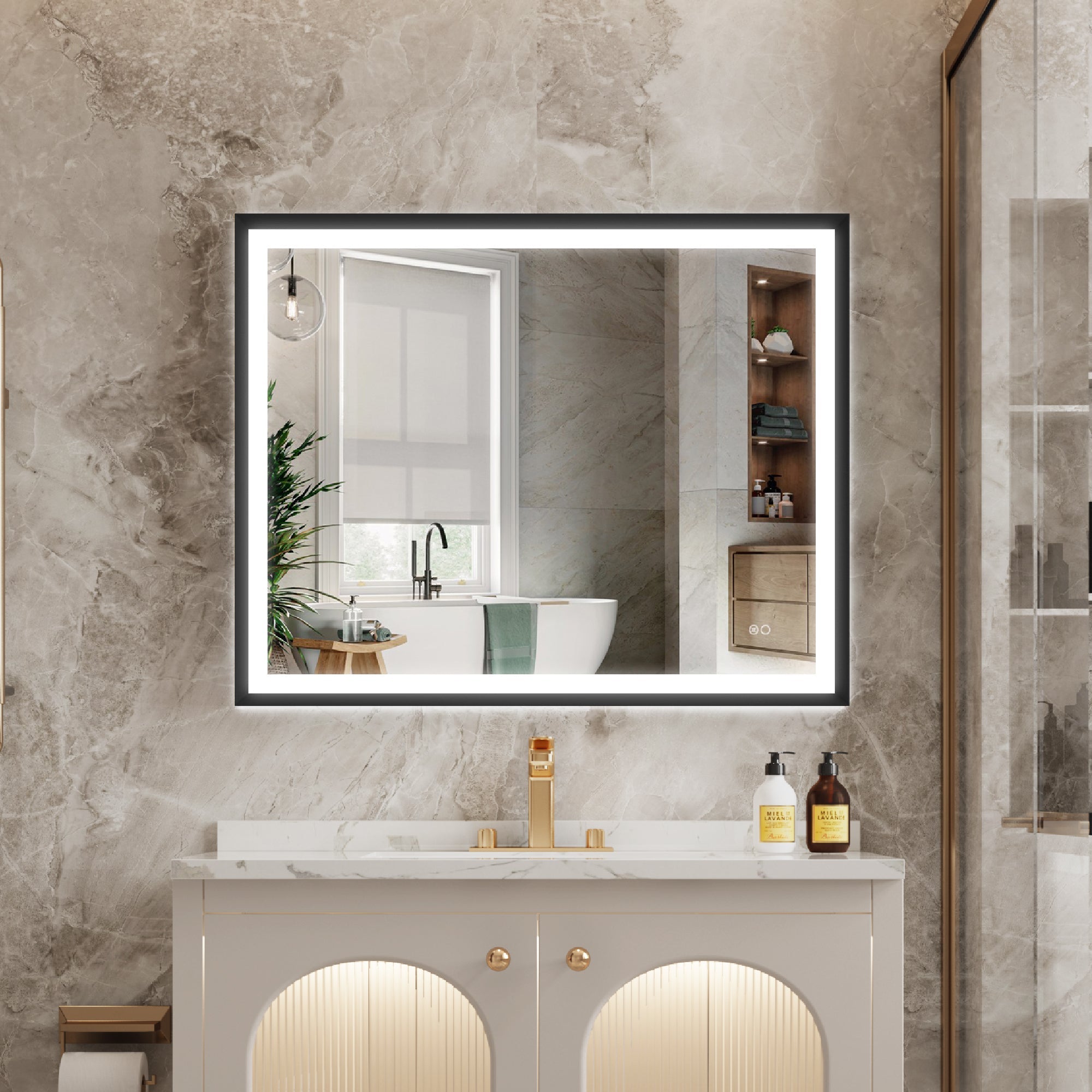
On 36-inch-high vanities, the bottom of the mirror cabinet is usually installed between 5 and 10 inches above the countertop. The height of the lower edge of the mirror cabinet from the ground is usually within the range of 41 inches to 46 inches.
The data show that when the distance between the lower edge of the mirror cabinet and the tabletop is less than 4 inches, the water-stain adhesion rate increases by about 15%; if it exceeds 12 inches, the visual balance is prone to imbalance.
2. Ergonomic principles for the height of the mirror center
In addition to the bottom spacing, the height of the mirror center is equally important. Industry design principles typically recommend that the center of the mirror be located between approximately 60 inches and 65 inches from the ground.
This height range matches the visual level of most adults. If the height of the mirror cabinet is 30 inches and the lower edge is at 44 inches, then the upper edge is approximately at 74 inches, and the center point is between 59 inches and 60 inches, with a coordinated proportion.
The data shows that the comfort rating is highest when the center of the mirror is between 60 and 62 inches.
3. Adaptation logic for different heights of mirror cabinets
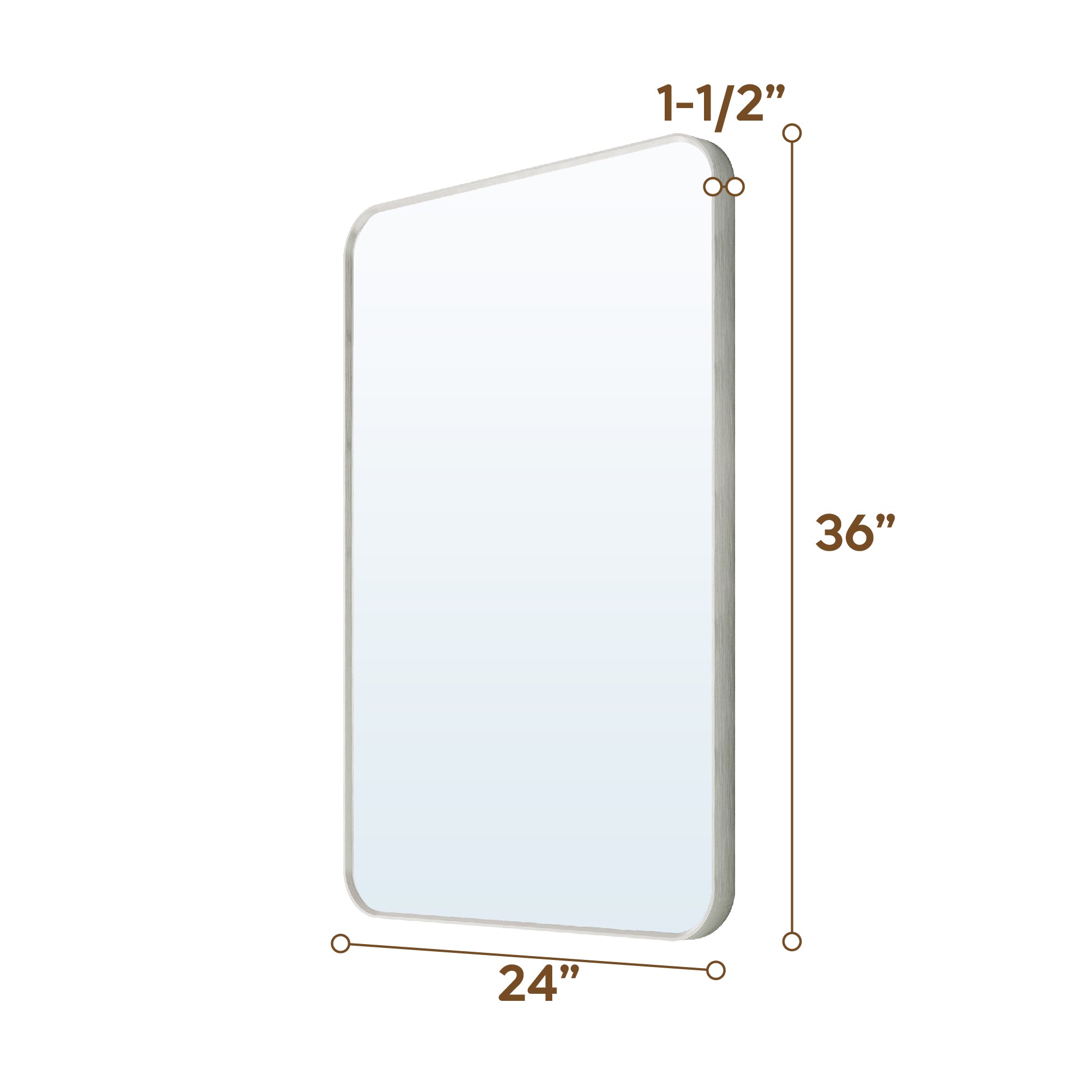
Common mirror cabinet heights include 24, 26, 30, and 34 inches.
If the height of the mirror cabinet is 24 inches, the lower edge can be installed slightly higher, such as 8 inches to 10 inches above the tabletop; If it is a 34-inch high mirror cabinet, the lower edge is usually controlled between 5 inches and 6 inches to avoid the top being too high.
In an 8-foot-high floor space, the top of the mirror cabinet should usually not exceed 78 to 80 inches to maintain a balanced wall ratio.
Design data shows that when the top of the mirror cabinet is less than 6 inches from the ceiling, the visual space appears compressed.
4. Differences in Layout between Single Basin and Double Basin
In a 36-inch single-basin layout, a mirror cabinet measuring 24 to 30 inches wide is usually installed. The height ratio is easier to control.
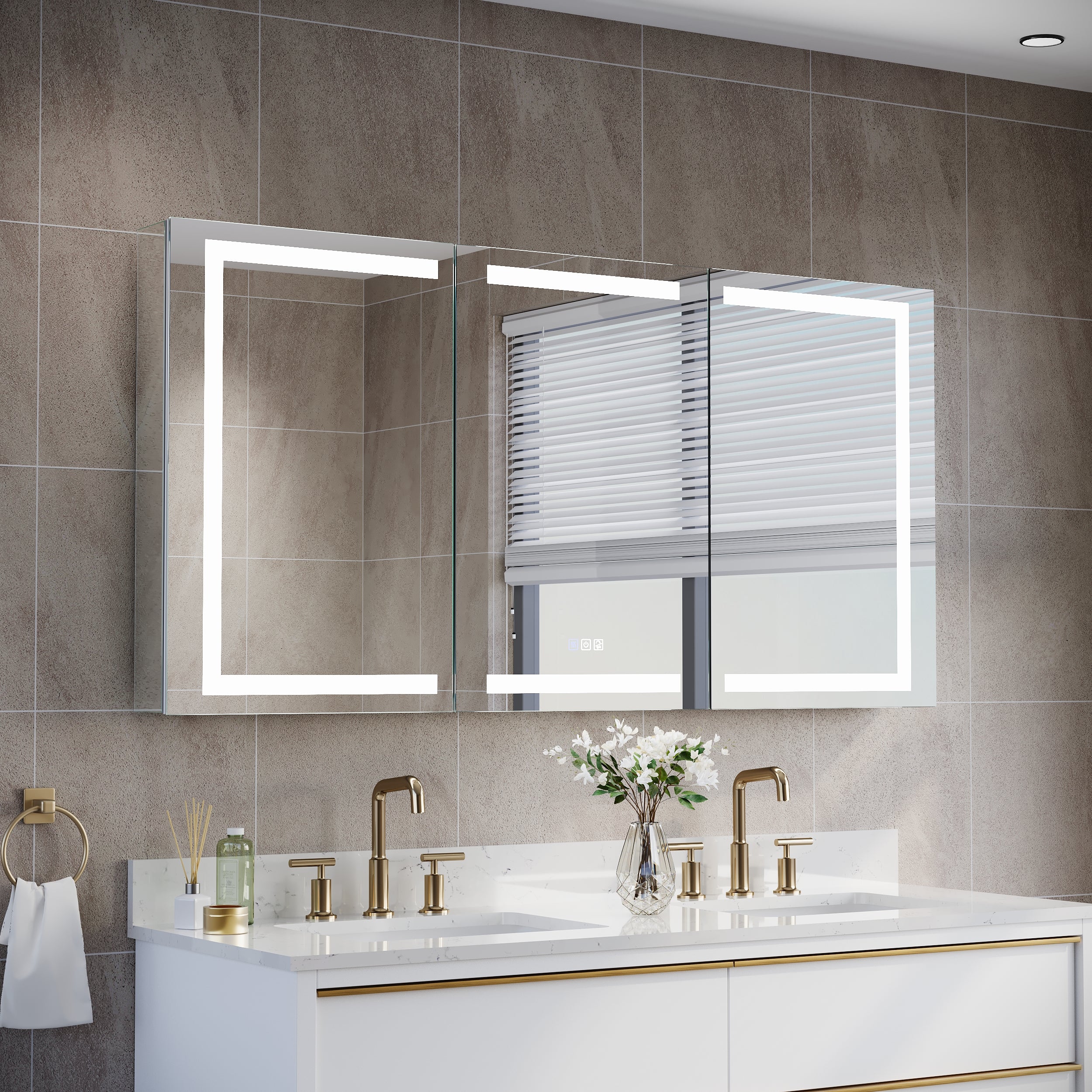
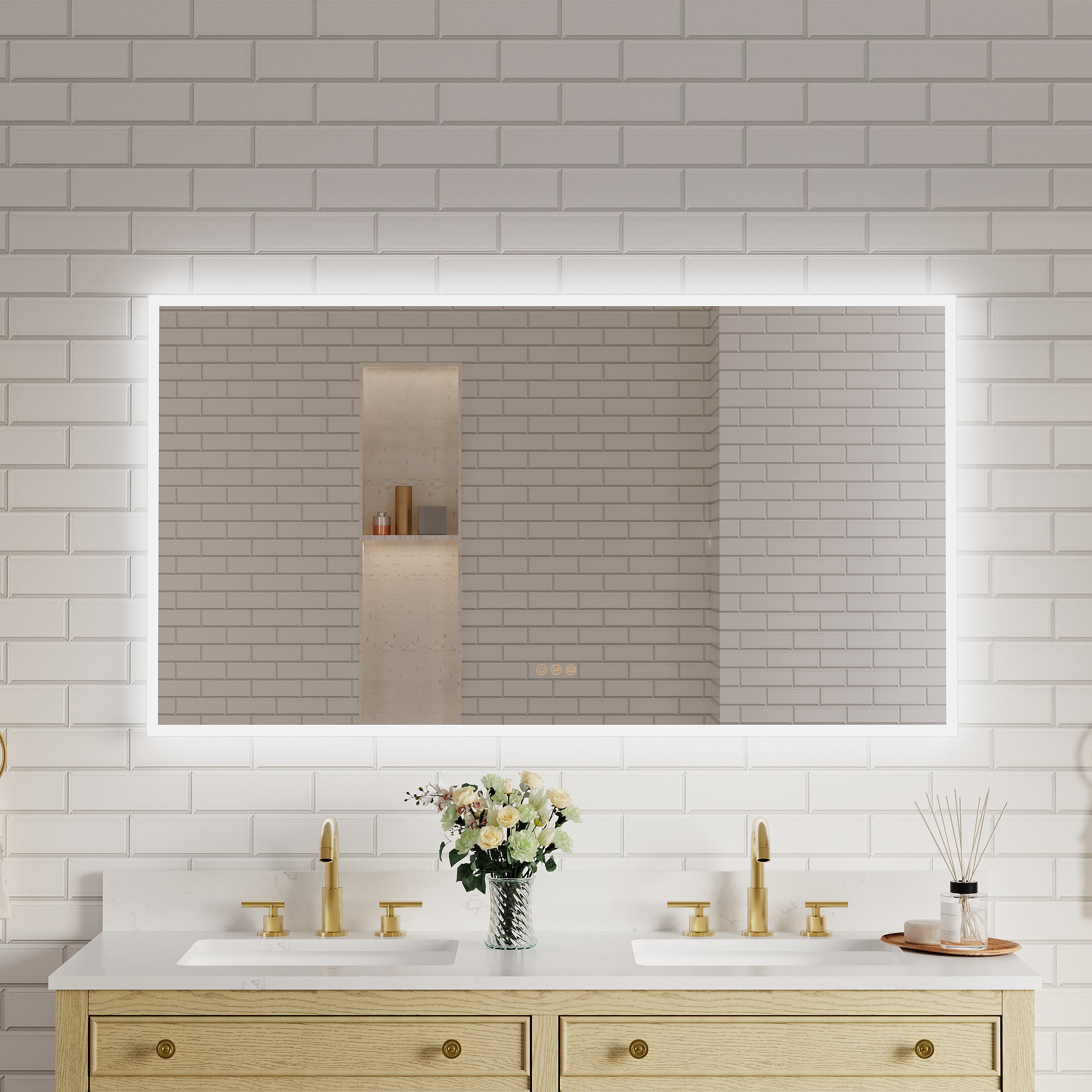
In a 60-inch double-basin layout, a common practice is to install two 24-inch to 30-inch mirror cabinets on either side. The lower and upper edges of the two mirror cabinets must maintain a horizontal error of less than 1/4-inch; it will significantly affect visual Coordination.
Survey data show that in a dual-mirror layout, visual dissonance significantly increases when the height error exceeds 1/2 inch.
5. The influence of embedded and surface-mounted structures
The embedded mirror cabinet is flush with the wall, and the installation height emphasizes alignment with the wall tiles or decorative lines.
The exposed structure should account for the door's opening and closing space to ensure the lower edge of the mirror cabinet does not interfere with the faucet's use. Especially when the faucet height exceeds 10 inches, sufficient space should be reserved.
Data shows that when the faucet height exceeds 8 inches, it is recommended that the distance between the bottom edge of the mirror cabinet and the countertop be at least 6 inches.
6. Adjustment of height differences among family members
If there is a significant height difference among family members, the center height of the mirror cabinet can be appropriately increased to 63-65 inches.
In spaces dominated by children, the installation height can be appropriately lowered to control the center of the mirror between 55 inches and 58 inches.
Data shows that in multi-member households, satisfaction with adjustable or customized height designs is about 12% higher.
7. Coordination between lighting and height
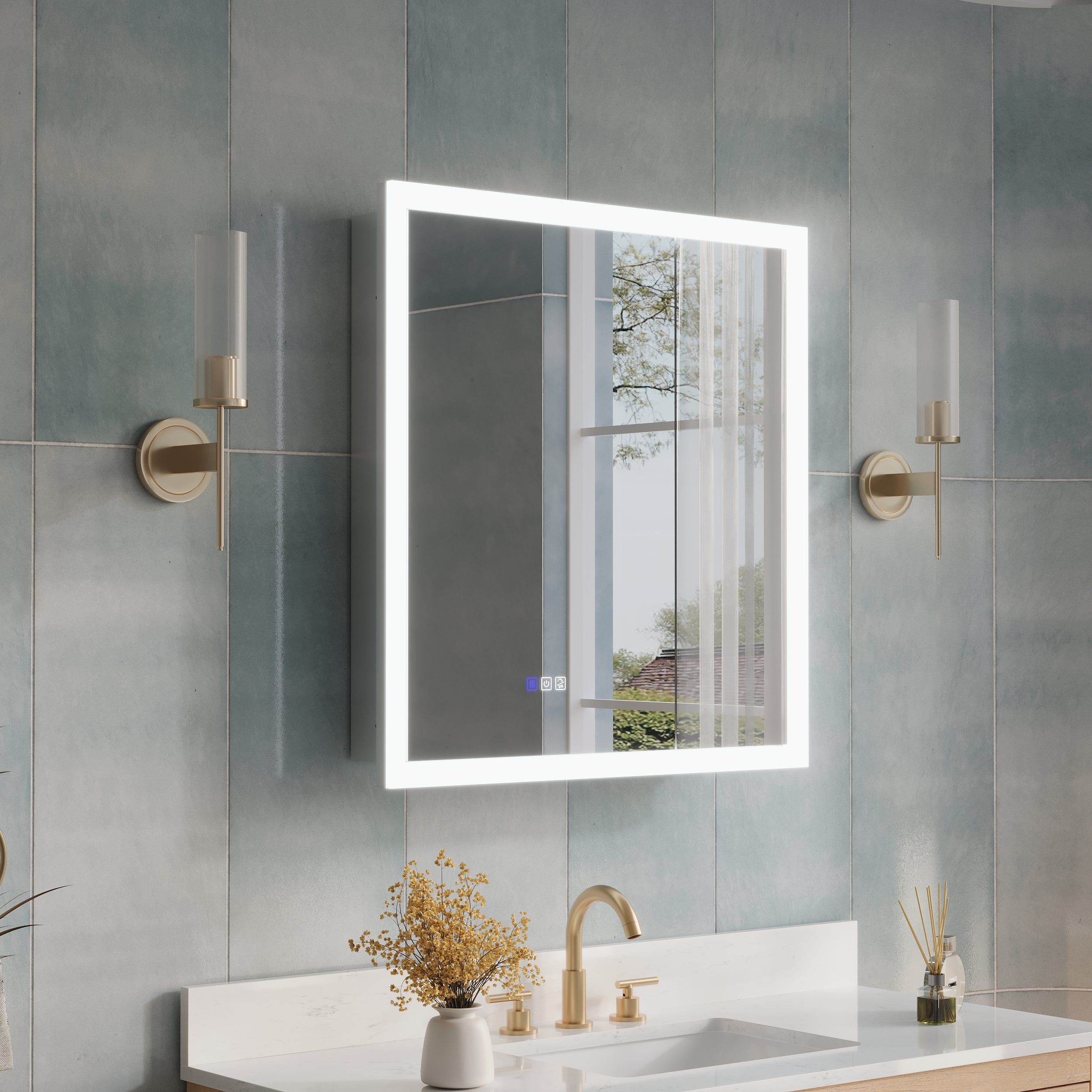
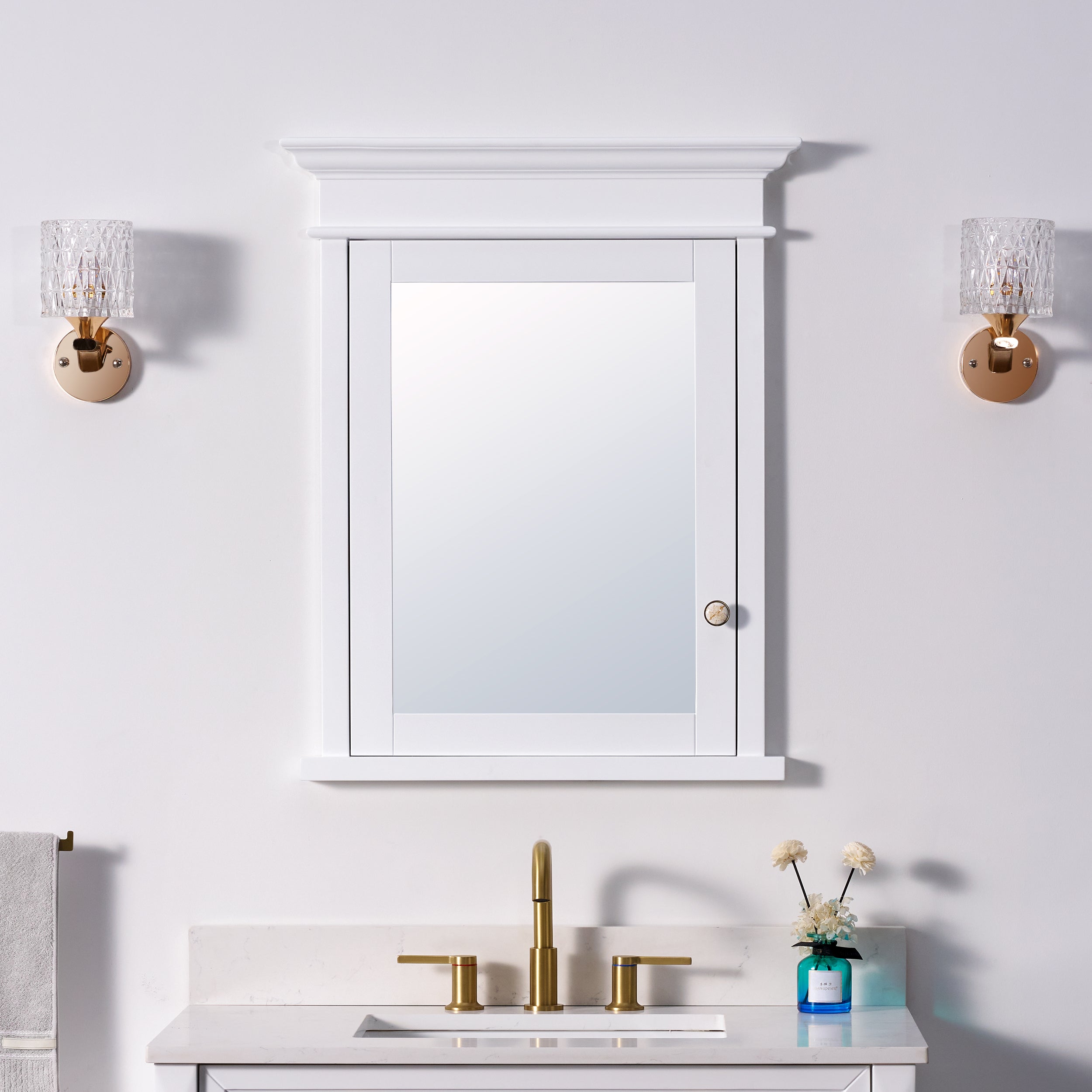
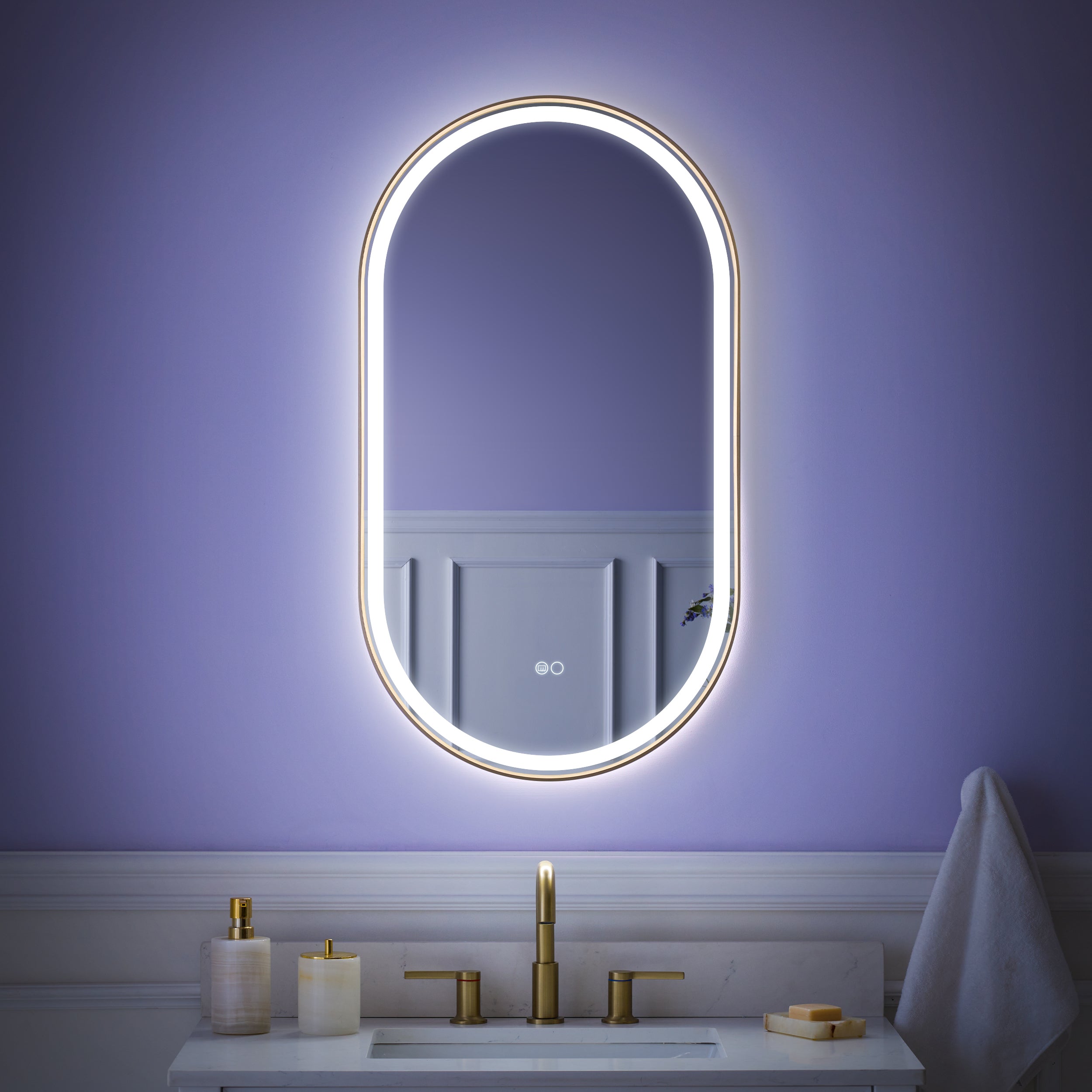
If wall lamps are installed on both sides of the mirror cabinet, the center of each lamp is usually aligned with the mirror's centerline, about 60 to 66 inches from the ground.
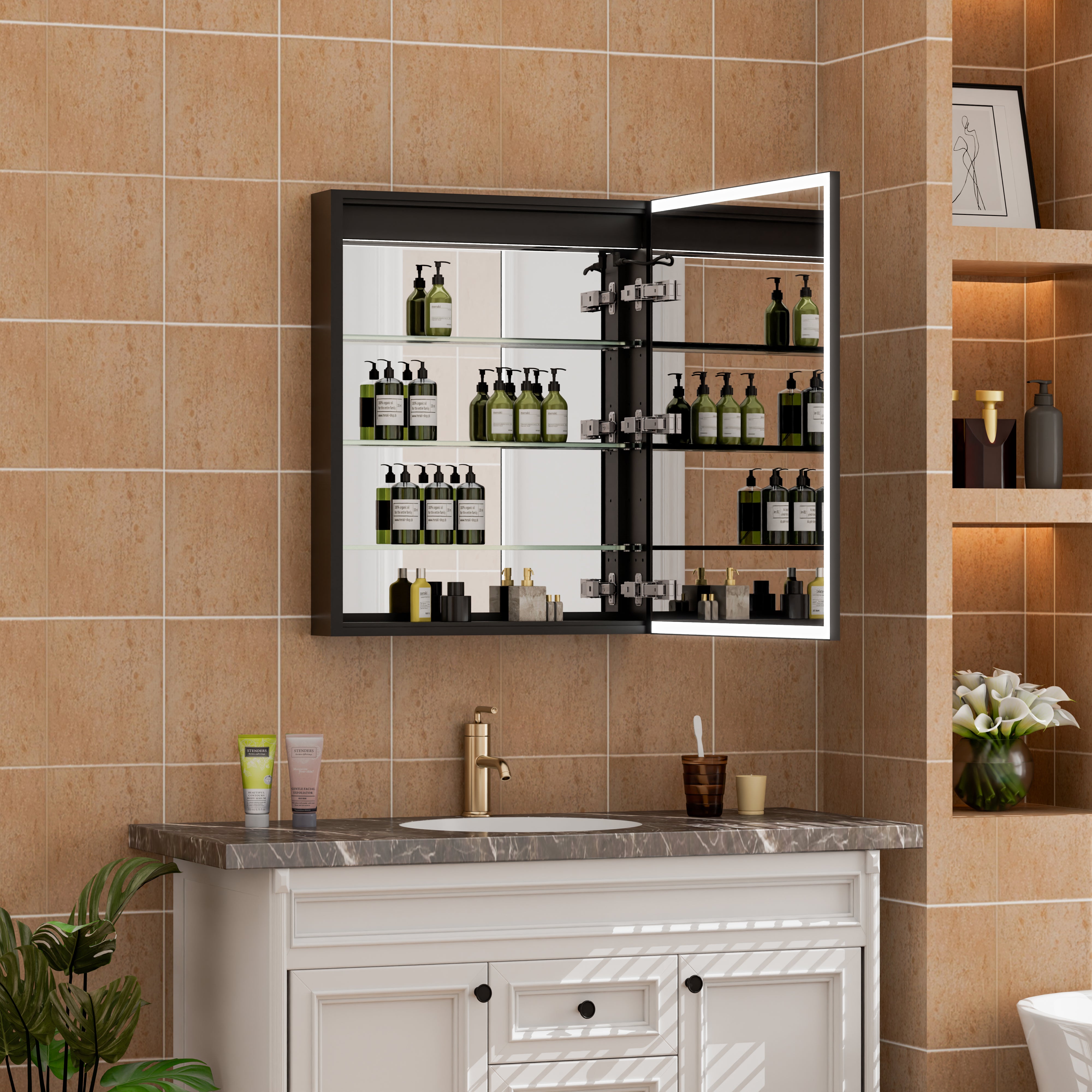
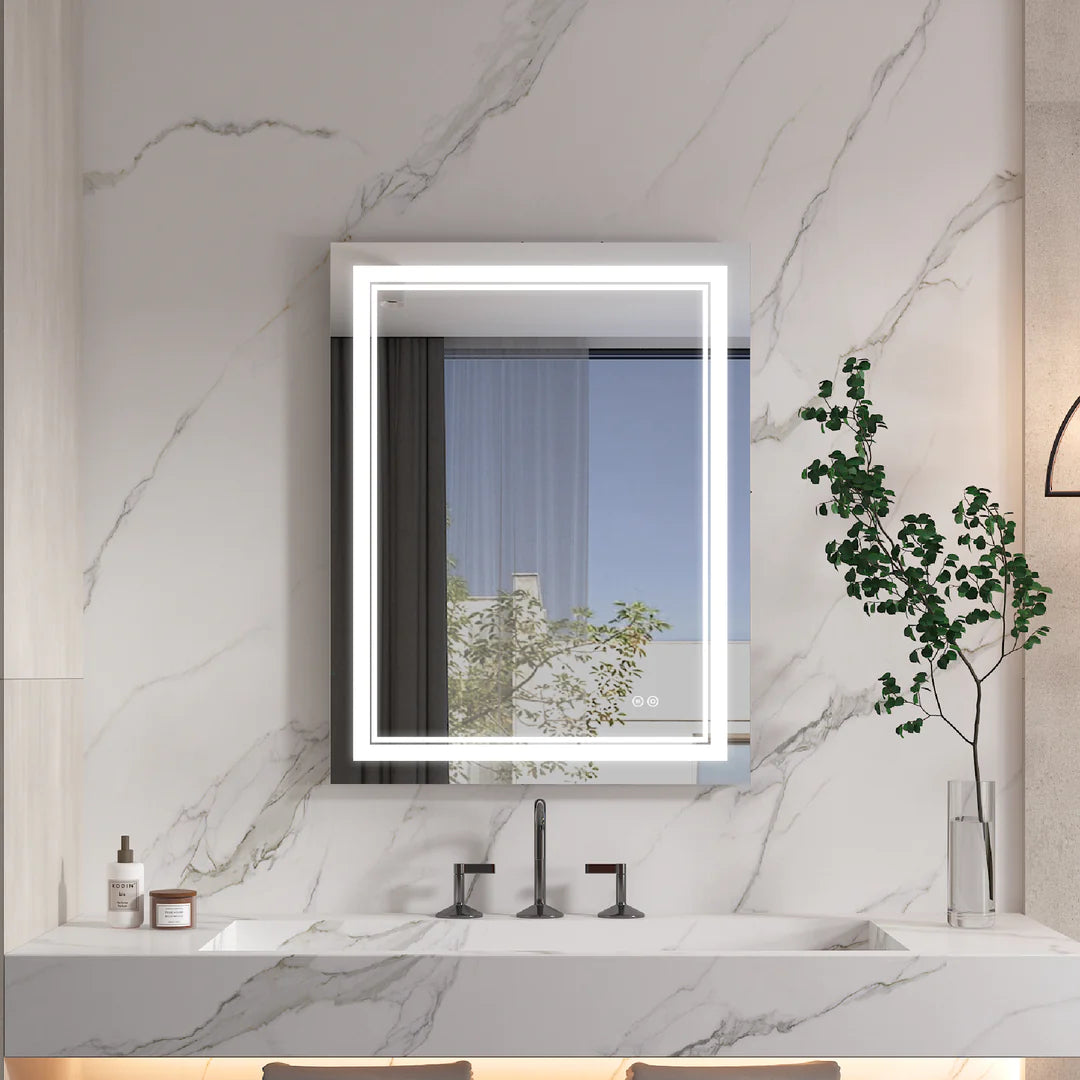
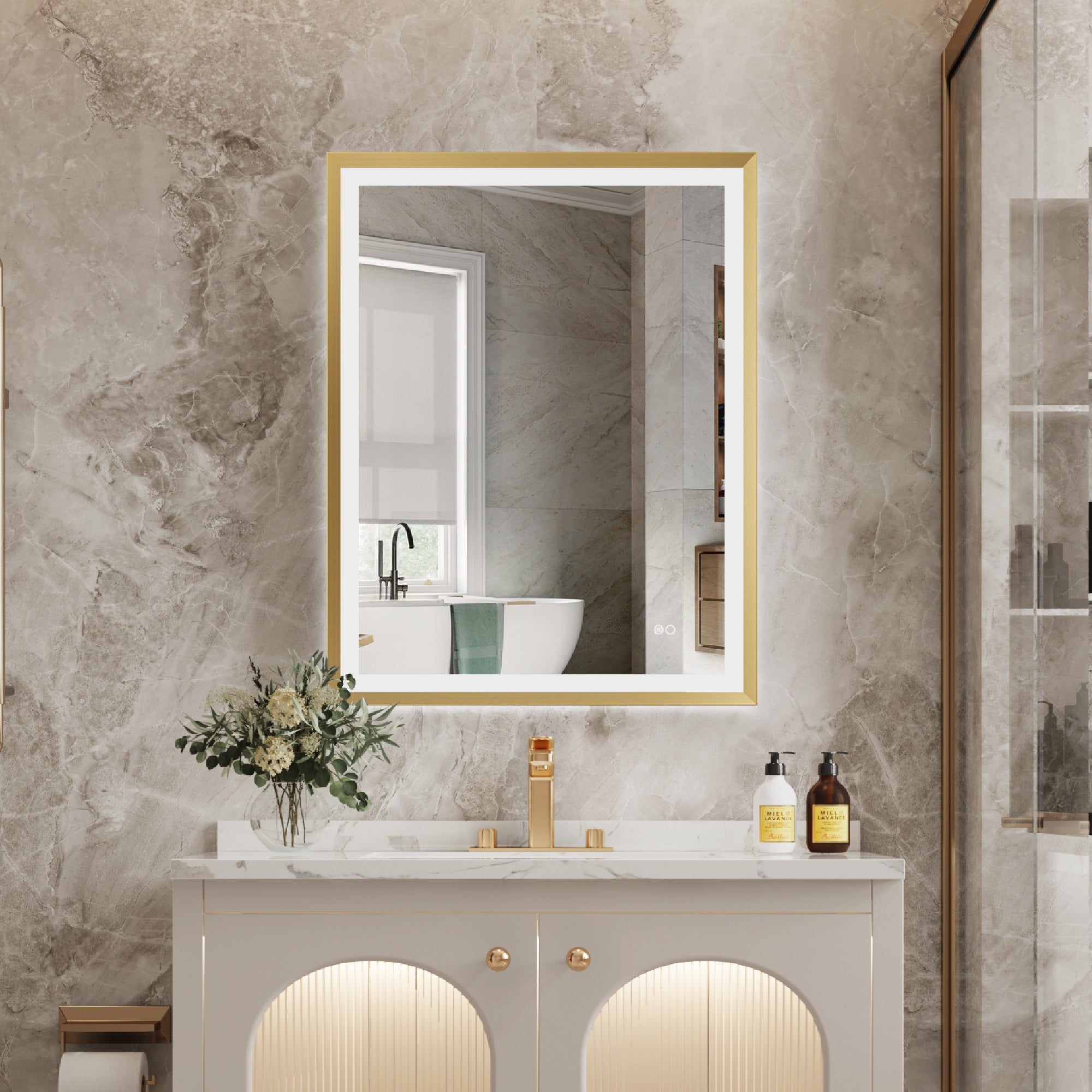
If it is a mirror cabinet with lights, the internal light distribution should evenly cover the entire mirror surface to avoid insufficient facial lighting due to the installation being too high.
Data shows that when the center of the mirror is at the same height as the lamp, facial shadows are reduced by about 20%.
8. Common errors and avoidance methods
• Ignore the countertop's actual height and install it directly according to the wall ratio.
• Failure to use a level caused the mirror cabinet to tilt.
• No reserved space for faucet or tailgate.
• Ignore the floor-to-height ratio, and make the top either too low or too high.
Statistics show that early measurement and simulation positioning can reduce installation errors by about 30%.

9. Conclusion
There is no single absolute standard for medical cabinet height; rather, it is determined by a comprehensive assessment of countertop height, mirror cabinet size, and ergonomic principles. Usually, the lower edge is between 5 inches and 10 inches from the tabletop, and the center of the mirror is between 60 inches and 65 inches from the ground, which is a relatively stable design range. From 24-inch small mirror cabinets to 34-inch high-specification structures, every inch difference affects the visual proportion and comfort of use. Accurate measurement and reasonable planning are the keys to achieving the unity of functionality and aesthetics.











Leave a comment
This site is protected by hCaptcha and the hCaptcha Privacy Policy and Terms of Service apply.