
















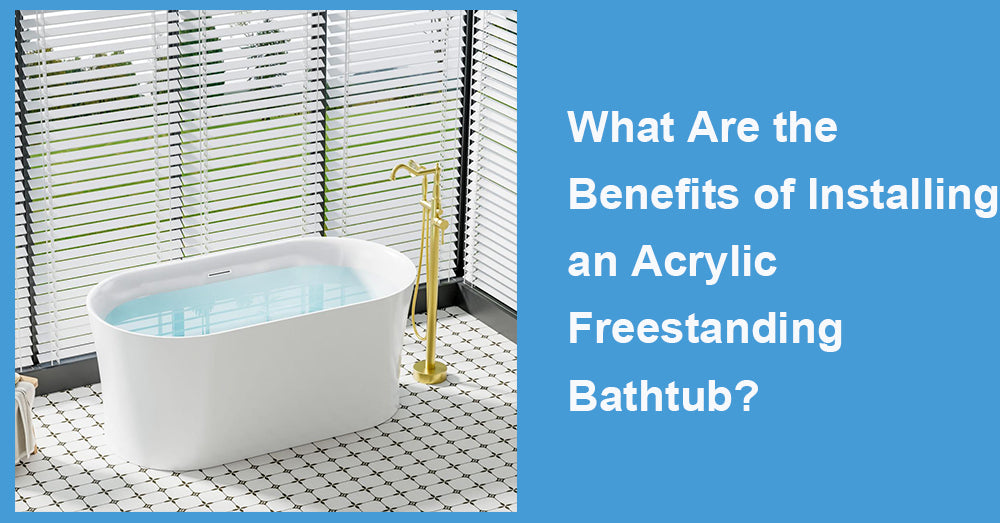
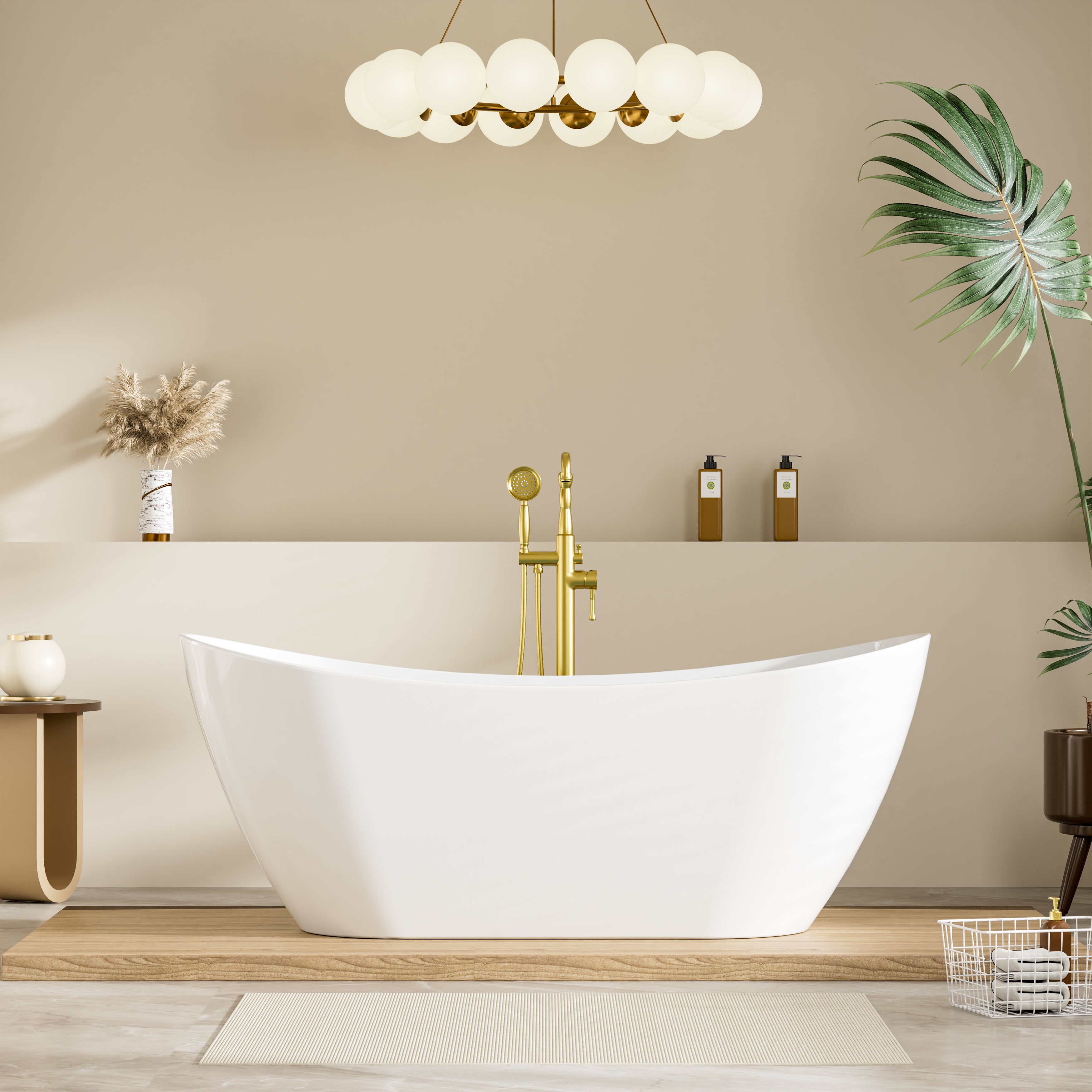
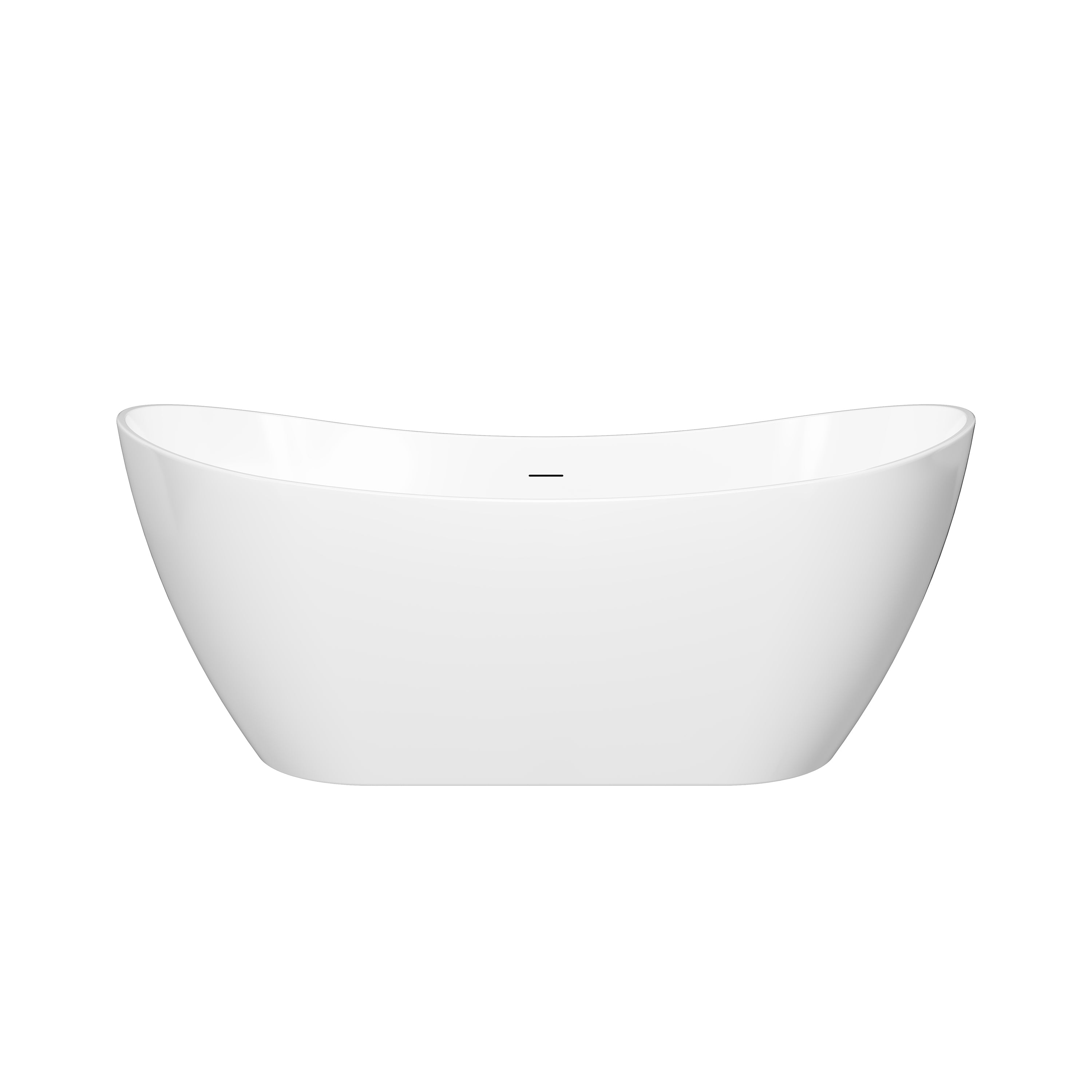
An acrylic freestanding bathtub can deliver the “spa centerpiece” look without the heavy structural demands and higher upkeep that come with some traditional tub materials. Acrylic tubs are popular because they are typically lighter to move and install, comfortable to the touch, easier to clean, and often easier to repair if they get scratched. When planning for water capacity, floor load, and long-term care, an acrylic freestanding tub can be one of the most practical ways to upgrade a bathroom's style and everyday comfort.
1. Easier Installation Because Acrylic Is Lightweight
One of the biggest practical benefits is weight. Acrylic freestanding tubs are typically much lighter than cast-iron tubs. (Cast iron is a dense, heavy metal commonly used in traditional bathtubs.) Acrylic tubs generally weigh around 60 to 100 lb, while cast iron tubs may weigh 250 to 500 lb or more (Source: North Built Construction). For remodeling, this weight difference means lighter tubs are easier to move, especially in narrow hallways or on upper floors, and may not require added structural support (which can mean installing extra beams beneath the bathtub).
Lightweight also reduces labor complexity. Even if you hire a contractor, fewer people and less equipment are often needed to maneuver and place the tub cleanly, reducing installation friction and scheduling delays.
2. Lower Floor Load Risk, Especially When You Calculate Filled Weight
A freestanding tub is not just about weight—the real load comes when filled with water and used. One gallon of water weighs about 8.34 lb (Source: CK-12), so water weight can be significant in deep soaking tubs.
Many freestanding tubs are larger than standard alcove tubs. One capacity guide notes that larger freestanding bathtubs can hold 90 to 100 gallons (Source: TubSafe). Using the 8.34 lb/gallon reference, a 90-gallon fill is about 751 lb of water (90 × 8.34), and a 100-gallon fill is about 834 lb of water (Source: CK-12; TubSafe). Add the tub weight and a bather, and the total load can exceed 1,000 lb in some scenarios, which is why placement and floor support should be planned carefully.
Acrylic helps because you start with a lighter empty tub than with heavier options like cast iron (Source: North Built Construction). This does not remove floor-load concerns, but it lowers the fixed weight and makes planning easier.
Practical planning tip: If the tub will be on an upper floor or in an older home, it may be worth confirming the joist direction and support with a qualified professional. You do not need to panic, but you do want to avoid surprises after the tub arrives.
3. Comfortable “Warm Touch” and Good Heat Retention for Soaks
Acrylic is often described as more comfortable to the touch than colder-feeling materials, and many homeowners choose it specifically for soaking comfort. Remodeling guidance notes acrylic tubs offer good heat retention and can keep bath water warm longer than many other materials in their price range (Source: Long Home). Another remodeling source explains that acrylic tubs are good at retaining heat, attributing this to acrylic's poor thermal conductivity, which helps keep bathwater warmer during a long soak (Source: Baileys Remodeling).
Better heat retention means you’re less likely to add hot water during a soak, improving comfort and reducing waste. It also enhances the coveted "spa retreat" feeling of freestanding designs.
4. Design Flexibility Without the Heavy Constraints
Acrylic freestanding tubs are available in many shapes, from modern oval silhouettes to slipper designs and compact footprints for smaller bathrooms. Because the material is relatively lightweight and can be formed into different profiles, it is easier to find a tub that fits your layout and style without forcing you to rebuild the room around a single heavy product.
This flexibility helps balance aesthetics and clearance. Freestanding tubs look best with space, but real bathrooms have doors, vanities, and showers competing for room. Acrylic makes it easier to pick a tub that fits without dominating the floor plan.
5. Low Maintenance Cleaning and Day-to-Day Practicality
Many homeowners choose acrylic because it's generally easier to maintain than porous materials. Contractor guidance notes that acrylic tubs are low-maintenance, with advantages such as simple installation and cost-effectiveness (Source: Angi). In daily use, this typically means a surface that cleans with gentle products and a soft cloth, without frequent sealing or specialty care. Harsh chemicals can damage the finish, so it is best to use non-abrasive cleaners and avoid harsh chemicals (Source: Angi). The upside is that basic care routines are straightforward, and the tub can stay clean without the high-maintenance demands of some premium materials.
6. Repairability When Scratches Happen
No tub material is immune to wear. The question is what happens when something goes wrong. Acrylic has a practical advantage here, as minor scratches and surface imperfections can often be repaired. A remodeling source notes that acrylic bathtubs are resistant to chipping and cracking, and that scratches can often be repaired relatively easily (Source: Baileys Remodeling). This matters for long-term ownership, especially in households with kids, pets, or frequent use.
Don’t resign yourself to expensive replacements. Acrylic’s repairability means you can keep your tub looking fresh and new, maximizing your investment and delivering long-term value.
7. Cost-Effectiveness Without Giving Up the “Statement Piece” Look
Freestanding tubs are often chosen for design impact. Acrylic can deliver that impact while staying relatively budget-friendly compared with heavy cast iron, stone, or copper options. Angi lists acrylic tubs as cost-effective and budget-friendly while still offering significant heat retention and durability (Source: Angi). If you want a bathtub that feels like a centerpiece but you do not want the project to become a structural engineering exercise, acrylic is a practical middle path. Think of your investment as maximizing your enjoyment every day. Acrylic gives you the best blend of comfort, style, and practicality—elevating your bathroom without complicating your life. Make a choice that rewards you daily.er.
8. What to Plan Before You Install
To get the full benefit, plan these details early.
· Capacity and hot water: Freestanding tubs can hold 90 to 100 gallons in some sizes (Source: TubSafe). Confirm your hot water supply can support the soak you want.
· Floor load: Use 8.34 lb per gallon to estimate water weight and total load (Source: CK-12).
· Faucet placement: Choose a filler with proper reach and height so water lands in the basin without splashing.
· Cleaning habits: Use gentle cleaners and avoid abrasive pads to protect the acrylic surface (Source: Angi).

Conclusion
Installing an acrylic freestanding bathtub can be a strong upgrade because it balances real-world practicality with high-end visual impact. Acrylic tubs are typically much lighter than cast iron, making installation easier and reducing the fixed weight on the floor (Source: North Built Construction). They also offer good heat retention for longer, more comfortable soaks (Source: Long Home; Baileys Remodeling), and they are generally low maintenance and repairable when scratches occur (Source: Angi; Baileys Remodeling). If you plan around capacity, filled weight, and sensible care, an acrylic freestanding tub can deliver the luxury look and the daily comfort people want, without turning the remodel into an overly complex project.















Leave a comment
This site is protected by hCaptcha and the hCaptcha Privacy Policy and Terms of Service apply.