
















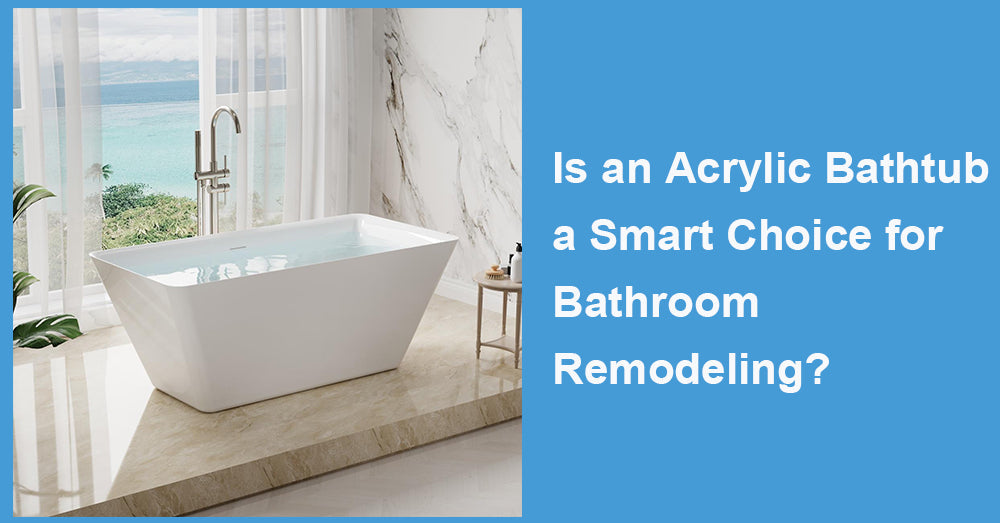
In bathroom renovation decisions, an acrylic bathtub is often seen as the mainstream choice that balances budget, comfort, and installation flexibility. Compared to cast iron or composite stone materials, acrylic bathtubs are lighter, offer more diverse shapes, and are easier to adapt to different spatial layouts. Industry data shows that in the standard 60-inch embedded bathtub replacement project, the proportion of acrylic material used has remained dominant for a long time. Whether it is a "smart" choice needs to be comprehensively evaluated across multiple factors, including size adaptation, insulation performance, durability, maintenance costs, and long-term value.
1. Size adaptation and spatial flexibility
Acrylic bathtubs are commonly available in lengths of 60, 66, and 72 inches, with widths ranging from 30 to 32 inches and depths typically 14 to 18 inches.
In bathrooms with 70 to 110 square feet, 60-inch embedded acrylic structures are the most common; In main bathroom spaces with an area exceeding 120 square feet, 66-inch or 72-inch models have a more comfortable advantage.
Data shows that in renovation projects, acrylic bathtubs have a compatibility rate about 20% higher than other materials in compact and medium-sized bathrooms, thanks to their customizable shapes and various edge designs.
2. Weight advantage and installation convenience
Acrylic bathtubs typically weigh 70 to 120 pounds, while cast iron models may weigh up to 300 pounds.unds.
The lighter weight reduces the requirement for load-bearing capacity of the ground structure and simplifies the handling and installation process. Data show that in standard renovation projects, the construction time for installing acrylic bathtubs is reduced by about 15% to 25% compared to cast-iron structures. In residential buildings or spaces that require installation upstairs, the weight advantage is particularly evident.
3. Thermal insulation performance
Acrylic material has good insulation performance. Test data show that when filled with hot water, the water temperature drops by approximately 3-5 °F within 30 minutes.
Compared to some metal materials, acrylic has a milder surface feel and does not cause any cold or irritating sensation.
In models longer than 66 inches, the water capacity increases to provide a more complete soaking experience. Data shows that among users who value comfort, the satisfaction rating of acrylic bathtubs is stable.
4. Durability and impact resistance
High-quality acrylic bathtubs are typically composed of multiple structural layers, including a reinforced fiberglass bottom layer.
Under normal usage conditions, acrylic has good impact resistance. Data show that in daily-use environments, structural integrity can be maintained for 10 to 15 years or more.
But the surface is relatively soft and may produce minor scratches when struck by hard objects. Therefore, strong abrasive tools should be avoided during cleaning.
5. Maintenance and cleaning convenience
The acrylic surface is smooth and easy to clean daily. Research data shows that cleaning once a week can reduce scale accumulation by about 40%.
Compared to porous materials, acrylic is less likely to absorb stains. Maintaining indoor humidity between 40% and 55% can help prolong surface gloss.
In hard-water environments, choosing models with anti-scaling coatings can further reduce maintenance requirements.
6. Diversity in Form and Design
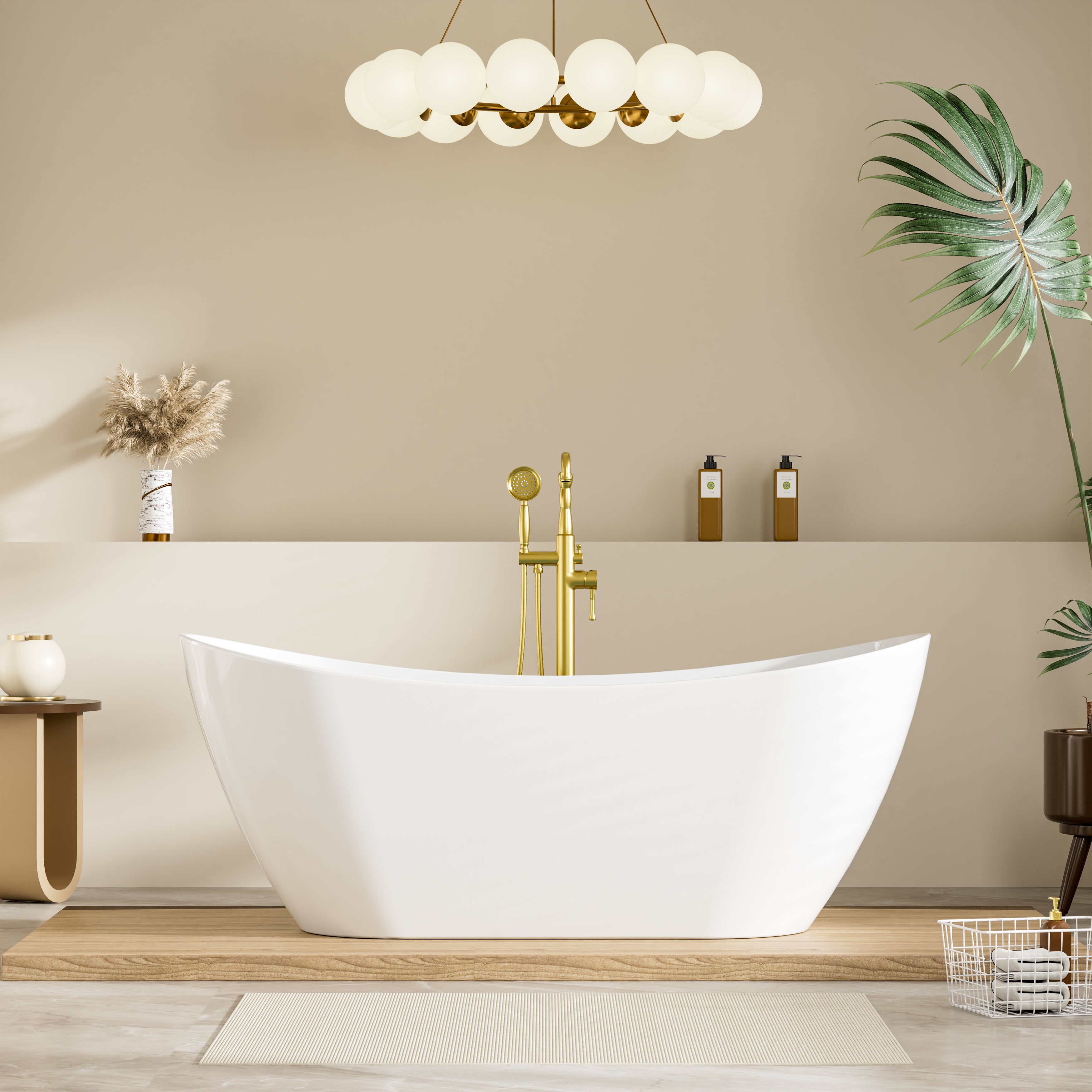
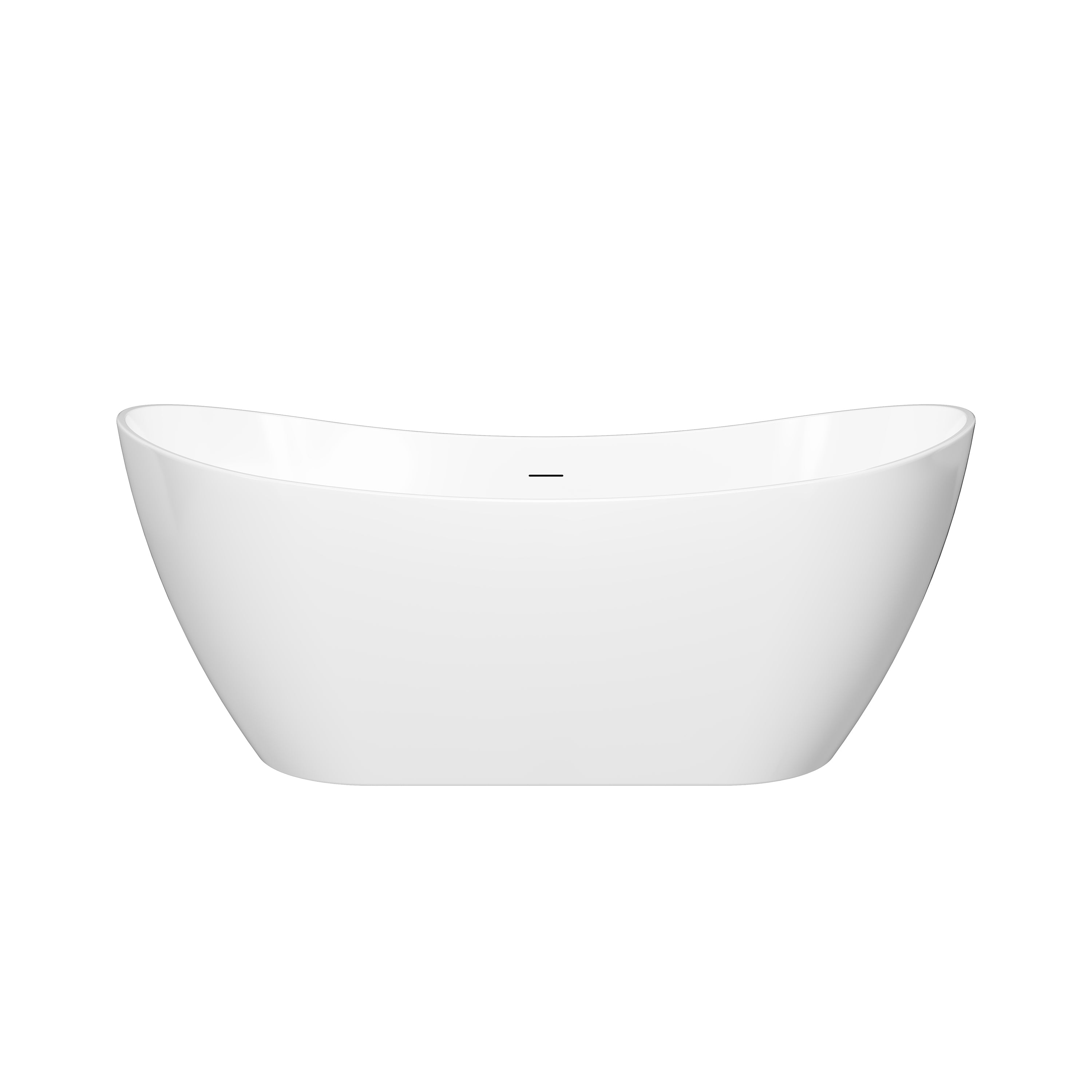
Acrylic material is easy to shape, so there are abundant choices in both standalone and embedded designs.
The standard length of independent models is 67 or 71 inches, with edge heights ranging from 22 to 24 inches, and a strong, streamlined design.
Data shows that the adoption rate of acrylic freestanding bathtubs has been increasing year by year as modern style renovation projects gain popularity.
Another practical advantage of acrylic bathtubs is their compatibility with a wide range of bathroom remodeling goals. Whether the project focuses on improving daily comfort, updating the visual style, or simplifying installation constraints, acrylic models can usually fit into the plan with fewer limitations. This versatility makes them especially appealing for remodels that need to balance function, appearance, and construction efficiency at the same time.
7. Cost and budget control
Compared to cast iron and composite stone bathtubs, acrylic bathtubs are usually more affordable.
Industry data shows that under the same size conditions, the initial investment cost of acrylic models is usually about 20% to 35% lower than that of other high-end materials.
For renovation projects with limited budgets but a desire to enhance comfort, acrylic provides a good balance of cost-effectiveness.
8. Long-term value and frequency of use
Bathroom renovation is often seen as an important step in improving the quality of living. Acrylic bathtubs maintain stable performance over the long term due to their comfort and ease of installation.
Data show that in households with high daily usage, the maintenance costs of acrylic bathtubs are relatively manageable.
If the space is limited or the use is mainly for showers, the return on investment in larger bathtubs may not be significant, so it should be judged based on actual usage needs.
9. Is it suitable for your renovation project?
If the bathroom area is between 70 and 120 square feet and you want to control budget and construction complexity, a 60-inch or 66-inch acrylic bathtub is often a rational choice.
If pursuing higher insulation performance or emphasizing ultimate durability, it can be compared with other materials.
The data shows that overall satisfaction with acrylic material is stable across medium budgets and conventional household use scenarios.

10. Conclusion
The advantages of an acrylic bathtub in a bathroom renovation include its light weight, stable insulation, and diverse design. From the 60-inch standard embedded structure to the 72-inch wide design, every inch affects comfort and proportional coordination. By reasonably evaluating the space, frequency of use, and budget, acrylic bathtubs can achieve a balance between functionality and cost, providing reliable,d practical upgrade solutions for renovation projects.











Leave a comment
This site is protected by hCaptcha and the hCaptcha Privacy Policy and Terms of Service apply.