
















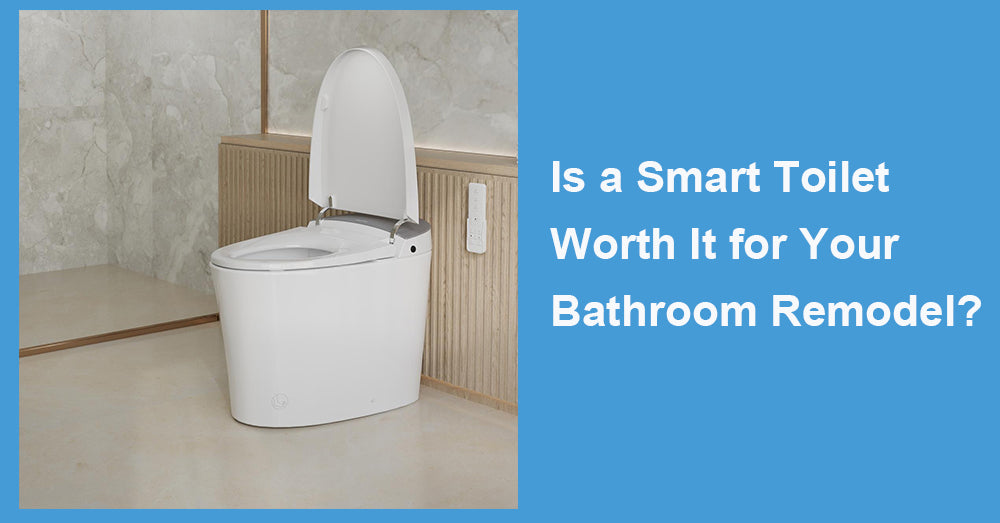
In this round of bathroom renovation, a smart toilet is no longer just a fresh configuration that "looks high-end", but a functional upgrade that more and more projects will seriously consider. Public trend data shows that in the past year's bathroom renovations, 38% of newly installed or upgraded toilets have at least one specialized function; In the previous year's data, this proportion was 41%. This indicates that it is not a product for a very small number of people to try, but has already entered the mainstream of renovation decision-making. The real question is no longer whether it's trendy, but whether the efficiency, cleaning experience, and long-term comfort it provides are worth the money.
1. Whether the smart toilet is worth it depends first on whether your bathroom is in a high-frequency usage scenario.
If this is the main bathroom, used every morning and evening, or if the home is already considering convenience and accessibility in the coming years, then its value will be significantly amplified. A study by Houzz 2025 shows that 68% of bathroom renovations take special needs into consideration, and of these,47% are preparing in advance for needs five years later or even longer; In the same group of studies, 23% of the solutions aimed at aging in place also incorporate ADA oriented toilet configurations. Combined with CDC data, over a quarter of people aged 65 and above experience falls each year, and the probability of falling again after a first fall increases significantly. That is to say, the real value of smart toilets for many households is not the "sense of technology", but the lower cost of getting up, fewer cleaning actions, and a smoother nighttime use experience.
2. What is truly worth spending money on is not the label of "intelligence" itself, but the specific functions it supports.
The publicly available data in the past two years is consistent: the most common toilet-specific functions consistently rank first are bidet seat, adjustable water pressure, heated seat, air dryer, self-cleaning, and nightlight. In the data for 2025, the relevant proportions are approximately 21%, 20%, 19%, 18%, 16%, and 14%, respectively; The corresponding data for 2024 are roughly at 23%, 21%, 17%, 17%, 19%, and 13%. The real meaning behind this is very clear: what users are truly willing to pay for is not the complex, flashy whole machine, but the functions that can solve a small trouble every day. The most common mistake when making a purchase is paying for a "fully functional all-in-one machine" without clearly thinking about whether the most commonly used features are cleaning, heating, automatic deodorization, and night lights.
3. If you value comfort and ease of sitting, size is more important than brand.
According to ADA accessibility standards, the common range for the height of water toilet seats is 17-19 inches; NKBA's bathroom planning proposal suggests reserving a clear space of 30 inches in front of the toilet, with a minimum common value of 21 inches. It is recommended to have at least 18 inches from the centerline of the toilet to the side wall or obstacle, with a minimum common value of 15 inches. These numbers illustrate a practical issue: smart toilets are not just about being able to be put down when purchased, but rather about whether people can smoothly turn around, stand up, clean, and open/close doors after installation. For a small bathroom, no matter how many functions there are, if the front activity space is compressed too narrow, the experience will actually deteriorate.
4. From a water-efficiency perspective, smart toilets are not inherently wasteful; the key is choosing the right flushing system.
EPA's WaterSense data indicates that toilets account for nearly 25% of indoor water usage in ordinary residential buildings; Products that meet WaterSense standards can achieve 1.28 gallons per flush or lower, which is 20% less than the current federal standard of 1.6 gpf. If the old, inefficient toilet is replaced with WaterSense-certified products, the average household can save about 13,000 gallons of flushing water per year and reduce annual water bills by about $170. In the context for renovation, this means that "intelligence" should not be equated with "water waste". What truly matters is whether there is a mature flushing platform, WaterSense certification, and whether water conservation and cleaning power are considered together.
5. However, it must also be made clear that smart toilets are not the optimal solution for all projects.
If you are only using a low-frequency guest bathroom with a limited budget, or if your existing space, power location, and maintenance conditions are average, then a "regular high-performance toilet with bidet seat" is often more stable than an integrated smart toilet. According to public data from 2024, 35% of toilets with special functions use built-in functional solutions, suggesting that the market does not consider "full machine integration" the only answer. The most cost-effective way to renovate is not to rush to the highest configuration in one step, but to prioritize the budget on stable flushing, appropriate seat height, practical cleaning function, and convenient subsequent maintenance.
6. If your renovation goal is long-term living rather than short-term visual upgrades, the value of smart toilets is easier to establish.
For households with elderly members, joint discomfort, or frequent nighttime waking, features such as warm-water cleaning, heated seats, night lights, and comfortable seat heights enhance daily life. According to 2025 Houzz data, many now prioritize future needs when renovating bathrooms, and safety and accessibility features are on the rise. This shift makes smart toilets more of a "residential efficiency upgrade" than a luxury.

7. To summarize, the value of a smart toilet lies not in its technology level, but in its ability to consistently address real needs in your space.
If your priorities are a comfortable seat, reduced manual cleaning, an improved nighttime experience, and a future-ready bathroom, investing is worthwhile. If, instead, you prioritize a high-end look in renderings, face space constraints, have a strict budget, and anticipate average maintenance, the return on investment is much lower. Ultimately, the best choice is not the priciest smart toilet, but the option least likely to bring regret in size, functionality, water efficiency, and maintenance.














Leave a comment
This site is protected by hCaptcha and the hCaptcha Privacy Policy and Terms of Service apply.