














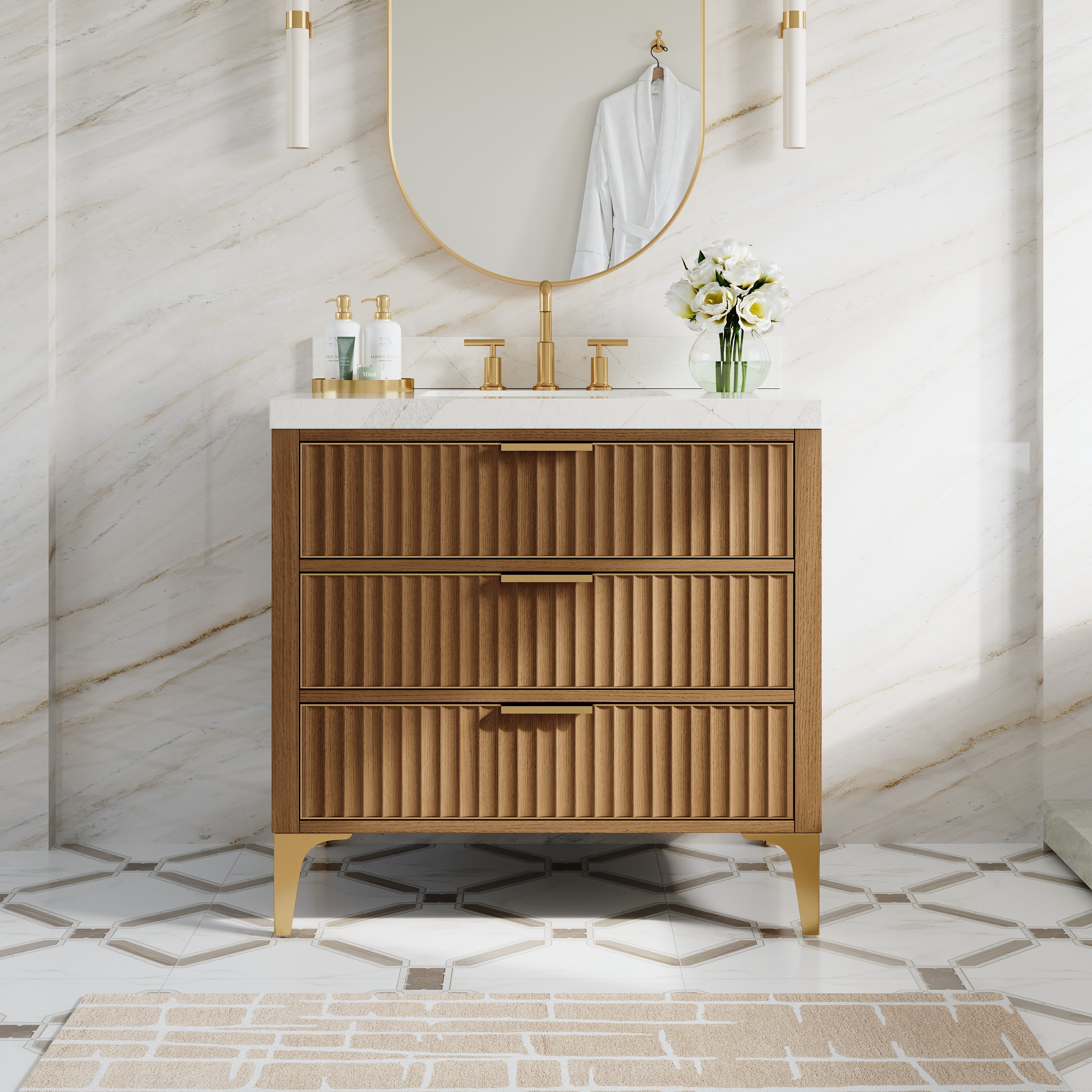
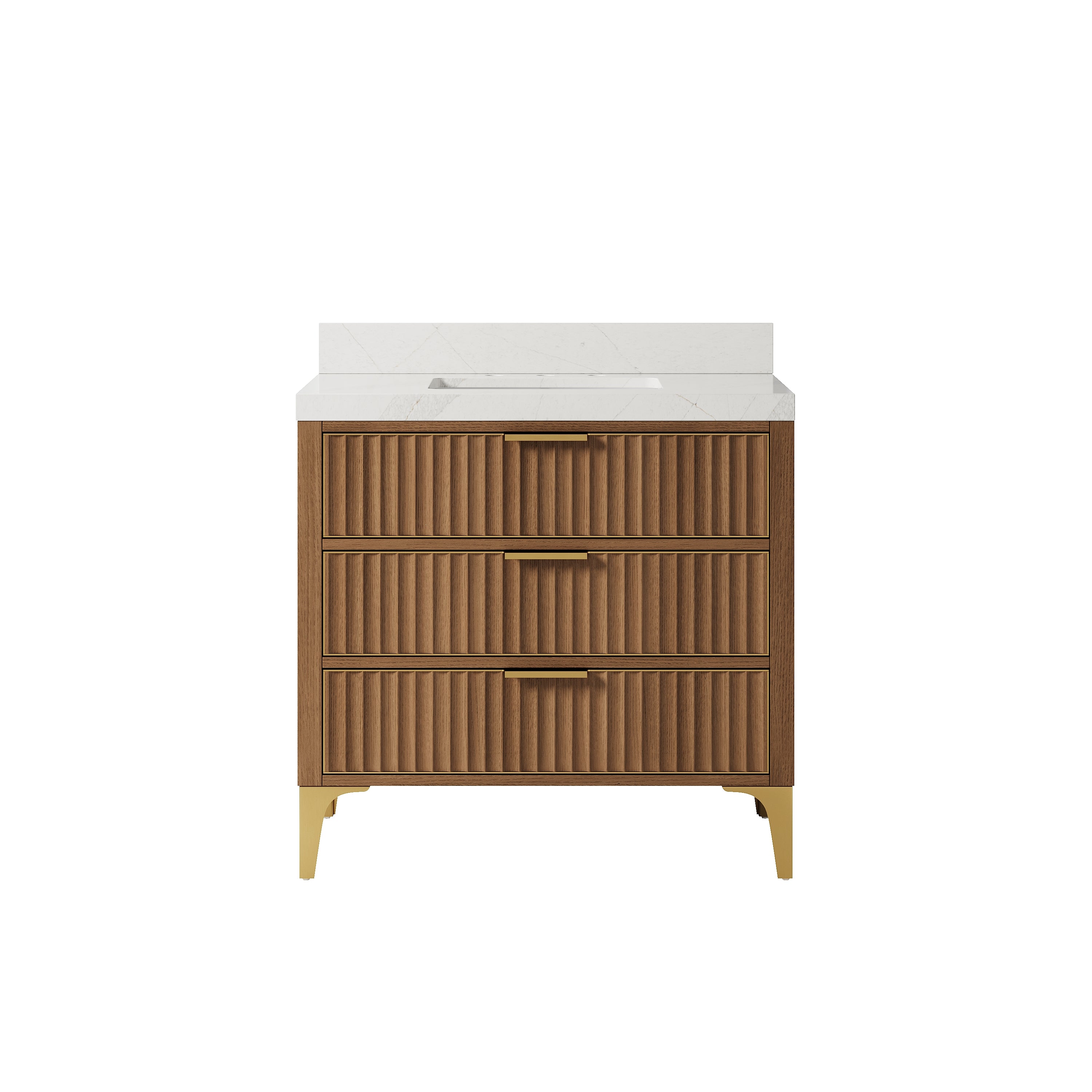
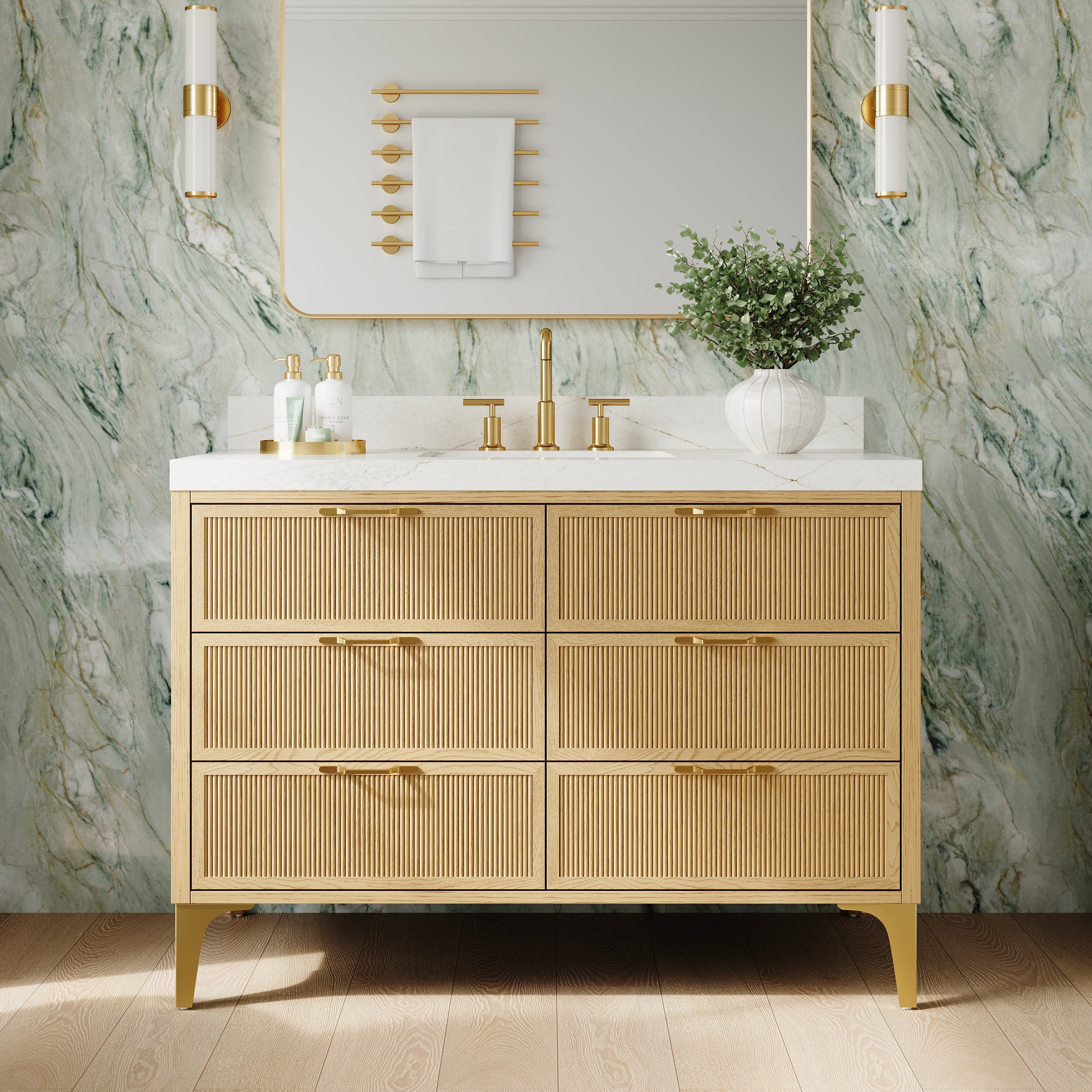
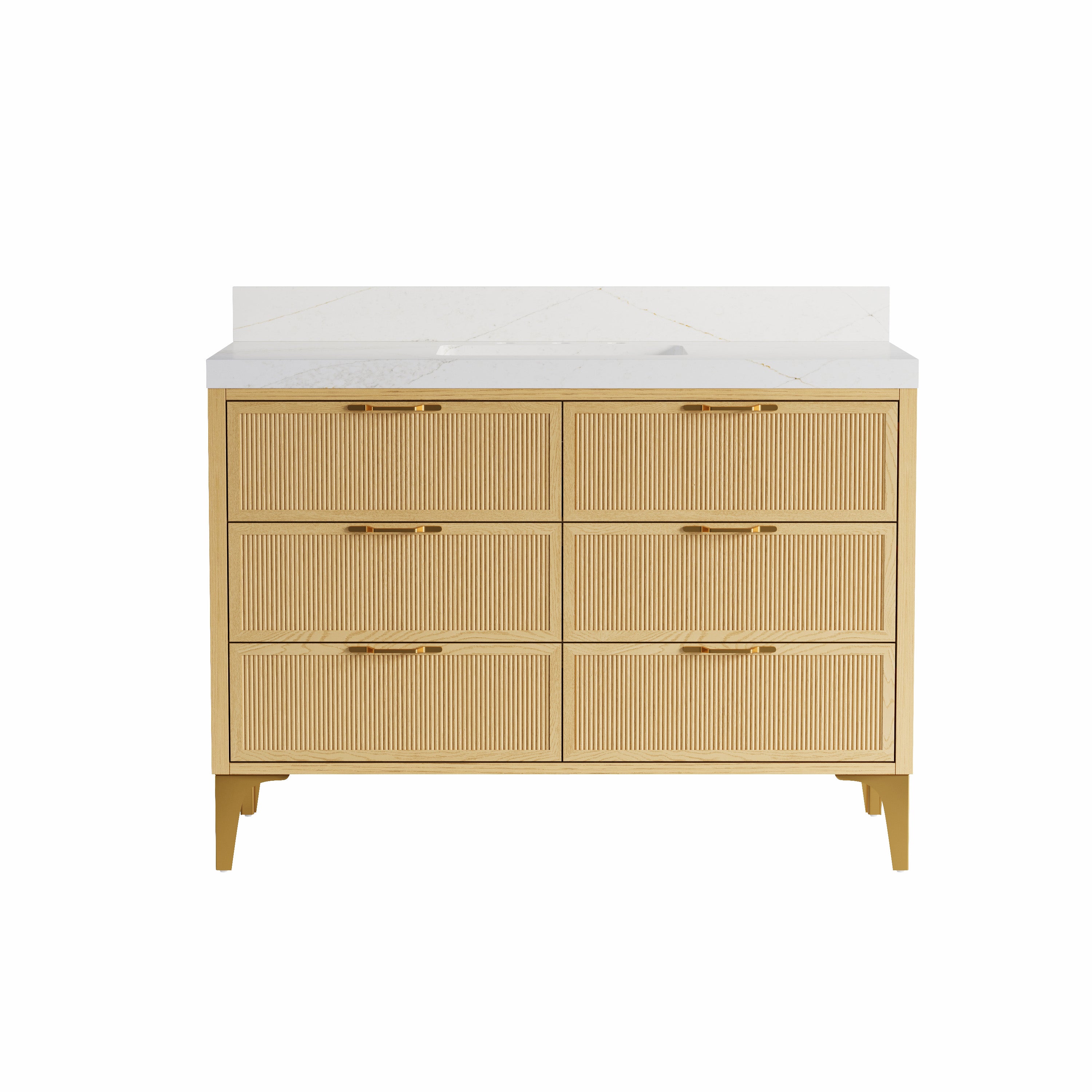


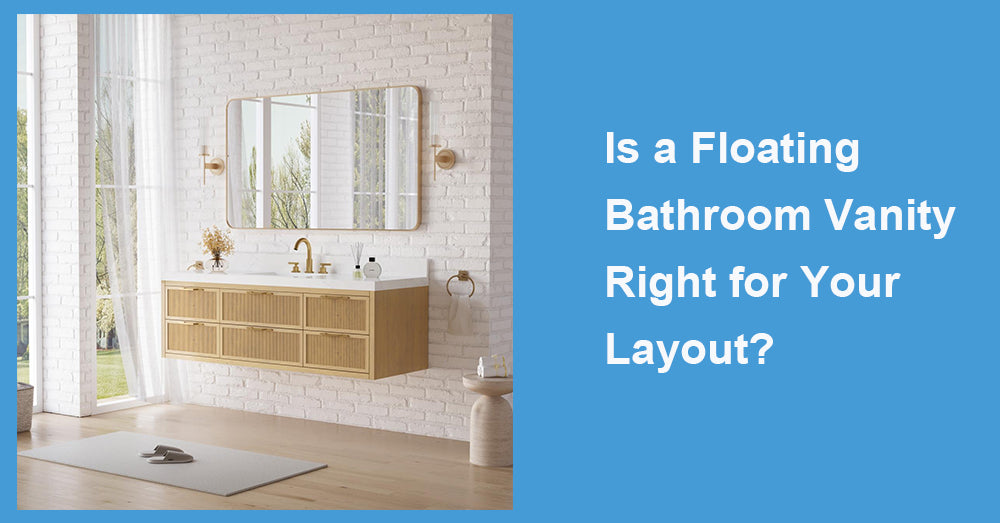
In the trend of modern bathroom design, the floating bathroom vanity is gradually becoming a representative choice that emphasizes minimalism and spatial sense. Unlike traditional floor-standing cabinets, the suspended structure is fixed to the wall, leaving the bottom space empty and visually more lightweight. Whether this design is suitable for your space, from a 24-inch compact layout to a 60-inch double basin structure, depends on the wall structure, storage requirements, and overall flow planning. Data shows that in bathrooms with an area of less than 100 square feet, suspended structures can significantly improve the space width rating, but not all layouts are suitable for this form.
1. Spatial sense and visual proportion
The biggest advantage of a suspended cabinet is its visual extension. Because the bottom of the cabinet is about 8 to 12 inches above the ground, the floor's continuity is enhanced, making the space appear larger.
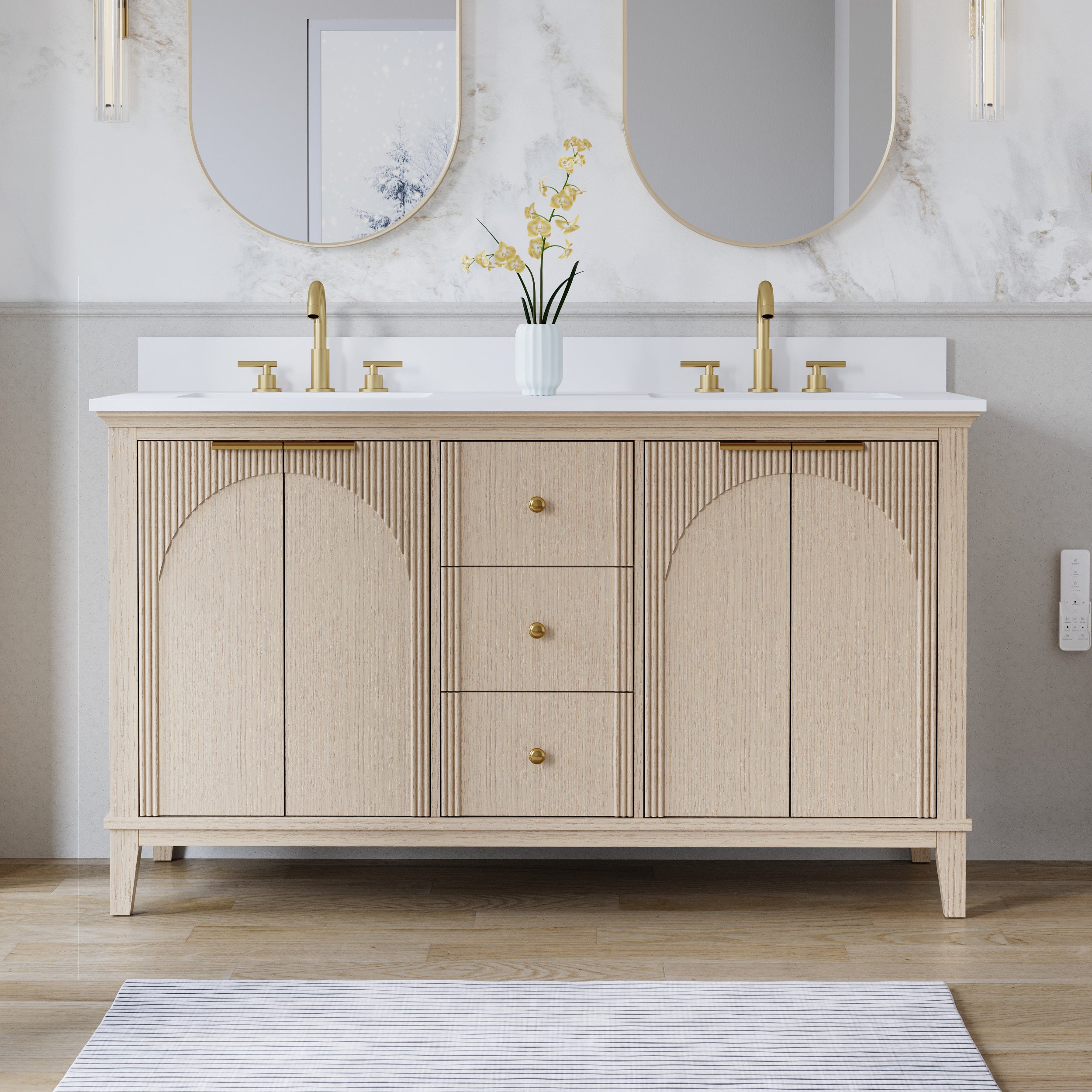
In a single-pot layout with a width of 36 inches, using a suspended structure can increase the visual width by about 15% to 20%. In the 60-inch60-inch dual-basin main bathroom, the suspended structure, combined with a large mirror surface, can further enhance the lateral extension effect.
Design data show that in bathrooms with an area less than 80 square feet, suspended cabinets result in significantly lower spatial pressure than floor-standing cabinets.
2. Installation height and ergonomics
The traditional vanity height is usually between 34 inches and 36 inches. The suspended design allows customization based on the user's height, with common installation heights ranging from 32 inches to 36 inches.
If family members are tall, the tabletop height can be set above 36 inches; if you prefer a low hand-washing position, you can adjust it to 32-34 inches.
Data shows that in designs with customizable heights, user satisfaction is about 10% higher than in fixed-height products.
3. Wall load-bearing and structural requirements
The suspended cabinet must be fixed on a sturdy wall structure. Most walls adopt a 16-inch center-to-center column structure. During installation, ensure the fixing bolts penetrate the column by at least 1 inch.
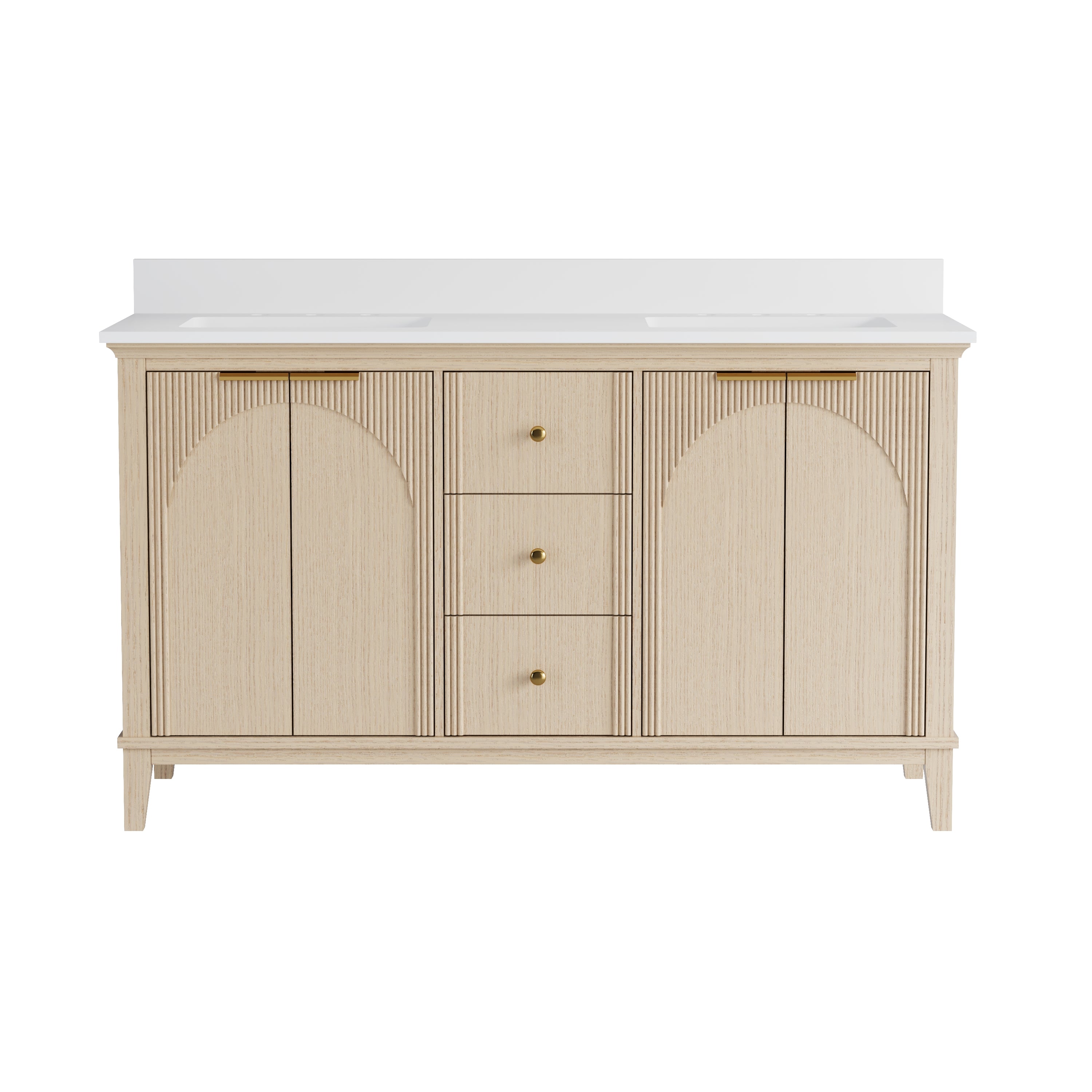
Taking a 60-inch double-basin suspended cabinet as an example, the overall weight may exceed 100 pounds, and with the addition of quartz countertops and basins, the total load-bearing capacity may exceed 200 pounds. Therefore, high-strength fasteners must be used.
The data shows that in installation cases where the column is not properly fixed, the risk of long-term sinking or loosening is significantly increased.
4. Is the storage capacity sufficient?
Floor-standing cabinets typically offer more storage space because the bottom is not limited. Suspended structures are slightly limited in height and typically have fewer internal drawer layers.
In a 36-inch single pot layout, the effective storage capacity of a suspended cabinet may be reduced by about 10% to 15% compared to a floor-standing cabinet of the same size. But by optimizing the drawer partition design, some gaps can be filled.
If there is a high demand for household storage, it is recommended to choose a design with deep drawers or to pair it with additional cabinets.
5. Cleaning and maintenance advantages
Due to the empty bottom, cleaning is more convenient. Robot cleaning equipment can directly enter the area below the cabinet, reducing blind spots.
Data show that in suspended-structure spaces, the average ground-cleaning time is reduced by about 15%.
At the same time, improved ventilation at the bottom can help reduce the risk of moisture accumulation.
6. Style and design matching
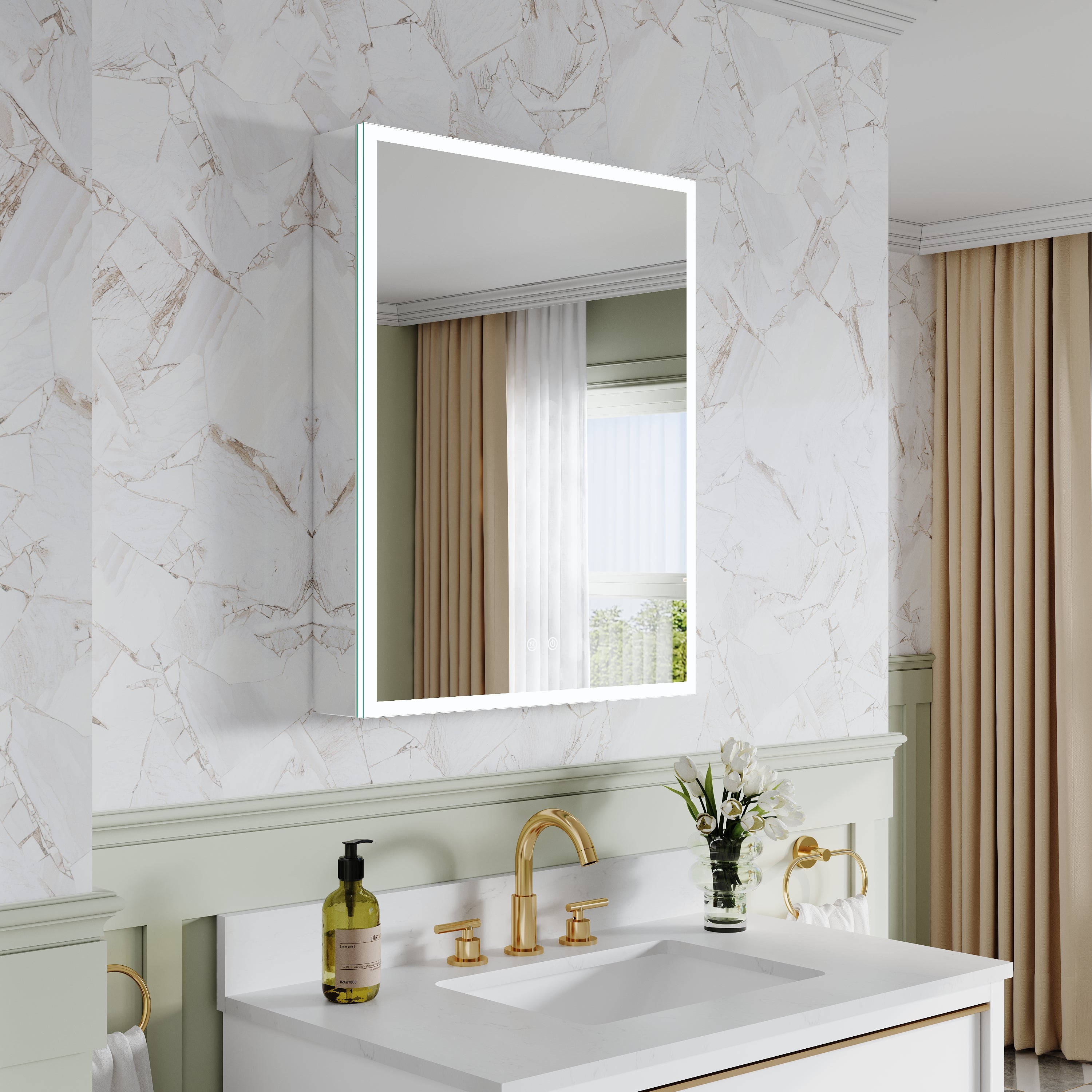
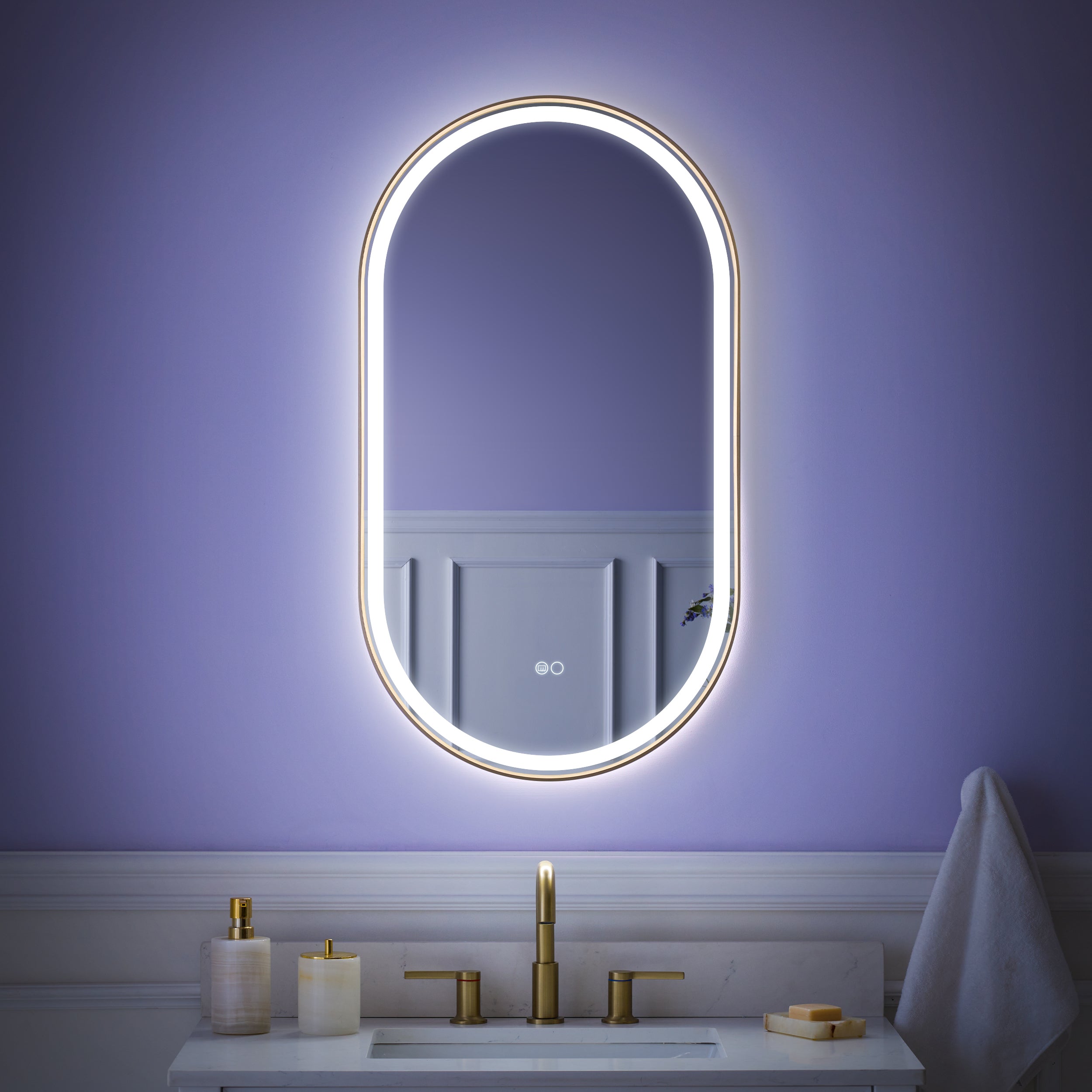
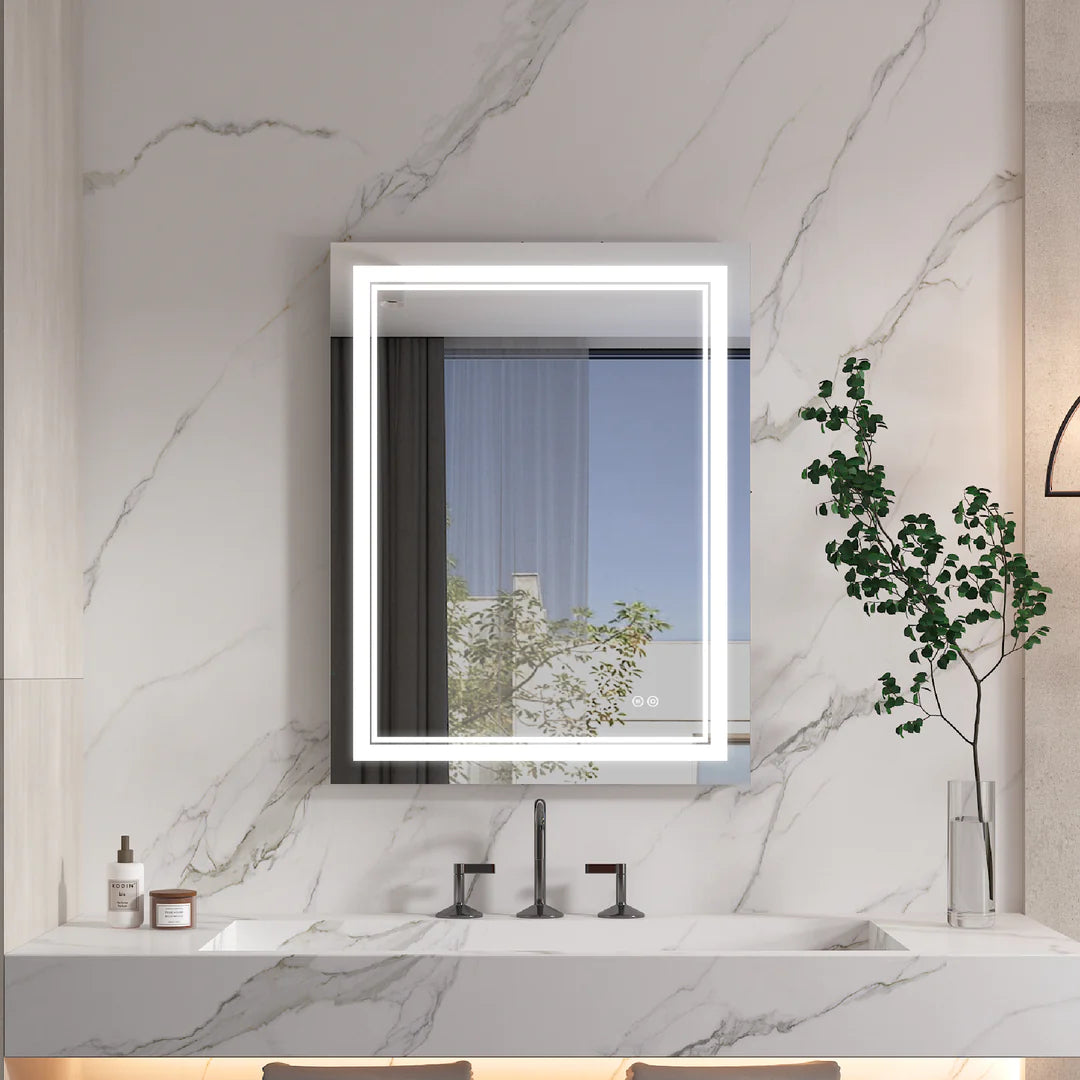
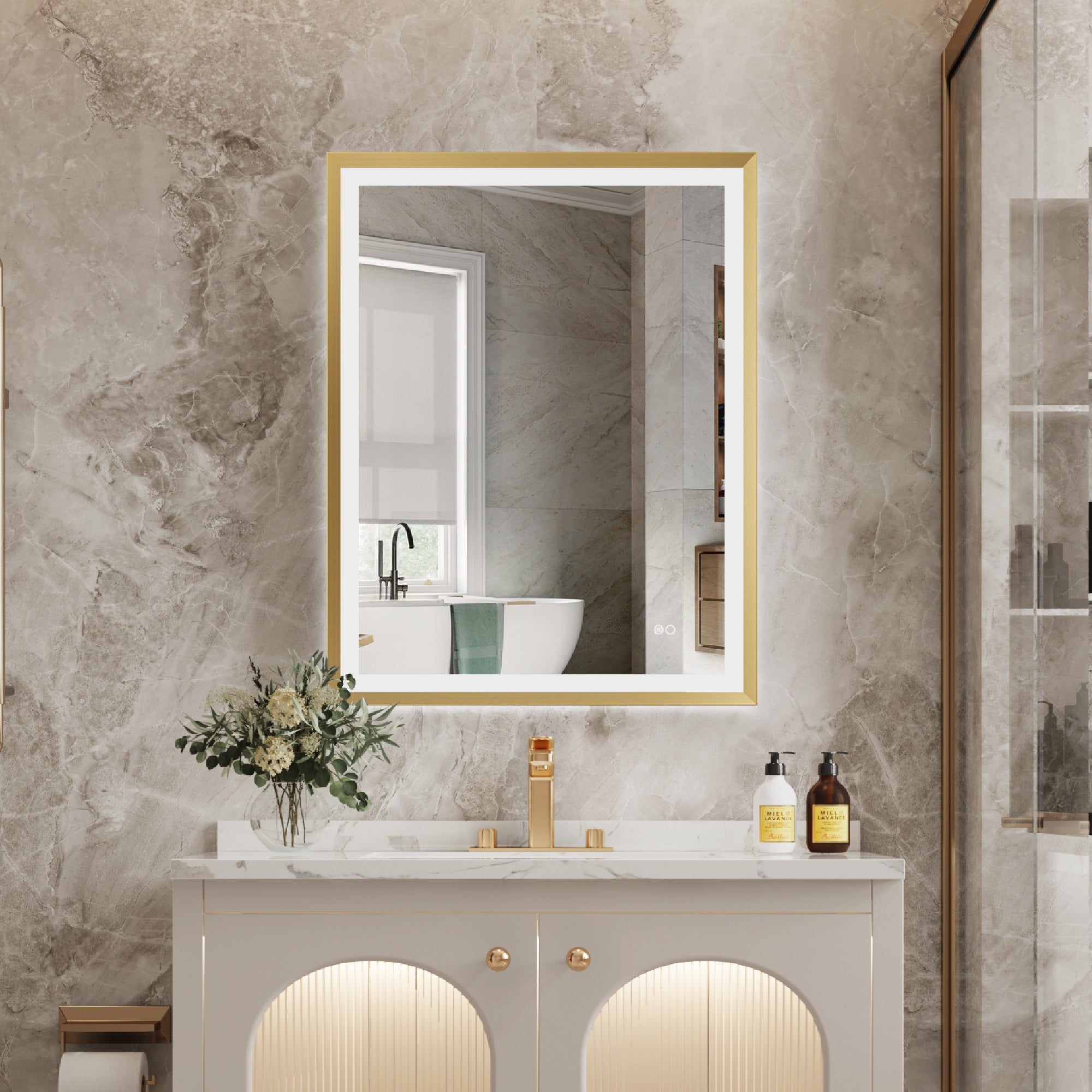
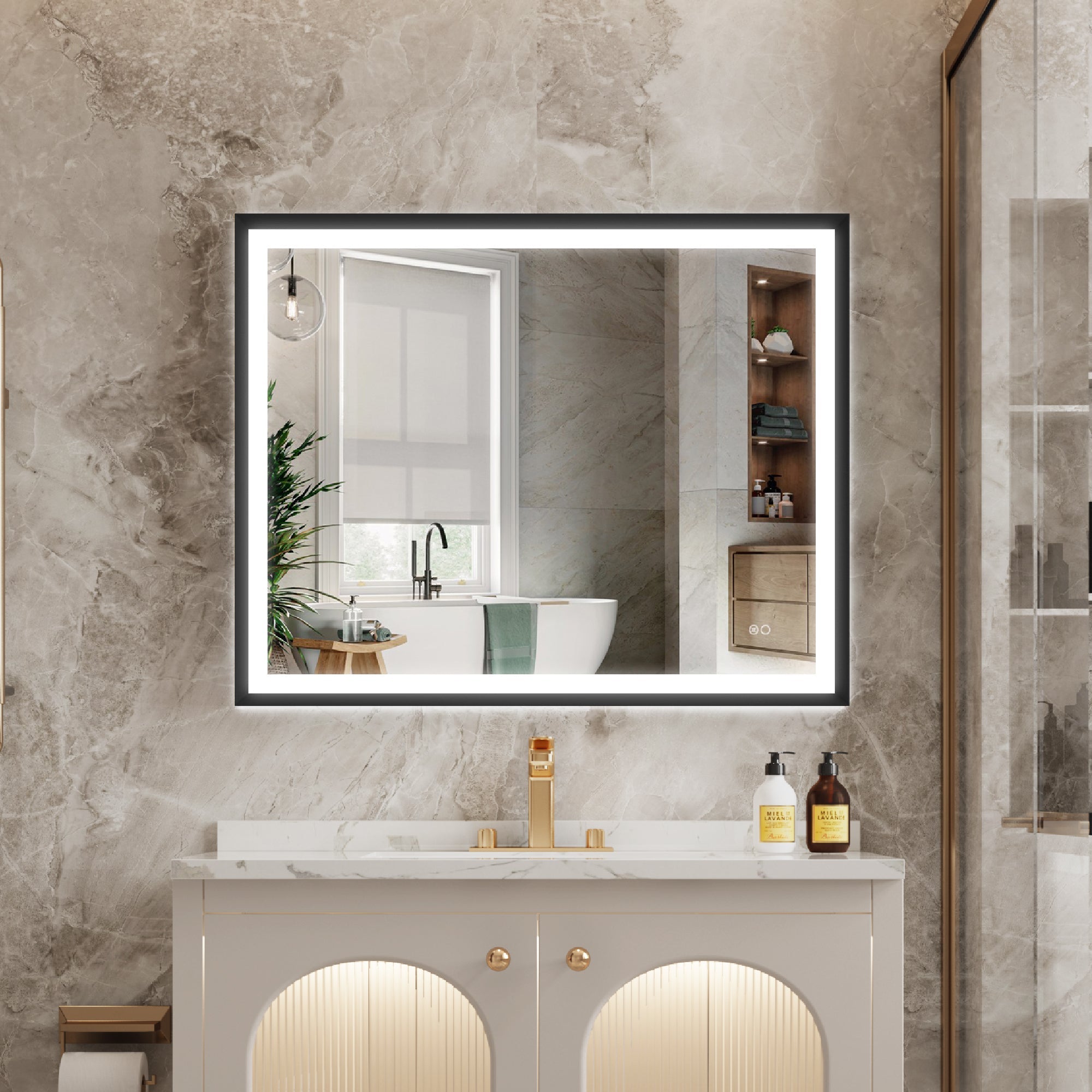
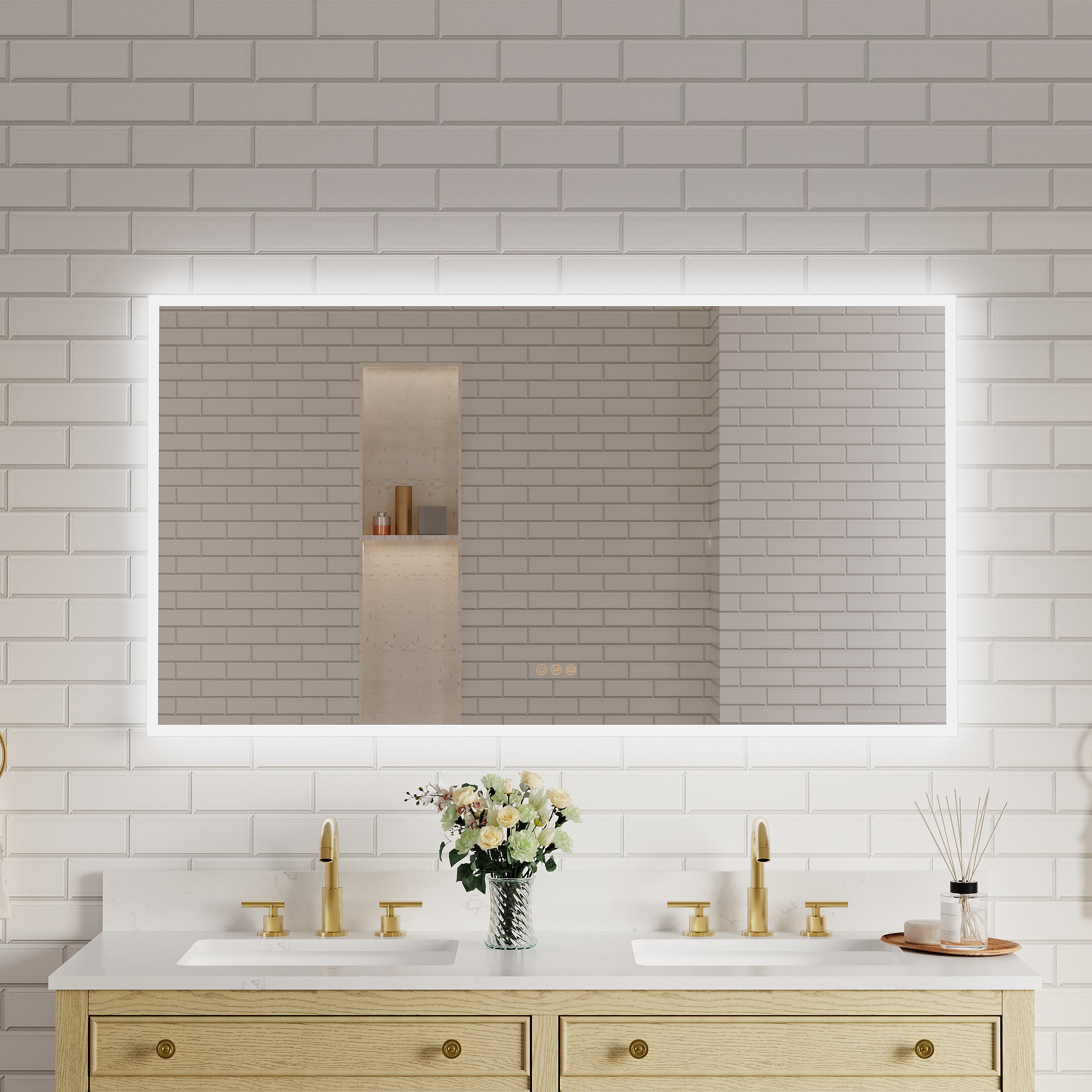
Suspended cabinets are more suitable for modern, minimalist, or industrial styles. Its lines are simple, and it works better when paired with frameless or backlit mirrors.
In a 60-inch double-basin space, pairing with two 30-inch mirrors or one 54-inch to 60-inch mirror can create a coordinated proportion.
If the space leans towards traditional or rural Style, a floor-to-ceiling structure may be more in line with the overall temperament.
7. Adaptation between small and large spaces
In bathrooms smaller than 70 square feet, suspended structures have significant advantages; in bathrooms over 120 square feet, the storage capacity advantage of the floor-standing structure is more pronounced.
Data show that in small and medium-sized spaces, the visual satisfaction score for suspended design is higher than that for floor-standing design; in large spaces, the difference between the two narrows.
8. Cost and construction complexity
Suspended installation usually incurs higher construction costs than floor-standing structures. Wall reinforcement and precise positioning are key steps.
During the new construction or comprehensive renovation phase, the additional Cost of adding suspended structures is relatively low; In spaces where wall decoration has been completed, the difficulty of renovation is relatively great.In practical planning, the suitability of a floating vanity often depends not only on room size, but also on how the bathroom is used every day. For households that prioritize a lighter visual effect, easier floor cleaning, and a more contemporary look, the suspended design often delivers clear long-term value. On the other hand, for families that rely on maximum enclosed storage or prefer simpler installation, a floor-standing cabinet may remain the more efficient solution. Looking at the layout through both daily habits and structural conditions can make the final decision more balanced.

9. Conclusion
There is no single answer to whether floating bathroom luxury is suitable for your layout. From 8-inch ground clearance to 60-inch wide structure, each inch affects visual and functional performance. Suspended design has obvious advantages in terms of spatial sense, cleaning convenience, and modern Style, but it requires strong wall support and a well-planned storage plan. Understanding the spatial area, structural conditions, and usage requirements is necessary to make a rational choice between aesthetics and practicality.












Leave a comment
This site is protected by hCaptcha and the hCaptcha Privacy Policy and Terms of Service apply.