

















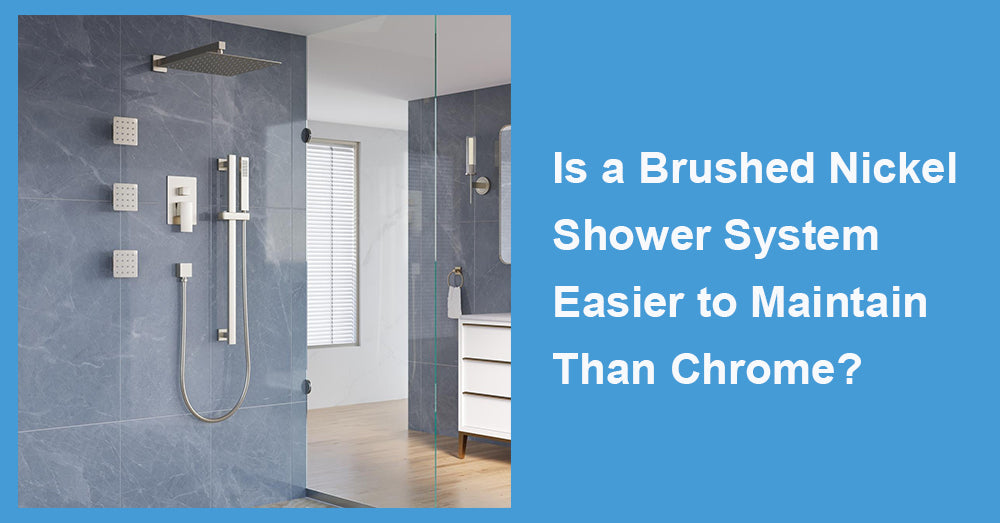
A brushed nickel shower system often looks cleaner for longer than chrome, but that doesn’t automatically mean it’s truly lower-maintenance. The real difference is how each finish shows water spots, fingerprints, and soap film—and how tolerant it is of aggressive cleaning. In day-to-day bathrooms, the “easier” choice usually comes down to your water hardness, ventilation, and whether you prefer a finish that hides marks or one that wipes perfectly clear.
1. What “maintenance” actually means for shower finishes
When people say a shower finish is easy to maintain, they usually mean three things:
· Spot visibility: Can you see dried mineral droplets and streaks from hard water?
· Smudge visibility: Do fingerprints and body oils show around handles and controls?
· Cleaning tolerance: How likely is the finish to dull, scratch, or discolor if someone uses the wrong cleaner?
Hard water is a big driver of what you see. Dissolved calcium and magnesium create mineral residue as droplets dry, and hardness ranges from “soft” to “very hard” based on calcium carbonate levels.
2. Why brushed nickel often appears cleaner than chrome
Chrome is reflective and mirror-like. That high reflectivity makes it excellent for a crisp, polished look—but it also makes water spots and fingerprints more obvious under bathroom lighting. Brushed nickel has a satin, micro-textured surface that diffuses reflections, so spotting and smudges are less visually loud.
This “hide-the-evidence” advantage is the main reason brushed nickel gets labeled “easier.” Many design and fixture guidance sources note that chrome tends to show water spots and fingerprints more readily, while brushed/satin nickel disguises them better.
3. Why brushed nickel can be trickier during the actual cleaning step
The same micro-texture that hides spots can also hold onto soap film and body oils a bit more than a perfectly smooth, glossy surface. In practical terms:
· Chrome can often be wiped and buffed to a uniform shine quickly.
· Brushed nickel can look “patchy” if cleaner residue is left behind in the texture, especially around controls and hand shower brackets.
So while brushed nickel may need less frequent “cosmetic” cleaning, it can require a more methodical wipe-and-rinse when you do clean, to avoid streaky haze.
4. The hidden truth: many “chrome” and “nickel” systems share the same plating stack
A lot of chrome-plated bathroom hardware is not “solid chrome.” It’s commonly a nickel layer with a chromium top layer (or a copper + nickel + chromium system), designed to balance appearance and corrosion resistance. Standards like ASTM B456 describe electrodeposited nickel/chromium (and copper/nickel/chromium) coatings used where both appearance and corrosion protection matter.
That matters because “maintenance” is often more about:
· coating quality and thickness,
· how well the finish was applied, and
· how harsh the cleaning routine is,
· than the label on the box.
5. Water hardness decides the cleaning workload more than the finish color
If your water is “hard” or “very hard,” mineral deposits can build fast on any finish. The USGS classification shows “hard” and “very hard” categories start at higher calcium carbonate levels, which correlate with more visible scale and spotting as water evaporates.
In those conditions:
· Chrome will usually show sharper, brighter-edged spots.
· Brushed nickel will often camouflage spotting—but deposits still accumulate and can eventually look like a dull film.
If you want the biggest reduction in maintenance time, the most effective moves aren’t finish changes—they’re drying habits and water management:
· Squeegee or towel-dry the metal surfaces after long showers.
· Keep a microfiber cloth within reach and wipe the valve trim and hand shower after use.
· If scale is persistent, consider solutions that address mineral content (not just stronger cleaners).
6. Modern shower system shapes: more parts can mean more wiping
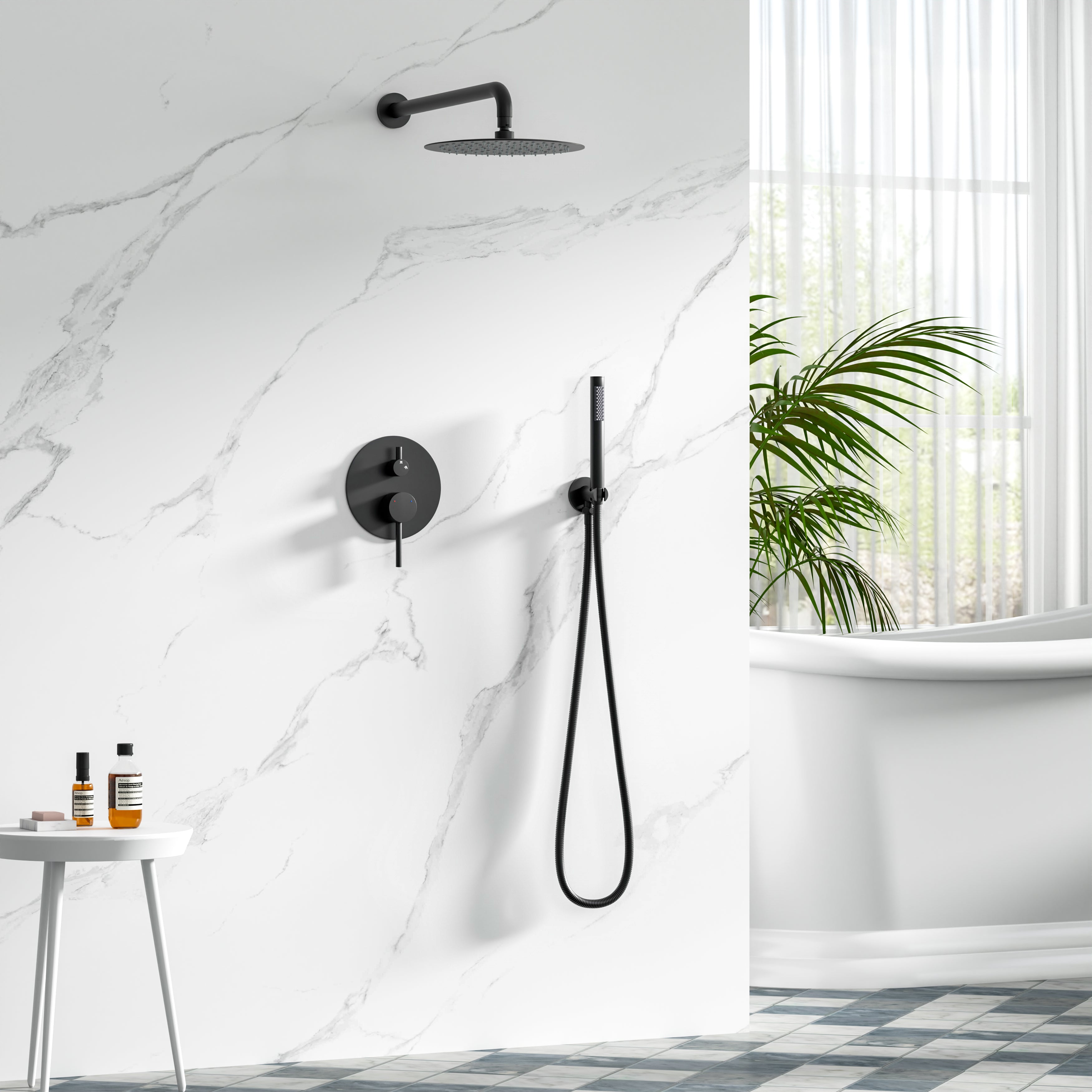
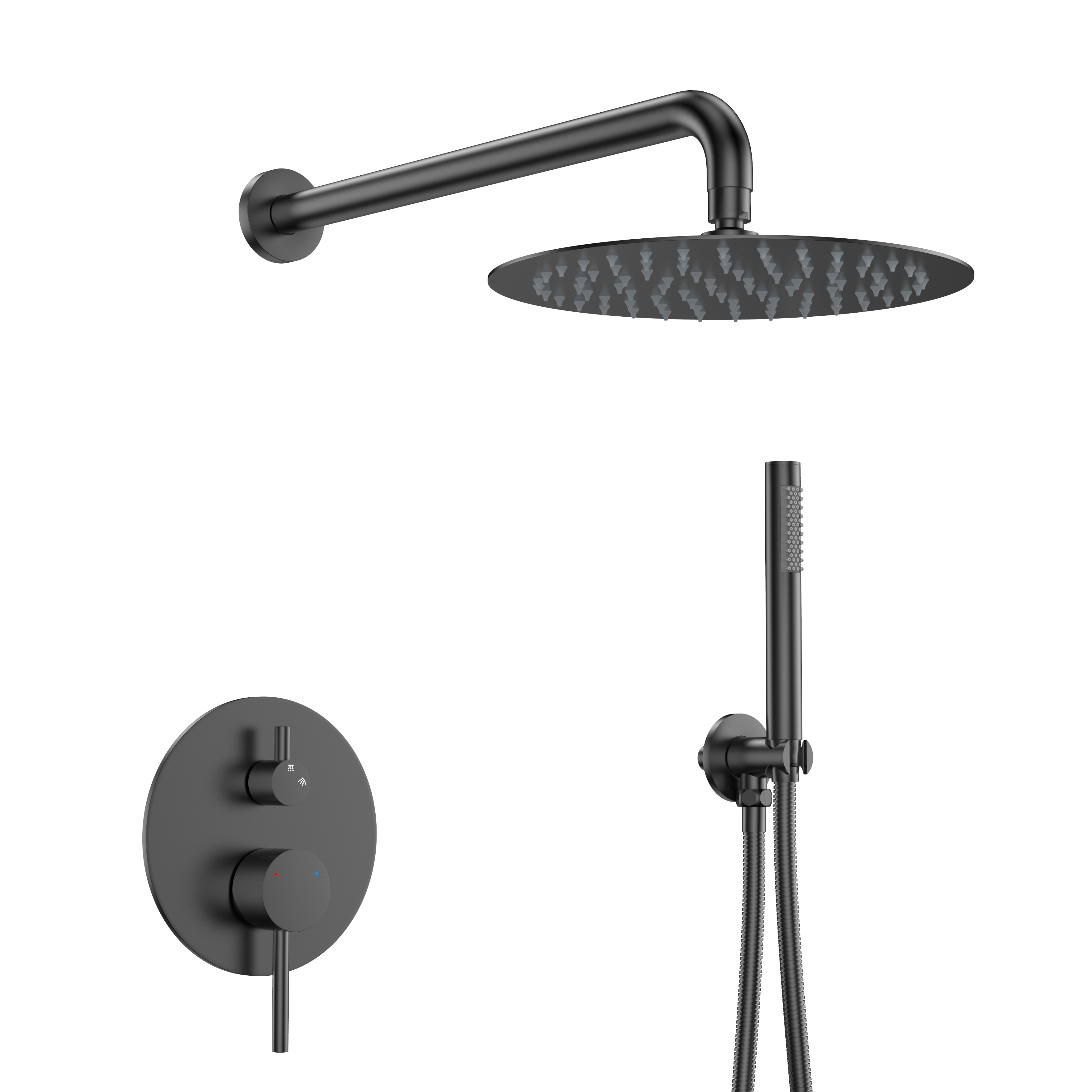
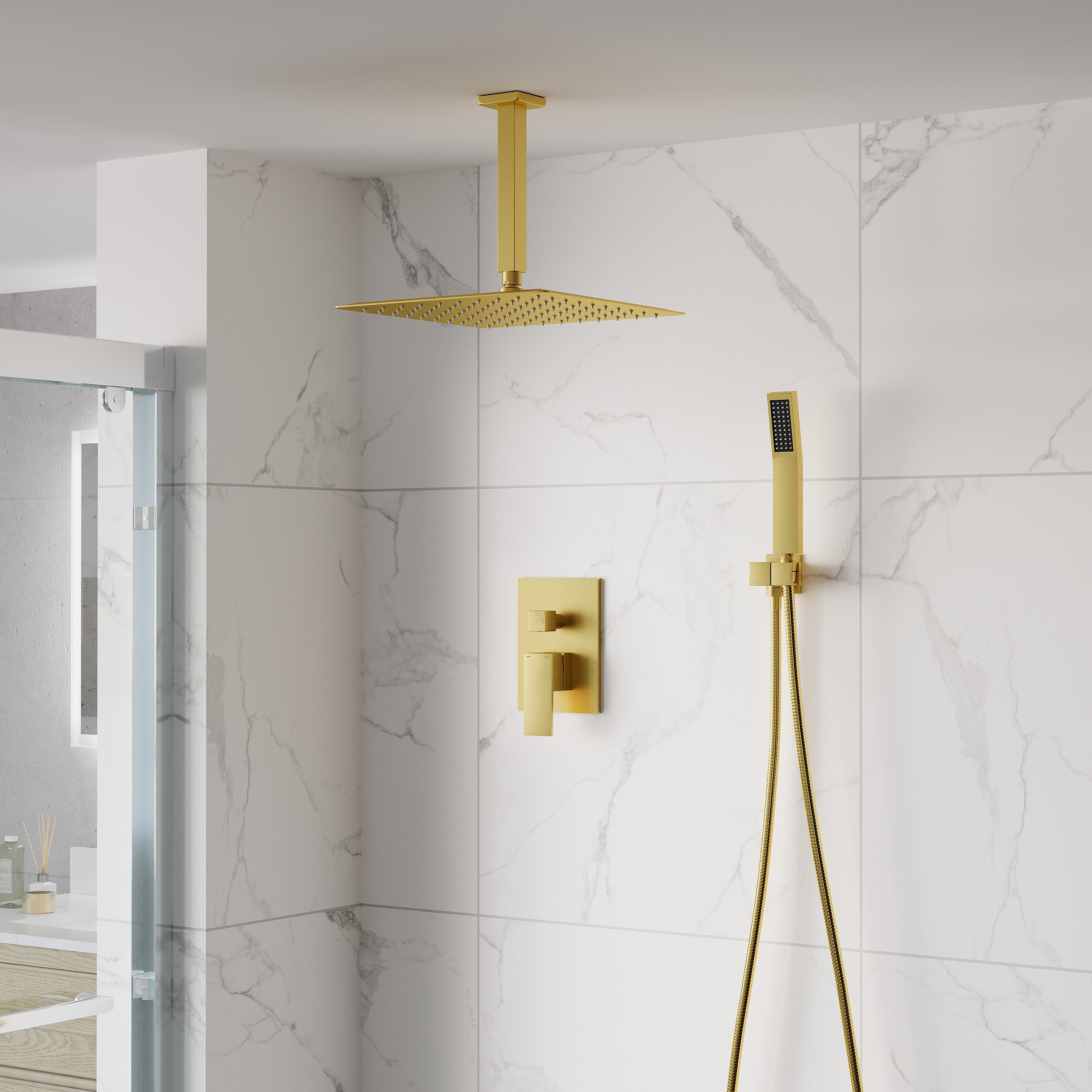
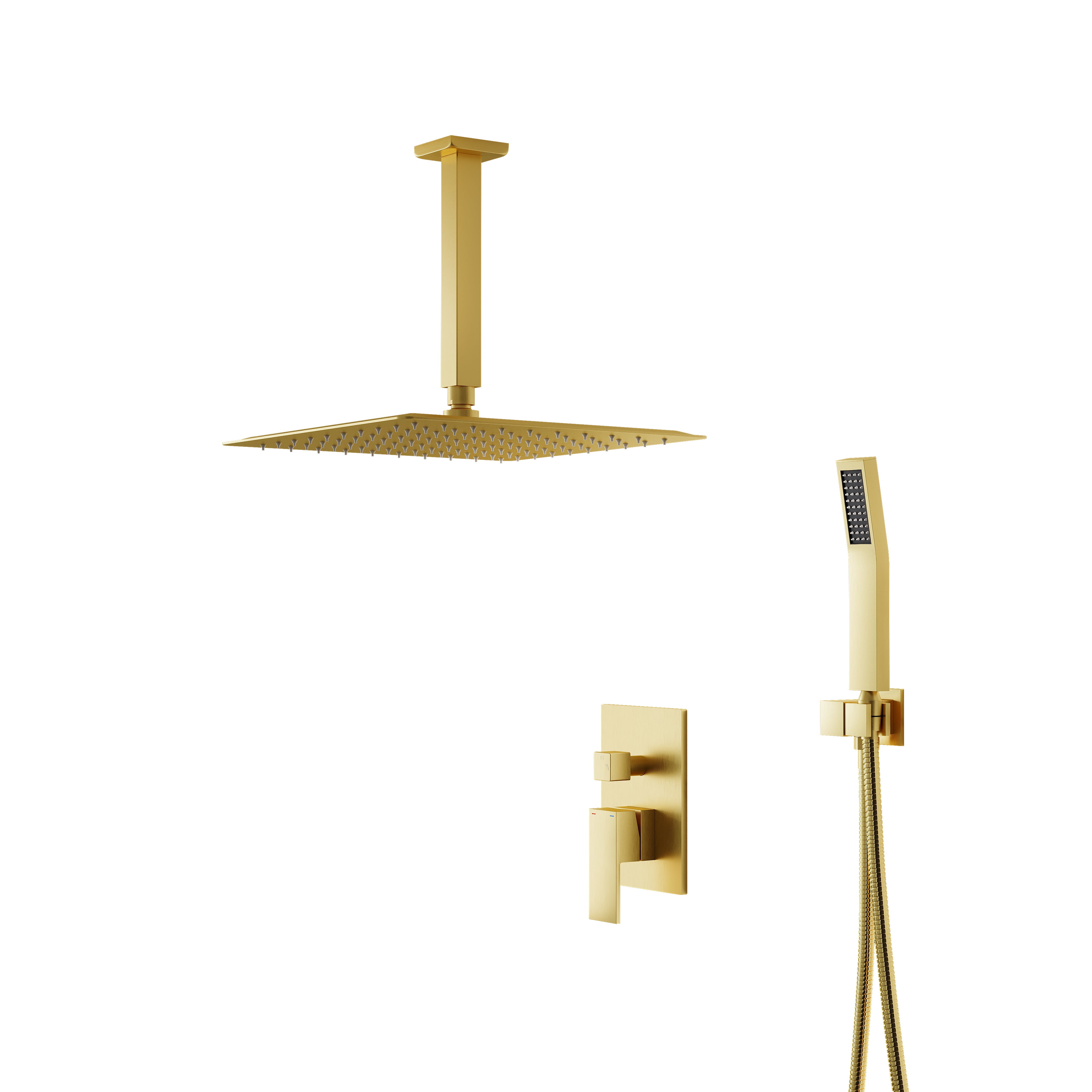
“Shower system” often means more components: rain head (commonly 8 in to 12 in), hand shower, slide bar, diverter, multiple body sprays. More components create more joints, edges, and spray patterns—places where droplets dry and leave residue.
This is where brushed nickel’s advantage can be real: it tends to make an assembly of many parts look calmer between cleanings. Chrome can look stunning, but on multi-function systems it can also look “busy” once it has spotting.
7. Cleaning rules that protect both finishes (and keep them modern)
If you want a finish that stays modern for years, the goal is to remove soap film and minerals without scratching or leaving chemical residue.
Best everyday method (both finishes):
· Warm water + a small amount of mild dish soap
· Microfiber cloth
· Rinse with clean water
· Dry with a second cloth
For disinfecting (when needed, not daily):
Bleach can be used in diluted solutions for disinfection, but it must be handled carefully and kept off vulnerable surfaces. CDC dilution guidance includes mixes like 5 tablespoons (1/3 cup) per gallon or 4 teaspoons per quart of water.
For plated finishes, a safer approach is usually: clean first (soap/water), then use a finish-safe disinfectant per label, rinse, and dry. Avoid letting strong solutions dwell on metal trim.
Avoid these common finish-killers:
· Abrasive powders and rough scrub pads
· Cleaners that sit too long on the surface
· Mixing chemicals (especially bleach with other cleaners)

8. So, is brushed nickel easier than chrome? A practical verdict
Choose brushed nickel if:
· You hate seeing spots the moment the water dries.
· Your shower system has many components and you want it to look tidy between cleanings.
· You prefer a softer, satin look that forgives fingerprints.
Choose chrome if:
· You want the fastest “wipe to perfect” result.
· You don’t mind quick, frequent wipe-downs (or you already squeegee after showers).
· You love a bright, reflective finish and consistent sparkle.
Most realistic answer: brushed nickel is usually easier to live with visually, while chrome is often easier to restore to a flawless uniform look—as long as you keep up with quick wiping.
9. Conclusion: the maintenance winner depends on your water and your habits
If your priority is a shower that looks clean even when life gets busy, brushed nickel tends to reduce the visual penalty of hard-water spotting and fingerprints. If your priority is a finish that you can wipe once and make it look brand-new, chrome delivers that crisp, high-reflection payoff—while also demanding more frequent touch-ups when water is mineral-heavy. Either way, the most “modern” outcome comes from a gentle routine: rinse, wipe, dry, and avoid aggressive abrasives. Finish choice changes the optics; daily drying and smart cleaning control the actual buildup.













Leave a comment
This site is protected by hCaptcha and the hCaptcha Privacy Policy and Terms of Service apply.