
















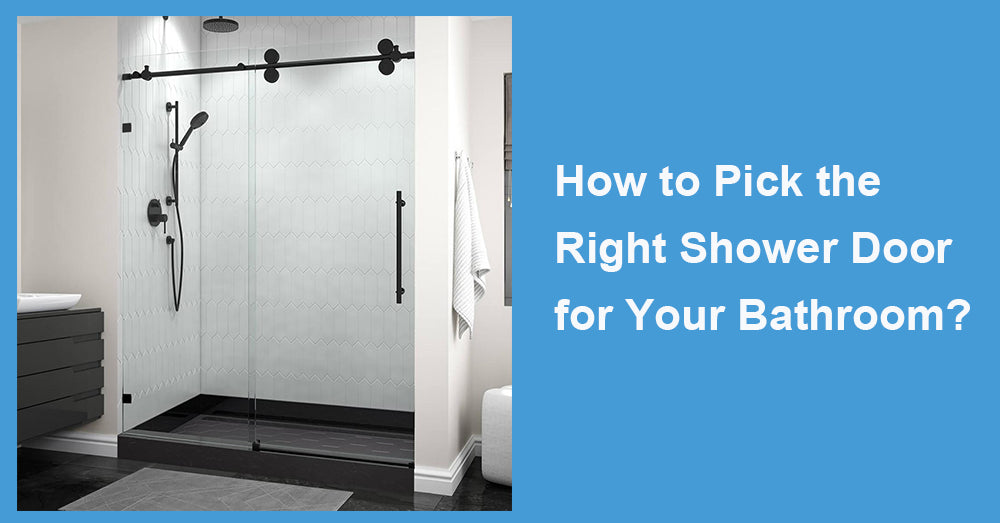
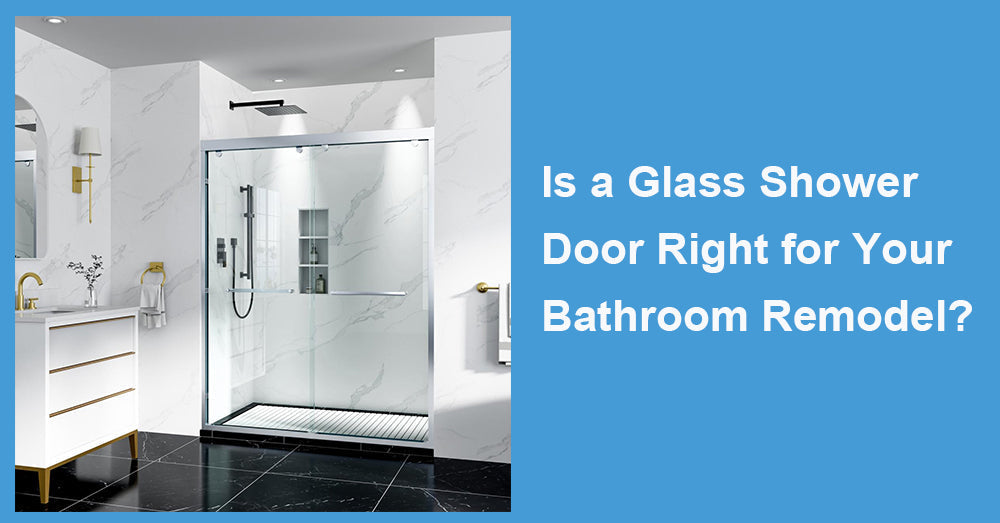
In a bathroom renovation, the shower door is never just the last accessory added. It is a key component that directly affects how open the space feels, how people move in and out, how effectively water is contained, and how much cleaning effort will be required later. The latest Houzz bathroom renovation study shows that 84% of projects choose enclosed shower areas rather than fully open ones. Among these options, 75% choose frameless doors, 18% choose semi-frameless doors, and 7% choose framed doors. This data says a lot: choosing a shower door today is no longer about whether to install one, but about which type is least likely to cause regret later.
1. The first decision is not the hardware finish or the rendering, but the door-opening style.
In the same Houzz study, hinged doors accounted for 38% of shower entry styles, sliding doors for 20%, shower curtains for 13%, and fixed panels for 7%. The logic behind this is very practical: if there is enough clearance outside the shower, a hinged door usually offers more direct entry and exit and creates a cleaner visual effect. If the bathroom is tight and the shower is close to a toilet, vanity, hallway, or towel bar, then a sliding door is often the more stable choice because it does not require swing clearance. Many people think they are choosing a style, but in reality, they are choosing whether movement conflicts will happen every day.
2. The second decision should be based on clearance, not on how good the door looks.
NKBA's Bath Planning Guidelines are clear: it is recommended to leave 30 inches of clear floor space in front of all sanitary fixtures and at least 24 inches in front of the shower entry. If future accessibility is a concern, the recommended clear area is often expanded to 30 inches by 48 inches. This means that when choosing a shower door, the first thing to measure is not the width of the glass, but whether there is enough space in front of the door for someone to stand comfortably, turn around, open the door, hold a towel, and step in or out without bumping into anything. In a small bathroom, once the proportions are wrong, even the most premium glass door can become a daily inconvenience.
3. The third decision is whether to choose framed or frameless.
Frameless doors are now the mainstream choice, not simply because they look more high-end, but because they make the shower area feel lighter and more open while preserving the visual continuity of tile and wall finishes. Especially in smaller bathrooms, frameless doors often do more to maintain a sense of openness than thicker framed options. But the practical side also matters: semi-frameless and framed doors have not disappeared because they still offer advantages in budget, tolerance for wall irregularities, and structural support. In other words, frameless is more popular, but not automatically better for every project. If your wall conditions, installation accuracy, or budget do not support a minimalist approach, a semi-frameless door may actually be the more reliable answer.
4. The fourth decision should take the shower layout into account as well.
According to Houzz 2025 data, among homeowners upgrading shower areas, curbless showers account for 44%, alcove showers for 42%, and curb showers for 20%. This matters because different shower layouts place different demands on the door. Alcove showers are usually better suited to sliding doors or standard hinged doors because the boundaries are clear and water control is easier to manage. Curbless and low-threshold designs feel lighter visually, but they are more sensitive to door gaps, floor slope, drainage direction, and lower door seals. Many projects fail not because the door was not expensive enough, but because the shower base's logic was not taken into account when selecting the door. The result is often water leaking through the gap or collecting at the entry after installation.
5. The fifth decision is safety, not aesthetics.
Federal safety standards from the CPSC clearly include shower doors and enclosures within the scope of building safety glass requirements. The CPSC also specifically notes that shower and bathtub enclosure glass is covered by mandatory safety standards, with the main goal of reducing the risk of cuts and puncture injuries if the glass breaks during contact with humans. Public safety notices also reported that between 2012 and 2016, an estimated 2,300 emergency room visits were caused by shattered shower glass doors. This means that when choosing a shower door, the priority should not only be whether the glass looks clear enough, but also whether it is a compliant safety-glass system and whether the installation will be carried out to an acceptable standard. A mature decision is not based solely on the sample photo, but on minimizing the risk of failure in a wet, slippery environment.
6. The sixth decision is the cleaning burden, which is often underestimated.
Frameless glass doors look the lightest, but they also mean that large glass surfaces, exposed hardware, and door seams are directly exposed to water spots, soap residue, and mineral buildup. In hard-water environments, especially, the glass can quickly show marks and haze if it is not wiped regularly. In other words, a more transparent shower door often requires more consistent upkeep. If you already dislike frequent cleaning or your bathroom ventilation is average, then the most popular frameless door may not be the most worry-free option for you. This is not an argument against frameless design. It is simply a reminder that visual lightness often comes with a higher maintenance requirement. It should not be treated as a zero-cost version of luxury. With frameless, hinged, and sliding doors all remaining highly popular, the more mature choice is to balance visual preference with maintenance realities rather than blindly following the mainstream.

7. The final decision is whether the door should be "as large as possible."
Many people assume that the larger the glass panel, the more high-end it will look, but NKBA guidelines point to another practical issue: shower areas with showerheads should provide a minimum clear inside dimension of 30 inches by 30 inches and a minimum height of 80 inches. At the same time, hinged shower doors should open outward. That detail is more important than it may seem. An outward-opening door is not just a matter of preference; it also relates to safety, emergency access, and the clearance in front of the entry. A truly good shower door is not the one with the largest piece of glass and the heaviest handle. It is the one that, in your bathroom, can provide openness, smooth access, effective water control, manageable cleaning, and years of use without becoming irritating. In the end, the right shower door is not the trendiest option, but the one that best fits your bathroom's size, traffic flow, and long-term maintenance needs. That is the hardest standard in renovation.












Leave a comment
This site is protected by hCaptcha and the hCaptcha Privacy Policy and Terms of Service apply.