
















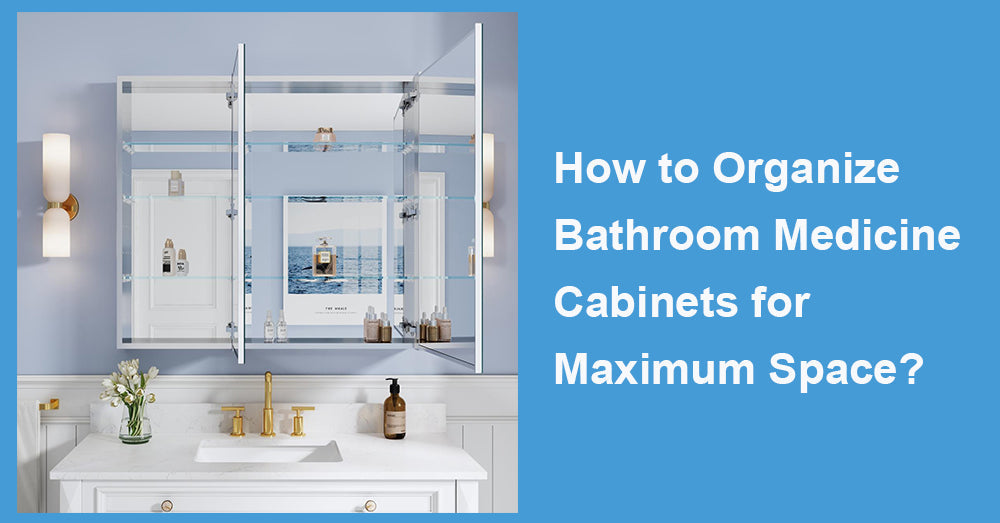
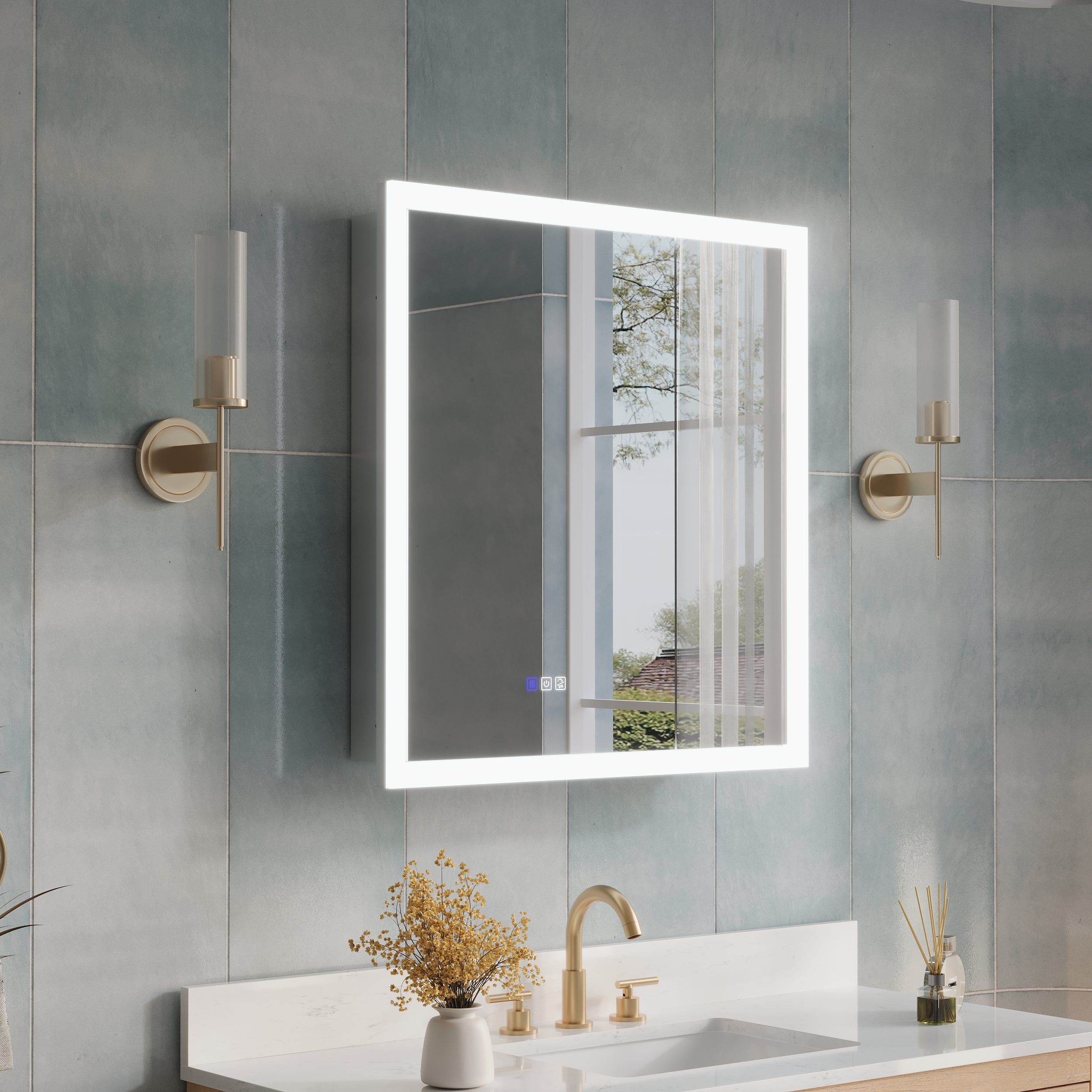
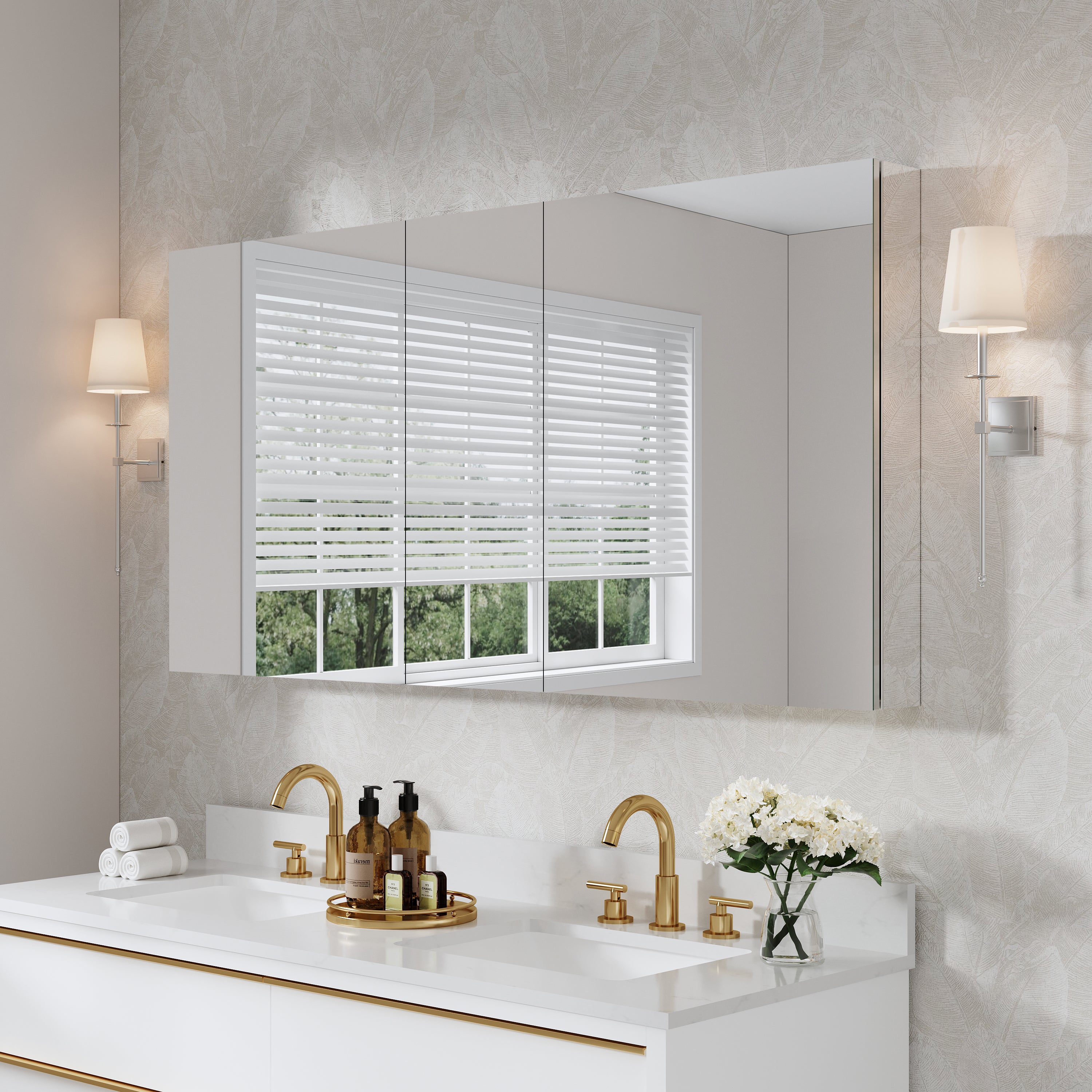
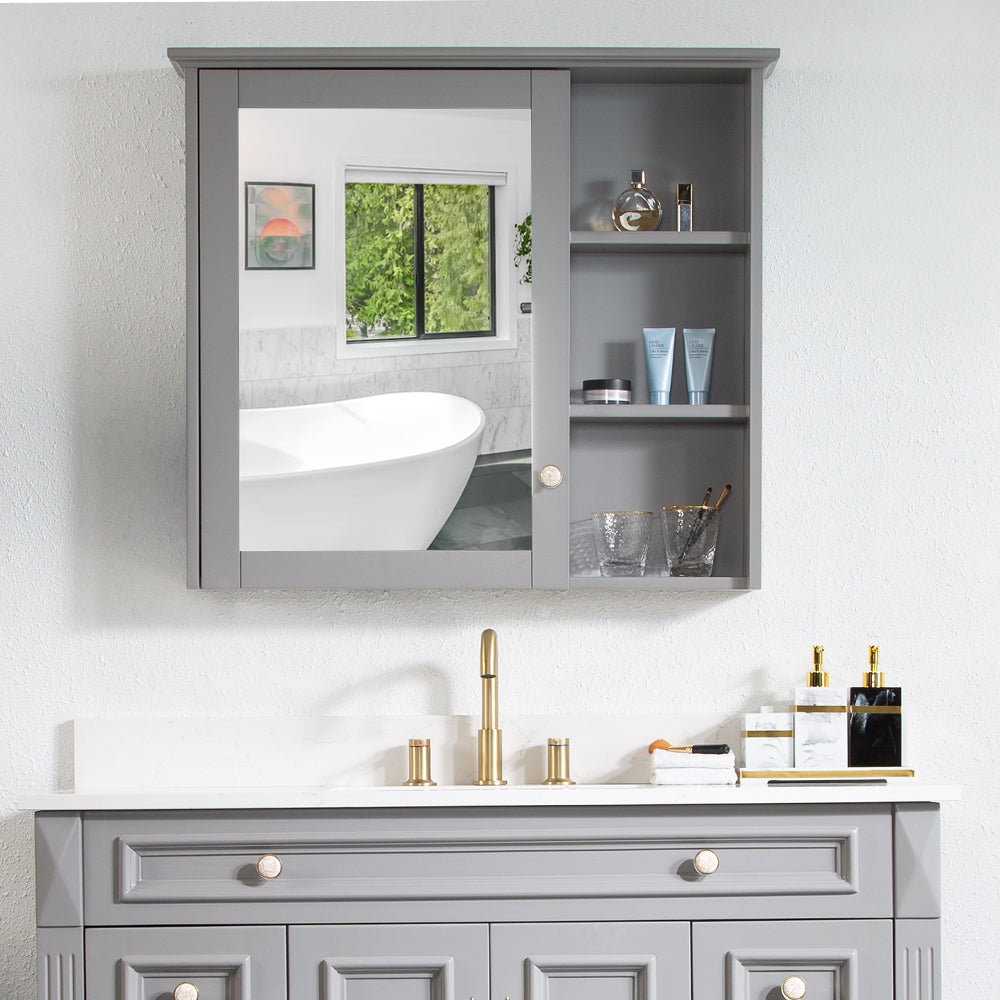
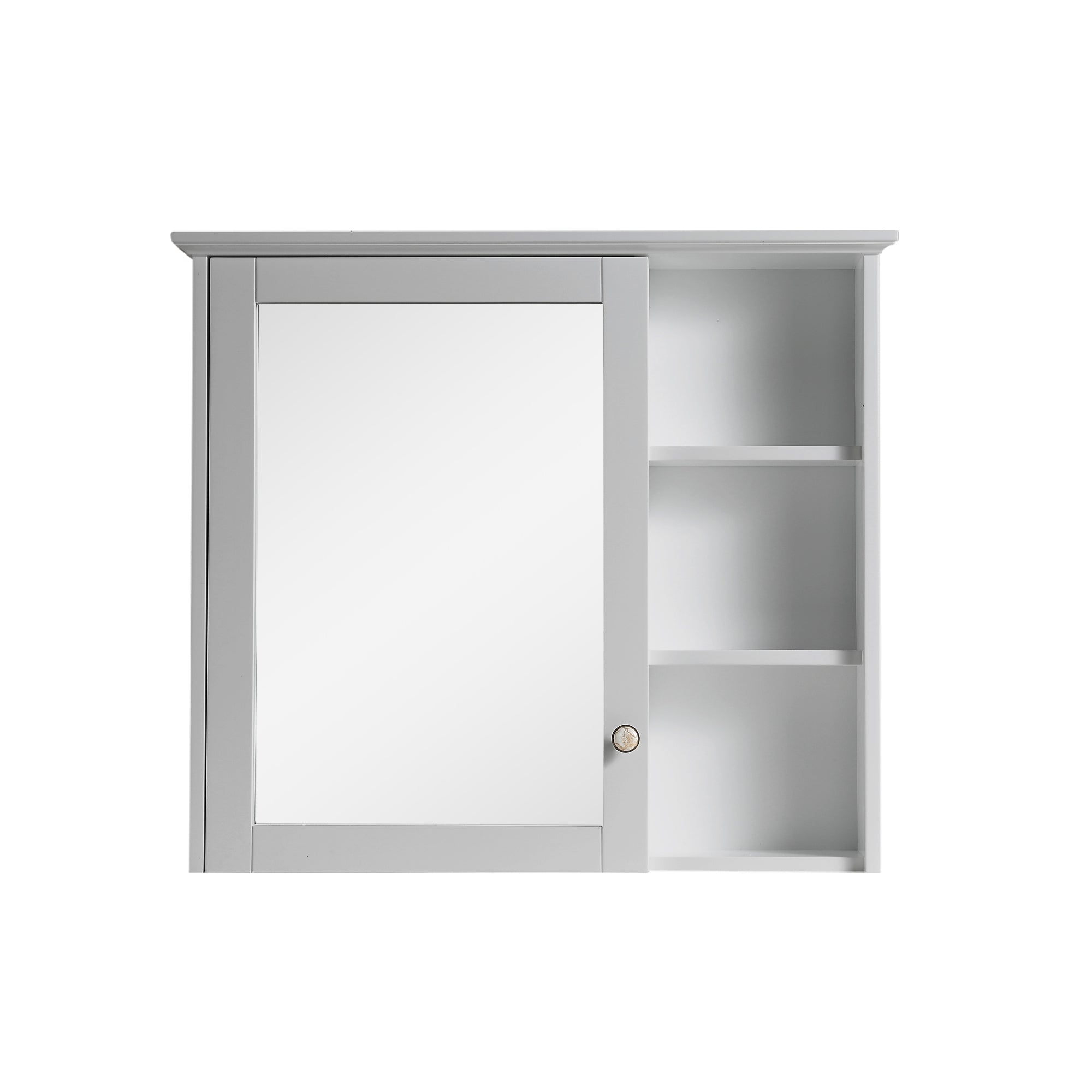
In modern home spaces, bathroom medicine cabinets are not just simple mirror storage cabinets.
They also serve as centralized storage for daily toiletries, medicines, and personal care items.
Whether it is a 20-inch-wide single-door structure or a 30-inch-or-larger three-door mirror cabinet, if the internal organization is not reasonable, it is easy to cause space waste or disorderly stacking of items.
Research shows that over 65% of households report "insufficient space" in mirror cabinets, but about 40% of these problems stem from improper storage methods rather than the cabinets' size.
Therefore, scientific planning of internal space is the key to improving utilization efficiency.
1. Divide functional areas based on size
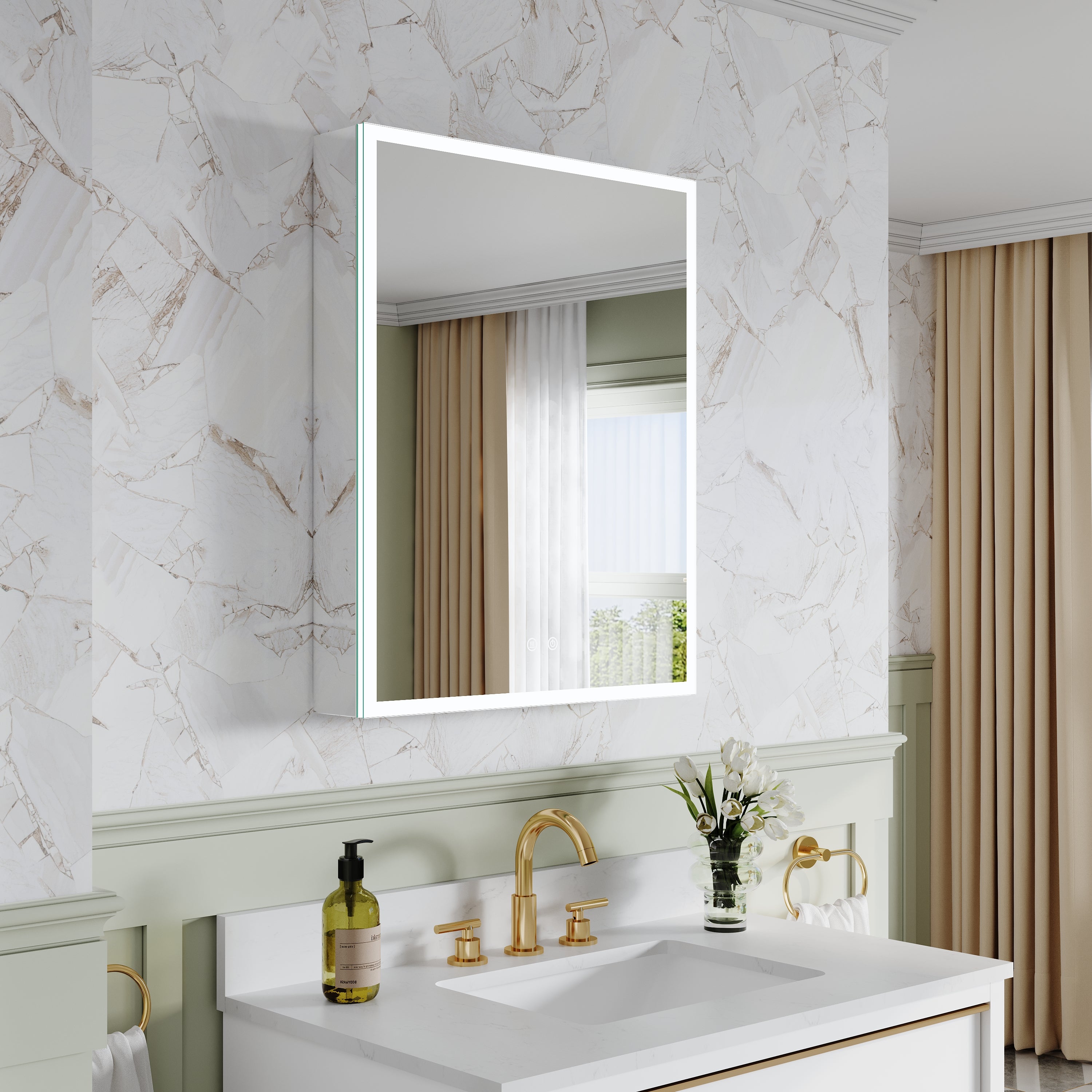
Common bathroom mirror cabinets have a width of 20 to 30 inches, a height of 26 to 34 inches, and an internal depth of 3.5 to 5 inches.
Seemingly limited space, but reasonable partitioning can significantly improve utilization.
Suggest dividing the internal space into three types of areas:
The upper layer is used to store low-frequency items, such as spare toothbrushes and travel gear cleaning products.
Place high-frequency products, such as toothpaste and skincare, in the middle layer.
The lower layer is suitable for higher-powered products or equipment, such as electric shavers.
Data shows that in households that adopt the "layered fixed function" storage method, the average time spent searching for items is reduced by about 25%.
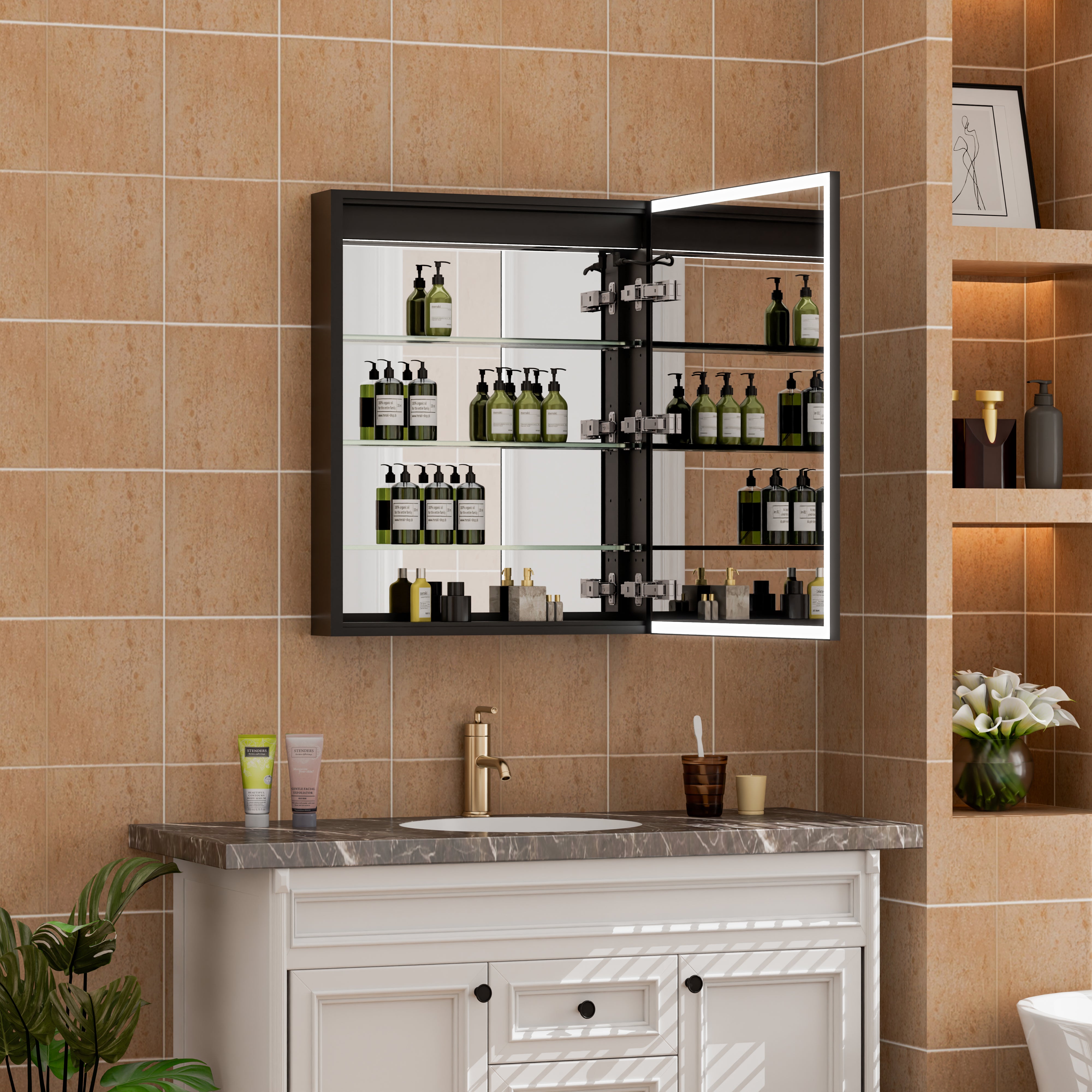
2. Optimize height using adjustable shelves
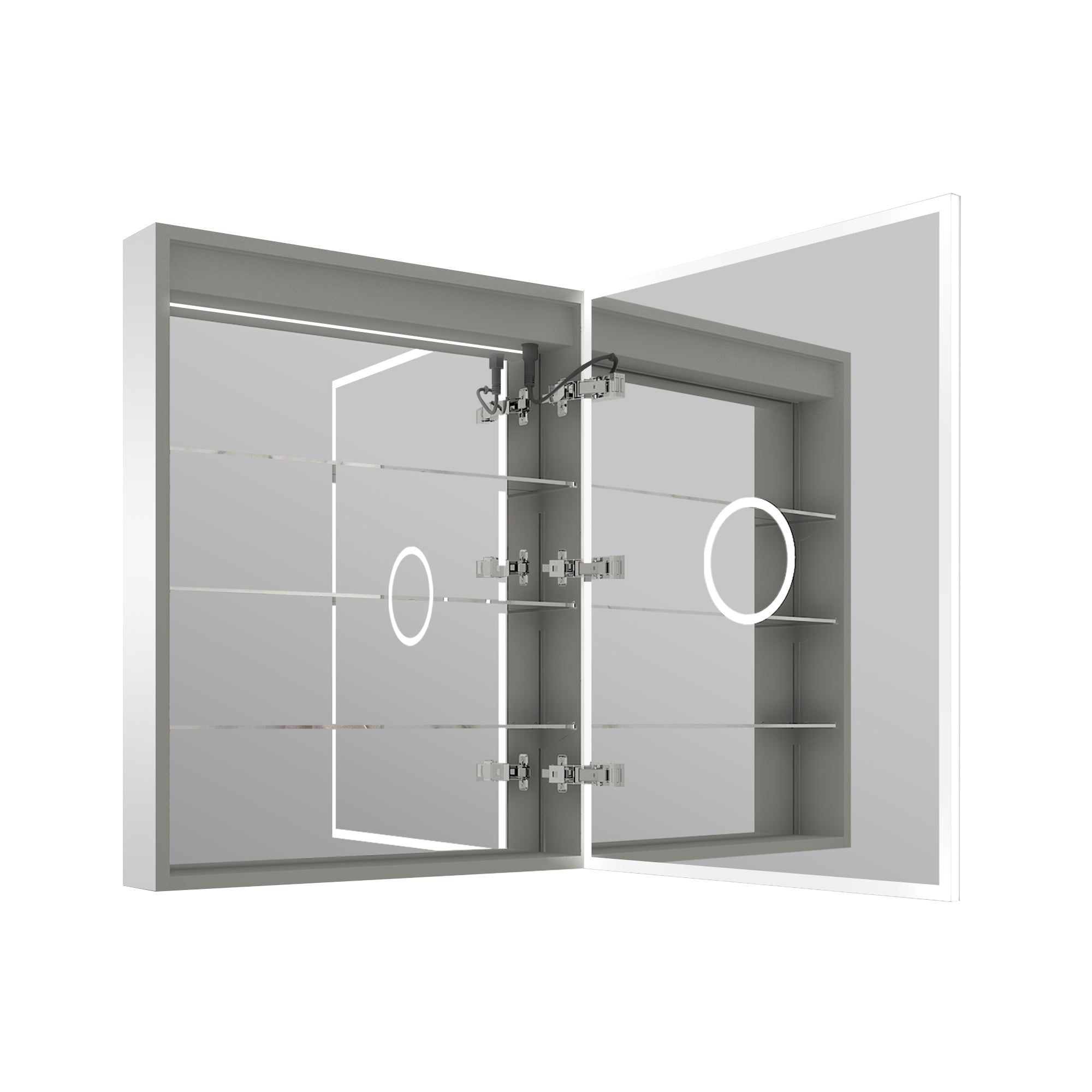
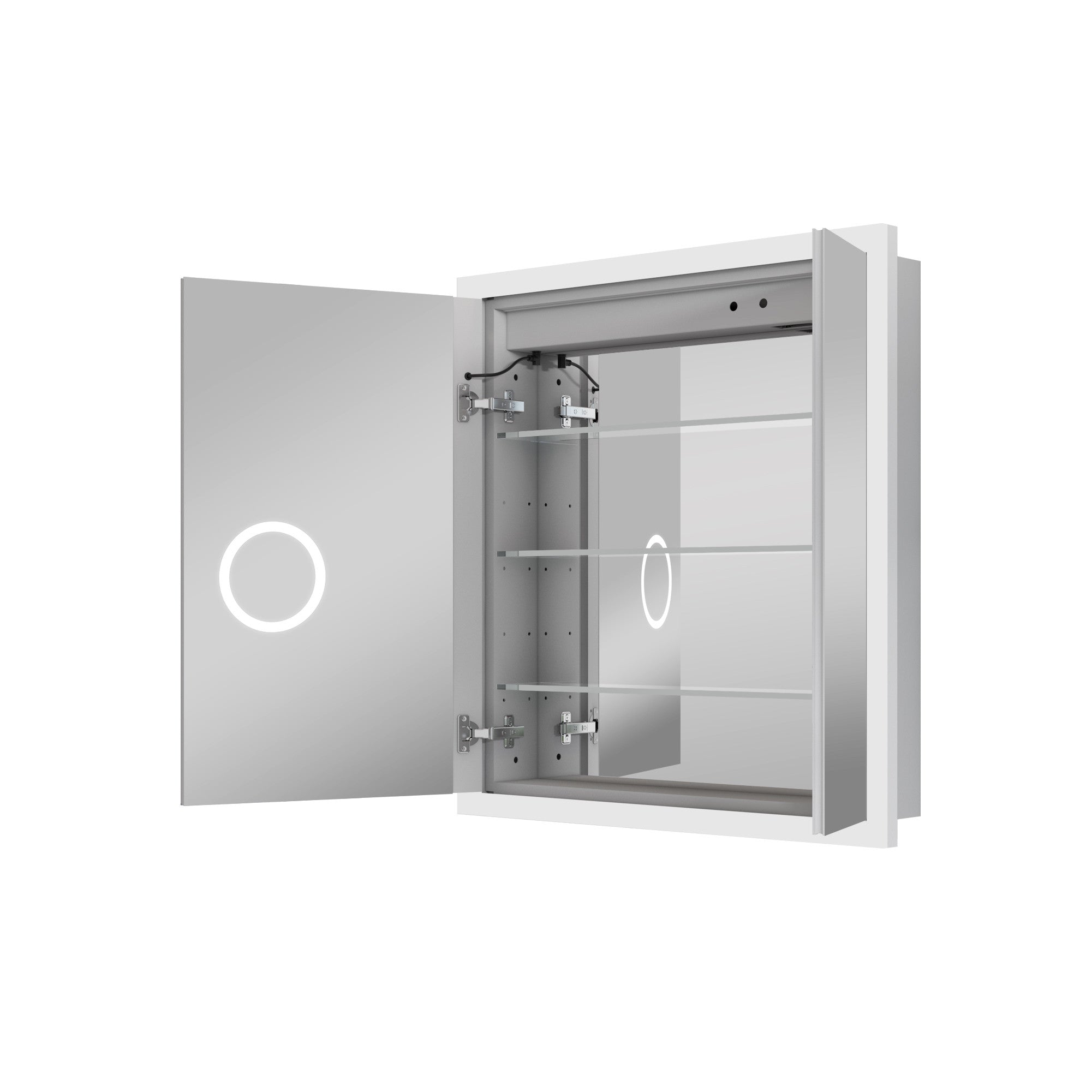
Many mirror cabinets feature adjustable shelves, yet users often overlook this feature.
The height of common skincare bottles is mostly between 4 and 7 inches, while some pump-head products may reach over 8 inches.
By precisely adjusting the shelf spacing to 6-inch or 8-inch, vertical space waste can be avoided.
Test data shows that optimizing shelf spacing can increase effective storage capacity by approximately 15% to 20% in a standard 30-inch high mirror cabinet.
For embedded structures with a depth of only 3.5 inches, precise control of vertical space is even more necessary.
3. Use separate boxes and storage trays
Small partition boxes are important tools for improving space utilization.
In a mirror cabinet with an internal depth of 4 to 5 inches, a small transparent box about 3 inches wide can be placed to store drugs, contact lens care products, or shaving accessories by category.
Data shows that in mirror cabinets without partition tools, the stacking ratio of items reaches 50%; after using the partition box, the stacking ratio decreases to below 20%.
In addition, shallow trays can be used for centralized storage of small bottles and cans to prevent tipping.
4. The utilization of vertical space and the interior space of doors
Some mirror cabinet doors can be equipped with narrow hangers or magnetic absorption strips on the inside.
A narrow rack with a width of about 2 inches to 3 inches can be used to place a toothbrush or a spray bottle.
In a 24-inch wide mirror cabinet, adding two narrow shelves inside the door can increase storage capacity by approximately 10%.
For double- or three-door structures, the interior space of each door can be used, but care should be taken not to compromise the closing tightness.
5. Avoid excessive hoarding and regular cleaning
Insufficient space is often related to hoarding habits.
Data shows that over 30% of items in the average household mirror cabinet have not been used in the past 6 months.
It is recommended to clean up expired drugs and items that have not been used for a long time every 3 to 6 months.
This not only frees up space but also enhances security.
6. Reasonably utilize height and visual management
Placing high-frequency objects at eye height (about 60 to 65 inches from the ground) can reduce repeated searching.
If the distance between the lower edge of the mirror cabinet and the tabletop is about 6 inches to 8 inches, the most commonly used area is usually the middle layer.
Placing labels facing forward or using transparent containers can help quickly identify content.
The data show that in households that adopt the "visual storage" principle, efficiency of use is significantly improved.
7. Customize space ratio based on family size
Single-use 36-inch vanity configurations typically feature 20-inch to 24-inch mirror cabinets, which offer relatively limited space.
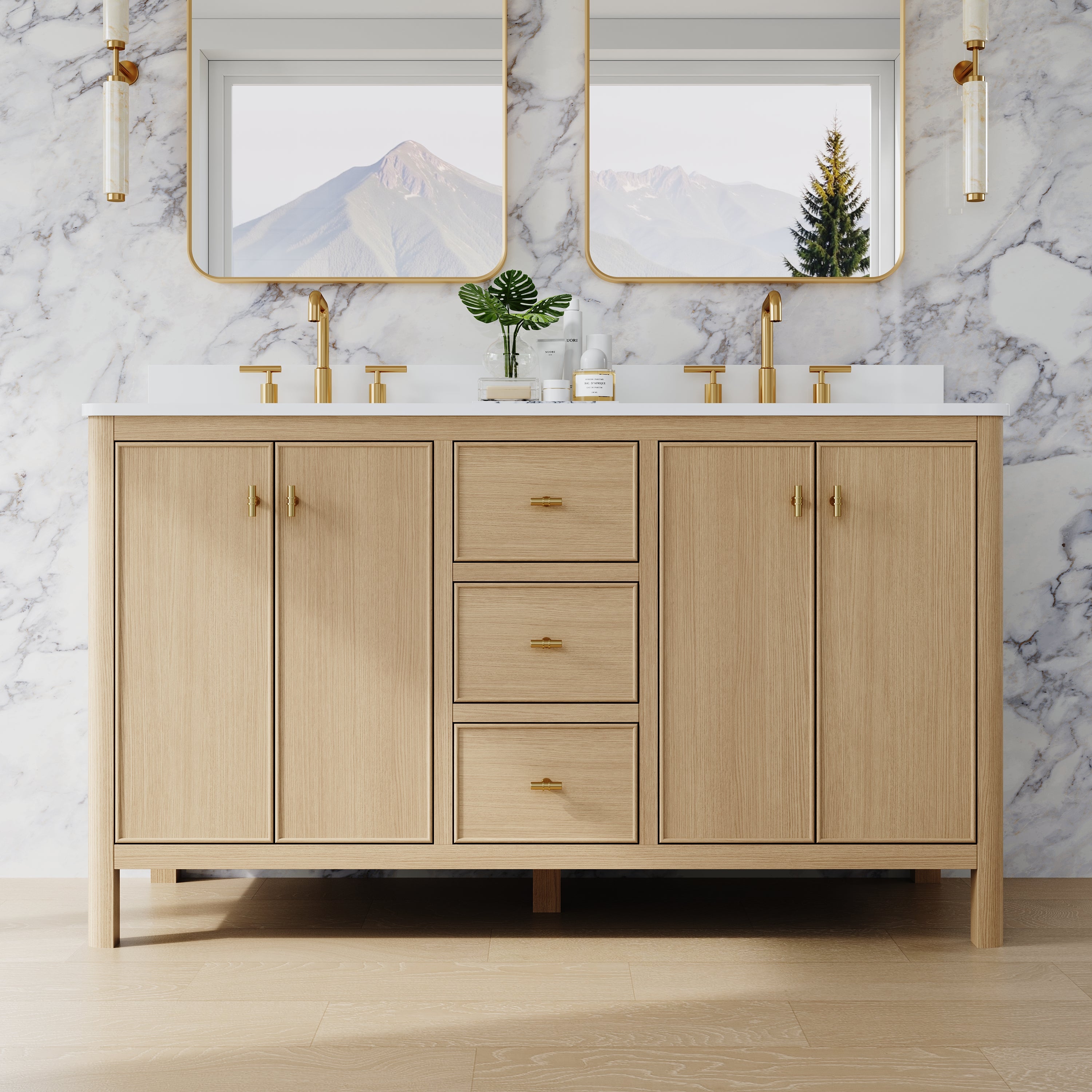
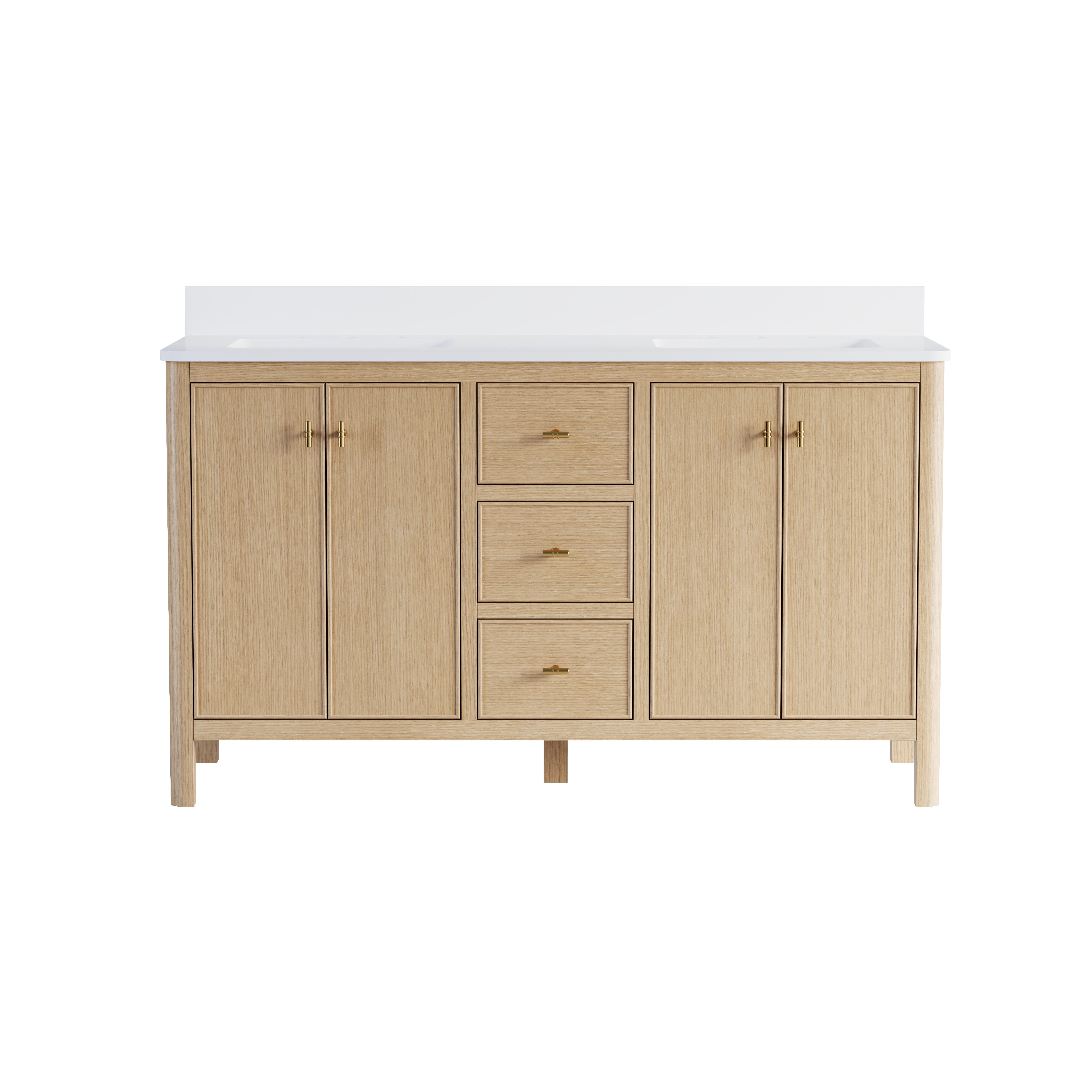
A 60-inch double-basin structure for two people often equipped with mirror cabinets ranging from 30 inches to 48 inches wide.
In multi-person households, it is recommended to allocate separate areas for each member to avoid mixing.
The partition width can be set between 8 and 12 inches to create clear boundaries.
8. Combining external storage to alleviate pressure
If the depth inside the mirror cabinet is only 3.5 inches and there is a high storage demand, it may be considered to add drawers for storage below the vanity or install auxiliary cabinets on the wall.
Data shows that in spaces with a main bathroom area exceeding 120 square feet, transferring some spare supplies to side cabinets can reduce the internal stacking rate of mirror cabinets by about 30%.

9. Conclusion
The space utilization efficiency of bathroom medicine cabinets does not depend solely on the 20-inch or 30-inch size, but also on zoning planning and usage habits.
By adjusting the shelf height reasonably, using partition boxes, optimizing the space inside the door, and regularly cleaning, the storage capacity and convenience of use can be significantly improved.
Within a limited depth range of 3.5 inches to 5 inches, a scientific organization is often more effective than simply increasing size.
Only by understanding the relationship between spatial proportion and item size can we truly achieve the goal of "maximizing the use of every inch".










Leave a comment
This site is protected by hCaptcha and the hCaptcha Privacy Policy and Terms of Service apply.