


















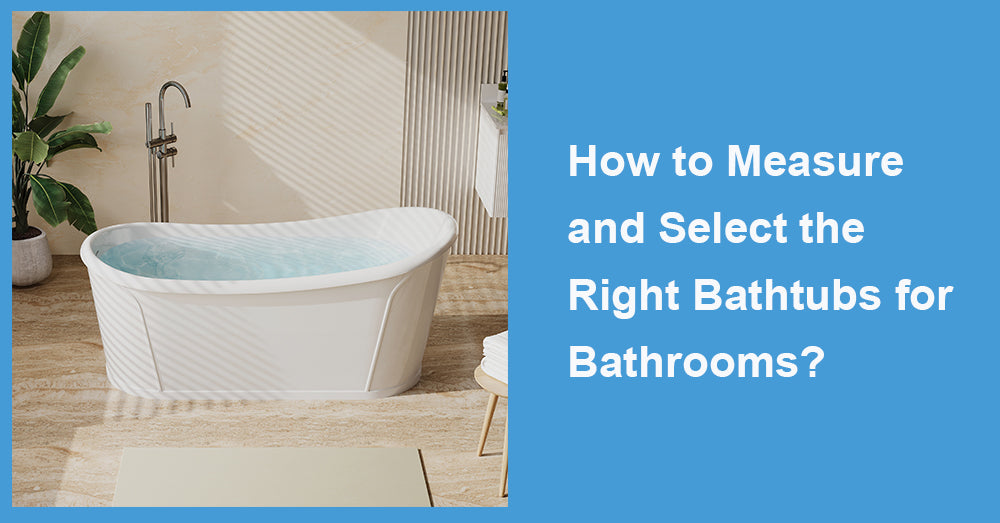
In bathroom decoration or renovation, the bathtubs for bathrooms are often the key product that shapes the spatial layout and user experience. However, in actual projects, many installation issues do not stem from product quality, but from inaccurate measurements or mismatched selection in the early stages. Factors such as bathtub size, drainage position, door opening direction, and structural load-bearing capacity may all affect the final effect.
From an industry perspective, choosing the right bathtub is not just about "choosing a favorite style", but a systematic project. This article will provide a detailed analysis of core issues, including measurement methods, size matching, spatial motion lines, and structural conditions.
1. Clarify the actual available space in the bathroom
Before measurement, it is necessary to distinguish between "total space area" and "actual installable space".
Many homeowners focus solely on the bathroom's overall size when choosing a bathtub, overlooking factors such as door openings, washbasin locations, toilet positions, and channel widths. Industry recommendations should focus on measuring the following data:
Effective length from wall to wall
Clear distance near windows or door frames
Reserved channel width (recommended not less than 60 centimeters)
In a small bathroom, every centimeter is crucial. Especially in standalone bathtub projects, it is necessary to reserve space for cleaning and maintenance, rather than just fitting perfectly.
2. Confirm the location of the drainage pipe and water supply
The position of the drainage outlet is one of the important factors in selecting a bathtub.
Standard embedded bathtubs are usually installed against the wall, with drainage located close to one side of the wall. The drainage outlet of a freestanding bathtub is often located in the center of the bottom or in a specific direction. If the drainage pipe has been pre-embedded, the modification may involve slotting the ground and redoing waterproofing.
Therefore, during the measurement phase, it is necessary to clarify:
Location of the center point of the drainage hole
Distance between the drainage outlet and the wall
Height of water supply pipe outlet
These data will directly affect the selection and installation complexity of bathtub structures.
3. Consider the user's height and immersion depth
A bathtub is not only a spatial product, but also a device for human use.
The common industry standard bathtub lengths are 60 inches (approximately 152 centimeters), 66 inches (approximately 168 centimeters), or 72 inches (approximately 183 centimeters). But whether the length is appropriate should be based on the user's height.
In addition, attention should be paid to the soaking depth. The standard depth is usually 14-18 inches. If you pursue a more comfortable soaking experience, you can choose a deep soaking tube, but at the same time, you need to confirm the load-bearing capacity of the ground.
When selecting dimensions, simulated measurements should be conducted on-site, such as marking the bathtub's contour on the ground to assess spatial proportions visually.
4. The type of bathtub determines the measurement focus
Different types of bathtubs have different space requirements.
A. Embedded bathtub
Three wall support spaces need to be reserved, and the direction of the skirt edge needs to be confirmed.
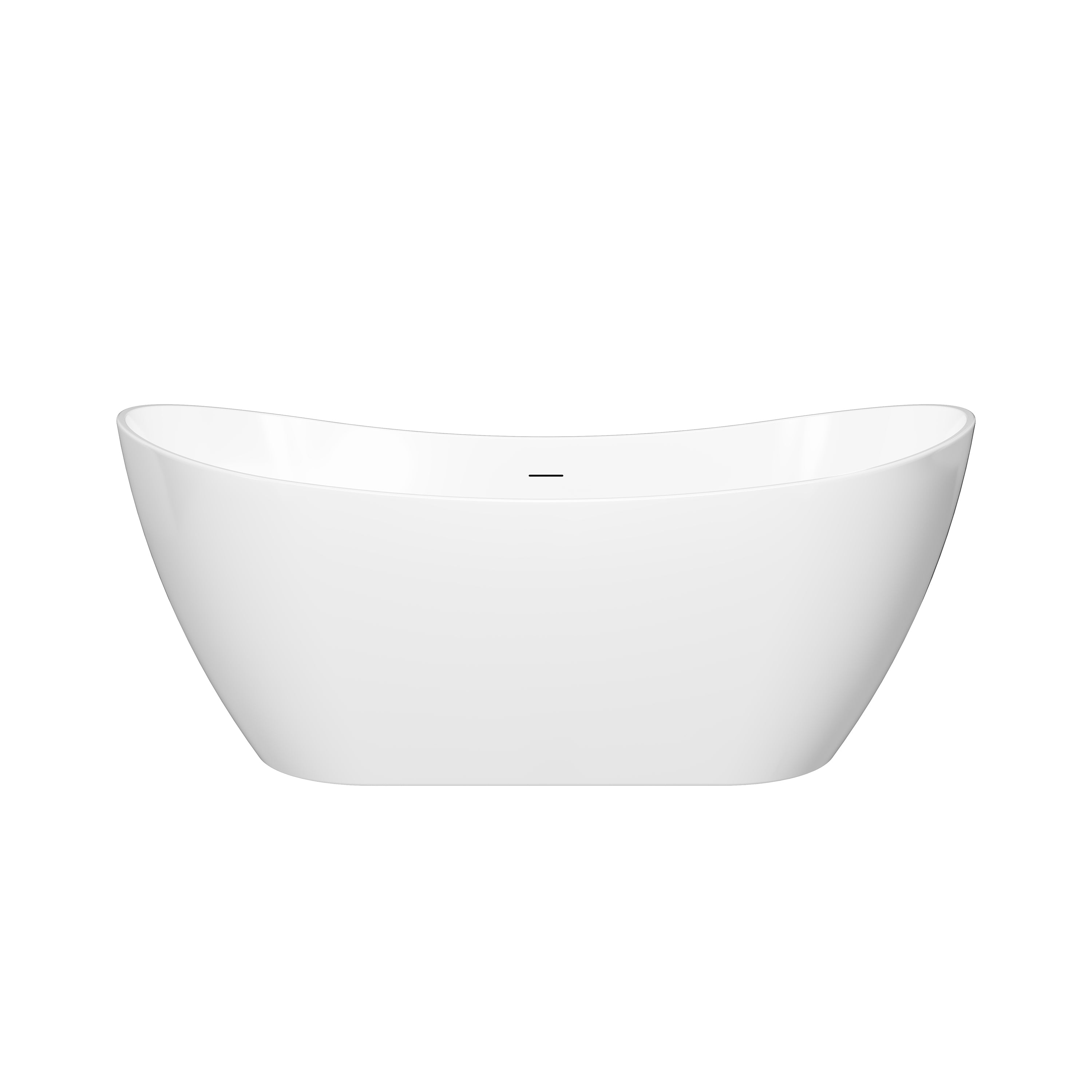
B. Freestanding bathtub
Attention should be paid to the clearance distance around, and it is usually recommended to leave at least 7-10 centimeters of cleaning space around.
C. Corner bathtub
Suitable for specific corner spaces, but with high requirements for the verticality of wall corners.
D. Alcove bathtub
Installation is the most standardized, but strict matching of reserved width is required.
Industry experience shows that different types have different measurement logics, and standards cannot be mixed.
5. Assessment of door openings and transportation routes
Many projects neglect handling issues, leading to difficulties in later construction.
Before selecting a bathtub, the following measurements should be taken:
Entrance door width
Clear width of bathroom door
Corridor and corner dimensions
Especially for large independent bathtubs, if they cannot enter the room smoothly, it may be necessary to remove the door frame or adjust the transportation path.
Industry advice is to confirm the size of the product packaging with the supplier before placing an official order.
6. Ground load-bearing and structural safety
Even though acrylic or composite bathtubs are lighter, their weight increases significantly when filled with water.
Generally speaking, the weight of a full bathtub and user can reach 300-400 kilograms. Therefore, special attention should be paid to structural safety during the renovation of old houses.
If it is a wooden structure ground, the spacing and bearing capacity of the load-bearing beams should be confirmed. If necessary, it is recommended to consult with structural engineering personnel.
7. Spatial proportion and visual coordination
A suitable bathtub should not only be compatible in size, but also coordinated in visual proportion.
For example, choosing a large bathtub in a small bathroom can compress the channel space; If a large main bathroom is equipped with a small bathtub, it will appear unbalanced in proportion.
The principle of proportionality is often followed in industry design:
The length of the bathtub accounts for approximately 70-80% of the available wall length
Leave enough space for the passage
Maintain smooth flow with the washbasin and shower area
By controlling the proportion, the overall spatial quality can be improved.
8. Reserve installation and maintenance space
Installation is not only about placing the bathtub, but also includes drainage maintenance and interface inspection.
Embedded bathtubs should reserve maintenance ports; The independent bathtub should ensure that the drainage interface is accessible. Ignoring these details may increase the difficulty of later maintenance.
In addition, it should be confirmed whether pre-installation of ground faucets or wall water outlets is necessary.

Conclusion
In the process of bathroom decoration, measuring and selecting a bathtub is a comprehensive task. It not only involves simple data on length, width, and height, but also relates to multiple aspects such as drainage layout, structural safety, spatial flow, and visual proportion. Industry practice has repeatedly proven that many installation problems stem from insufficient preparation in the early stages, rather than the product itself. Only through systematic measurement, comprehensive evaluation of structural conditions, and selection based on usage requirements can the bathtub truly integrate into the space and be used stably for a long time. For any project planning to upgrade the bathroom, precise measurement and rational selection are always the first steps towards successful installation.




























Leave a comment
This site is protected by hCaptcha and the hCaptcha Privacy Policy and Terms of Service apply.