
















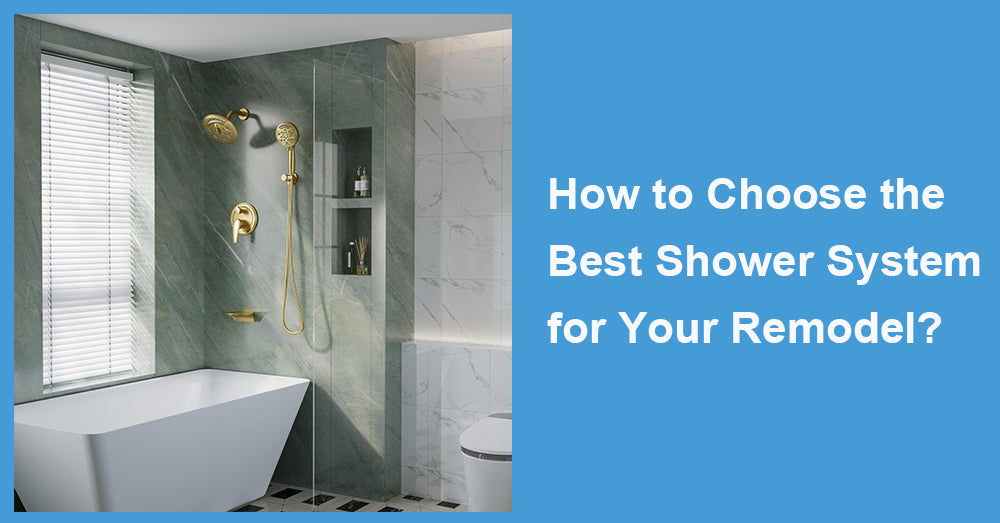
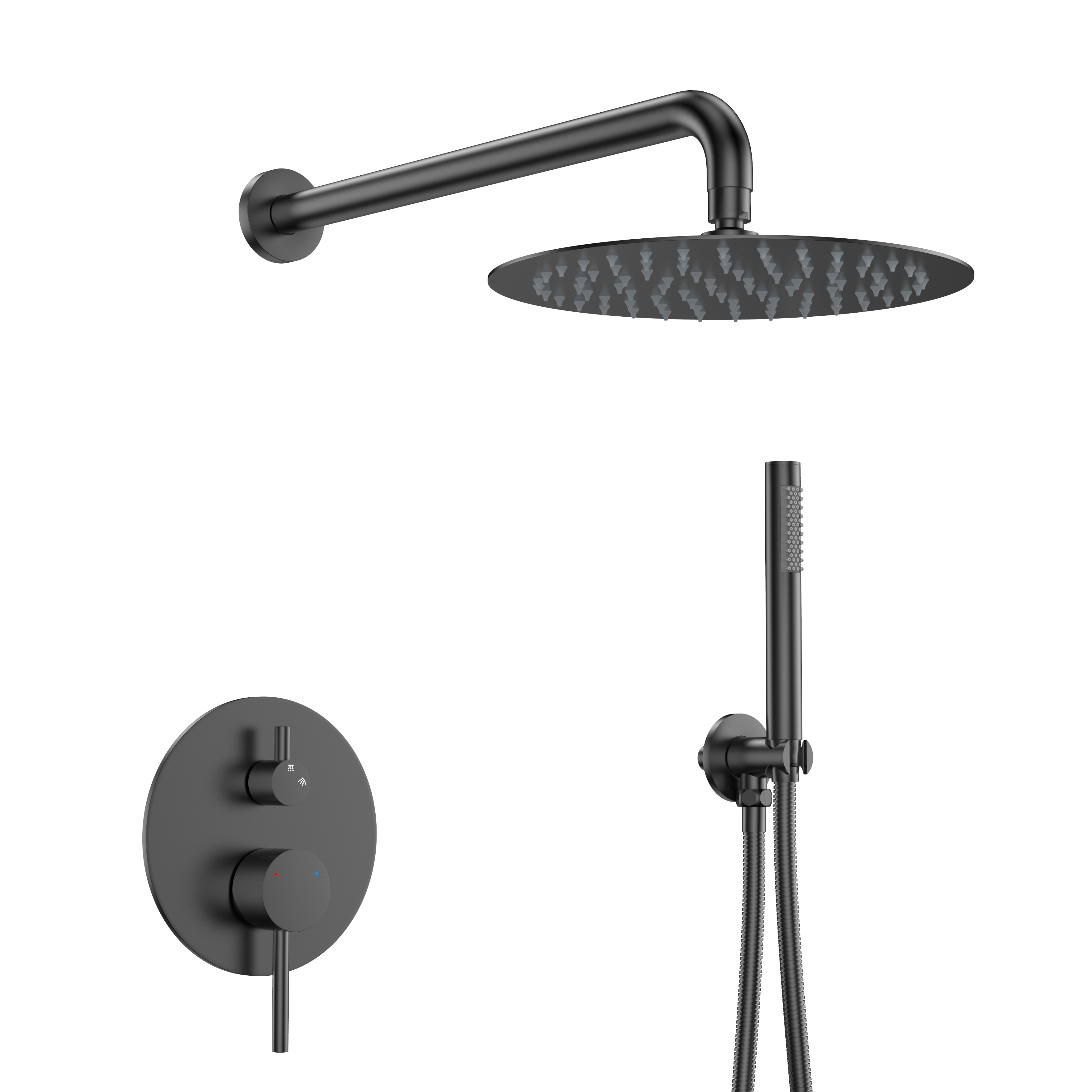
In the process of bathroom renovation, the shower system is often a key component that determines the user experience and spatial quality. From a basic single showerhead configuration to a combination system that includes an overhead shower, handheld showerhead, and a multifunction shower valve, the choice is not only about appearance, but also about water pressure matching, safety controls, and long-term durability. Data shows that in the overall bathroom upgrade budget, investment in shower systems usually accounts for about 10% to 20%, which are high-use, high-value projects. To select a truly suitable product, evaluate it against the following core dimensions.
1. First, confirm the spatial dimensions and layout conditions
The size of the shower space directly affects the selection of system types. Common shower enclosure widths include 32, 36, and 48 inches; walk-in structures typically have a width of 60 inches or more.
In standard shower rooms ranging from 36 to 48 inches, a single overhead shower or a combination of overhead shower and a handheld showerhead is sufficient; in spaces larger than 60 inches, adding a body spray or a dual-function system would be more proportional.
Data shows that in shower spaces with a width exceeding 60 inches, the satisfaction rate for choosing a dual-function system is about 18% higher than for a single outlet.
2. Matching water pressure and flow rate is crucial
The water supply pressure is usually between 40 PSI and 60 PSI. If it is below 30 PSI, some multifunctional systems may experience insufficient water flow.
The current mainstream shower system flow standard is 2.5 gallons per minute (GPM) or lower. Some water-saving models can be as low as 2.0 GPM.
Test data show that under 40 PSI conditions, the 2.5 GPM system can provide stable water flow coverage. If two water outlets are opened simultaneously, the total flow rate must match the water supply capacity.
Before making a choice, confirm the water supply pressure and pipe size at home.
3. Choose the appropriate type of valve core
Modern systems are mainly divided into two control modes: Pressure Balance and Thermostatic.
Pressure Balance prevents sudden temperature changes by balancing the pressure of hot and cold water; Thermostatic directly adjusts the target temperature, with fluctuations controlled to approximately 1 °F.
Data show that in a multi-outlet system, the water temperature stability of a thermostatic valve is about 20% to 30% higher than that of a pressure-balancing valve.
If the renovation goal emphasizes comfort and precise temperature control, Thermostatic has more advantages.
4. Top spray size and coverage range
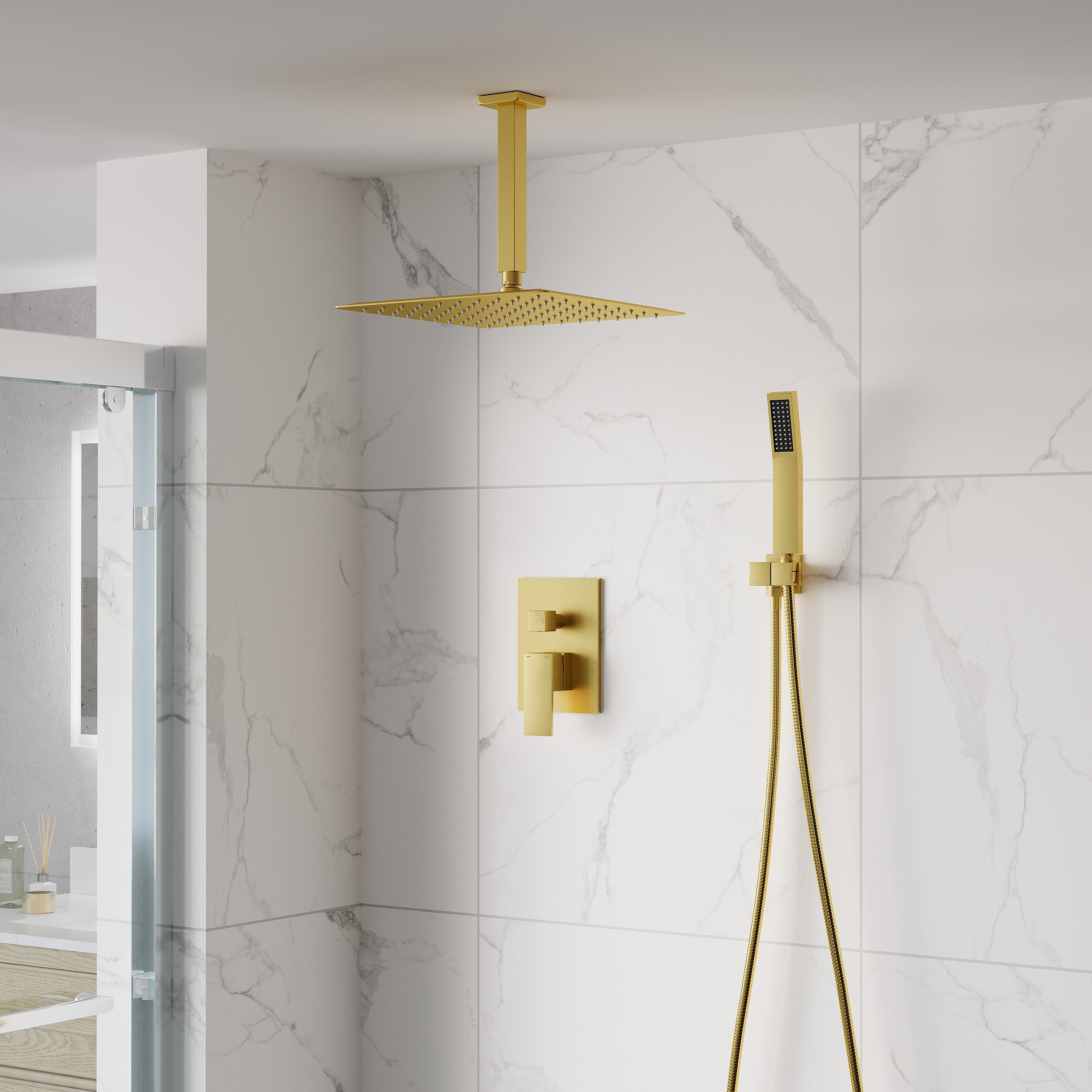
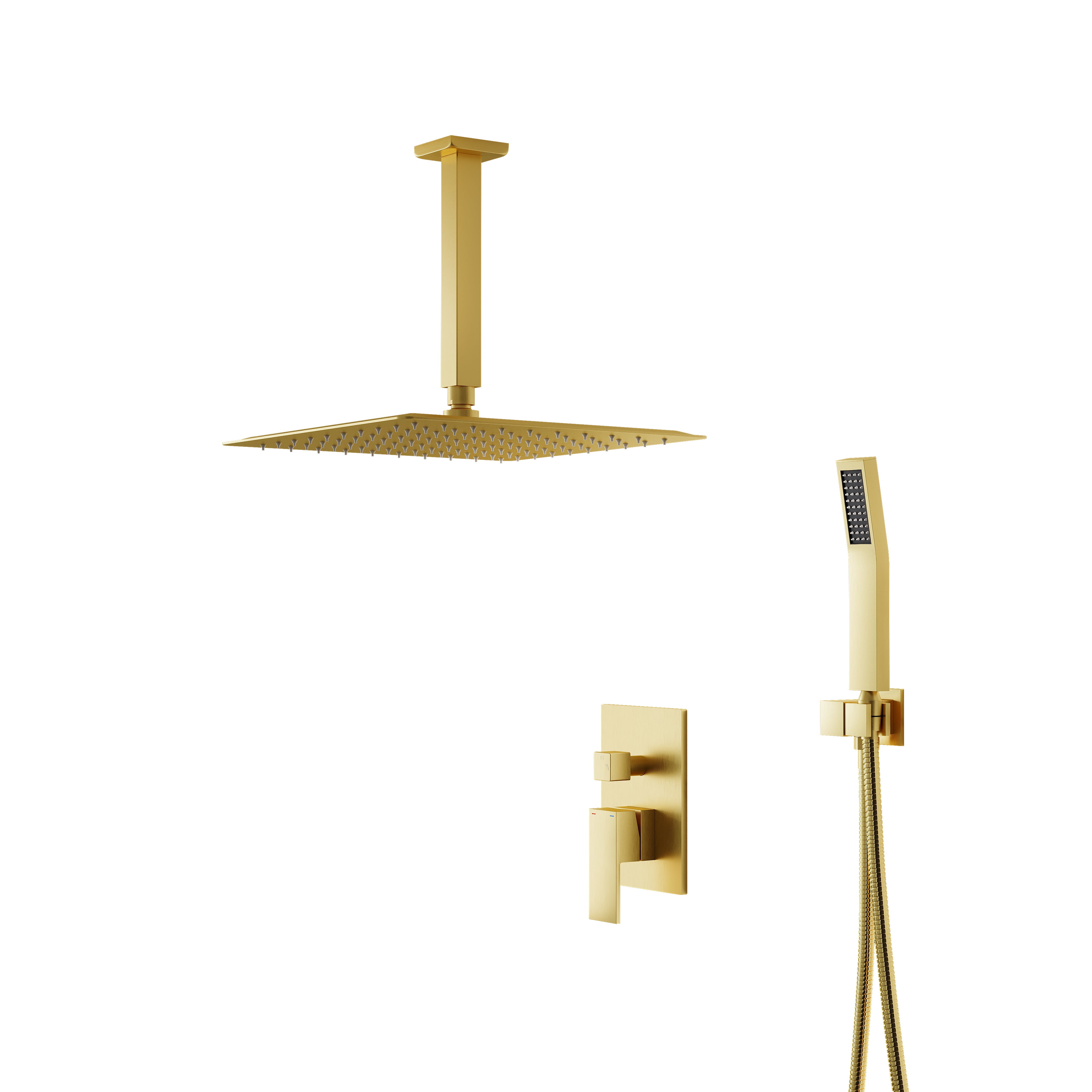
Common specifications for overhead shower diameter include 8-inch, 10-inch, and 12-inch.
In a 36-inch shower space, an 8-inch or 10-inch overhead shower is more coordinated; in a 60-inch-wide space, a 12-inch overhead shower provides more visual balance.
Test data show that a 10-inch overhead shower can cover approximately 70% of the shoulder area at a flow rate of 2.5 GPM; the 12-inch model offers wider coverage but requires higher water pressure.
5. Material and surface treatment
The main material is usually brass or stainless steel. Brass valve bodies are widely used due to their high corrosion resistance and stability.
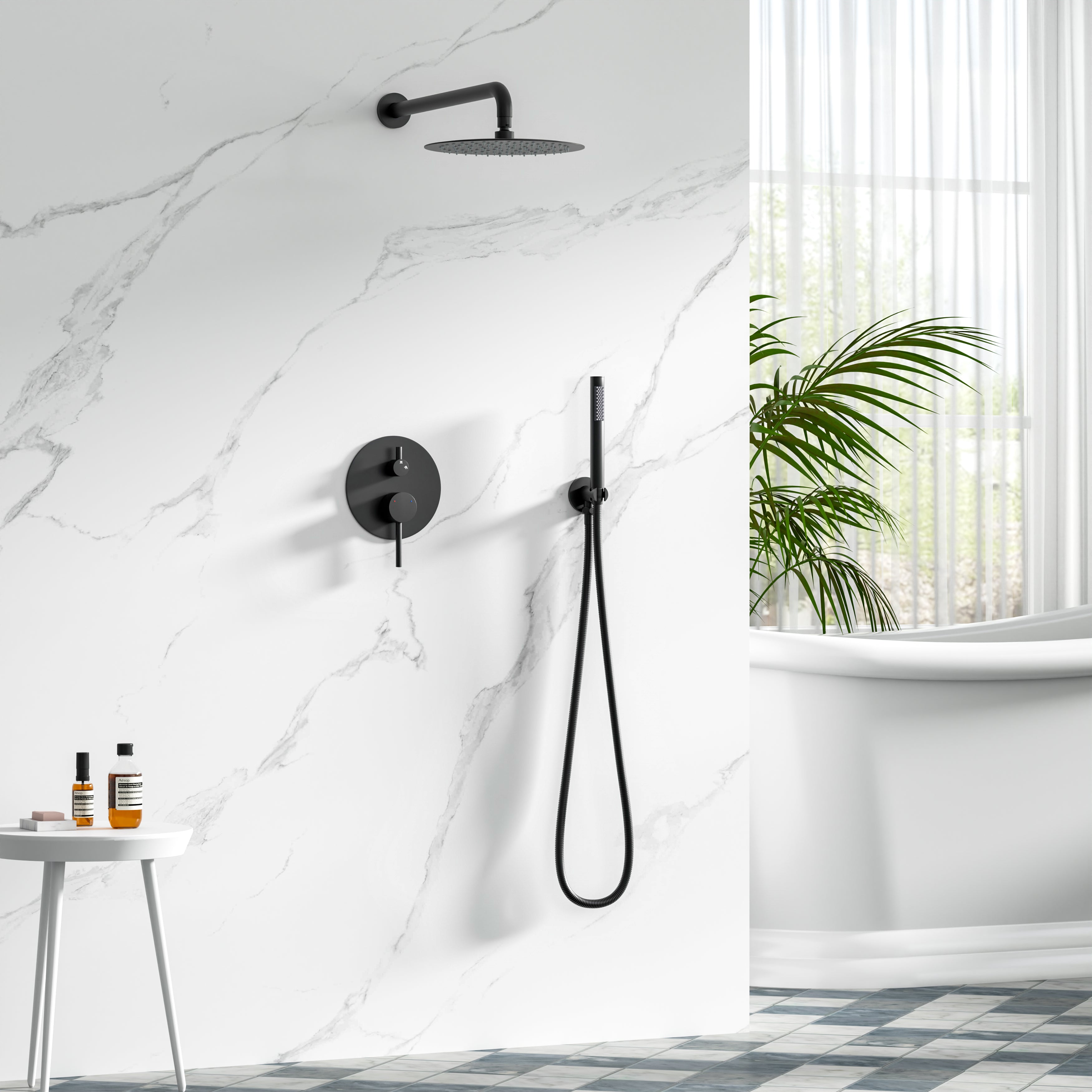
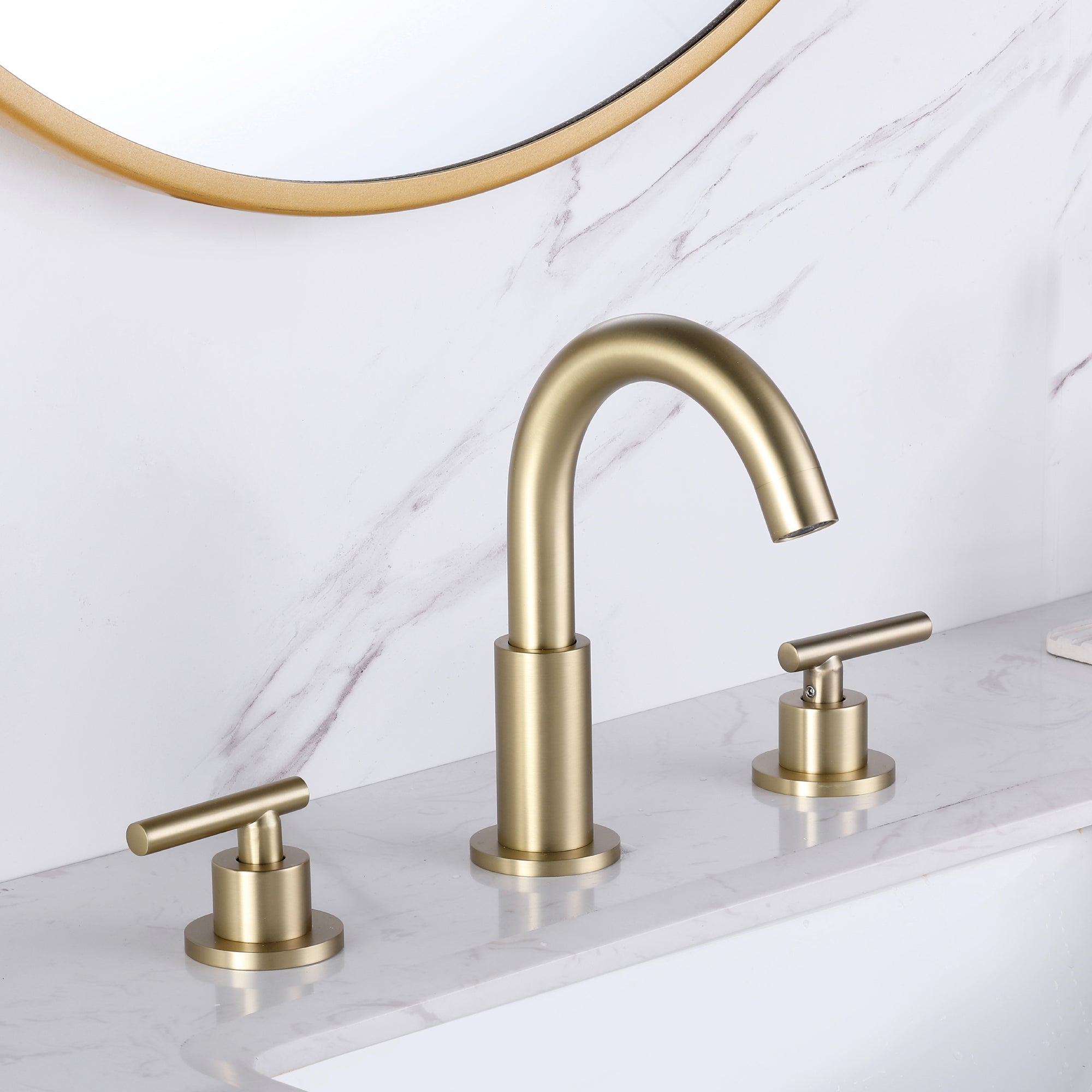
Surface treatments include chrome plating, brushed nickel, matte black, and brushed gold. Data show that brushed finishes are superior to high-gloss chrome plating in terms of water-stain resistance, resulting in about a 15% reduction in scale visibility.
In long-term use environments, corrosion resistance is more important than color.
6. Installation type and construction difficulty
The shower system is divided into two types: exposed and concealed. The concealed installation system requires in-wall plumbing, which has a simpler appearance but higher construction complexity.
During the comprehensive renovation phase, the construction cost of the concealed installation system is relatively manageable; If it is a partial upgrade, the exposed structure is more convenient.
Data shows that the proportion of concealed installation systems used in new or large-scale renovation projects has been increasing year by year.
7. Handheld showerhead and additional features
The length of the handheld showerhead hose is usually between 60 inches and 72 inches, making it easy to use flexibly.
Multiple water flow modes are available for massage, rain shower, or mixed mode selection. Survey data shows that in systems with multiple water flow functions, user satisfaction is about 15% higher.
For families with varied needs or accessibility needs, handheld showerheads are almost a must-have.
8. Long-term maintenance and water-saving efficiency
Water-saving systems not only reduce water use but also help control long-term costs. The water-saving design, ranging from 1.28 GPM to 2.0 GPM, can significantly reduce water consumption while maintaining spray performance.
Data shows that compared to the old 3.5 GPM structure, modern water-saving systems can reduce water consumption by over 40%.
At the same time, a nozzle design that is easy to disassemble and clean should be chosen to reduce clogging from mineral deposits.

9. Conclusion
Choosing the appropriate shower system is not about pursuing the number of functions, but about making rational judgments based on spatial dimensions, water pressure conditions, and usage habits. From an 8-inch overhead shower to a 12-inch large structure, from a 2.0 GPM water-saving standard to constant-temperature control technology, every size and flow rate affects the final experience. By precise measurement and system matching, the optimal balance between comfort, safety, and durability can be achieved, delivering true long-term value to renovation projects. A well-chosen shower system can also make everyday use feel more efficient, more comfortable, and more aligned with the overall goals of the renovation.














Leave a comment
This site is protected by hCaptcha and the hCaptcha Privacy Policy and Terms of Service apply.