
















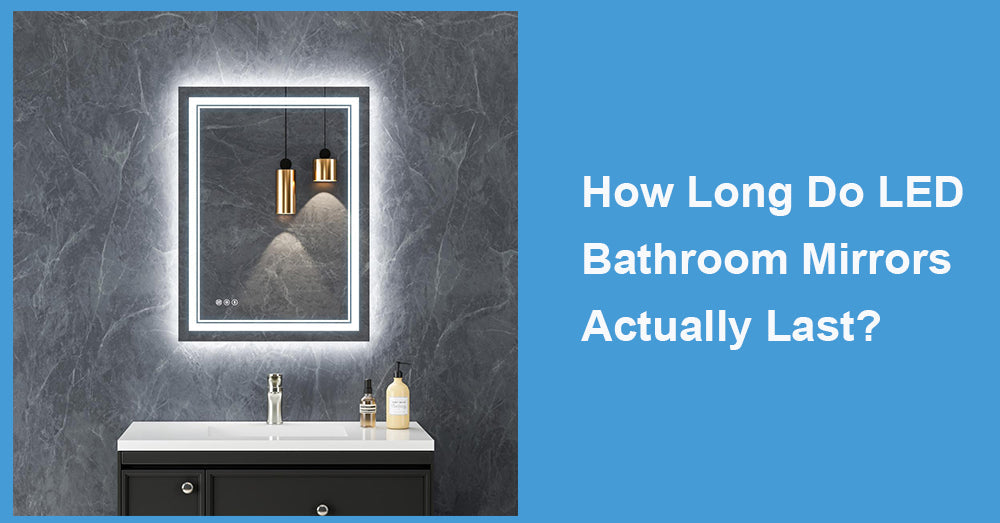
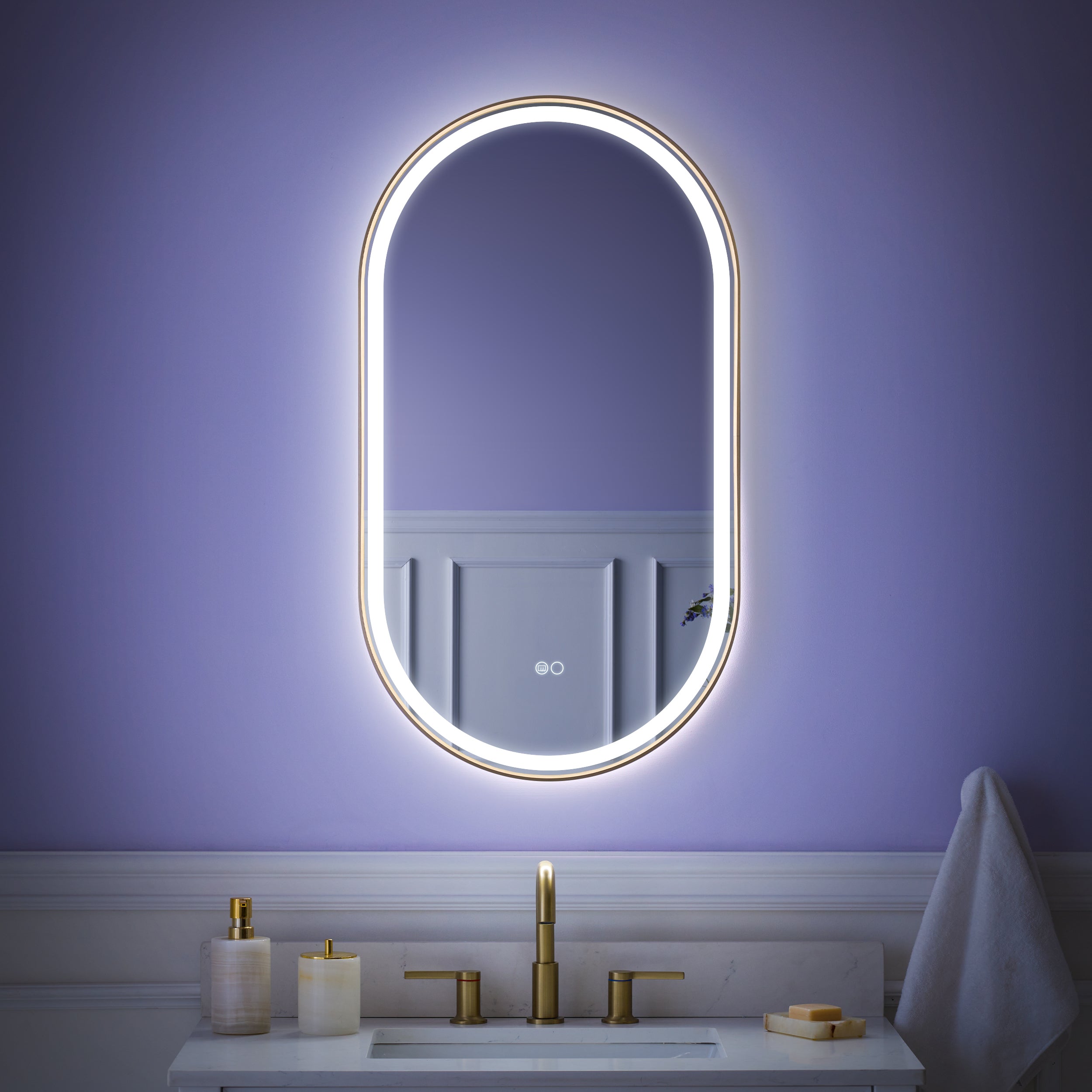
A quality LED bathroom mirror can last for many years, but the honest answer depends on what you mean by “last.” LEDs rarely fail like a traditional bulb that suddenly burns out. More often, the mirror still turns on, but it becomes noticeably dimmer, the color shifts, or a driver component fails and the lighting stops working even though the LED chips themselves could have kept going. Understanding the difference between LED “lumen maintenance” life and real-world “system” life helps you buy smarter and avoid disappointment.
1. The Two Lifespans You Should Care About
A. LED chip life (gradual dimming)
Most LED lifetime claims are based on lumen maintenance, not total failure. A common metric is L70, the point where the LED produces 70% of its initial light output. L70 is widely used because LEDs typically fade over time instead of failing abruptly. (Source: IES LM-80 overview and testing explanations; Source: LED manufacturer reliability pages discussing lumen maintenance concepts.)
To estimate L70, reputable manufacturers rely on:
· LM-80 testing, which measures lumen output and color maintenance of LED packages, arrays, or modules over time at different temperatures. (Source: ANSI/IES LM-80 preview document; Source: technical explanations of LM-80.)
· TM-21 projections, which extend LM-80 test data to estimate longer-term lumen maintenance. (Source: lighting testing references and LM-80/TM-21 guidance summaries.)
B. Mirror system life (electronics and environment)
Even if the LED chips are still healthy, the mirror can “die” because of the system around them, especially the LED driver and controls. Research and industry discussions repeatedly point to driver components, particularly electrolytic capacitors, as a common life-limiting factor, strongly tied to heat. (Source: Illuminating Engineering Society article on LED driver useful life and capacitor temperature; Source: Analog Devices technical article on electrolytic capacitor lifetime rules of thumb.)
Bottom line: A mirror can outlive its driver on paper, but the driver often determines whether the light still works in real life.
2. So What’s a Realistic Lifetime Range?
For LED lighting in general, government and efficiency programs emphasize that LEDs typically last much longer than older lighting types. (Source: U.S. Department of Energy, LED Lighting overview; Source: ENERGY STAR lighting messaging on longevity.) Many LED products are commonly marketed in ranges such as tens of thousands of hours, but actual life depends heavily on thermal management and component quality.
For LED bathroom mirrors, a realistic “expectation range” looks like this:
· LED light output staying acceptably bright: often many years, commonly aligned with long lumen-maintenance projections when quality LEDs and good heat sinking are used. (Source: LM-80 testing concept and lumen maintenance guidance.)
· Driver and controls: can be the practical limit, especially in mirrors with poor ventilation behind the glass, tight housings, or low-quality power supplies. (Source: IES driver life research; Source: Analog Devices capacitor lifetime discussion.)
Rather than chasing a single hour number, treat the mirror like a system: the more heat and moisture stress you reduce, the longer it stays reliable.
3. Why Heat Matters So Much (Even in a Bathroom)
LEDs themselves are efficient, but the electronics still generate heat, and heat is the enemy of both LEDs and drivers.
A widely cited engineering rule of thumb is that electrolytic capacitor life roughly doubles for every 10°C reduction in operating temperature. (Source: Analog Devices, capacitor lifetime case study.) IES research also found an inverse exponential relationship between LED driver useful life and the operating temperature of the output capacitor. (Source: Illuminating Engineering Society research article on LED driver useful life.)
What this means in practice:
· Mirrors with better thermal paths (metal backing, proper heat sinking, quality driver design) usually last longer.
· Installing a mirror in a spot with poor airflow behind it, or enclosing drivers tightly with no thermal relief, can shorten driver life.
4. Why Moisture and Condensation Reduce Reliability
Bathrooms create humidity spikes and, sometimes, condensation. Condensation is more damaging than “humidity” alone because it creates a liquid film that can become conductive if residues are present, which can drive corrosion and leakage currents. (Source: conformal coating technical guidance on humidity vs. condensation in electronics.)
Higher-quality products may protect electronics with better enclosure design, gasketing, or coatings. While you do not need to become an engineer, it is worth looking for basic signals of moisture-aware design:
· Sealed or protected electrical compartments
· Moisture-resistant connectors
· Clear installation guidance about locations and ventilation
5. What Manufacturers Mean by “LED Lifetime” (and How to Read It)
When you see a lifetime claim, ask these questions:
1. Is it an L70 lumen-maintenance claim or a “time to failure” claim?
L70 is normal for LEDs; it does not mean the mirror is broken at that point, only dimmer.
2. Is the claim supported by LM-80/TM-21 style testing?
LM-80 measures actual lumen maintenance over time; TM-21 projects longer-term performance. (Source: ANSI/IES LM-80 preview; Source: LM-80 testing explanations.)
3. What about the driver?
Some brands emphasize LED chips but say little about driver durability. Driver life is strongly temperature-dependent and often limits the system. (Source: IES driver life research; Source: Analog Devices capacitor lifetime article.)
6. Daily Use: How Many Years Do “Hours” Translate To?
Lifetime ratings are hours-based. Your real calendar life depends on how long you use the light each day.
A simple conversion:
· 1 hour/day ≈ 365 hours/year
· 3 hours/day ≈ 1,095 hours/year
· 5 hours/day ≈ 1,825 hours/year
If a mirror’s lighting system is designed to sustain tens of thousands of hours under reasonable conditions, that can translate into many years of typical bathroom use. The bigger risk is not “running out of hours,” but heat, moisture stress, and driver quality.
7. Practical Buying Checklist for Longer-Lasting LED Mirrors
Look for:
· Published lumen maintenance testing language (LM-80/TM-21 references are a positive signal). (Source: ANSI/IES LM-80 preview; Source: LM-80 testing explanations.)
· Dimming and quality control features (smoother dimming often correlates with better driver design, though not always).
· Reasonable warranty length and clear warranty coverage for the LED and driver separately, if stated.
· Moisture-aware construction (sealed compartments, protected wiring, clear installation instructions).
Be cautious if:
· The listing only says “long life” with no definitions or specs.
· There is no mention of testing methods, component standards, or warranty clarity.
· The mirror is extremely thin with no obvious thermal strategy, yet claims extremely high lifetime.
8. How to Make an LED Mirror Last Longer After Installation
You can extend real-world life with a few habits:
· Run the exhaust fan during and after showers to reduce condensation cycles.
· Avoid placing the mirror where it gets direct spray or constant splash.
· Use gentle cleaners and avoid soaking edges and seams.
· If the mirror has a defogger, use it as intended and avoid trapping extra heat behind the mirror with poor airflow.

Conclusion
LED bathroom mirrors can last a long time, but “LED life” is not the same as “mirror life.” The LED chips are often designed around gradual lumen maintenance (commonly discussed as L70), supported by LM-80 testing and TM-21 projections. (Source: ANSI/IES LM-80 preview; Source: LM-80 testing explanations.) In real bathrooms, the system’s driver and controls frequently determine whether the mirror stays reliable, and driver life is strongly tied to temperature and component aging, especially electrolytic capacitors. (Source: Illuminating Engineering Society driver life research; Source: Analog Devices capacitor lifetime article.) Add moisture and condensation stress, and build quality matters even more. Choose a mirror with credible testing signals, solid thermal design, and a meaningful warranty, and you can reasonably expect many years of dependable use.












Leave a comment
This site is protected by hCaptcha and the hCaptcha Privacy Policy and Terms of Service apply.