














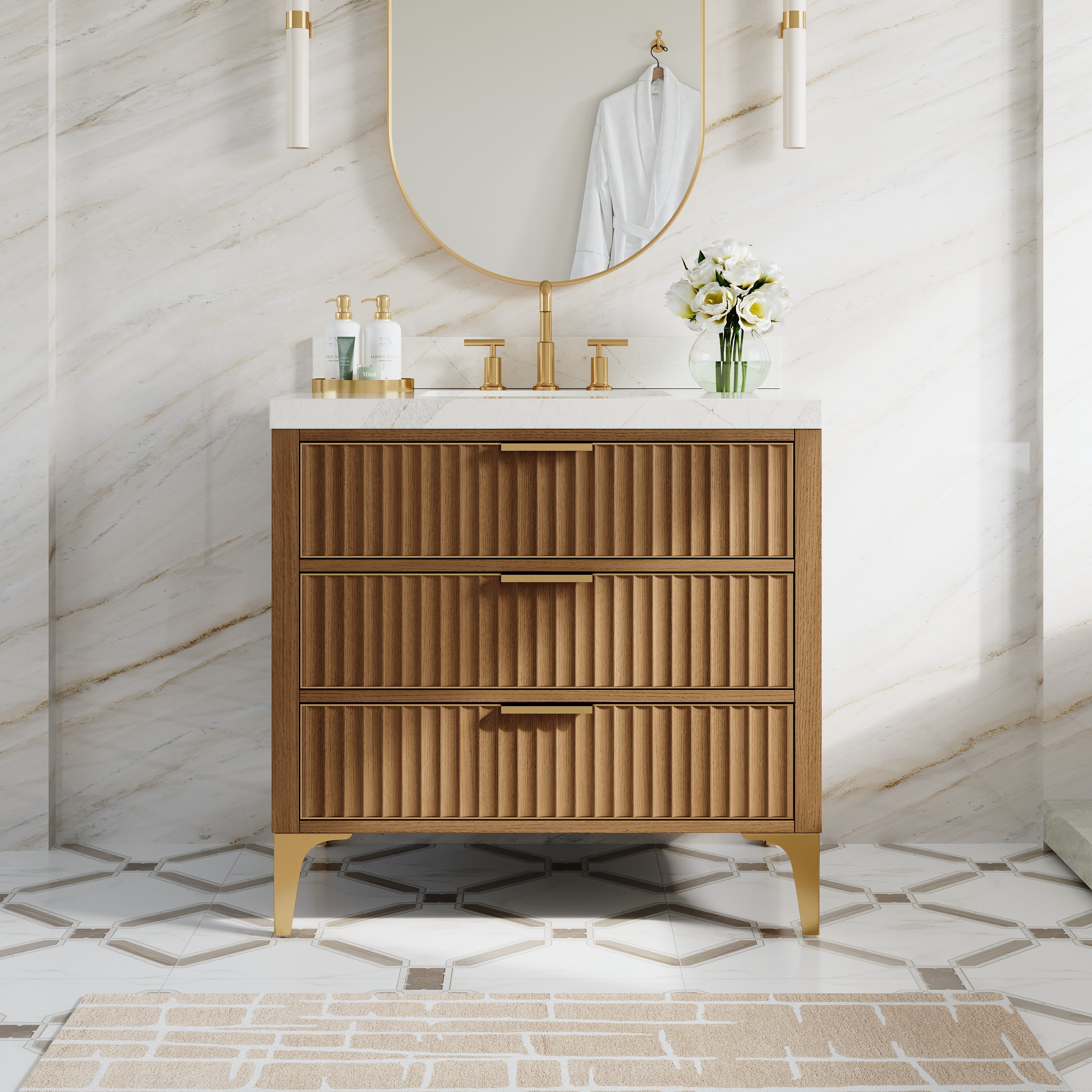
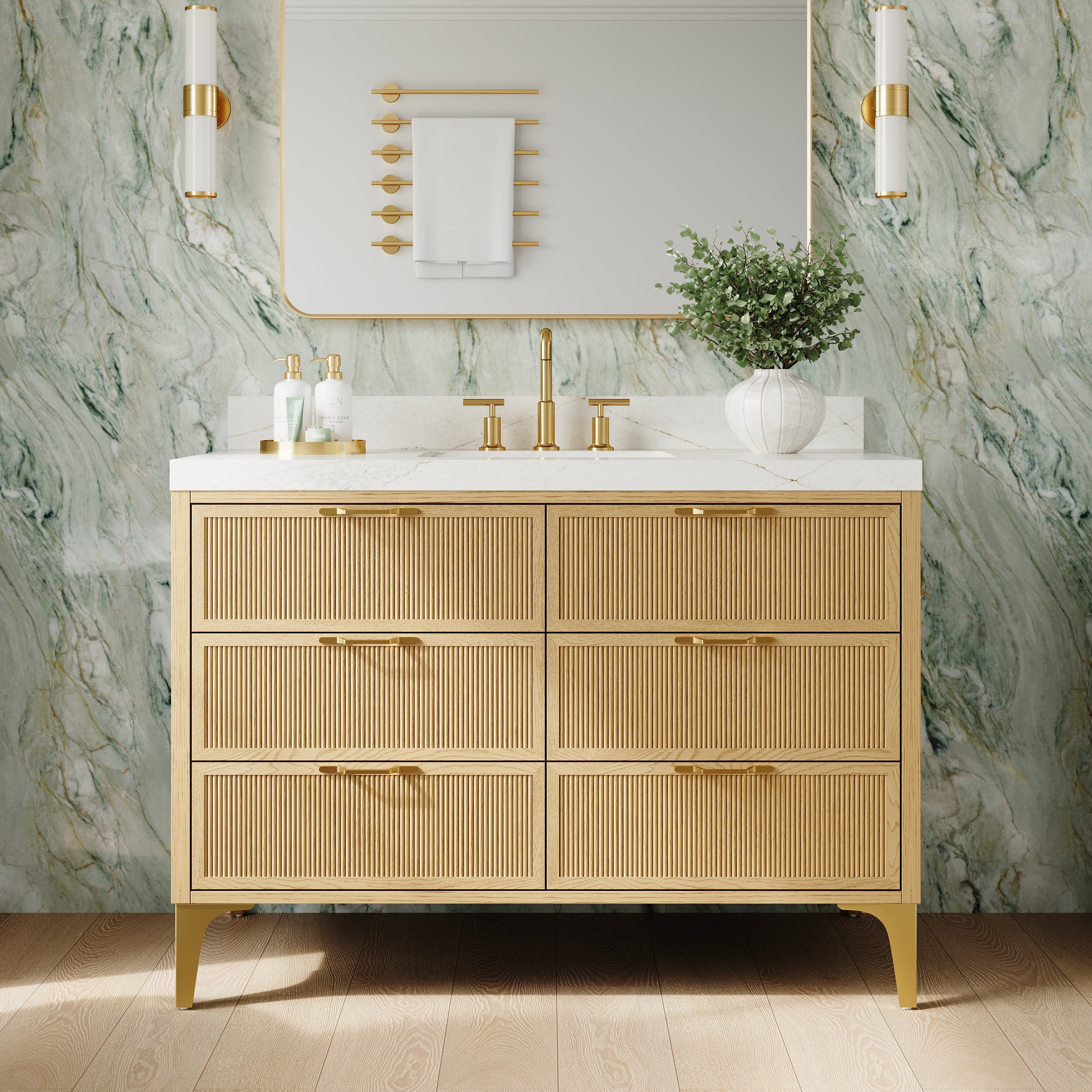


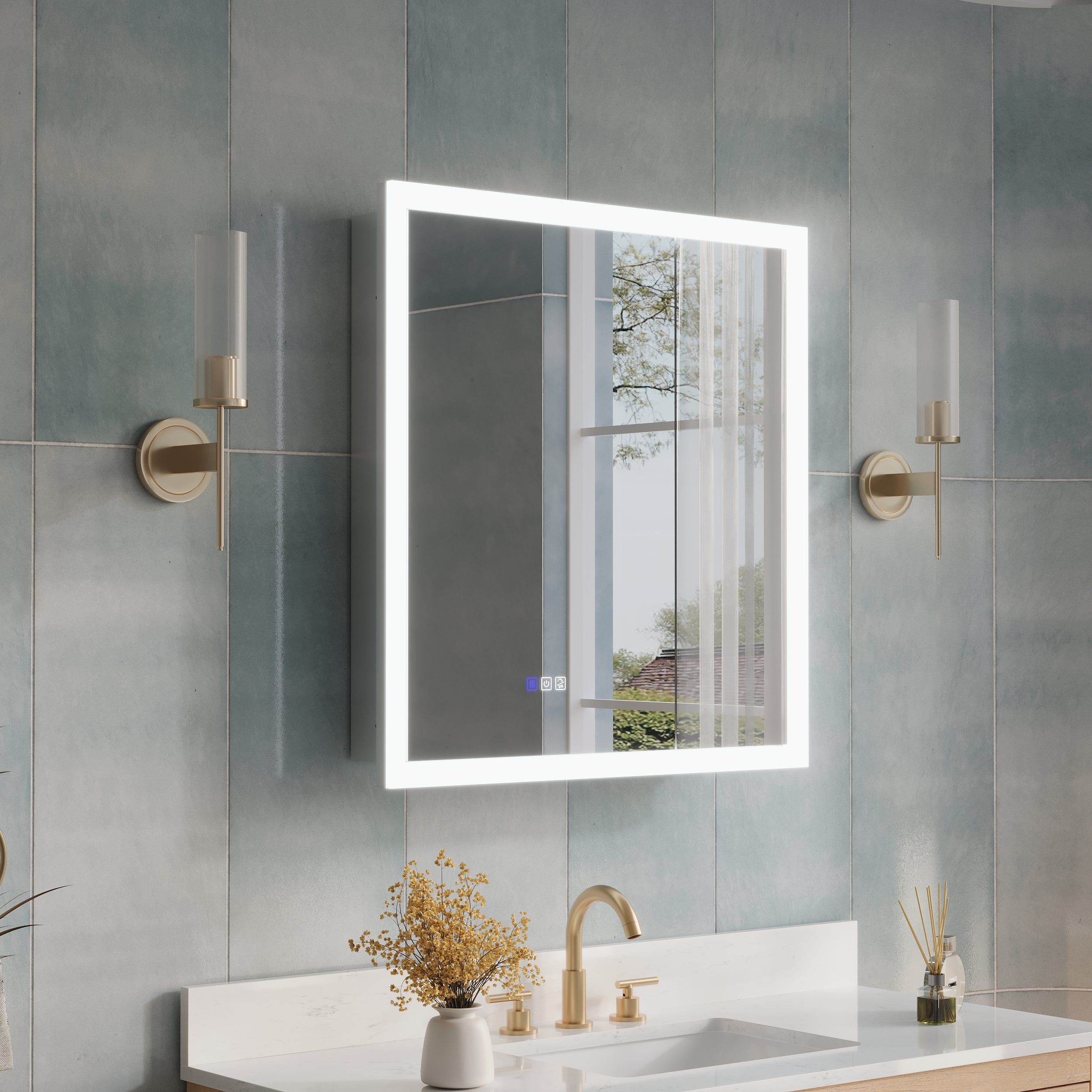
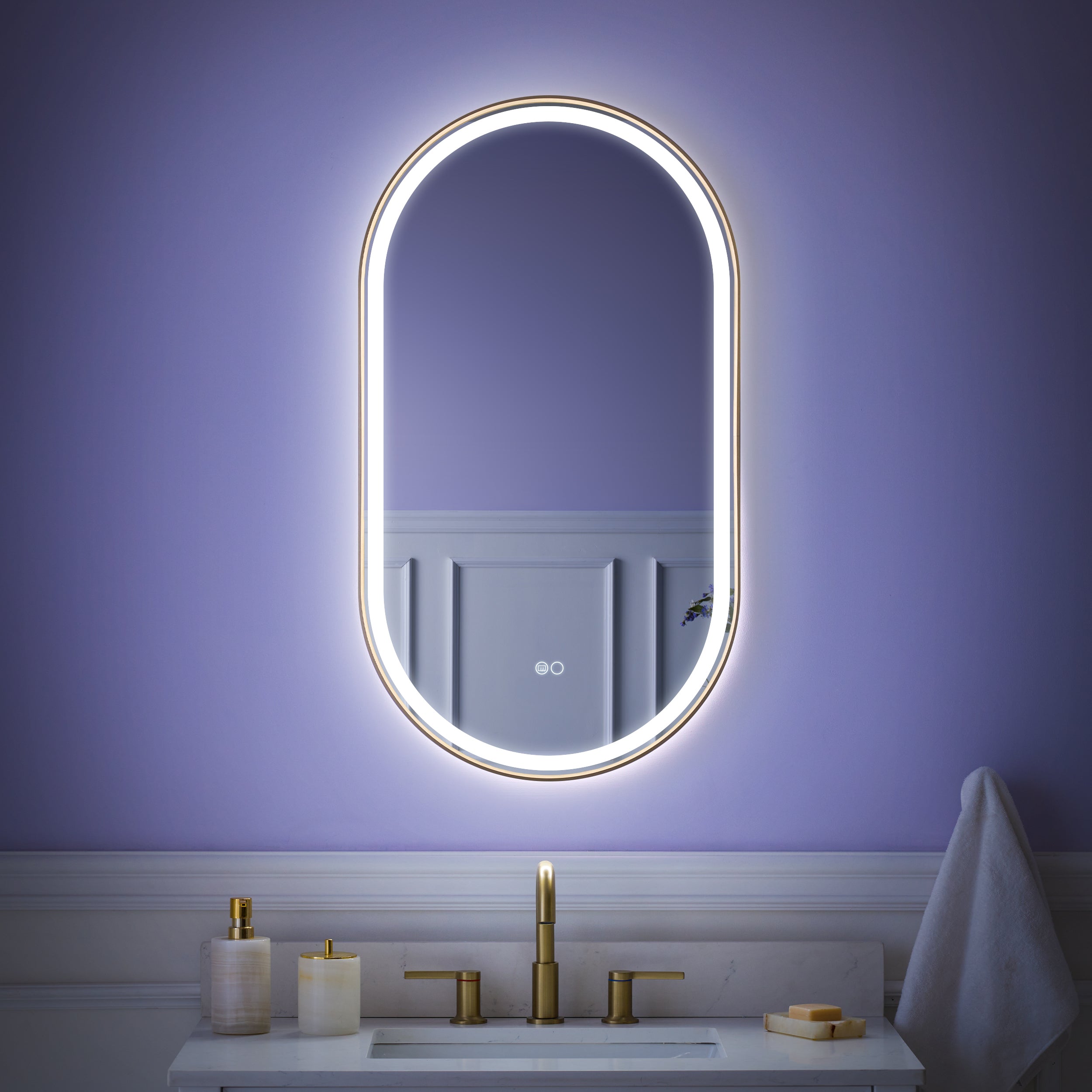
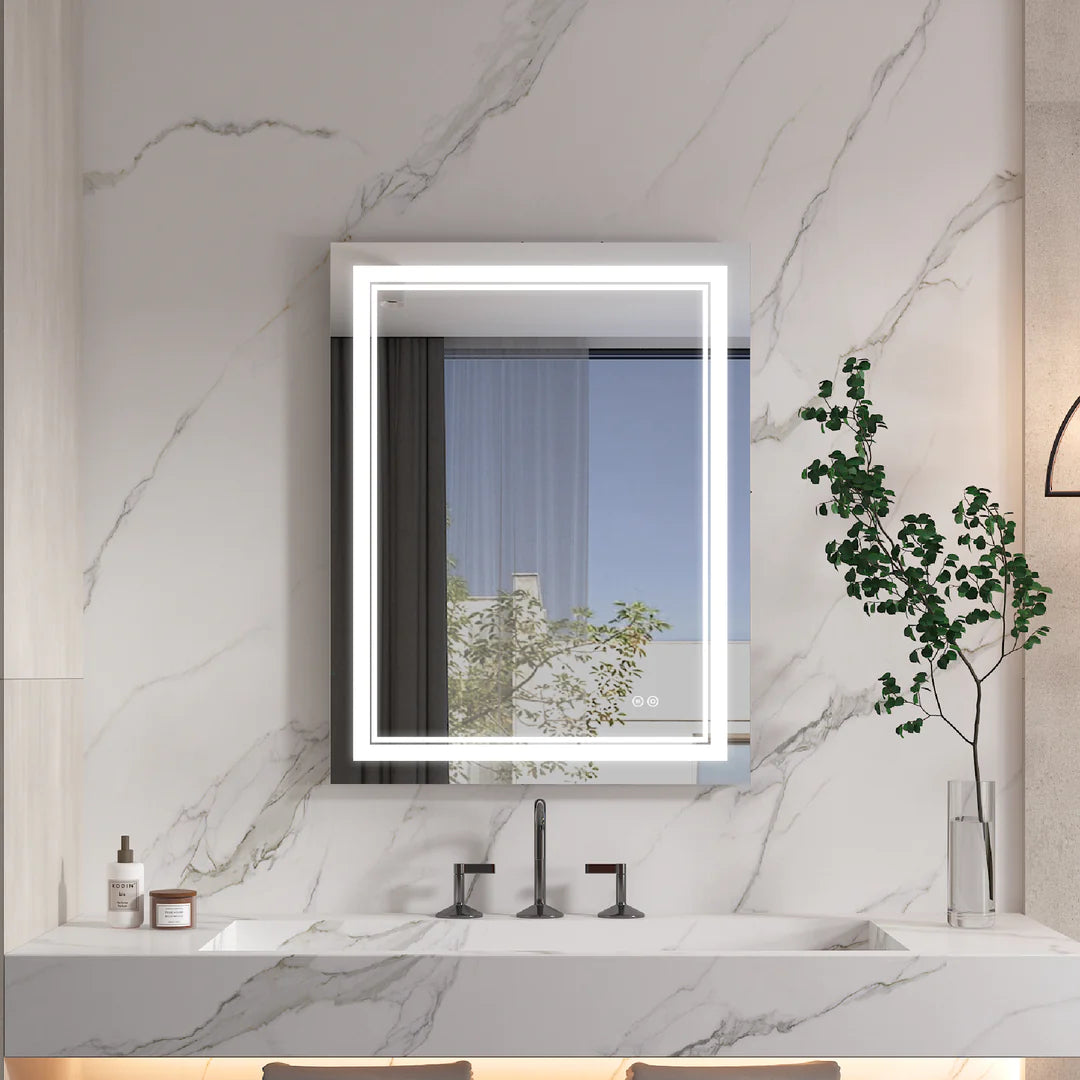
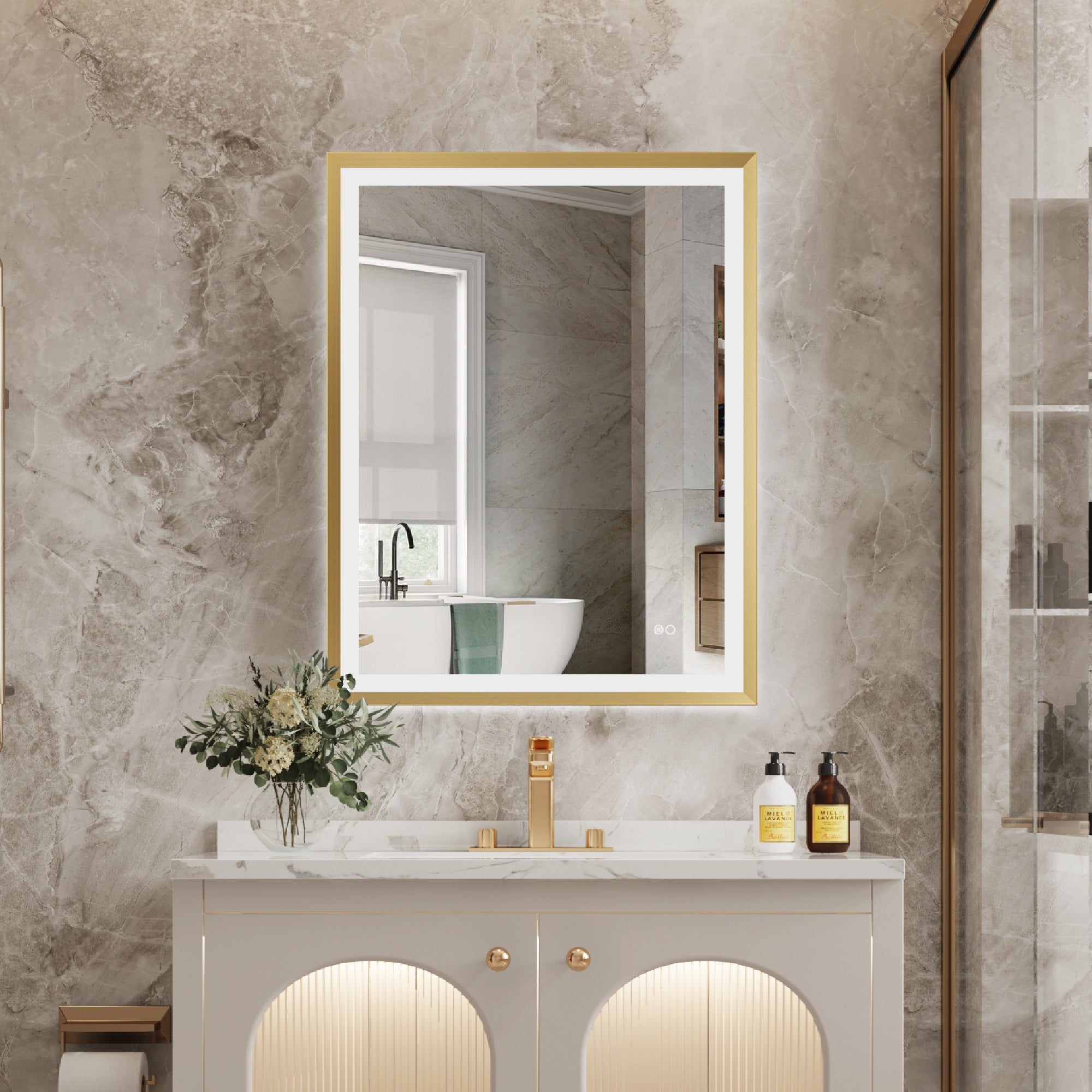
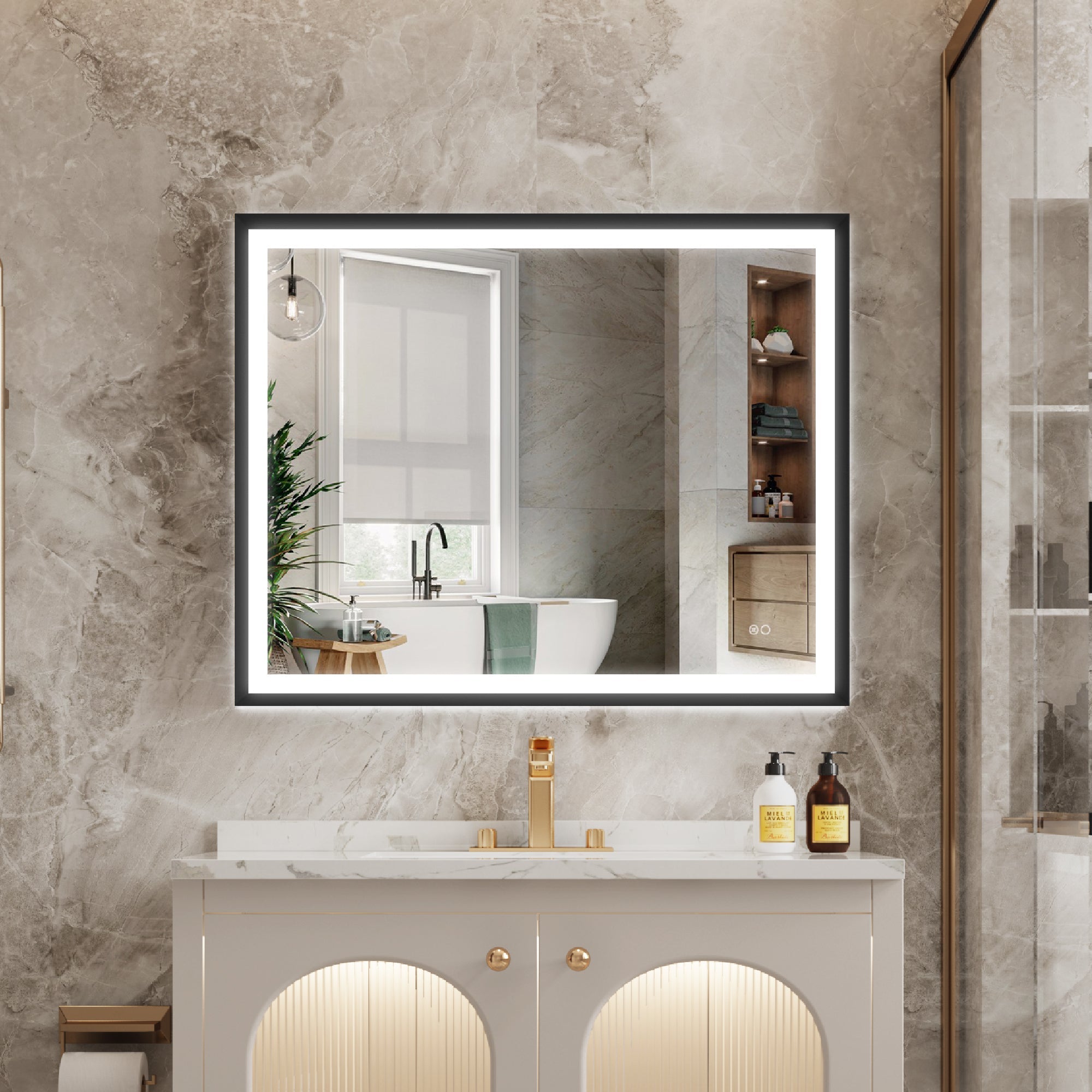
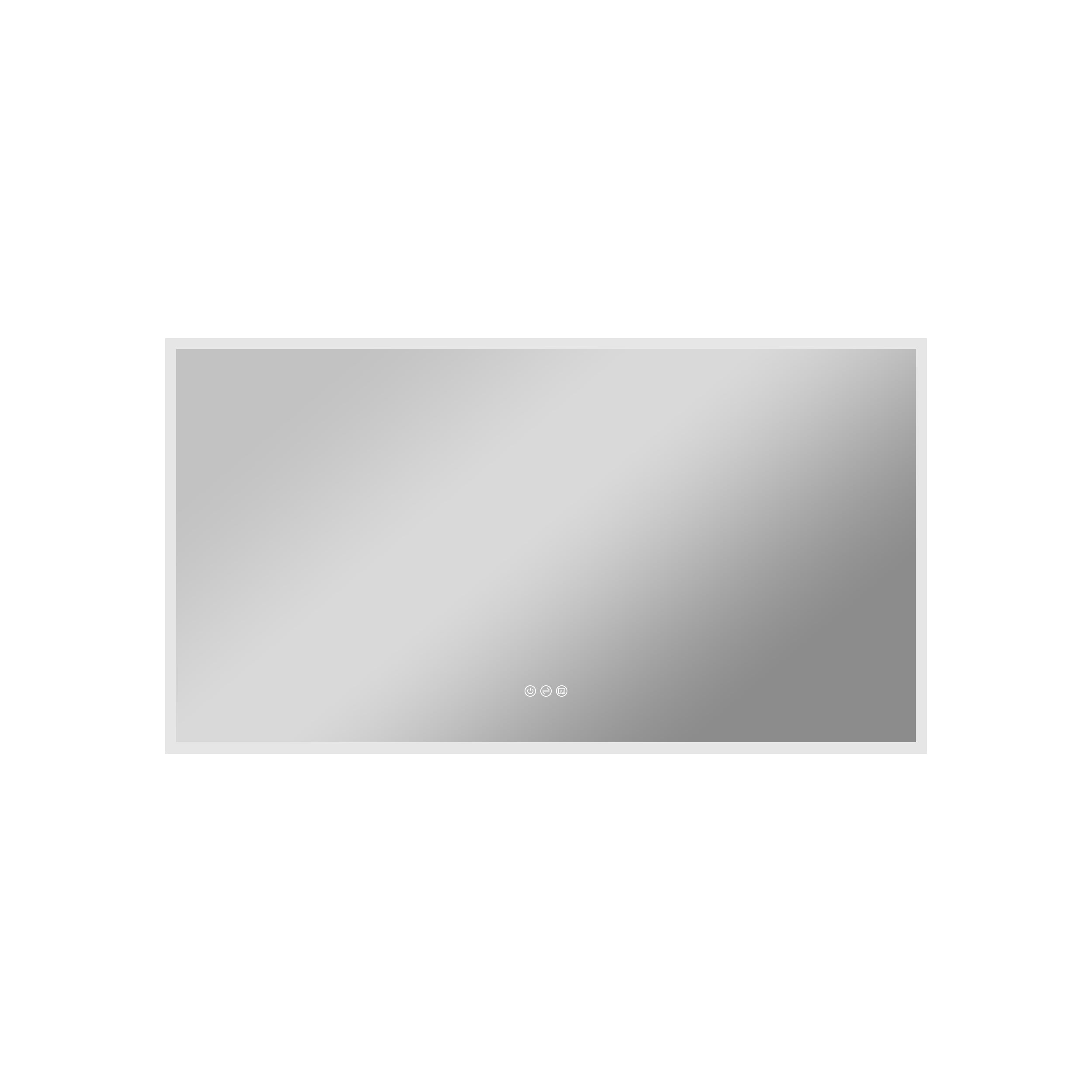
In the trend of modern bathroom renovation, lighted vanity mirror are no longer just functional accessories but an important component of space design. From a 36-inch single-basin layout to a 60-inch dual-basin main bathroom, the illuminated mirror is transforming the lighting, visual proportions, and overall atmosphere. Industry data shows that in recent bathroom renovation projects, over 45% of renovated spaces have chosen integrated lighting mirror design, and this proportion is even higher in mid to high-end projects. Compared with traditional top lights or side wall lights, the light mirror not only optimizes facial lighting but also upgrades the overall spatial texture at the visual level.
1. Optimize facial lighting to reduce shadow issues
Traditional bathroom lighting often relies on top lighting fixtures, but top light sources can easily create shadows on the face, especially affecting judgment of detail during shaving or makeup.
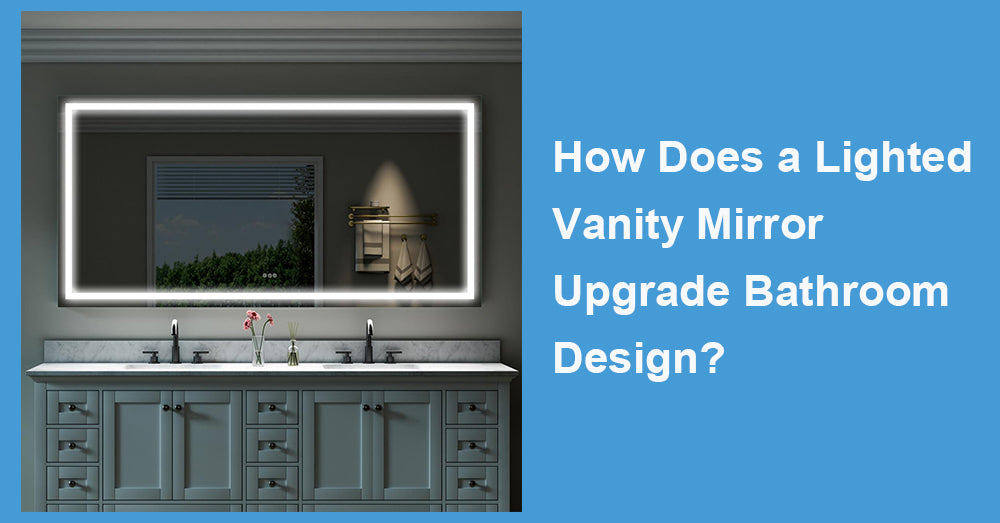
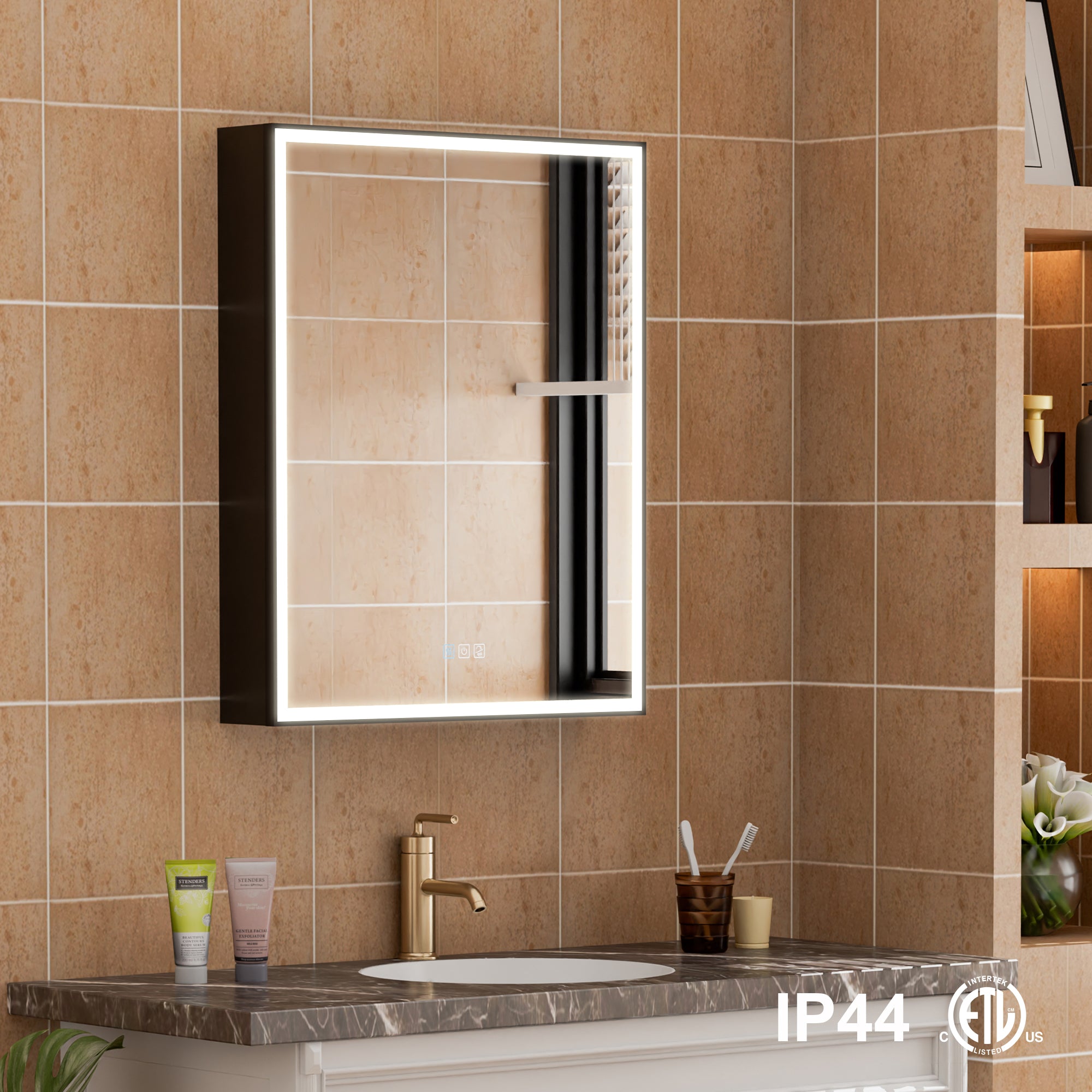
Mirrors with lights usually use embedded LED light sources, either surround or side-mounted. The common 36-inch model outputs brightness between 1200 and 2000 lumens; the 48-inch to 60-inch model can reach 2500 to 3500 lumens.
Test data shows that under light conditions with a color rendering index (CRI) of over 90, facial shadows are reduced by about 25% and detail clarity is significantly improved. This uniform distribution of light is difficult to achieve with traditional top lights.
2. Enhance spatial hierarchy and modern style
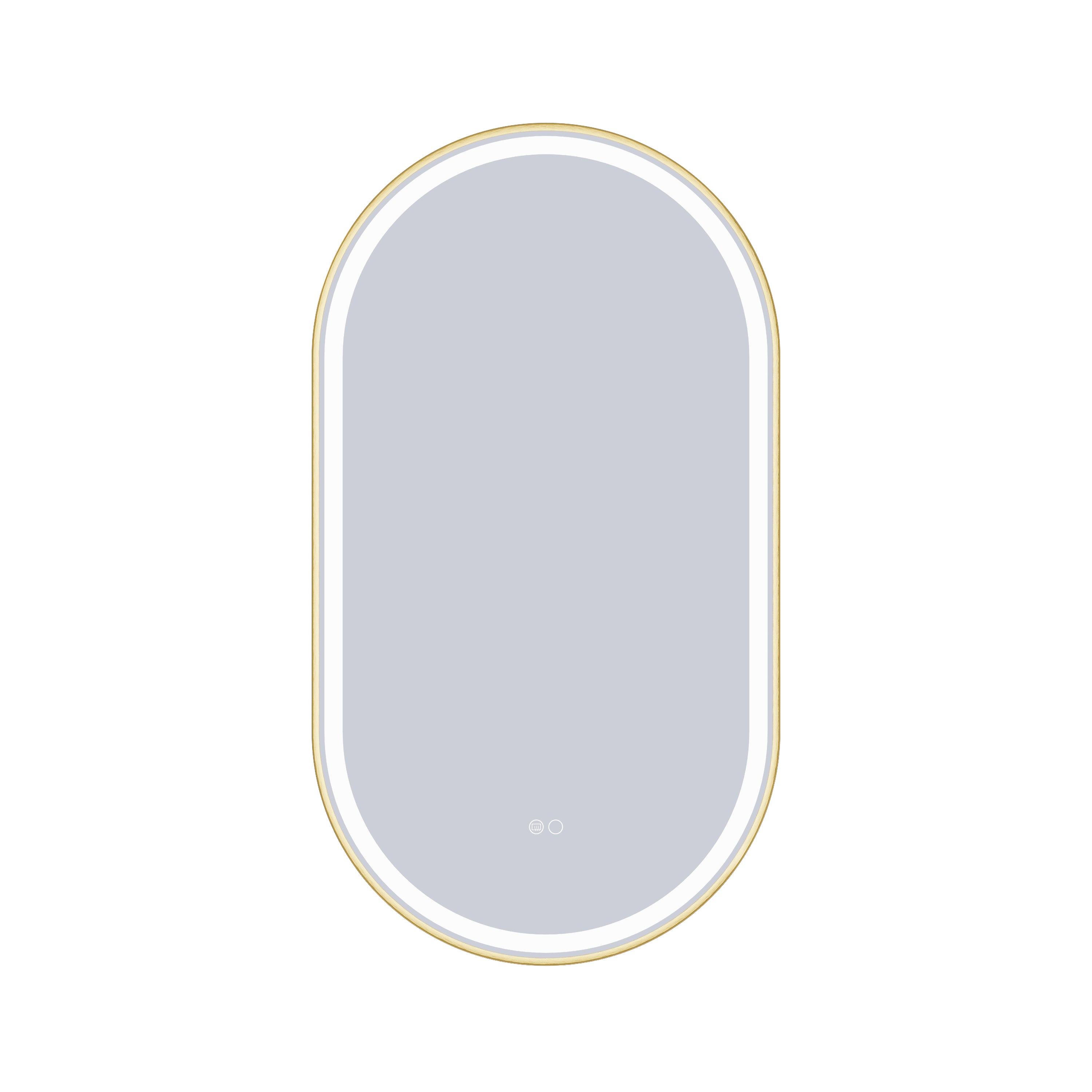
The illuminated mirror creates a "floating" effect through hidden light sources, producing a soft halo around its edges. In a space with an 8-foot ceiling height, the mirror is usually 30 to 36 inches high, with the lower edge 5 to 10 inches from the tabletop.
Data shows that in bathrooms with an area of less than 100 square feet, the use of illuminated mirrors increases the modern rating of the space by about 20%. Especially in minimalist or transitional styles, the fusion of light sources and mirrors becomes the visual focus.
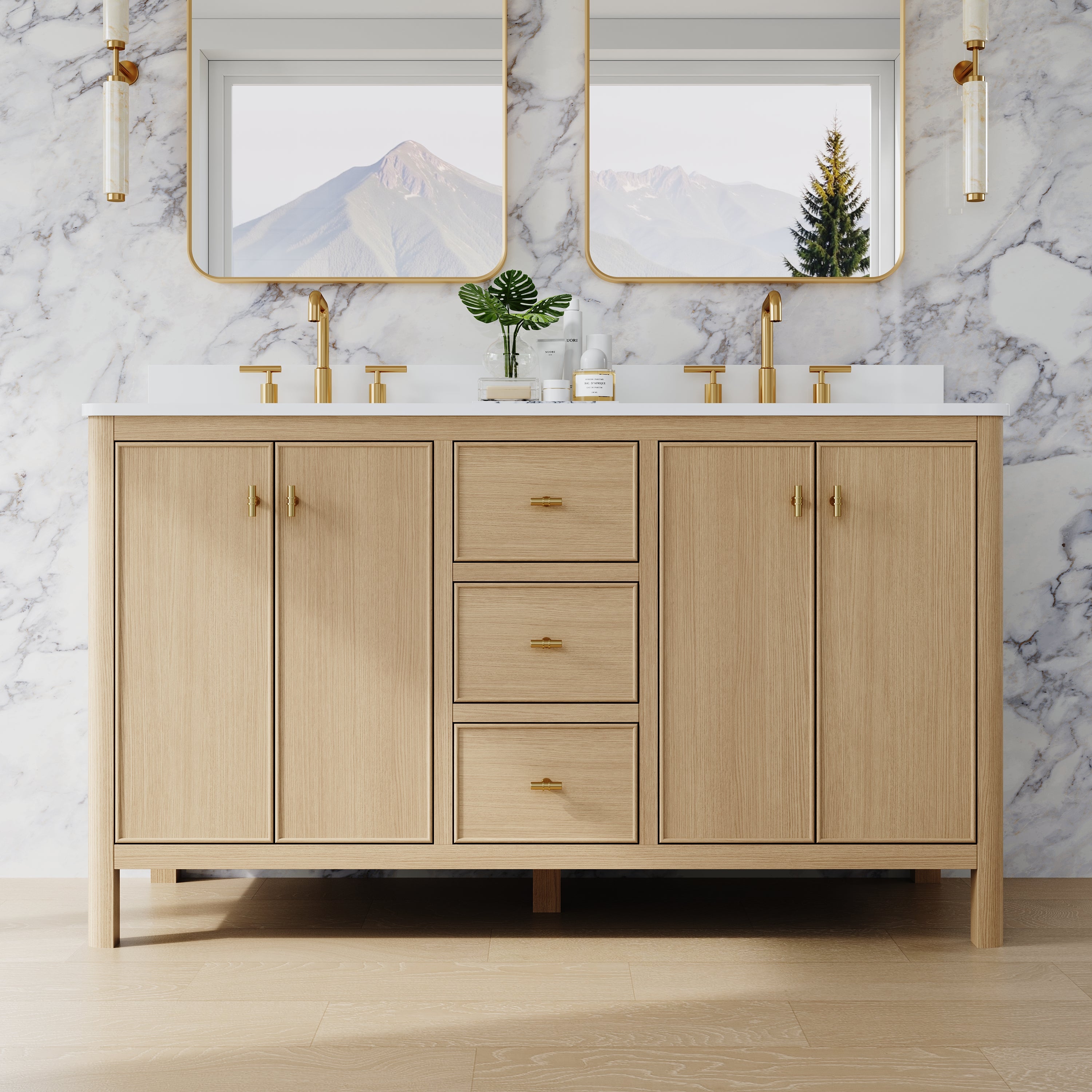
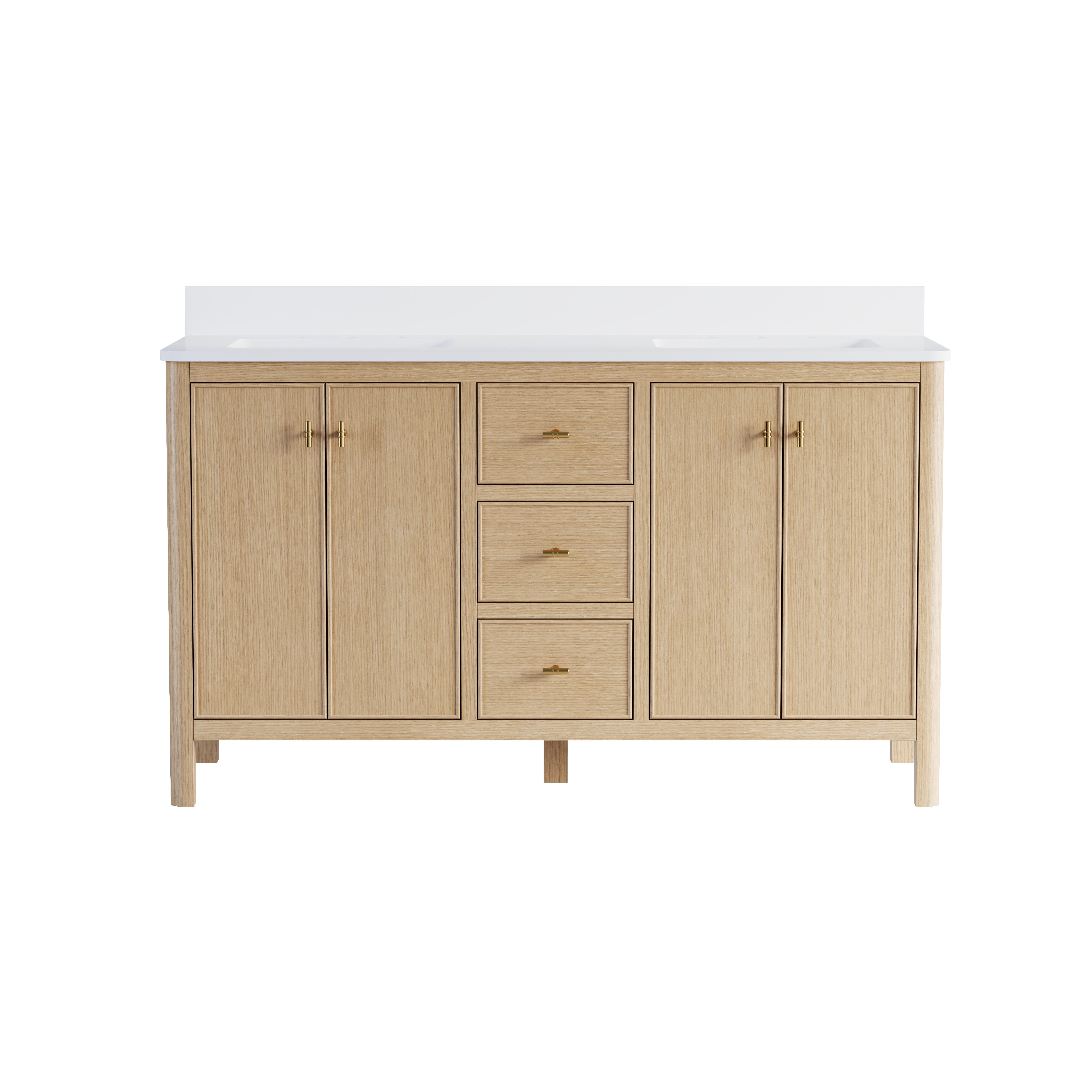
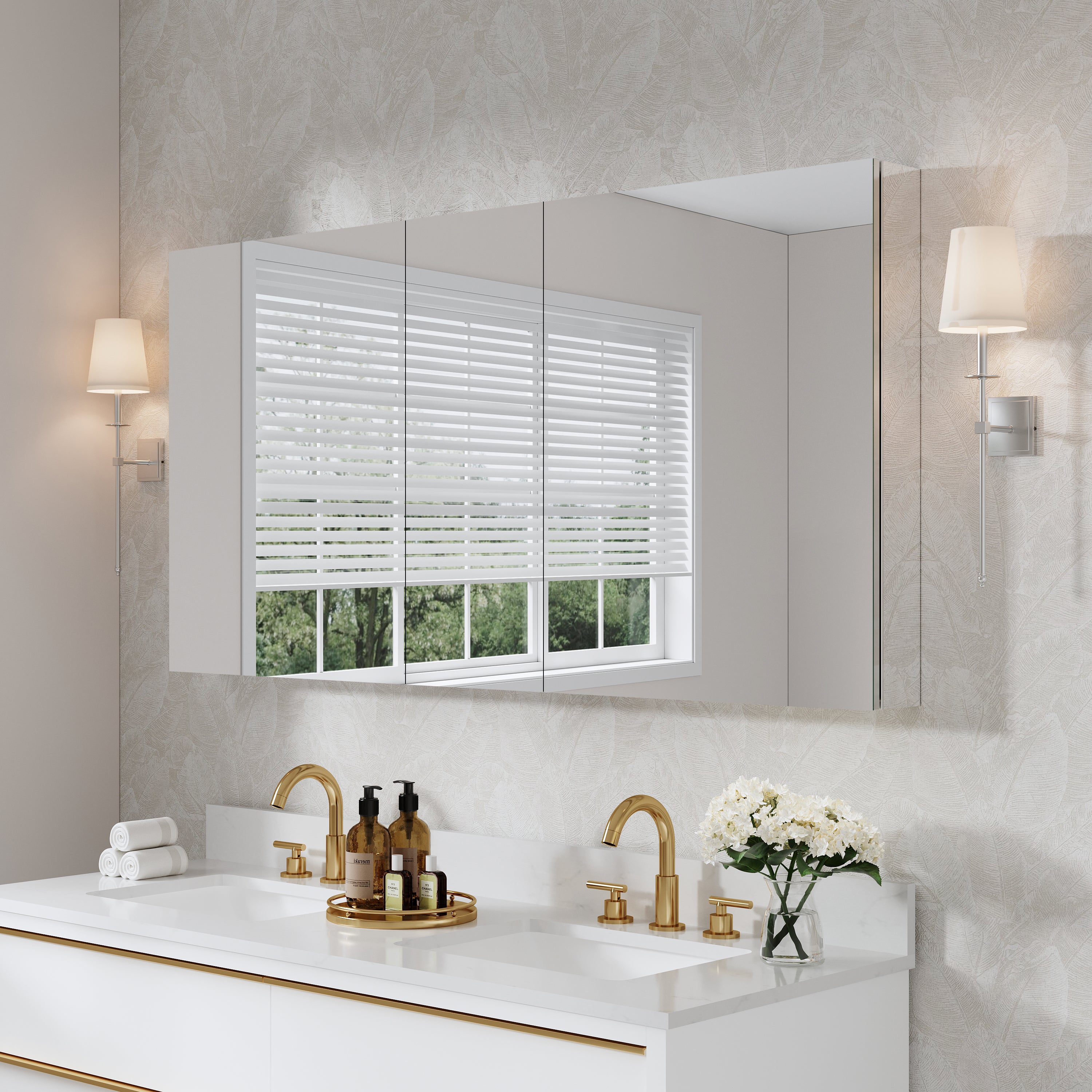
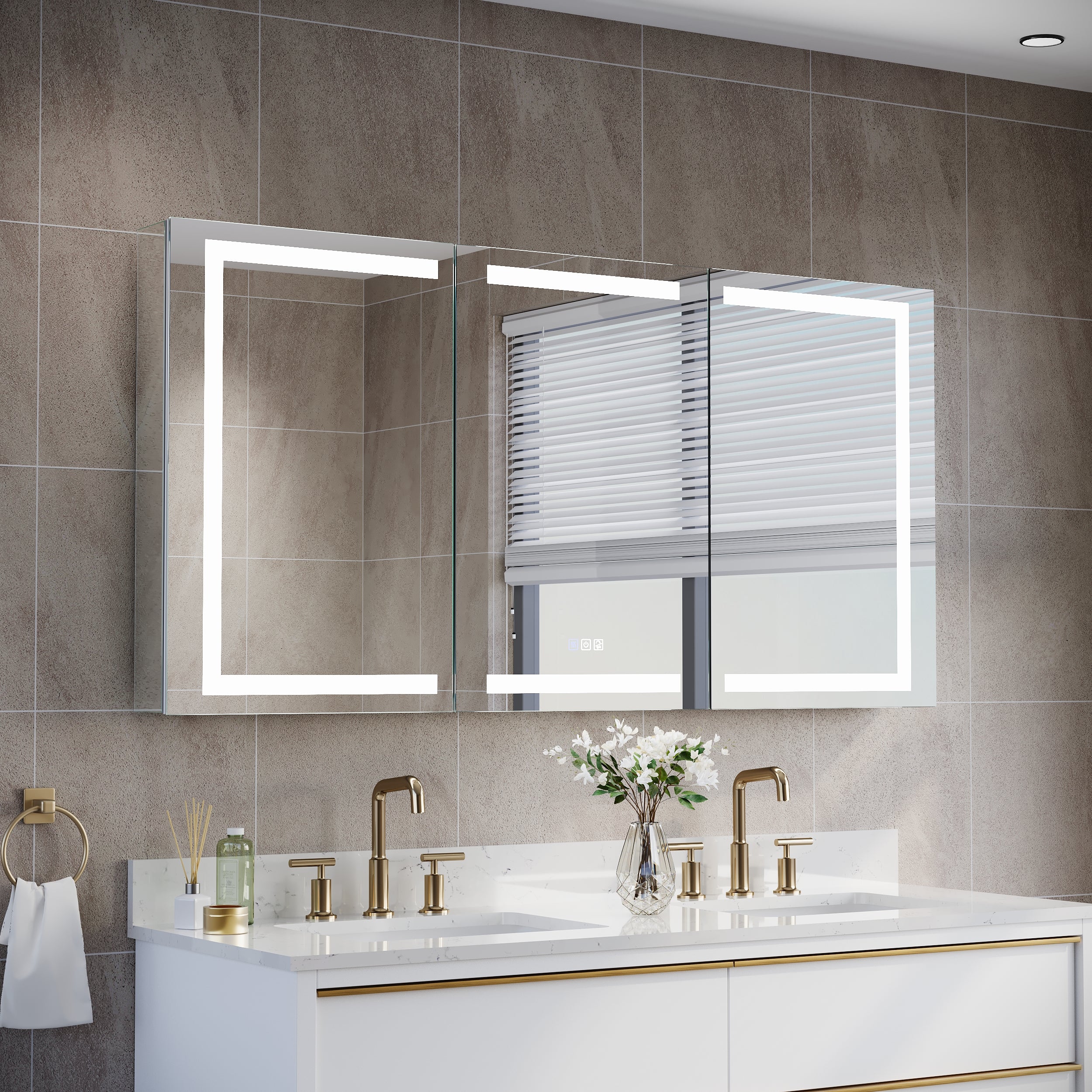
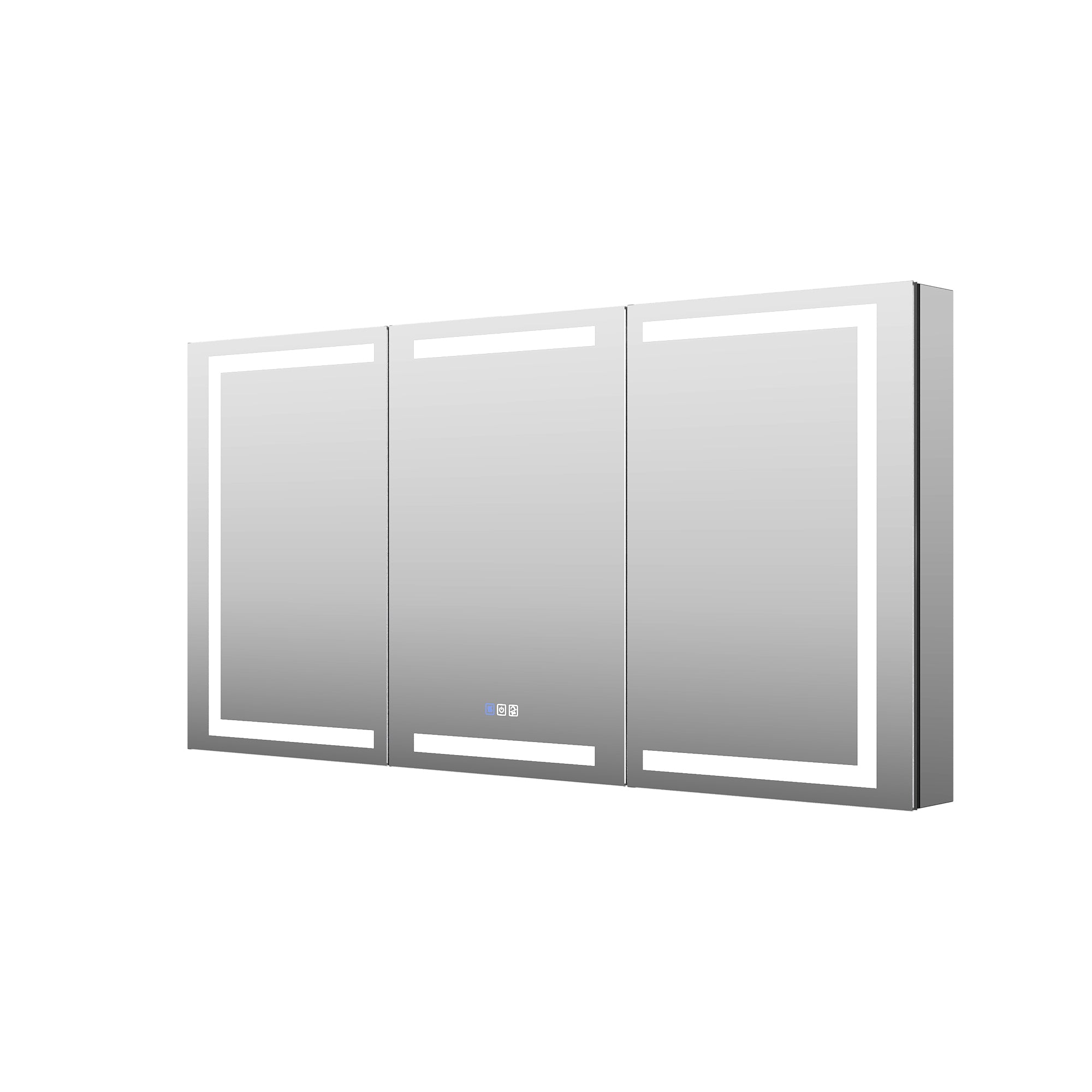
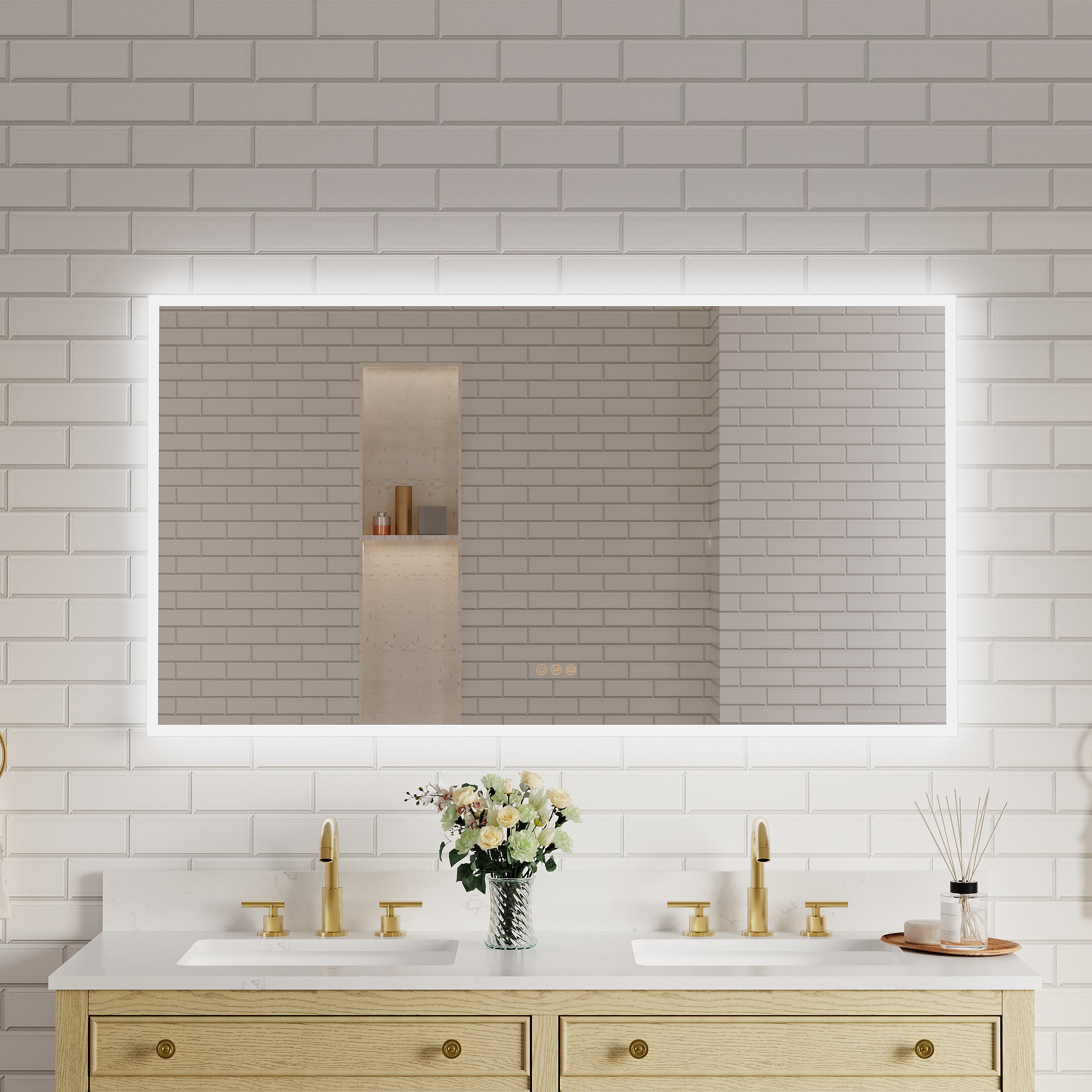
For a 60-inch dual basin layout, both dual mirrors and integrated long mirrors can form a unified visual line through a light strip.
3. Enhance visual width
Light has a significant impact on spatial perception. Surrounding light sources blur the boundary between the wall and the mirror, visually expanding the space.
In a 36-inch single-basin space, a light mirror can enhance wall brightness and make the space appear wider. Data show that in compact bathrooms, the opening width rating for spaces with illuminated mirrors is about 15% higher than for regular mirrors.
In windowless environments, this kind of light extension effect is particularly important.
4. Integrate functions to reduce additional lighting fixtures
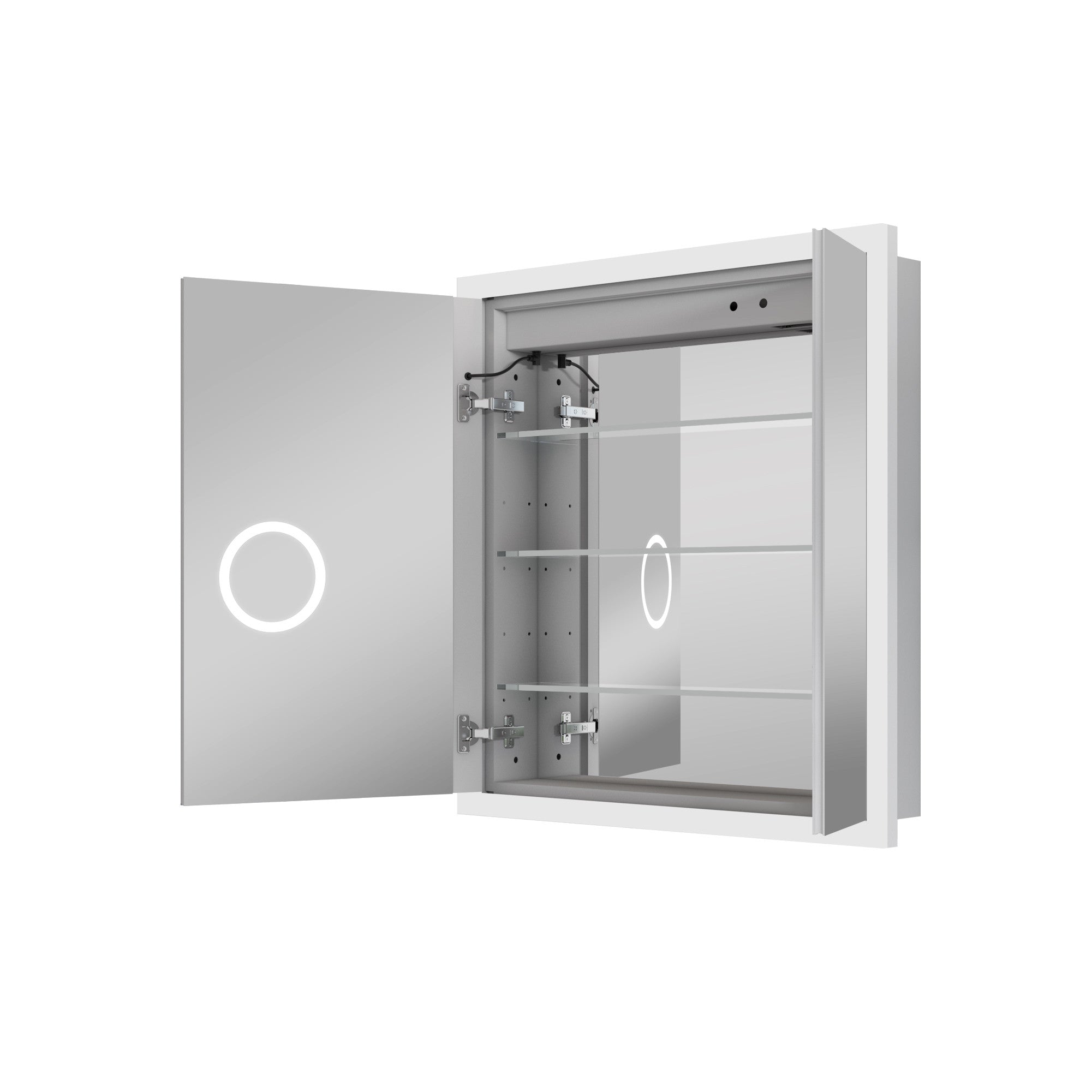
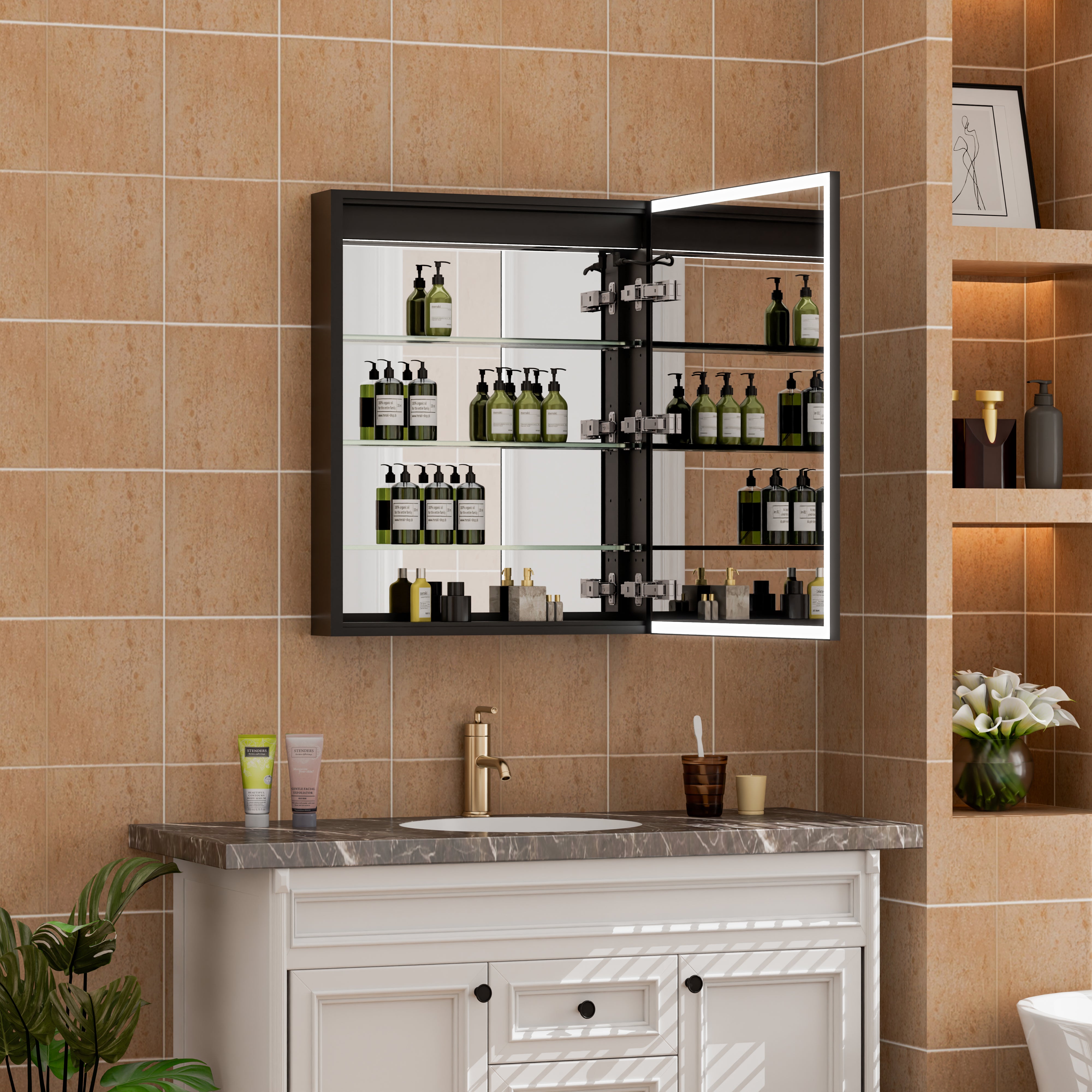
Partially illuminated mirrors can replace traditional wall lamps. If the output brightness reaches 2000 lumens or above, it can meet the lighting needs of daily tasks.
Data shows that in spaces with an area of less than 80 square feet, having a light mirror can reduce the installation requirement for at least one set of side wall lights. This not only saves space but also simplifies the wiring structure.
At the same time, the mirror light source is evenly distributed to avoid unilateral brightness deviation caused by side wall lights.
5. Defogging and intelligent control function
Modern illuminated vanity mirrors typically integrate defogging heating films. The heating area raises the mirror temperature to near air temperature within 2 to 5 minutes, significantly reducing condensation.
Data shows that in environments with humidity exceeding 70%, the clarity retention rate of mirrors with defogging function exceeds 90%.
In addition, the touch dimming and color temperature adjustment functions allow users to switch between 3000K and 5000K to meet different time requirements.
6. Proportion and size selection
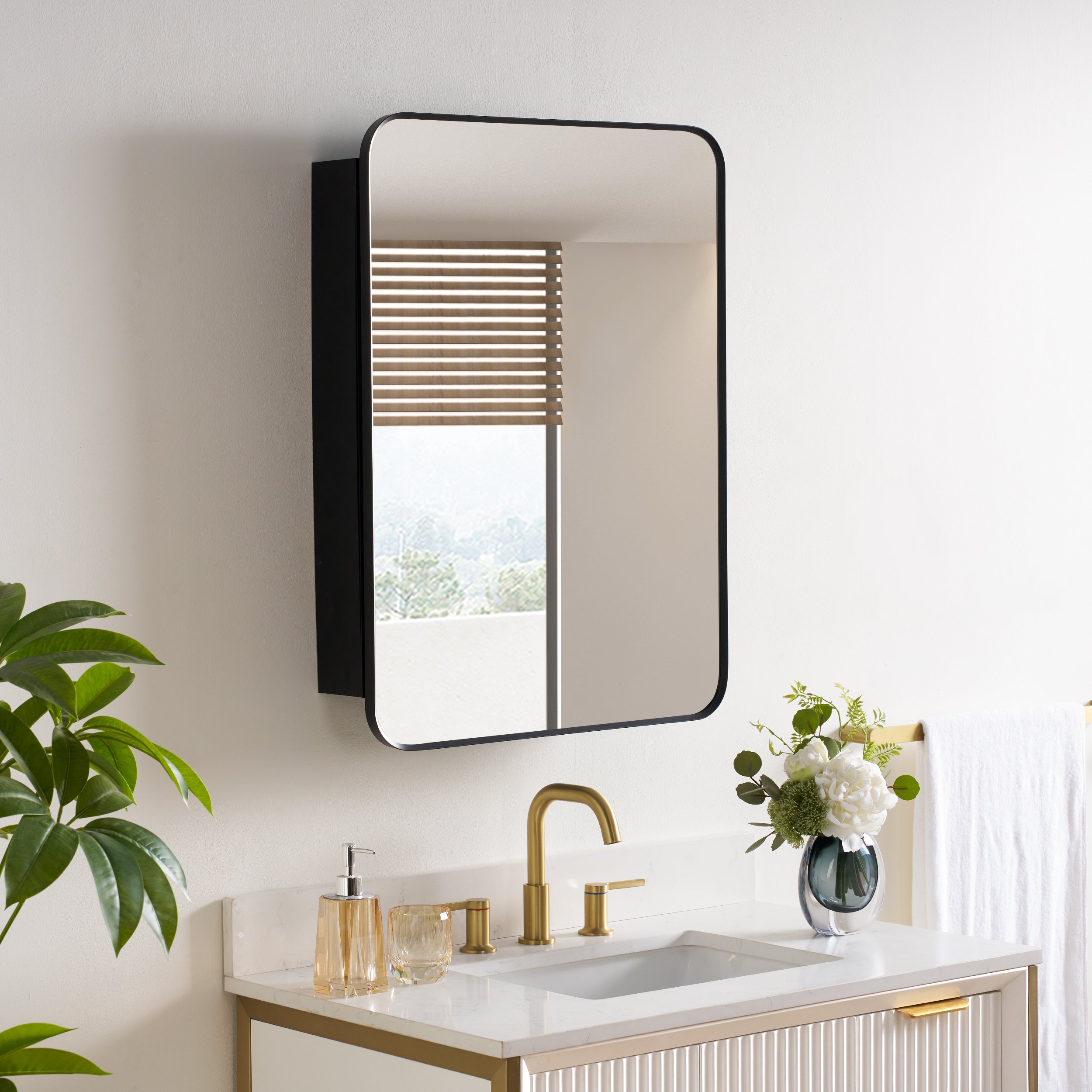
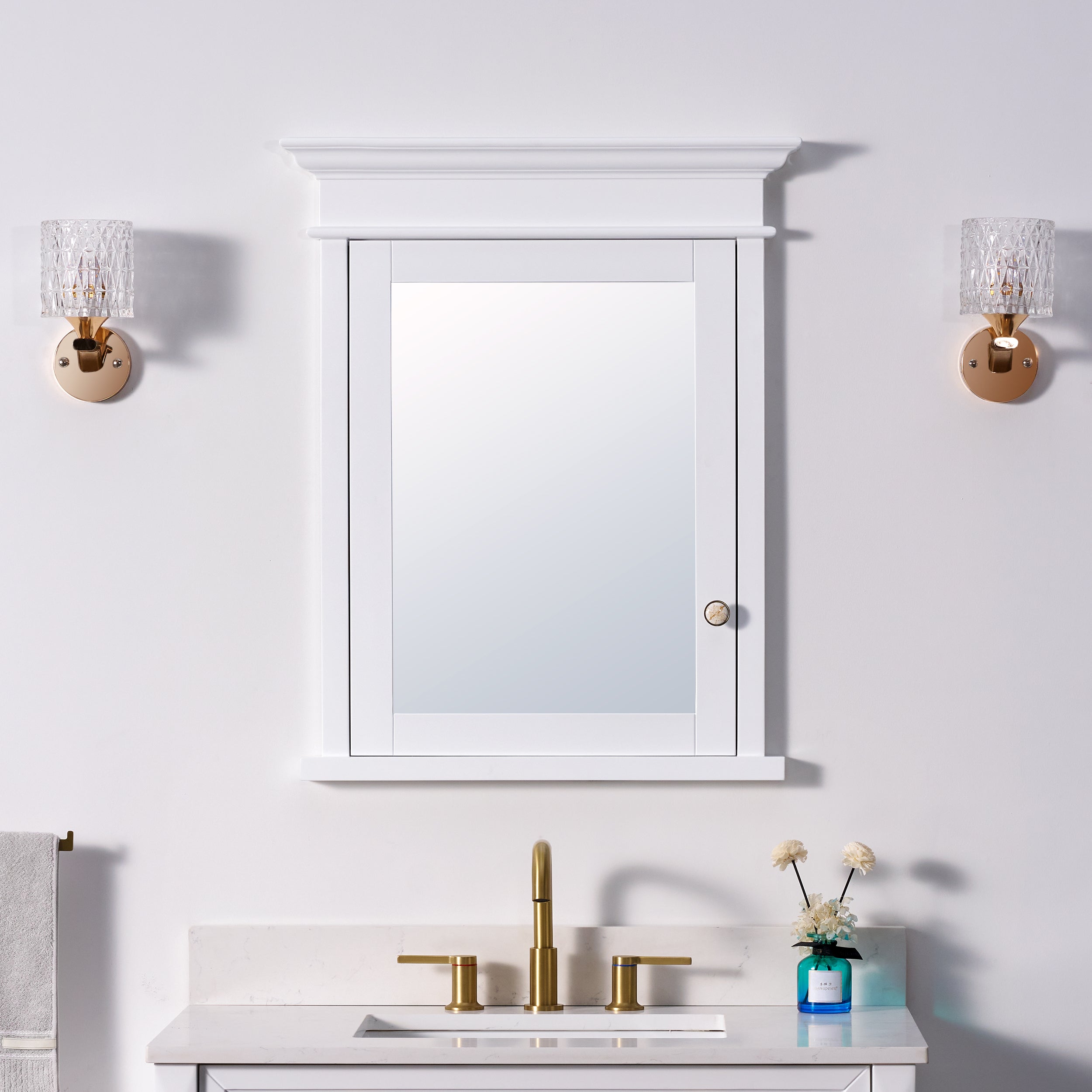
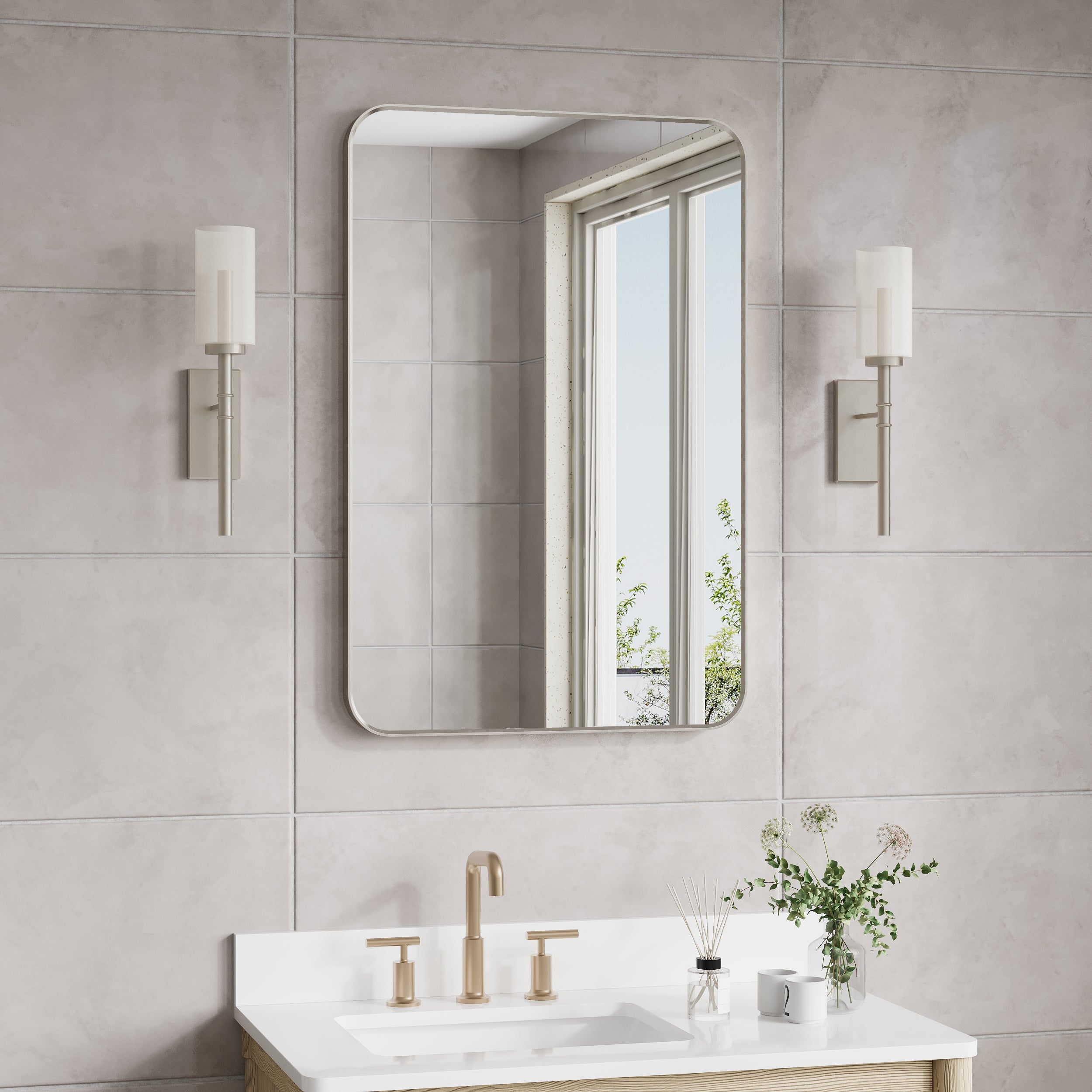
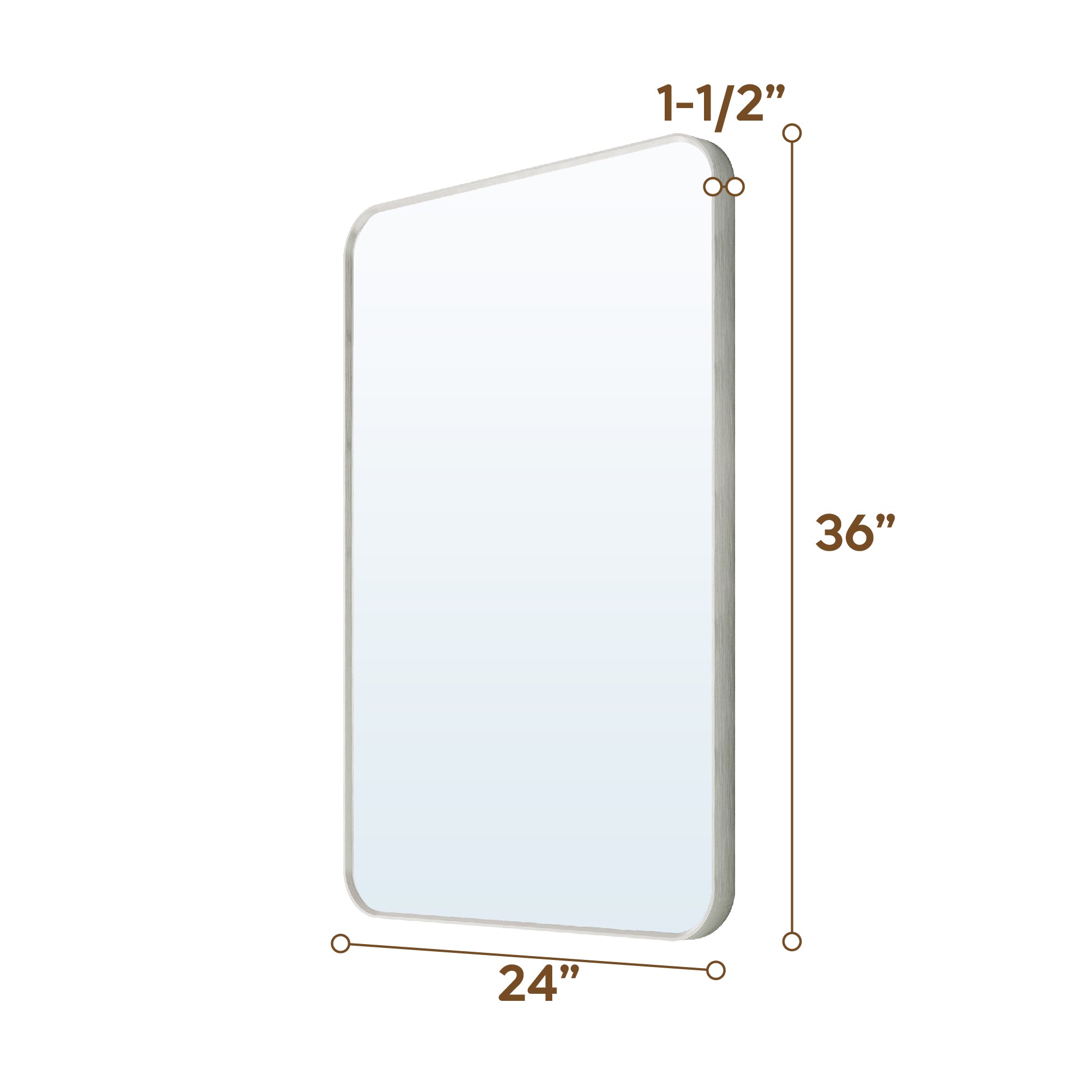
The width of a mirror is usually 70% to 90% of the tabletop's width. For example, a 36-inch countertop can be paired with a 28-inch to 32-inch illuminated mirror; the 60-inch double-bowl structure can use two 30-inch mirrors or one 54-inch to 60-inch integral mirror.
The data shows that when the mirror ratio imbalance exceeds 10%, the spatial coordination significantly decreases. Reasonable size matching is a prerequisite for achieving design upgrades.
7. Energy consumption and long-term operating costs
LED light sources have high efficiency and low energy consumption characteristics. The average power is usually between 30W and 60W.
Data shows that LED light sources can reduce energy consumption by over 70% and have a longer lifespan compared to traditional halogen lamps.
Choosing energy-saving models during the renovation phase can help reduce long-term operating costs.
8. Enhance the overall sense of spatial value
Bathroom renovation is often seen as an important step in improving the quality of residential properties. The illuminated mirror is widely believed to enhance the spatial grade due to its modern technology and design sense.
Industry data shows that the proportion of applications with illuminated mirrors in high-end renovation projects is increasing year by year. Especially in the main bathroom, the visual focus created by the combination of light sources and mirrors gives the space a more sophisticated feel.

9. Conclusion
The reason illuminated vanity mirrors have become an important element in modern bathroom upgrades is not simply a pursuit of trends, but rather the comprehensive advantages of light optimization, spatial proportion, and functional integration. From a single-pot configuration of 1200 lumens to a dual-pot configuration of over 3000 lumens, each inch size and unit brightness affect the final effect. By selecting the appropriate size, color temperature, and installation height, illuminated mirrors not only improve the lighting experience but also comprehensively enhance the bathroom design at the visual level, truly achieving a dual upgrade of functionality and aesthetics in the renovation project.













Leave a comment
This site is protected by hCaptcha and the hCaptcha Privacy Policy and Terms of Service apply.