














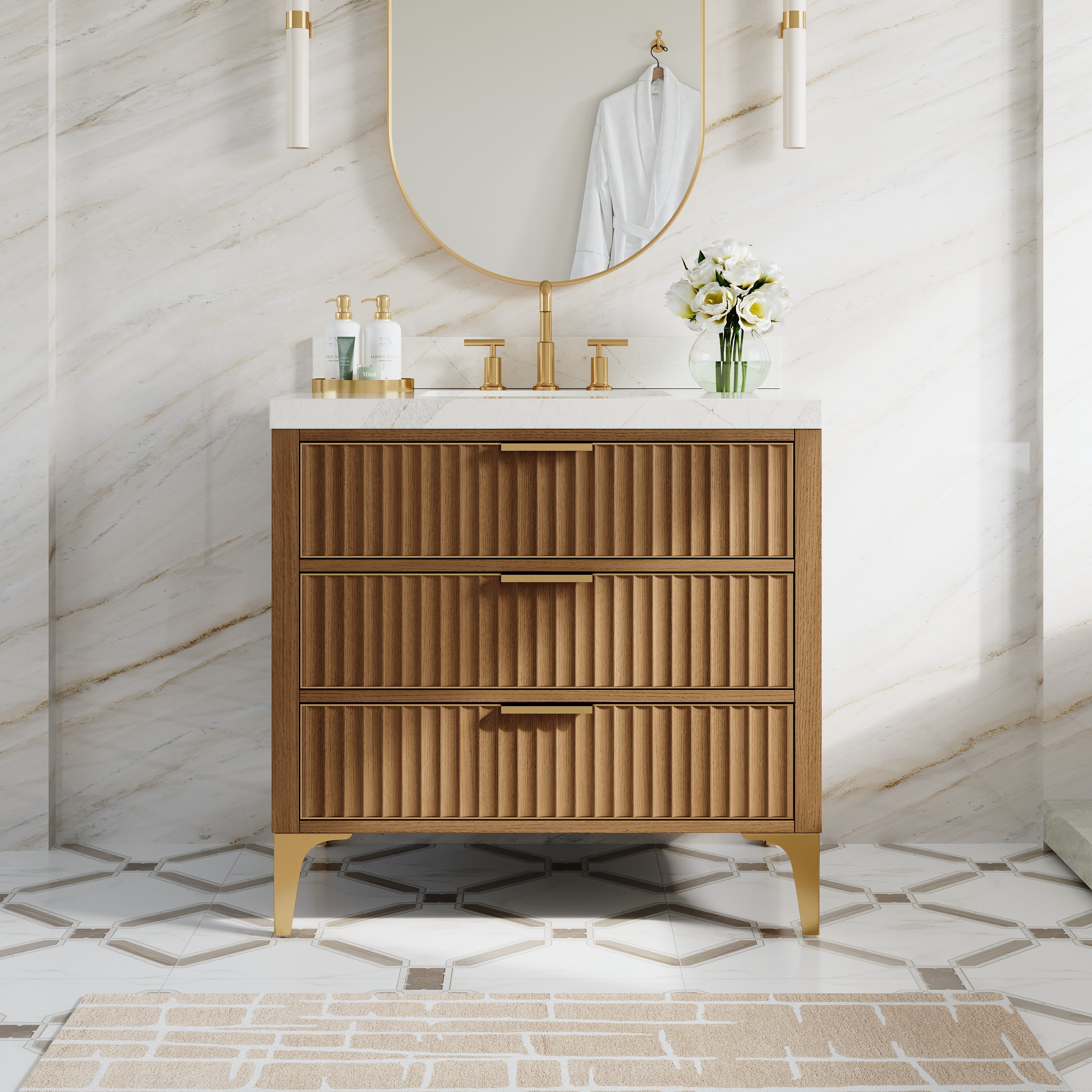
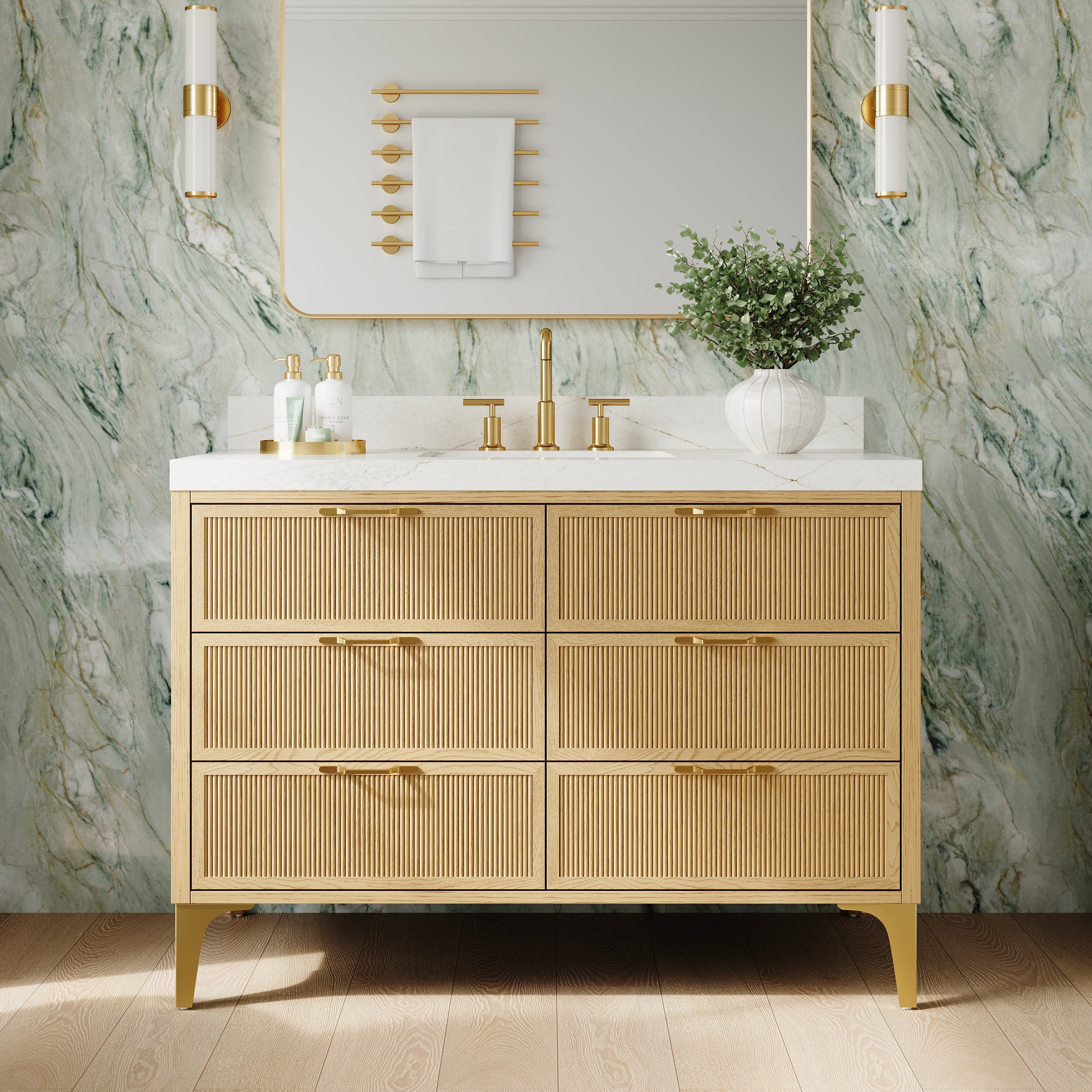


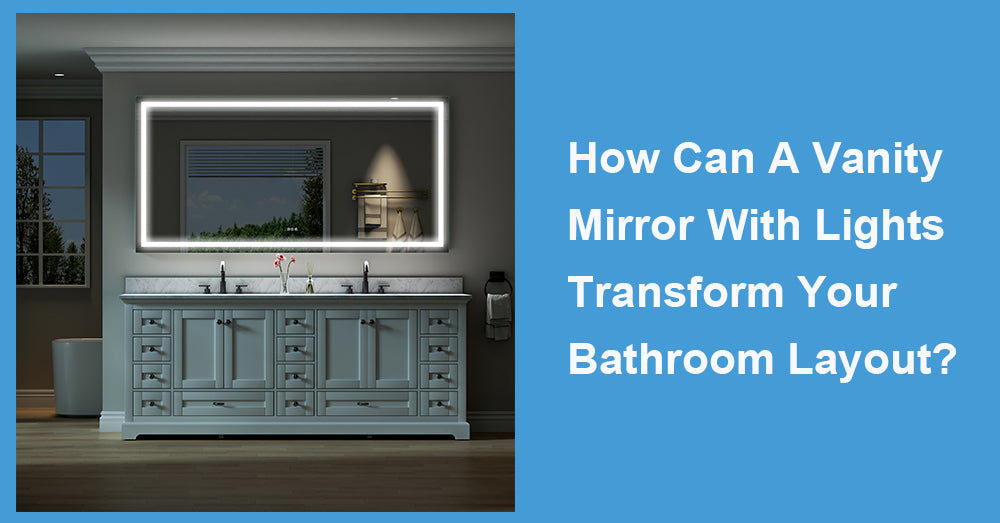
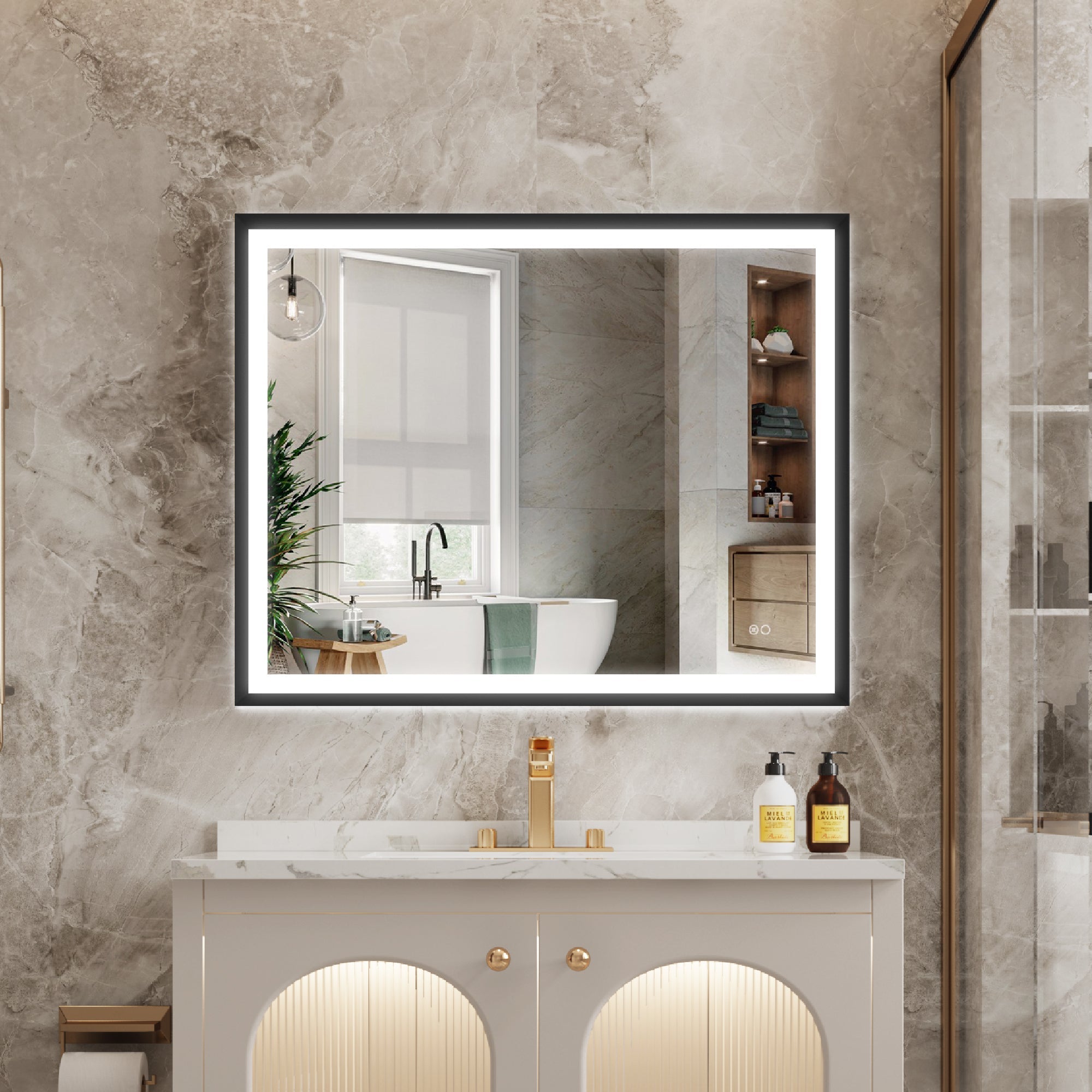
In the trend of modern bathroom renovation, vanity mirror with lights are gradually becoming a key element in changing spatial layout and visual structure. Compared to traditional mirrors paired with independent wall lamps or top lighting fixtures, illuminated vanity mirrors redefine how bathroom light is organized and the spatial proportions by integrating lighting and mirror functions. Industry data shows that in recent years, the proportion of integrated lighting mirrors in high-end bathroom renovation projects has continued to rise, and the configuration rate in the main bathroom space has exceeded half. It not only improves lighting quality but also affects layout arrangement and wall structure planning at the layout level.
1. Redefine the lighting layout structure
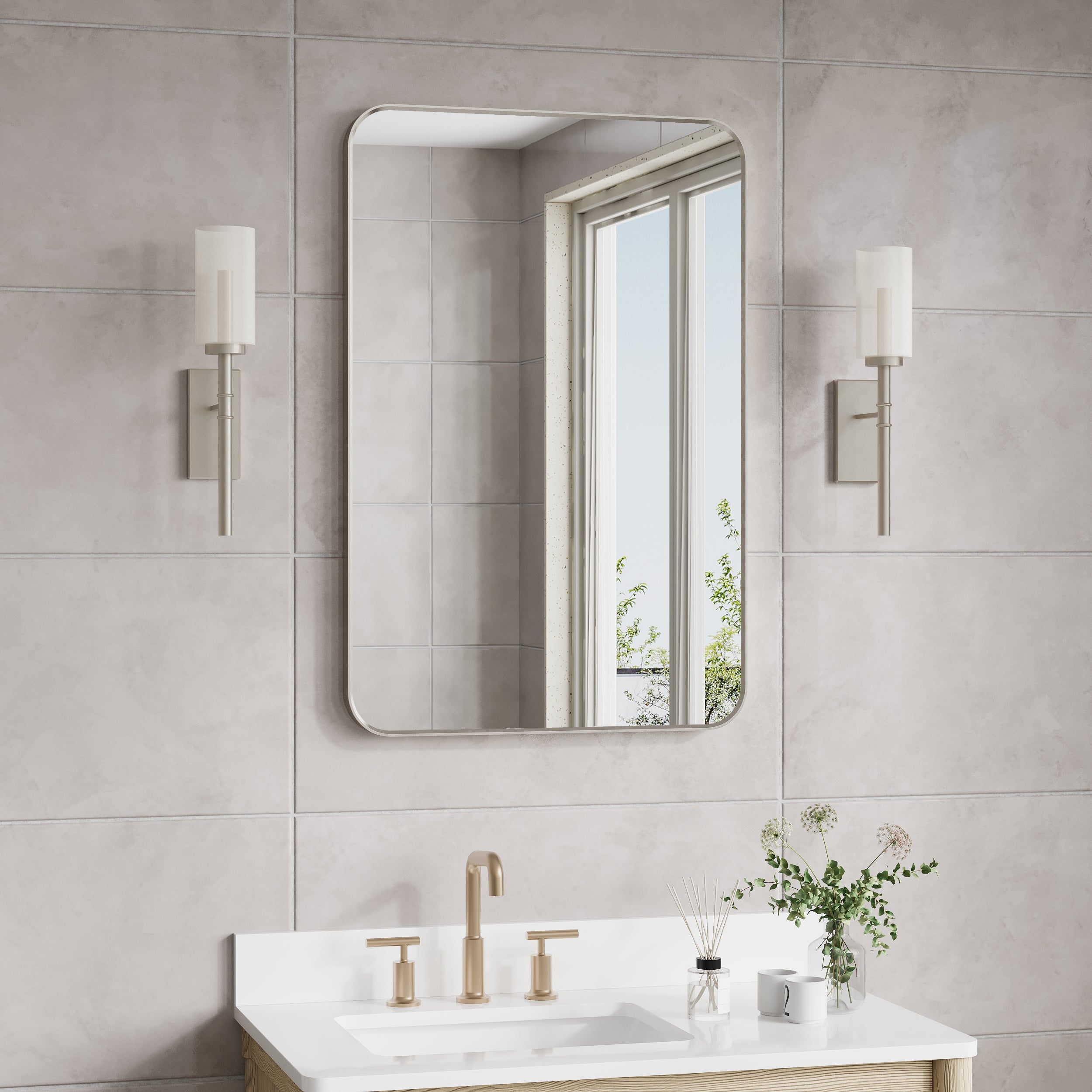
Traditional bathrooms usually adopt a separate structure of "top light+mirror+side wall light". This design can easily cause wall congestion in small spaces.
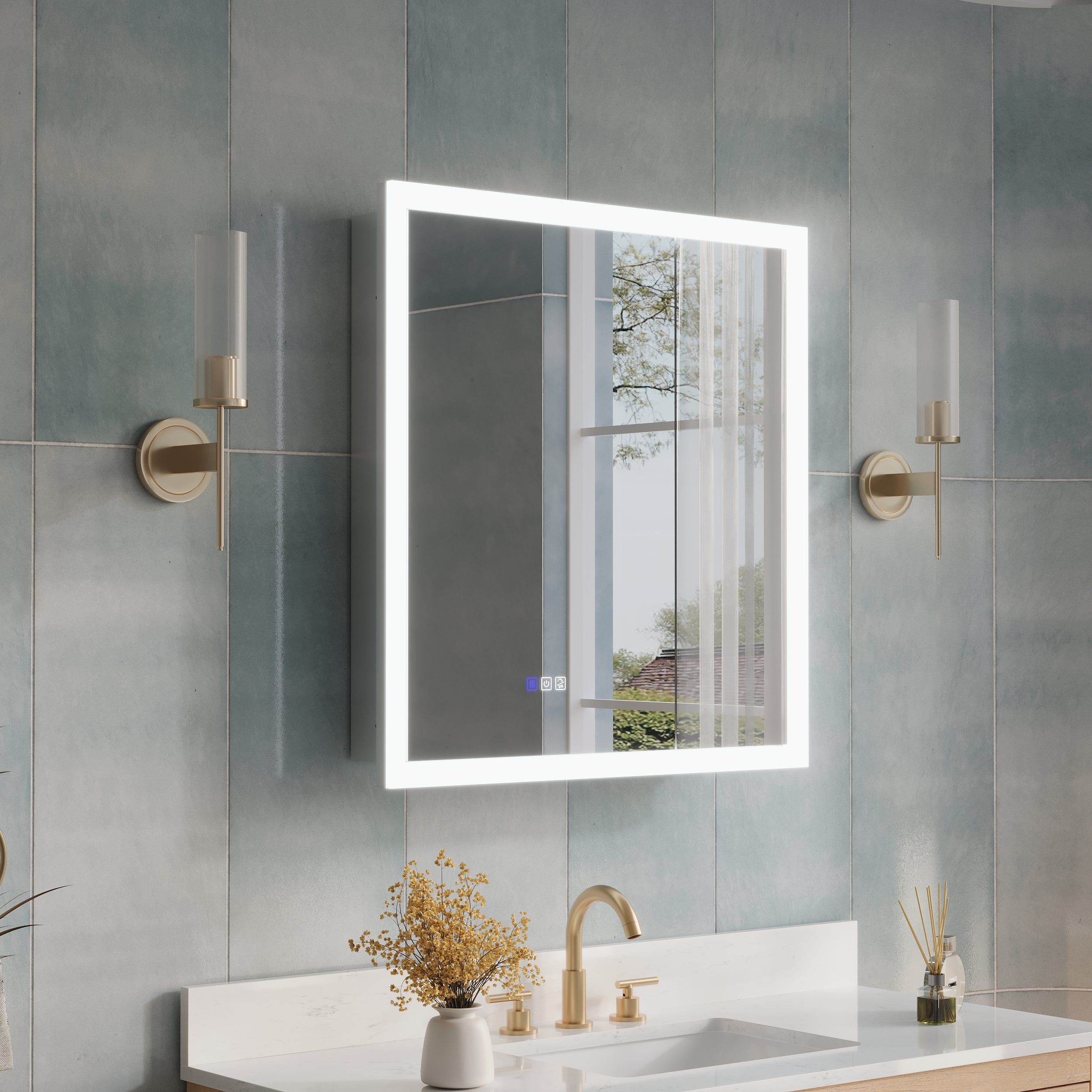
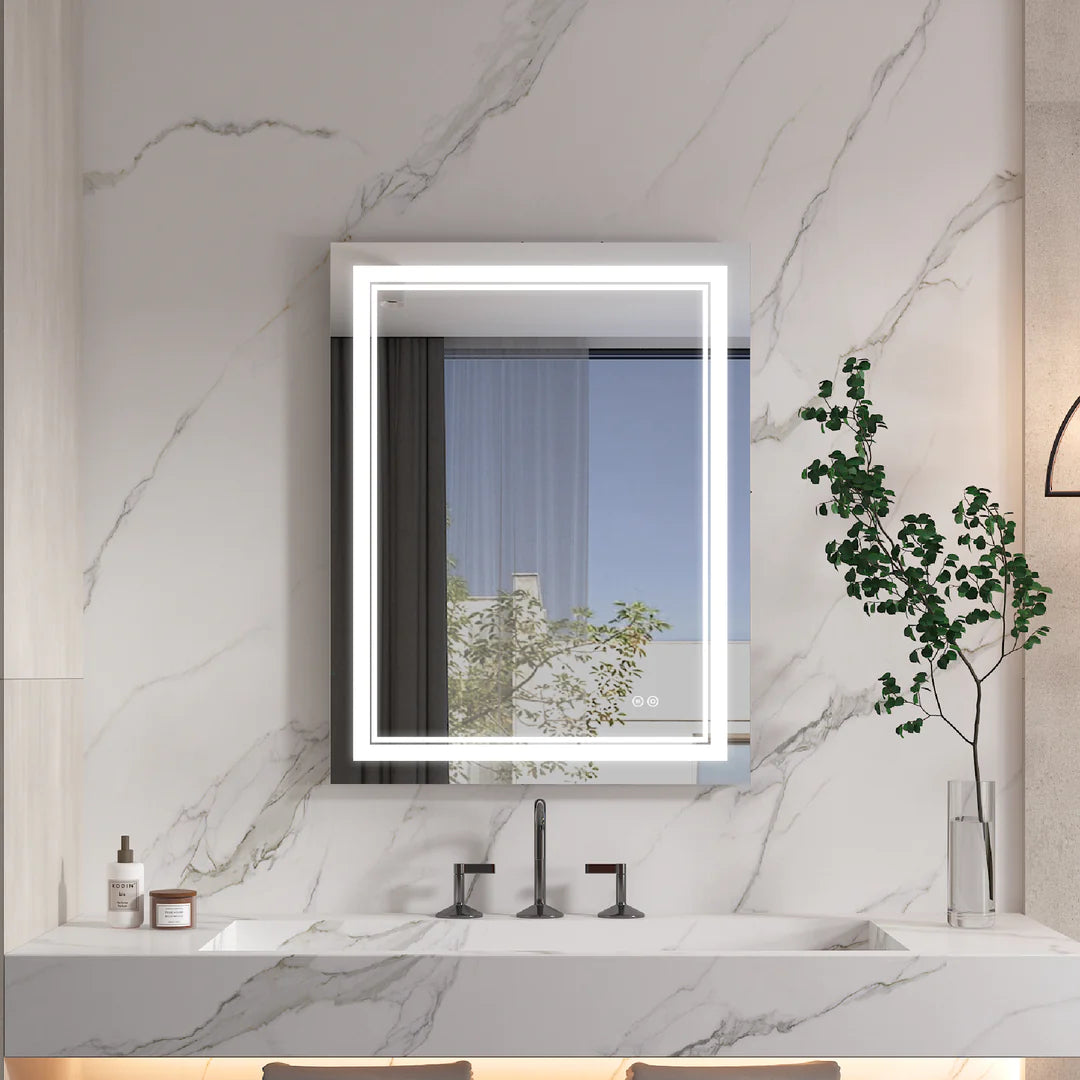
Embedding the light source into the mirror body with a light mirror reduces the need for additional lighting fixture installation. The common 36-inch model outputs brightness between 1200 and 2000 lumens; the 48-inch to 60-inch model can reach 2500 to 3500 lumens.
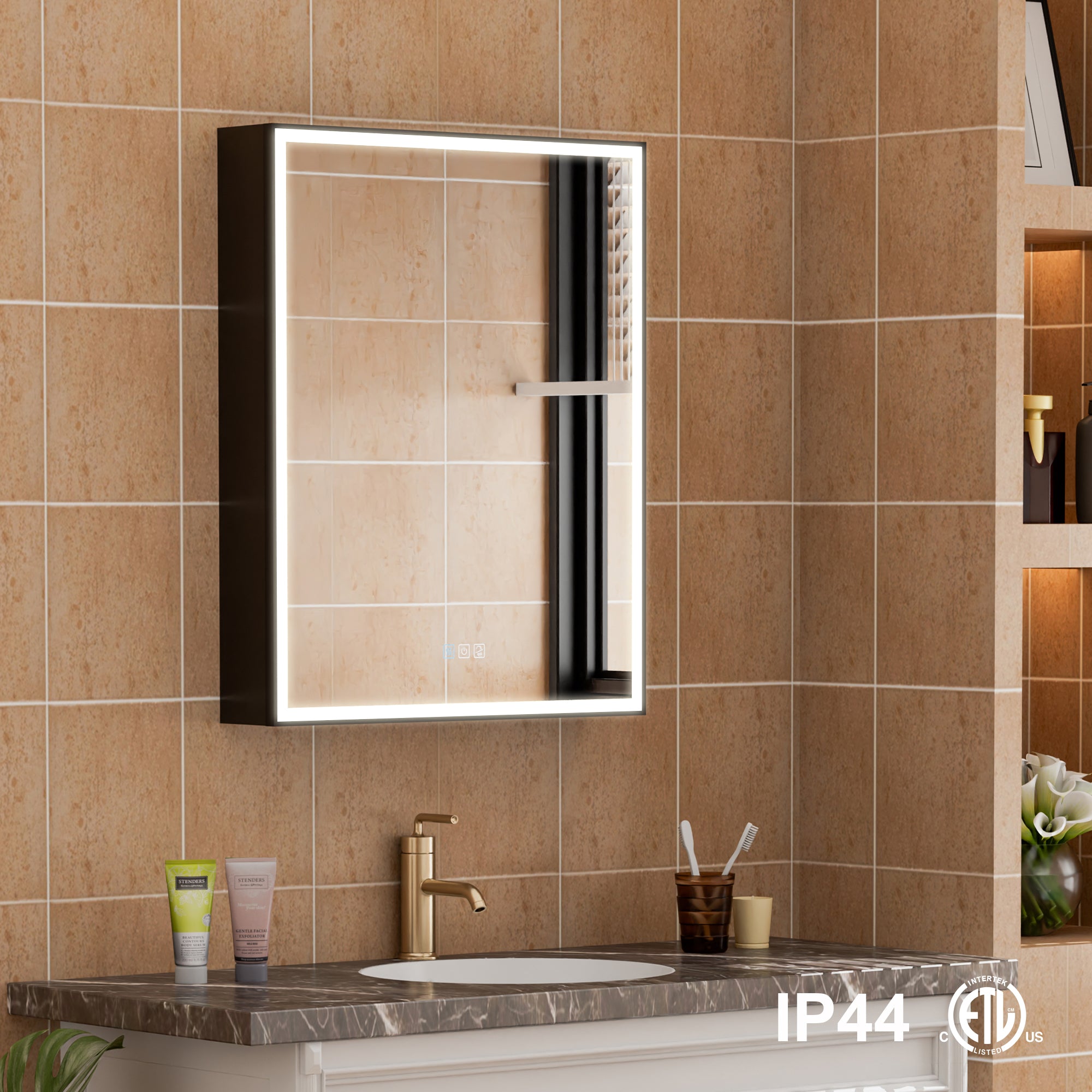
Data shows that in spaces with an area less than 90 square feet, the use of illuminated mirrors can reduce at least one set of side wall lights, thereby freeing up about 6 inches or more of wall installation space. This integration method makes the layout more concise.
2. Optimize spatial proportion and visual center of gravity
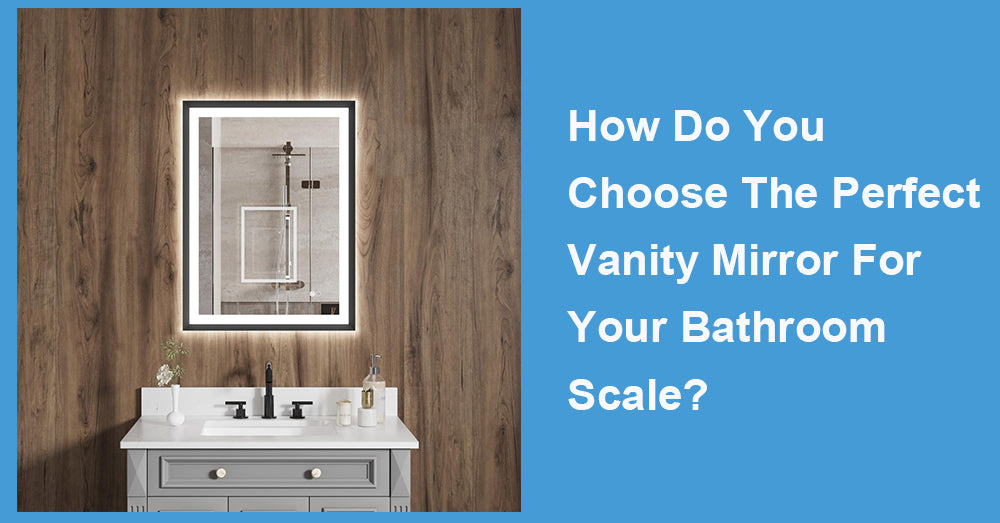
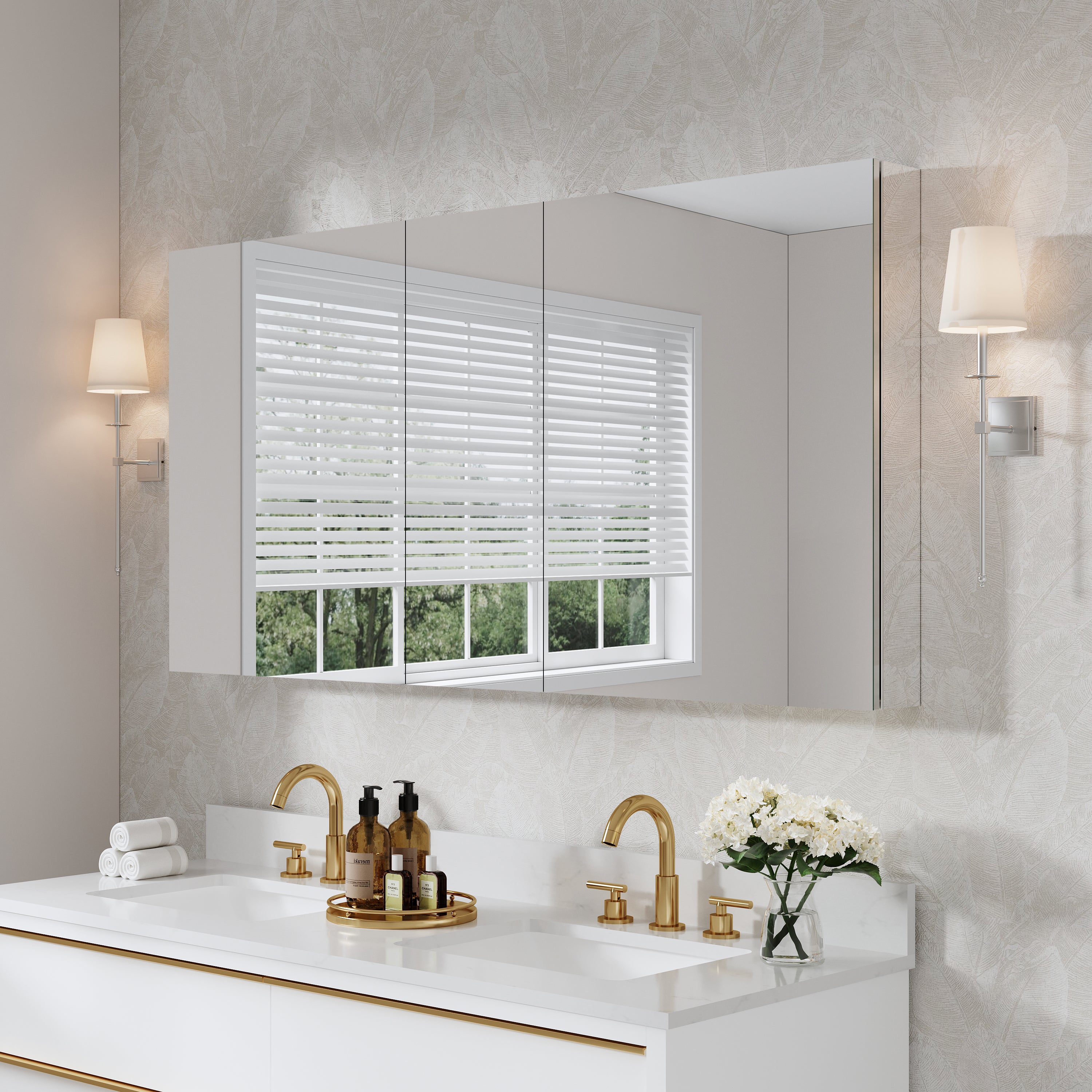
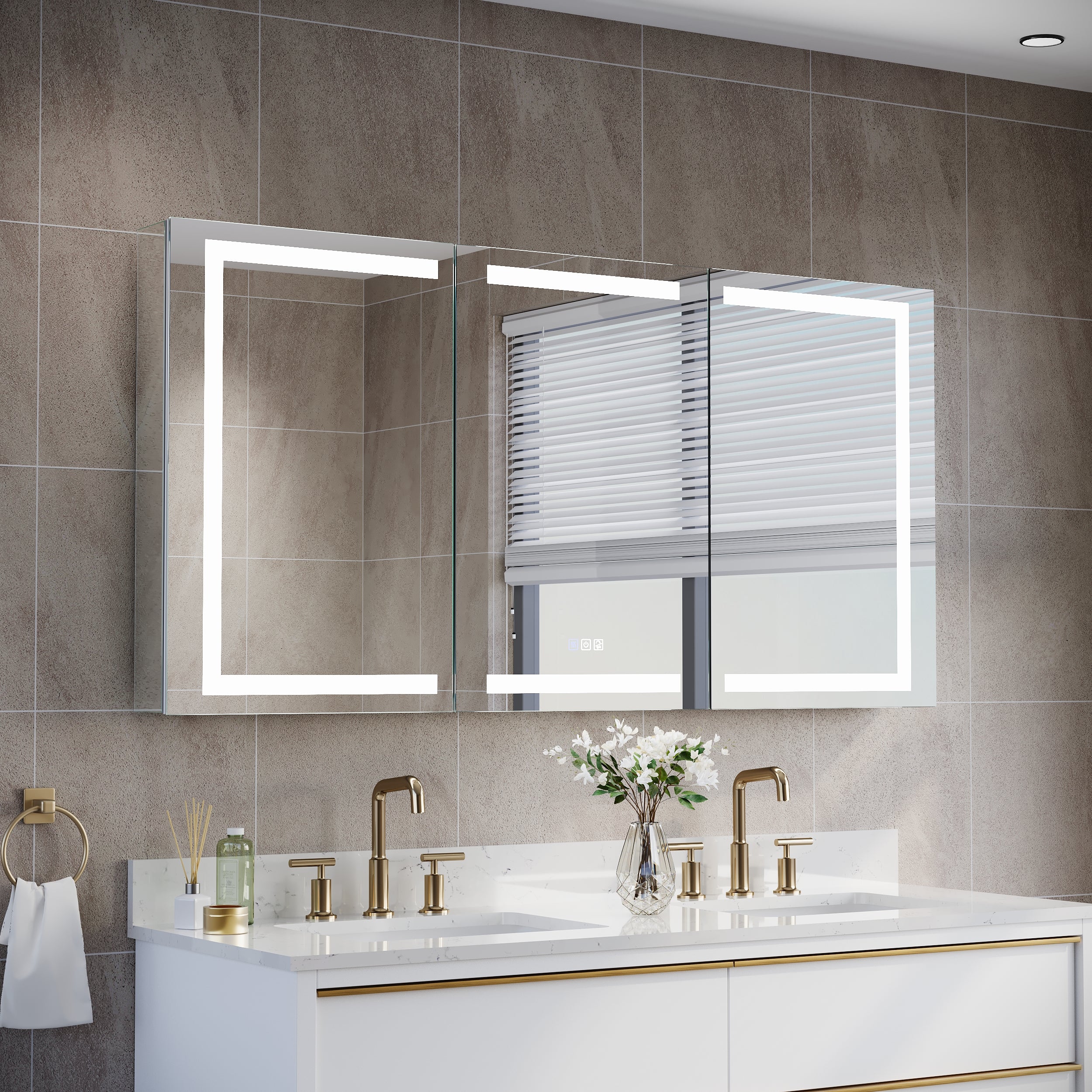
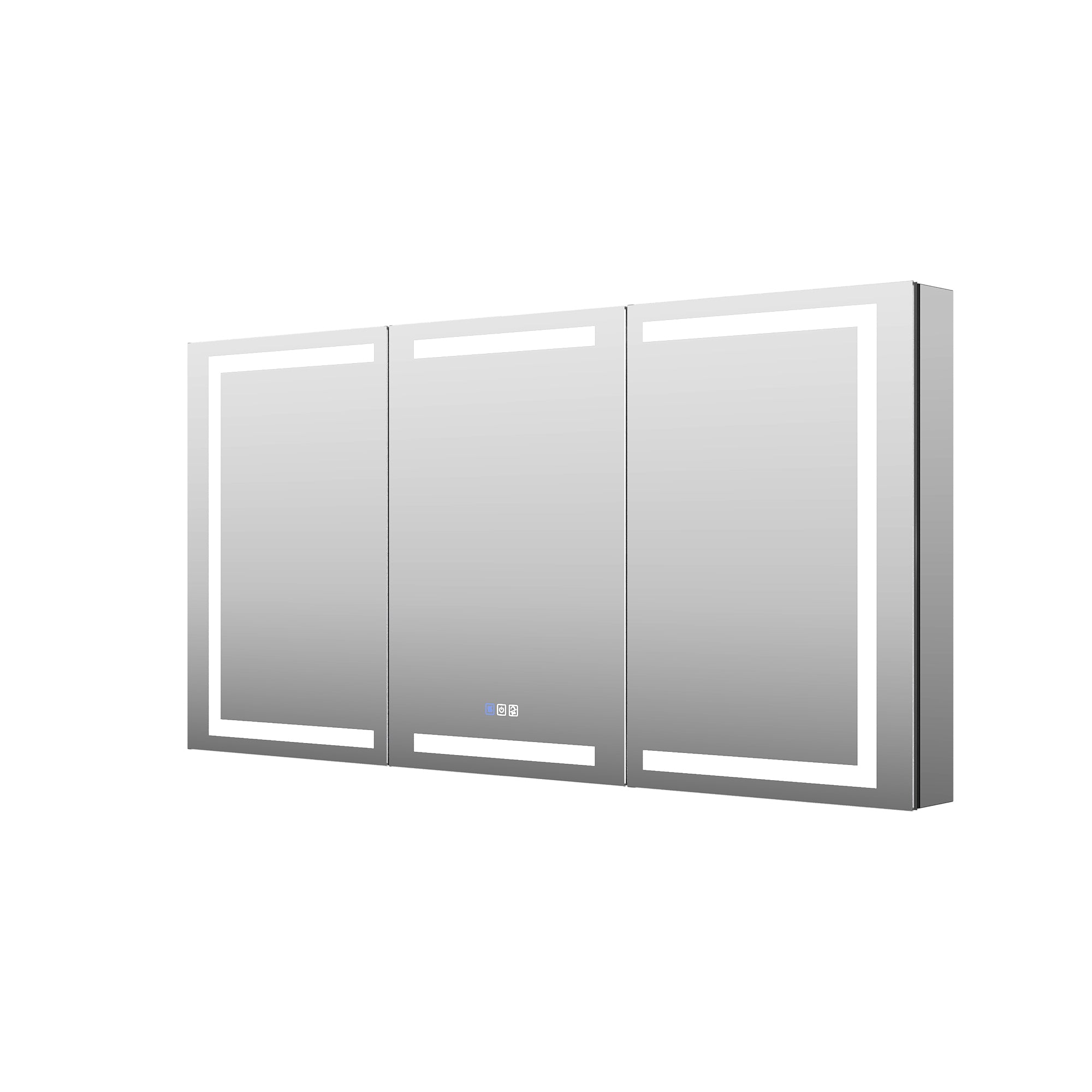
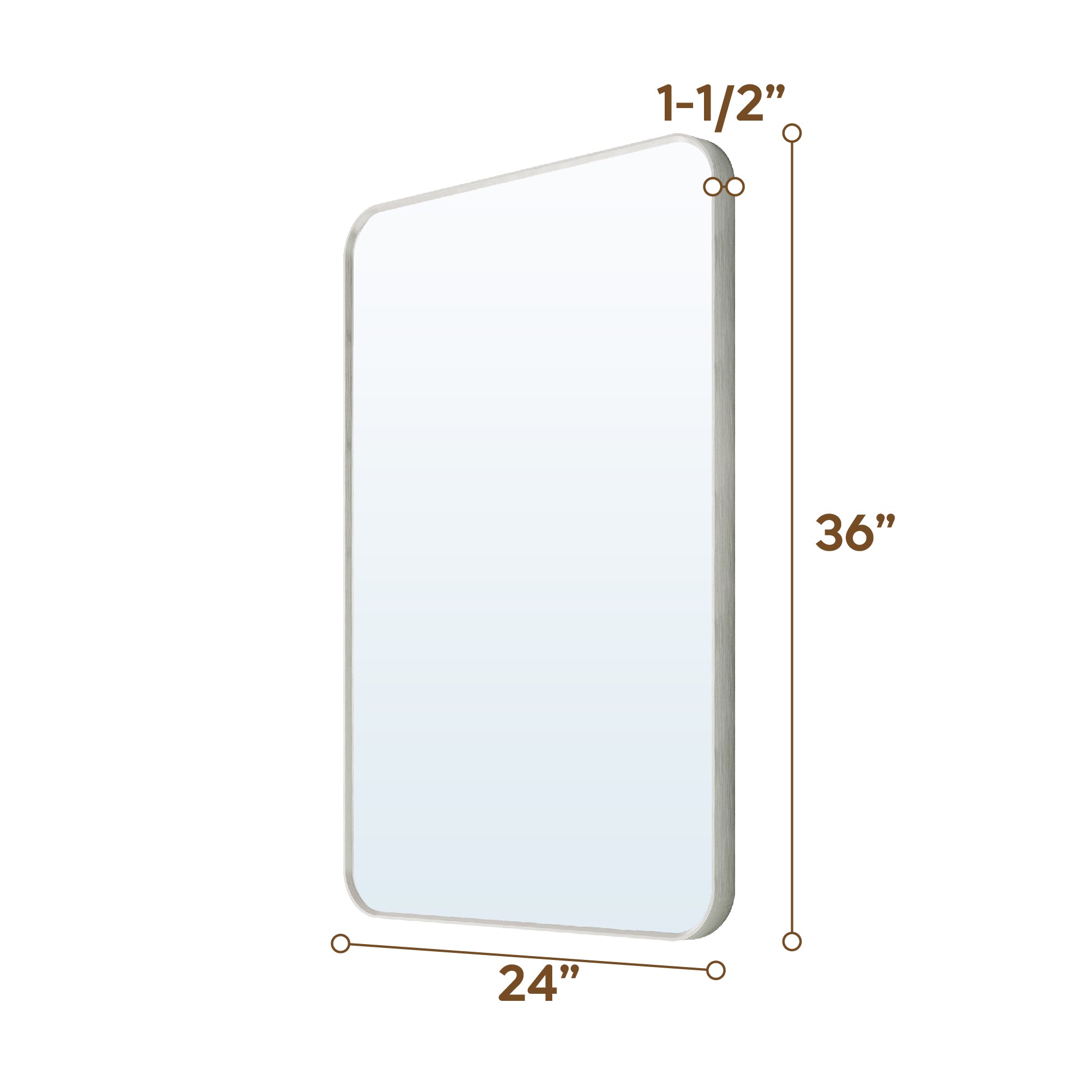
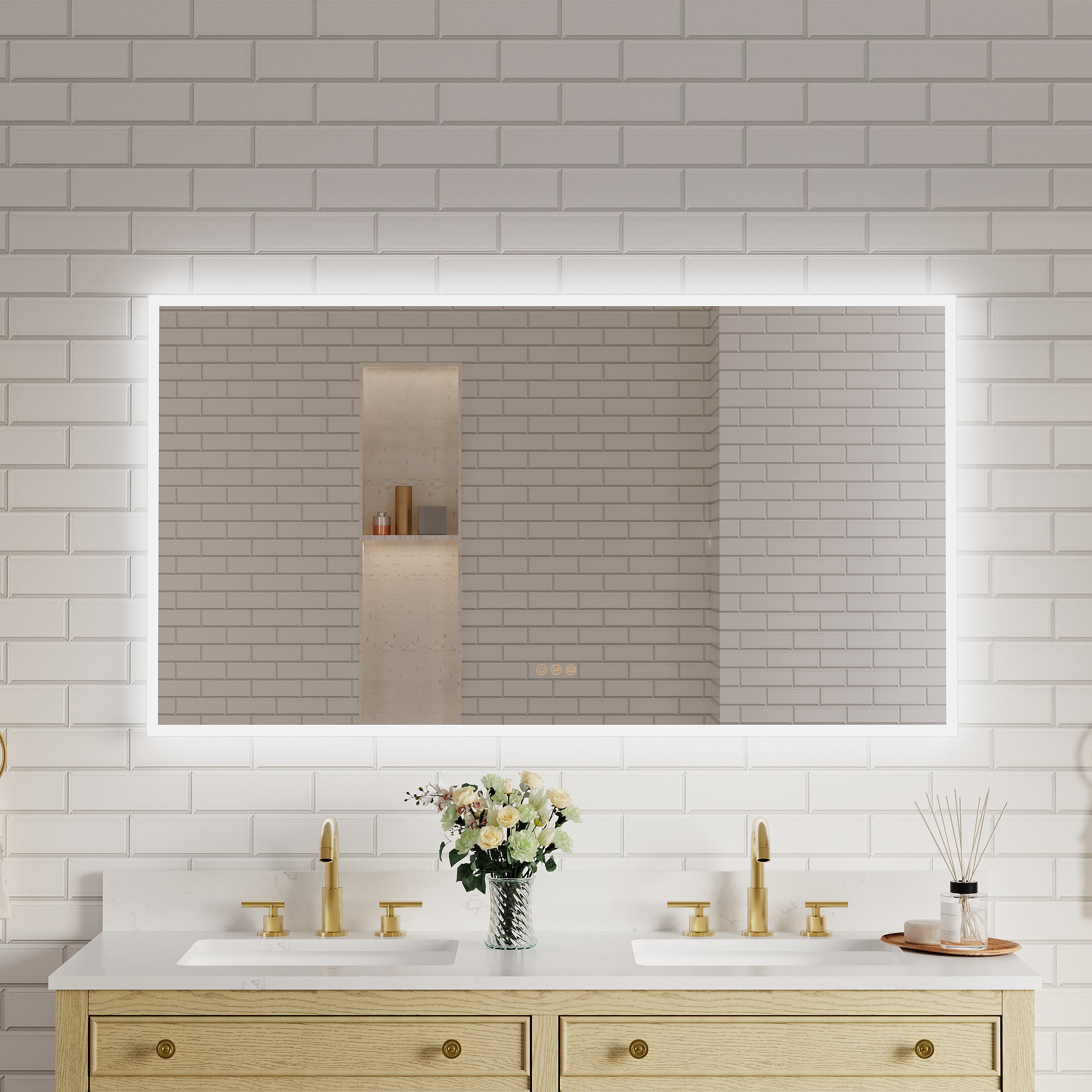
The width of a mirror is usually 70% to 90% of the tabletop's width. For example, a 36-inch countertop is suitable for pairing with a 28-inch to 32-inch mirror; the 60-inch dual basin layout can choose between two 30-inch mirrors or one 54-inch to 60-inch integral mirror.
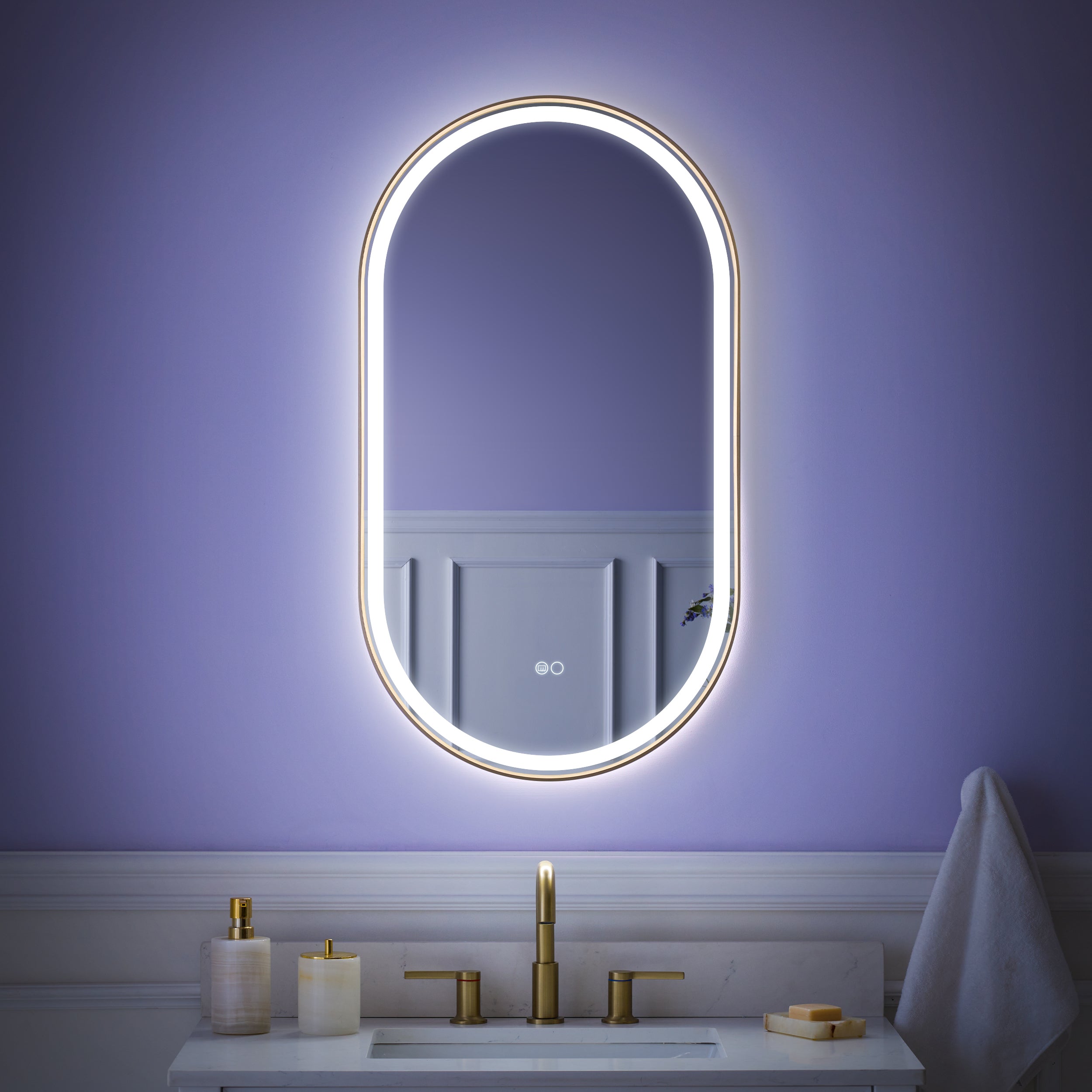
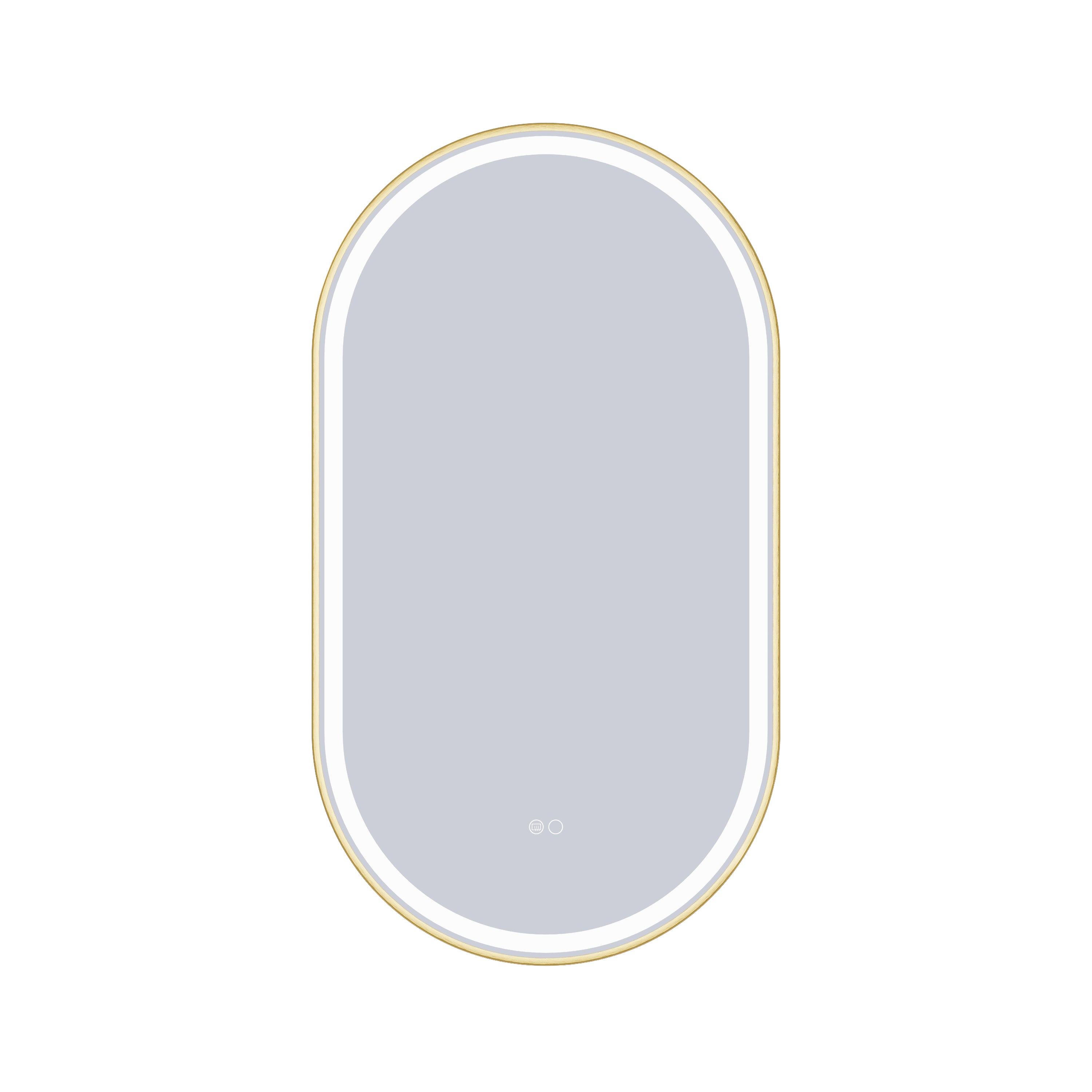
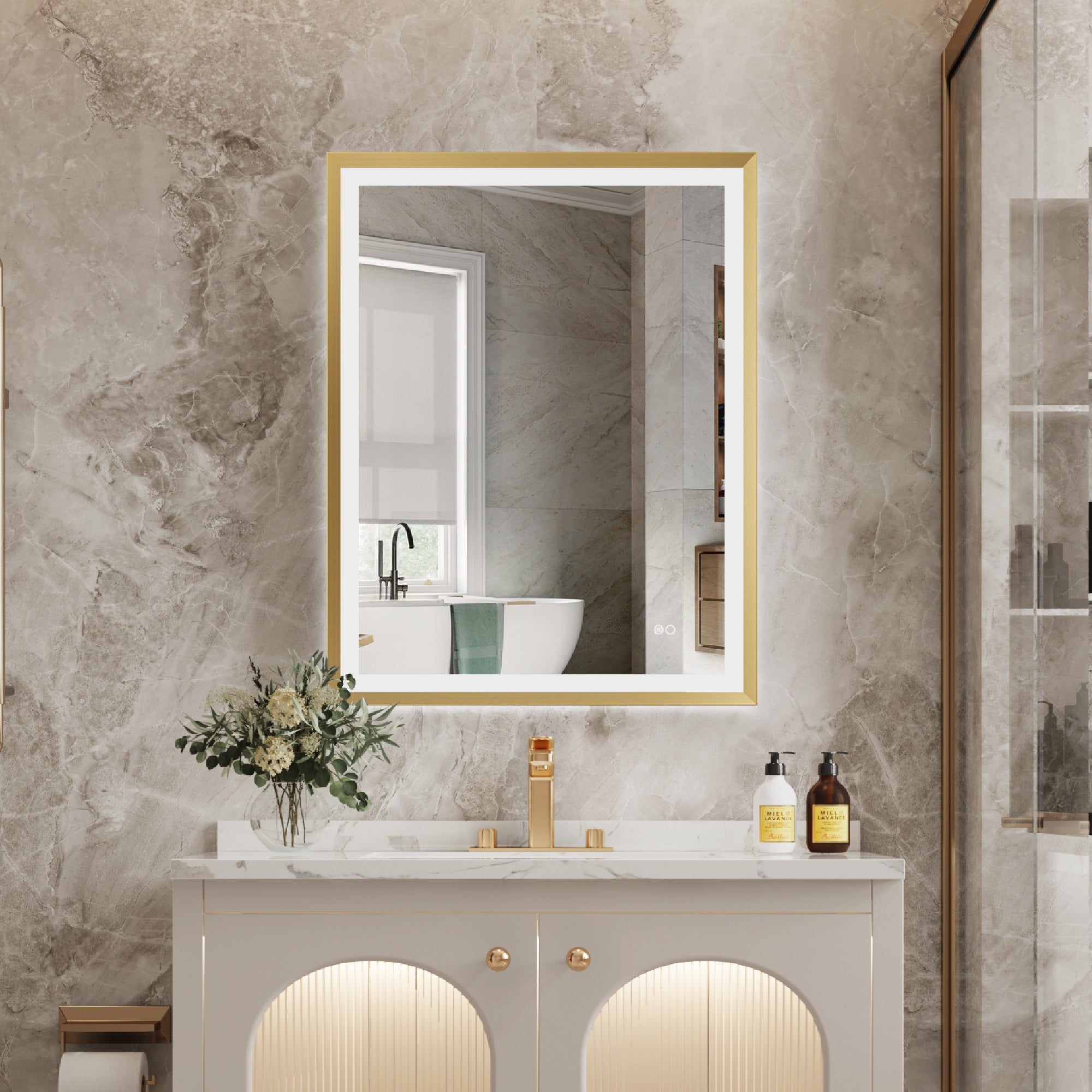
When the mirror ratio is reasonable, the spatial coordination score is improved by about 15%. The illuminated mirror outlines the edges with light strips, concentrating the visual center of gravity and reducing the sense of a hollow wall.
In an 8-foot-high floor space, the mirror height is usually set between 30 and 36 inches, with the lower edge 5 to 10 inches from the tabletop to maintain balance.
3. Enhance the sense of openness in the space
Light has a significant impact on spatial perception. The illuminated mirror blurs the wall's edges, creating edge halos that make the space appear larger.
Research shows that in bathrooms with an area of less than 100 square feet, LED light strips can improve wall brightness uniformity by about 15% to 20% and increase the width rating by about 12%.
In windowless environments, this visual extension effect is particularly pronounced.
4. Improve the flow and functional zoning
When the mirror is separated from the lamp, the wall layout needs to reserve space for the lamp, which may affect the layout of the cabinet or storage module.
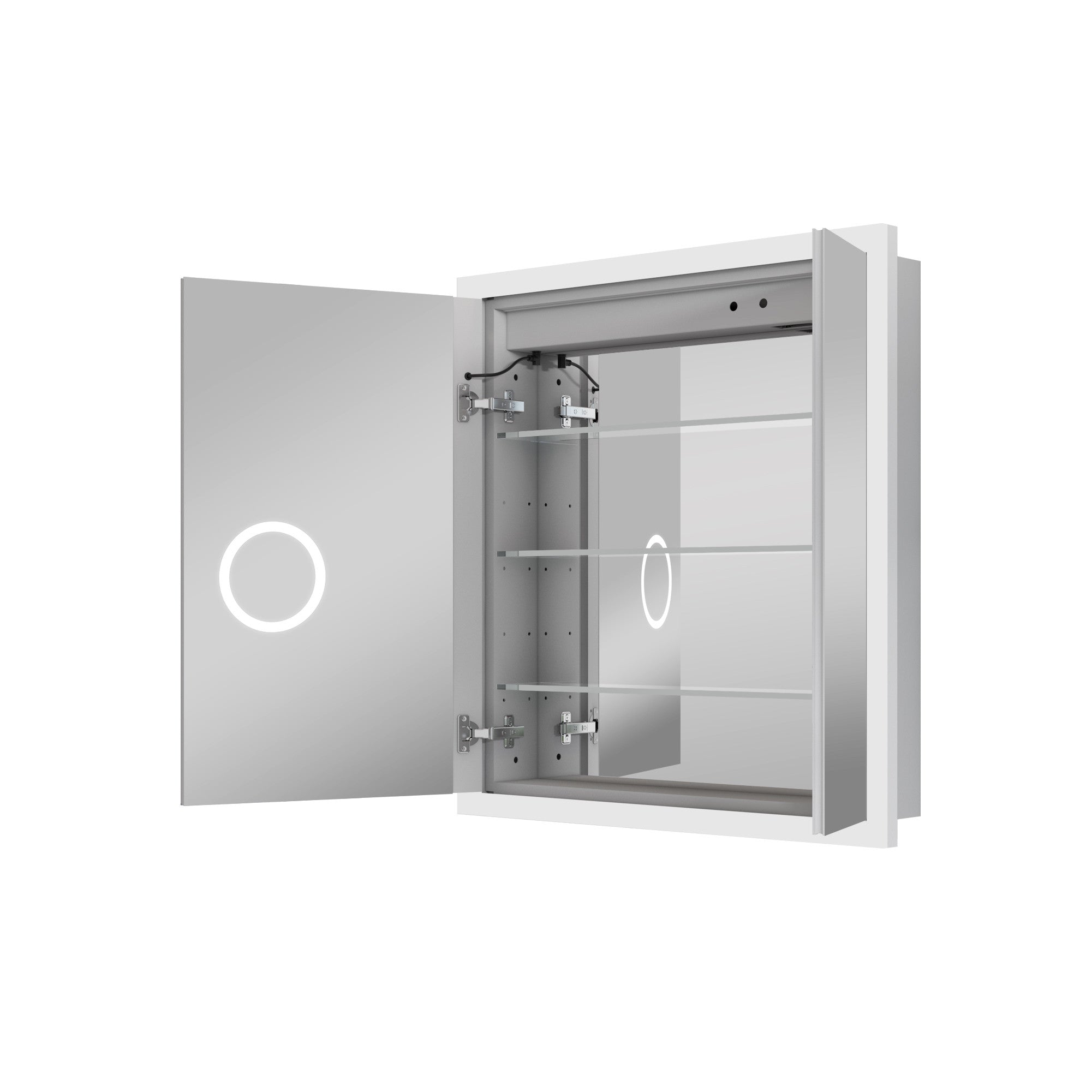
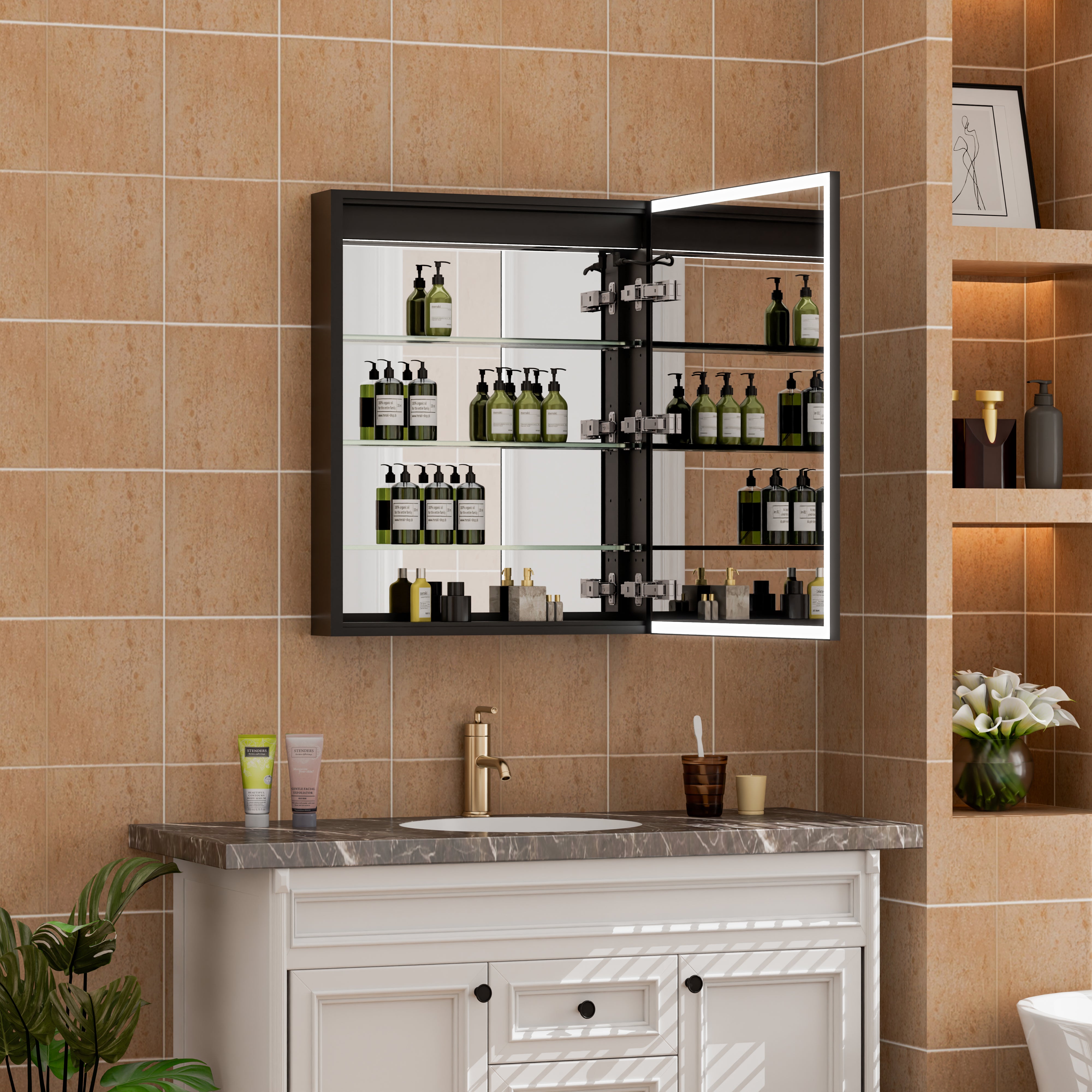
Equipped with light mirrors to reduce the space occupied by lighting fixtures and make the wall layout more flexible. For example, in a 36-inch single pot structure, 1 to 2 small cabinets or open shelves can be added.
The data show that in the integrated lighting layout, the wall utilization rate increases by about 10%.
5. Improve task lighting accuracy
Top light sources can easily create shadows on the face. Mirrors with lights usually use a surround light strip to provide more uniform illumination of the face.
When the color rendering index (CRI) reaches 90 or above, skin tone restoration is more accurate. Test data shows that shadows have decreased by approximately 20% to 25%.
This change in light structure makes daily shaving and makeup more precise.
6. Color temperature adjustment changes the atmosphere of the space
Modern light mirror supports color temperature adjustment from 3000K to 5000K.
Warm-colored light is better for relaxing at night, while cool white light is better for organizing in the morning. Data shows that in a color-adjustable temperature environment, overall satisfaction has increased by approximately 18%.
This flexibility allows a single space to present different atmospheres at different times.
7. Defogging function and adaptability to high-humidity environments
The humidity after showering usually exceeds 70%. Mirrors with lights are often equipped with heated defogging film that can restore clarity in 2 to 5 minutes.
Data shows that in environments with humidity exceeding 75%, the defogging function maintains a mirror clarity retention rate of over 90%.
This feature reduces the need for frequent wiping and improves daily convenience.
8. Energy saving and long-term operating costs
The average power of LED light sources is between 30W and 60W, with high efficiency and a long lifespan.
Data shows that LED systems can reduce energy consumption by about 70% compared to traditional halogen lamps.
Choosing energy-saving models during the renovation phase can help reduce long-term operating costs.
9. Enhance the overall design value
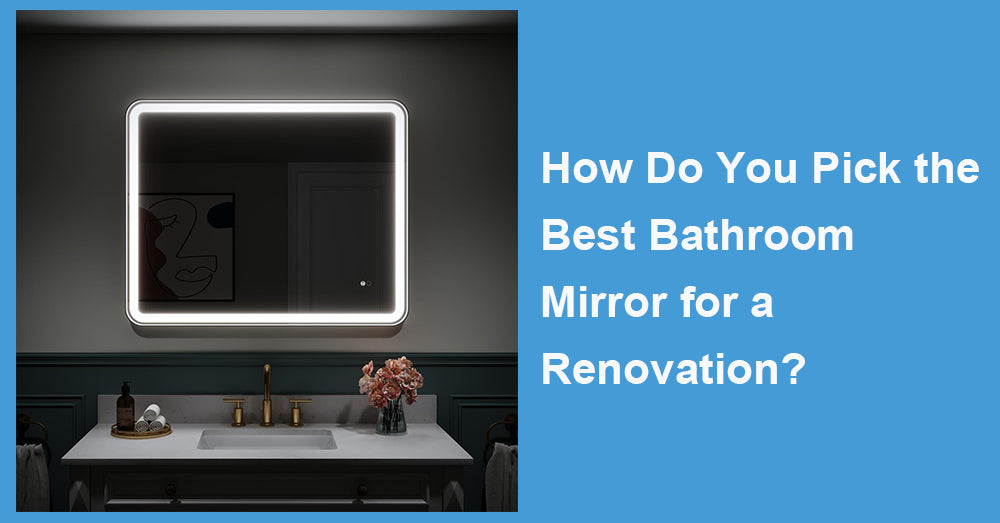
As bathroom design evolves toward intelligence and integration, illuminated mirrors have gradually become a highlight of renovations.
Industry data shows that the proportion of applications with illuminated mirrors in high-end renovation projects is increasing year by year. Its modern performance and spatial integration advantages make the bathroom more tasteful.
Especially in dual bowl layouts above 60 inches, the integrated light strip mirror becomes the visual core.

10. Conclusion
The change in bathroom layout through Vanity Mirror with Lights is reflected not only in increased brightness but also in comprehensive optimization of wall organization, flow planning, and visual proportion. From the compact configuration of 1200 lumens to the wide design of 3500 lumens, every inch size and unit brightness will affect the spatial experience. By selecting the appropriate size, color temperature, and installation height, illuminated mirrors not only enhance lighting but also redefine bathroom layouts, enabling the renovation project to achieve a synchronous upgrade of functionality and aesthetics.











Leave a comment
This site is protected by hCaptcha and the hCaptcha Privacy Policy and Terms of Service apply.