














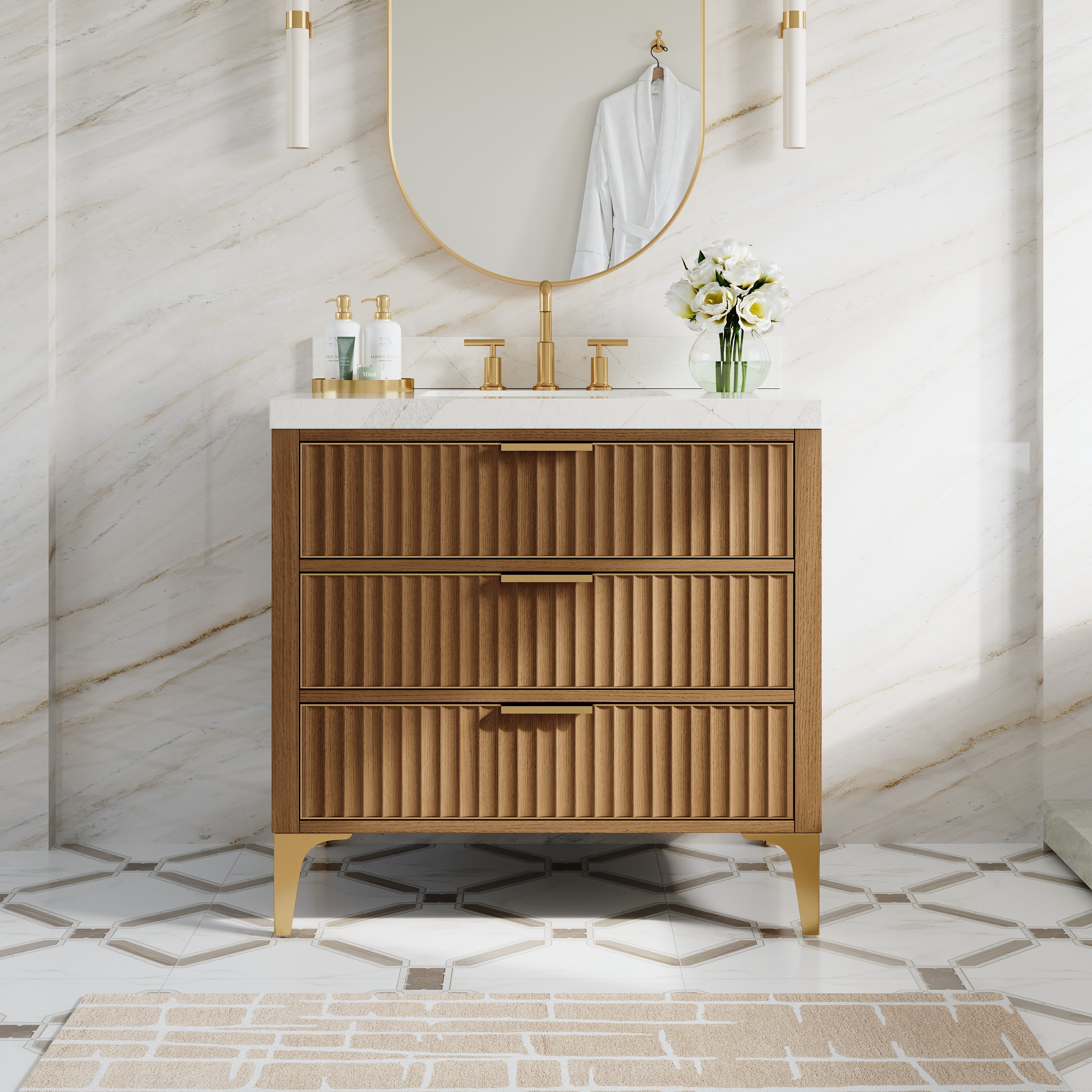
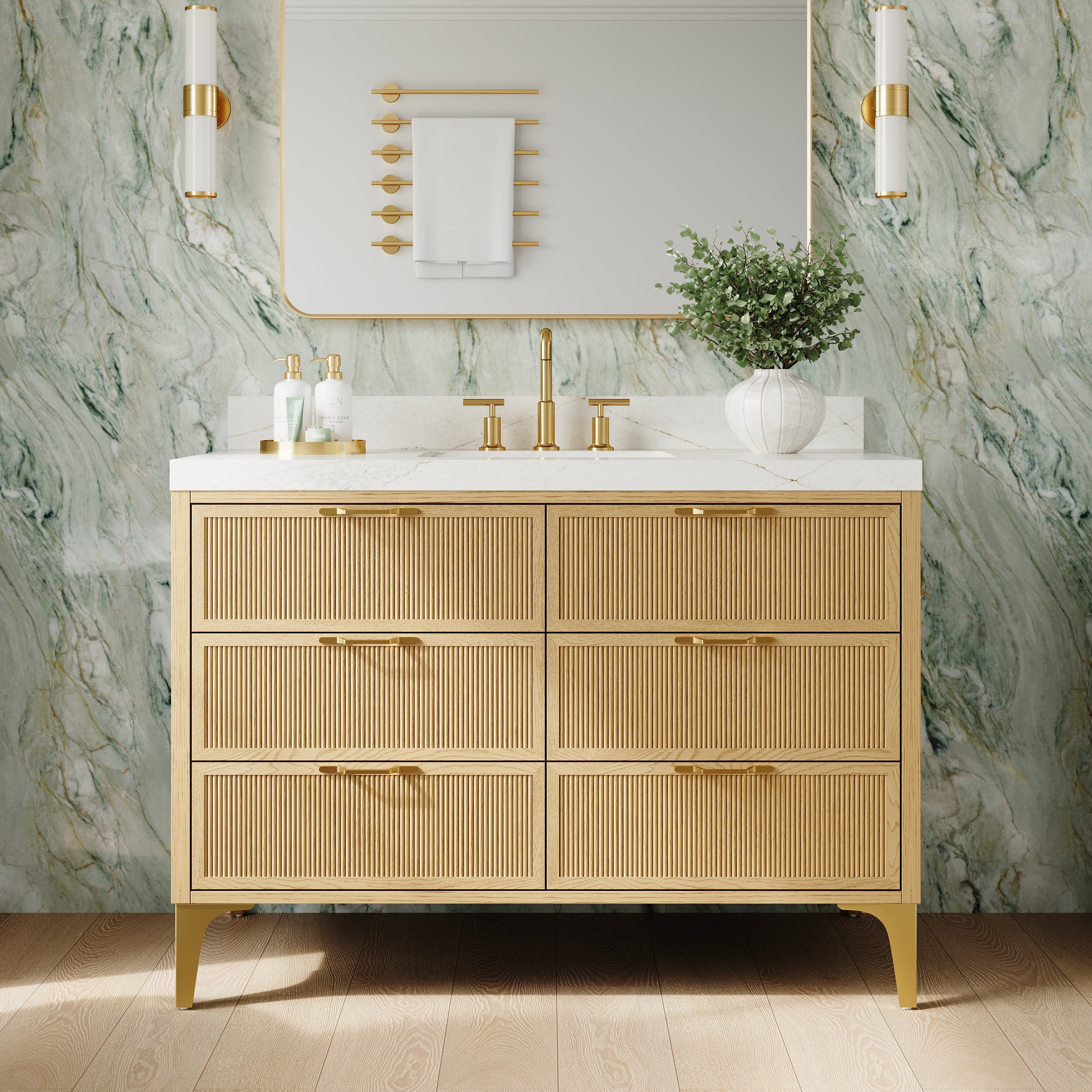


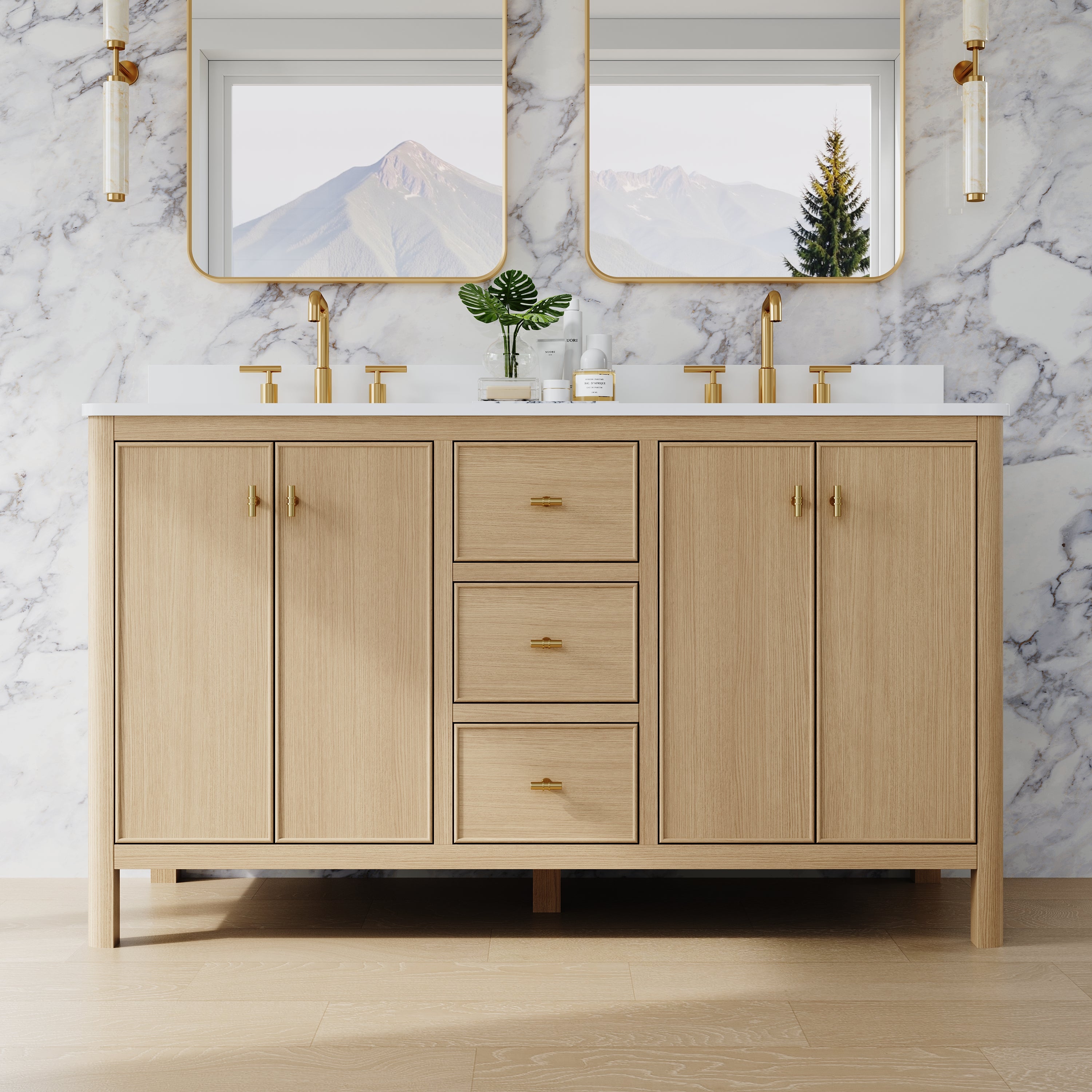
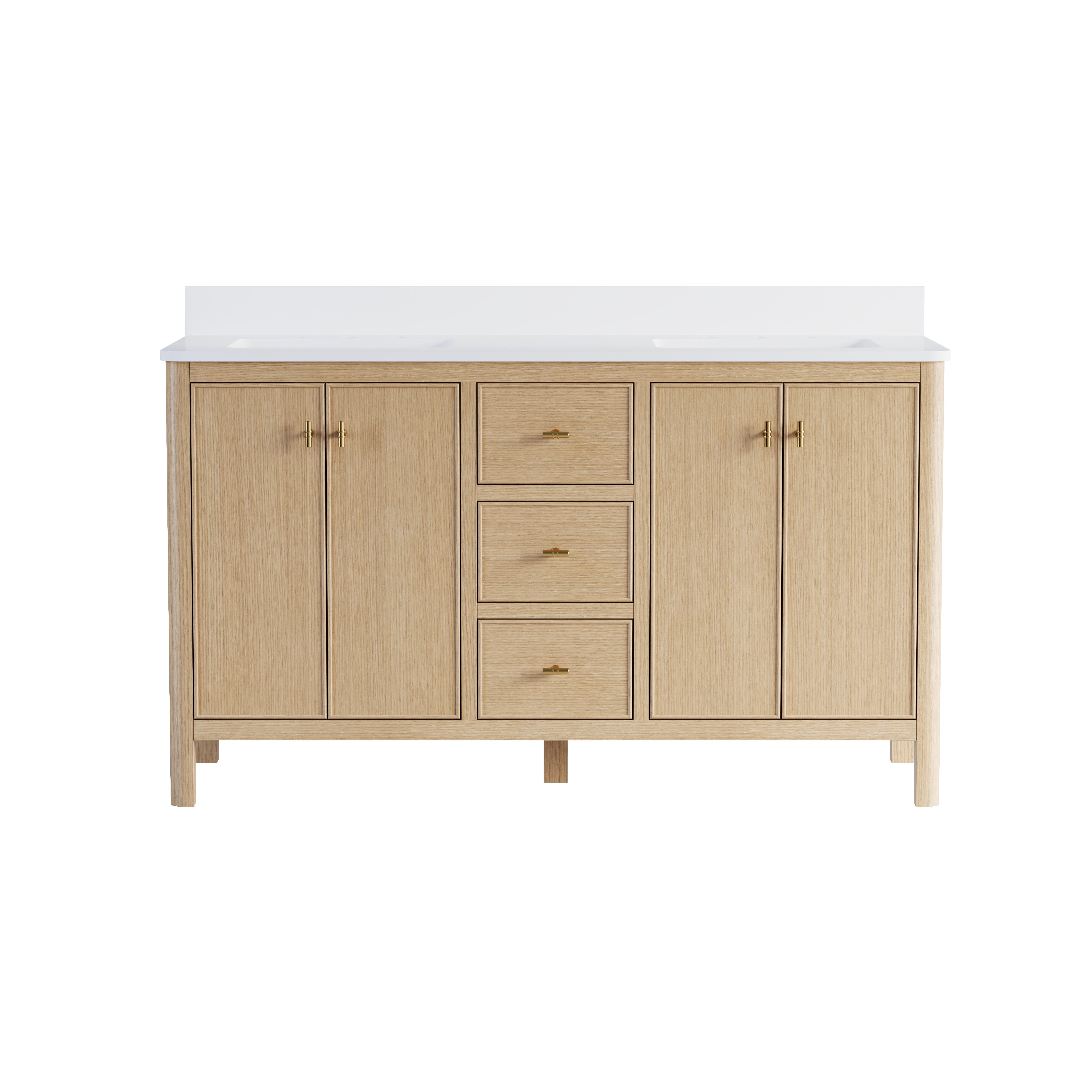
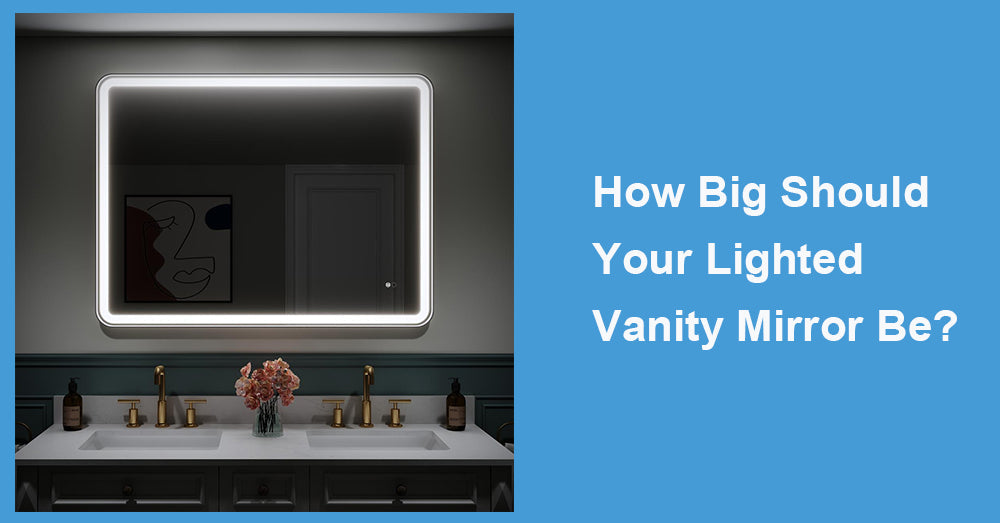
The most common tipping point when choosing an lighted vanity mirror is not whether the light is bright enough, but the incorrect size: the mirror is too narrow, leaving the countertop above it looking empty, with only a small portion visible. Mirrors that are too large can compress, block light positions, and even conflict with sockets/switches.
More importantly, in recent years, illuminated mirrors have shifted from being a "decorative upgrade" to a feature that many families actively choose - an annual trend study covering a large number of bathroom renovation projects shows that 34% of renovation projects will choose mirrors with "special functions", of which LED lighting mirrors account for 24%.
Since you are likely to use it frequently for a long time, the size must be in place at once.
1. Starting from the "bathroom cabinet width"
You can use the two least regretful rules in the industry (both applicable to illuminated mirrors/mirror cabinets):
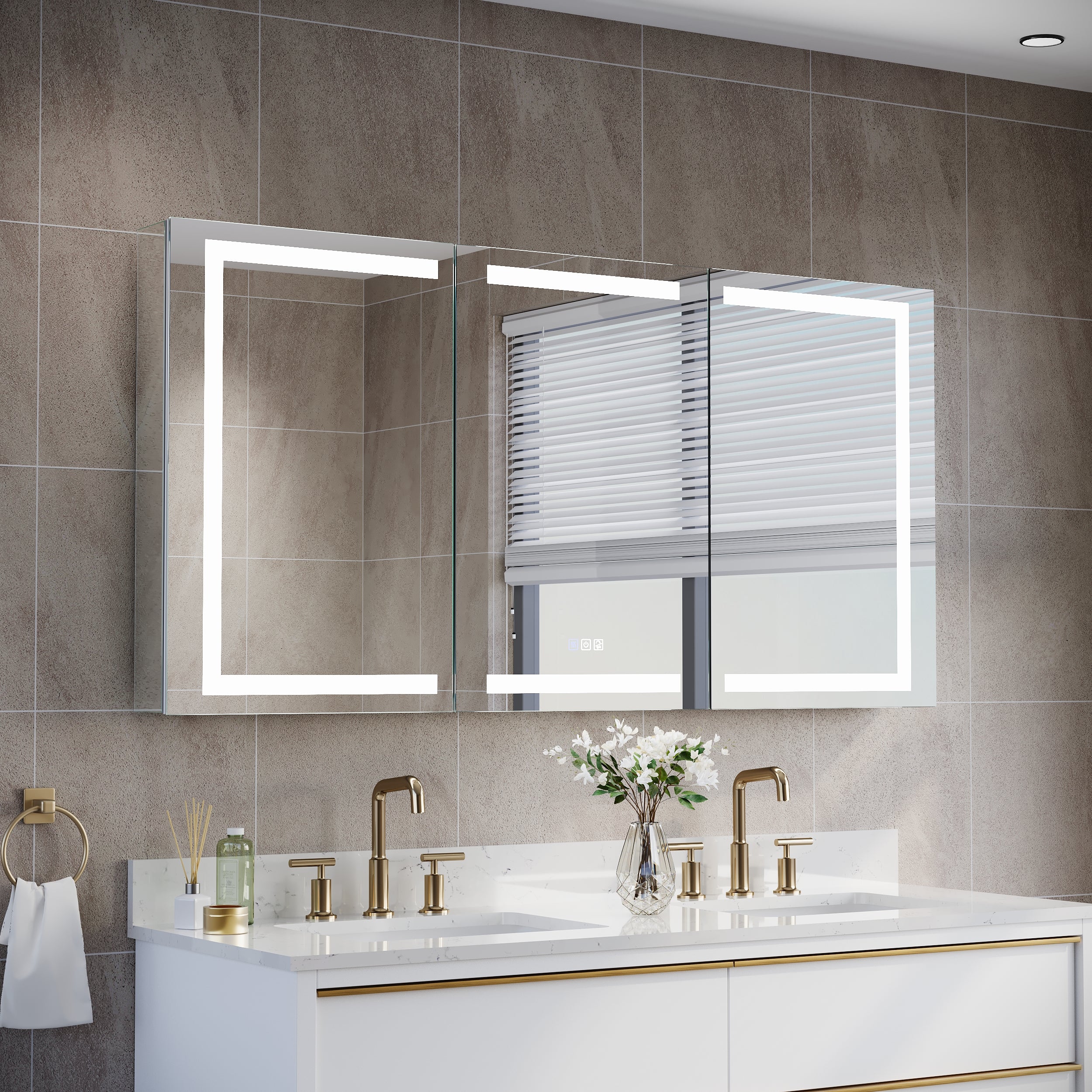
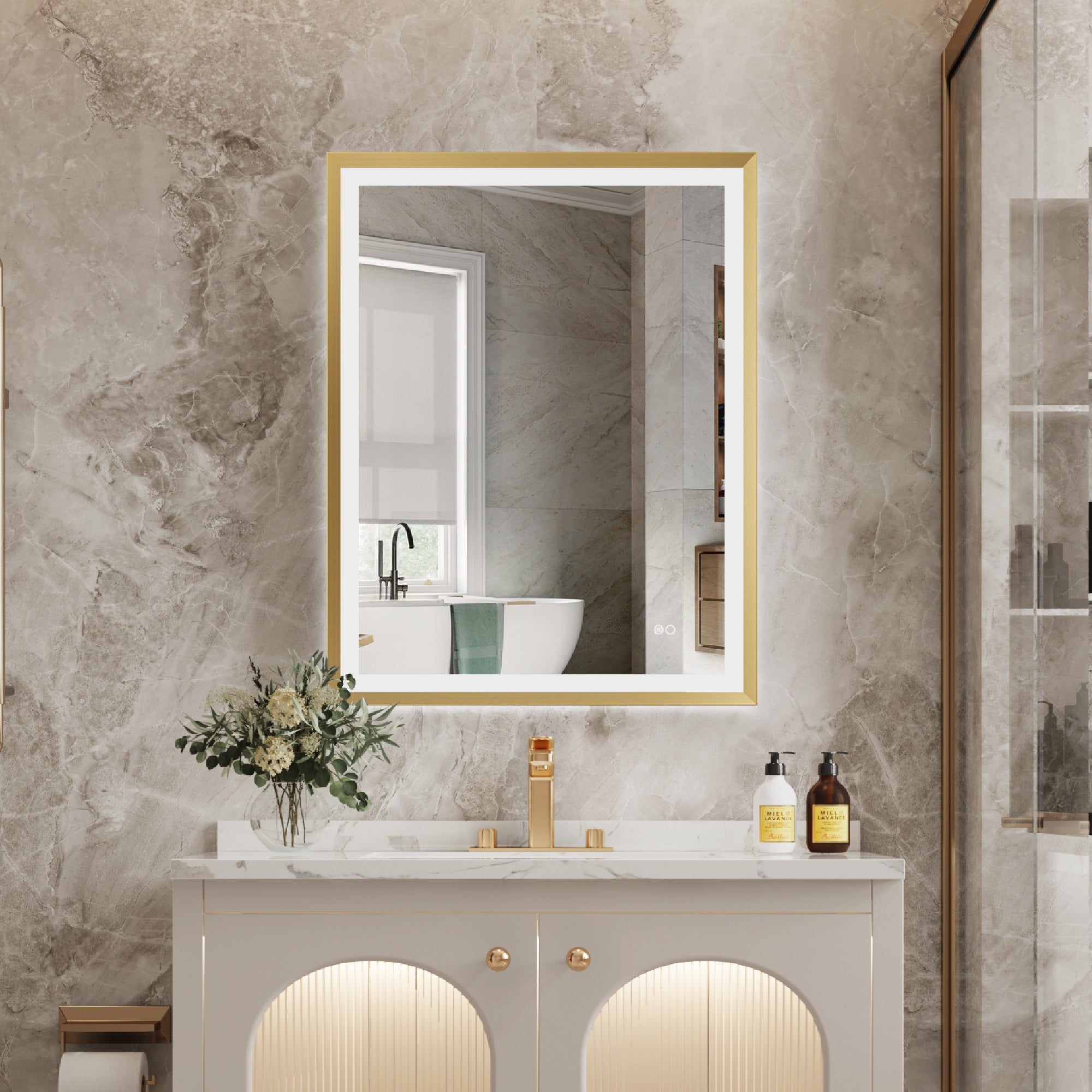
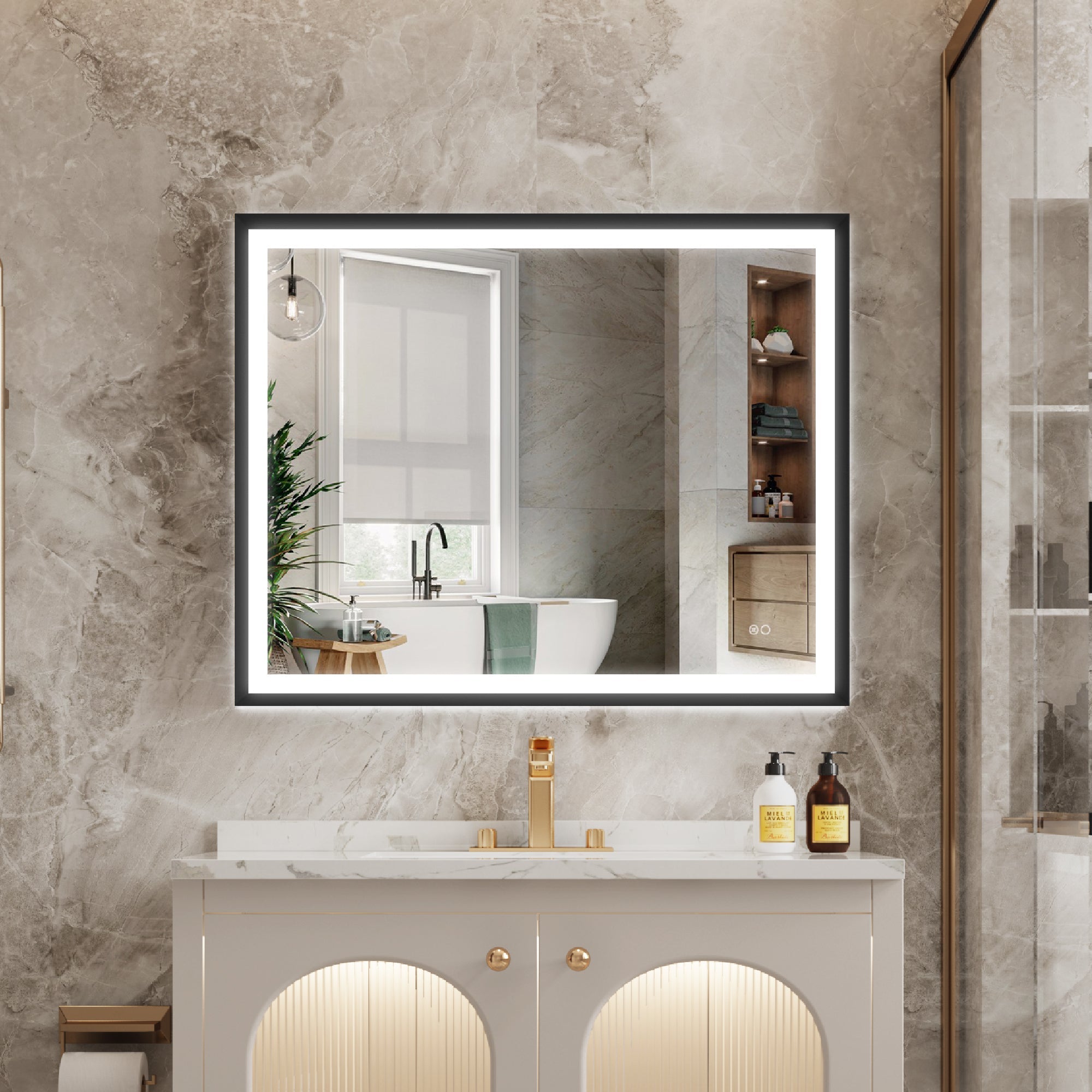
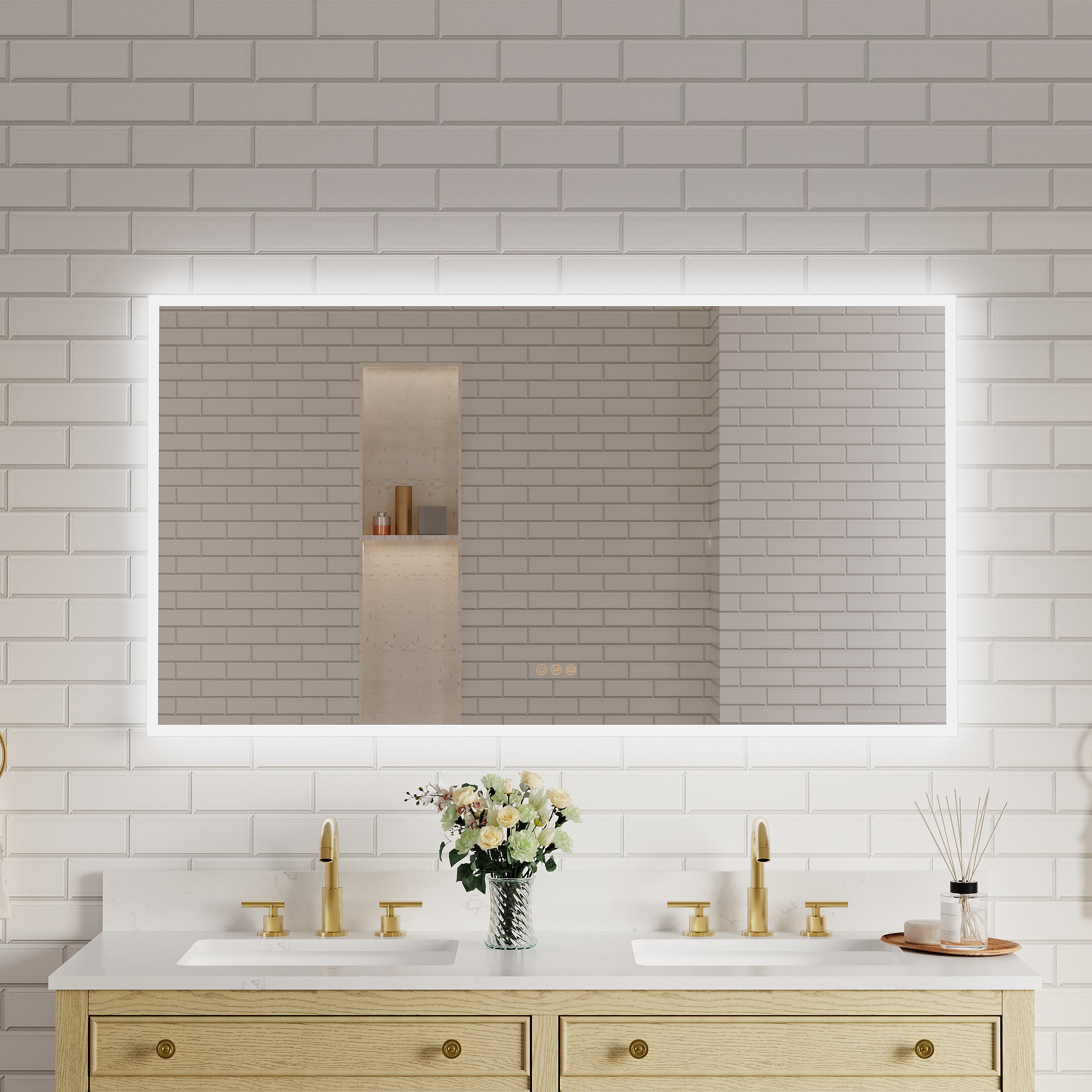
Rule A: Mirror width ≈ 70%-90% of bathroom cabinet width.
This is the most common proportion method: it can "catch the table" without appearing too full from edge to edge.
Rule B: The mirror is 2"-4" narrower than the bathroom cabinet (more neat and durable)
If you prefer a more "high-end, clean" sense of white space, use this one for stability: leave 1-2" gaps on each side of the mirror, making the overall look lighter.
To help you land better, first list the common bathroom cabinet widths: the mainstream standard widths are often 24", 30", 36", 48", 60", and 72". You only need to compare these dimensions to quickly determine the mirror width range:
24" bathroom cabinet: recommended mirror width of 20"-24"
30" bathroom cabinet: recommended mirror width 24"-28"
36" bathroom cabinet: recommended mirror width of 30"-34" (or fully equipped with 36")
48" bathroom cabinet: recommended mirror width of 40"-46" (or 48" should be neatly integrated)
60" double basin: two mainstream solutions
One side long mirror: 48"-60" (strong overall sense, prominent size)
Double-sided single mirror: 24"-30" on each side (clear zoning, symmetrical stability)
2. Don't blindly choose height
The height of a mirror is determined by its coverage and spatial proportions, rather than the principle of 'higher, higher'.
More universal height range: 28"-40"
Suitable for most families: the mirror extends from the face to the upper body, and its proportions are also easier to match with the bathroom cabinet.
If you want a stronger "hotel feel" or higher walls, you can consider 40"-48", but check the light positions, sockets, and whether there are hanging cabinets/windows above in advance.
A simple self-check: stand in the position where you use it daily, do not let the upper edge of the mirror make you "look up to see your head", and do not press the lower edge of the mirror above the faucet/countertop to make it crowded.
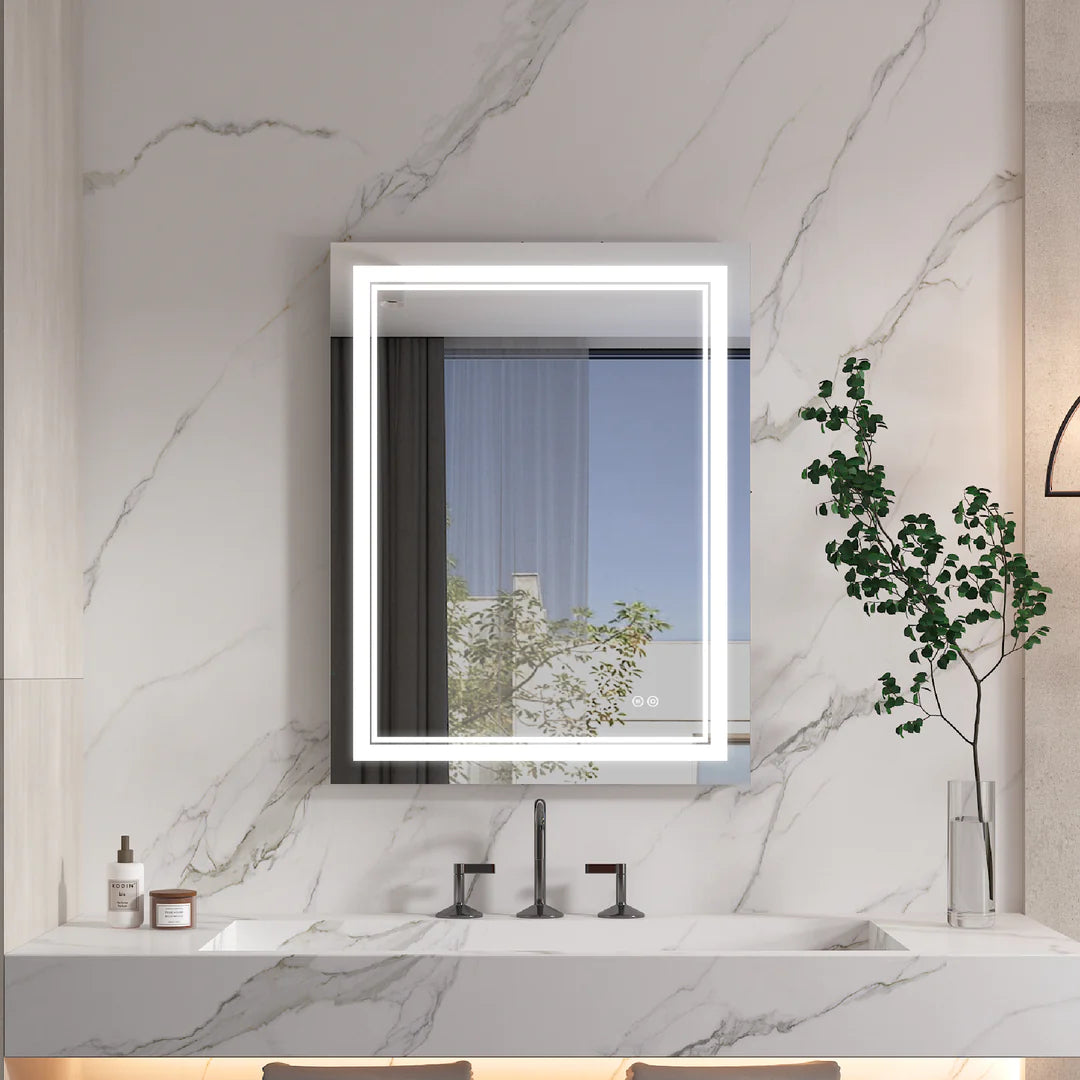
3. Mirrors with lights will 'look bigger'
Many people of the same size feel that having a light mirror is more "wall-occupying" because:
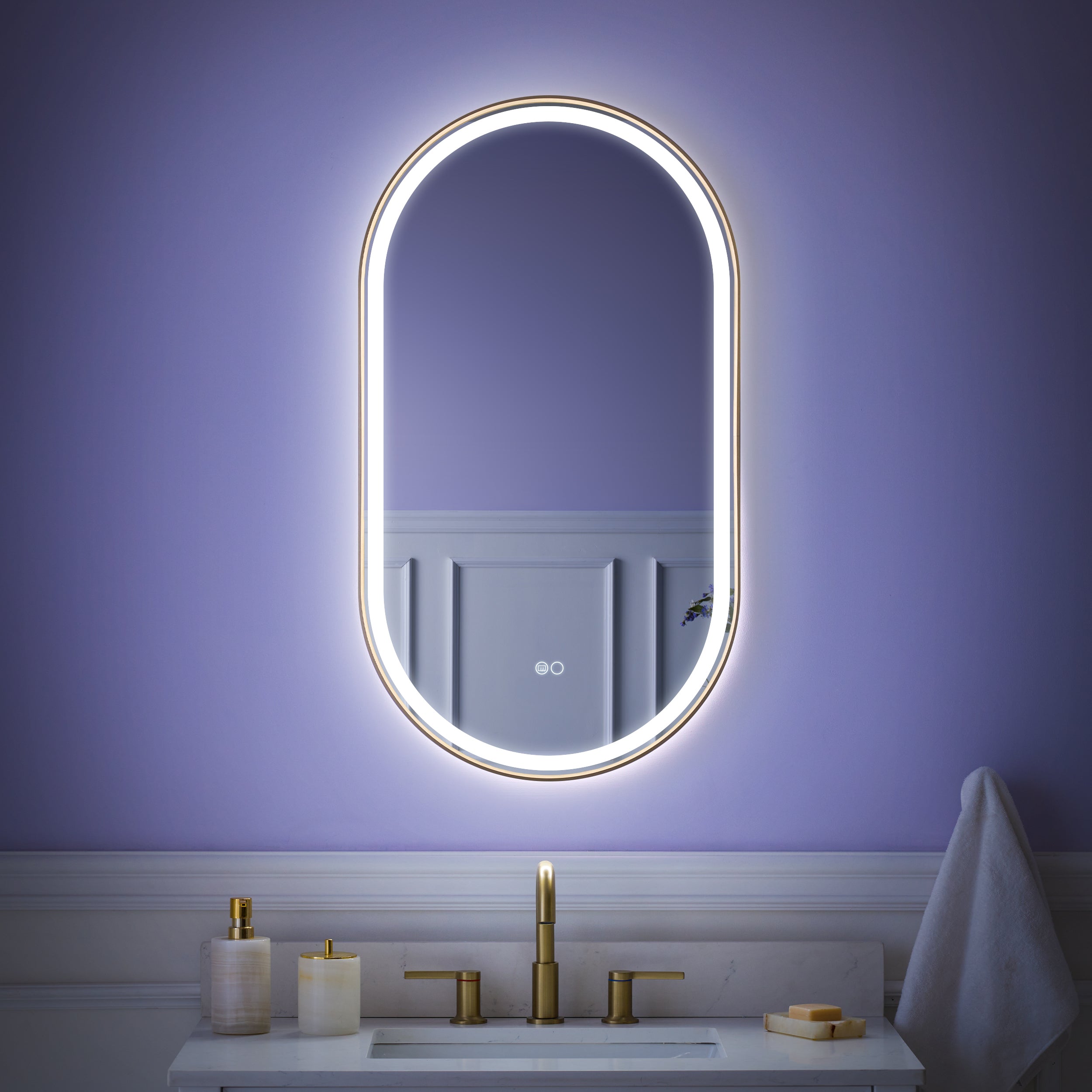
• Luminous edges/light strips will strengthen the boundaries, making the mirror more visually appealing.
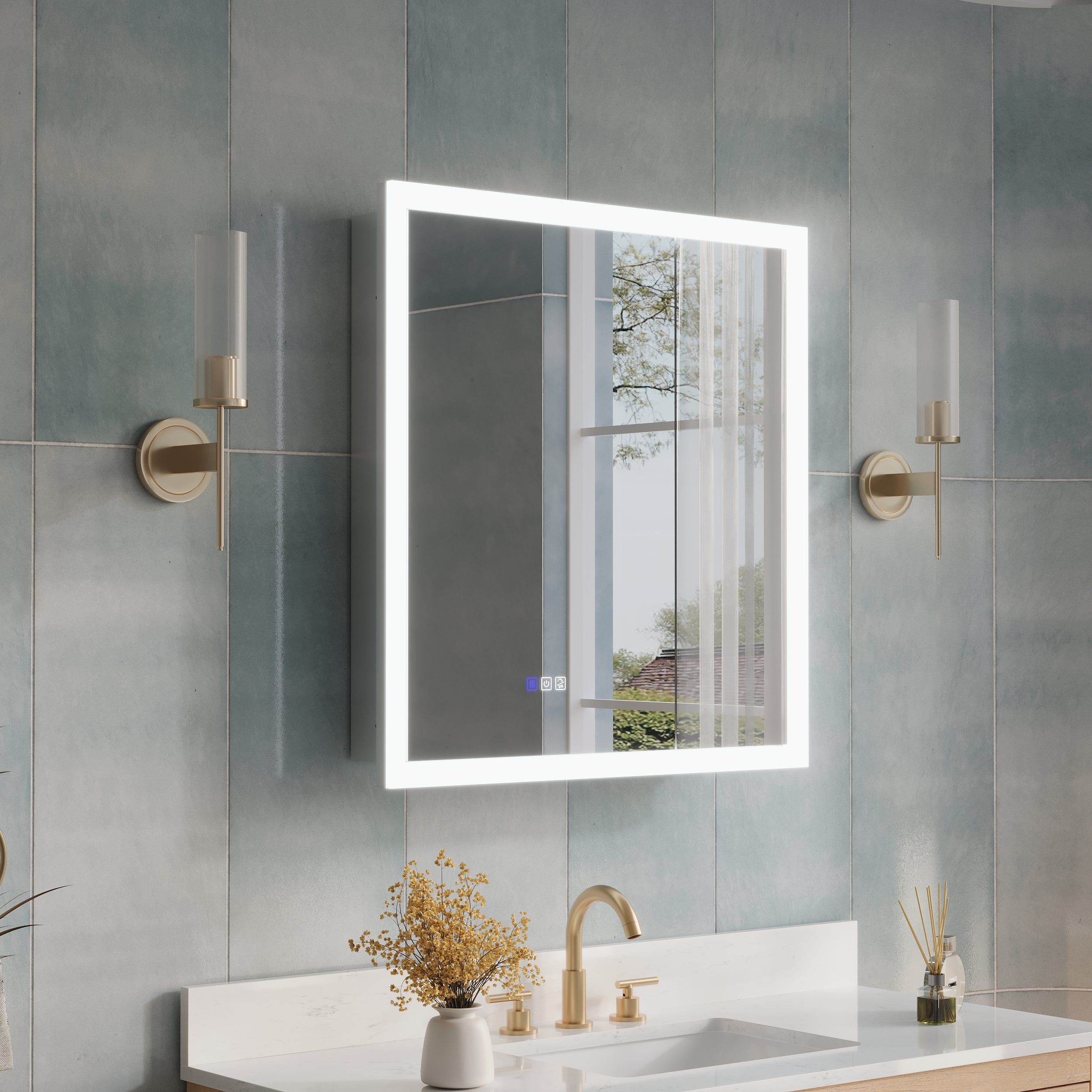
• Especially when it comes to "front-facing illumination" or "side-facing illumination", it will make the mirror look like a glowing panel, more prominent than a regular mirror.
So if your bathroom is small and has many wall elements (shelves, decorative paintings, wall lights are all included), it is recommended to lean the mirror size towards the lower edge of rule A; On the other hand, if the wall is very clean and you want the mirror to bear the main visual impact, the mirror can be made wider near the bathroom cabinet.
4. Coordinate mirror size with the light position
If you still want to install a vanity light bar, height planning should be considered together. The common installation suggestion is that the mirror light strip should be about 75"-80" off the ground, and the bottom edge of the lamp should be about 3" off the upper edge of the mirror to achieve more uniform facial lighting.
In addition, the industry planning guidelines emphasize that task lighting in the basin area should be on both sides of the mirror, close to eye level, and that direct light sources should be avoided as much as possible.
This will, in turn, affect the size of the mirror:
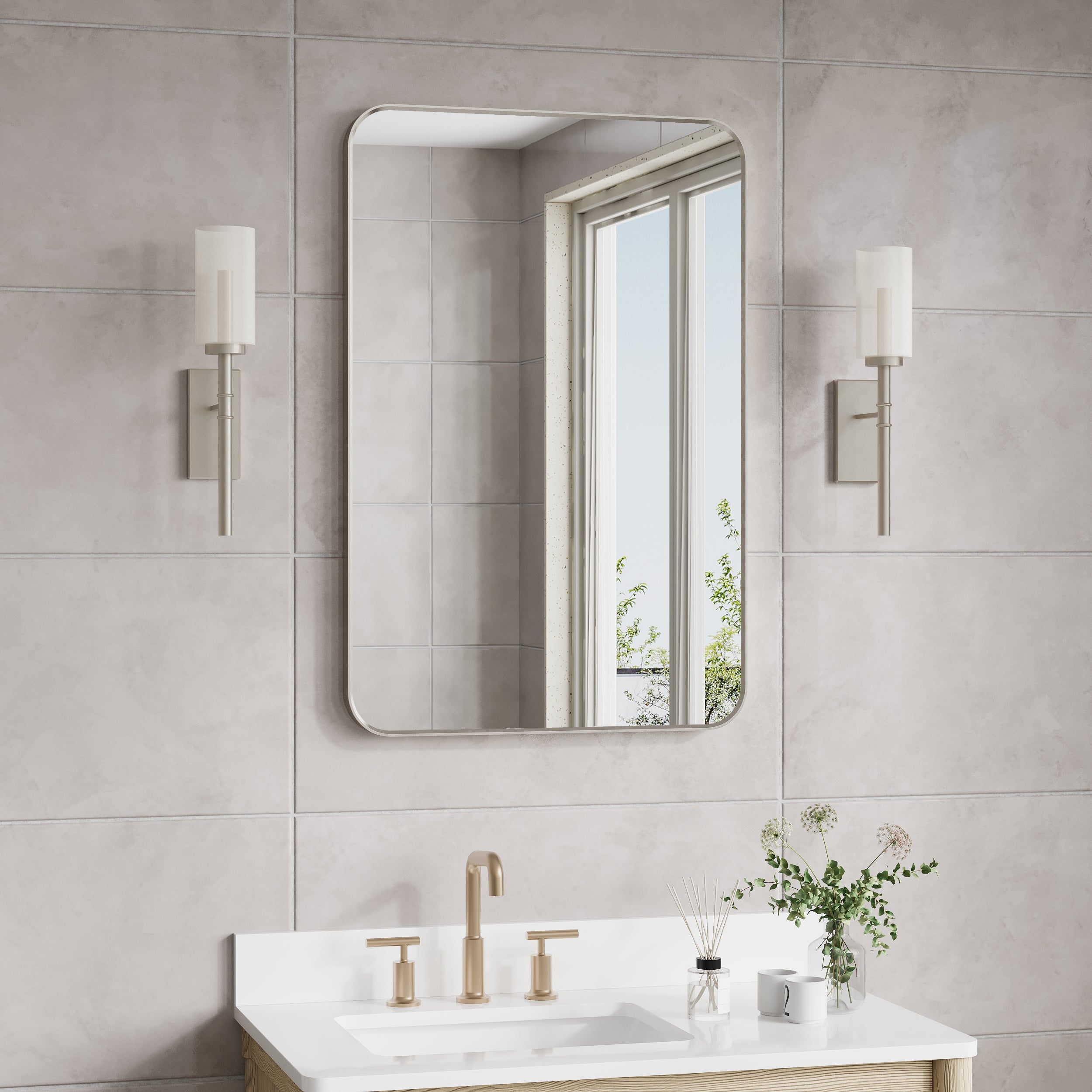
• If you want to place wall lamps on both sides, do not make the mirror too wide, or the wall lamps will have no space or appear crowded.
• If you decide to rely mainly on the "mirror built-in light," the upper light bar can be weakened, and the mirror height can be more flexible.
5. Double basin: one long mirror or two single mirrors
You can decide based on the "usage scenario" instead of patting your head according to your preferences:
A long mirror is more suitable for:
• Want to make the space appear larger and more cohesive.
• There is a lot of storage on the countertop, and I hope the wall view is cleaner.
• You care more about 'being able to see it from any position'.
A two-sided single mirror is more suitable for:
• Two people are using it simultaneously, and it is hoped that the left and right partitions are clear.
• You need to install wall lamps on both sides or provide independent lighting for each basin.
• You care more about symmetry and order.
6. 30-second sizing procedure
First, confirm the width of the bathroom cabinet (commonly 24"/30"/36"/48"/60"/72").
The mirror width should be set within the range of 0.7 to 0.9 by multiplying the width of the bathroom cabinet.
If you like it to be more neat, use "2"-4" narrower than the cabinet" for fine-tuning.
Mirror height priority falls between 28" and 40"; If you want to have a stronger presence, you need to probe up to 40"-48", but you must check the light position and switch/socket.
If you want to install the upper light strip, reserve a height logic of 75"-80" for the light position, and keep a reasonable distance between the lamp and the upper edge of the mirror.

7. Conclusion: The most "appropriate" size is to make the mirror look like the upper body of the bathroom cabinet
Your goal in selecting an illuminated vanity mirror is not to buy the 'largest' one, but to create a clear structure on the wall: the bathroom cabinet below supports it, the mirror above catches the proportion, and the light is responsible for evenly illuminating the face.
Following the proportion and light position logic above, you can basically avoid 80% of regretful items.












Leave a comment
This site is protected by hCaptcha and the hCaptcha Privacy Policy and Terms of Service apply.