
















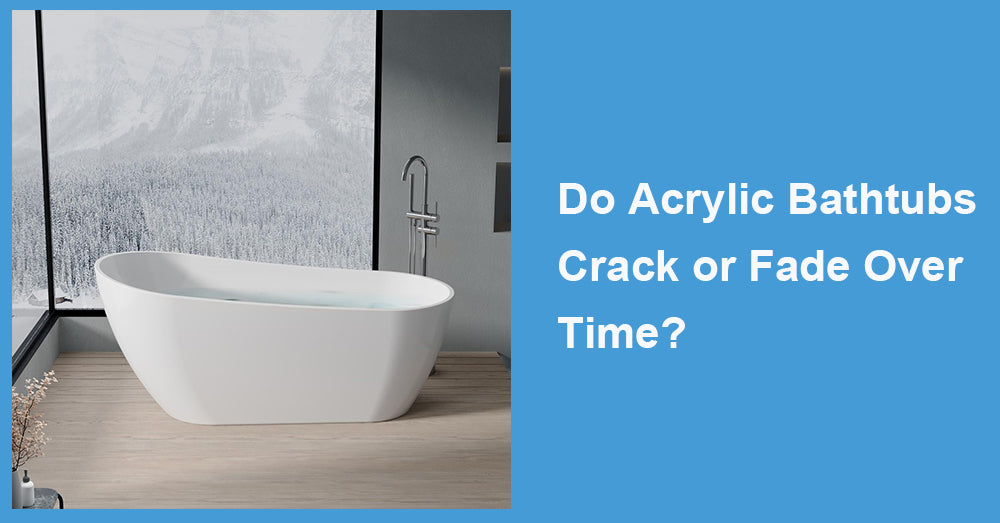
Against the backdrop of residential renovation and the continued rise of the bathroom equipment market, acrylic bathtubs are gradually becoming the mainstream choice. From new residential construction to old-house renovation, this material has captured over 40% of the market share due to its lightweight, cost advantages, and design flexibility, making it one of the fastest-growing subcategories in recent years. However, as the usage cycle extends, the issue of whether it will crack or fade has become a core concern for consumers and the industry.
1. The market is growing rapidly, and durability issues are being re-examined
Multiple market research institutions have pointed out that the widespread popularity of acrylic bathtubs is mainly due to their "lightweight, easy to install, and low maintenance cost" characteristics, as well as their good impact resistance and non-porous structure, which do not easily absorb water or breed mold.
At the same time, industry reports generally emphasize that high-quality acrylic products resist cracking and fading, making them suitable for long-term use. Developers and brand marketing frequently use this type of expression, and also reinforce consumers' awareness of its "durable materials".
But as a large number of products enter a usage cycle of more than 5 years, some user feedback gradually emerges, including surface fine lines, decreased gloss, and even local color changes. These phenomena are not universal quality defects, but they have prompted the industry to re-examine the true lifespan performance of acrylic materials.
2. Cracking risk: not the material itself, but a 'system problem'
From a materials science perspective, acrylic itself has high toughness. Industry technical data shows that under normal usage conditions, it has strong impact resistance and "requires significant external force to cause obvious rupture".
However, experts in the field of construction and installation generally believe that the actual occurrence of cracking is mostly due to the following "systemic factors":
Insufficient installation support
Acrylic bathtubs usually require even support at the bottom. If a mortar or support frame is not used during installation, long-term load-bearing will cause local stress concentration, resulting in cracks.
Long-term structural fatigue
Although the material has elasticity, under frequent alternation of hot and cold water environments, slight thermal expansion and contraction will gradually accumulate stress, especially in low-end products.
Quality differences in composite structures
High-end products usually add multiple layers of glass fiber reinforcement on the back of acrylic, while low-priced products use thinner reinforcement layers, which are more prone to structural problems over time.
Improper use
For example, placing heavy objects or hard tools in the bathtub may create stress points and increase the risk of cracking.
Therefore, the general industry view is that acrylic bathtubs are theoretically less prone to cracking, but their actual performance is highly dependent on installation quality and product grade.
3. Fading and loss of light: environment and maintenance are the key variables
Compared to cracking, consumers are more likely to perceive issues such as "fading" or "loss of luster".
From a material perspective, the color of acrylic runs through the entire material layer rather than a surface coating, so it will not peel off easily like sprayed materials. This means that true 'severe fading' is relatively rare.
However, industry analysis suggests that the following factors can cause users to experience a "fading sensation":
Effects of ultraviolet radiation
Long-term exposure to sunlight may cause slight surface aging, especially in windowed bathrooms.
Improper cleaning method
Using bleach or strong alkaline cleaning agents can damage the surface gloss layer, causing the color to appear lighter or gray.
Scale and mineral deposition
Minerals in hard water can form deposits on the surface, making the bathtub look dull.
Accumulation of micro scratches
Long-term use of rough cleaning tools can form small scratches, reduce reflectivity, and visually resemble "fading".
Therefore, the industry tends to define this issue as "surface aging or improper maintenance" rather than material defects themselves.
4. Life cycle: 10-20 years, industry consensus reached
In the market, most manufacturers and renovation companies provide a reference lifespan of 10 to 20 years. Industry data shows that with proper maintenance, acrylic bathtubs can typically be used for over 15 years.
Meanwhile, some brands even offer long-term warranties to strengthen their durability positioning further.
However, compared to other materials, acrylic still has certain differences:
Compared to cast iron, it has a slightly shorter lifespan, but it is lighter in weight
Compared to fiberglass, it has significantly stronger durability
Compared to glazed steel, it has better crack resistance, but slightly inferior fade resistance
This also explains why acrylic has become the "most cost-effective solution" in the mid-range residential market.
5. Industry trend: Delaying aging through technological upgrades
Faced with consumers' concern for durability, manufacturers are improving product performance through technological innovation, including:
Enhanced Composite Materials: Improving Impact and Fatigue Resistance
UV-resistant coating technology: delaying aging caused by sunlight
Surface hardening treatment: reduces scratches and loss of gloss
Upgrading environmentally friendly materials: enhancing long-term stability.
These innovations are driving the transformation of acrylic bathtubs from "economical products" to "durable consumer goods".
6. Consumer and Industry Suggestions
The conclusion given by industry experts regarding whether it will crack or fade is relatively consistent:
Acrylic bathtubs are not prone to cracking or fading under normal use, but their long-term performance depends heavily on installation quality and maintenance practices.
Consumers are advised to pay close attention to the following points:
Choose high-quality products with fiberglass reinforcement.
Ensure that the bottom is fully supported during installation.
Use neutral cleaning agents to avoid strong corrosive chemicals.
Regularly clean the scale and maintain the surface gloss.
Avoid prolonged direct sunlight exposure.

Conclusion
Overall, acrylic bathtubs are not "necessarily" prone to cracking or fading over time. On the contrary, in the current market, it is still considered the mainstream material for balancing cost, design, and durability.
What truly determines its service life is not only the material itself, but also the comprehensive result of "product quality+installation process+usage habits". Driven by continuous industry upgrades and technological advancements, the long-term performance of acrylic bathtubs is continually improving, and their market position remains difficult to replace in the short term.











Leave a comment
This site is protected by hCaptcha and the hCaptcha Privacy Policy and Terms of Service apply.