


















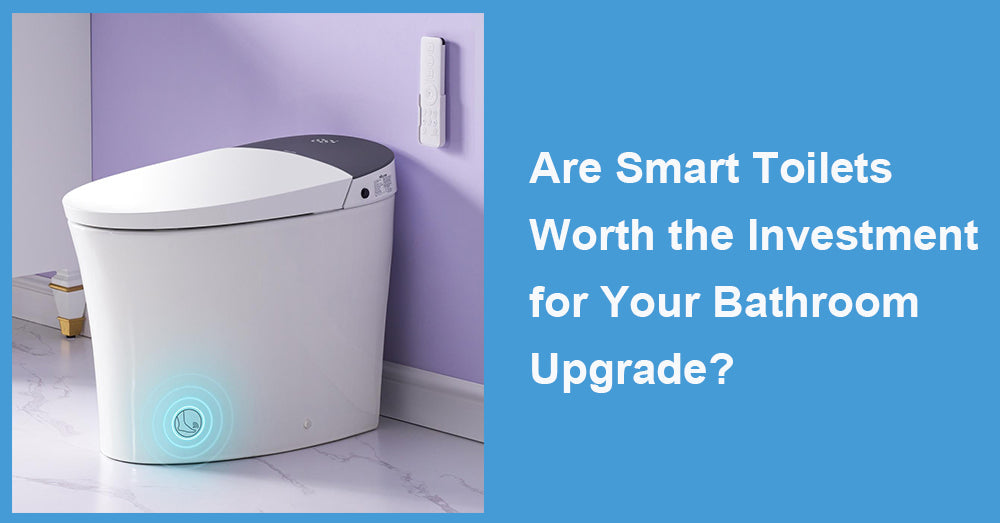
Smart toilets promise a cleaner routine, more comfort, and a more “finished” bathroom experience—often with features like bidet washing, heated seats, automatic flushing, deodorizing, and night lighting. Whether they’re worth the investment depends on what you value most: water efficiency, hygiene and comfort, accessibility, and long-term maintenance. The smartest approach is to evaluate them like a system (water use + performance + power + serviceability), not like a gadget.
1. Start With the Non-Negotiables: Water Use and Flush Performance
Even the most advanced toilet should still be efficient and reliable. A widely used efficiency benchmark is the WaterSense label. EPA notes that WaterSense-labeled toilets use 1.28 gallons per flush (gpf) or less, which is 20% less than the federal standard of 1.6 gpf, while providing equal or superior performance. (Source: EPA WaterSense “Residential Toilets”.)
If your current toilet is older (especially pre-1990s), the savings can be much larger—some older models use several gallons per flush. Replacing an older toilet is often one of the highest-impact indoor water upgrades because toilets account for a large share of indoor water use—nearly 30% in many household water-use summaries. (Source: Home Depot Eco Actions summary referencing WaterSense/EPA messaging.)
A simple “worth it” water-savings math
If you’re moving from 1.6 gpf to 1.28 gpf, you save 0.32 gallons per flush. EPA provides the 1.6 vs. 1.28 reference, and multiple sources cite average behavior around five flushes per person per day. (Sources: EPA WaterSense; Residential End Uses of Water Study reference via Home Water Works; academic research abstract noting five flushes/day.)
That’s about:
· 0.32 × 5 = 1.6 gallons/day per person
· ≈ 584 gallons/year per person (1.6 × 365)
In a multi-person household, that adds up quickly—before even considering that many older toilets exceed 1.6 gpf.
Performance: avoid the “efficient but clogs” trap
Flush performance is where smart buying matters. Beyond efficiency labels, look at independent performance testing like MaP (Maximum Performance), which rates how many grams of test media a toilet clears in one flush. MaP explains its score as grams of simulated waste removed in a single flush. (Source: MaP Testing.)
Some practical benchmarks:
· WaterSense performance requirements are often referenced around 350 grams (Source: Ferguson guide comparing MaP testing to WaterSense requirements.)
· MaP “Premium” criteria commonly reference 600 grams as a high-performance threshold. (Source: MaP Search page.)
Bottom line: If a smart toilet doesn’t flush reliably, the “smart” features won’t matter. Start your shortlist with solid flush performance first.
2. Comfort and Hygiene: Where Smart Toilets Can Truly Feel Different
The biggest day-to-day difference usually comes from bidet functions and comfort features:
· adjustable wash position/pressure
· warm water washing
· heated seat
· warm-air drying (varies by model)
· deodorizing and night light (quality varies)
Bidets can improve comfort and hygiene, especially for people with mobility limitations or sensitive skin—but technique matters. Health guidance from physicians emphasizes using low pressure, avoiding overuse, and keeping nozzles clean to prevent irritation or hygiene issues. (Source: Health.com doctor-advised bidet guidance.)
Practical takeaway: A smart toilet can be worth it if it measurably improves comfort or accessibility for someone who will use those features daily—not just occasionally.
3. Electricity and Placement: Know What You’re Signing Up For
Unlike standard toilets, smart toilets (and most electric bidet seats) require power. That introduces:
· outlet access (often a dedicated GFCI-protected receptacle is used in bathrooms)
· cable management (a messy cord can ruin the “clean upgrade” look)
· maintenance of electronics (drivers, heaters, sensors)
Power consumption varies heavily based on heated-seat settings, water heating method, and standby behavior. Many manufacturer/retailer claims exist, but they are not consistently standardized across brands—so treat energy numbers as “order-of-magnitude” unless the product provides tested specs.
If you want a safer, lower-risk step, consider a bidet seat upgrade on a proven toilet first. It captures much of the comfort benefit with easier replacement if electronics fail later.
4. Reliability and Maintenance: The Real Cost Driver Over Time
Smart toilets are more complex systems. That’s not automatically bad—but it changes what “worth it” means. Ask these questions before buying:
A. Parts and support
· Are replacement parts easy to order (valves, sensors, remote, seat components)?
· Is the warranty clear about electronics vs. ceramics?
· Is there a service network, or will you be shipping parts back and forth?
B. Cleaning reality
Many smart toilets have more seams, sensors, and nozzles than a standard bowl. Look for:
· easy-to-remove seat components (if applicable)
· self-cleaning nozzle functions
· smooth glazing designed to reduce staining (varies by brand)
C. Water quality and filtration
If your water has heavy mineral content, nozzles and internal plumbing can scale up faster. Some systems use filters; check replacement cost and frequency.
Rule of thumb: The more features you buy, the more you should care about serviceability and parts availability.
5. Design and “Upgrade Value”: When the Investment Makes Sense
Smart toilets can elevate the bathroom experience in ways buyers notice: cleaner sightlines, quiet closing lids, and a more modern routine. But “worth it” depends on matching the product to the project.
Renovation benchmarks show bathrooms can retain meaningful value overall, but a smart toilet is rarely the single deciding factor. If the rest of the bathroom still has harsh lighting, weak ventilation, or poor storage, you won’t feel the upgrade as strongly.
A better strategy is often:
1. fix the fundamentals (ventilation, lighting, storage, leak control)
2. choose an efficient, high-performing toilet
3. add smart features where they support daily comfort (bidet, seat heat, auto flush) rather than buying maximum features by default
6. A Practical Buying Checklist
Use this to decide if a smart toilet is worth your money:
Water + flush performance
· WaterSense-level efficiency: ≤ 1.28 gpf and independently certified for performance. (Source: EPA WaterSense.)
· Confirm strong flush performance (MaP score clarity; aim higher than minimum if clogging is a concern). (Sources: MaP Testing; Ferguson MaP overview.)
Daily comfort
· Bidet functions you’ll actually use (pressure/position control)
· Practical temperature controls (seat/water)
· Night light only if it helps your routine
Hygiene safety
· Start low pressure, avoid overuse, keep nozzle clean. (Source: Health.com medical guidance.)
Power and installation
· Confirm outlet location and safe bathroom wiring plan (use a qualified installer if unsure)
· Clean cable routing and access for maintenance
Serviceability
· Clear warranty coverage for electronics
· Easy access to filters/parts
· Brand support and replacement part availability

Conclusion
Smart toilets are worth the investment when they solve real daily problems: reliable flushing with lower water use, improved hygiene and comfort through bidet features, and a cleaner, more modern routine. Start with proven efficiency and performance—1.28 gpf or less with verified certification (Source: EPA WaterSense). Then choose smart features that you’ll use consistently, and only “level up” to more complex systems if you’re comfortable with power requirements and long-term service needs. If comfort, accessibility, and routine quality are priorities, the upgrade can feel genuinely transformative—provided the fundamentals (flush performance, humidity control, and maintenance support) are handled upfront.















Leave a comment
This site is protected by hCaptcha and the hCaptcha Privacy Policy and Terms of Service apply.