






















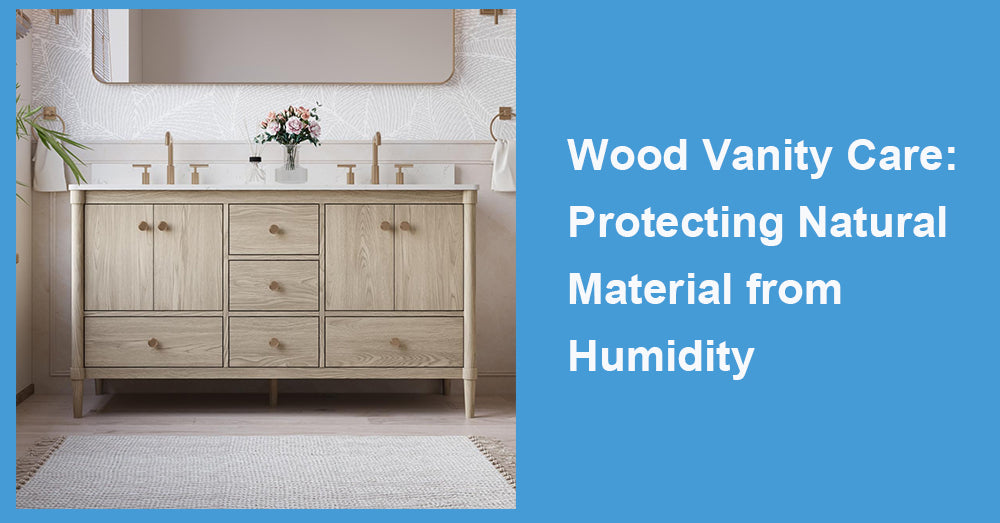
In line with the trend of bathroom design that emphasizes natural textures and a warm touch, wood vanity remain an important element in high-end and classic spaces. Whether it's a 36-inch single-basin structure or a 60-inch or 72-inch double-basin layout, natural wood can add unique textures and layers to the space. However, the bathroom is exposed to high humidity and alternating cold and hot environments for a long time. Without scientific protection, wooden cabinets may experience problems such as expansion, cracking, warping, and even mold growth. Industry material testing data shows that when the environmental humidity remains above 65% for a long time, the probability of deformation of solid wood panels without sufficient sealing treatment increases by about 35% -40%. Therefore, understanding the impact of humidity on wood and taking systematic maintenance measures is key to extending its service life.
1. Physical reactions of wood under humidity changes
Natural wood has moisture absorption and release properties. When air humidity rises, wood fibers absorb moisture and expand; when humidity decreases, they shrink. Research has shown that under environmental changes in which humidity increases from 40% to 70%, the width of solid wood panels may change by approximately 1/16 inch to 1/8 inch. If this natural variation is not accounted for in the structural design, it may lead to cabinet door misalignment or drawer jamming.
Modern bathroom cabinets typically have a standard height of 34-36 inches and a depth between 18-22 inches. In large cabinet structures above 60 inches, the horizontal span is relatively large, and stable internal support and moisture-proof structure design are more needed.
2. Material structure selection: Comparison between solid wood and composite structure
The current wooden bathroom cabinets on the market mainly include three structures:
All-solid-wood structure
Solid wood frame+multi-layer board box
Solid wood veneer structure
The data show that the combination of a solid wood frame and a moisture-proof multi-layer board provides better stability in a fluctuating humidity environment, with a deformation rate about 20% lower than that of all solid wood structures. This structure retains the natural wood grain texture while enhancing overall moisture resistance.
In high-humidity areas, it is recommended to avoid using cabinet designs with unsealed backboards, as open structures are more likely to absorb moisture.
3. The importance of surface sealing coating
The moisture resistance of wooden bathroom cabinets largely depends on the surface sealing process. Common coatings include:
Multi-layer polyurethane waterproof paint
Water-based moisture-proof paint
Natural oil wax protective layer
Experimental data show that wood treated with three or more layers of polyurethane sealing can increase its resistance to water vapor penetration by about 30% -35%. A high-quality sealing layer can form a waterproof barrier on the wood's surface, reducing moisture from entering the fibers.
If there are minor scratches or peeling coating on the cabinet's surface, they should be repaired promptly to avoid local discoloration caused by water vapor infiltration.
4. Humidity control: key environmental factors
The ideal humidity range for a bathroom is typically 40% to 60%. If the peak humidity after showering exceeds 70%, the exhaust system should be turned on promptly. Data shows that continuous ventilation for 20-30 minutes after showering can reduce the peak humidity by approximately 15% -25%.
For windowless bathrooms, installing high-efficiency exhaust fans is particularly important. Maintaining air circulation not only protects wooden cabinets but also helps extend the lifespan of hardware components.
Excessive winter drying can also affect wood. If the humidity remains below 35% for a long time, it may cause the wood to shrink and crack. Therefore, stabilizing humidity is more important than simply reducing humidity.
5. Daily cleaning and waterproofing details
The surfaces of wooden cabinets should be designed to prevent long-term water accumulation. After washing hands, wipe away water droplets promptly, especially around the faucet and basin edges.
Neutral cleaning agents should be used during cleaning to avoid products containing strong acids, alkalis, or ammonia components. Data shows that long-term use of irritating cleaning agents can accelerate coating aging and shorten service life by about 15%.
If the cabinet width is 36 inches or more, it is recommended to check for signs of expansion at the joint regularly.
6. Internal space moisture-proof management
The depth inside the drawer is usually between 14 and 18 inches. If wet towels or wet items are stored, it will accelerate the accumulation of internal humidity.
Suggestion:
Do not put wet items directly into the drawer.
Regularly open the door for ventilation.
Place moisture-proof and moisture-absorbing bags inside the cabinet.
Data shows that maintaining internal air circulation can reduce the risk of mold growth by about 30%.
7. Hardware and structural stability
Humidity not only affects wood but also affects hinges and slides. It is recommended to check the hardware connection parts every 6-12 months and use an appropriate amount of anti-rust lubricant.
For 60-inch or 72-inch double basin structures, attention should be paid to whether there is a slight sinking in the middle support area. A timely adjustment can prevent long-term deformation and expansion.
8. Avoid heat sources and direct sunlight
If the bathroom is equipped with heating equipment, ensure that it is at least 6 inches away from the cabinet. Long-term heating may cause wood to dry and crack.
Meanwhile, direct sunlight can also cause surface fading. Matte glass or curtains can help reduce the impact of ultraviolet rays.
9. Regular maintenance and refurbishment
High-quality wood vanities recommend surface care every 2-3 years, such as applying protective oil or lightly waxing. If an oil wax coating structure is used, the maintenance frequency can be appropriately increased.
Data shows that regular maintenance can extend the overall service life of wooden cabinets by more than 20%.

10. Conclusion
Wooden bathroom cabinets combine natural beauty and functional value, but require scientific maintenance in high-humidity environments. By stabilizing humidity, strengthening ventilation, protecting coatings, and ensuring proper cleaning, the risk of deformation and aging can be significantly reduced.
A wood vanity is not unsuitable for bathrooms, but it does require a systematic protective strategy. As long as material characteristics and environmental management are considered in design and daily use, natural wood can maintain stability and elegance in damp spaces for a long time, achieving a balance between natural materials and modern lifestyles.









































Leave a comment
This site is protected by hCaptcha and the hCaptcha Privacy Policy and Terms of Service apply.