






















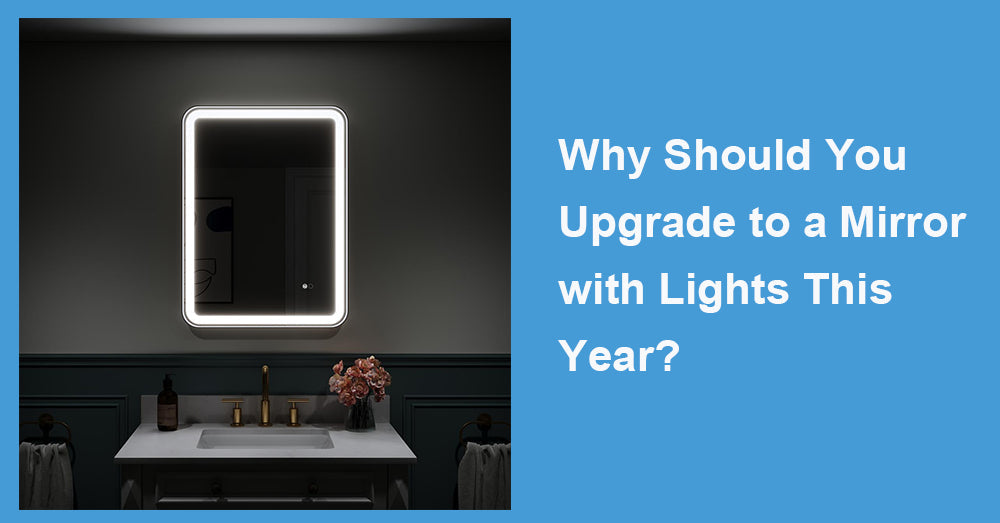
A mirror with lights can change the way a bathroom works more than many homeowners expect. It brings focused illumination closer to your face, reduces awkward shadows, and can replace some of the separate lighting fixtures that often crowd the vanity wall. After working with bathroom products and renovation layouts for years, I have found that illuminated mirrors are most valuable when they solve a real lighting problem rather than being chosen simply because they look modern.
1. Why a Mirror with Lights Can Improve Everyday Routines
Traditional bathroom lighting often comes from the ceiling or from a fixture mounted above the mirror. That setup can work, but it commonly creates shadows beneath the eyes, nose, and chin.
Integrated mirror lighting places illumination closer to face level. For shaving, skin care, applying makeup, trimming facial hair, or inserting contact lenses, that difference is easy to notice.
It also simplifies the wall. Instead of combining a mirror with separate sconces or a large vanity bar, one fixture can handle both reflection and task lighting.
This is especially useful in compact bathrooms where every inch of wall space matters.
2. A Mirror with Lights Gives You Better Control Over Brightness
One of the biggest improvements in newer illuminated mirrors is lighting control.
Many models now include dimming, which is far more useful than it sounds. Bright light can help during detailed grooming in the morning, while lower brightness is more comfortable late at night.
Some mirrors also allow you to change color temperature. Warm light creates a softer feel, while neutral or cooler light can make facial details easier to see.
From a buying perspective, I consider dimming more useful than decorative effects. If your budget is limited, prioritize good brightness control before paying for extra features you may rarely use.
Color Temperature Matters More Than Many Buyers Expect
A common mistake is choosing a mirror based on how bright it looks in product photos.
Brightness is only part of the equation. Light that is too warm may distort how makeup colors appear, while very cool light can make the bathroom feel harsh.
For daily grooming, a neutral setting is often the most practical. If you like softer lighting at night, a model with adjustable color temperature gives you more flexibility.
3. It Can Make a Bathroom Feel Brighter and More Open
Mirrors already help distribute light by reflecting it around the room. Integrated LEDs add another layer.
In a small bathroom or one with limited natural light, an illuminated mirror can reduce dark areas around the vanity and make the room feel more open.
That does not mean one mirror will replace every other light source. Ceiling lighting is still useful for general illumination, especially in larger bathrooms.
The best result usually comes from layered lighting: ceiling light for the room, mirror lighting for the face, and optional accent lighting where needed.
4. Modern Features Can Be Useful, but Not All Are Necessary
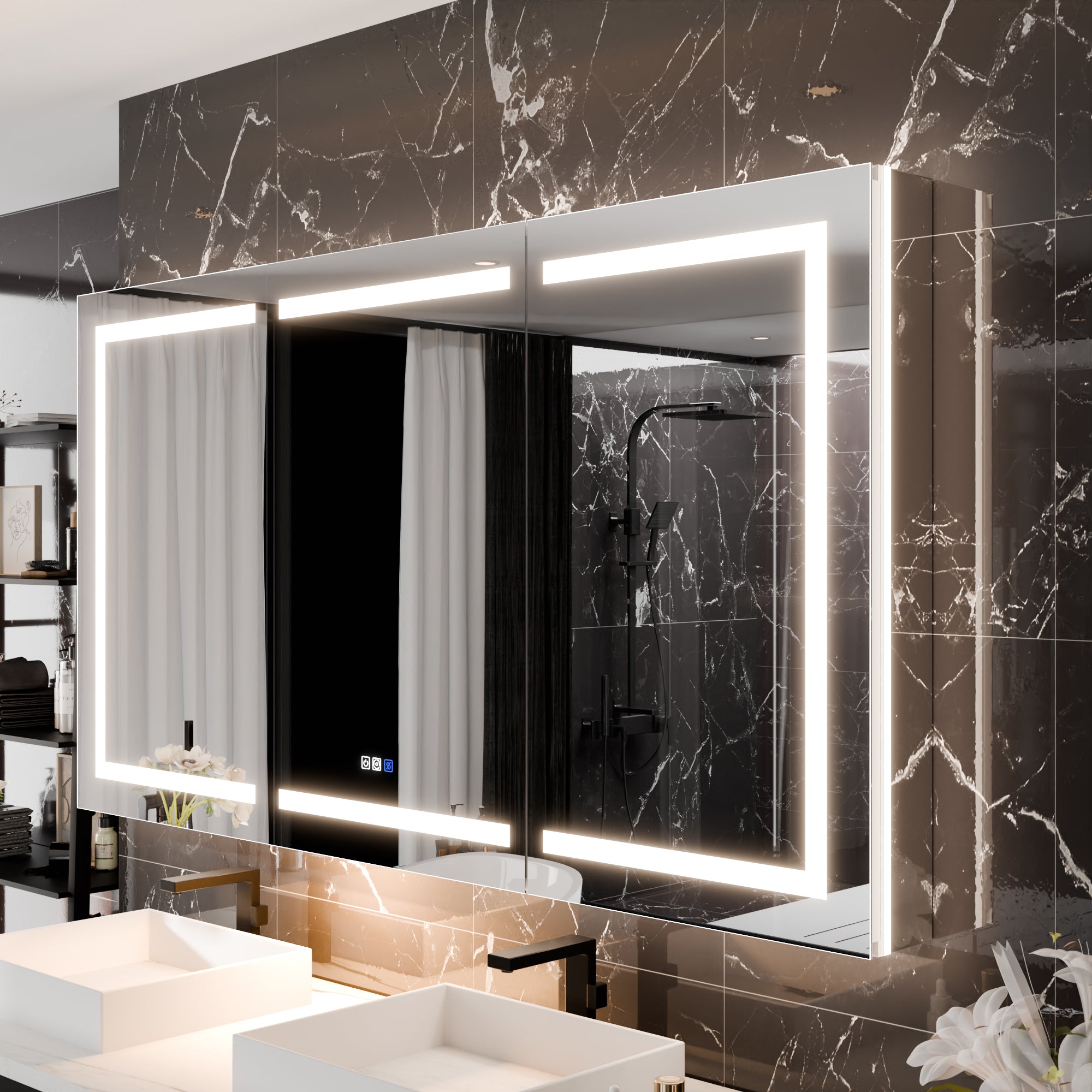
Defogging is one of the features buyers ask about most often. It can be very convenient in bathrooms where hot showers regularly leave the mirror covered in condensation.
Touch controls are another popular option. They create a cleaner surface and eliminate visible switches, though some people still prefer traditional wall controls.
Memory functions can also save time by returning the mirror to your preferred brightness or color setting.
Still, more technology creates more components that can eventually need service. A basic illuminated mirror may actually be a better choice if you value simplicity and long-term ease of use.
When an Illuminated Mirror May Be More Than You Need
Not every bathroom benefits from one.
If you already have well-positioned sconces on both sides of the mirror, your facial lighting may already be excellent. Replacing that arrangement with an illuminated mirror may offer more visual change than practical improvement.
It may also be unnecessary in a powder room where grooming tasks are minimal.
Buy for how the space is used, not just for how the fixture looks in a showroom.
5. Installation Deserves Careful Planning
A standard mirror can often be hung with basic wall hardware. A lighted model may require more preparation.
Hardwired versions need an appropriate electrical connection behind the mirror. Because bathrooms are wet environments, installation should follow applicable electrical requirements.
Before ordering, measure the vanity width, available wall height, outlet locations, backsplash, faucet height, and nearby cabinets.
I also recommend checking whether the mirror needs to sit flush against the wall. Uneven tile or decorative trim can sometimes interfere with mounting.
At Wellfor, choosing the correct size should be treated as seriously as choosing the features. A mirror that is too narrow can look undersized above the vanity, while an oversized one may crowd surrounding fixtures.
6. Energy Use Is Usually Reasonable
LED lighting is generally efficient and produces less heat than older incandescent lighting.
That makes an illuminated mirror practical for daily use, especially if it replaces several conventional vanity bulbs. Dimming can reduce consumption further when maximum brightness is unnecessary.
Still, built-in lighting is not free energy. Leaving the LEDs or defogging function running all day wastes electricity.
Use the features when you need them and switch them off when you leave the room.
7. Maintenance Is Simple If Moisture Is Controlled
Clean the glass with a soft microfiber cloth and a nonabrasive cleaner. Instead of spraying liquid directly across the mirror, apply cleaner to the cloth first. This reduces the chance of moisture collecting around edges, touch controls, or electrical components.
Bathroom ventilation matters too. An exhaust fan helps control condensation and protects the mirror, cabinetry, hardware, and painted surfaces.
Check the mirror occasionally for loose mounting points or damaged seals, especially in heavily used bathrooms.

8. How to Choose the Right Upgrade This Year
Start by identifying the problem you want the mirror to solve. If your current vanity area is too dark, look for strong front lighting. If morning and nighttime routines require different light levels, prioritize dimming and adjustable color temperature.
Measure carefully before buying and decide whether you want a hardwired or plug-in installation. Then consider features such as defogging, memory settings, and touch controls.
A mirror with lights is worth upgrading to when it improves visibility, simplifies your vanity wall, and makes daily routines easier. Choose the lighting quality first, the useful features second, and the decorative details last. That approach usually leads to a mirror you will appreciate long after the novelty wears off.








































Leave a comment
This site is protected by hCaptcha and the hCaptcha Privacy Policy and Terms of Service apply.