














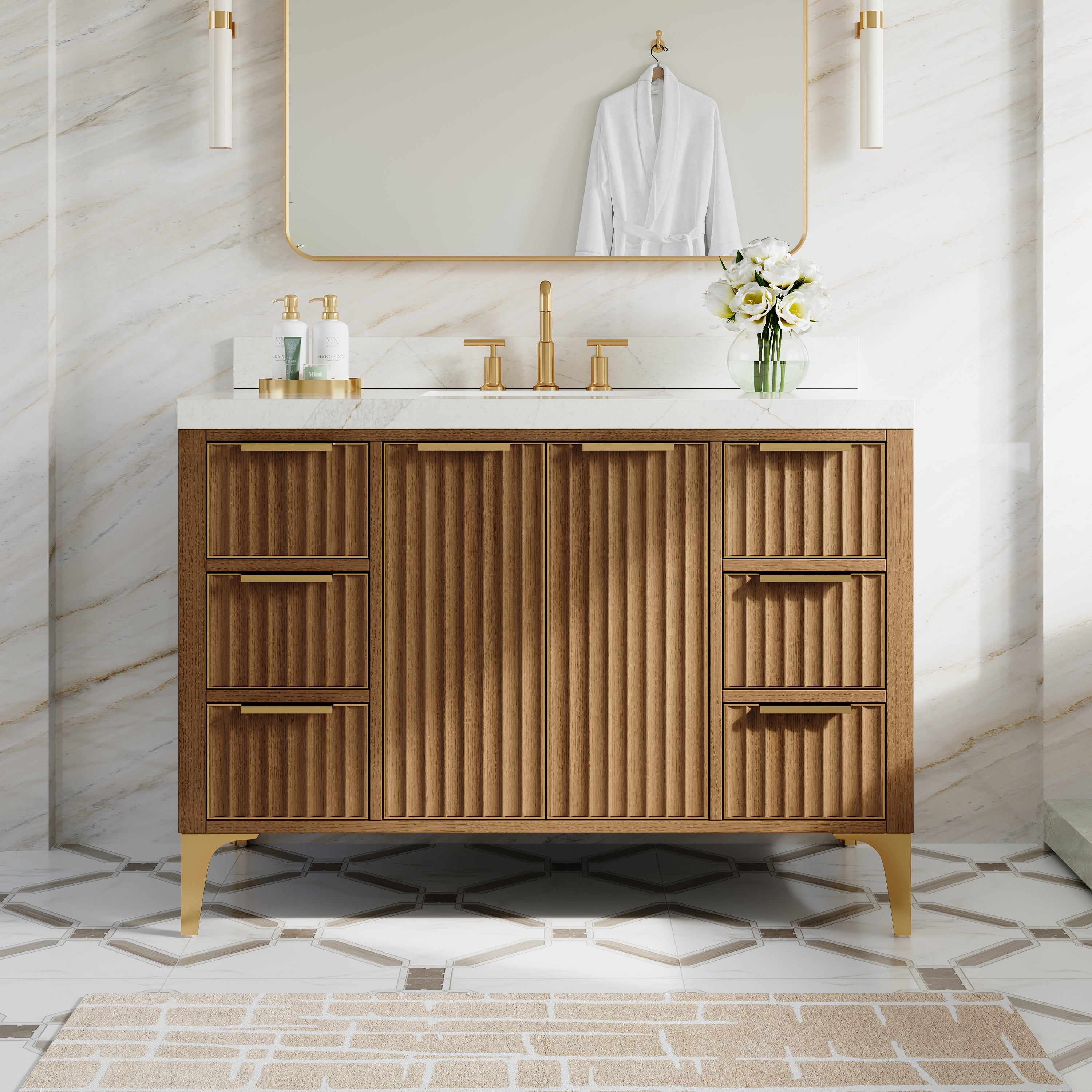
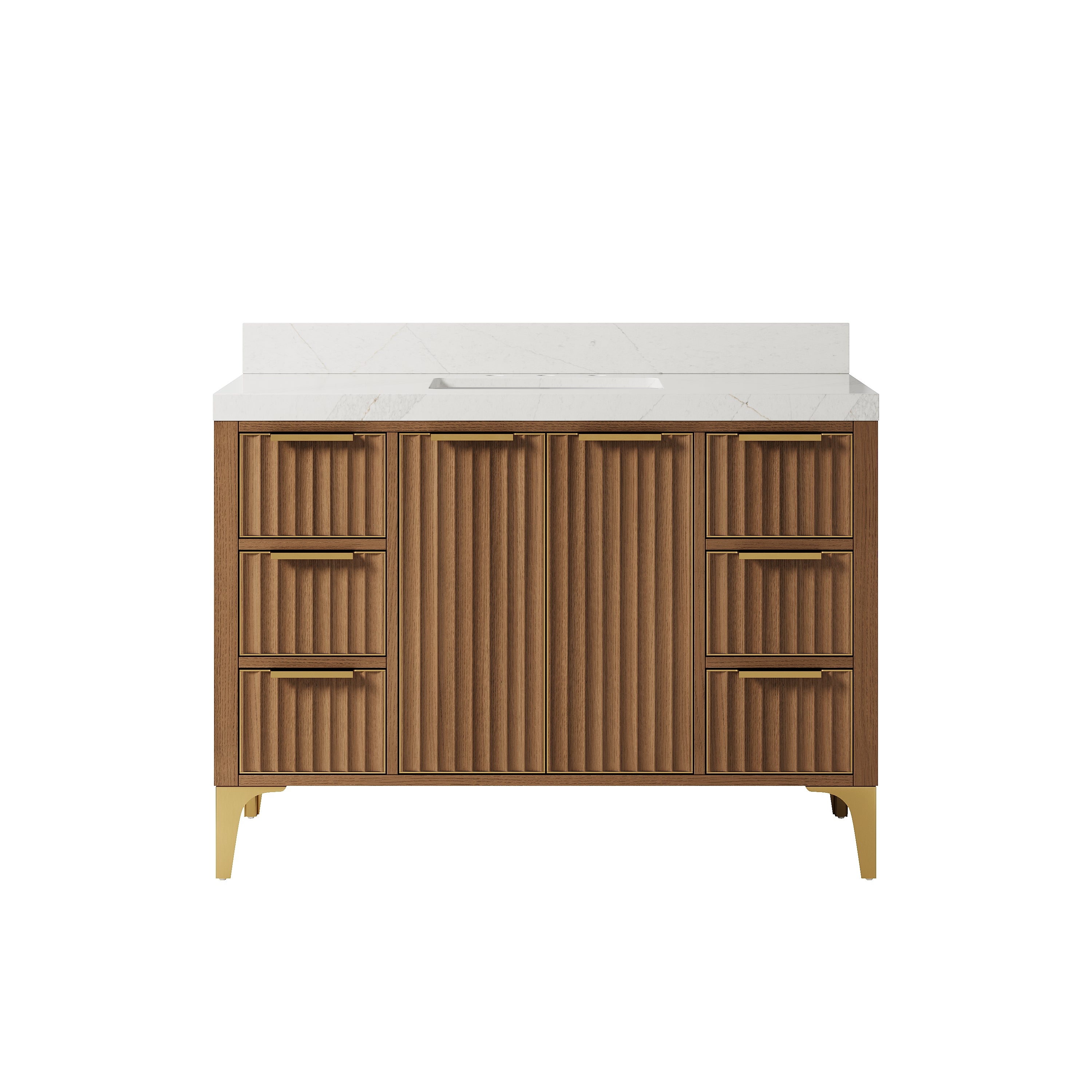


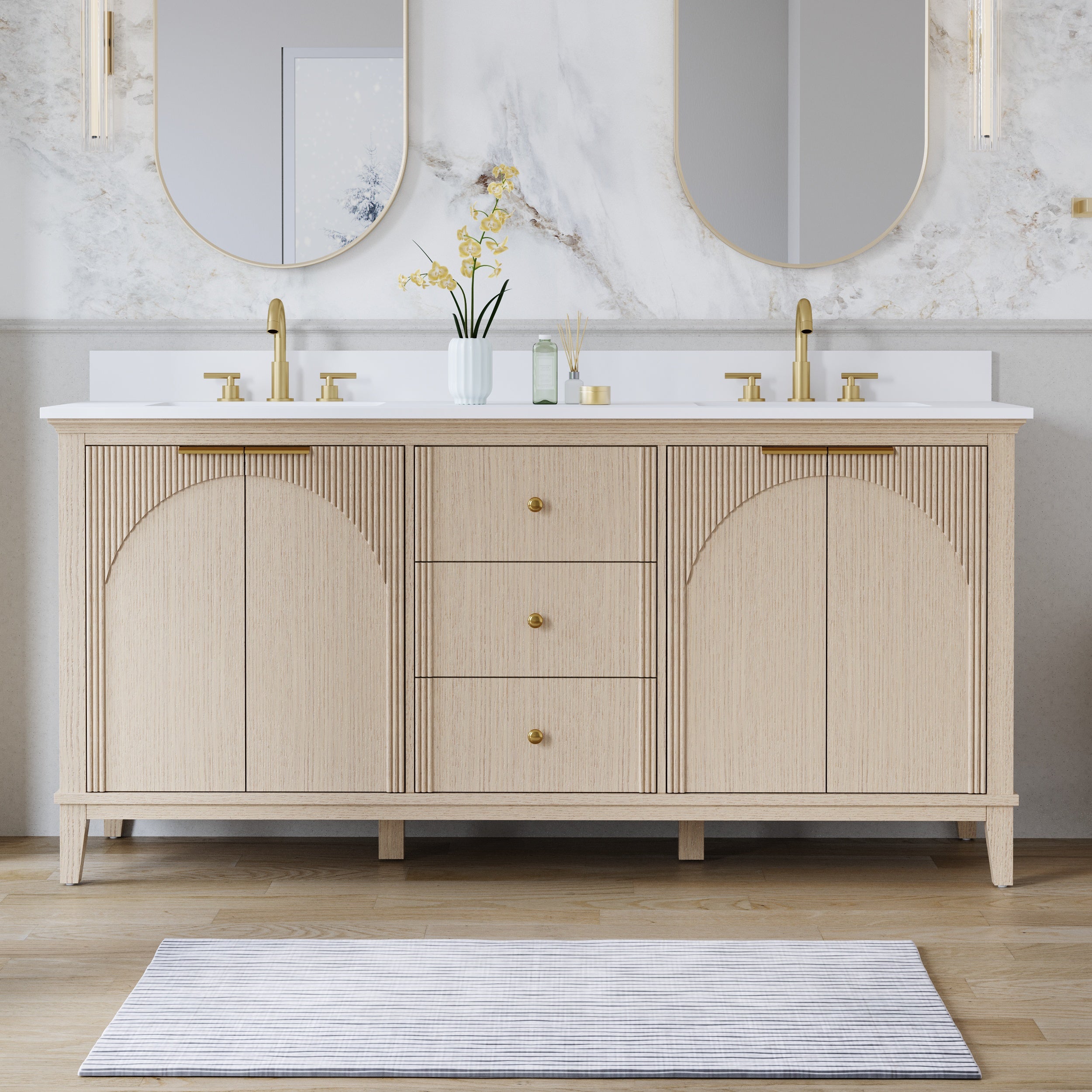
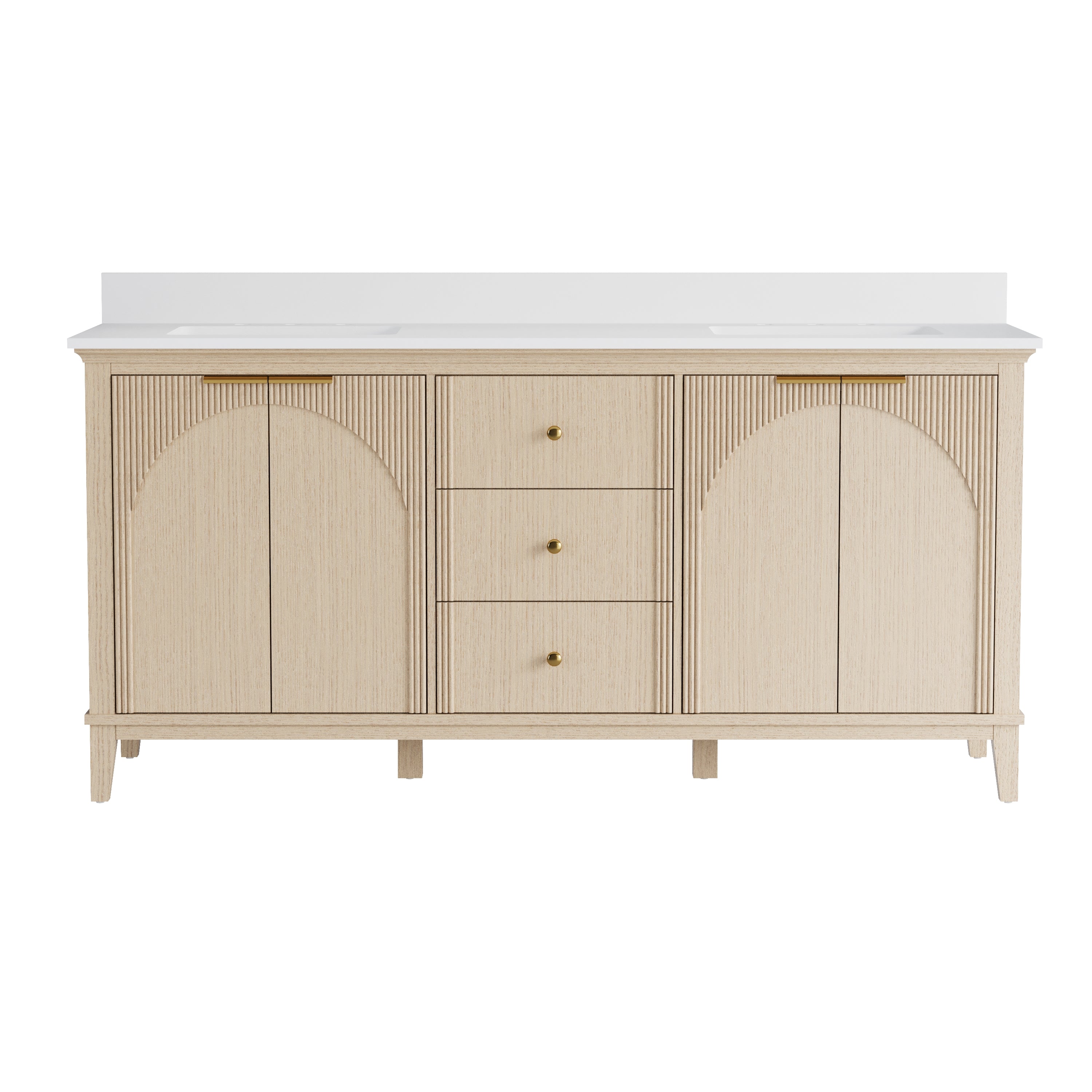
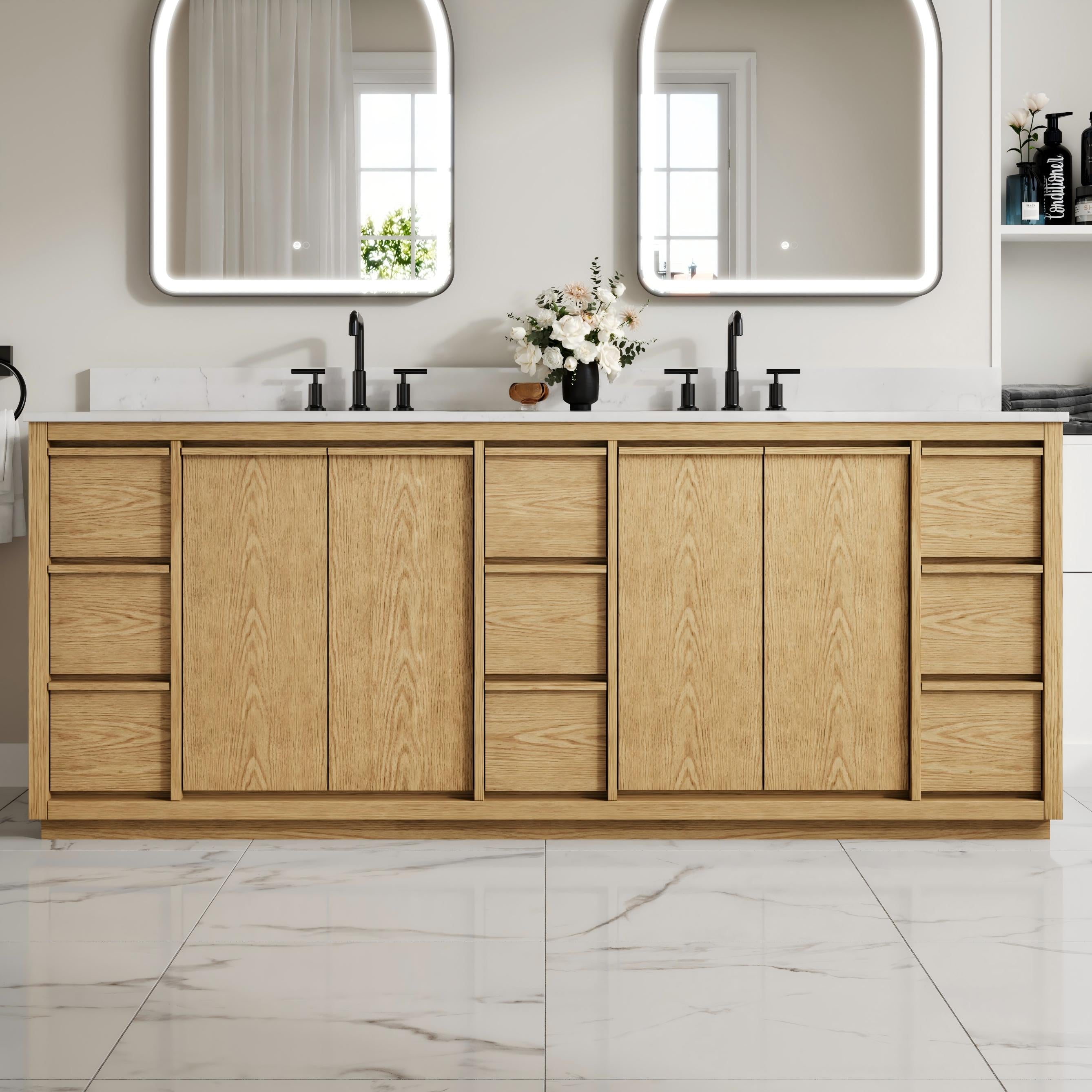
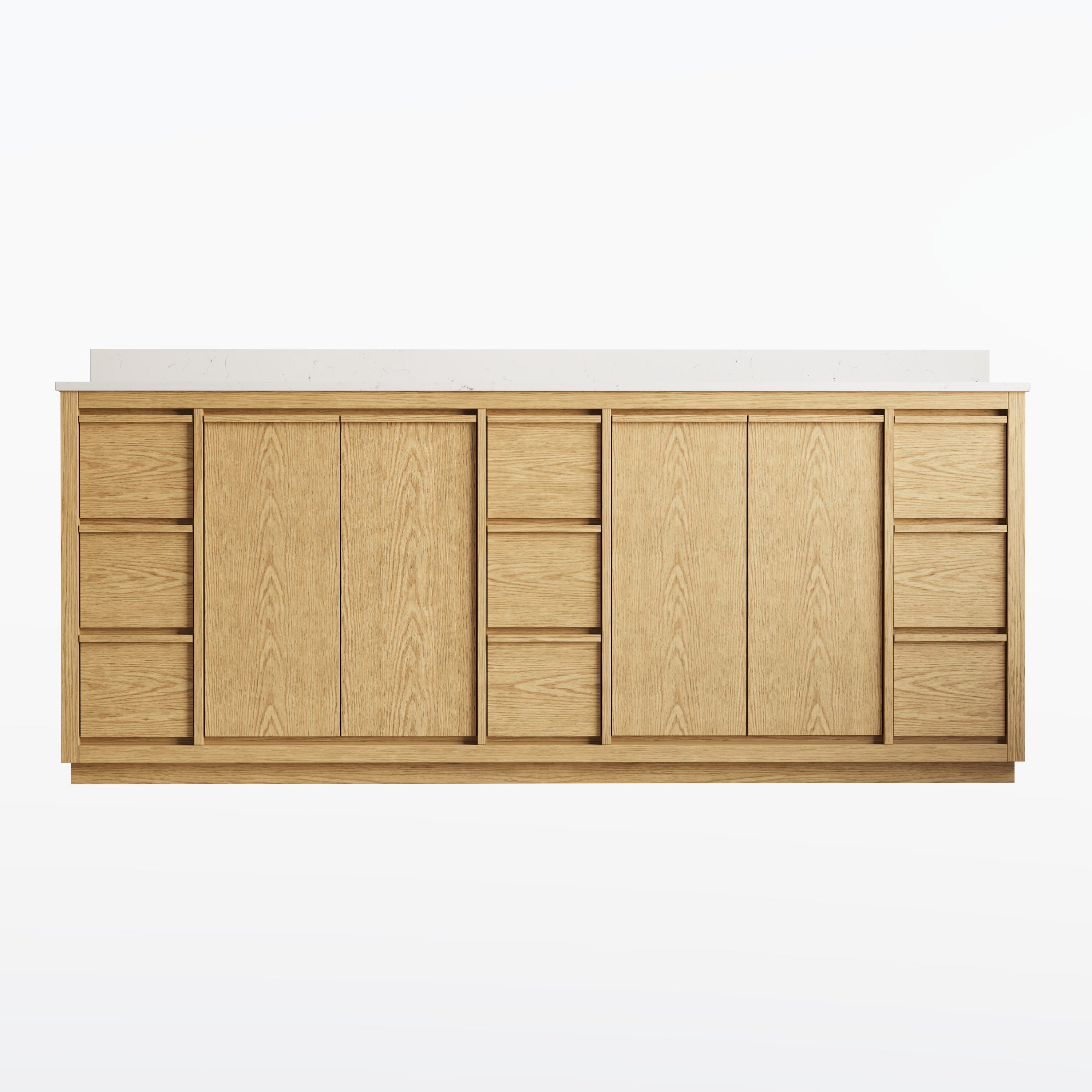

Bathroom vanities in wood bring warmth, texture, and a sense of permanence to rooms that are otherwise dominated by tile, glass, metal, and stone. During more than 20 years of evaluating bathroom cabinetry, I have seen wood vanities work successfully in compact guest baths, busy family bathrooms, and spacious primary suites. Their appeal goes beyond appearance. When properly constructed and installed, they can offer durable storage, repairable surfaces, and a design that remains relevant long after fashionable paint colors begin to feel dated.
Wood is not the correct choice for every project, though. Its performance depends on material quality, moisture protection, ventilation, and the way the bathroom is used.
1. Bathroom Vanities in Wood Make Bathrooms Feel More Inviting
Bathrooms often contain several hard, reflective surfaces. While those materials are practical, combining too many of them can make a room feel cold or impersonal. Wood changes that balance.
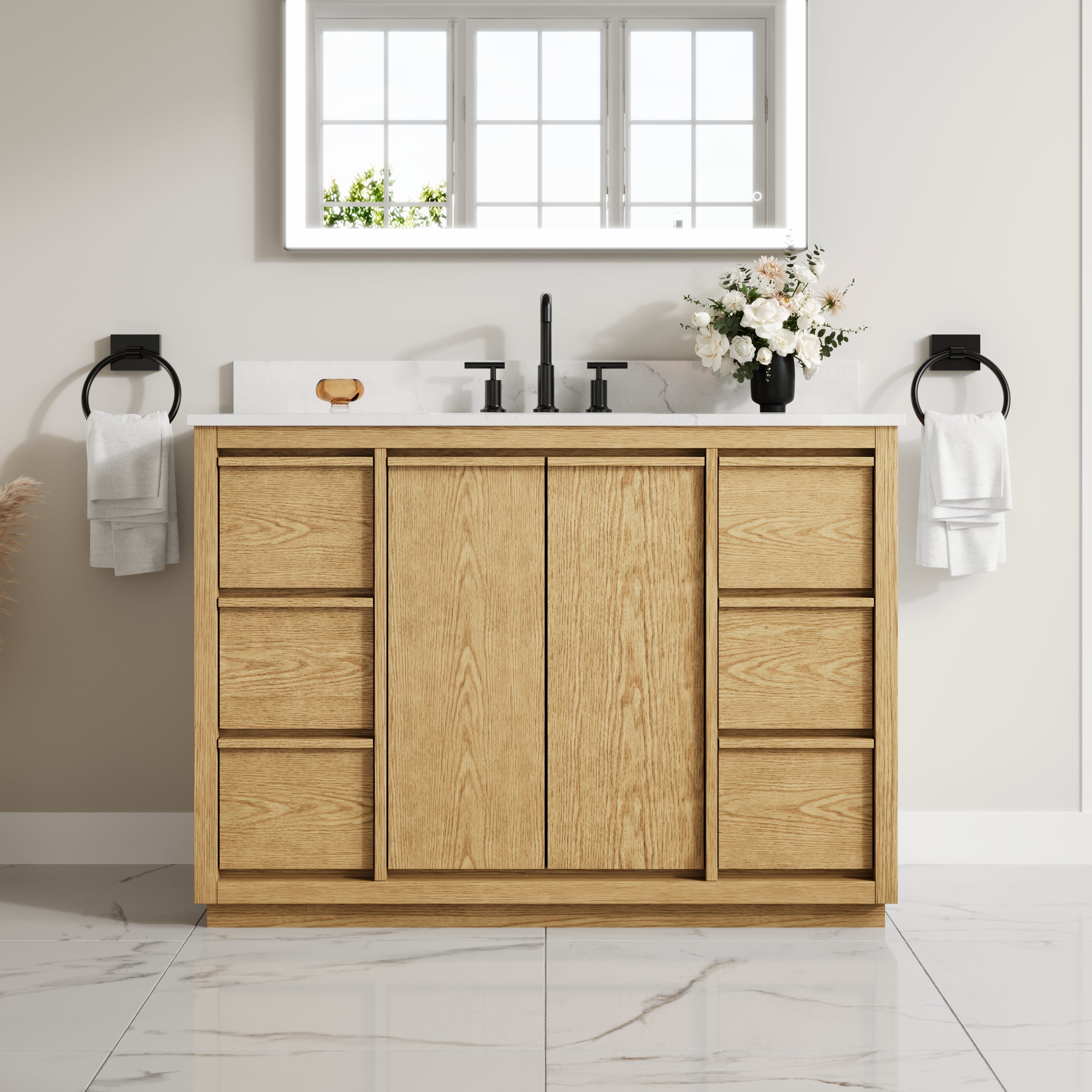
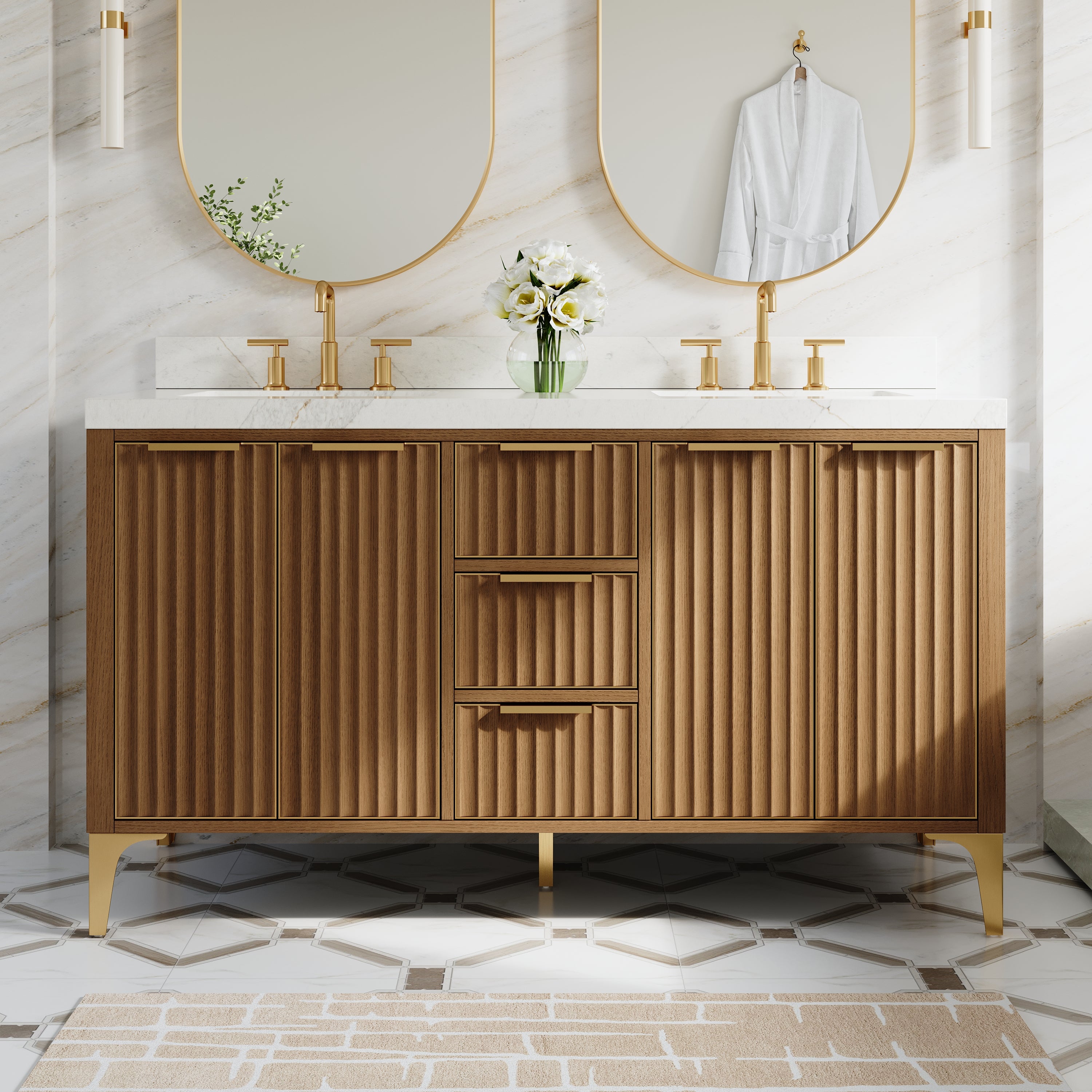
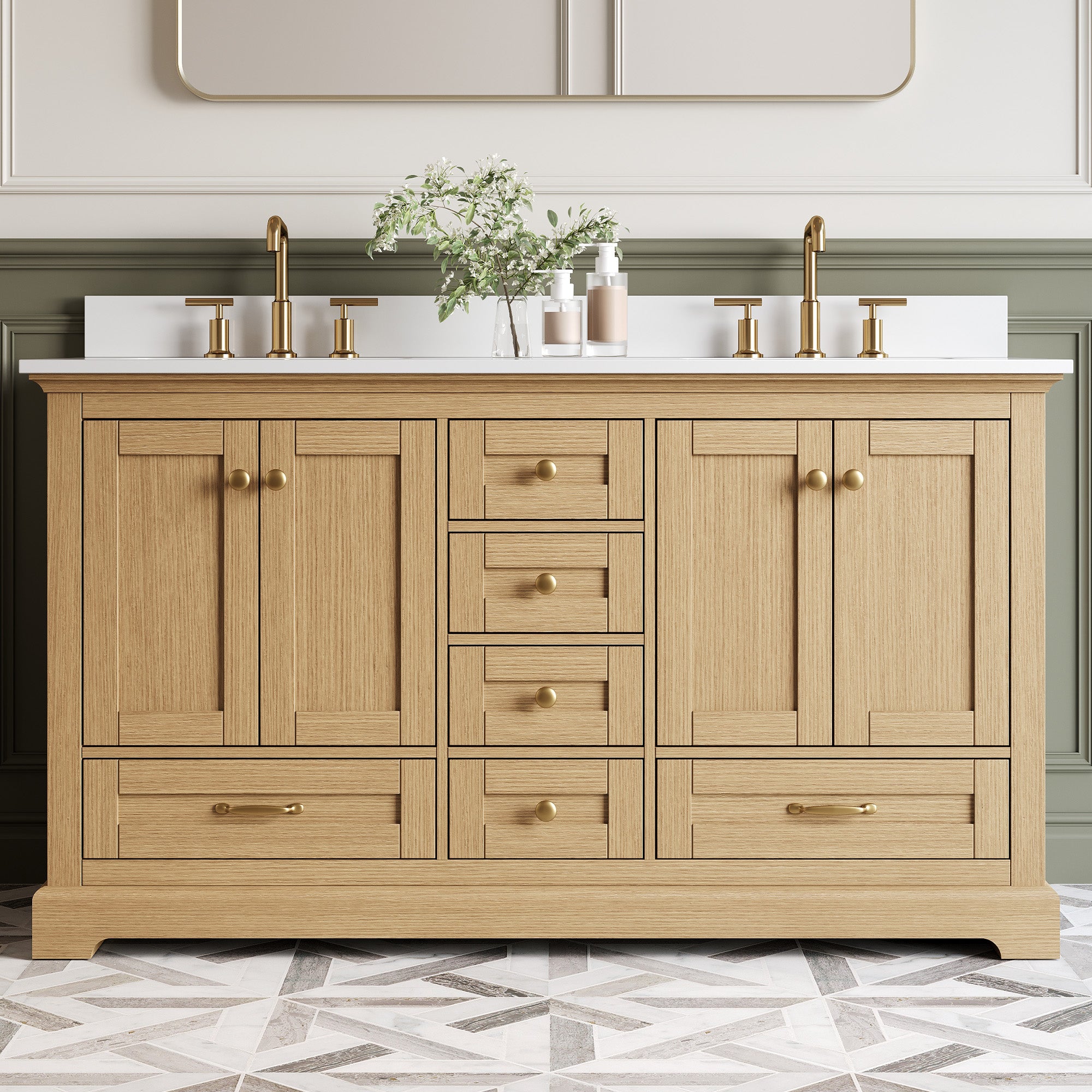
A light oak vanity can soften white tile and a frameless shower enclosure without making a smaller room feel heavy. Walnut creates depth in a larger primary suite. Medium wood tones work especially well in transitional bathrooms, where modern fixtures need to sit comfortably beside more traditional architecture.
This is one reason wood cabinetry continues to appear across organic-modern, Scandinavian, Japandi, farmhouse, and transitional renovations. The same material can feel minimal or substantial depending on the grain, finish, door profile, and mounting style.
In my experience, homeowners are often happier with a vanity that complements the character of the house rather than one chosen solely because it appeared in a trend photograph.
2. Wood Offers Long-Term Design Flexibility
A well-selected wood tone can adapt to future changes in the bathroom. Hardware can be replaced, walls can be repainted, and mirrors can be updated without forcing the owner to change the vanity.
Light wood pairs naturally with warm white walls, soft gray tile, and brushed nickel. Medium walnut works with brass, black, or chrome fixtures. Darker finishes can create a stronger focal point when the room has enough natural or artificial light.
Do not assume every wood finish is neutral
Wood has undertones. Some oak finishes appear golden, while others lean gray or beige. Walnut may look rich and warm in daylight but much darker under cool overhead lighting.
One of the most common mistakes I see is choosing the vanity independently from the floor and countertop. Order a finish sample when possible, or compare detailed photographs under lighting similar to the bathroom. A beautiful vanity can still feel misplaced when its undertone conflicts with the surrounding materials.
3. Quality Wood Construction Can Last for Years
Durability is one of the strongest reasons to choose bathroom vanities in wood, but the word “wood” alone does not guarantee quality.
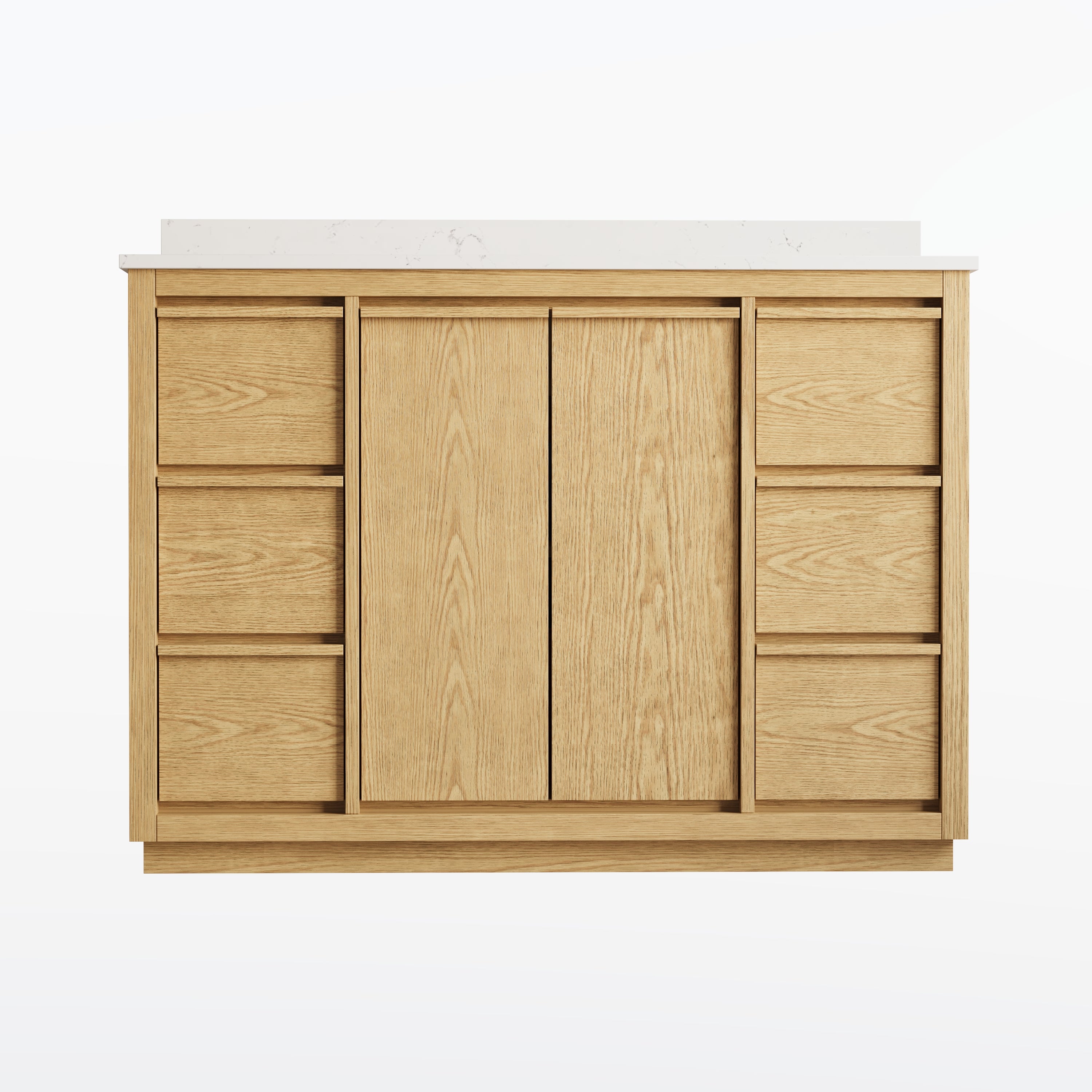
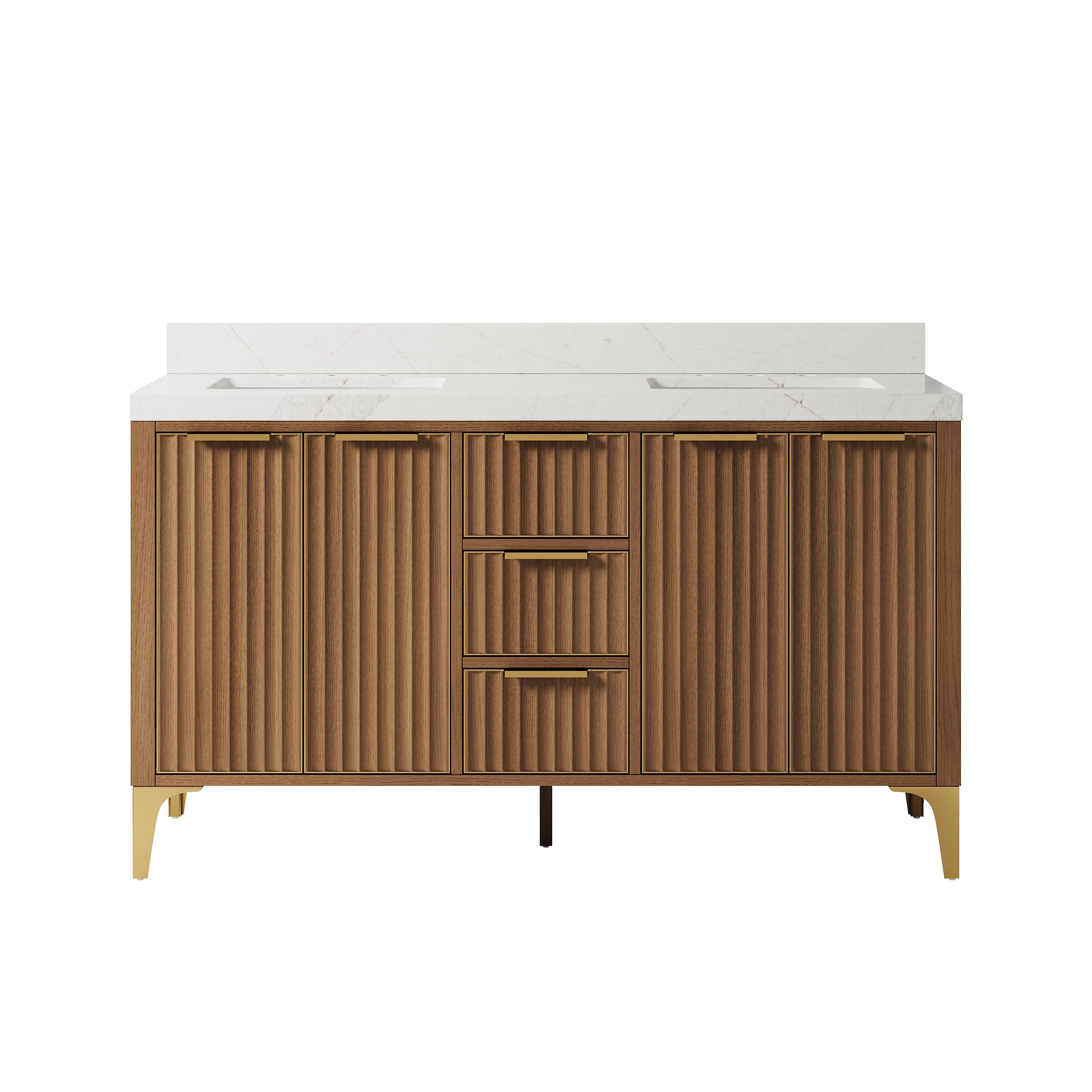
Solid wood frames and drawer fronts can provide strength and hold hardware securely. Quality plywood is often a practical choice for cabinet boxes because it tends to remain stable as humidity changes. Well-made veneers over a durable core can also perform successfully.
What I avoid is poorly sealed particleboard, thin drawer bottoms, exposed edges, and vague product descriptions that do not identify the cabinet materials. Once water reaches a weak composite core, swelling can happen quickly and is difficult to repair.
Good wood cabinetry has another advantage: minor damage may be repairable. Scratches can sometimes be touched up, hinges can be replaced, and certain finishes can be renewed. A chipped laminate surface is usually less forgiving.
Wood is not waterproof
Even premium cabinetry can suffer when water is allowed to stand around the sink or when a plumbing leak remains hidden. Natural wood may also expand or contract slightly as humidity changes.
This does not make wood unsuitable for bathrooms. It means the room needs working ventilation, properly sealed surfaces, and basic care. Buyers looking for a completely maintenance-free cabinet may prefer another material.
4. Storage Design Should Match Daily Routines
The finish attracts attention, but the interior layout determines whether the vanity is pleasant to use.
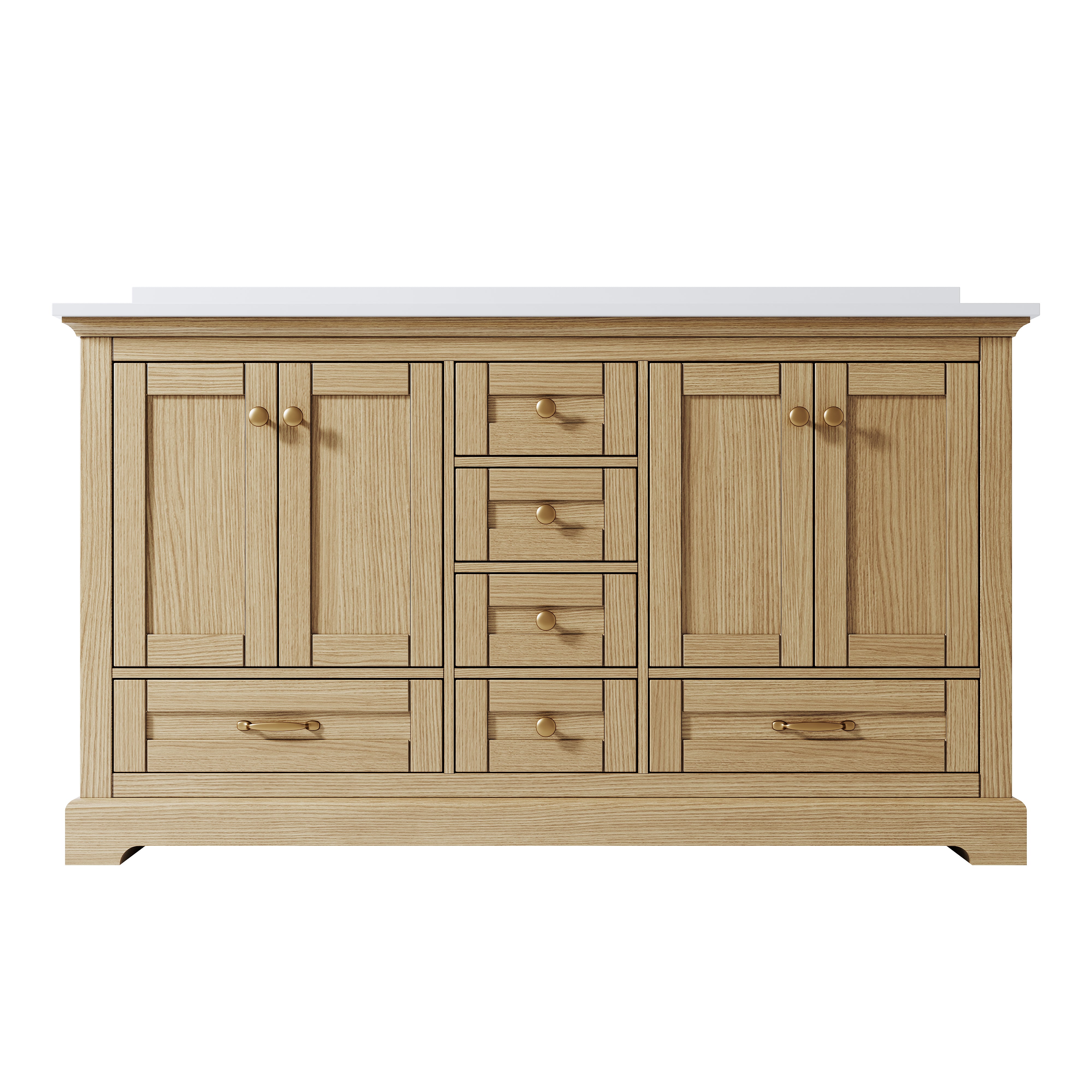
In a family bathroom, deep drawers are useful for hair tools, cosmetics, skincare, and smaller toiletries. Cabinet space beneath the sink works better for taller bottles, cleaning supplies, and extra paper goods. A guest bath may need less daily storage but more room for spare towels.
Do not count drawer fronts without checking the interior. Some are decorative because the sink occupies the space behind them. Plumbing cutouts can also reduce usable capacity.
Floating wood vanities make the floor easier to clean and help compact bathrooms feel more open. Their drawback is reduced storage height. Freestanding models usually provide more cabinet space and are easier to install over existing plumbing, although they can feel bulky in narrow rooms.
5. Know Where Wood Works Best
Wood vanities are well suited to ventilated primary bathrooms, family baths, and guest rooms where homeowners want natural warmth and long-term design flexibility. They are especially effective in bathrooms with large areas of white, gray, or stone-look surfaces that need visual softness.
They may not be the best choice in a wet room, a poorly ventilated basement bathroom, or a space where water frequently reaches the cabinet base. A rental property with inconsistent maintenance may also benefit from a more moisture-tolerant surface.
Size matters as well. A deep furniture-style vanity can overwhelm a narrow bathroom even when its width fits the wall. Measure the cabinet depth, countertop overhang, drawer clearance, toilet spacing, and doorway before ordering.

6. Install and Maintain the Vanity Properly
The cabinet must be level so doors and drawers remain aligned. The countertop, sink, and backsplash joints should be sealed continuously, and all plumbing connections should be tested before the storage areas are filled.
Floating models require secure wall framing or an approved mounting system. Freestanding vanities should be protected from standing floor water, particularly around the base and lower edges.
Daily care is straightforward. Run the exhaust fan during showers and leave it operating until the room begins to dry. Wipe water around the faucet and sink rim. Use a soft cloth with a mild, non-abrasive cleaner, and avoid leaving wet towels against the cabinet.
Check the plumbing and cabinet interior several times a year. A small leak found early is easy to repair. The same leak left for months may ruin the cabinet base.
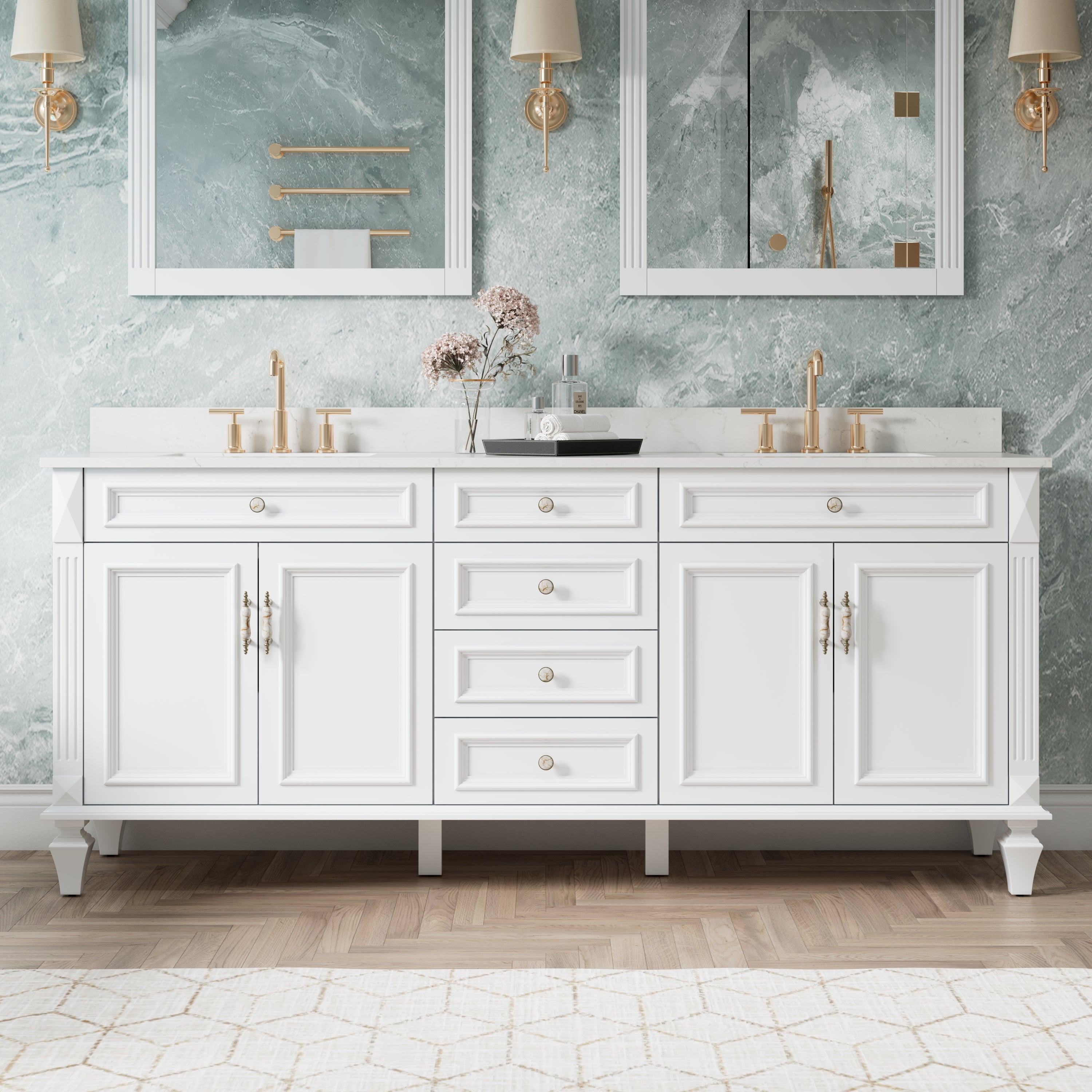
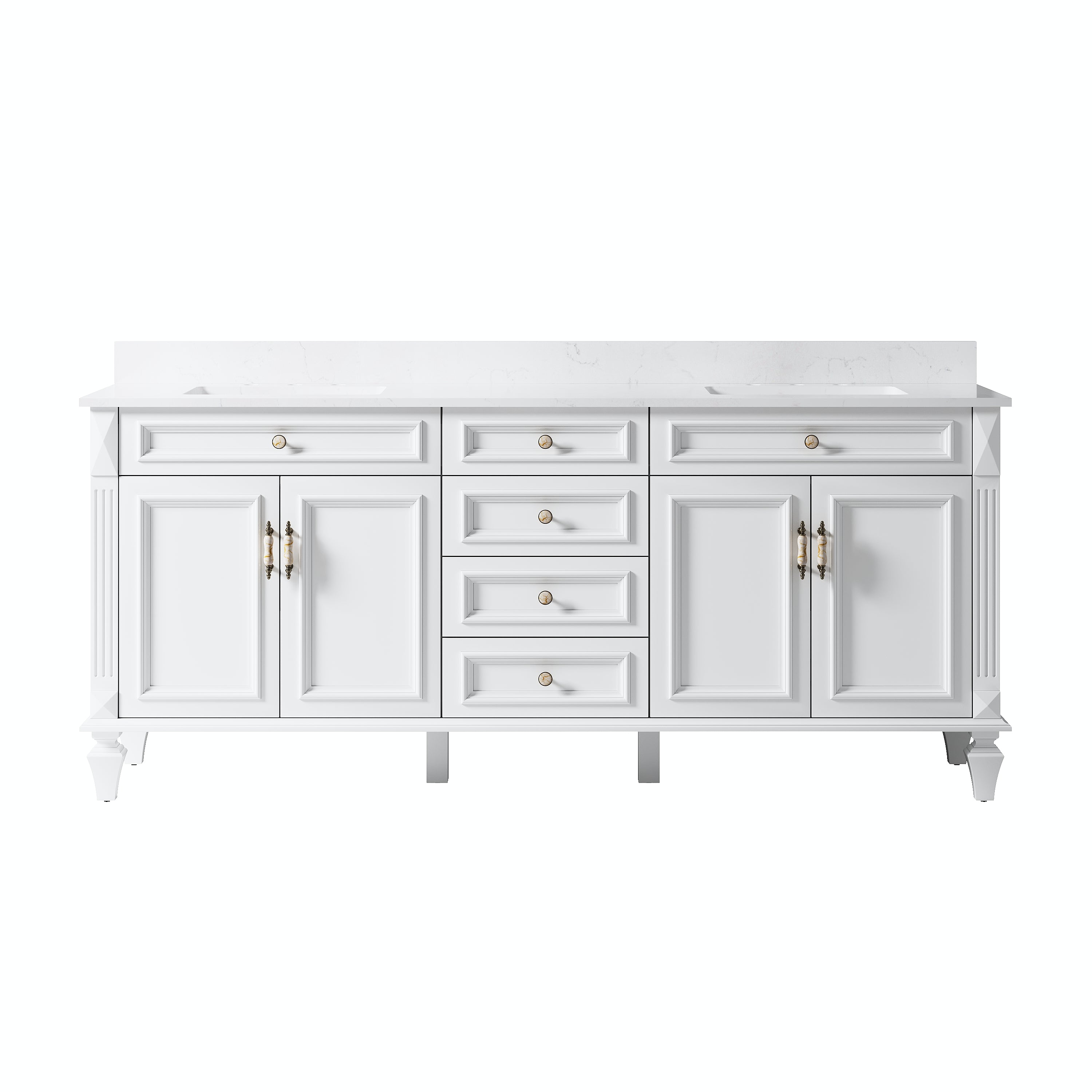
When comparing Wellfor models, start with construction, storage, and moisture protection before choosing the wood tone. Select a size that leaves comfortable movement, make sure the finish belongs with the surrounding materials, and buy for the bathroom’s real workload. Properly chosen and maintained, bathroom vanities in wood can give a remodel warmth, practical storage, and a sense of quality that remains convincing for many years.














Leave a comment
This site is protected by hCaptcha and the hCaptcha Privacy Policy and Terms of Service apply.