






















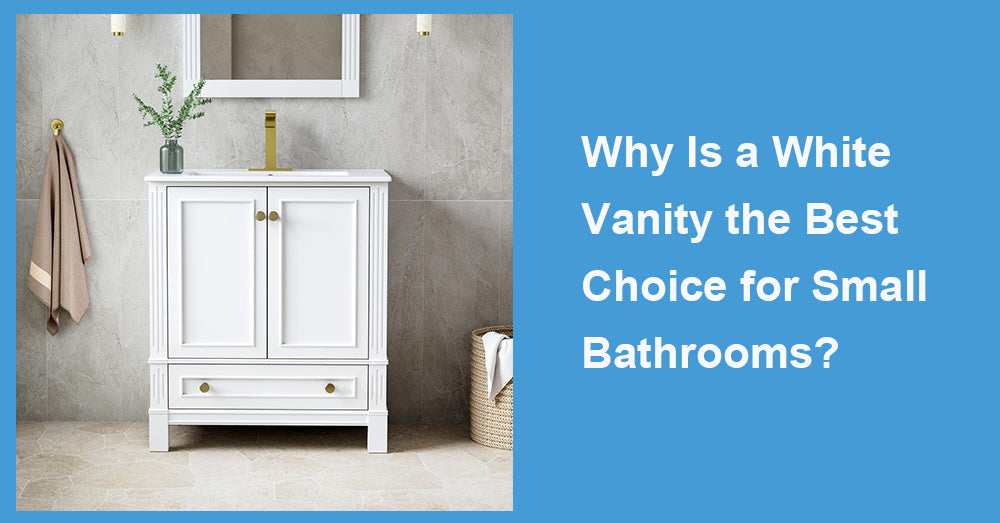
A white vanity is often the safest and most effective choice for a small bathroom because it reduces visual weight without sacrificing storage. After more than 20 years of working with bathroom cabinetry, I have seen the same pattern repeatedly: dark or oversized cabinets can make a compact room feel tighter, while a well-proportioned white vanity helps the space feel brighter, calmer, and easier to navigate. The color alone is not magic, but it gives a small bathroom a flexible foundation.
The best results come from combining the right white finish with sensible dimensions, useful storage, and a cabinet style that does not overwhelm the room.
1. A White Vanity Makes a Small Bathroom Feel More Open
White reflects light more effectively than darker finishes. In a bathroom with one small window—or no window at all—that can make a noticeable difference. The cabinet appears to recede instead of forming a heavy block along the lower half of the wall.
This visual effect is especially useful in powder rooms, apartment bathrooms, narrow guest baths, and older homes where expanding the floor plan is not realistic. A white cabinet cannot create more square footage, but it can help the room feel less enclosed.
I have seen small bathrooms improve dramatically without changing the tile or plumbing. Replacing a dark, furniture-style cabinet with a simpler white model often makes the mirror, walls, and flooring feel more connected.
2. Why a White Vanity Works With More Materials
Small rooms have little tolerance for mismatched finishes. Every material is visible at once, so the vanity needs to cooperate with the countertop, floor, wall color, faucet, mirror, and lighting.
A white vanity works with many common bathroom materials. It pairs easily with gray-veined quartz, warm beige stone, ceramic tops, black fixtures, chrome, brushed nickel, and soft brass. It also gives patterned tile room to stand out without making the space feel busy.
Not every white finish is the same
One common mistake is treating white as a single color. Some finishes are cool and crisp. Others have cream, gray, or warm beige undertones.
A bright white cabinet may look harsh beside ivory tile. A warmer white can appear yellow under cool LED lighting. When possible, compare a finish sample with the countertop and flooring before ordering. Lighting temperature should be considered too.
The wrong undertone will not make the vanity unusable, but it can keep the bathroom from feeling settled.
3. Storage Becomes More Important in a Small Room
A compact bathroom cannot afford wasted cabinet space. The vanity often has to store toiletries, toilet paper, cleaning products, grooming tools, and extra towels, all within a limited footprint.
Deep drawers are usually more useful than one large open cabinet. They keep smaller items visible and prevent bottles from disappearing behind the plumbing. A cabinet with adjustable shelves can also work well, especially when taller products need to stand upright.
Do not judge storage by the number of drawer fronts. Some top drawers are decorative because the sink sits behind them. Others have large plumbing cutouts that leave less usable room than the exterior suggests.
For a busy family bathroom, I would prioritize functional drawers over decorative legs or elaborate molding. In a lightly used powder room, the storage needs may be modest enough to allow a more streamlined design.
4. Floating and Freestanding Designs Create Different Effects
A floating white vanity is one of the strongest options for a very small bathroom. By exposing the floor beneath the cabinet, it allows the eye to travel farther across the room. It is also easier to clean underneath.
The drawback is storage. Wall-mounted designs may have less cabinet height, and installation requires secure wall support. Plumbing must be positioned carefully so pipes do not interfere with drawers or remain visibly exposed.
A freestanding white vanity usually offers more storage and can be easier to install over existing plumbing. It may suit traditional and transitional bathrooms better. Still, bulky legs, deep side panels, and a heavy base can make a narrow room feel crowded.
Depth may matter more than width
Homeowners often concentrate on cabinet width and overlook projection into the room. A 30-inch vanity that is 22 inches deep may feel more intrusive than a slightly wider shallow-depth model.
Measure the distance from the wall to the front edge of the countertop. Then check the clearance to the toilet, shower door, and bathroom entrance. Use painter’s tape to mark the footprint on the floor before buying. This simple step reveals circulation problems quickly.
5. The Benefits Come With a Few Honest Limitations
A white finish shows toothpaste, makeup, hair dye, and dirty handprints more easily than many wood tones. That can be inconvenient in a children’s bathroom or a heavily used family space.
Poor-quality white paint may chip around corners and handles. Glossy finishes can reveal scratches, while detailed door profiles collect dust in grooves. A smooth matte or satin finish is often easier to live with.
An all-white bathroom can also feel sterile. The solution is not necessarily a different vanity color. Warm lighting, wood accents, textured towels, veined countertops, or a framed mirror can add depth without making the room feel smaller.

6. Installation and Maintenance Protect the Look
Measure the wall in several places because older rooms are not always square. Confirm the countertop width, cabinet depth, plumbing location, drawer clearance, and delivery path before ordering.
The vanity should be installed level so doors and drawers remain aligned. Seal the sink, countertop, and backsplash joints carefully. Even a small plumbing leak can damage the cabinet interior if it remains hidden.
For routine care, use a soft cloth and a mild, non-abrasive cleaner. Wipe colored spills quickly. Remove standing water around the faucet, and run the exhaust fan after showers to control humidity.
When comparing Wellfor options, look for a white vanity with compact proportions, useful drawers, durable construction, and an undertone that belongs with the room. Choose floating when visual openness matters most, or freestanding when storage is the priority. A carefully measured white vanity can make a small bathroom feel brighter and more comfortable while still handling the practical demands of daily use.







































Leave a comment
This site is protected by hCaptcha and the hCaptcha Privacy Policy and Terms of Service apply.