






















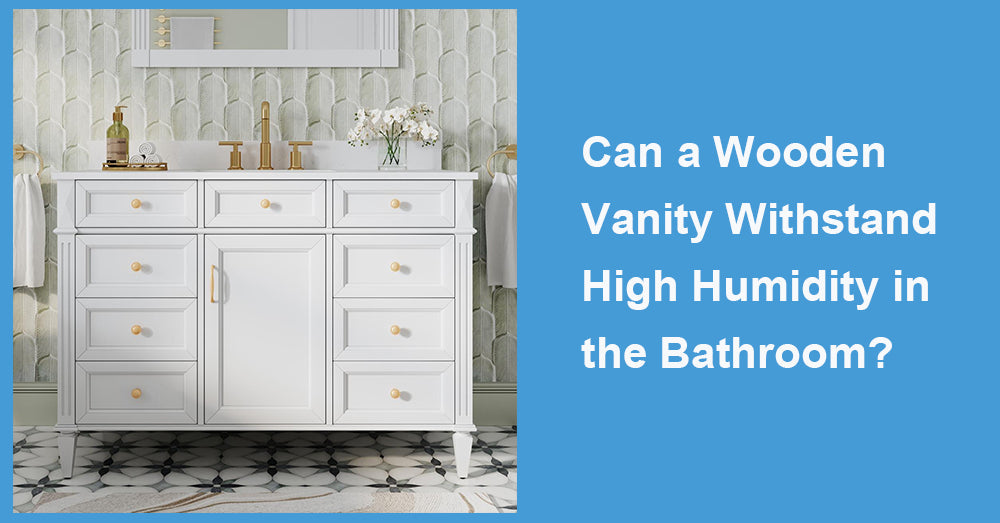
A wooden vanity can withstand high bathroom humidity when it is properly constructed, sealed, installed, and maintained. During more than 20 years of working with bathroom cabinetry, I have seen quality wood vanities remain stable in heavily used primary bathrooms for well over a decade. I have also seen newer cabinets swell within a year because water reached an exposed edge or a slow plumbing leak went unnoticed. Wood is not the problem by itself. Poor materials, weak ventilation, and careless installation usually cause the damage.
1. How High Humidity Affects a Wooden Vanity
Wood is a natural material that responds to moisture in the surrounding air. When humidity rises, it can absorb a small amount of moisture and expand. As the bathroom dries, it releases that moisture and contracts.
Minor movement is normal. Problems begin when the cabinet remains damp for long periods or repeatedly moves between very humid and very dry conditions. Doors may shift out of alignment, drawers can begin to rub, and an unprotected surface may develop rough patches or discoloration.
The bathroom environment is especially demanding because humidity is rarely the only concern. Water splashes around the sink, wet towels touch cabinet faces, and plumbing connections remain hidden inside the cabinet. A vanity must handle all of these conditions at once.
2. What Makes a Wooden Vanity Suitable for Humid Bathrooms?
Construction quality matters more than a fashionable finish. Solid wood offers strength and repair potential, but it may expand and contract as humidity changes. Quality plywood is often a practical choice for cabinet boxes because its layered structure provides good dimensional stability.
Well-made vanities may combine solid wood frames or drawer fronts with plywood panels. That is not a shortcut when the materials are selected carefully. In many cases, the combination performs better in a bathroom than a cabinet built from poorly prepared solid wood.
The finish also plays a major role. Paint, stain, or clear protective coatings should cover the doors, drawer fronts, corners, and exposed edges evenly. Areas around plumbing cutouts and the cabinet base deserve particular attention.
Do not assume “solid wood” means waterproof
This is one of the most common buyer misconceptions. Solid wood can be durable, but it is still vulnerable to standing water and persistent dampness.
A premium material cannot compensate for an unfinished edge, a leaking drain, or an exhaust fan that never clears the steam. Buyers should look beyond the material label and evaluate the complete cabinet.
3. The Advantages and Limitations of Wood
The main advantage is appearance. Wood adds warmth to bathrooms filled with tile, glass, metal, and stone. Natural grain gives the room depth without relying on bold color or decorative patterns.
Wood can also be repairable. Minor scratches may be touched up, hinges can be adjusted, and certain finishes can be renewed. A damaged laminate surface is often harder to restore because the material beneath the outer layer does not match.
There are honest limitations. Wood requires more attention than highly water-resistant synthetic materials. Finish damage should not be ignored. Humidity must be controlled, and plumbing needs occasional inspection.
A wooden cabinet may also be a poor choice in a bathroom where water regularly reaches the floor, such as an open wet room without adequate drainage. In that setting, a wall-mounted vanity or a more moisture-tolerant material may be safer.
4. Where Wood Vanities Perform Best
A wooden vanity is well suited to a ventilated primary bathroom, guest bath, or family bathroom where ordinary splashes are wiped up and the room dries after use.
I often recommend wood in bathrooms where the design needs softness. A light oak vanity can warm up white tile in a compact guest bath. Medium walnut creates a stronger focal point in a spacious primary suite. A painted wood vanity can suit a transitional bathroom while still providing durable construction beneath the finish.
When another material may make more sense
Wood may not be the best choice in a poorly ventilated basement bathroom, a frequently flooded rental, or a space where maintenance is unlikely.
Fix moisture problems before investing in new cabinetry. Replacing the vanity without repairing a weak exhaust system or leaking pipe simply moves the problem to a new cabinet.
5. Installation Details That Prevent Moisture Damage
Installation has a direct effect on longevity. The cabinet should be level so doors and drawers remain aligned. A floating vanity needs secure wall support, while a freestanding model should sit where water cannot collect around its base.
The sink, countertop, and backsplash joints must be sealed continuously. Gaps around the faucet or sink rim allow water to reach the cabinet gradually.
Check the plumbing layout before ordering. Drainpipes and supply lines should fit without requiring large, rough openings in the cabinet. Any newly cut edges should be protected according to the manufacturer’s instructions.
Test every plumbing connection before filling the vanity with towels or toiletries. A slow drip beneath the sink can remain hidden behind cleaning products for months.
6. How to Maintain Wood in a Humid Bathroom
Run the exhaust fan during showers and leave it operating until the mirror clears and the room begins to feel dry. If steam remains for a long time, the fan may be undersized, blocked, or poorly vented.
Wipe standing water around the faucet and sink. Do not hang wet towels over cabinet doors, and avoid placing damp bottles directly into drawers.
Use a soft cloth with a mild, non-abrasive cleaner. Strong bleach solutions, harsh solvents, and abrasive pads may weaken the protective finish. Apply cleaner to the cloth rather than spraying it into door gaps or drawer edges.
Inspect the cabinet several times a year. Look for loose hinges, worn corners, finish chips, damp areas beneath the sink, and staining around plumbing. Small problems are usually easy to correct when found early.

7. What to Look for Before Buying
When comparing Wellfor and other bathroom vanities, review the cabinet-box material, drawer construction, finish coverage, hardware, and edge sealing. Look for clear product specifications rather than vague descriptions such as “premium wood.”
Consider the bathroom’s actual routine. A busy family bath needs durable drawer slides and accessible storage. A guest bath may place more emphasis on appearance and compact proportions.
A wooden vanity can perform reliably in high humidity, but it should be chosen for the environment rather than for wood color alone. Buy a well-sealed cabinet, confirm that the room has dependable ventilation, install it carefully, and treat standing water as something to remove rather than tolerate. With those habits in place, a wooden vanity can retain its structure, function, and natural warmth through many years of bathroom use.









































Leave a comment
This site is protected by hCaptcha and the hCaptcha Privacy Policy and Terms of Service apply.