






















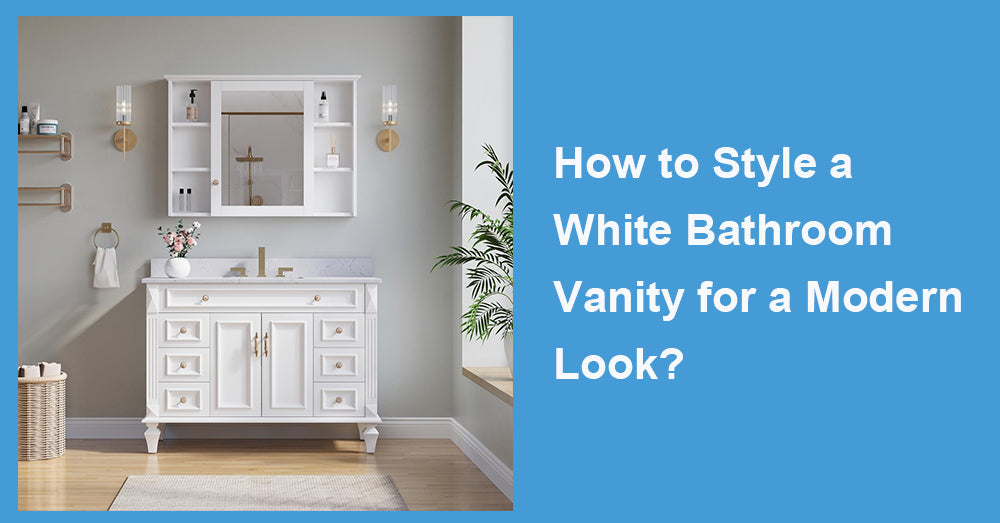
A white bathroom vanity gives a remodel a clean starting point, but the cabinet alone does not create a modern bathroom. After more than 20 years of working with bathroom products and layouts, I have found that the most convincing spaces rely on proportion, restraint, and a careful mix of textures. White cabinetry works because it is visually quiet. That makes it easier to introduce stronger details through the countertop, hardware, mirror, lighting, and surrounding surfaces without making the room feel crowded.
The goal should not be to make every element white. A modern bathroom needs contrast, warmth, and practical storage to keep the design from feeling flat.
1. Start With the Right White Bathroom Vanity Style
Cabinet shape sets the direction for the entire sink area. Flat-front drawers create the cleanest contemporary look because they reduce visual breaks and unnecessary detailing. A simple shaker-style vanity can also feel modern when the frame is narrow and the hardware is restrained.
Floating vanities are particularly effective in compact or spa-inspired bathrooms. By exposing more of the floor, they make the room feel lighter and simplify cleaning underneath. Freestanding models provide more storage and often work better in family bathrooms, though bulky legs and ornate trim can weaken the modern effect.
Pay attention to proportions. A vanity that is too deep can make a narrow bathroom feel compressed, even in white. A cabinet that is too small for the wall may look temporary rather than intentional.
Not every white finish creates the same mood
Cool white works well with gray stone, chrome, and crisp black accents. Warmer white pairs more naturally with beige tile, brass hardware, and wood accessories.
One of the most common mistakes I see is choosing a vanity from an online image without considering the room’s lighting. Warm bulbs can make a bright white finish look creamy, while cool lighting may make an ivory cabinet appear yellow. Compare samples whenever possible.
2. Use the Countertop to Add Depth
A completely plain white top can create a seamless minimalist look, but it may also make the vanity disappear into the room. Subtle veining or a slightly warmer surface usually adds enough depth without disrupting the clean design.
White quartz with soft gray veining is a practical choice for busy bathrooms. It resists stains, requires little maintenance, and works with many hardware finishes. Pale beige or stone-look tops create a softer modern style, especially when paired with natural wood flooring or warm wall tile.
Dark countertops provide stronger contrast. They can look sharp in a larger bathroom, though they may show soap residue and water spots more clearly.
Sink shape matters too. A rectangular undermount sink reinforces clean lines and leaves the countertop easy to wipe. Vessel sinks can make a statement, but they add visual height and may feel crowded on smaller vanities.
3. Choose Hardware That Supports the Design
Hardware is a small detail with a large visual effect. Matte black creates definition and works especially well when the room includes black-framed mirrors or shower enclosures. Brushed nickel feels quieter and tends to age well. Soft brass adds warmth without losing a modern character.
Avoid mixing too many finishes in a compact bathroom. Two coordinated metals can work, but three or four often make the space look unplanned.
Keep handle shapes simple
Slim bar pulls, recessed handles, and understated knobs suit modern cabinetry. Oversized decorative hardware can overwhelm a white vanity and push the room toward a more traditional style.
Before ordering, test how the hardware feels in the hand. A narrow pull may look elegant but become frustrating if it is difficult to grip with wet fingers.
4. Style the Mirror and Lighting as One Composition
A modern vanity area should feel balanced from the countertop to the ceiling. The mirror and lighting need to relate to the cabinet width rather than being selected separately.
A wide rectangular mirror creates a streamlined effect over a single vanity. Rounded corners soften the room and work well with square cabinetry. In a double-sink bathroom, one large mirror can make the space feel unified, while two separate mirrors create more personal zones.
Lighting should be functional before it is decorative. Vertical sconces beside the mirror provide even facial illumination. An LED mirror can reduce visual clutter and work well in smaller bathrooms, especially when the rest of the design is restrained.
Avoid relying only on a bright ceiling fixture. Strong overhead light creates shadows at the face and can make an otherwise polished vanity area feel harsh.
5. Add Warmth Without Adding Clutter
White cabinetry, white tile, and white walls can become sterile if every surface has the same tone and texture. The answer is not more decoration. It is better material contrast.
A wood-framed mirror, woven basket, warm metal faucet, or softly textured towel can make the bathroom feel more comfortable. One or two natural elements are usually enough.
Keep the countertop edited. A soap dispenser, a small tray, and one useful container may be all that is needed. Rows of bottles quickly undermine the clean appearance, even when each item is attractive.
Good storage is essential here. Deep drawers can hold skincare, cosmetics, and grooming tools more effectively than one large cabinet. If everyday products have no assigned place, the vanity will rarely maintain its modern look.
6. Know Where This Style Works Best
A white bathroom vanity is well suited to small bathrooms, windowless guest baths, modern primary suites, and remodels where long-term flexibility matters. It also works well when the room includes patterned tile, strong stone veining, or dark fixtures that need a quiet visual base.
It may be less suitable when the homeowner wants a moody, traditional, or strongly rustic bathroom. White also shows makeup, hair dye, toothpaste, and dirty handprints more readily than many wood finishes.
That visibility can be useful because spills are cleaned sooner, but it does require regular care.

7. Protect the Look Through Installation and Maintenance
Install the vanity level so drawers and doors remain aligned. Seal the sink, countertop, and backsplash joints carefully, and make sure plumbing connections are dry before filling the cabinet.
Use a soft cloth and a mild, non-abrasive cleaner. Wipe colored spills quickly, remove standing water around the faucet, and run the exhaust fan after showers. Avoid harsh scrubbing pads that can dull the finish.
When comparing Wellfor options, start with cabinet proportions, storage, and construction, then build the design through the countertop, hardware, mirror, and lighting. A carefully styled white bathroom vanity should feel clean without feeling empty, modern without becoming cold, and practical enough to stay organized through everyday use.









































Leave a comment
This site is protected by hCaptcha and the hCaptcha Privacy Policy and Terms of Service apply.