
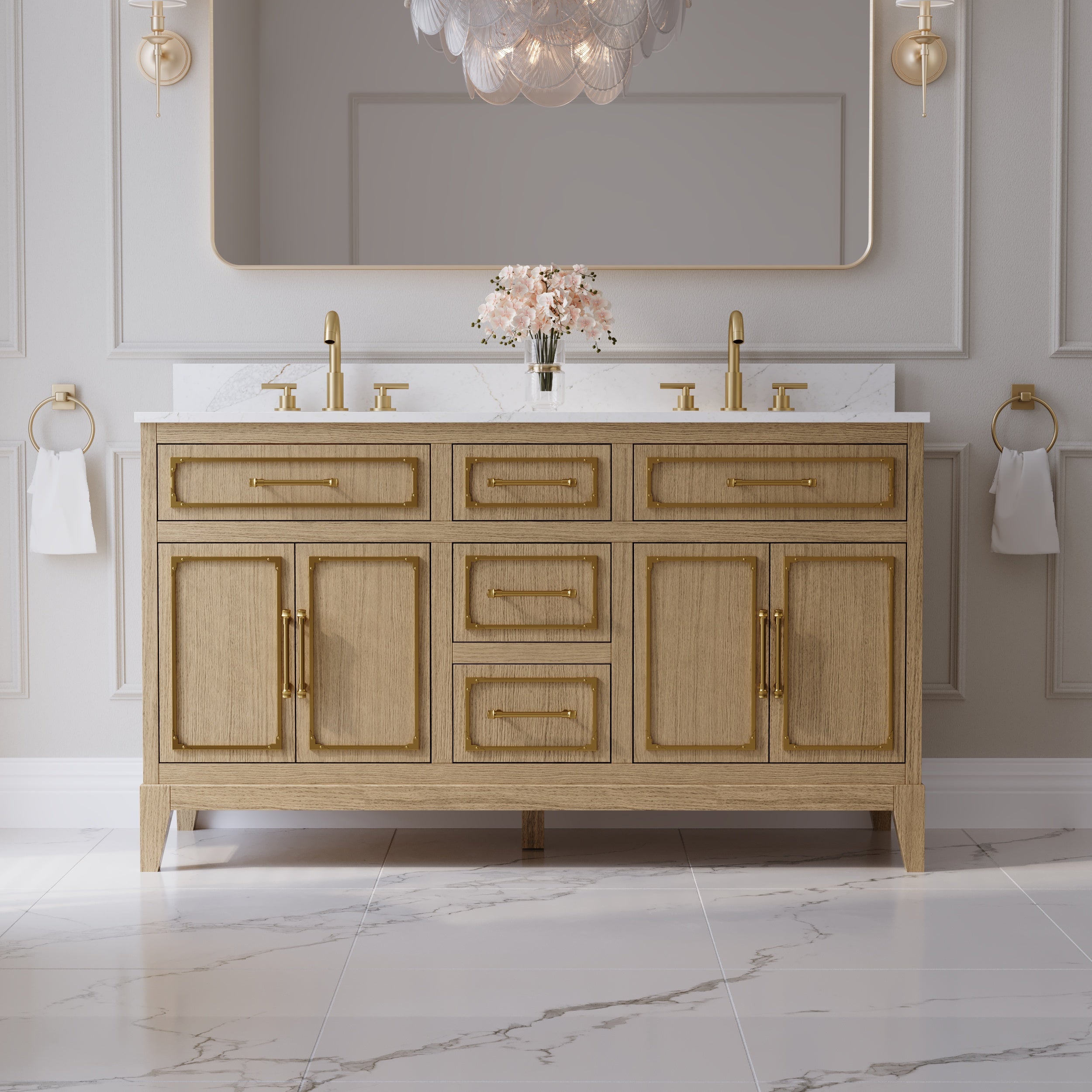
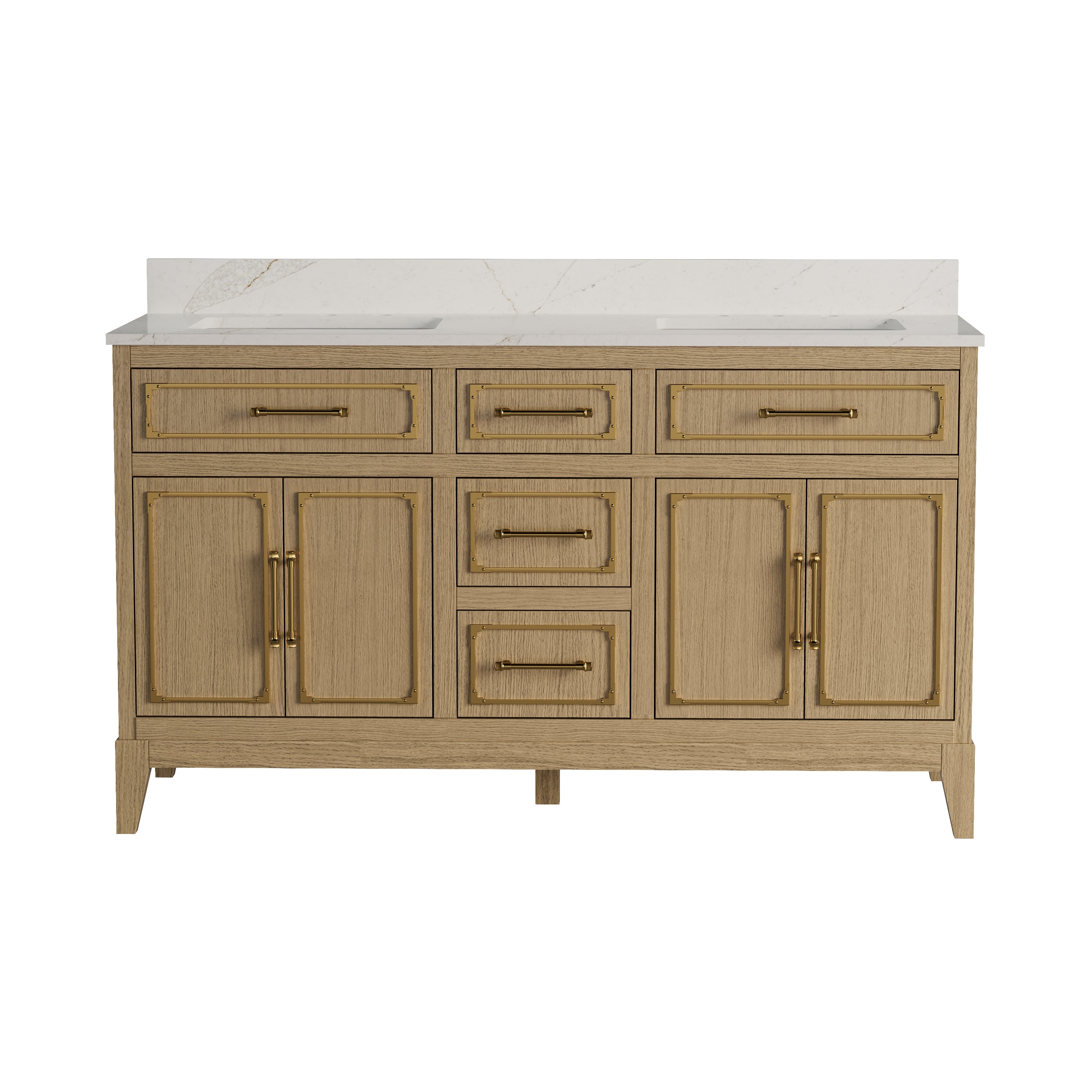
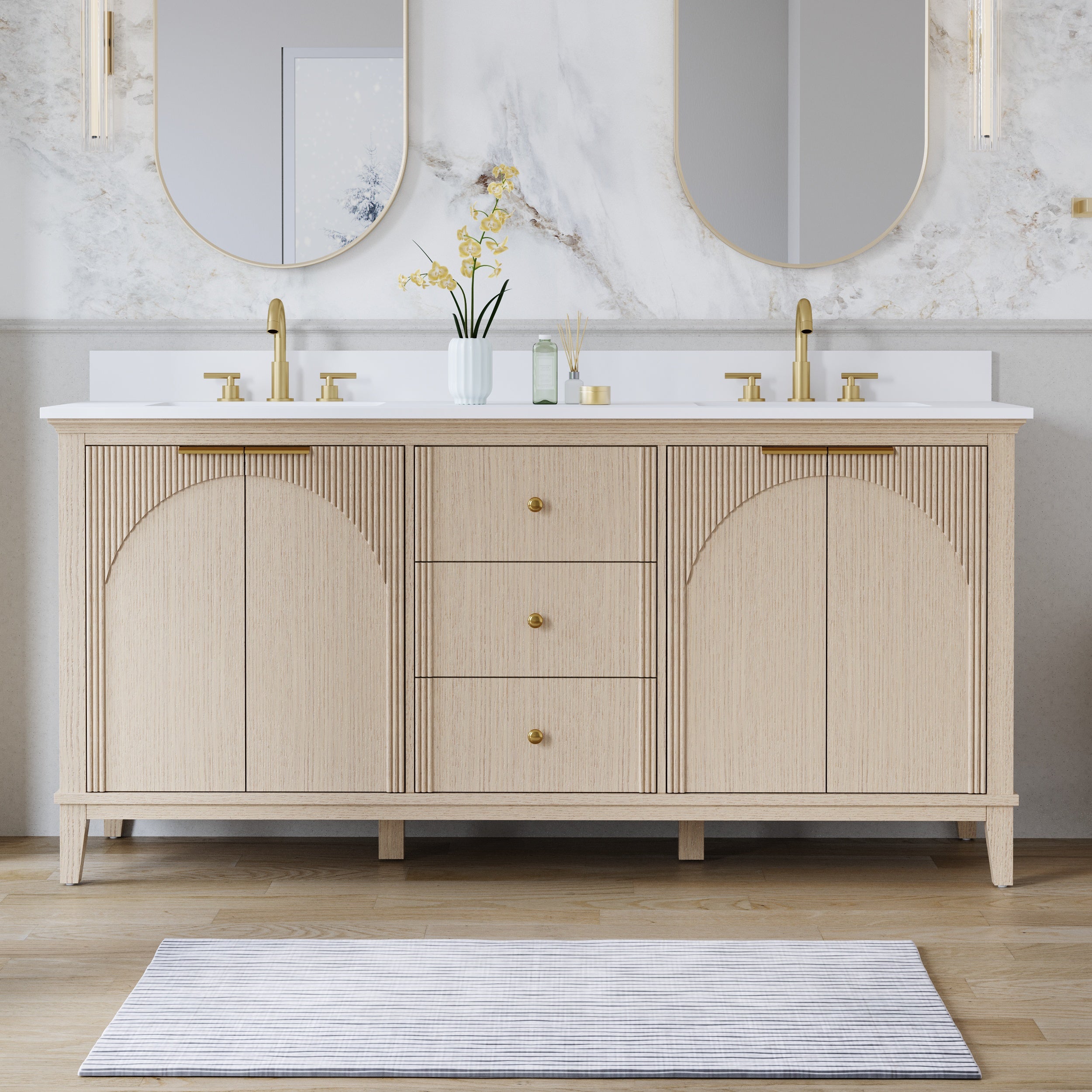
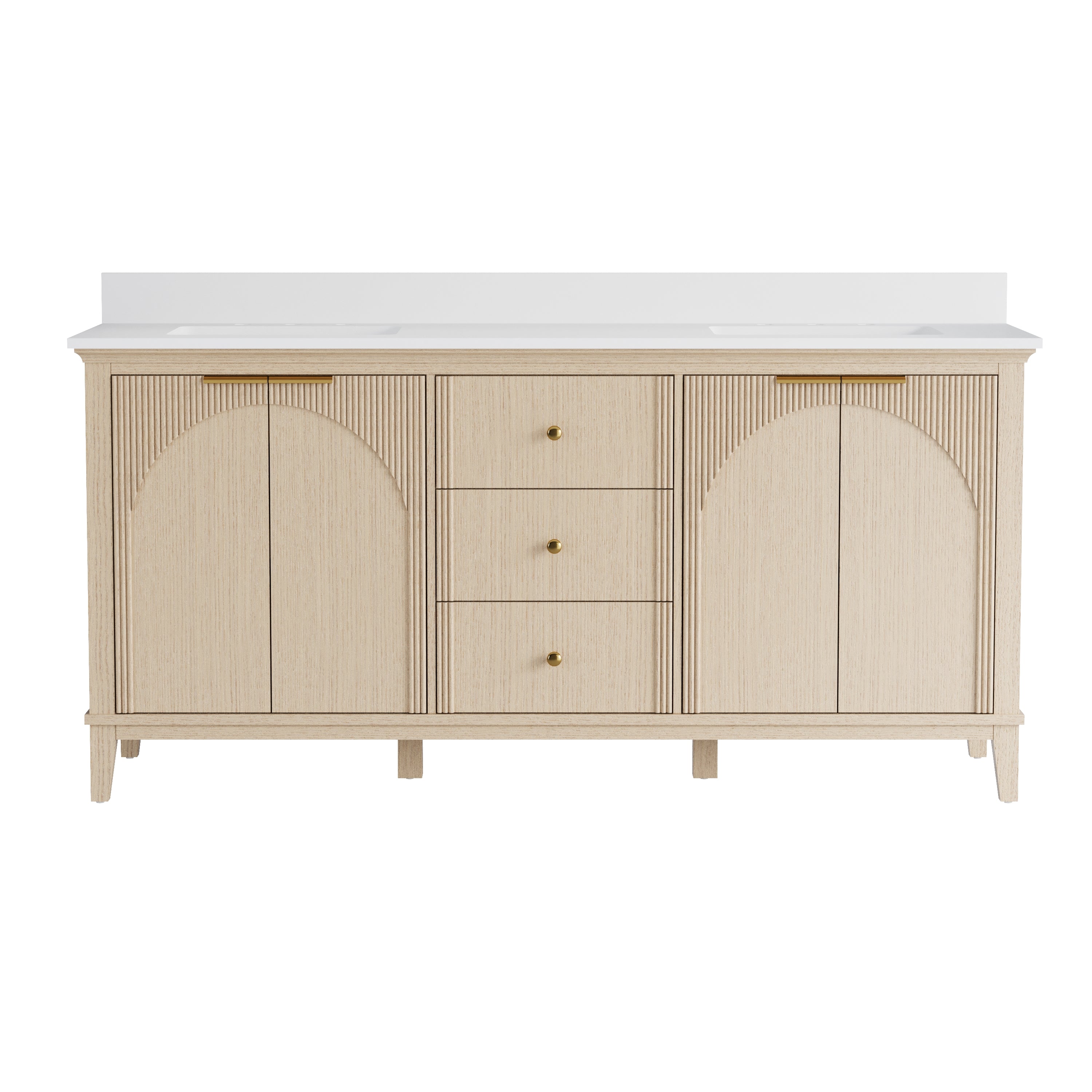
A wood vanity can set the tone for an entire bathroom, but the finish determines whether it feels calm, dramatic, rustic, or refined. After more than 20 years of working with bathroom cabinetry, I have learned that the best finish is rarely chosen in isolation. It needs to relate to the flooring, wall color, countertop, lighting, hardware, and the architectural character of the home. A beautiful wood tone can still look misplaced when its undertone or visual weight conflicts with the room.
The goal is not to match every surface. It is to create a finish relationship that feels deliberate.
1. Start With the Room’s Existing Undertones
Before comparing oak, walnut, espresso, or natural finishes, look closely at the permanent materials already in the bathroom. Tile, stone, and flooring usually have warm, cool, or neutral undertones, even when they appear white or gray at first glance.
Warm beige tile often pairs well with honey oak, natural oak, or medium walnut. Cool gray stone may work better with ash, pale oak, or wood finishes that have a softer gray cast. White marble-look surfaces are flexible, but their veining still matters. Blue-gray veins may clash with strongly golden cabinetry, while warmer veining can look flat beside a cold, washed-out finish.
One common mistake is matching the wood vanity only to a small flooring sample. The vanity is a much larger visual block, so the effect can become stronger once installed. Compare full-size samples under the bathroom’s actual lighting whenever possible.
2. Which Wood Vanity Finish Works Best in Small Bathrooms?
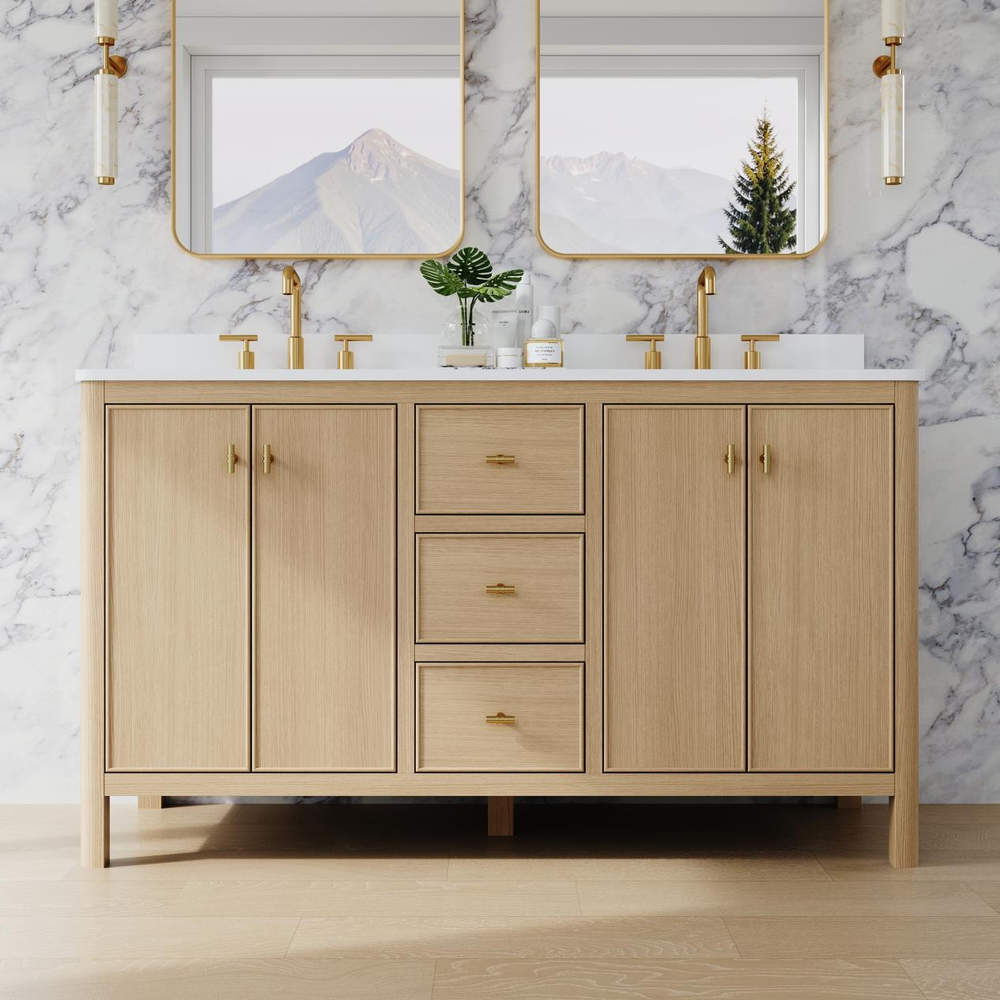
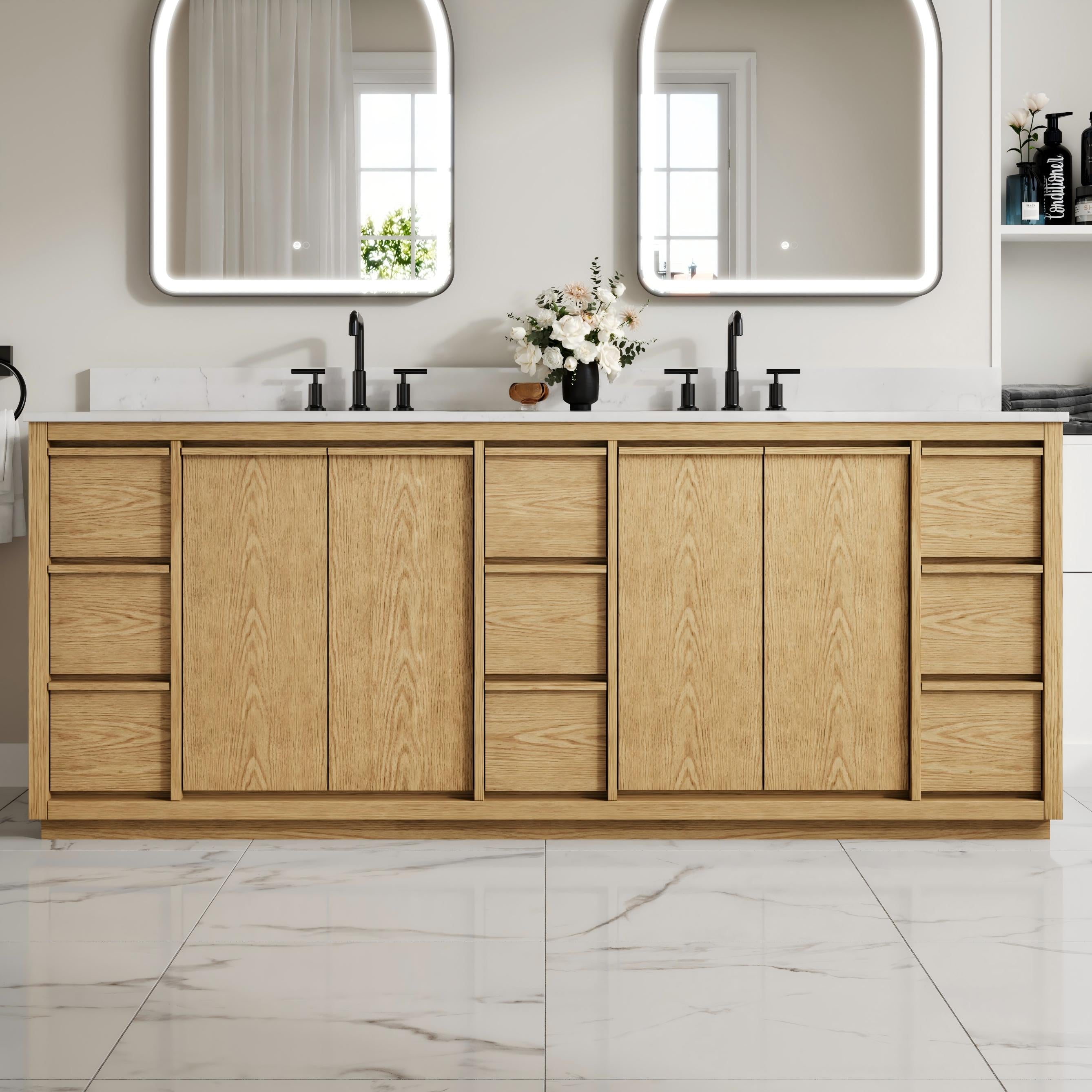
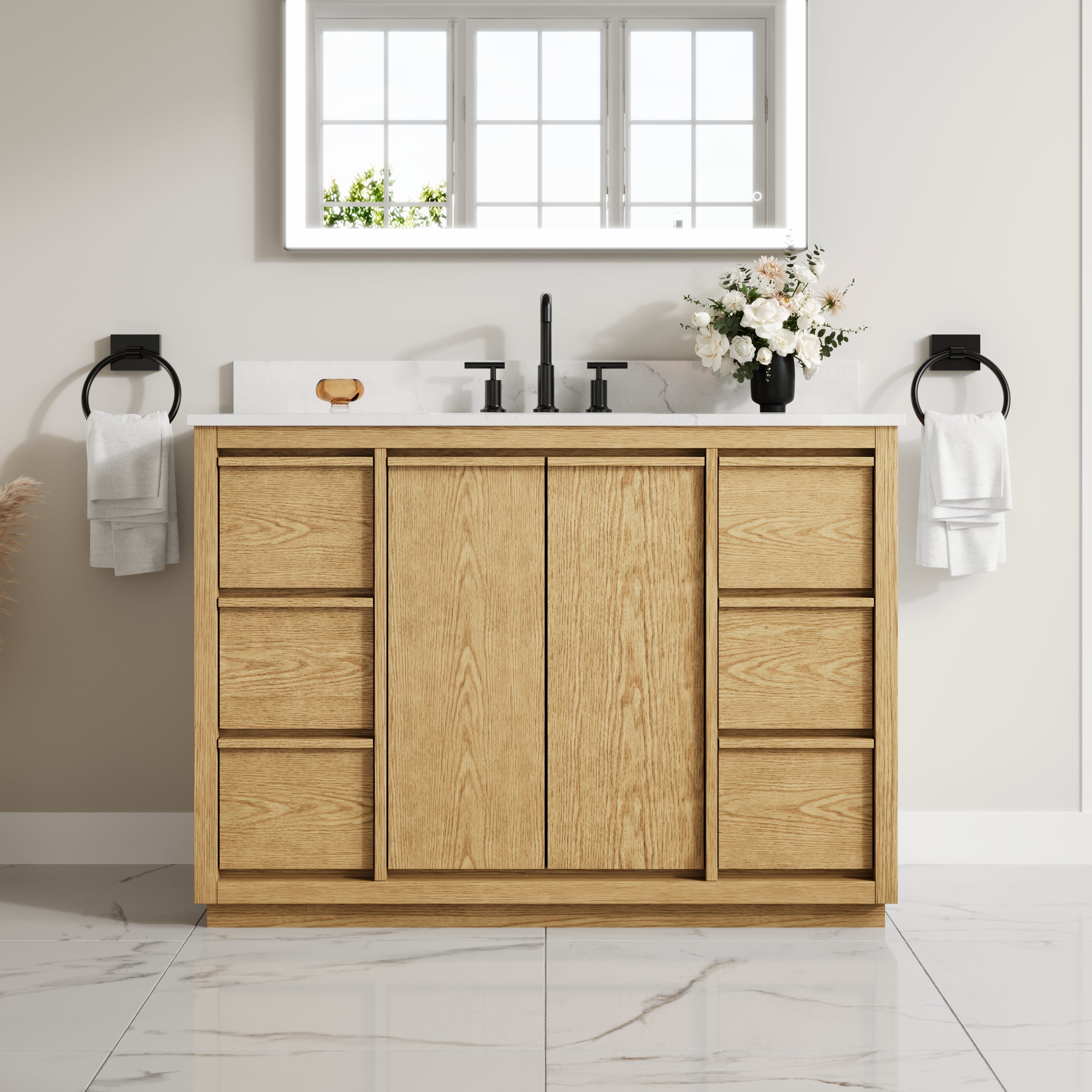
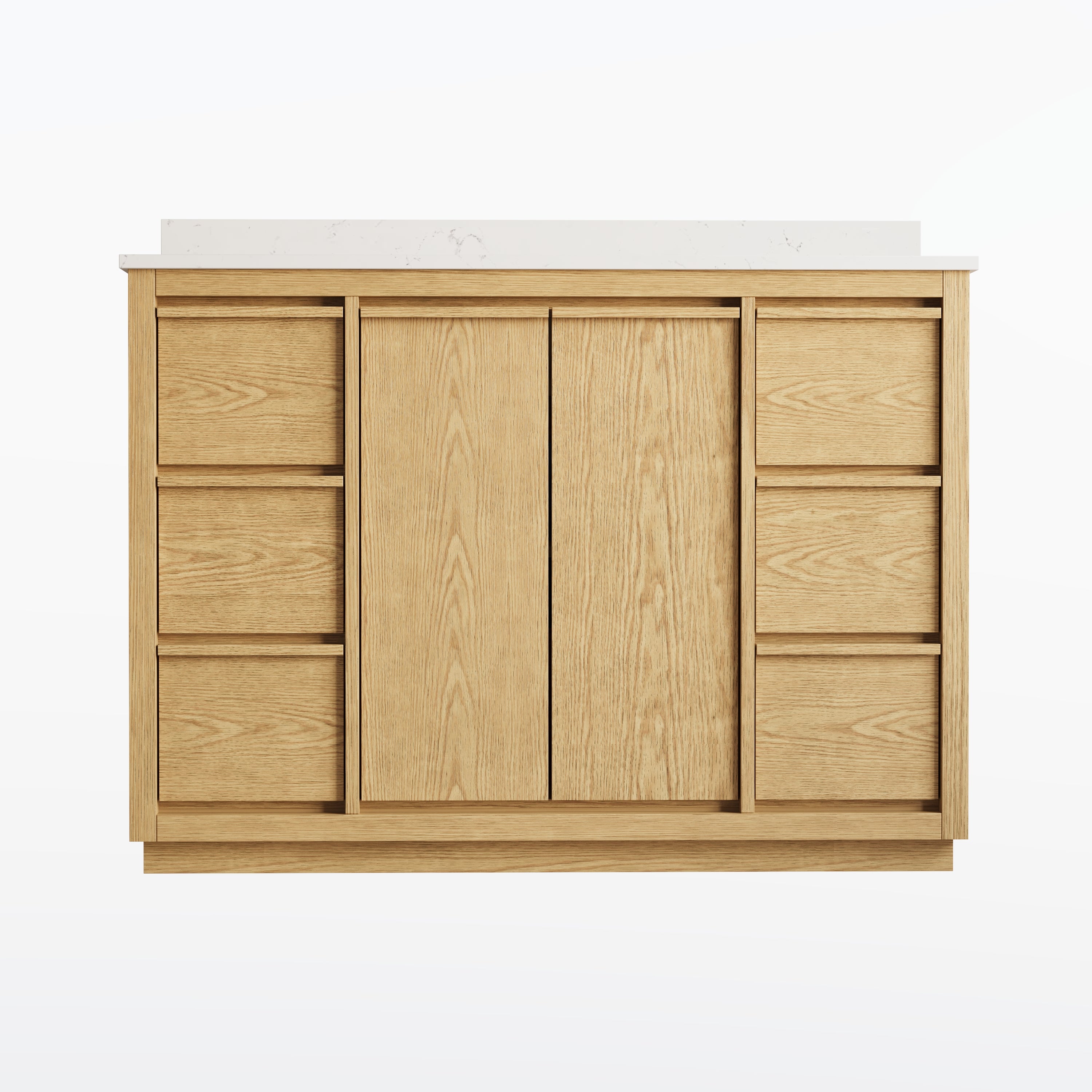
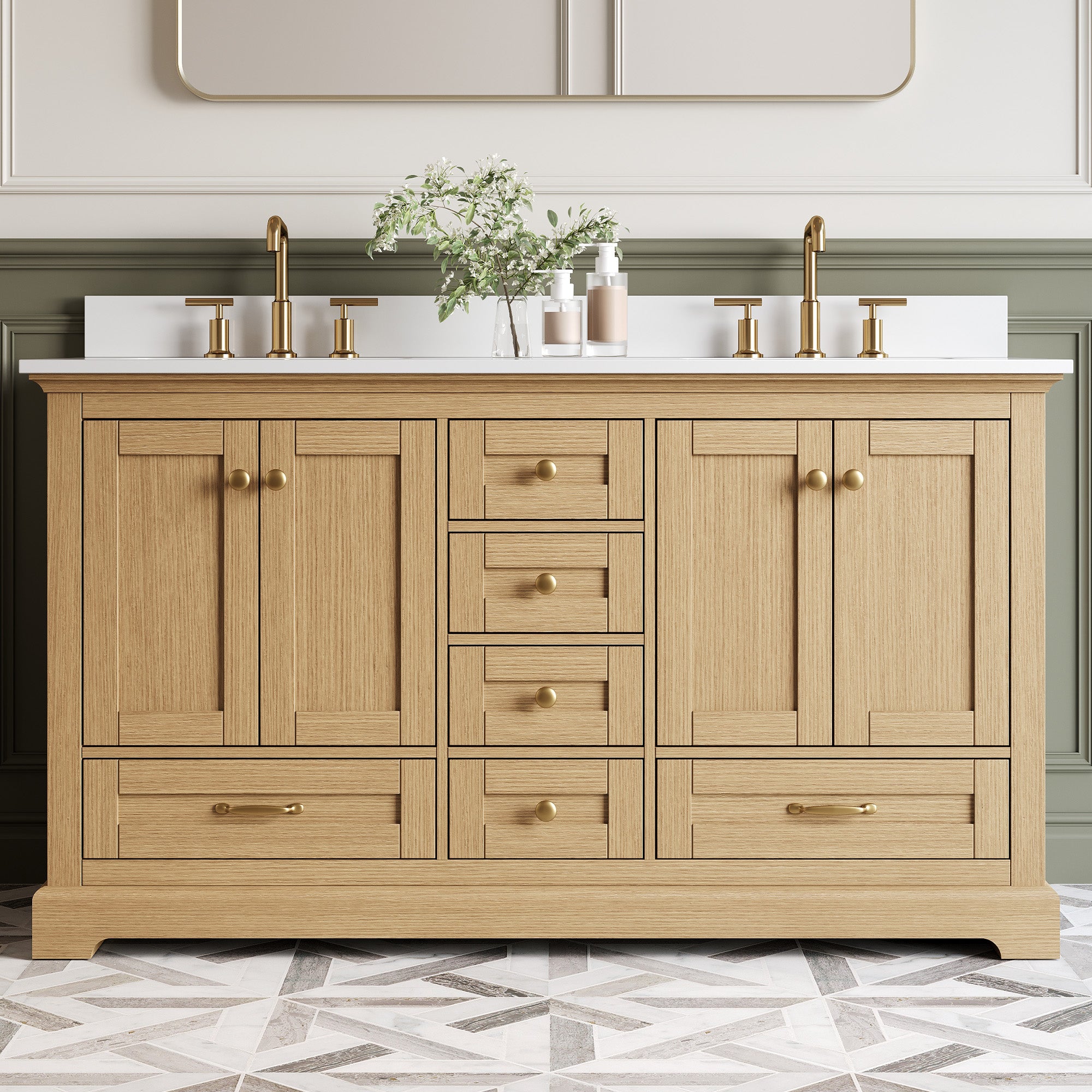
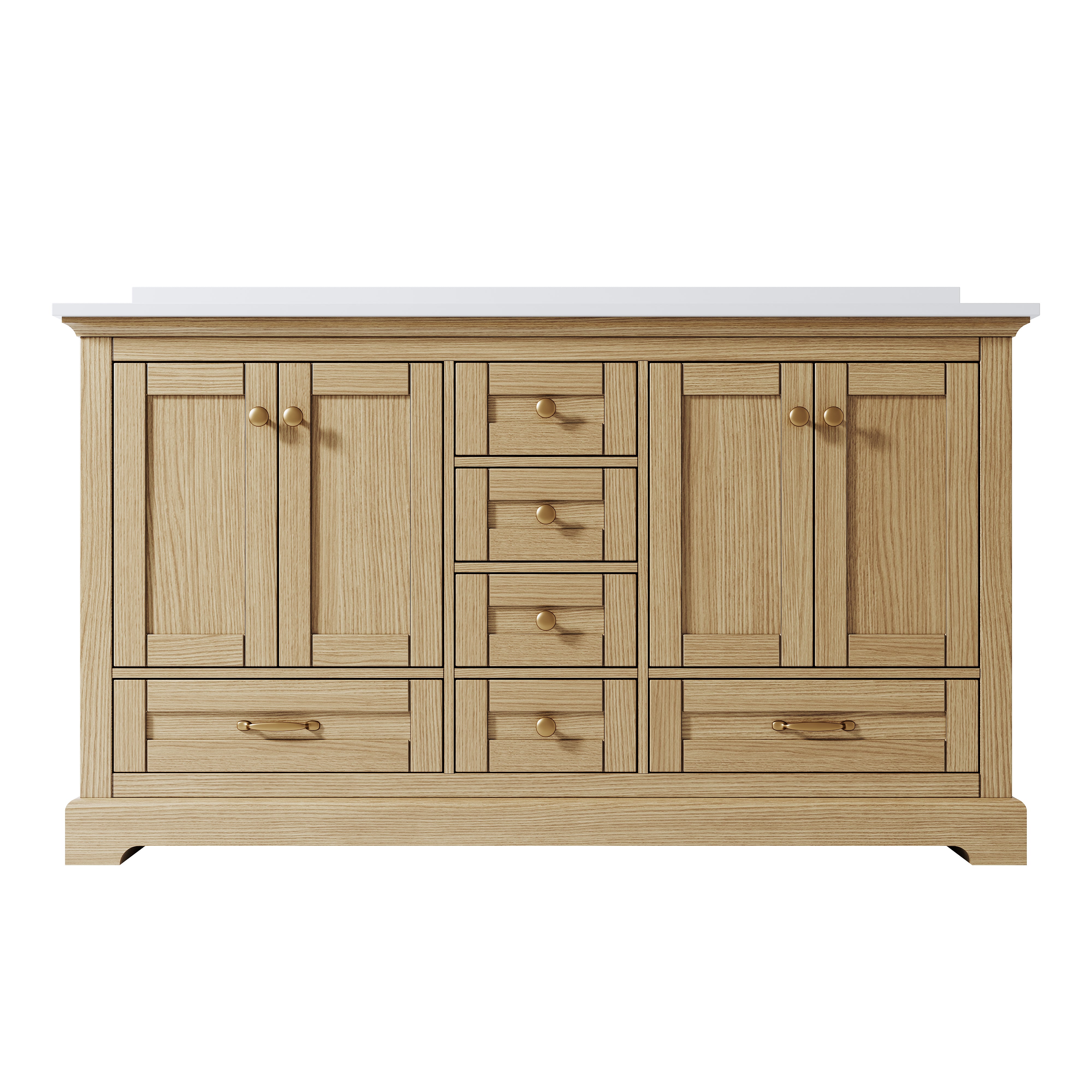
Light wood finishes are usually the safest choice in compact spaces. Pale oak, ash, and natural maple reflect more light than darker stains and reduce visual heaviness around the sink area.
This works particularly well in narrow guest bathrooms, apartments, and rooms without windows. A light wood vanity adds warmth without making the lower half of the bathroom feel crowded. Pair it with a white or lightly veined countertop, simple hardware, and a mirror that does not overpower the cabinet.
The limitation of very pale finishes
Light wood is not automatically interesting. If the flooring, walls, vanity, and countertop are all similar in tone, the bathroom can feel washed out.
Contrast may need to come from matte black hardware, a darker mirror frame, textured tile, or warmer lighting. The finish should soften the room, not disappear completely.
3. Medium Wood Tones Offer the Most Flexibility
Medium wood finishes are often the easiest to live with over time. They provide more depth than pale oak but remain lighter and less formal than dark espresso.
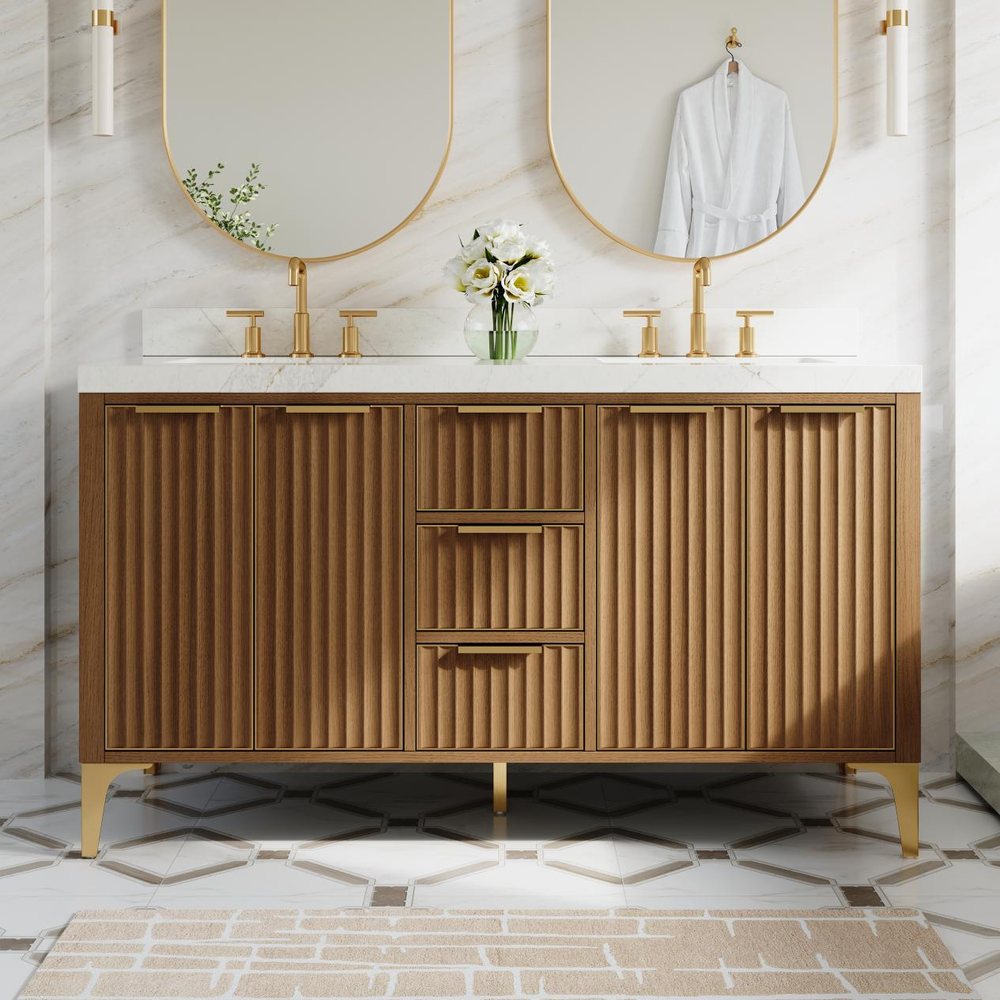
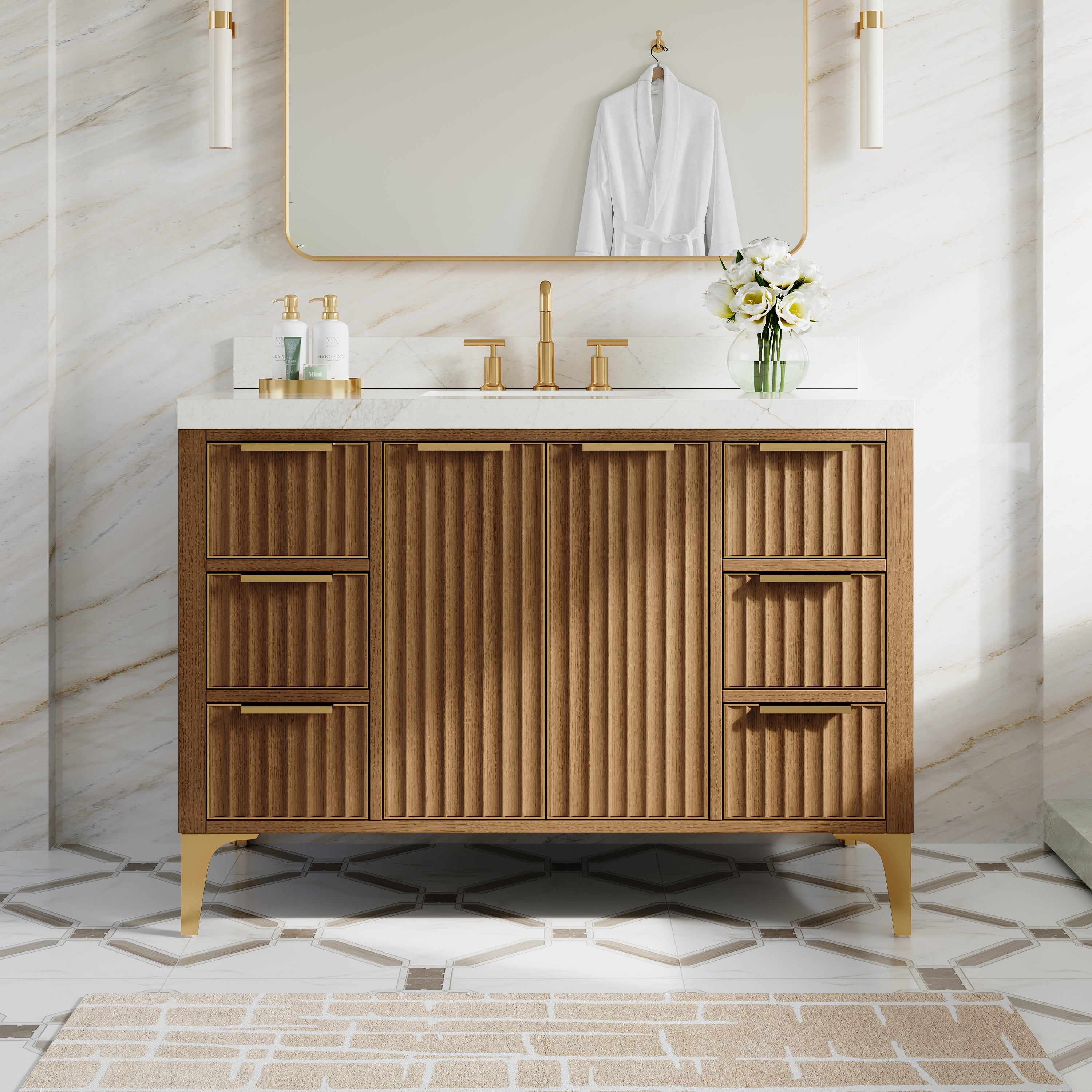
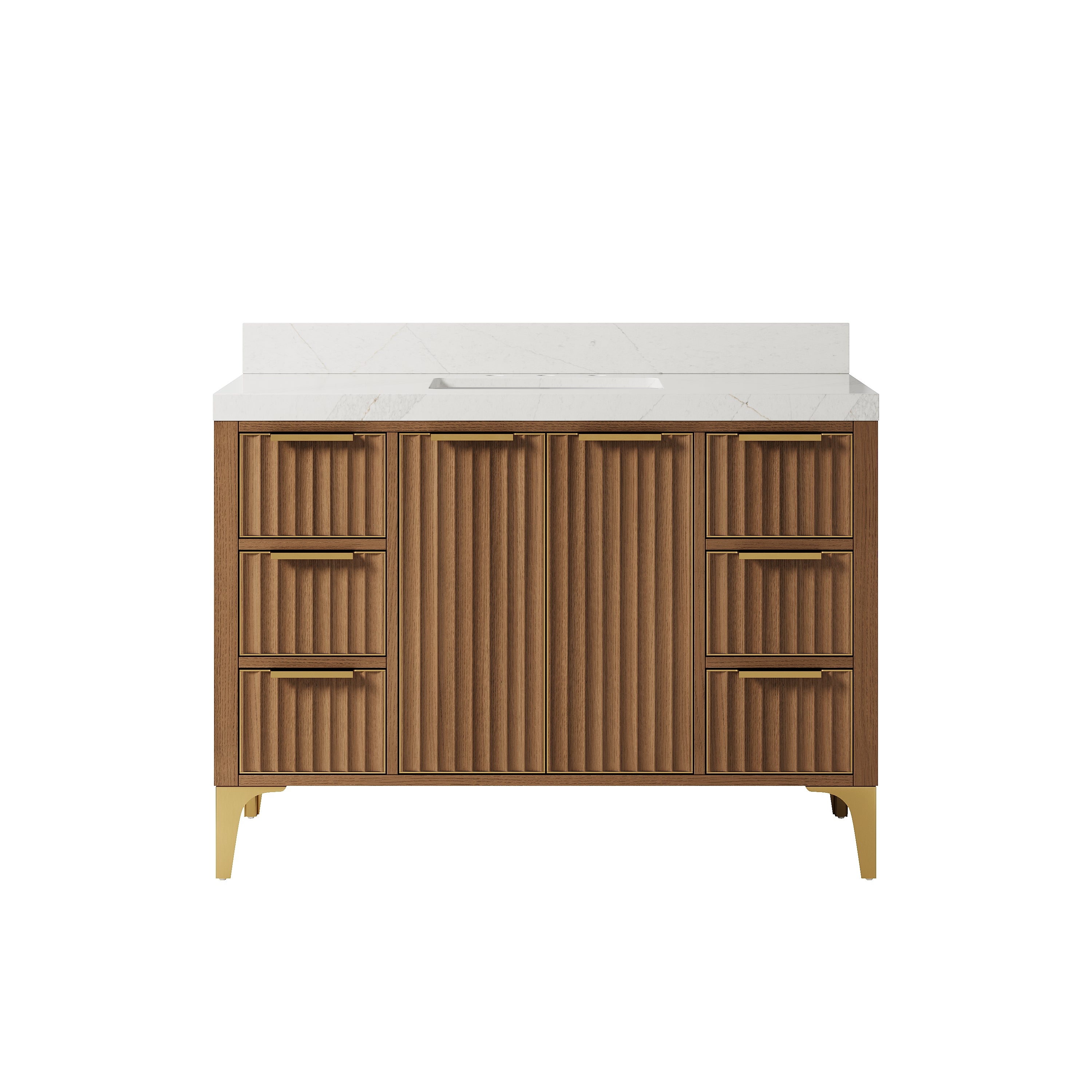
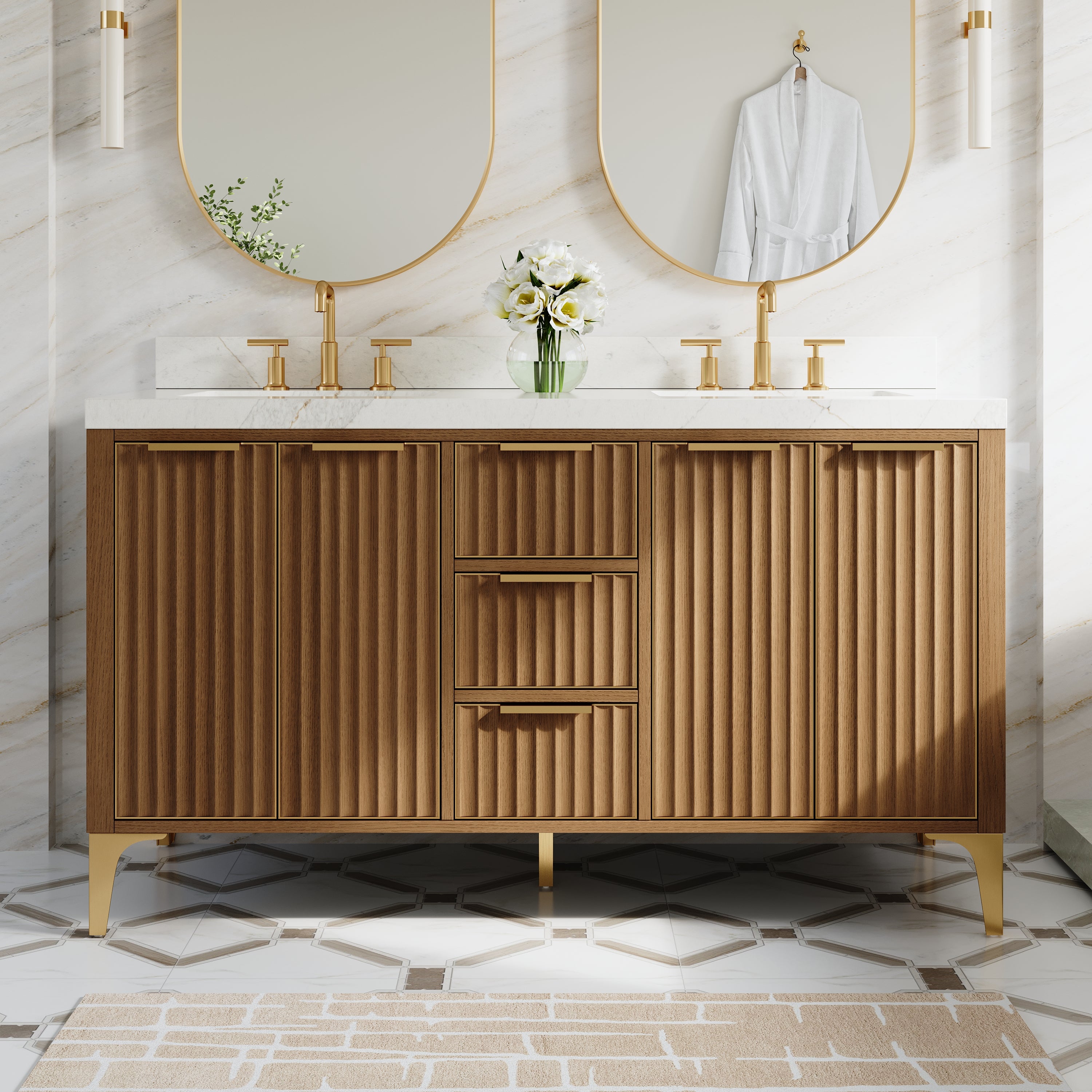
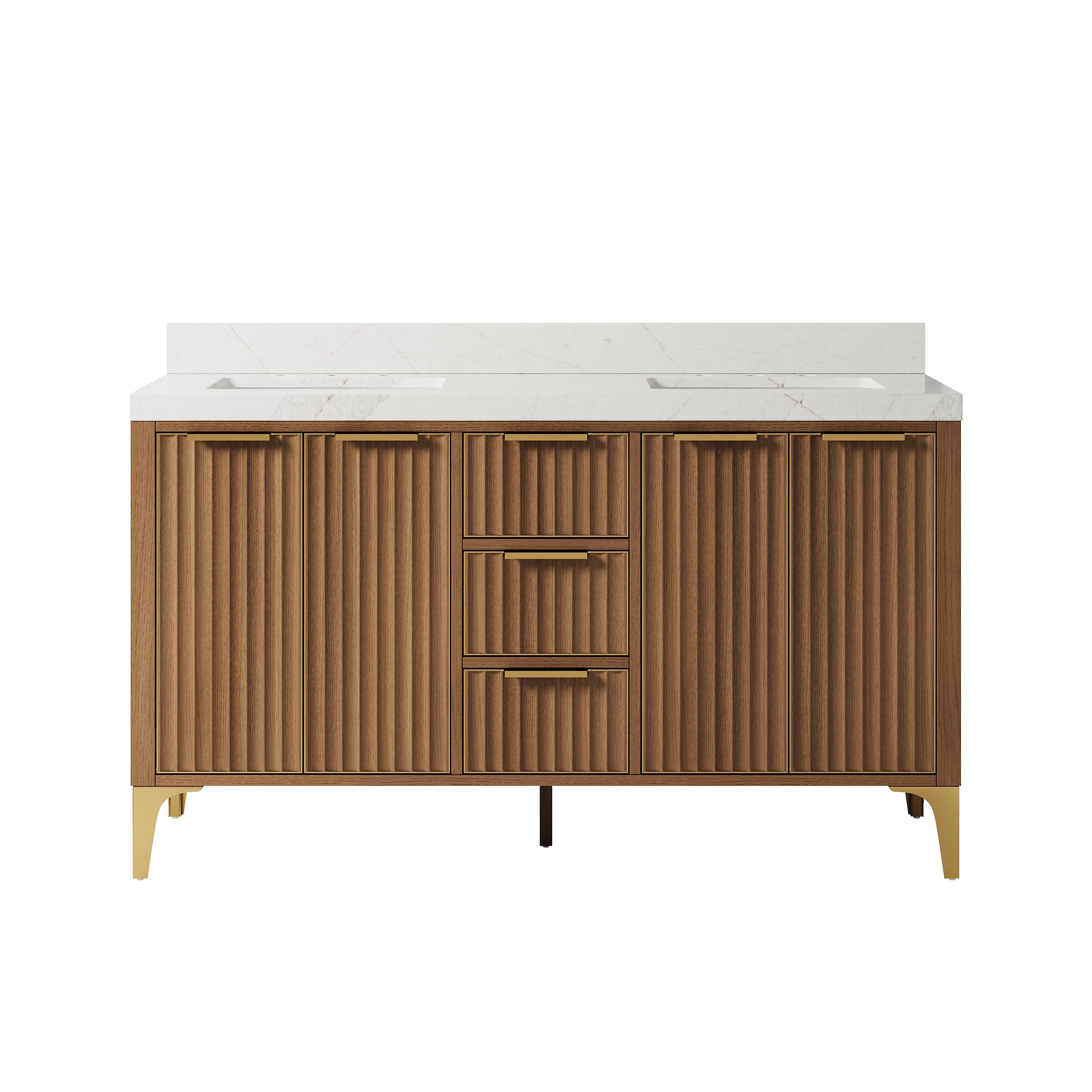
Walnut, medium oak, and warm brown finishes suit transitional, organic-modern, mid-century, and many traditional interiors. In a family bathroom, they also hide minor dust and everyday marks better than very dark or painted white cabinets.
From an industry perspective, this is the finish range I recommend most often when homeowners want long-term flexibility. Medium wood can work with brushed nickel today, brass later, and black hardware after that. It is not dependent on one narrow style.
Still, the grain pattern should be considered. Strong grain can become busy beside patterned floor tile or dramatic stone. In those rooms, a calmer wood surface usually works better.
4. When Dark Wood Creates the Right Effect
Dark walnut, espresso, and deep brown finishes can anchor a spacious bathroom and give it a more tailored, high-end character. They are especially effective in large primary suites with generous natural light, pale countertops, and open floor space.
A dark wood vanity can also create contrast in an otherwise soft room. Against white tile or light stone, it becomes a clear focal point without requiring bold color.
Where dark finishes may fall short
Dark wood can make a small bathroom feel tighter, particularly when the cabinet is freestanding and reaches the floor. It also shows dust, dried water, and soap residue more clearly than many homeowners expect.
I would avoid a very dark finish in a narrow room with weak lighting unless the vanity has a floating design or the surrounding materials are notably bright. Visual weight matters as much as cabinet width.
5. Match the Finish to the Design Style
Modern bathrooms usually benefit from cleaner finishes with controlled grain. Light oak, soft walnut, and matte natural stains work well with flat-front drawers and minimal hardware.
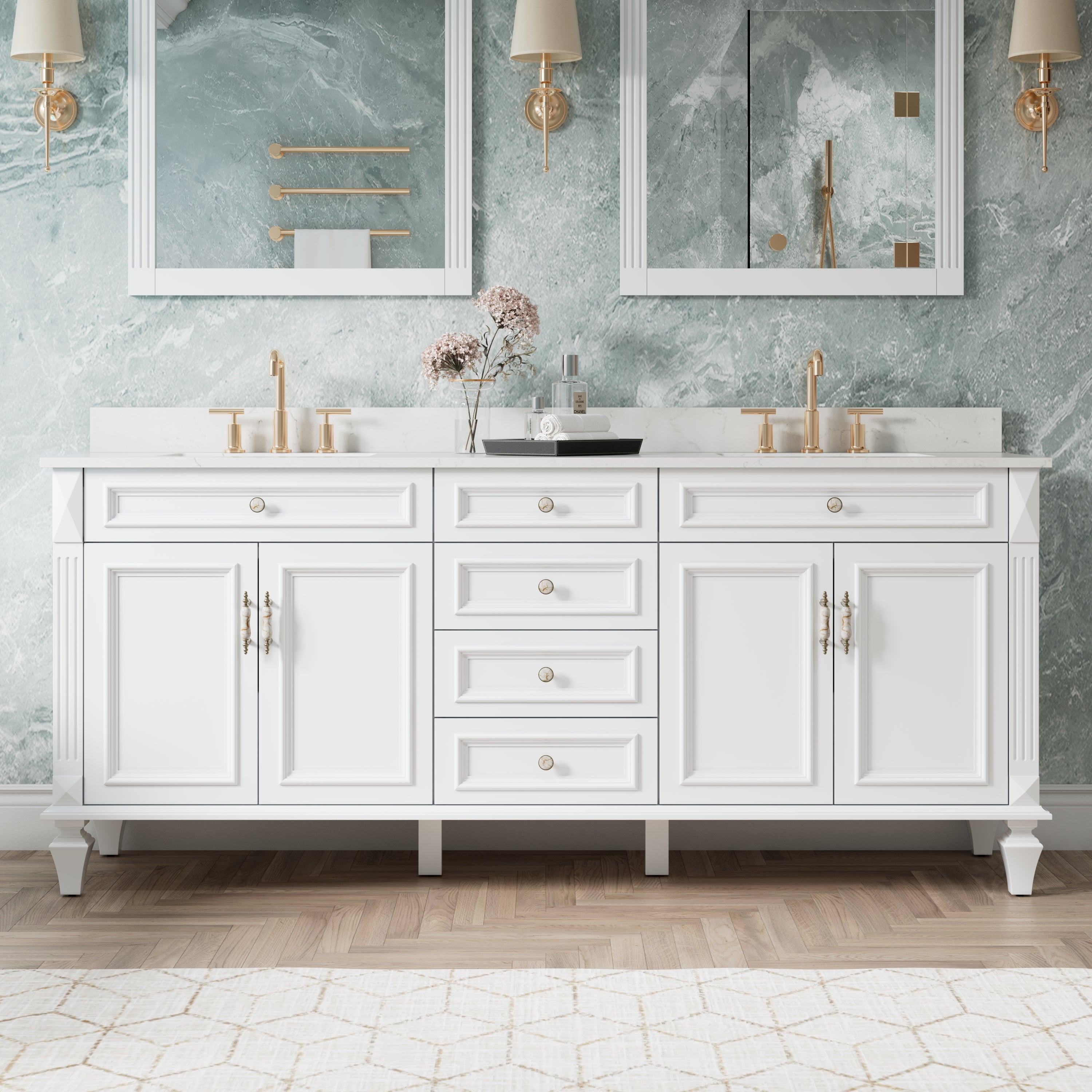
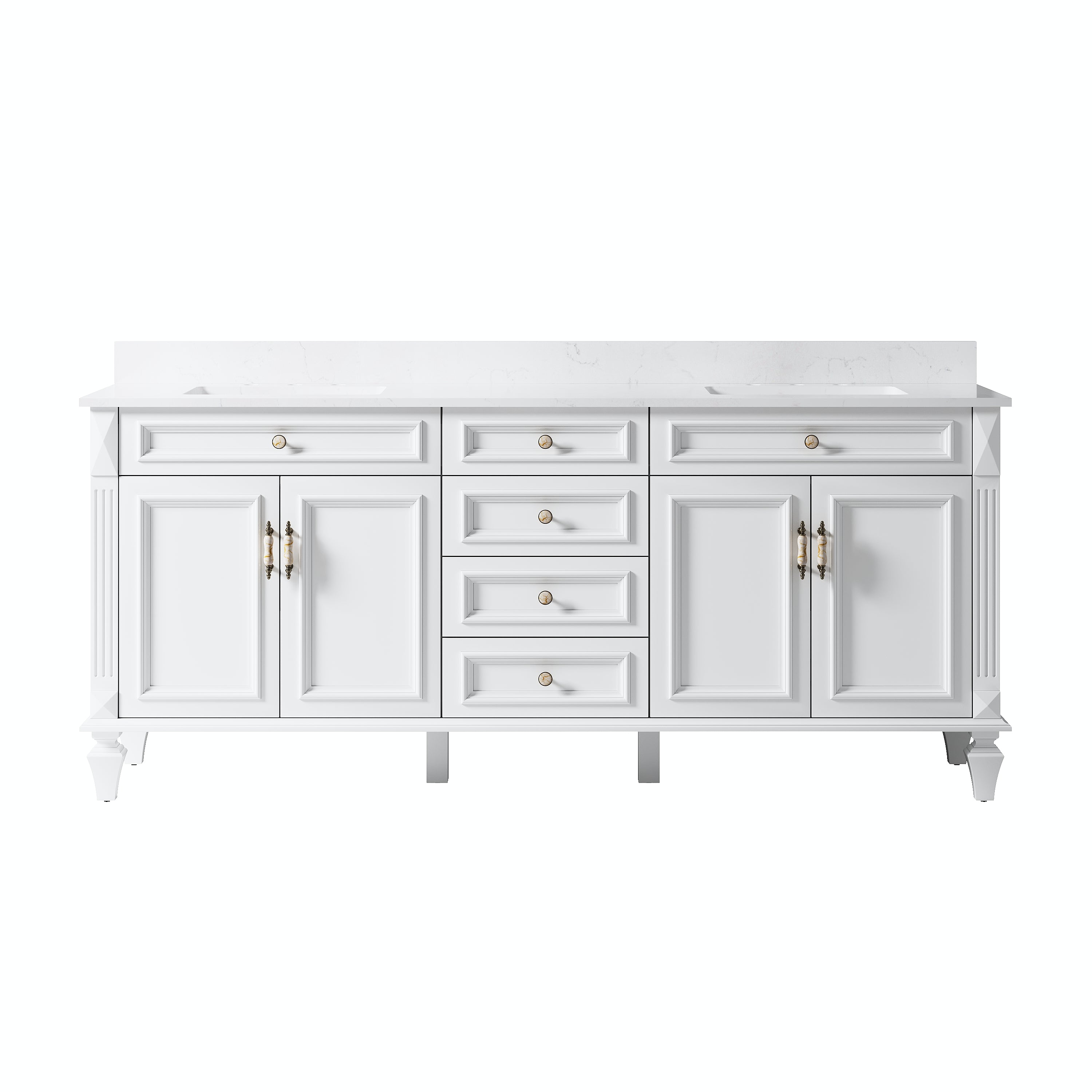
Traditional interiors can support richer tones, visible paneling, and furniture-style details. A medium or dark finish often feels more natural in homes with substantial trim, classic doors, and decorative lighting.
Farmhouse bathrooms may suit textured oak or weathered finishes, but restraint is important. Heavy distressing can make a new cabinet look artificially aged. Scandinavian and Japandi spaces generally call for lighter woods, simple grain, and a finish that feels quiet rather than glossy.
The finish sheen matters too. Matte and satin surfaces tend to look more current and hide minor imperfections. High-gloss wood finishes can feel formal and show fingerprints quickly.
6. Consider Maintenance Before Choosing the Finish
Every wood finish has practical advantages and disadvantages.
Light finishes hide dust but may show makeup, hair dye, or dark stains. Medium wood is forgiving in daily use. Dark finishes conceal some discoloration but reveal water spots and lint.
A properly sealed surface should handle ordinary bathroom splashes, but no wood vanity is waterproof. Standing water should be wiped promptly, especially around drawer edges, sink seams, and the cabinet base.
Use a soft cloth and mild cleaner. Avoid abrasive pads and harsh chemicals that can dull the finish. Run the exhaust fan after showers, and check plumbing connections several times a year. A slow leak beneath the sink can damage any finish from the inside.

7. Installation Can Change How the Finish Looks
Wood tone is affected by surrounding light. A vanity placed beneath warm LED lighting may look more golden than it did in a showroom. Cool lighting can make some finishes appear gray or flat.
Install the cabinet level and make sure the countertop, backsplash, and sink are sealed properly. Floating vanities need secure wall support, while freestanding models should not sit where floor water regularly collects.
Hardware placement also changes the result. Brass warms a finish, black creates stronger contrast, and brushed nickel keeps the look quiet. Test the combination before drilling permanent holes.
When comparing Wellfor options, choose a wood vanity finish by starting with the room’s undertones, size, lighting, and design style. Select light wood for openness, medium tones for flexibility, and dark finishes when the bathroom has enough space and brightness to support them. Then confirm that the cabinet construction, storage, and finish protection suit everyday use. The best wood vanity should look connected to the home rather than simply fashionable on installation day.













Leave a comment
This site is protected by hCaptcha and the hCaptcha Privacy Policy and Terms of Service apply.