






















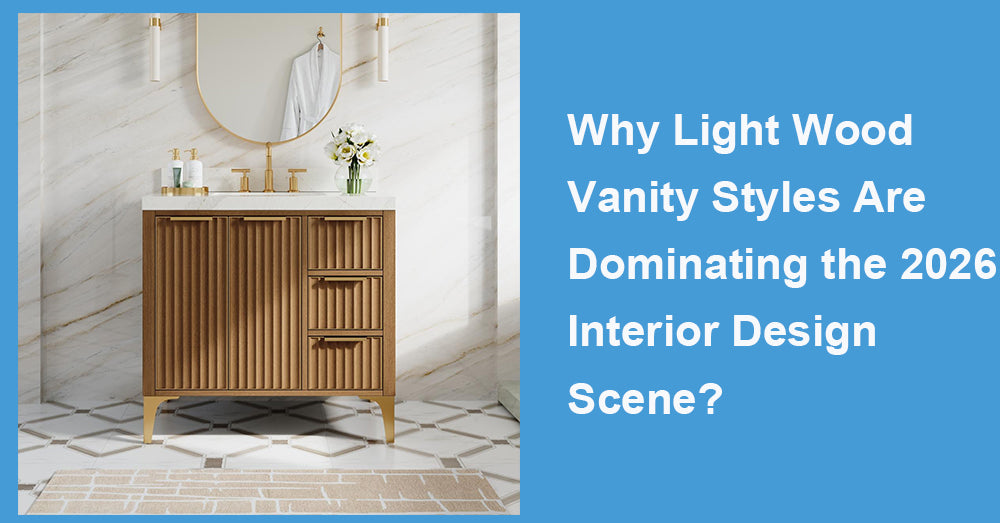
A light wood vanity has become one of the clearest signals of where bathroom and interior design are heading in 2026. I see it in primary bath remodels, guest suites, and even compact powder rooms where homeowners want something warmer than white but quieter than darker wood. The appeal is easy to understand: light wood brings softness, natural texture, and a more relaxed kind of luxury. It makes a room feel finished without making it feel formal.
This shift is not happening in isolation. According to NKBA, wood-faced vanities have overtaken painted ones in bath design popularity for 2026, with 62% of respondents favoring wood-faced vanities compared with 53% for painted styles. (Source: NKBA)
1. Why Light Wood Feels Right for 2026
A few years ago, many bathrooms leaned hard into bright white, cool gray, and strong black contrast. That look still has its place, but it can feel a little sharp now, especially in homes where people want more comfort and less visual tension. Light wood changes that mood immediately. It introduces warmth, but not heaviness. It feels modern, though not sterile.
What makes this especially relevant in 2026 is the broader move toward natural materials and more grounded interiors. According to Houzz, warm and medium wood tones are making a strong comeback across the home, replacing the once-dominant light oak and reinforcing a shift toward richer, more tactile spaces. (Source: Houzz)
I would add one practical point from experience: light wood is easier to live with than many homeowners expect. It does not dominate the room. It gives the eye something natural to rest on, which is why it works so well in bathrooms that need to feel calm first thing in the morning and relaxed at the end of the day.
2. Why a Light Wood Vanity Fits Organic Modernism So Well
If there is one design phrase that genuinely explains this trend, it is organic modernism. Not because it sounds fashionable, but because it describes the balance accurately. Homeowners still want clean lines and uncluttered spaces. They just do not want them to feel cold.
A light wood vanity helps solve that. It keeps the architecture simple while adding grain, warmth, and variation. In bathrooms filled with porcelain, glass, metal, quartz, and tile, that matters. The vanity becomes the material that softens everything else.
Houzz’s bathroom inspiration coverage keeps reinforcing this point. Their featured and popular bathroom projects continue to show welcoming wood vanities, layered neutrals, and natural materials used to make baths feel more livable rather than overly polished. (Source: Houzz)
This is why light wood works in so many styles without looking confused. In a Scandinavian-inspired bathroom, it feels airy. In a Japandi space, it feels calm and disciplined. In a transitional bathroom, it bridges modern and classic details more easily than either stark white or dark espresso finishes.
A common mistake buyers make
Many people assume all light woods create the same effect. They do not. Some read pale and slightly gray. Some lean honey-toned. Some feel creamy and soft under warm lighting, while others look flatter than expected once installed.
That is where projects go wrong. Homeowners often choose a finish from a small online image and forget to compare it with their tile, countertop, wall color, and lighting temperature. A light wood vanity only looks effortless when its undertone belongs in the room.
3. The Real Advantages, and the Limits You Should Be Honest About
The biggest advantage is versatility. A light wood vanity works with brushed nickel, matte black, and softer brass. It pairs well with white quartz, marble-look tops, stone-inspired tile, and warmer paint colors. It also helps small and medium-size bathrooms feel brighter than darker woods do, while still adding more warmth than a white vanity usually can.
It ages well visually too. Trend-driven painted colors can feel very current and then suddenly feel tired. Light wood tends to hold its relevance because it looks rooted in material rather than fashion.
There are limits, and they are worth saying clearly. Cheap wood-look finishes can feel artificial in person. A light wood vanity with weak construction will not become more durable just because the color is popular. It can also get lost in a room that already has too many pale finishes and not enough contrast. In those bathrooms, the result can feel washed out rather than serene.
Where it may not be the best fit
I would think twice about a light wood vanity in a bathroom that is already visually flat, with beige tile, pale walls, weak lighting, and no stronger accent to anchor the room. I would also be cautious in very traditional bathrooms where ornate cabinetry and deeper painted finishes suit the architecture better.
This style works best when the room wants softness, simplicity, and a natural material story. It is less convincing when the room is asking for drama or formality.

4. What to Check Before You Buy Into the Trend
Start with construction. Always. A beautiful finish cannot rescue poor joinery, weak drawer slides, or a cabinet box that is not suited for bathroom humidity. Then look at proportion. A light wood vanity usually looks best with clean lines and a shape that feels intentional rather than bulky.
Storage matters too. I have seen homeowners buy the right finish and still end up disappointed because the drawers were shallow or the plumbing cutout stole most of the useful space. A trend only becomes worth following if the vanity actually supports daily use.
There is also a bigger market context here. According to Statista, U.S. home improvement expenditure reached $531 billion in 2025, which tells you homeowners are still investing heavily in spaces that need both style and staying power. (Source: Statista) That is one reason this particular look is gaining traction. It feels current, but it does not feel disposable.
For homeowners considering brands like Wellfor, my advice is simple: choose a light wood vanity when you want warmth without heaviness, modern style without harshness, and a bathroom that feels easy to live with every day. If the tone is right, the construction is solid, and the room has enough contrast to support it, a light wood vanity will not just follow the 2026 design scene. It will outlast it.









































Leave a comment
This site is protected by hCaptcha and the hCaptcha Privacy Policy and Terms of Service apply.