














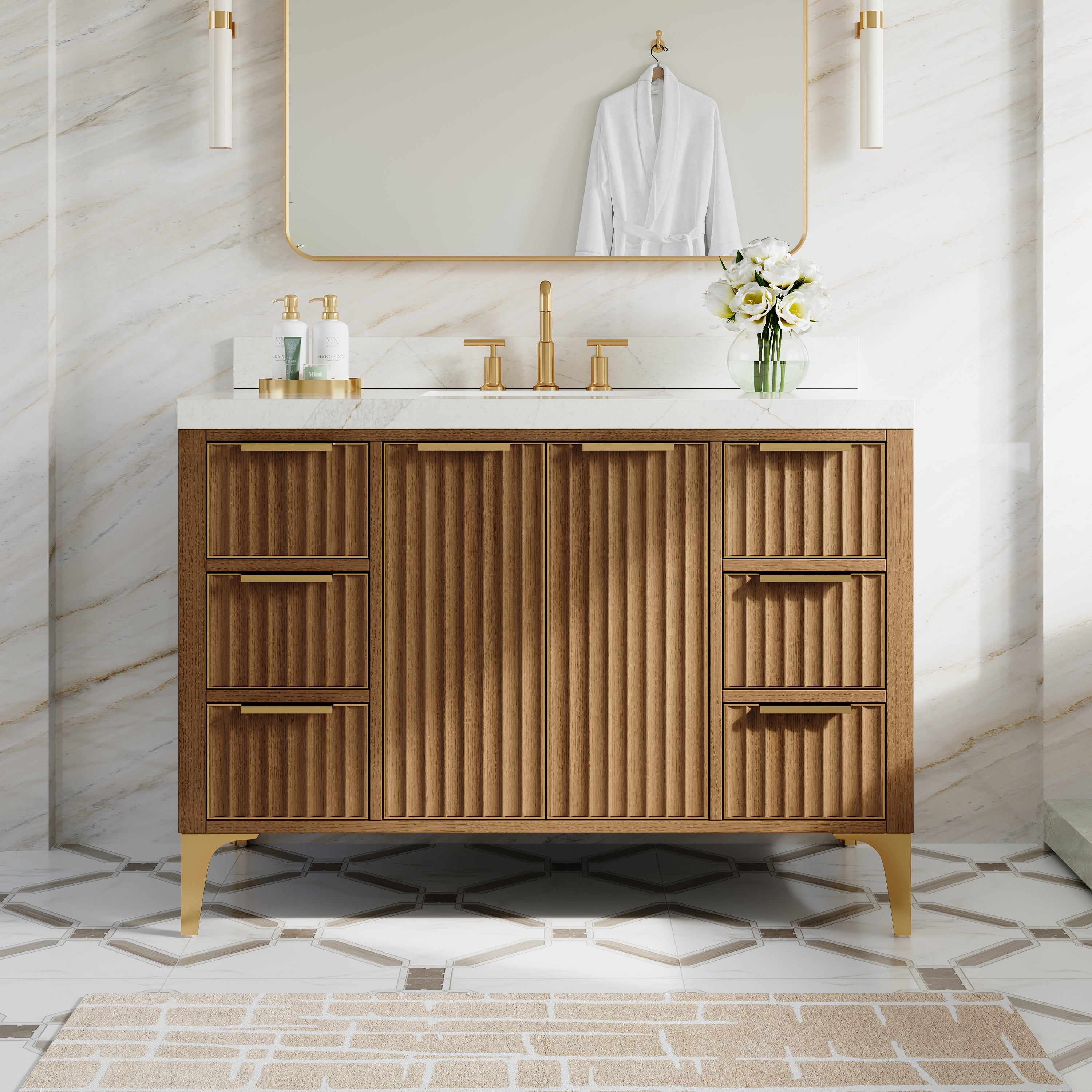
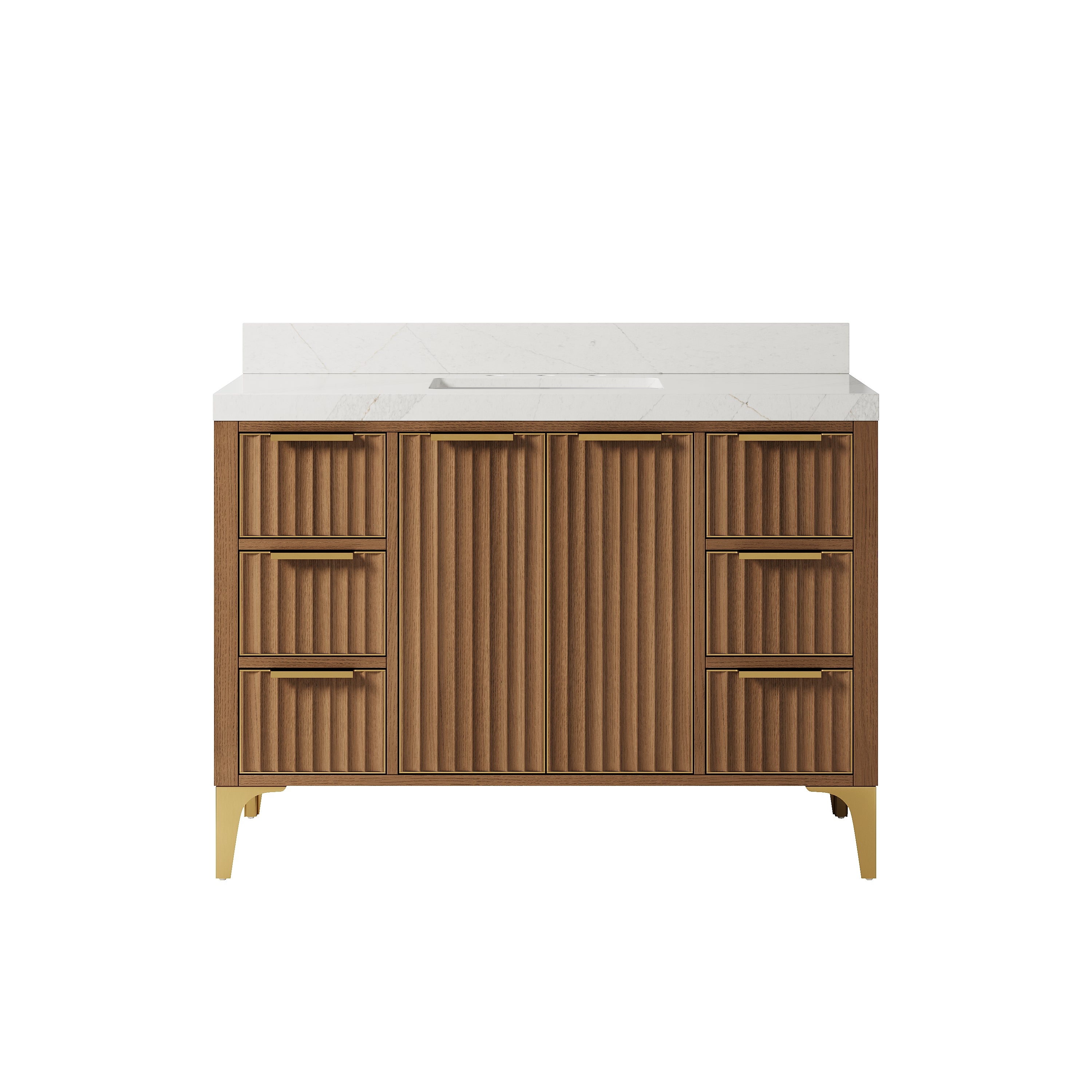


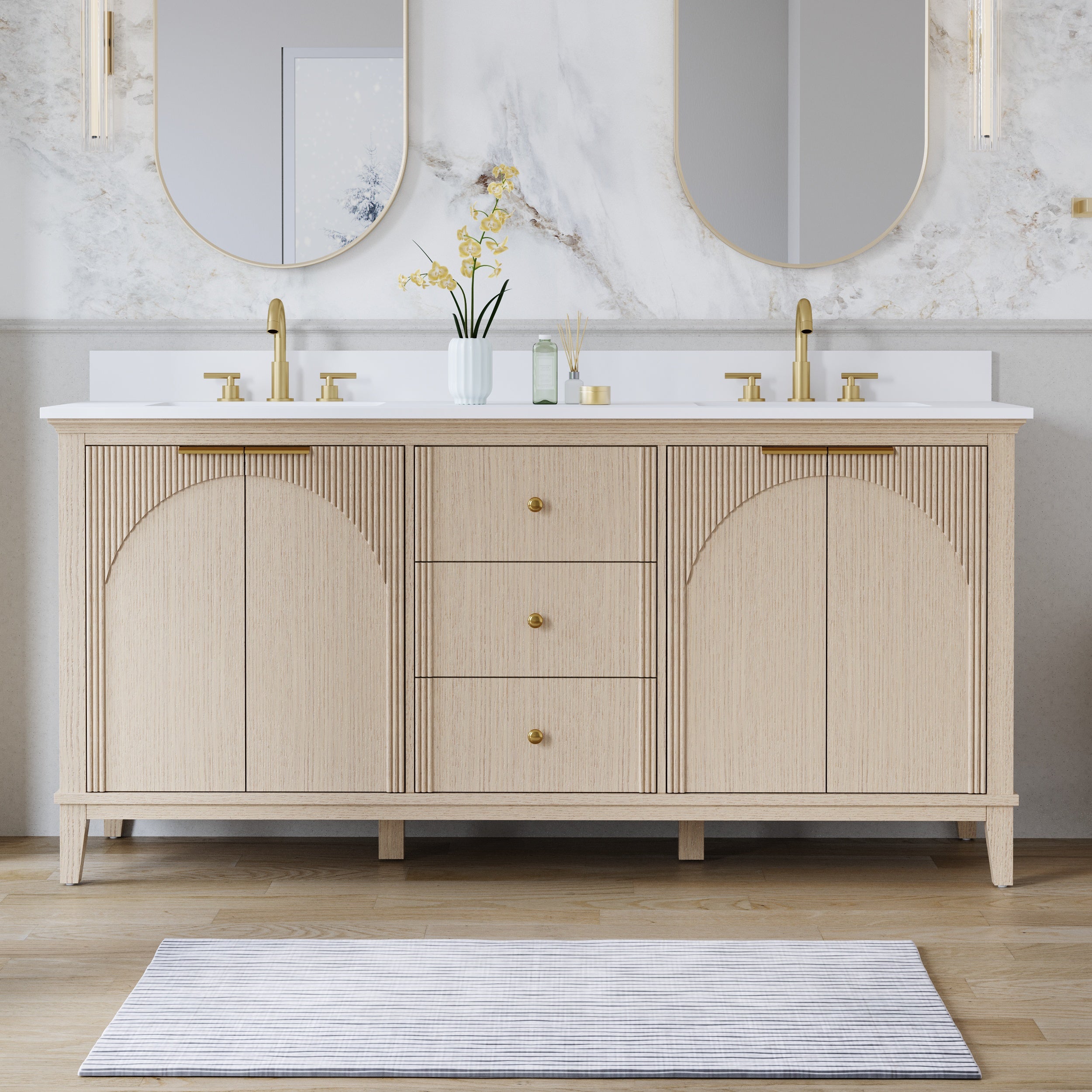
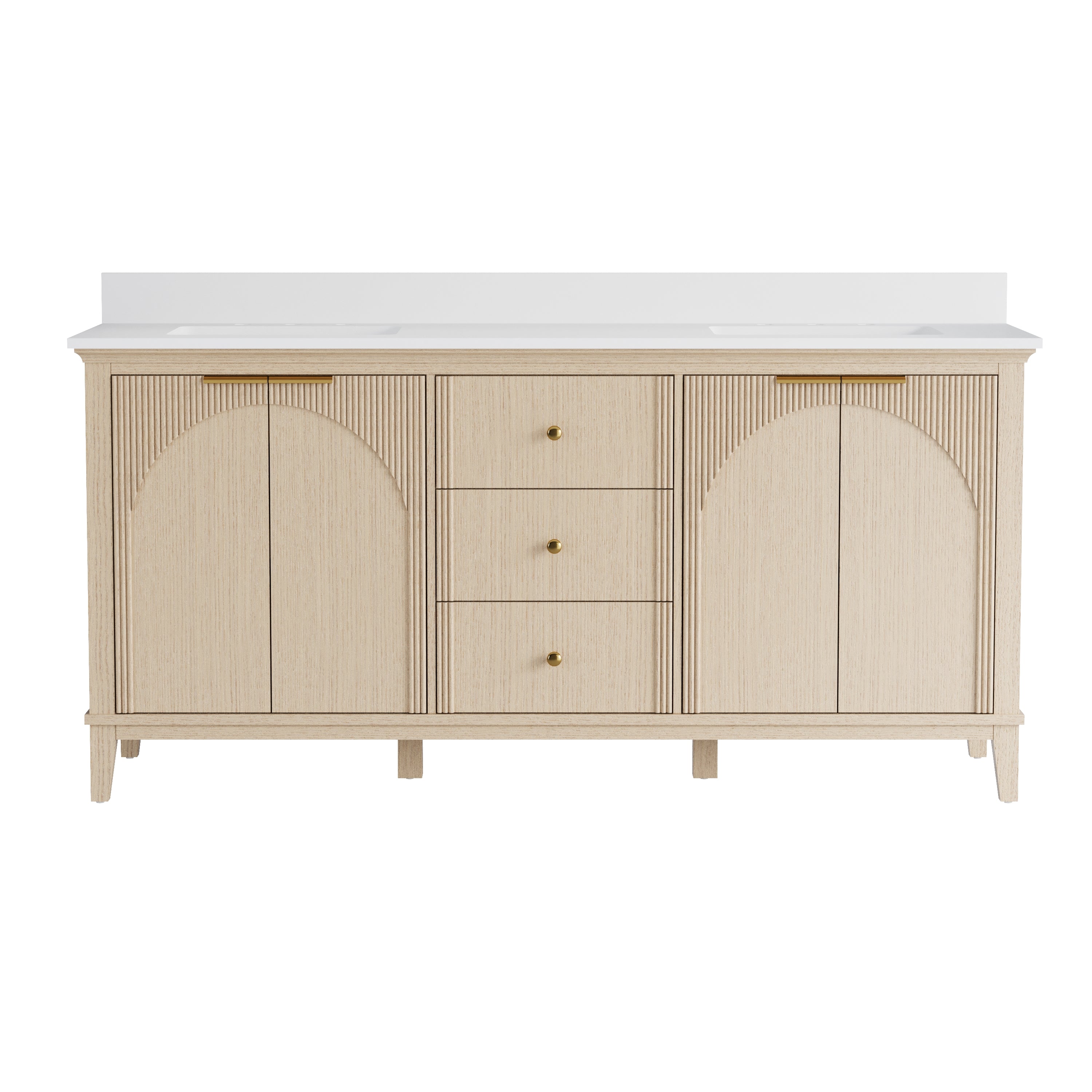
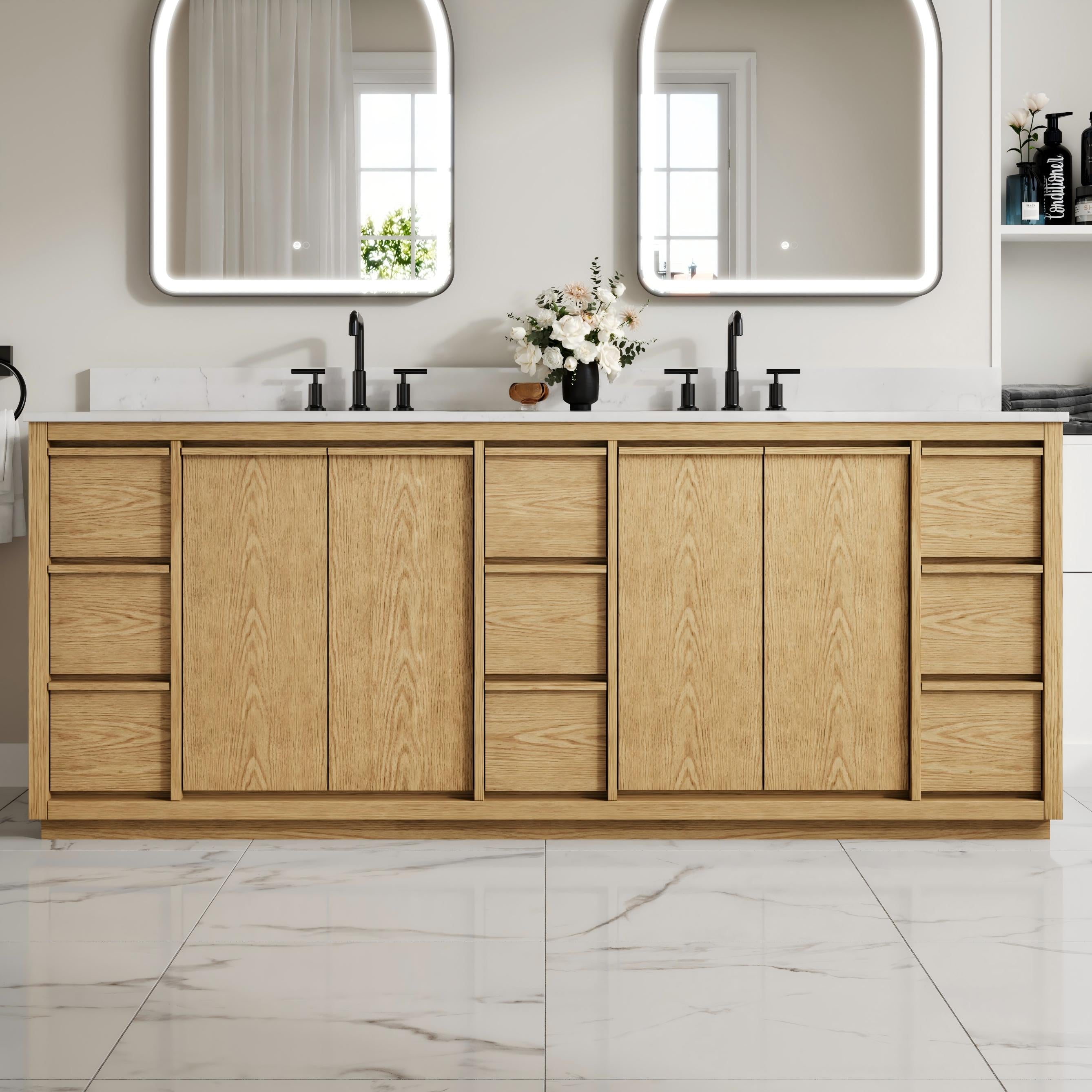
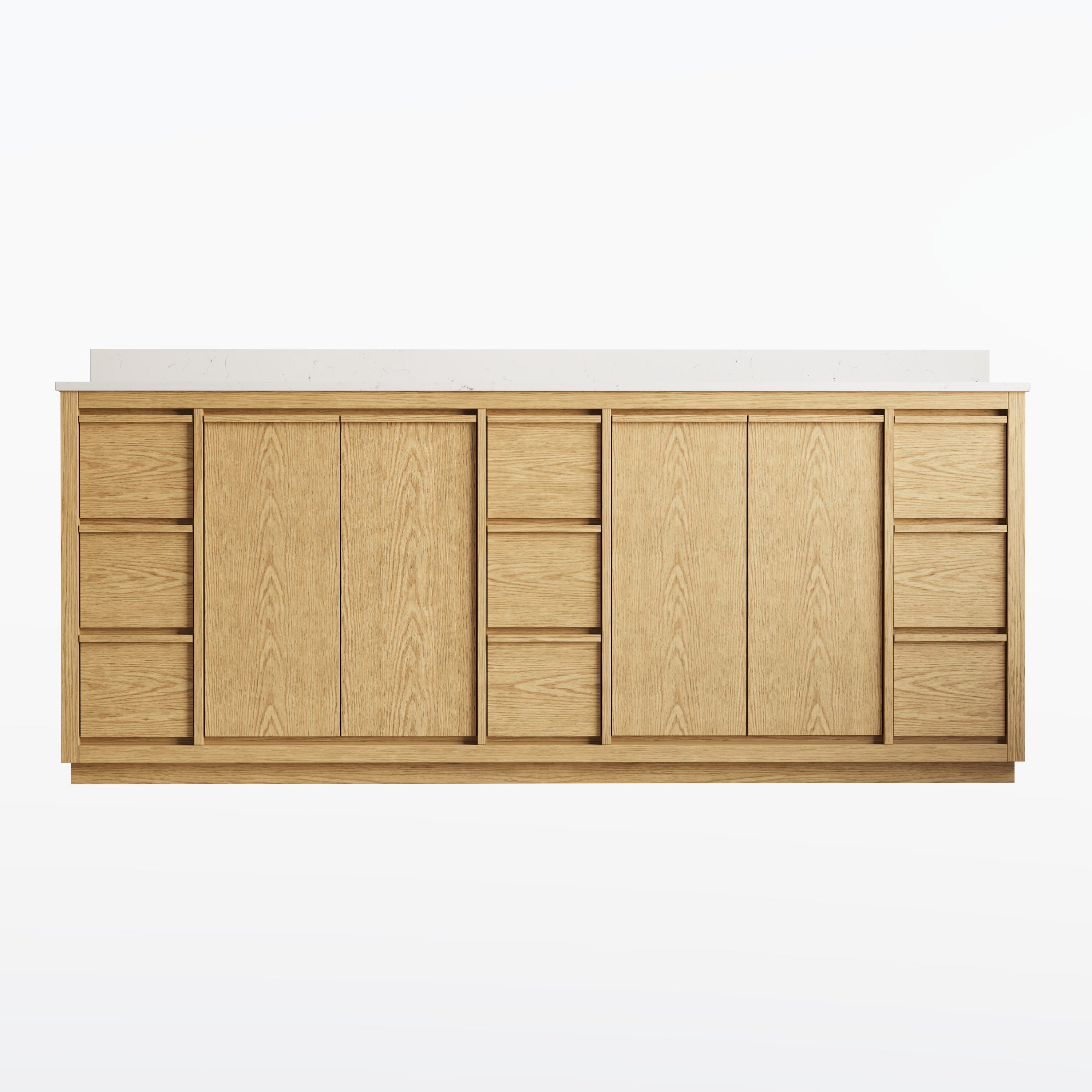
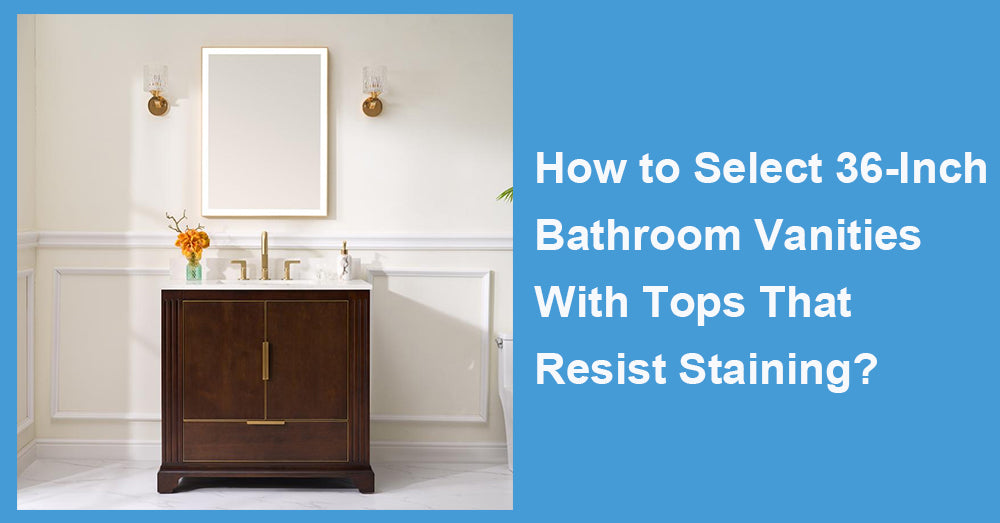
Choosing 36-inch bathroom vanities with tops requires more than comparing cabinet colors and countertop patterns. In a bathroom, the top is exposed to toothpaste, cosmetics, soap residue, hair dye, hard-water deposits, and cleaning products, often within a compact working area. A surface described as durable may still stain if it is porous, poorly sealed, or cleaned with the wrong product. The most reliable choice comes from examining the countertop material, sink construction, finish, seams, care requirements, and the way the vanity will actually be used.
1. Start with the Countertop Material, Not the Pattern
Color and veining are usually the first details people notice, but the material underneath has a greater effect on stain resistance.
Engineered quartz is widely used because its nonporous surface does not readily absorb liquids. Houzz’s 2025 bathroom research found that engineered quartz was selected for 45% of upgraded bathroom countertops. Quartzite accounted for 20%, granite for 14%, and marble for 13%. Porcelain and ceramic remained smaller categories at 3% and 2%, respectively. (Source: 2025 Houzz Bathroom Trends Study) (Houzz)
Quartz is often the easiest choice for a busy bathroom because it generally does not require routine sealing. Manufacturers still recommend wiping spills promptly and avoiding abrasive pads, but ordinary soap, makeup, and grooming products are less likely to soak under the surface. MSI describes its engineered quartz as nonporous and resistant to stains, scratches, and chips. (Source: MSI Q Quartz) (MSI Surfaces)
Natural stone needs a closer look. Granite and quartzite can perform well, but sealing requirements vary. Marble is more absorbent and can react with acidic products, making it less forgiving around cosmetics and certain cleaners.
2. Understand What “Stain-Resistant” Actually Means
Stain-resistant does not mean stain-proof.
Even a nonporous surface may develop discoloration when hair dye, nail polish, strong pigments, or chemical cleaners remain on it for too long. A bathroom countertop also collects residue around the faucet and sink rim, where water evaporates and leaves minerals behind.
Product specifications should explain whether the material is nonporous, factory sealed, or dependent on periodic sealing. Vague phrases such as “easy to maintain” are not enough. Look for actual cleaning instructions and a list of products that should be avoided.
Quartz manufacturers commonly recommend warm water, a soft cloth, and mild soap for everyday care. Abrasive scouring pads can dull the finish, even when the material itself is stain-resistant. (Source: MSI Quartz Care and Maintenance) (MSI Surfaces)
The practical test is simple: the easier a top is to clean with ordinary products, the more likely it is to retain its original appearance.
3. Consider the Countertop Color and Pattern
A surface may resist absorption while still showing every mark.
Solid white tops look clean and bright, but dark cosmetics, rust-colored water deposits, and hair dye are easy to notice. Very dark tops can reveal toothpaste residue, dust, and dried water spots. Mid-tone patterns, light veining, and subtle movement tend to disguise minor marks between cleanings.
This does not mean choosing a busy pattern. On a 36-inch vanity, the visible countertop area is limited once the sink and faucet are installed. Heavy veining can make the top feel crowded, particularly when the cabinet doors or flooring also have strong patterns.
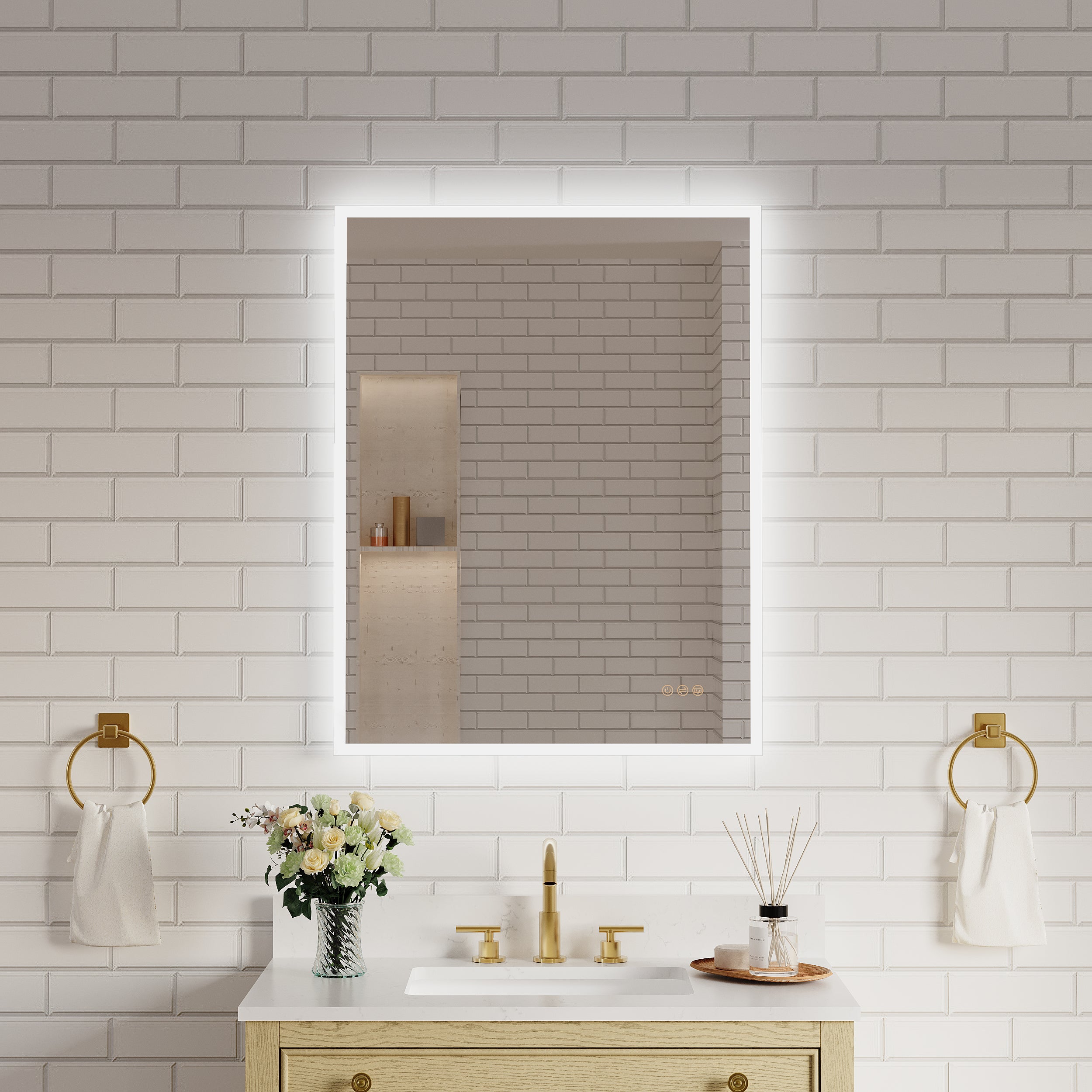
A soft white quartz with light gray or beige movement often provides a useful compromise. It keeps the room bright while reducing the appearance of small water marks. The choice should be viewed under the bathroom’s actual lighting, since warm and cool LEDs can change how stains and surface residue appear.
4. Inspect the Sink-to-Top Connection
The sink installation can create more maintenance problems than the countertop itself.
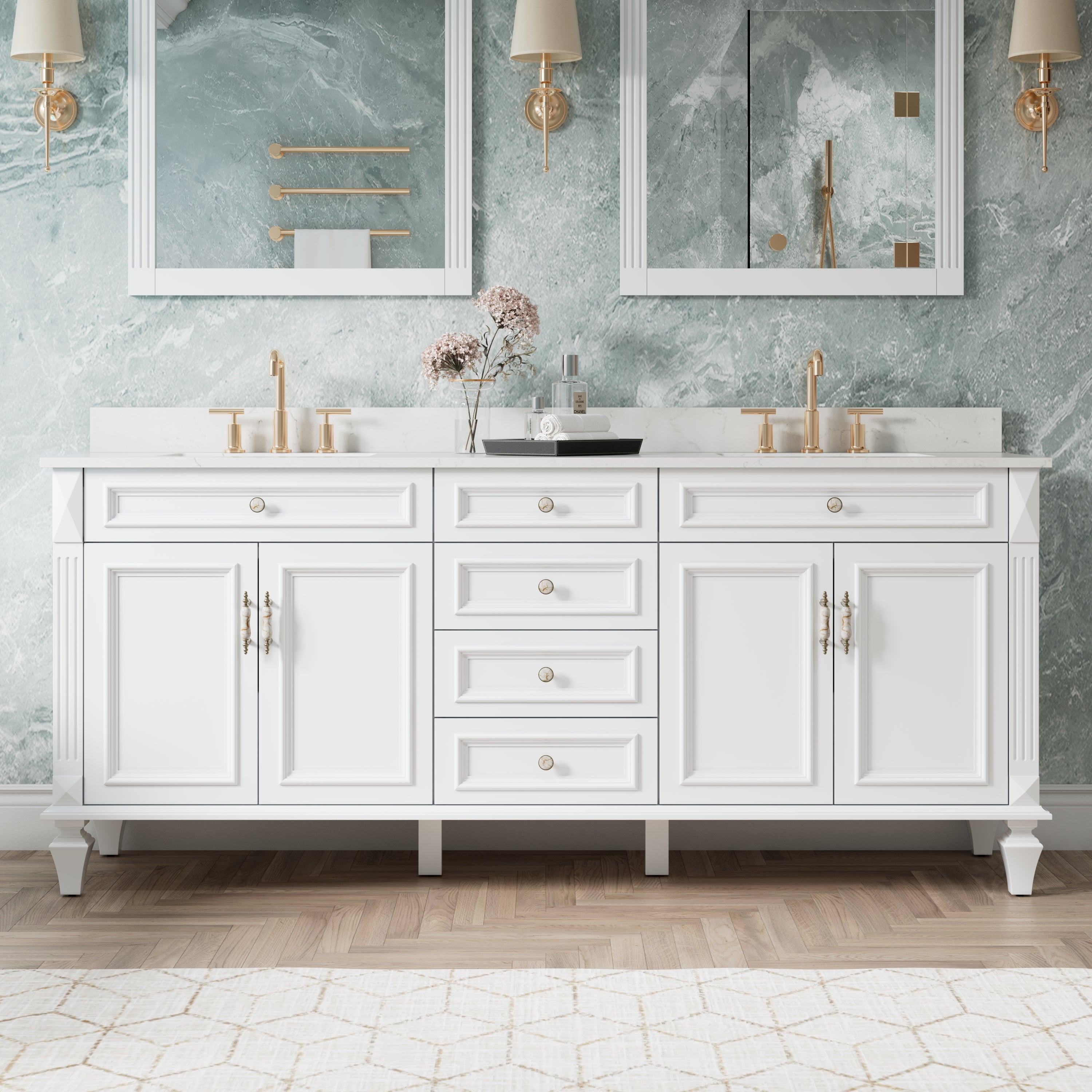
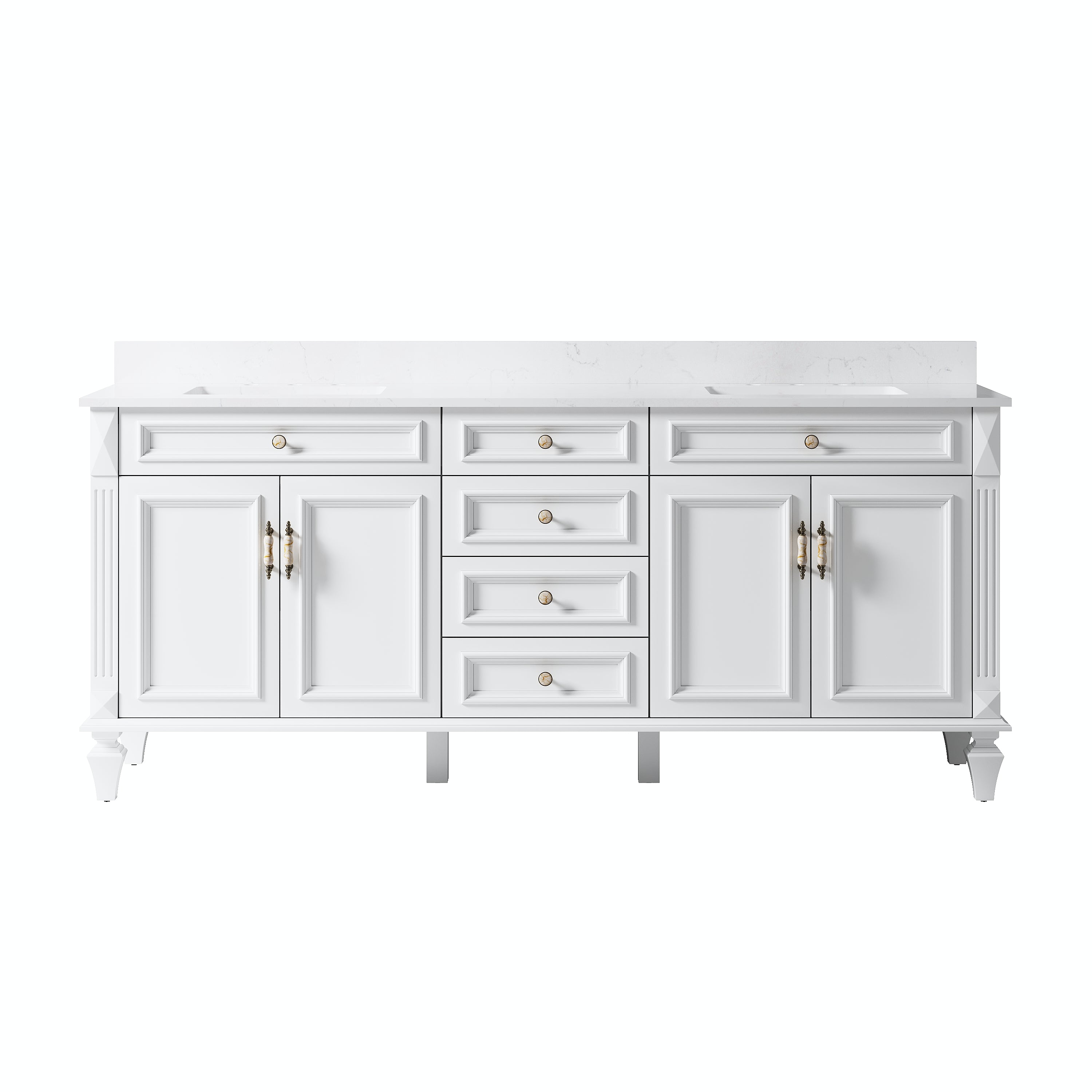
An undermount sink leaves the upper surface uninterrupted, so water and debris can be wiped directly into the basin. However, the joint beneath the countertop must be properly sealed. If the sealant separates, moisture and residue can collect along the edge.
An integrated sink removes that seam almost entirely. Cultured marble and solid-surface tops are often molded with the basin as one piece, reducing the number of joints that need cleaning. The trade-off is that damage to the sink may affect the entire top rather than one replaceable component.
Drop-in sinks create a visible rim. That rim can trap toothpaste, soap, and moisture unless it is cleaned regularly. For stain resistance, the material matters, but fewer exposed joints usually mean fewer places for residue to settle.

5. Check the Faucet Drilling Before Ordering
A 36-inch vanity top may be drilled for a single-hole, 4-inch centerset, or 8 inch widespread faucet. The drilling pattern needs to match the faucet before installation begins.
Using a deck plate to cover unused openings is possible in some cases, but it creates another perimeter where water and grooming products can collect. A correctly matched faucet produces a cleaner installation and reduces unnecessary seams.
Spout reach also matters. A faucet that directs water too close to the back of the basin can cause repeated splashing around the base. One that projects too far forward may send water toward the front edge. Either condition leaves the countertop wetter than it needs to be.
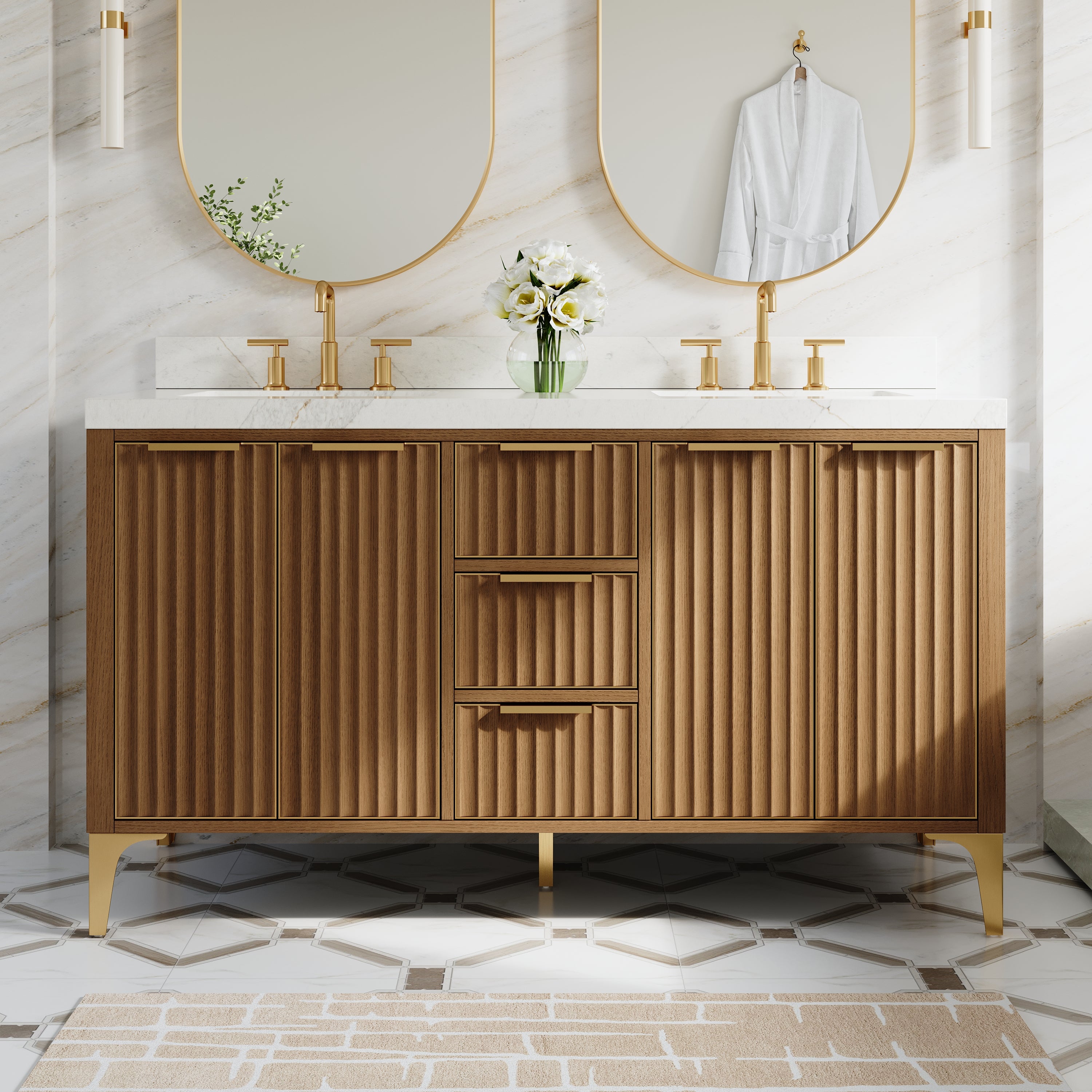
Before purchase, compare the faucet dimensions with the sink opening and the distance between the faucet holes and the basin. A product drawing is more dependable than judging the proportions from a lifestyle image.
6. Pay attention to back splashes and side splashes.
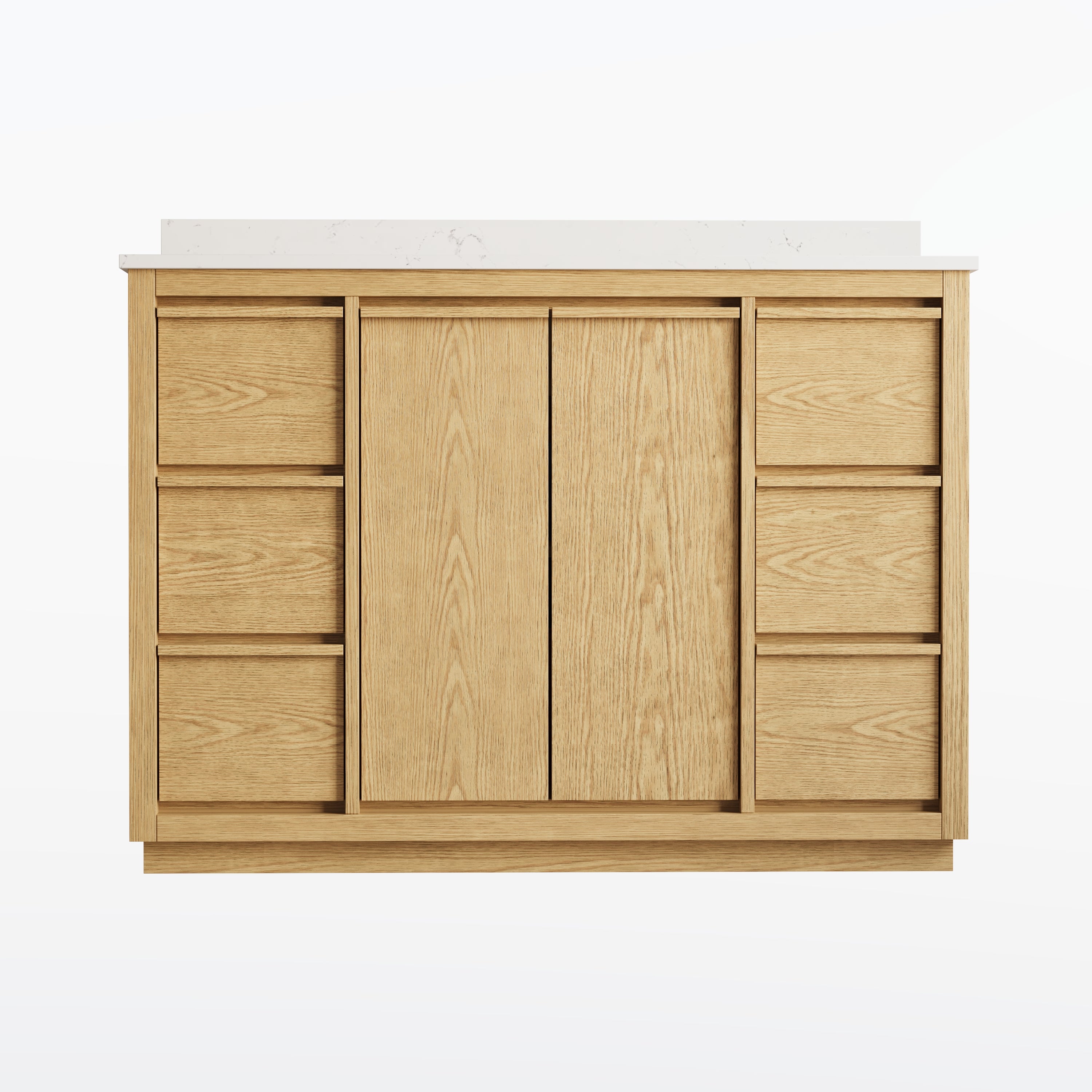
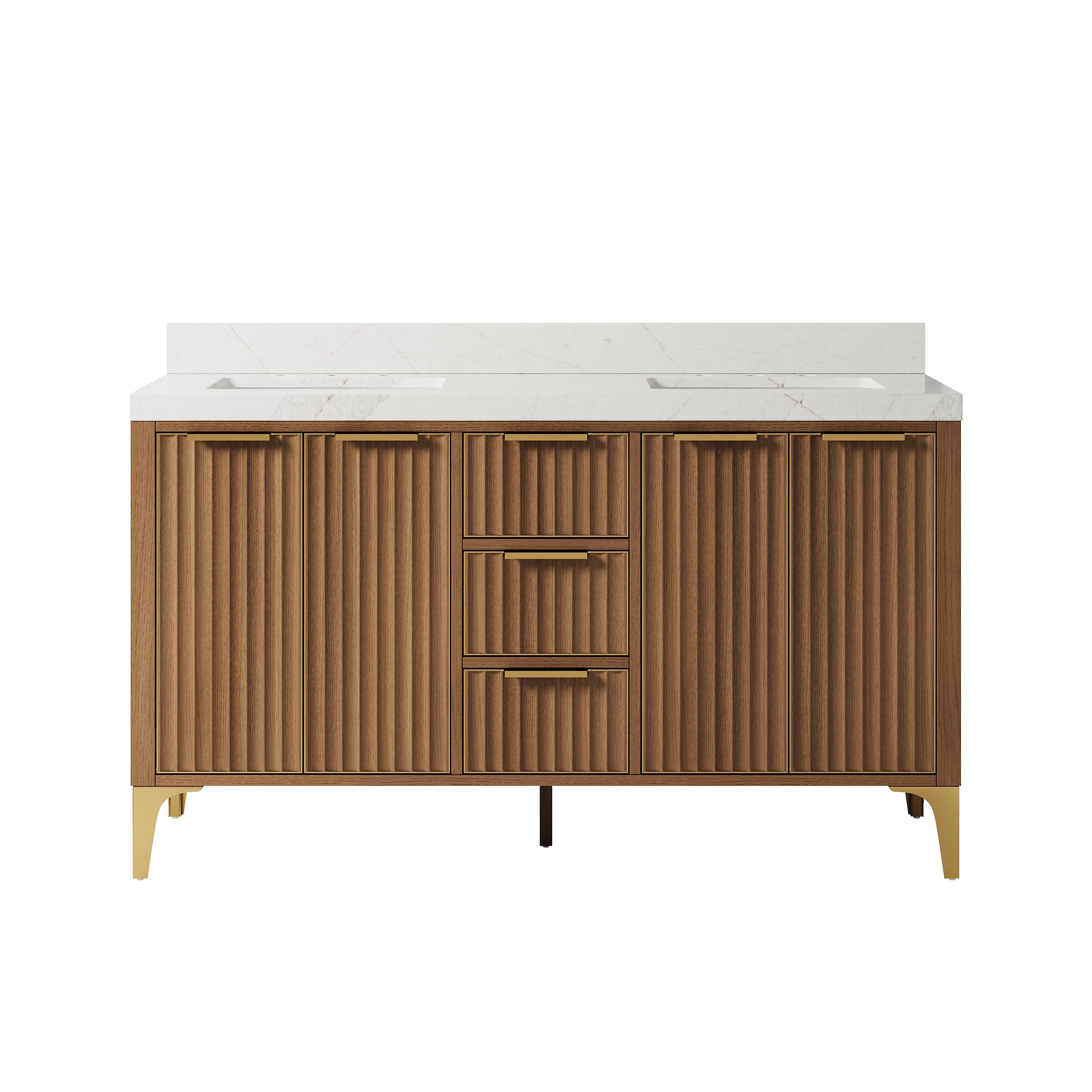
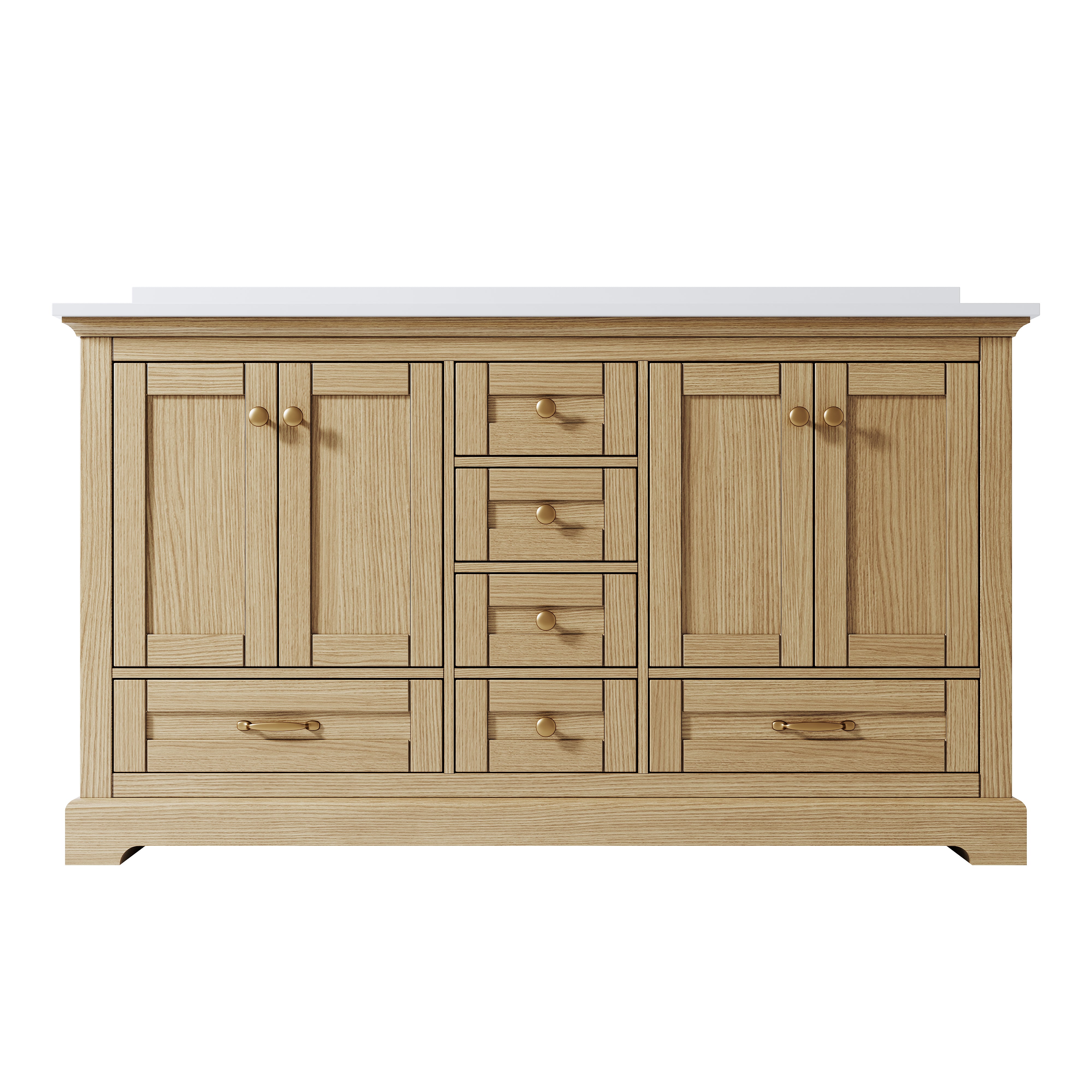
Many 36-inch bathroom vanities with tops include a 4-inch backsplash, but the package details vary. Some include only the top and sink. Others provide a back splash but sell the side splash separately.
A back splash protects the wall from water and toothpaste, yet the seam where it meets the countertop must be sealed neatly. Excess caulk can trap dirt, while gaps allow moisture to reach the wall or vanity cabinet.
A side splash is useful when the vanity sits tightly against a side wall. Without it, water may collect along the wall edge, particularly if the wall is uneven. Confirm that the side splash matches the top material and thickness. Similar-looking white surfaces can have noticeably different undertones.
A vanity installed between two walls also needs careful measurement. A nominal 36-inch cabinet may have a countertop that extends slightly beyond the cabinet box.
7. Look Beyond the Top to the Cabinet Finish
A stain-resistant countertop does not help much if splashes damage the cabinet below it.
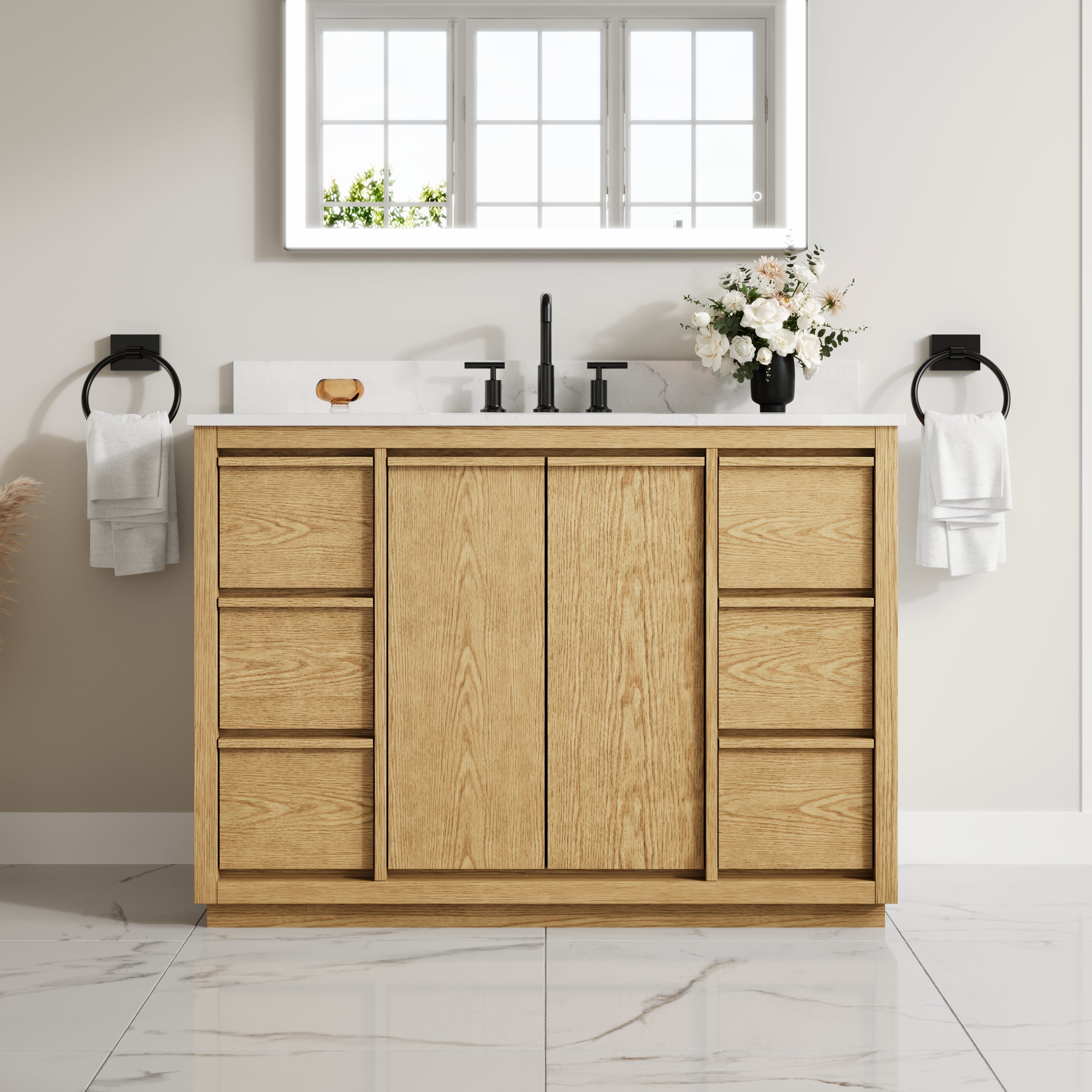
Water tends to collect around drawer fronts, door edges, and the area directly beneath an overhanging top. Painted cabinets should have consistent coverage along their edges. Wood vanities need a properly applied protective finish, especially near the sink and floor.
The EPA recommends controlling indoor moisture because damp materials support mold growth. It advises reducing indoor humidity to between 30% and 60% and using bathroom exhaust ventilation to remove moisture. (Source: U.S. Environmental Protection Agency) (US EPA)
Check the underside of the countertop, sink cutout, plumbing openings, and cabinet base for unfinished surfaces. These areas are rarely visible in promotional photography but can affect long-term performance after a small leak or repeated splashing.
8. Compare Daily Care Requirements
A countertop that needs frequent specialty treatment may not suit a bathroom shared by several people.
Engineered quartz generally requires simple cleaning and no regular sealing. Natural marble may need more careful care and periodic sealing. Granite and quartzite vary by slab and finish, so the supplier should provide material-specific instructions.
Avoid assuming that stronger cleaners produce better results. Bleach, solvents, abrasive powders, and rough pads may damage the finish or sealant. The correct response to a spill is usually prompt removal, followed by cleaning with mild products approved by the manufacturer.
Keep the care guide after installation. The vanity warranty may exclude damage caused by unapproved chemicals, and general stone-cleaning advice may not apply to every engineered or composite top.
9. Request Specifications That Can Be Verified
Useful product information should identify the countertop material, sink type, faucet-hole spacing, overall top dimensions, backsplash height, and maintenance requirements.
Ask whether the sink is already attached and whether the top arrives installed on the cabinet. A preattached top can reduce work at the job site, but the complete unit is heavier and more difficult to move through narrow doors. A separate top is easier to carry but requires leveling, adhesive, plumbing alignment, and sealing during installation.
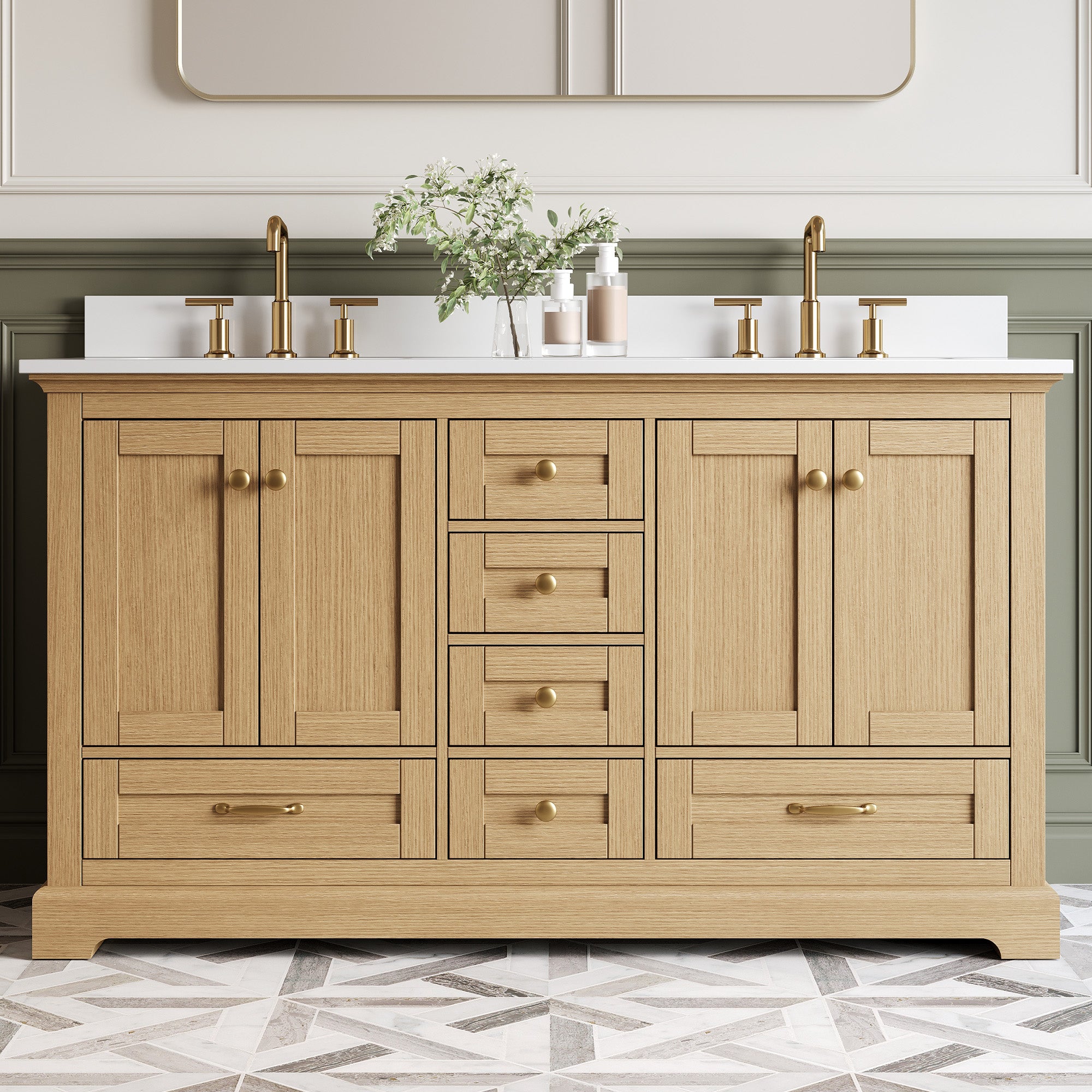
NKBA’s 2026 Bath Trends Report shows continued interest in practical, well-organized bathroom products, alongside natural materials and more personalized vanity design. Wood-faced vanities were identified by 62% of surveyed professionals, compared with 53% for painted finishes. (Source: NKBA 2026 Bath Trends Report) (NKBA)
For stain resistance, the safest selection is usually a nonporous top, a clean sink connection, properly matched faucet drilling, and minimal exposed seams. Those details are less dramatic than color or veining, but they have a much greater effect on how the vanity looks after years of toothpaste, water, cosmetics, and daily cleaning.














Leave a comment
This site is protected by hCaptcha and the hCaptcha Privacy Policy and Terms of Service apply.