














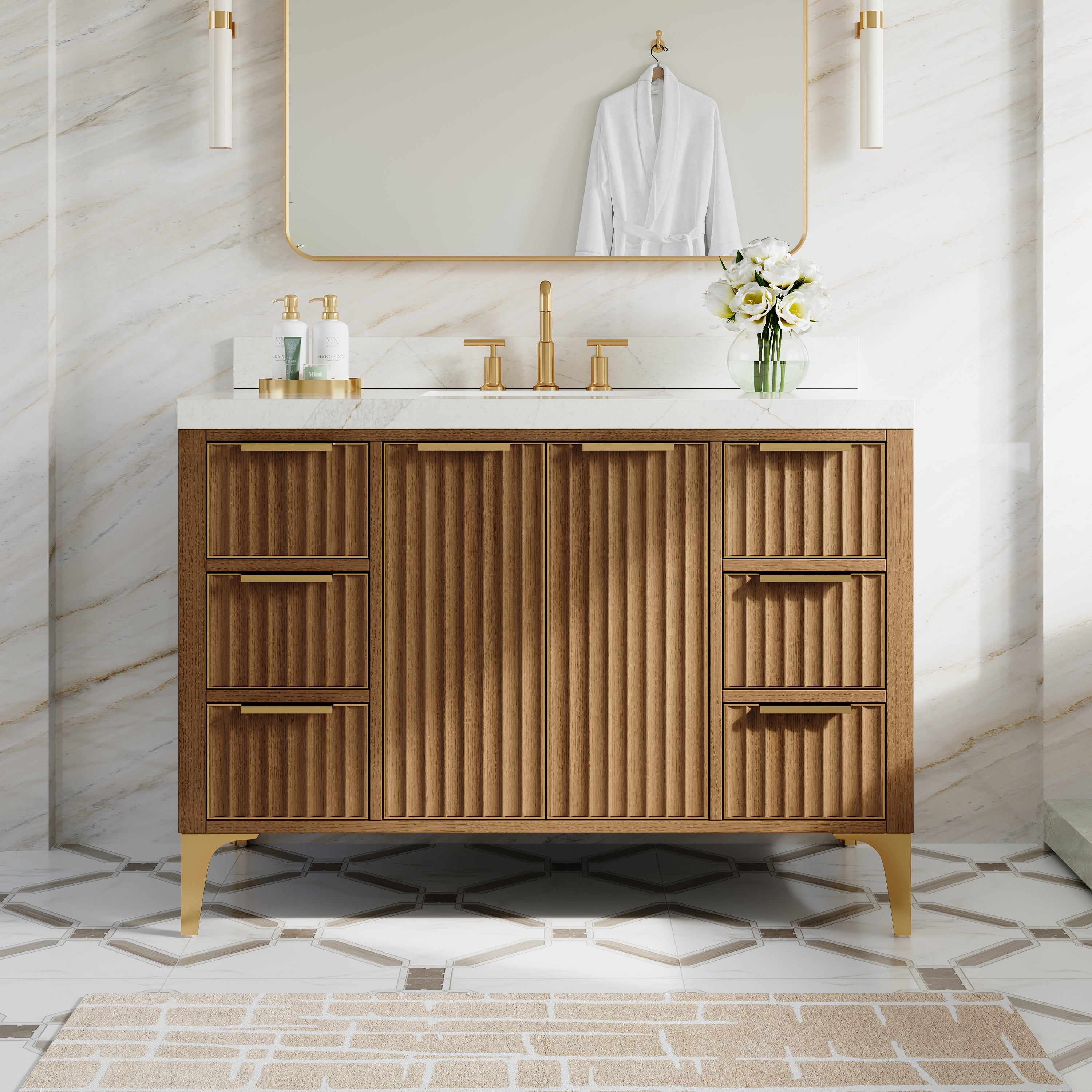
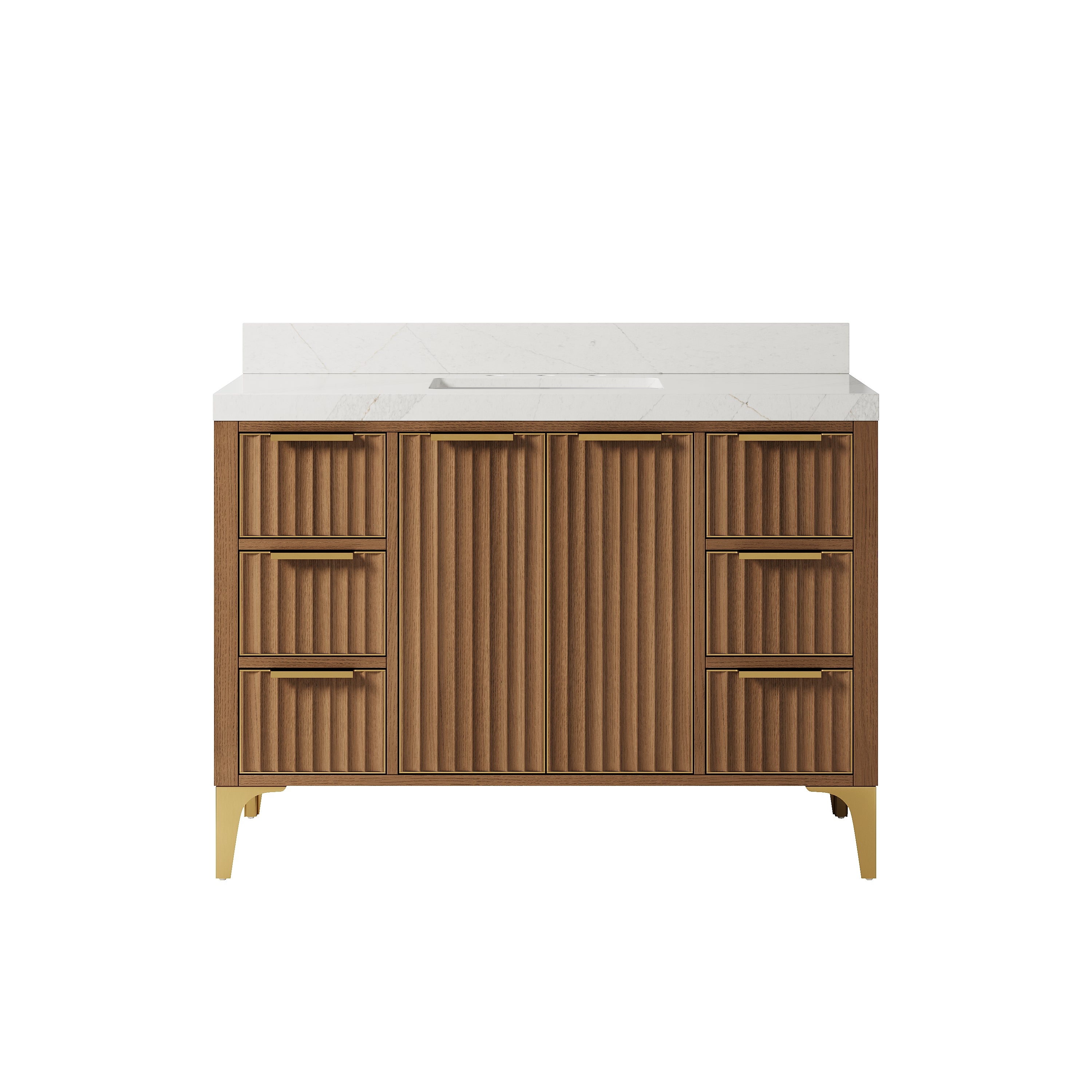


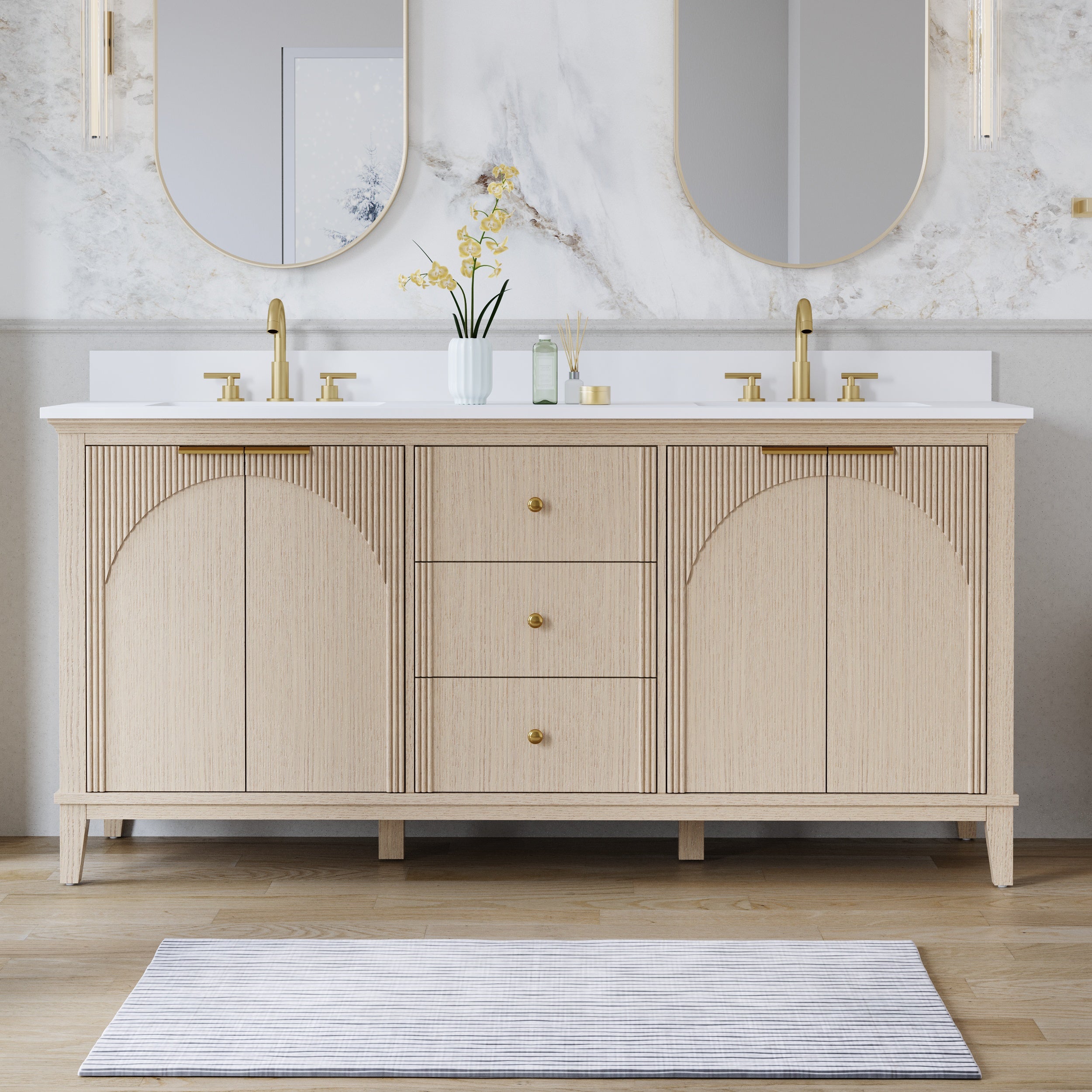
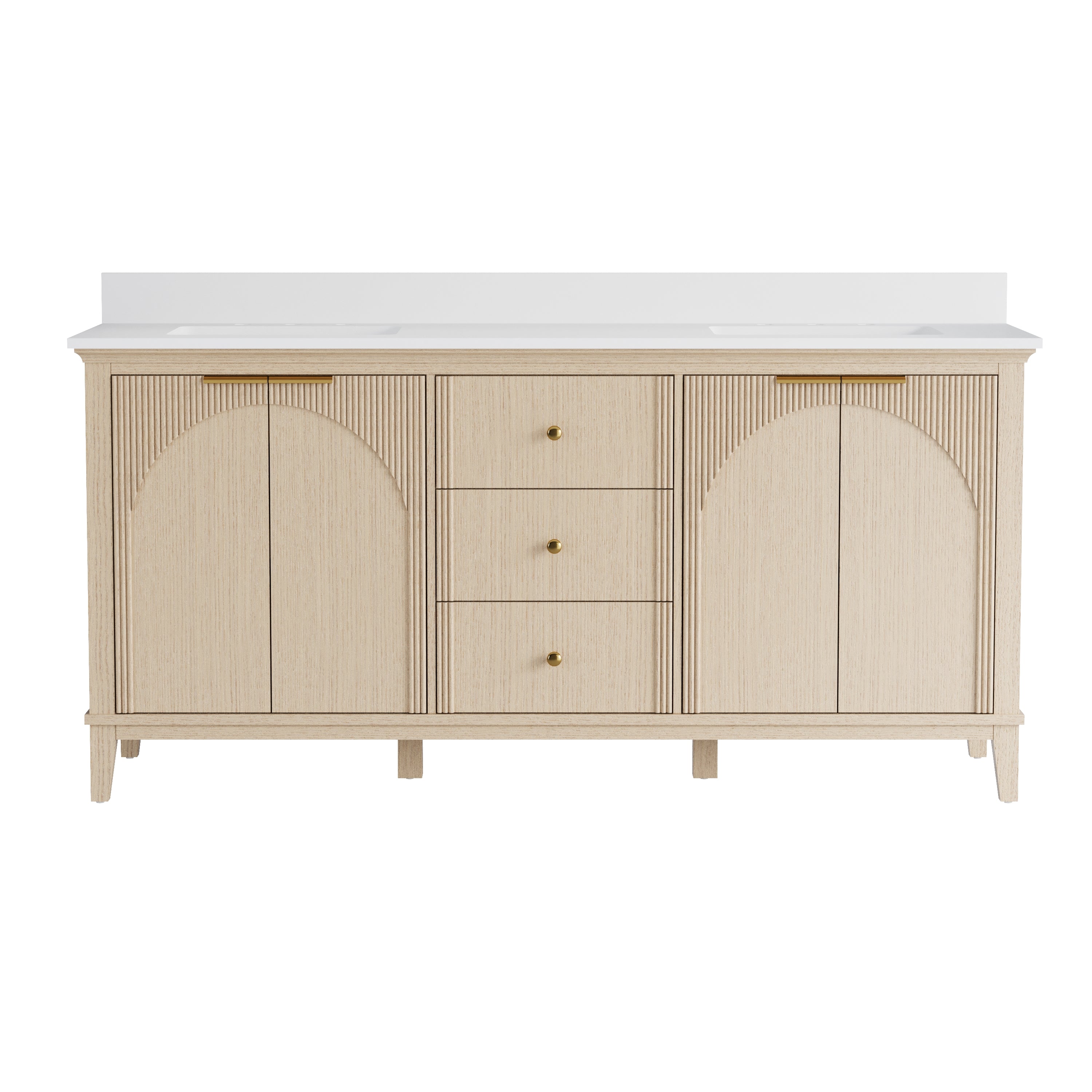
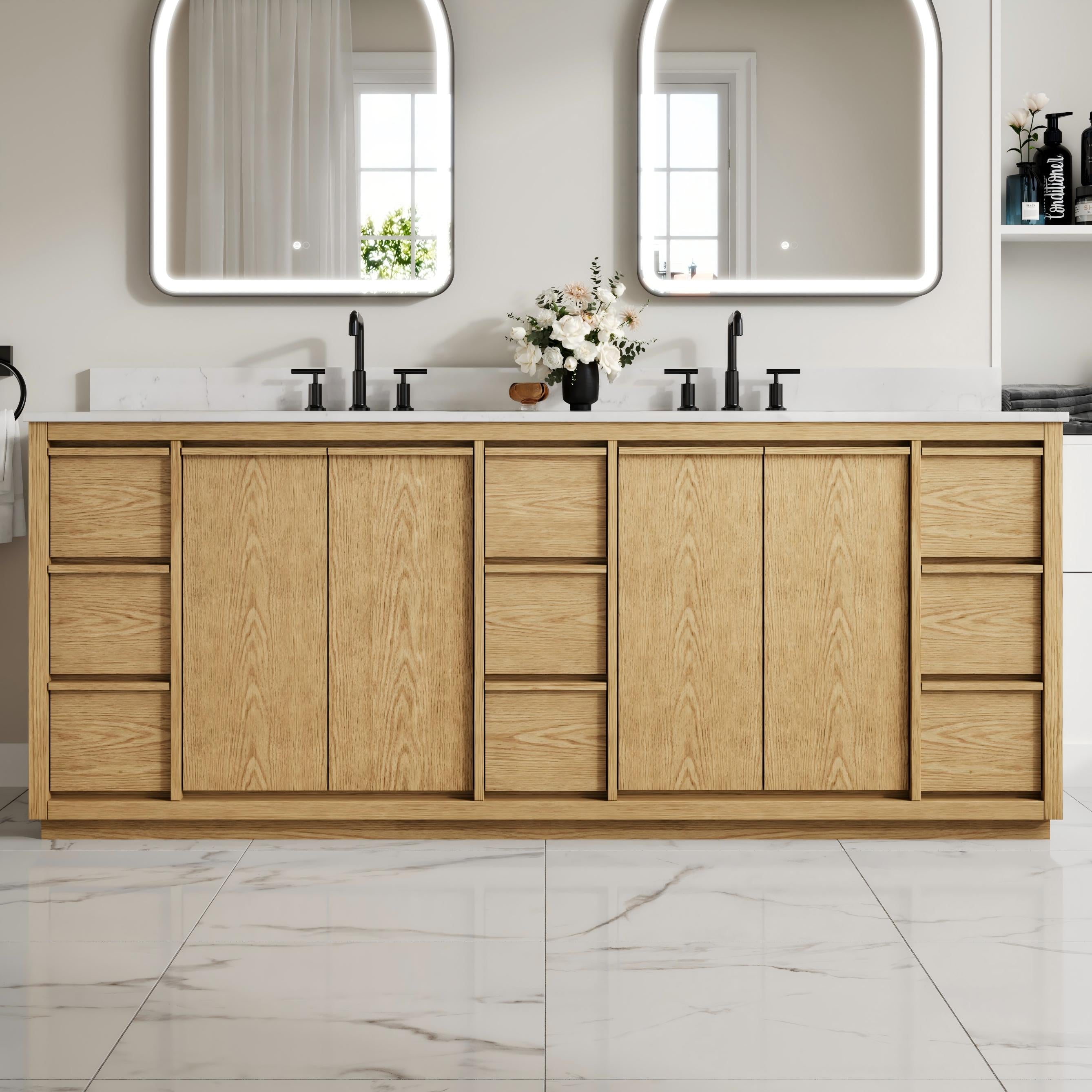
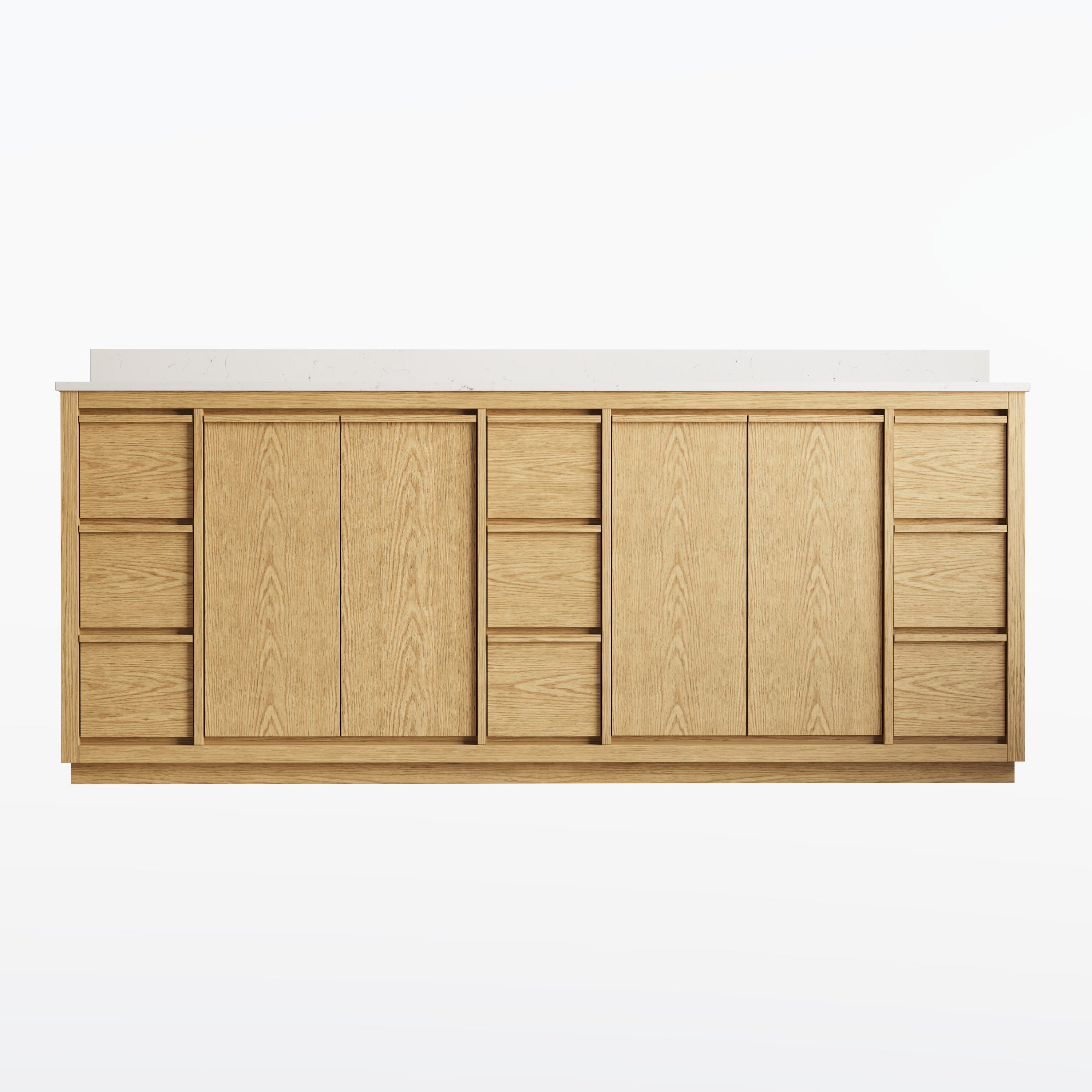
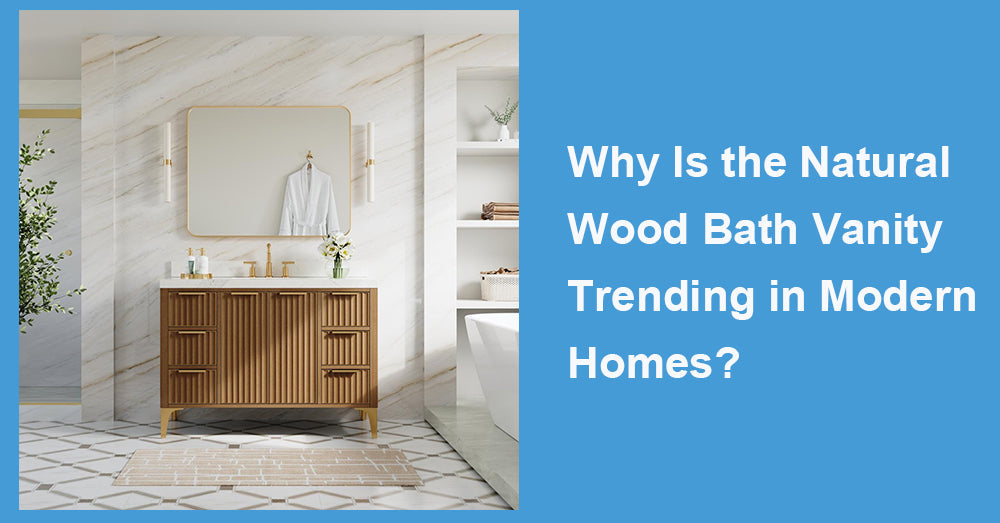
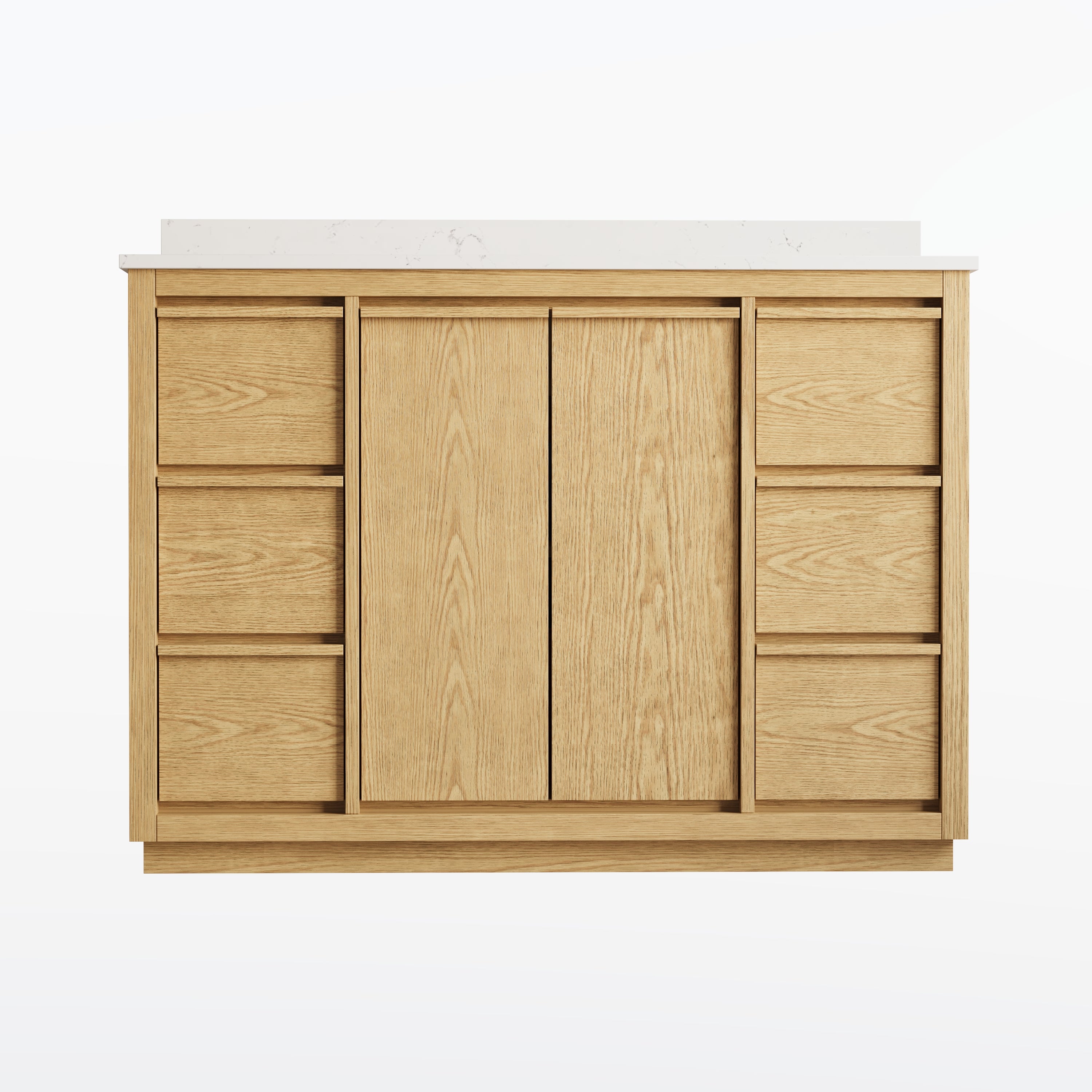
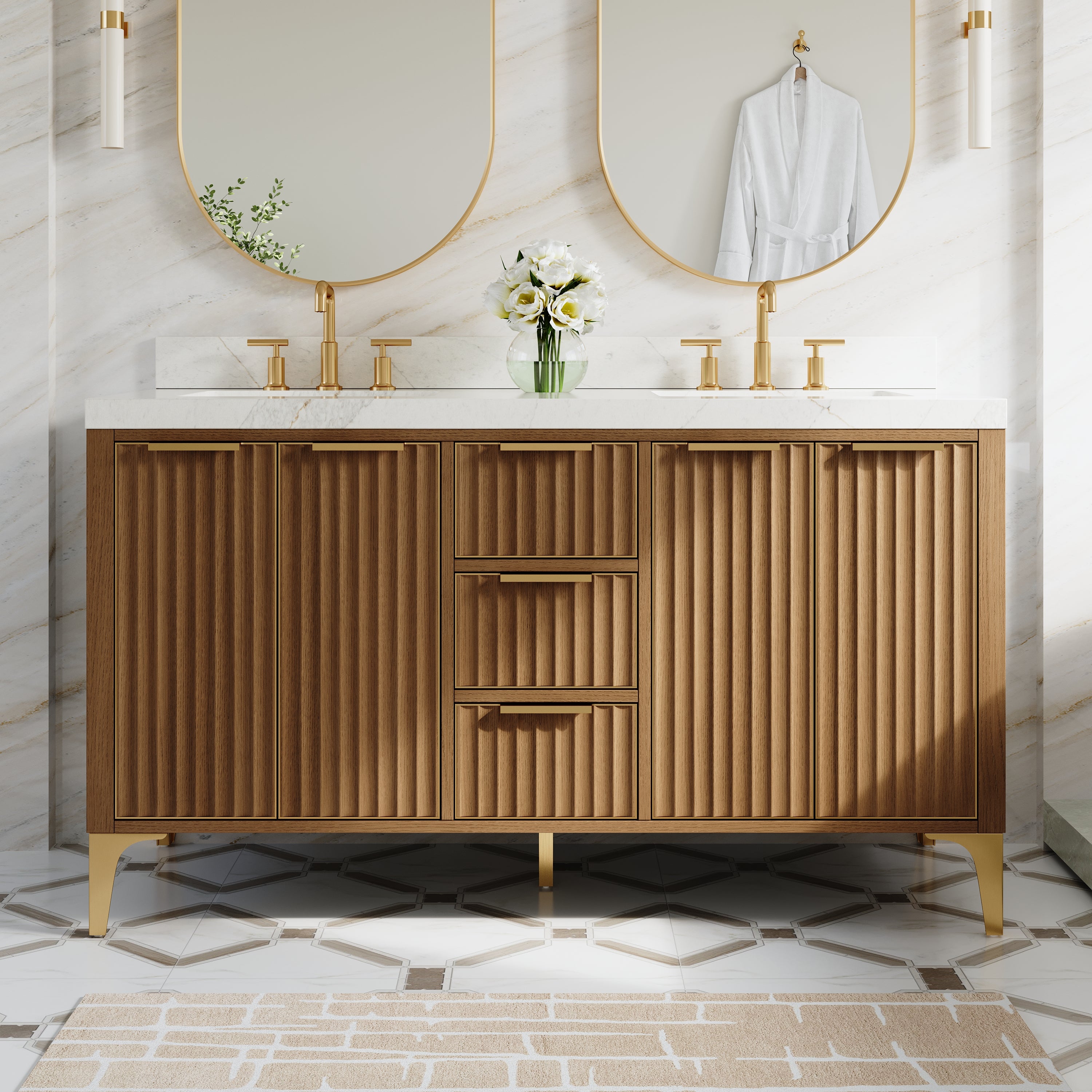
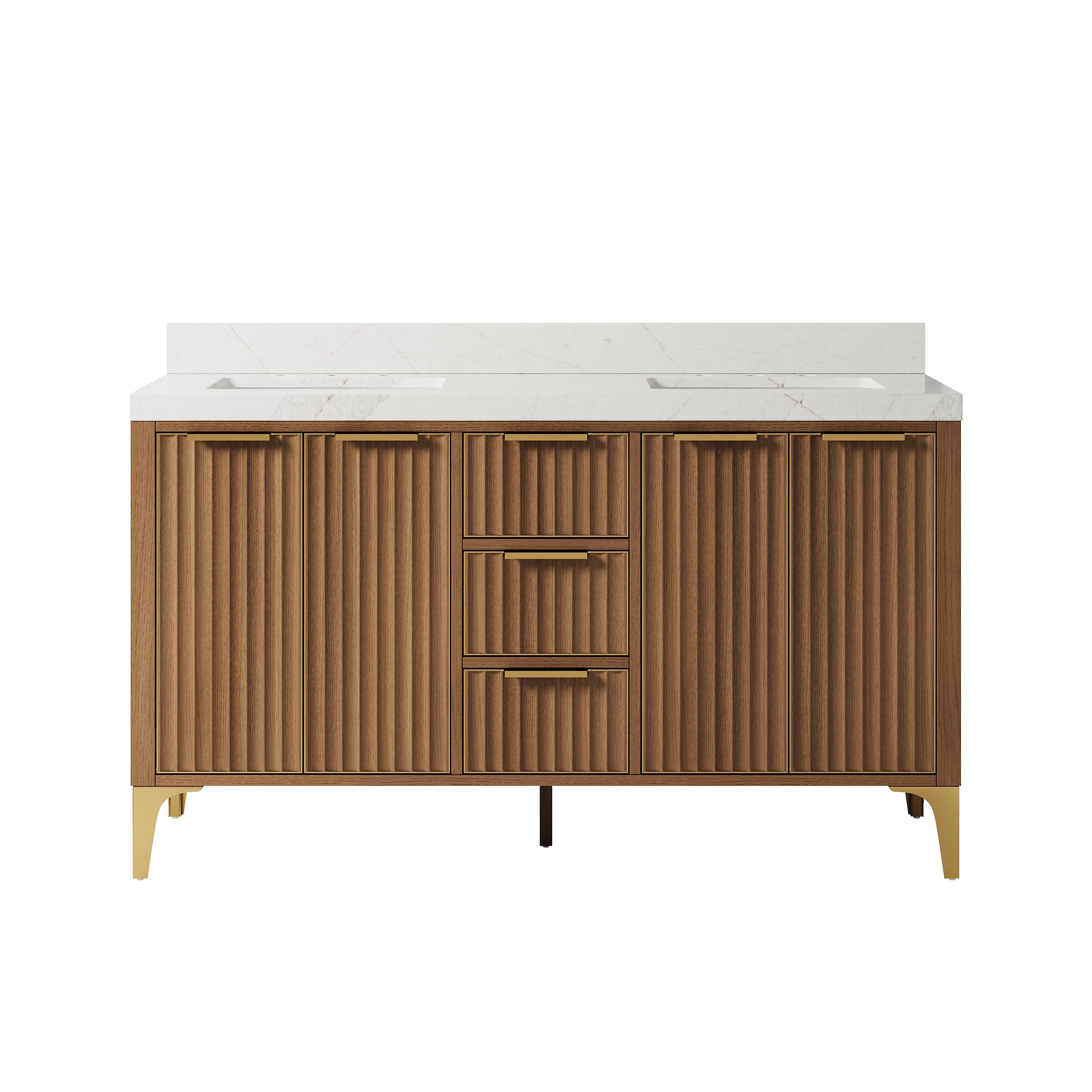
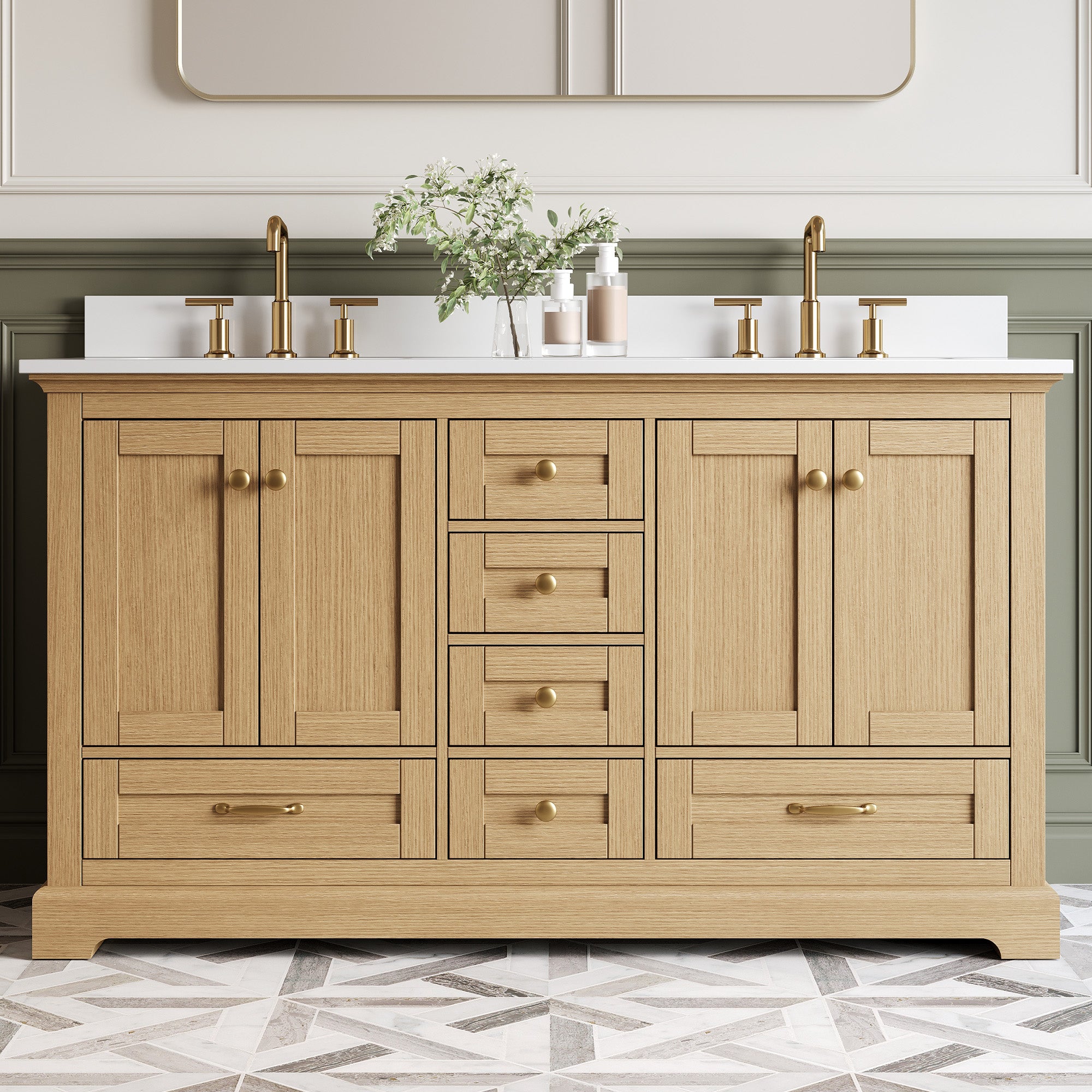
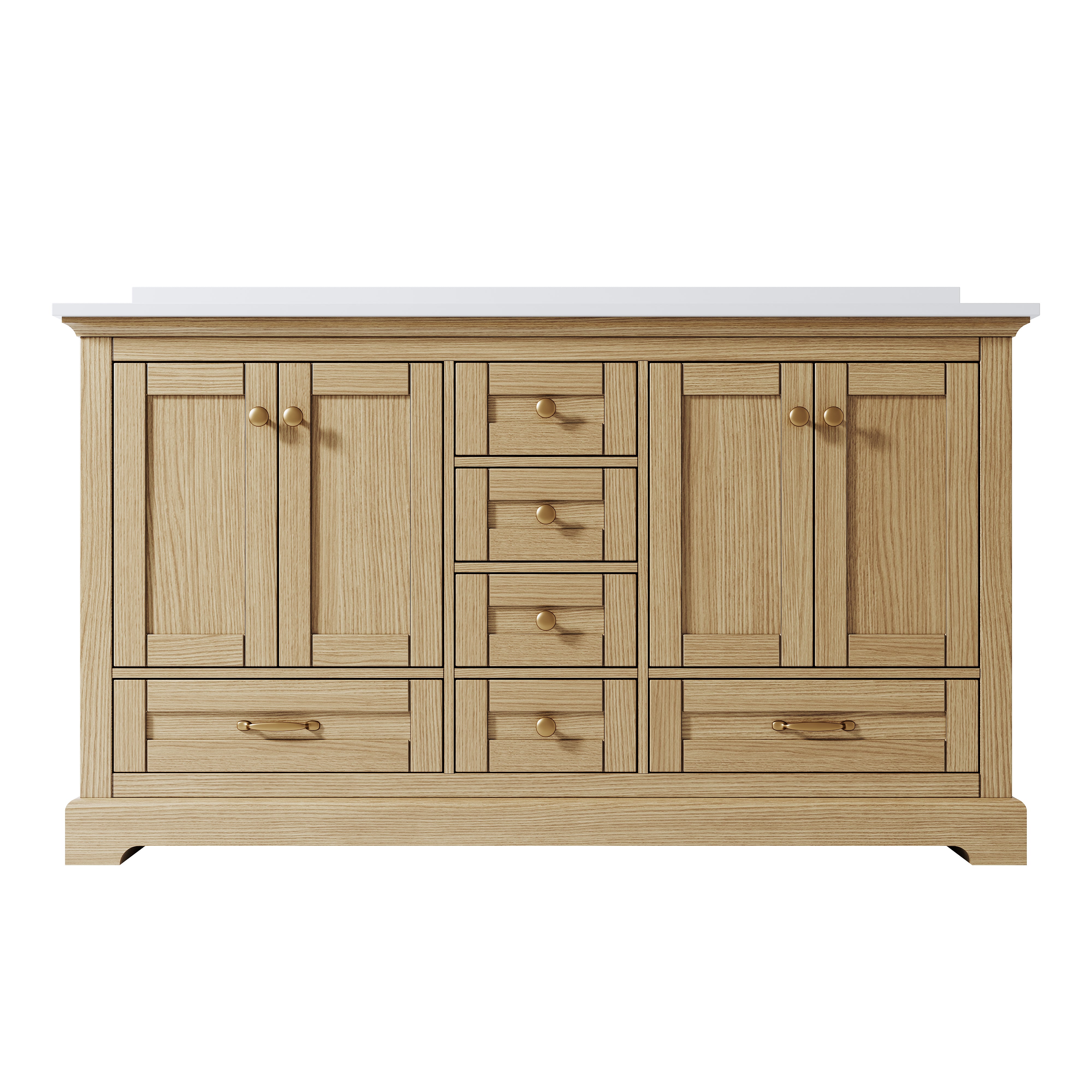
A natural wood bath vanity has become one of the most requested features in modern bathroom design, and the reason goes beyond a passing preference for oak. After more than 20 years of working with vanities, I have watched bathrooms move from ornate furniture styling to cool gray minimalism and, more recently, toward warmer interiors. Natural wood answers that shift well. It softens tile and glass, introduces visible texture, and gives a polished room a more comfortable character.
1. The Natural Wood Bath Vanity Supports Warmer Modernism
Modern bathrooms once relied heavily on bright white surfaces, cool gray finishes, and sharp black contrast. Many homeowners now want clean lines without a clinical feeling.
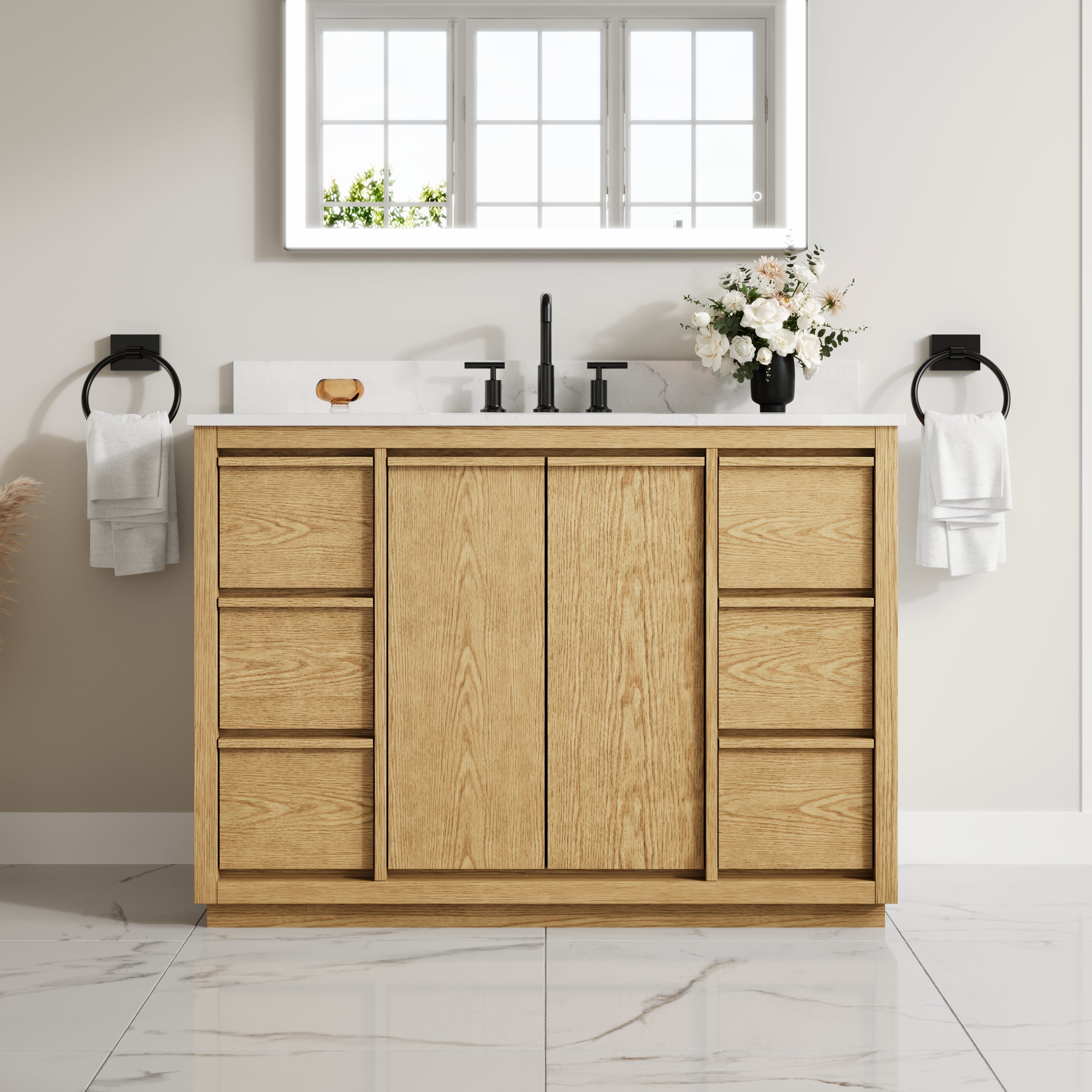
Natural wood provides that balance. A slab-front oak vanity looks streamlined, yet the grain prevents it from feeling flat. Walnut gives a larger bathroom depth. Pale ash can warm a compact room without creating the weight of a dark cabinet.
According to NKBA, wood-faced vanities have overtaken painted vanities in popularity, with 62% of respondents favoring wood-faced designs compared with 53% for painted finishes. The report connects this growth with continued interest in biophilic bathroom design.
(Source: NKBA)
2. Natural Materials Make Bathrooms Feel Less Artificial
Bathrooms contain many hard surfaces: tile, glass, metal, mirrors, quartz, and ceramic. Together, they can feel cold.
Wood changes that balance. In a primary bathroom, a light wood vanity beside warm stone tile can make an early morning routine feel less harsh. In a guest bath, a furniture-style cabinet can add character without expensive decorative wall treatments.
Houzz’s 2026 design coverage points toward warm wood tones, matte finishes, slab-front cabinetry, and restrained hardware as part of a more inviting approach to modern interiors.
(Source: Houzz)
Wood Does Not Automatically Create Harmony
A common mistake is adding a wood vanity while leaving every other decision cold and disconnected. A yellow-toned oak cabinet beside blue-gray tile and harsh cool lighting may look misplaced rather than calming.
The undertones should relate. Natural wood does not need to match the floor, but the materials should feel intentional together.
3. The Style Works Across More Homes Than Buyers Expect
A natural wood vanity is not limited to rustic bathrooms. Flat-panel doors suit contemporary spaces. Light oak works naturally in Scandinavian and Japandi interiors. Medium walnut can bridge modern fixtures with traditional architecture, making it useful in transitional renovations.
The advantage is flexibility. Hardware, mirrors, lighting, and wall colors can change later while the wood remains relevant.
There is a limitation. Strong grain can compete with dramatic stone or patterned tile. When the room already has a major visual feature, I prefer a quieter finish.
Light, Medium, or Dark?
Light wood is usually the safest choice for small bathrooms and rooms with limited daylight. It adds warmth while keeping the space visually open.
Medium tones are forgiving in family bathrooms because they hide minor dust and ordinary marks. Dark walnut can look sophisticated in a spacious primary suite, but it needs good lighting and enough contrast.
4. Better Construction Makes the Trend Worth Following
A popular finish does not guarantee a durable vanity. I have seen inexpensive wood-look cabinets fail because the base absorbed water or the veneer lifted near the sink.
Check what the cabinet is actually made from. Solid wood frames and drawer fronts can provide strength. Quality plywood often performs well for cabinet boxes because it remains comparatively stable as humidity changes. Properly sealed engineered materials may also be suitable.
The weak points are usually exposed edges, thin particleboard, poor drawer construction, and vague material descriptions.
Natural wood also offers repair potential. Minor scratches can sometimes be touched up, hardware can be replaced, and certain finishes can be refreshed.
5. Know Where a Wood Vanity Works—and Where It Does Not
Natural wood performs well in ventilated primary baths, guest bathrooms, and family spaces where ordinary splashes are wiped promptly. It is especially useful when the design needs warmth without added ornament.
It is less suitable for a frequently flooded wet room, a bathroom with unresolved plumbing leaks, or a rental where maintenance is likely to be neglected. Wood is moisture-resistant when properly finished; it is not waterproof.
A floating design creates a lighter appearance and simplifies floor cleaning, but it may provide less storage. A freestanding cabinet usually offers more capacity, though it can feel bulky in a tight layout.

6. Installation and Maintenance Protect the Finish
Before ordering, measure the wall, cabinet depth, countertop overhang, plumbing position, and drawer clearance. Compare the vanity interior with the existing drain and supply lines.
Install the cabinet level. Seal the sink, faucet openings, countertop, and backsplash carefully. Test every plumbing connection before filling the storage areas.
Maintenance should stay simple. Run the exhaust fan after showers, wipe standing water, and use a soft cloth with a mild, non-abrasive cleaner. Avoid leaving wet towels against the cabinet face. Check beneath the sink several times a year for slow leaks.
For homeowners comparing Wellfor models, the best choice is not simply the trendiest tone. Look for durable construction, a finish that relates to the room’s lighting and tile, and storage that supports daily routines. A well-selected natural wood bath vanity will bring warmth to a modern bathroom without making it feel rustic, and with proper care, it can remain convincing long after the current design cycle has moved on.














Leave a comment
This site is protected by hCaptcha and the hCaptcha Privacy Policy and Terms of Service apply.