














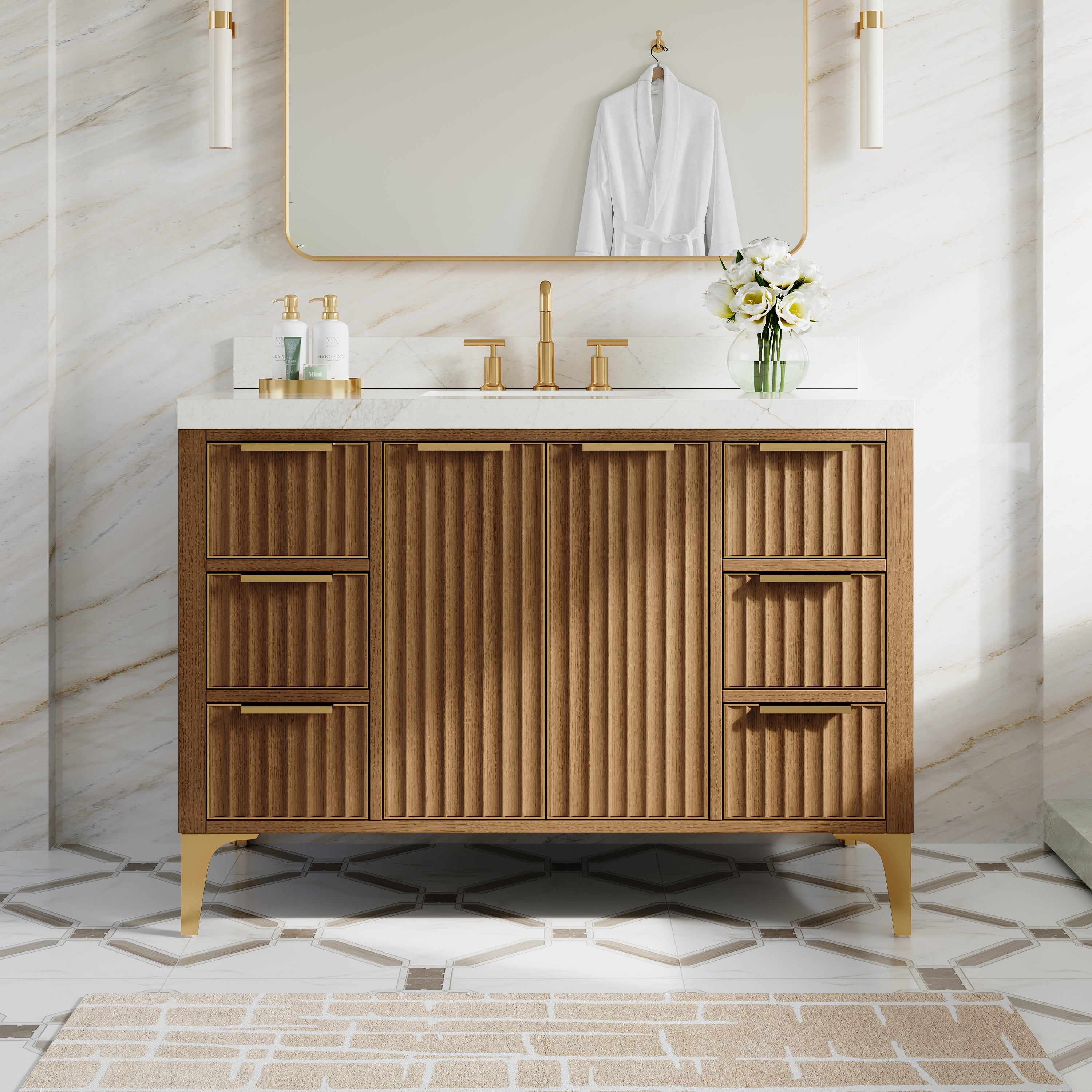
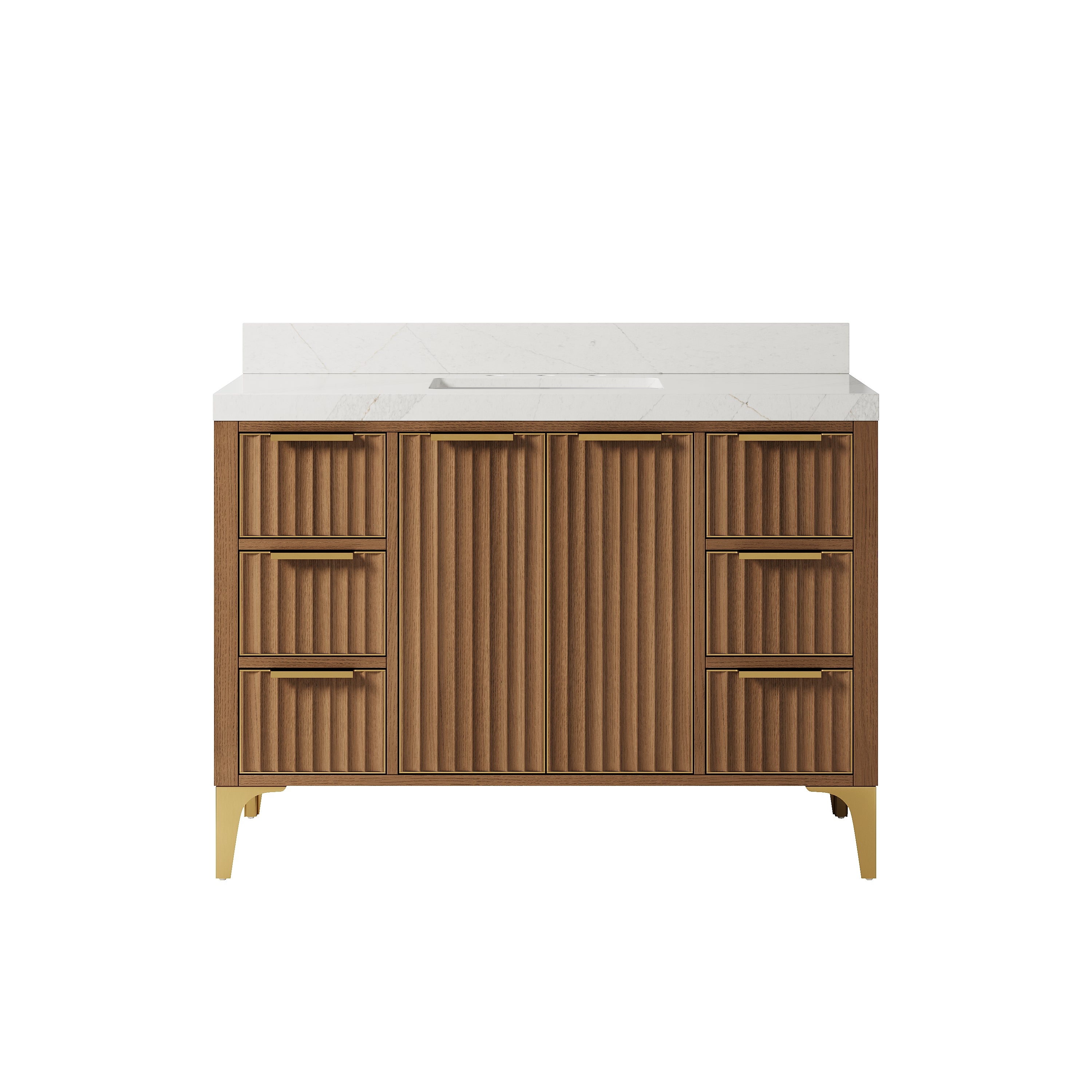


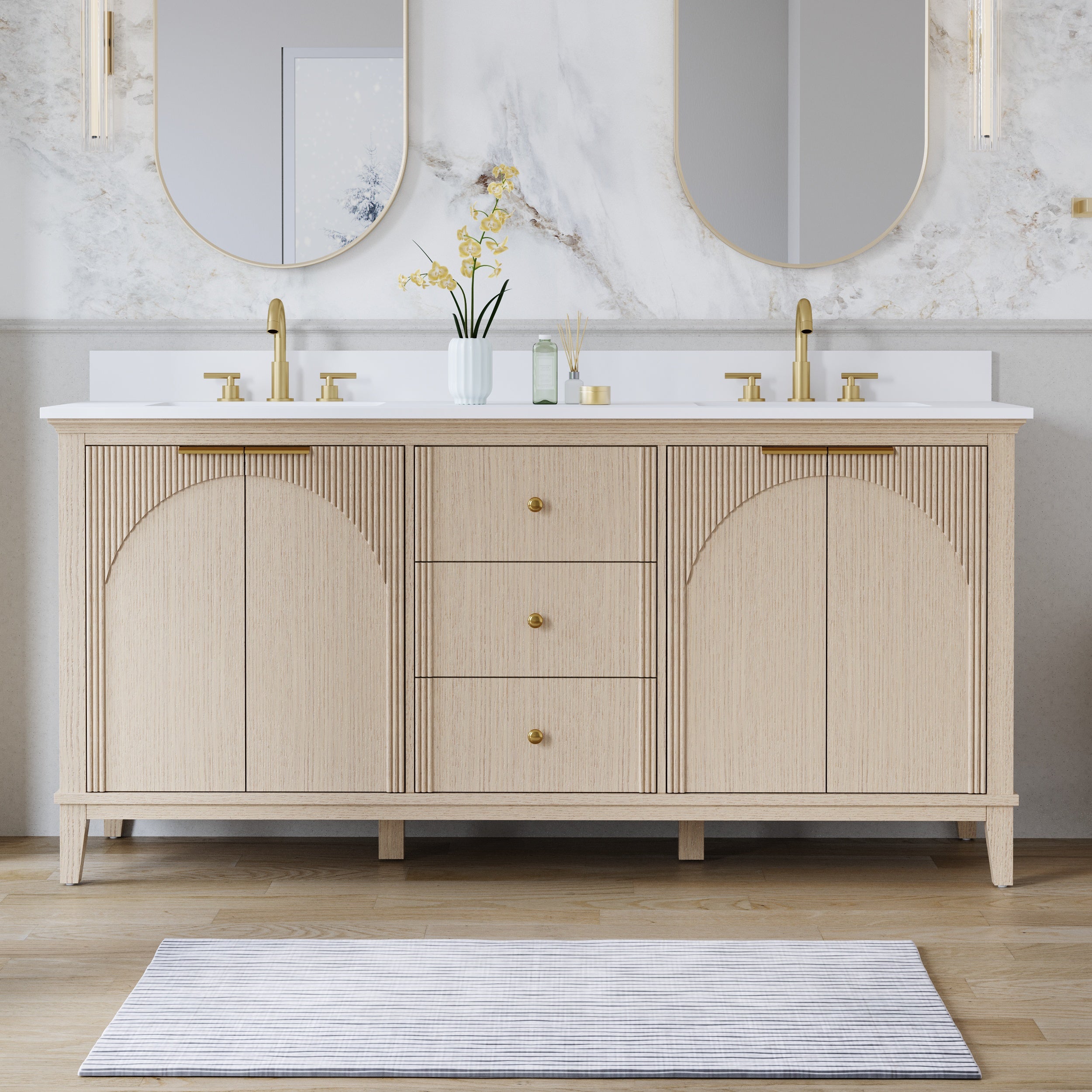
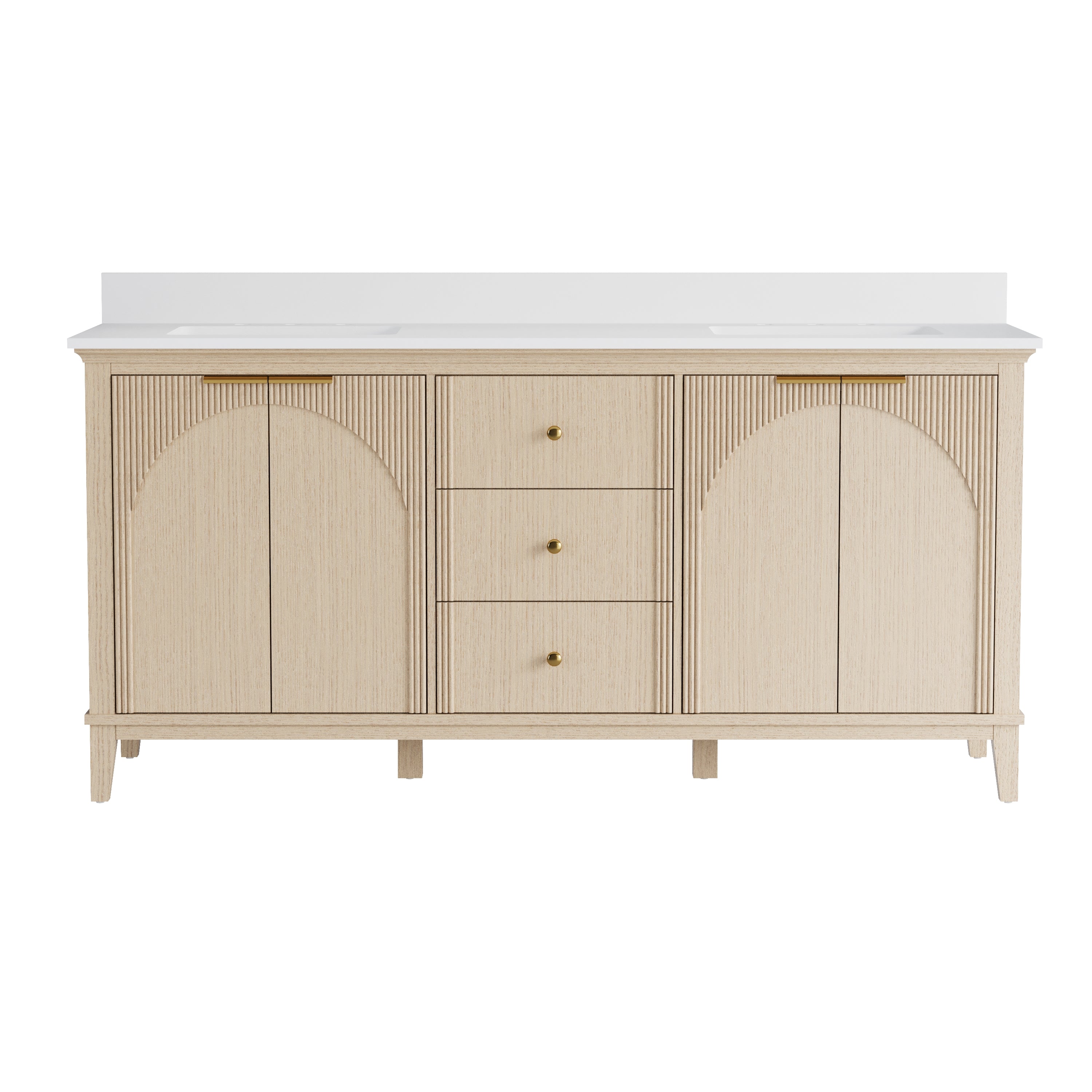
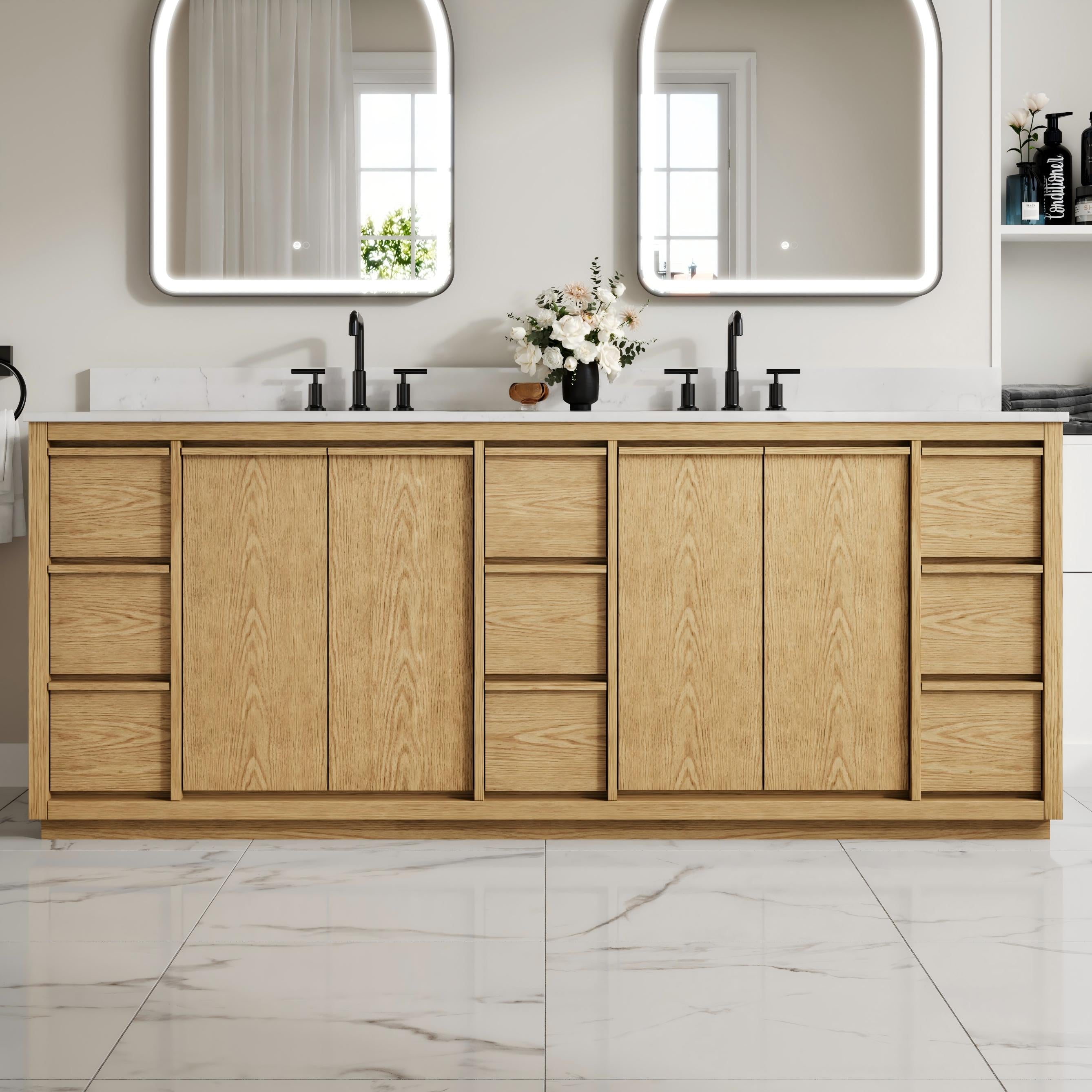
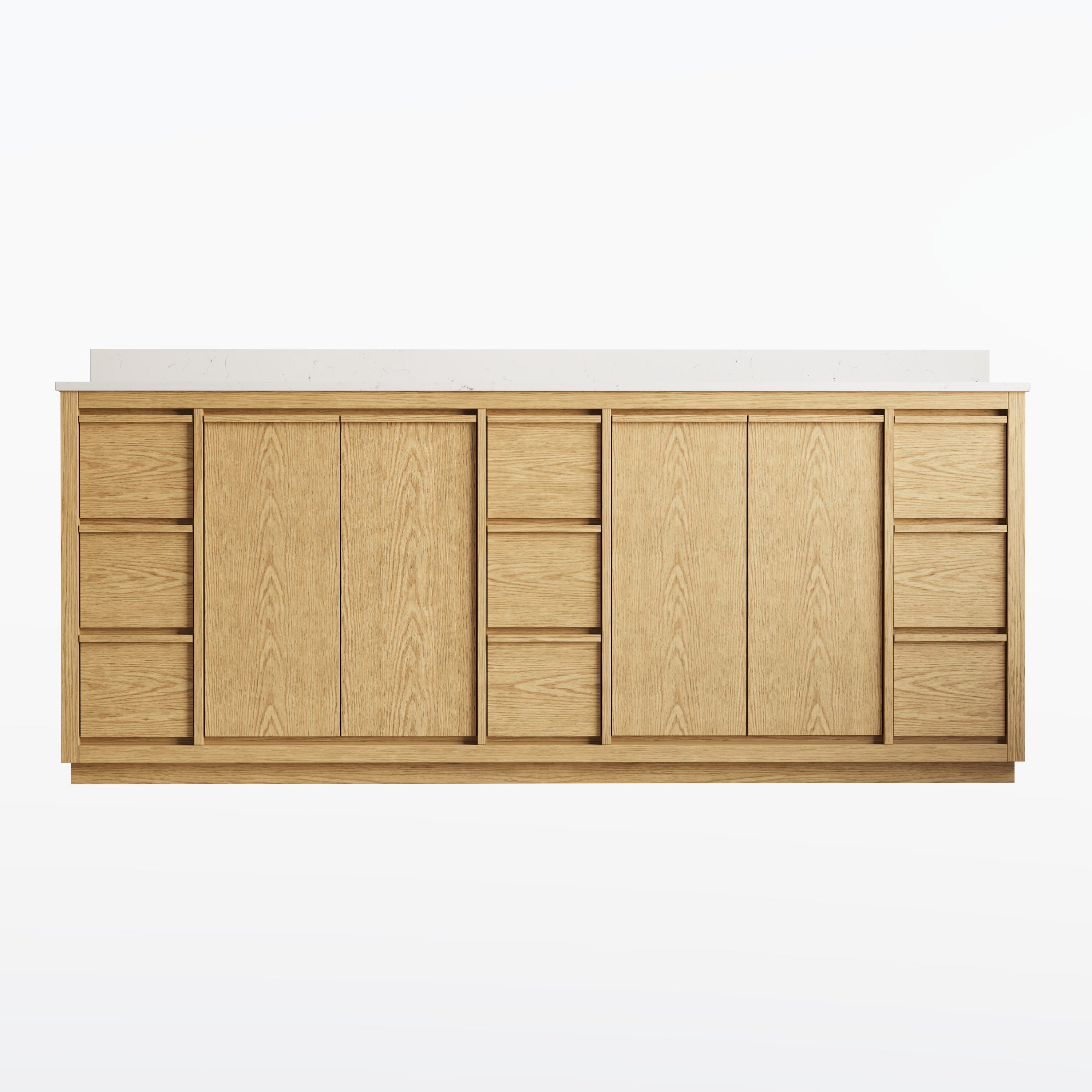
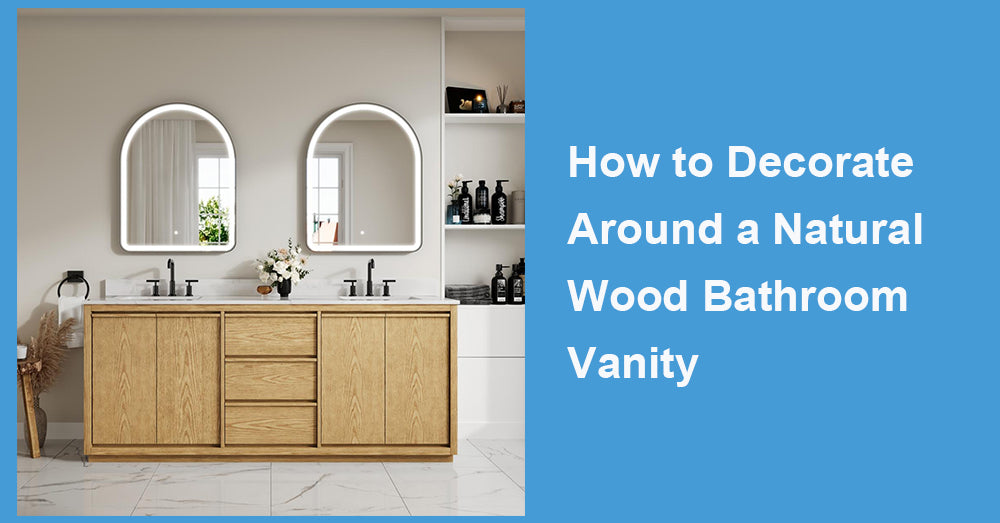
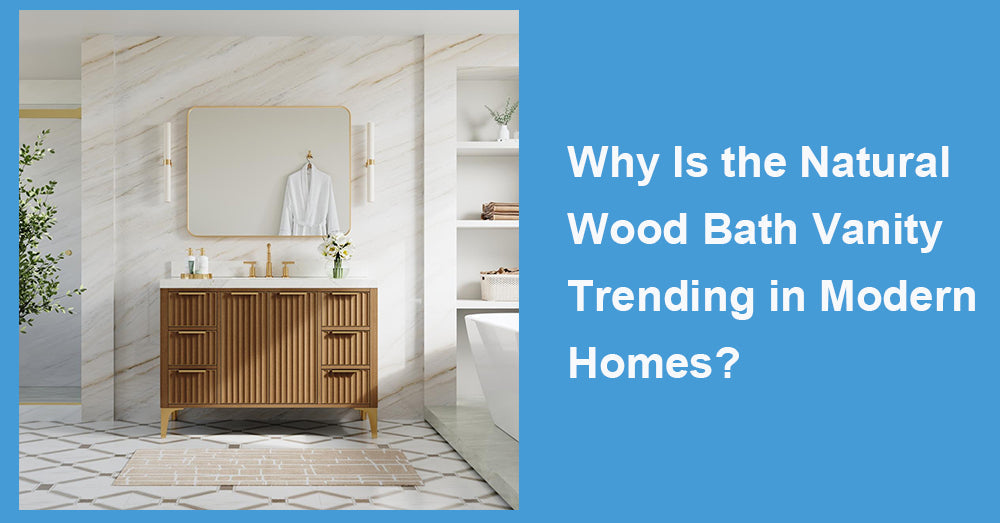
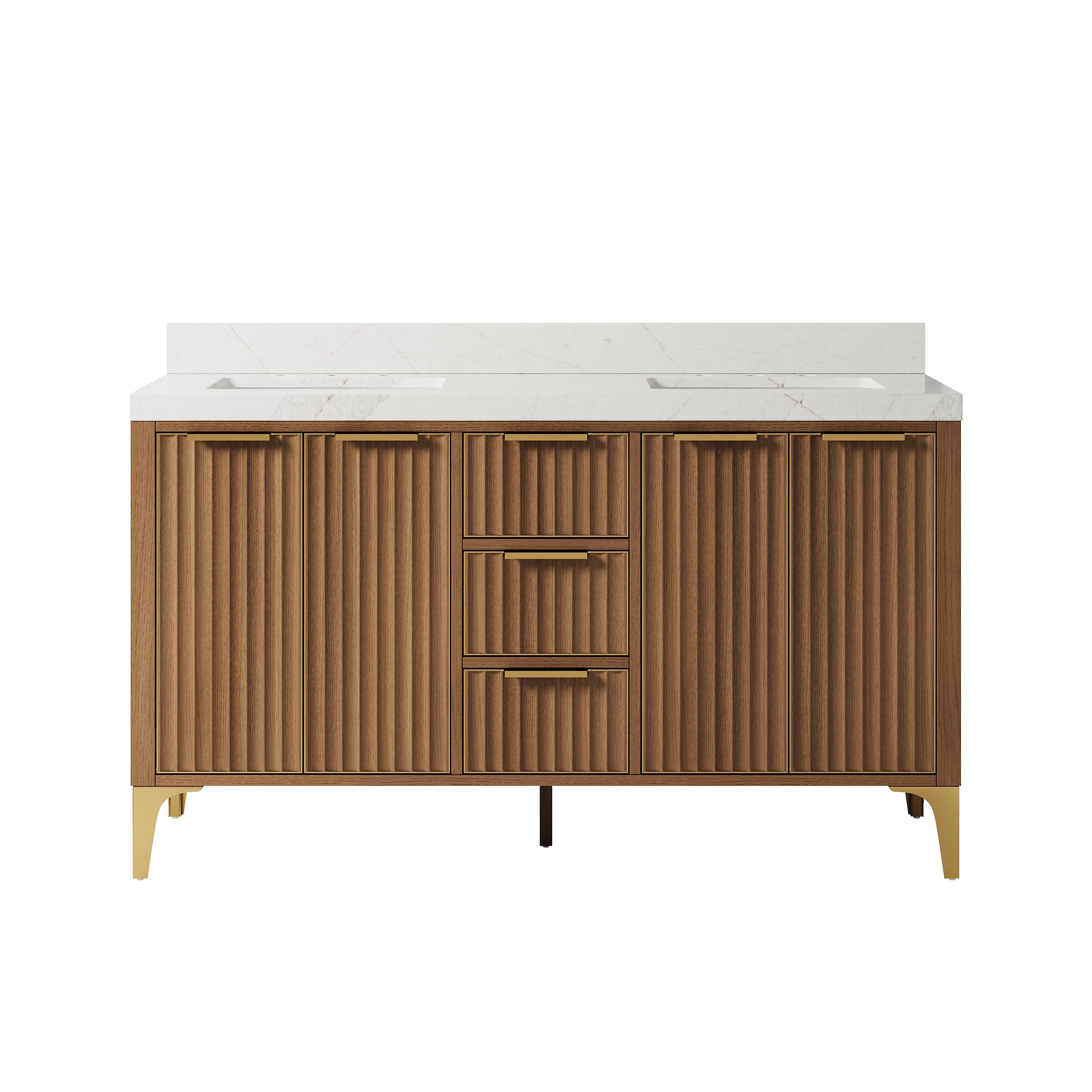
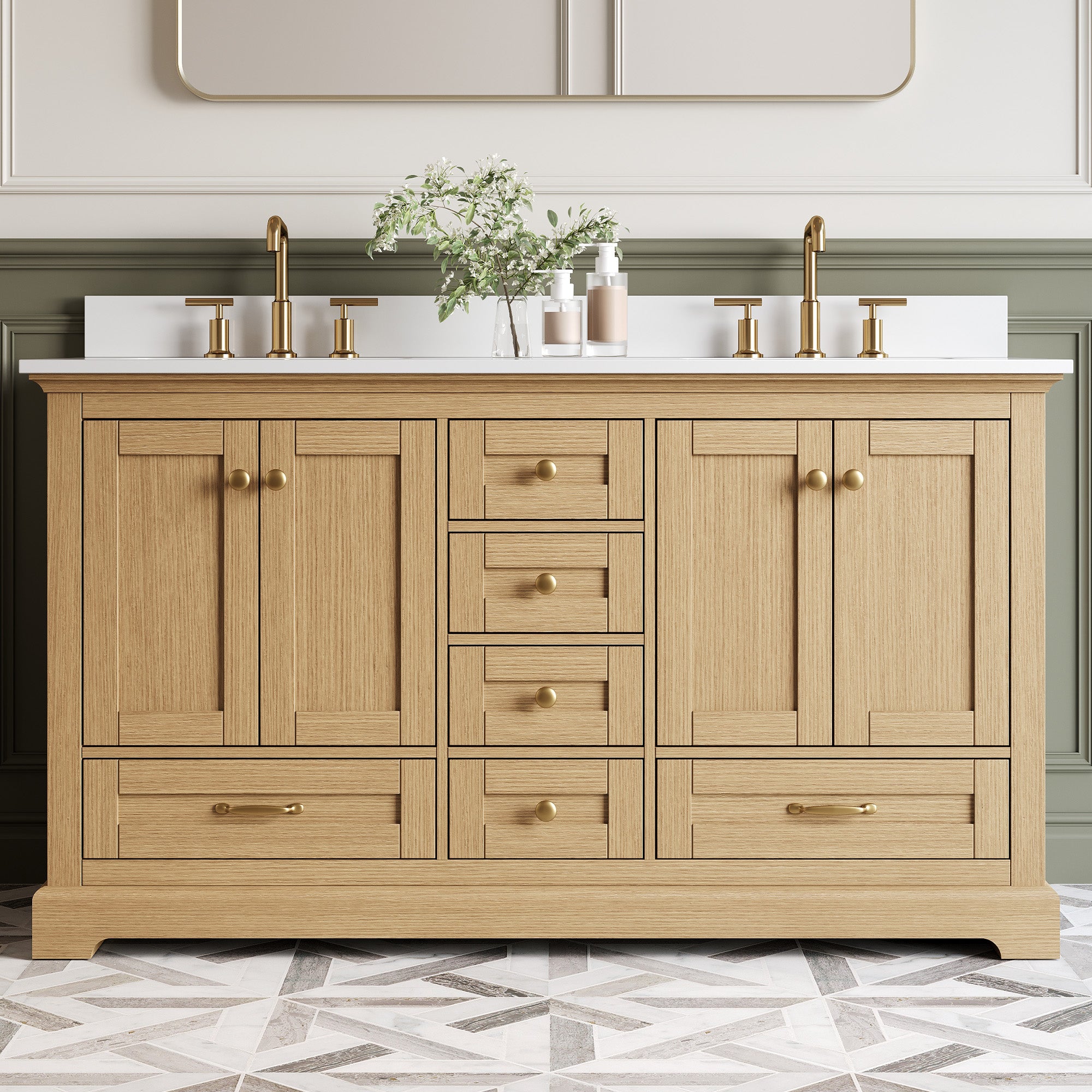
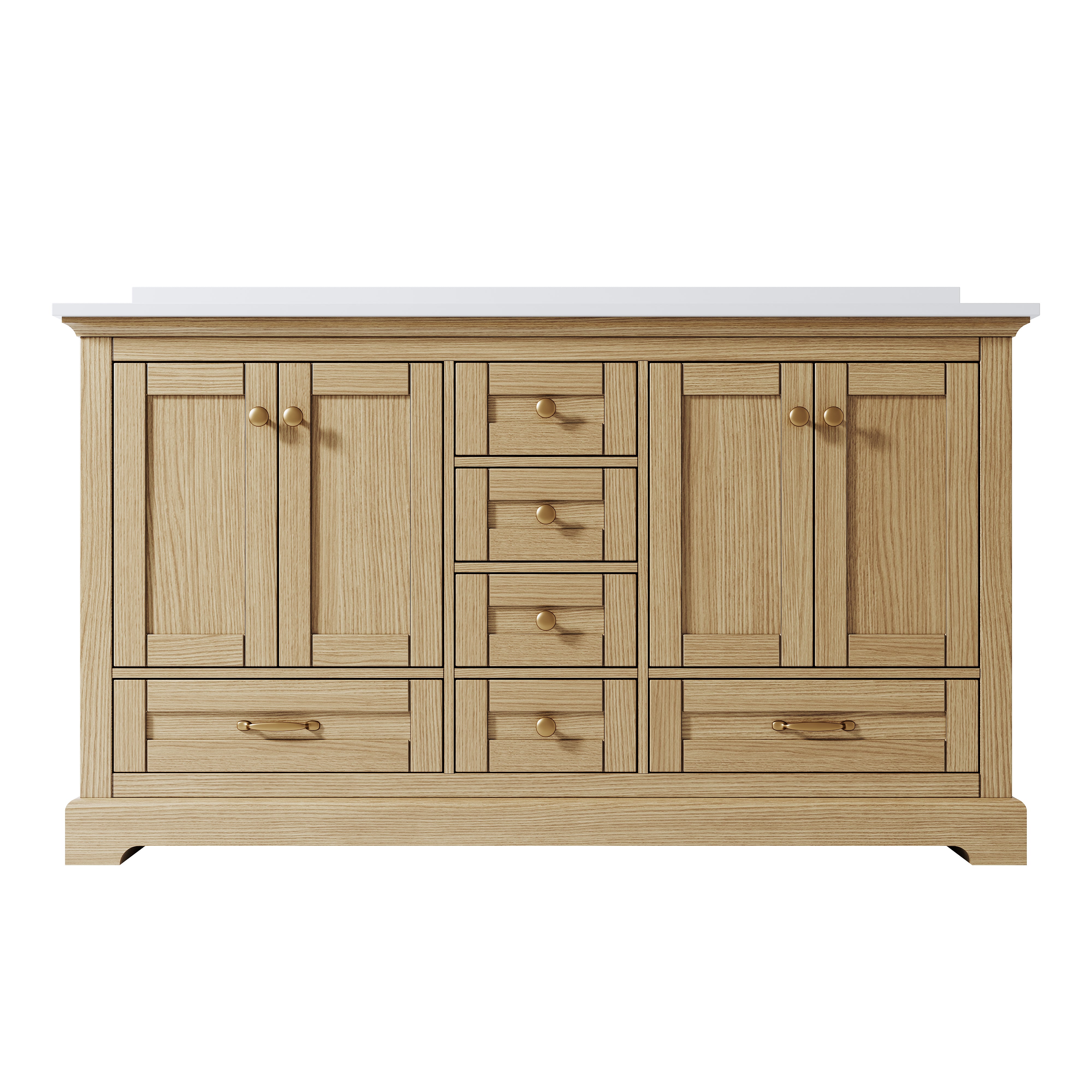
A natural wood bathroom vanity has become a major anchor in current bathroom design. Visible grain adds warmth, softens tile and stone, and gives compact rooms more residential character. Renovation data supports the shift: wood tones are the leading vanity color family at 28%, while 74% of renovators choosing wood vanities select solid wood. Maple and white oak rank highest, at 29% and 23%. The industry takeaway is clear: natural wood is moving beyond farmhouse styling and becoming a long-term foundation for modern, transitional, and spa-inspired bathrooms. [Houzz]
1. Let the Wood Tone Set the Palette
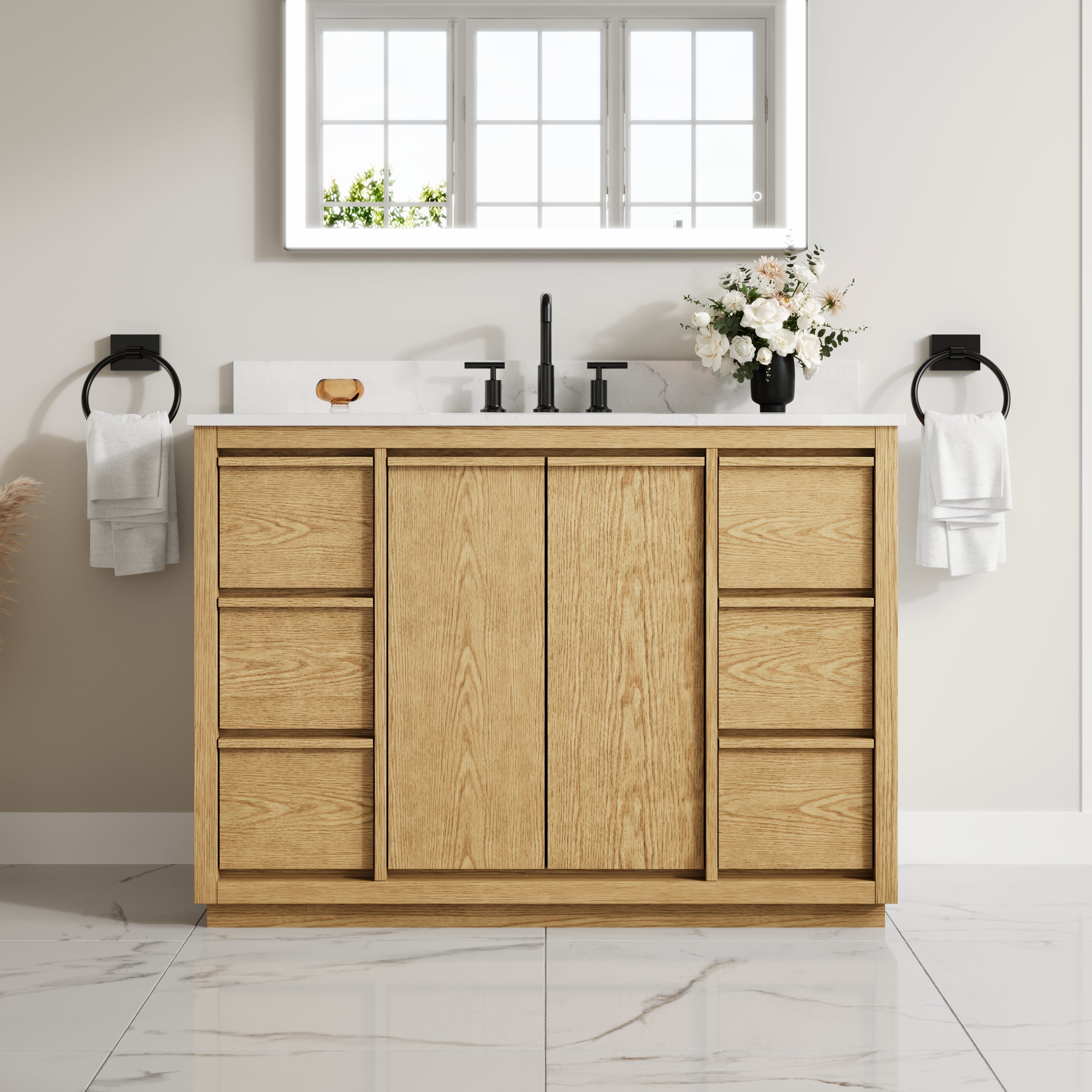
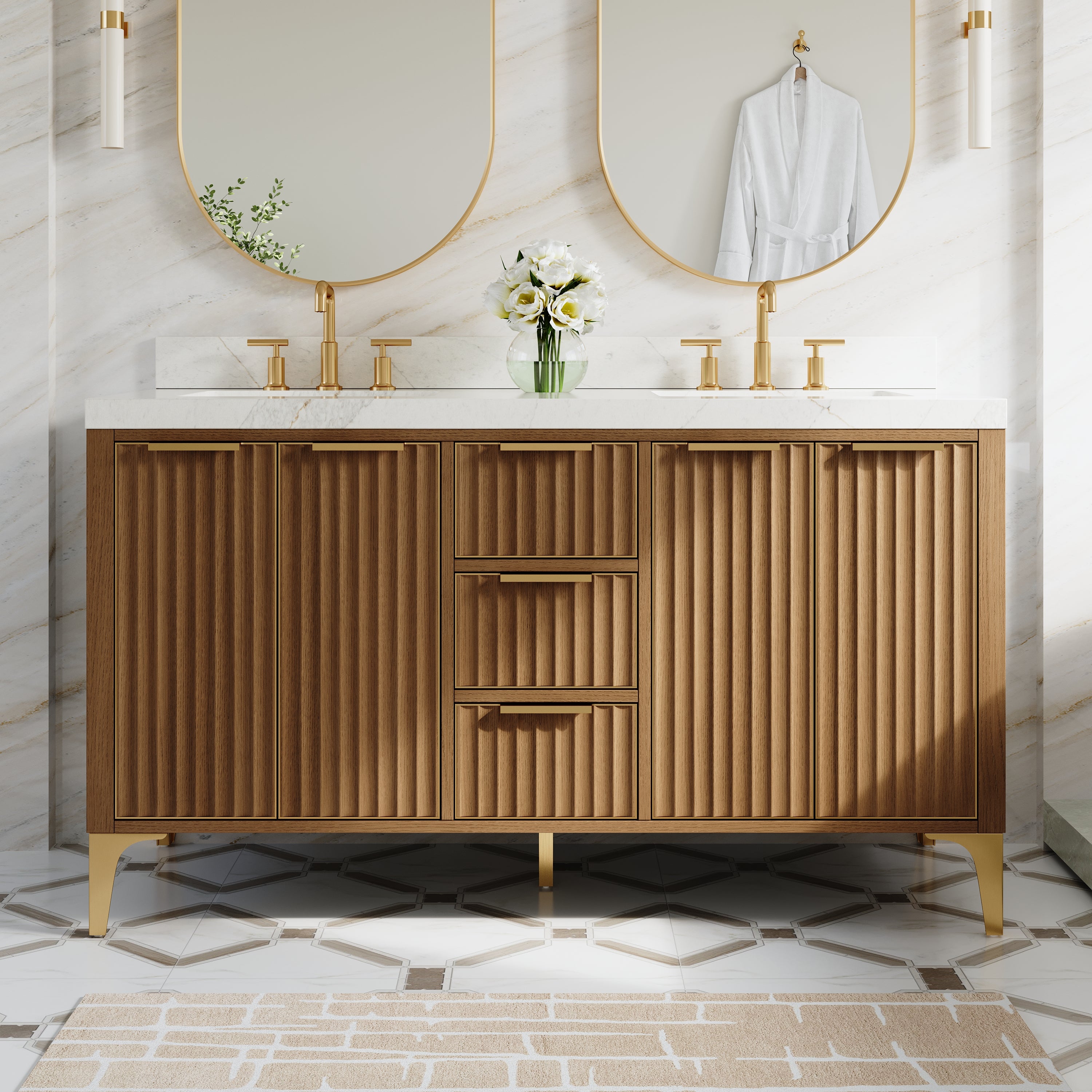
Start with the vanity’s undertone rather than a favorite paint color. White oak, ash, and light maple work well with warm white, pale clay, muted sage, limestone tones, and gentle blue-gray. Walnut and darker oak gain definition beside cream walls, light quartz, restrained black accents, and brushed metal.
Do not match every wood surface exactly. One dominant grain, supported by quieter materials, feels more architectural. Too many competing finishes can make a small bathroom look improvised.
Industry judgment: the best wood-vanity bathrooms are not “all natural.” They use one organic focal point and surround it with clean, moisture-resistant surfaces.
2. Use a Light Countertop for Contrast
White is the leading countertop color in renovated bathrooms, appearing in 48% of upgraded spaces, with off-white at 20%. A pale top creates useful separation between natural grain and the sink area. [device.report][2]
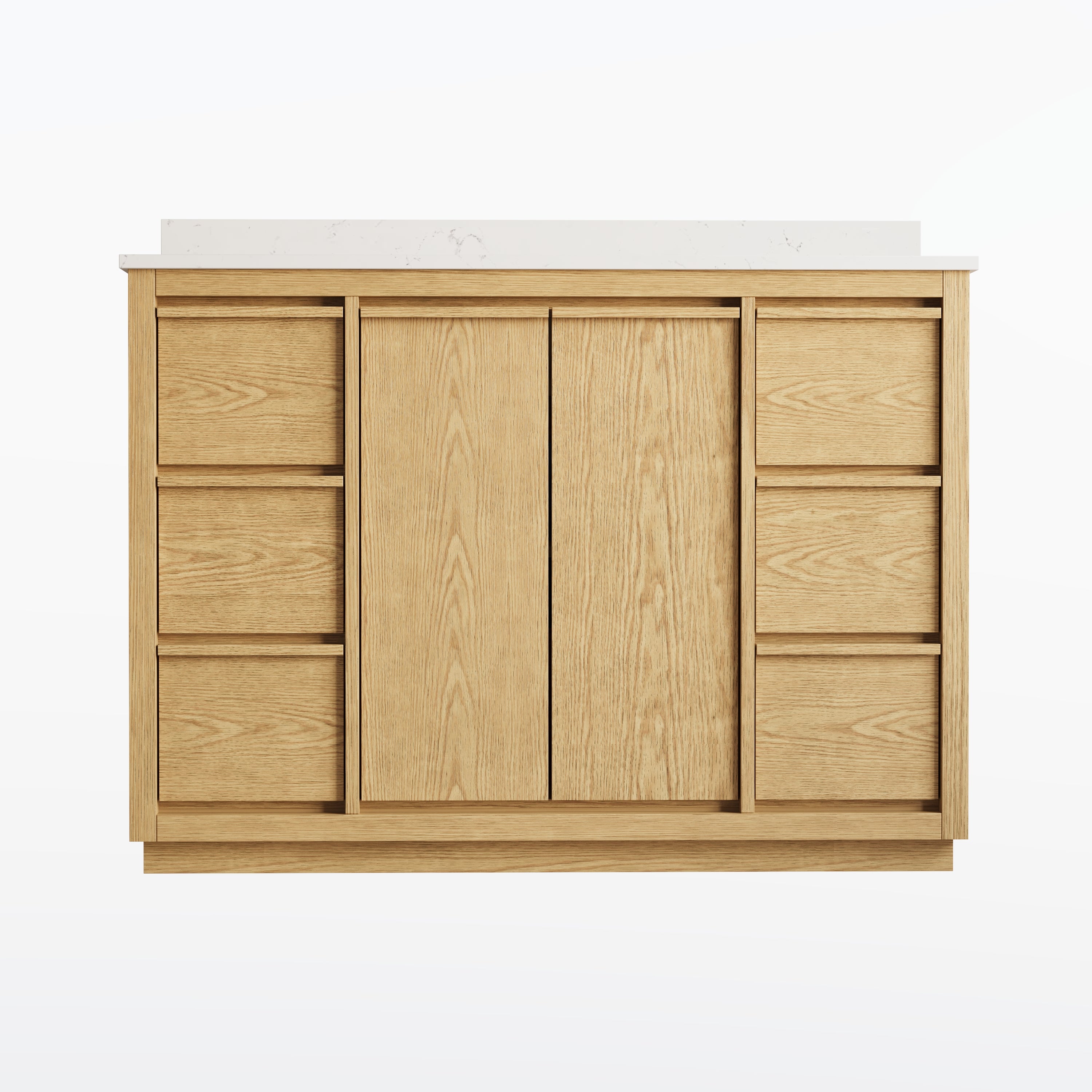
For light oak, consider soft white quartz, warm-veined stone, or a matte solid surface. For walnut, brighter white or pale gray keeps the room from feeling heavy. Strong marble movement can work, but it should not compete with dramatic grain.
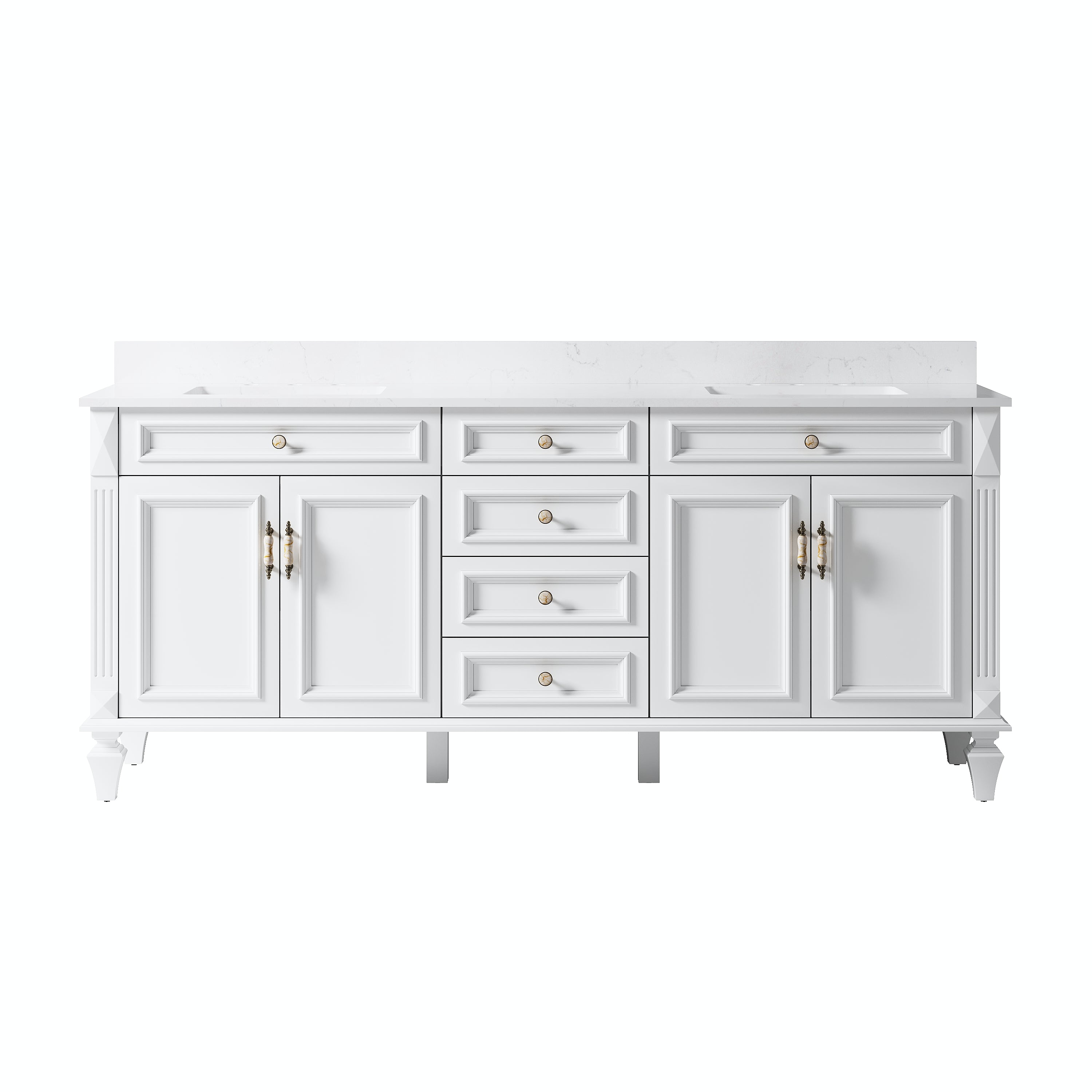
A depth near 22 inches fits many standard layouts. Common widths include 24, 30, 36, 48, 60, and 72 inches, simplifying the coordination of sinks, mirrors, lighting, and storage. [Signature Hardware][3]
3. Size the Mirror to the Vanity
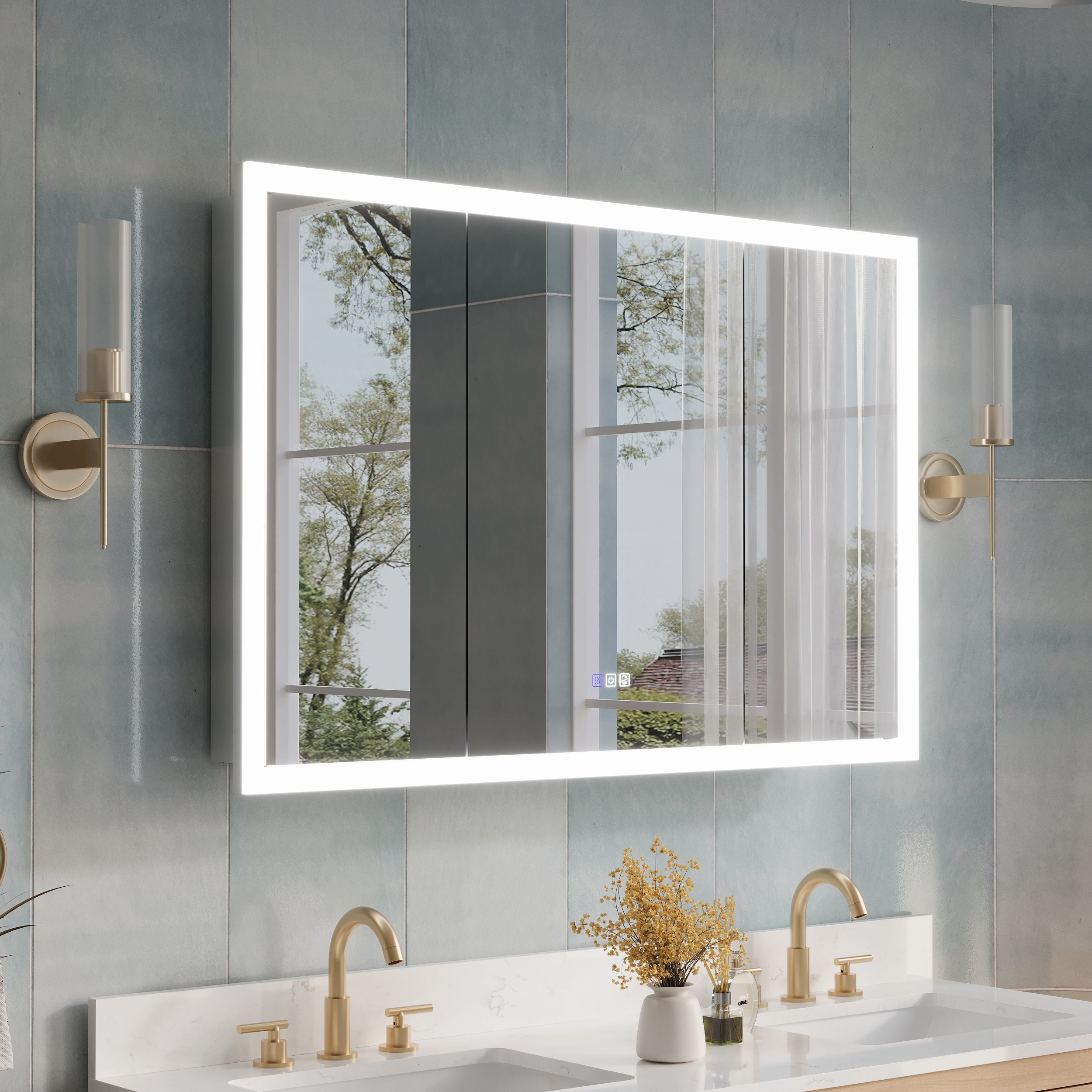
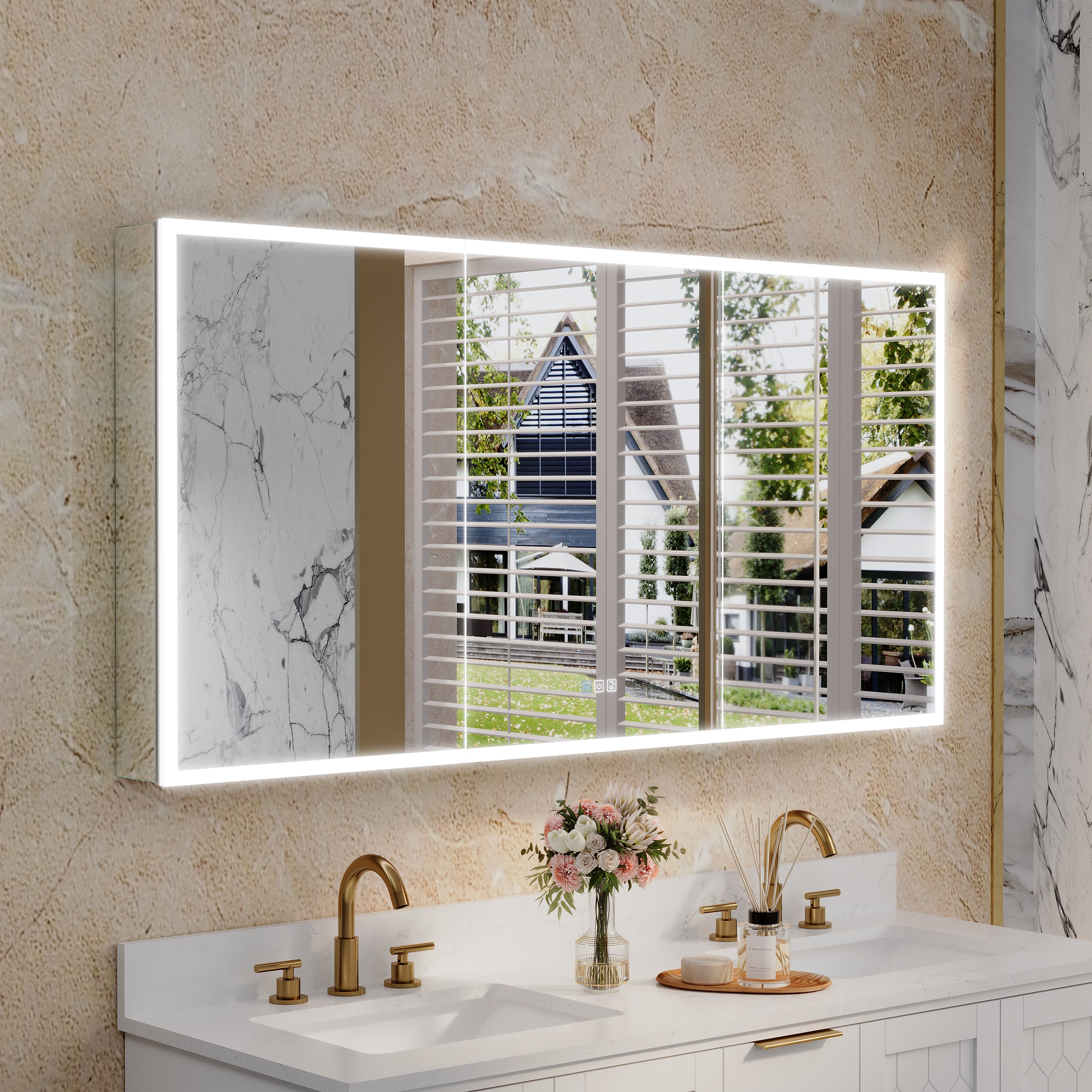
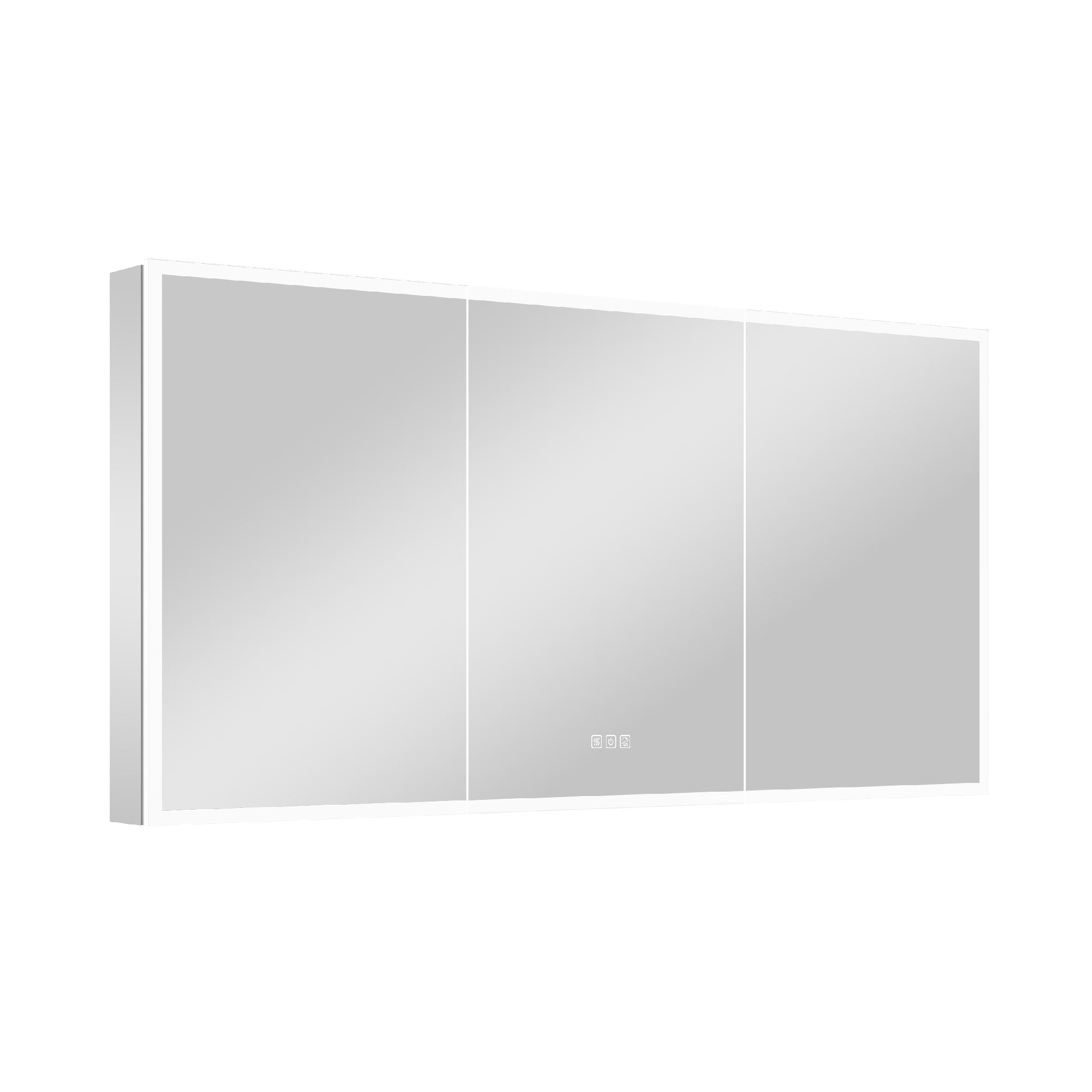
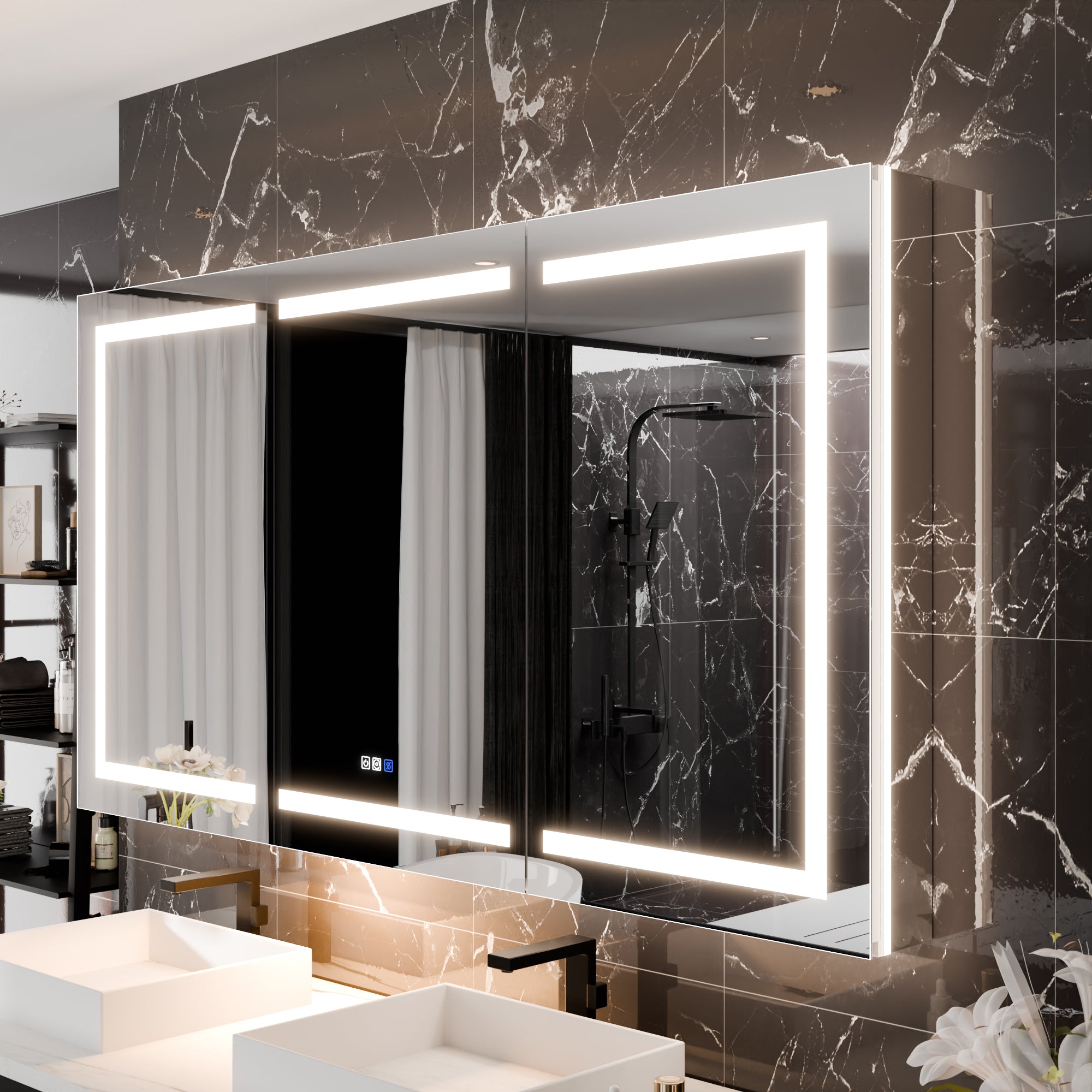
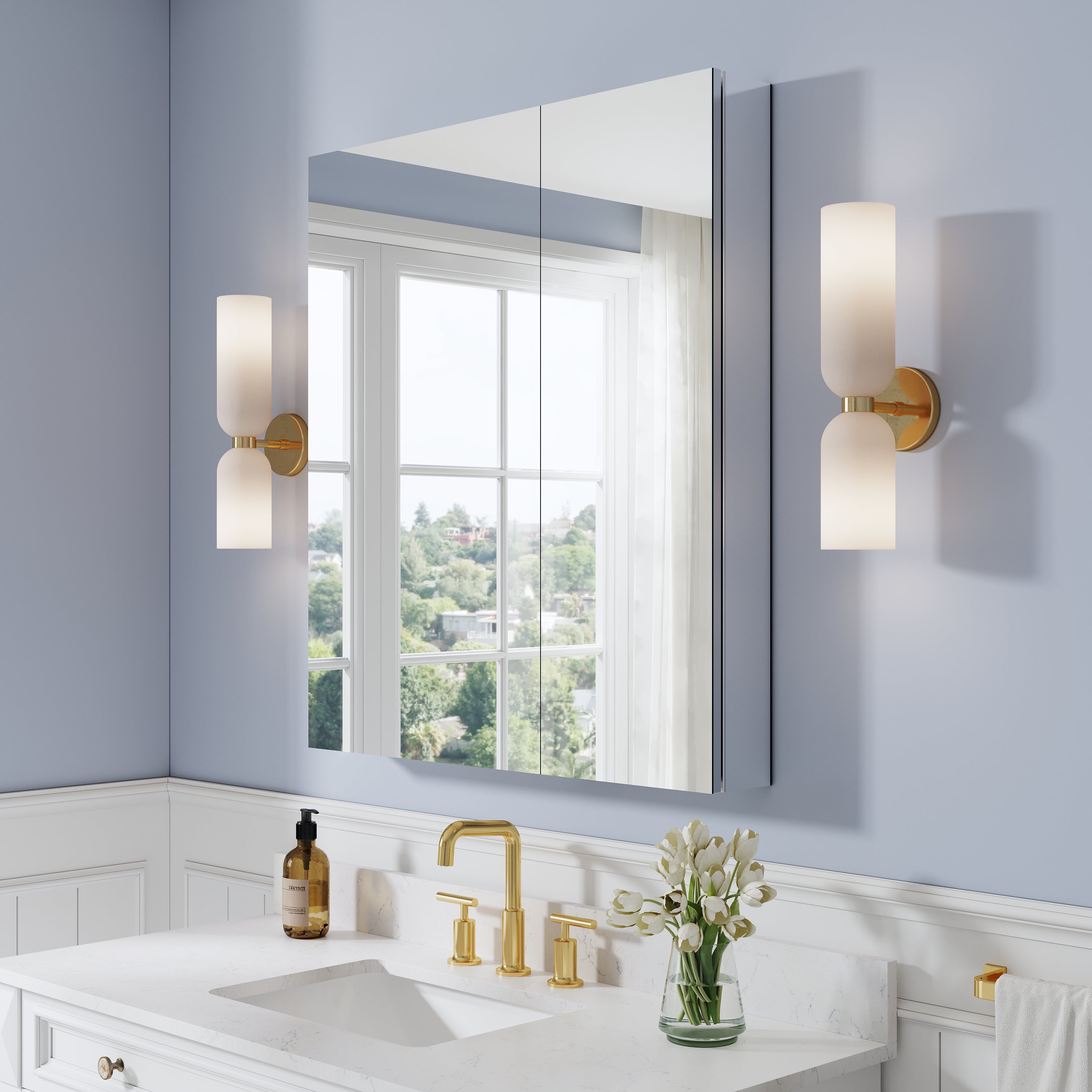
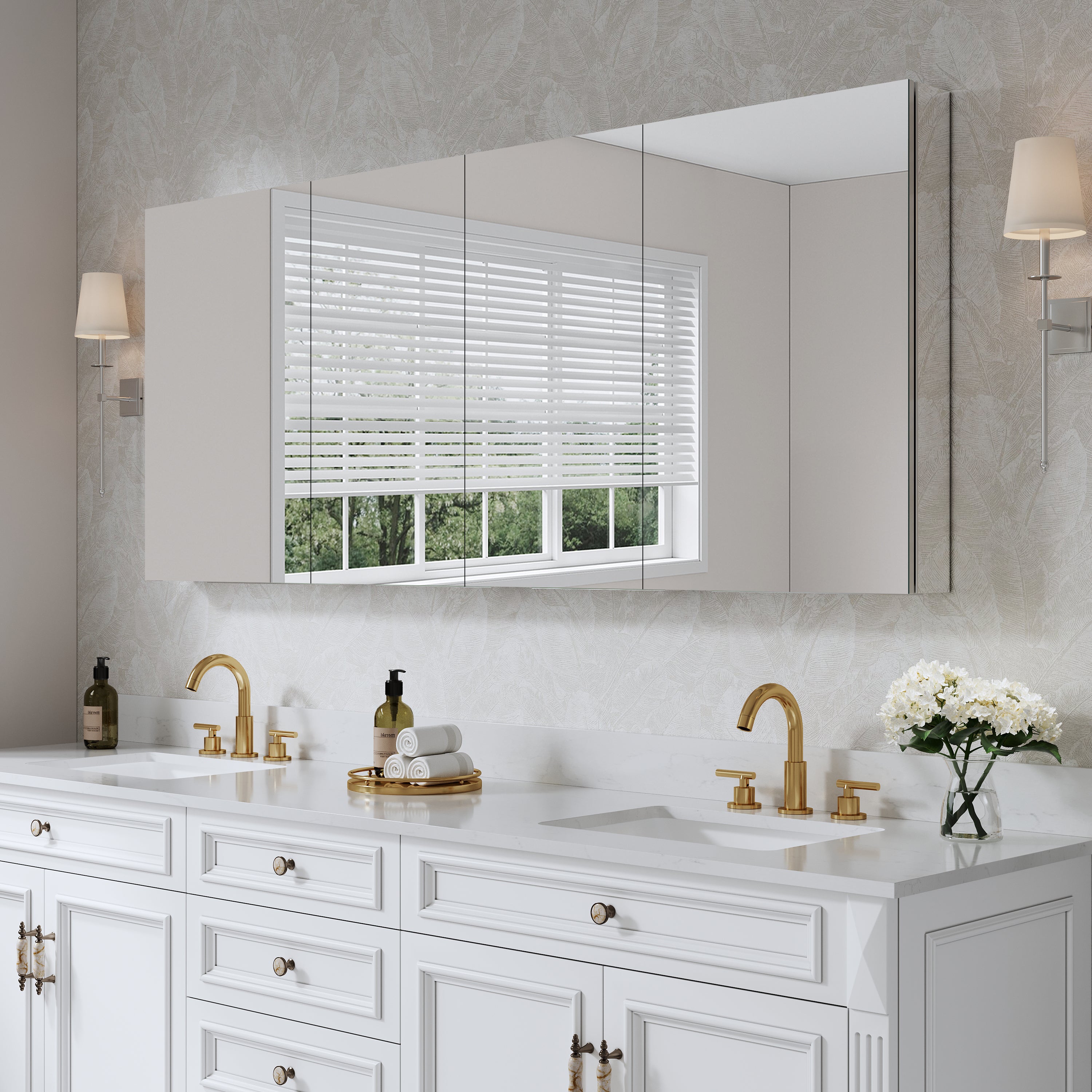
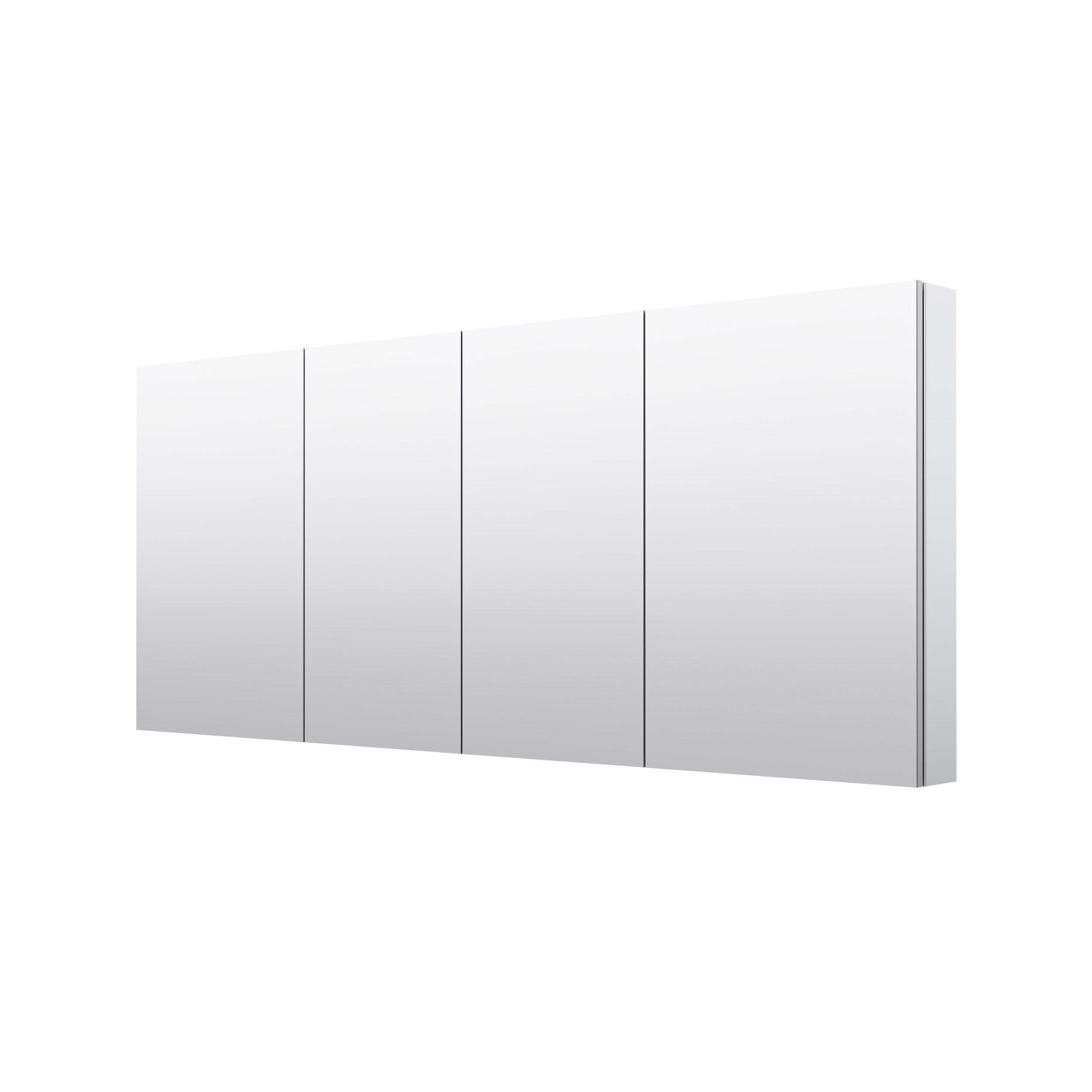
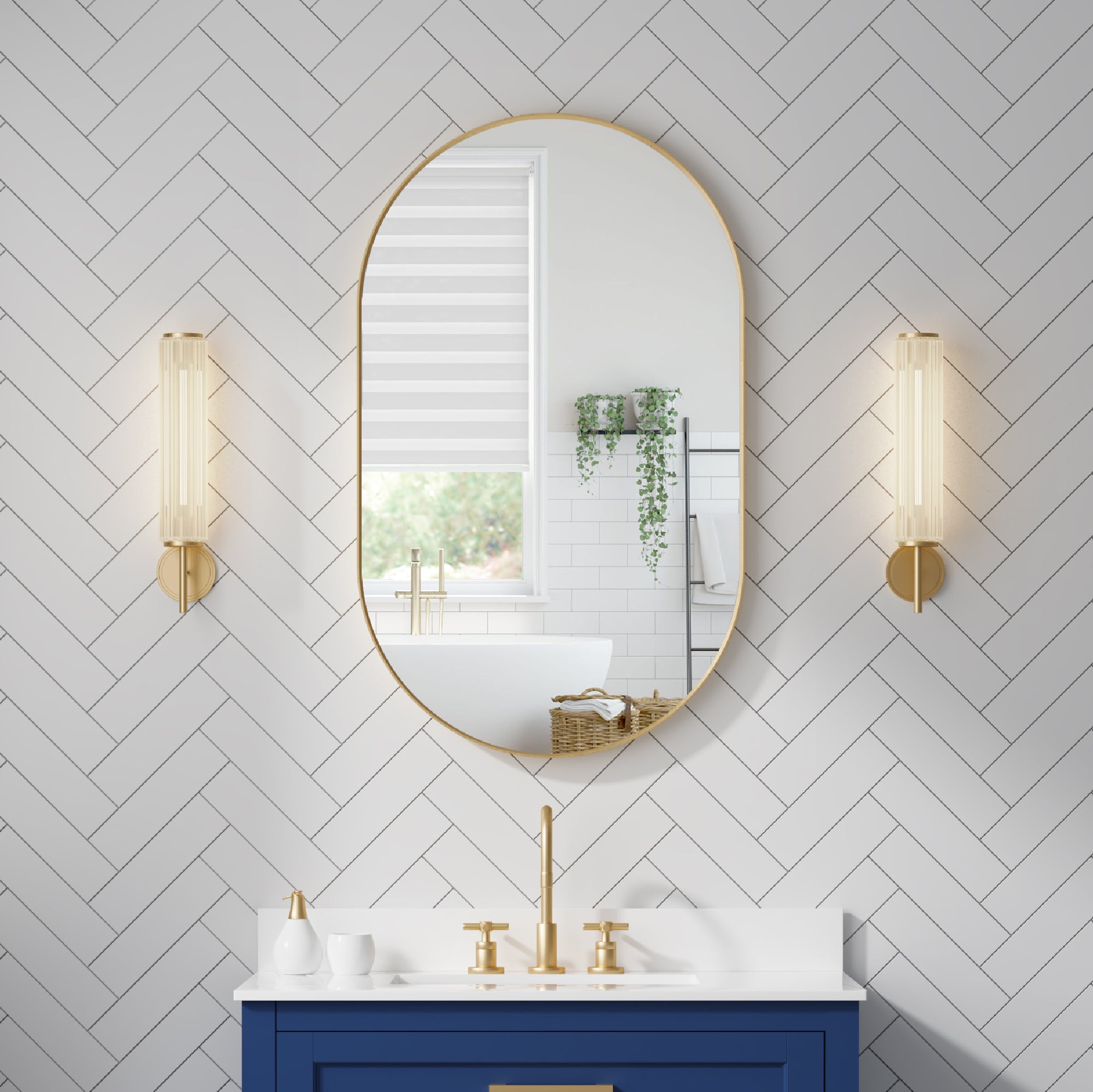
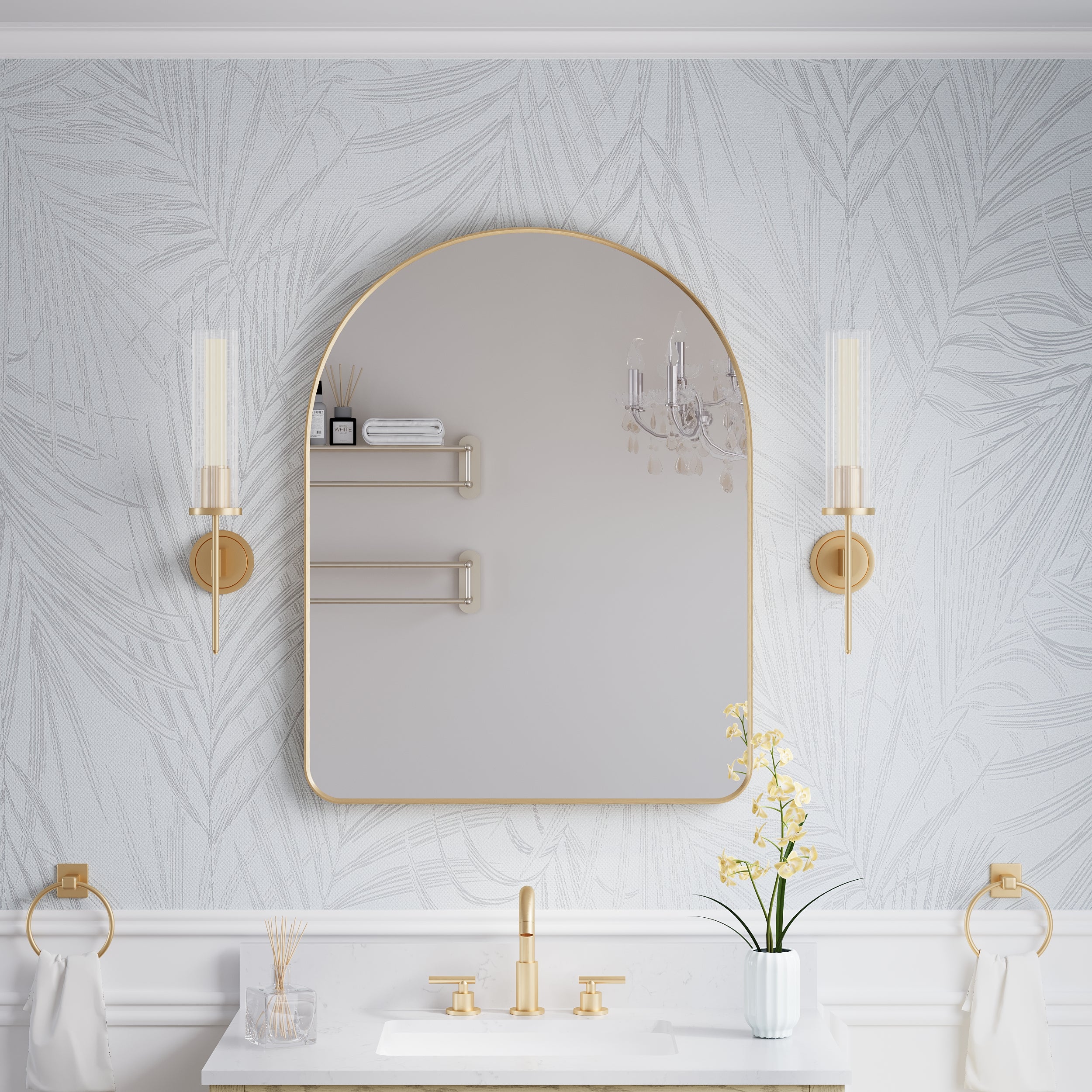
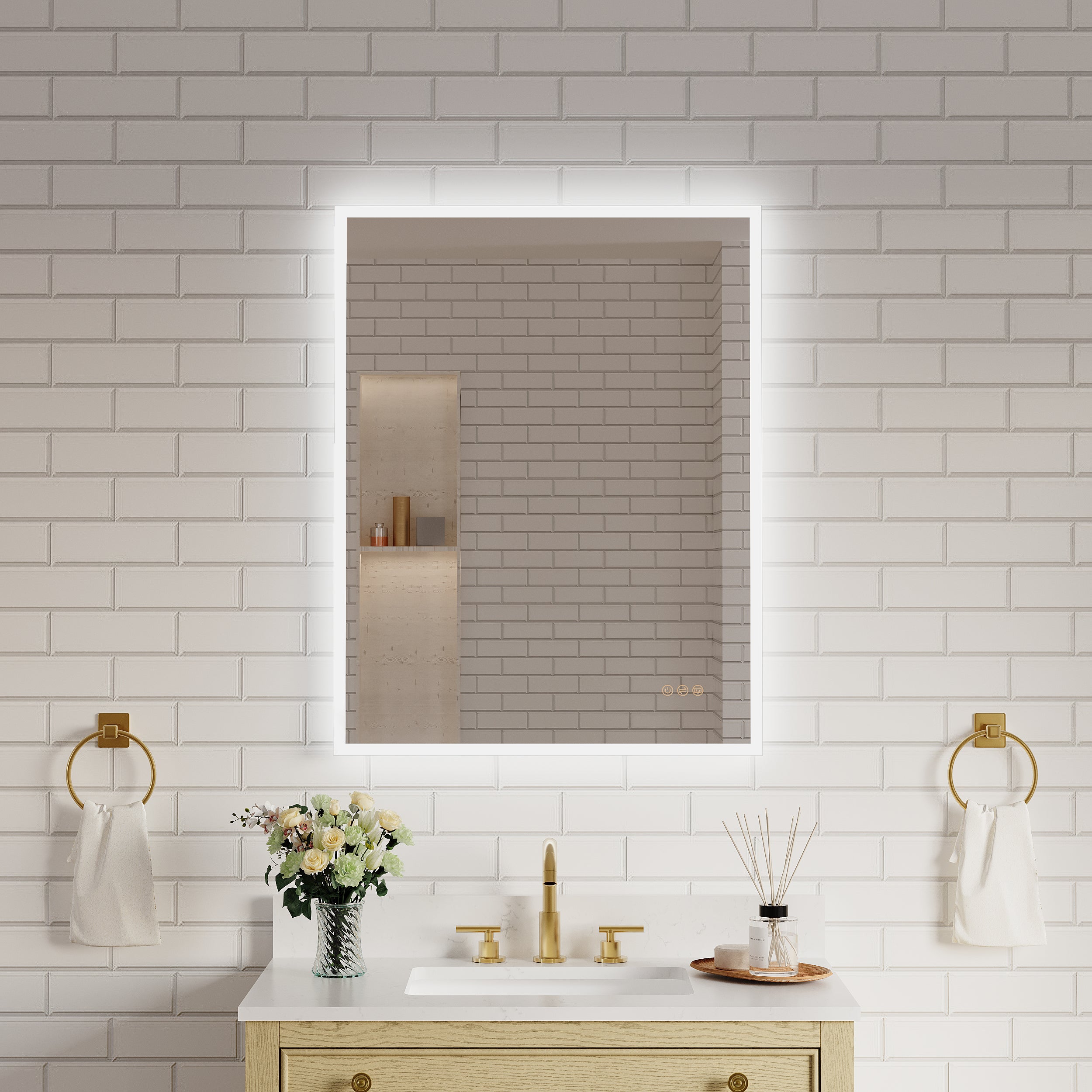
The mirror should belong to the vanity zone, not simply fill the wall. Kohler advises choosing a mirror or medicine cabinet that is narrower than, or equal to, the vanity width. This keeps the upper wall balanced and leaves room for lighting. ([kohler][4])
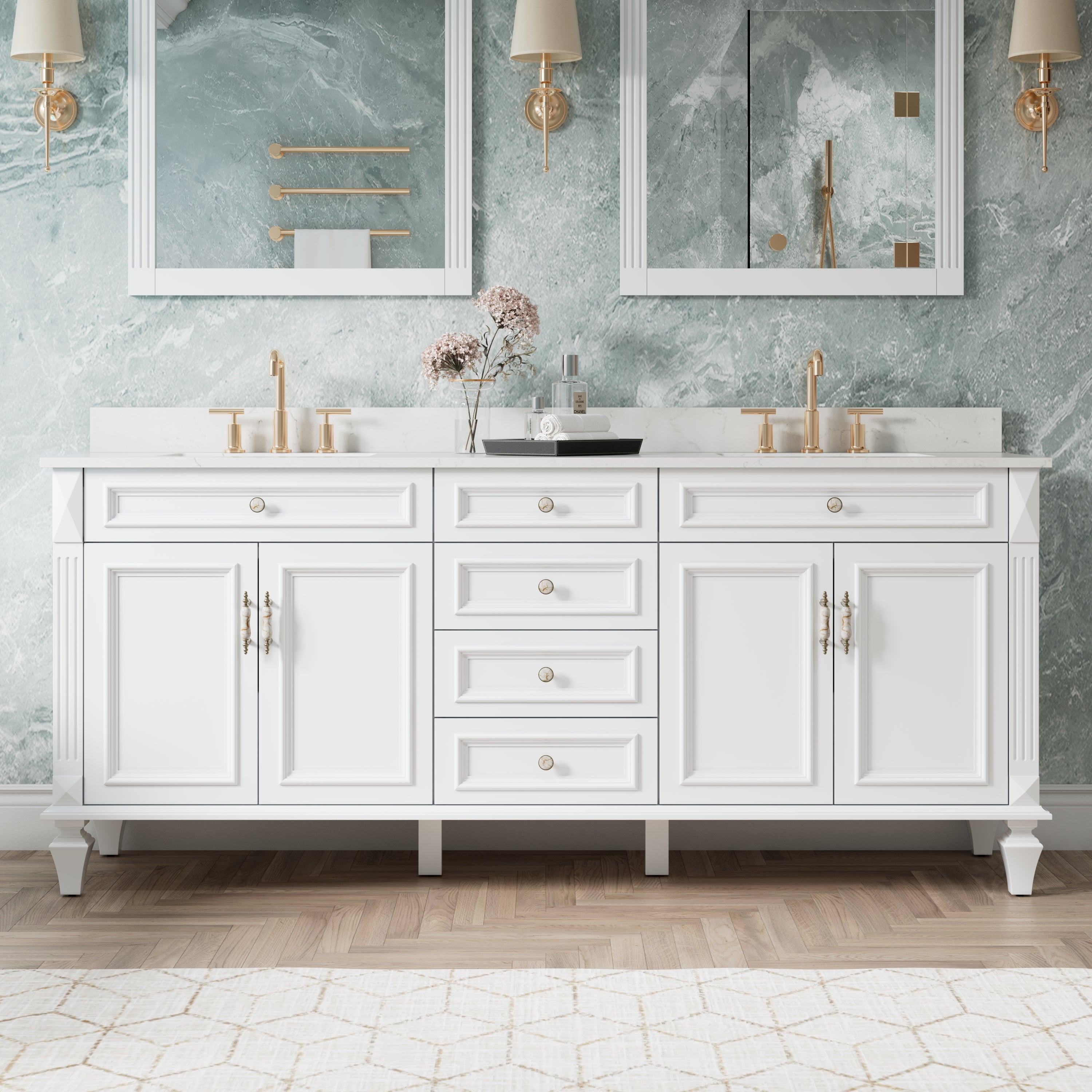
For a 36-inch vanity, a mirror around 28 to 34 inches wide usually creates a comfortable border. Above a 48-inch vanity, a 36- to 44-inch mirror often feels proportionate. For a 60- or 72-inch double vanity, one wide mirror looks streamlined, while two mirrors give each sink a clearer zone.
Nearly half of upgraded vanities are 48 inches or smaller. Another 19% are 60 inches, and 14% are 72 inches, confirming that practical scale matters more than showroom drama. [Houzz][1]
4. Use Lighting to Reveal the Grain
Natural wood can look flat under one cool ceiling fixture. Layered lighting reveals texture and makes the vanity area more flattering. Combine general ceiling light with task lighting at the mirror.
Side sconces work well when space allows. Positioning them roughly 60 to 66 inches above the finished floor often places light near face level, although mirror size and user height should guide the final location. In narrow rooms, an illuminated mirror or a horizontal fixture above it may be more practical.
Brushed nickel, aged brass, bronze, and matte black all work with wood. Repeat the chosen finish on the faucet, cabinet pulls, shower trim, or towel ring to create visual continuity.
5. Add Texture, Then Edit
Bathrooms contain many hard surfaces, so texture matters. Woven baskets, ribbed glass, linen-look shades, hand-finished ceramics, or a washable runner can soften the room. Keep the countertop edited. A narrow tray, one towel, and one compact plant or vase are often enough.
NKBA’s 2025 Bath Trends research, based on feedback from 500 industry professionals, highlights warm, natural rooms, layered lighting, wellness, and elegant storage within easy reach. [NKBA][5]
Industry judgment: fewer accessories and better materials now create more perceived luxury than decorative excess.

6. Keep Tile Quiet and Functional
A vanity with pronounced grain pairs best with calmer flooring, such as large-format porcelain, pale stone looks, or simple small-format tile. When both floor and vanity are highly patterned, the room can feel busy before accessories are added.
Warm white, sand, taupe, muted green, and soft gray are reliable wall-tile partners. A backsplash of about 4 inches offers practical protection, while extending the material to the mirror creates a stronger statement. Partial tile can also make a freestanding wood vanity feel more like furniture.
The industry view is that tile should act as architecture, not compete with other focal points.
7. Connect Style With Long-Term Performance
A natural look feels more credible when products also support efficient use. WaterSense-labeled bathroom faucets use no more than 1.5 gallons per minute and can reduce flow by at least 30% compared with standard 2.2-gallon-per-minute models without sacrificing performance. [US EPA][6]
Look for sealed cabinet interiors, durable finishes, replaceable hardware, and soft-close fittings. Houzz reports that 78% of renovating homeowners choose soft-close drawers and 75% choose soft-close doors, showing that daily function now influences perceived quality as much as appearance. [device.report][2]
8. Conclusion
The best way to decorate around a natural wood bathroom vanity is to let it lead without asking it to carry the entire room. Match its undertone, choose a restrained countertop, size the mirror carefully, layer the lighting, and add only a few tactile accessories. The result can feel warm without becoming rustic, modern without becoming cold, and styled without losing function.
Natural wood works across multiple bathroom sizes and design categories, making it a flexible long-term specification rather than a short-lived trend. Start with the vanity width and wood tone, then choose every surrounding finish as part of one coordinated palette. That process reduces costly mismatches and creates a bathroom that is easier to trust, maintain, and enjoy.
















Leave a comment
This site is protected by hCaptcha and the hCaptcha Privacy Policy and Terms of Service apply.