






















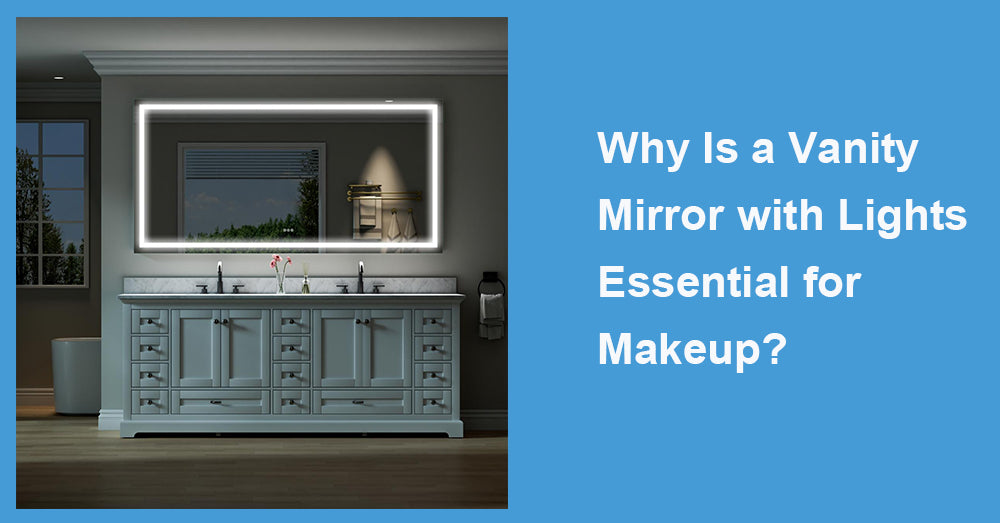
A vanity mirror with lights can make a noticeable difference in how accurately makeup is applied, especially in bathrooms where ceiling fixtures create shadows or natural daylight is limited. After more than 20 years of working with bathroom lighting, mirrors, and renovation layouts, I have found that the best makeup lighting is not simply bright. It should be even, flattering without being misleading, and close enough to natural light that foundation, concealer, blush, and eye makeup look consistent once you leave the bathroom.
1. A Vanity Mirror with Lights Reduces Facial Shadows
Standard ceiling lights often illuminate the top of the head more strongly than the face.
That can create shadows beneath the eyes, nose, and chin. When applying makeup, those shadows make it harder to judge coverage and color accurately.
A lighted mirror brings illumination closer to face level.
Models with lighting around several edges tend to distribute light more evenly than a single overhead fixture. This makes it easier to see texture, blending, and small areas that need attention.
The difference is especially obvious when applying concealer or eye makeup.
2. Good Lighting Helps Makeup Look More Natural
One of the most common makeup mistakes happens when products are applied under poor lighting.
Foundation may look perfectly blended in a dim bathroom but appear too dark or uneven outdoors. Blush can be overapplied because weak lighting makes color difficult to judge.
Brightness Should Be Adjustable
More light is not always better.
Very intense lighting can flatten the face and make users apply less product than they normally would. Dim lighting creates the opposite problem.
Dimmable mirror lighting allows you to adjust brightness according to the room and time of day.
I consider this one of the most useful features for anyone who applies makeup regularly.
3. Color Temperature Changes What You See
Lighting color has a major effect on how skin tones and cosmetics appear.
Warm light can make skin look softer and more golden. Cool light may reveal detail clearly but can make the complexion appear slightly washed out.
Neutral daylight-style illumination usually provides the most useful reference for makeup.
A mirror with multiple color-temperature settings gives more flexibility.
You can apply makeup under neutral light, then check how it looks under warmer or cooler conditions before leaving home.
That is more practical than relying on one fixed lighting tone.
4. Even Light Is More Important Than Maximum Brightness
Consumers often compare illuminated mirrors based on brightness alone.
That is not how I would choose one.
The position and distribution of the LEDs matter just as much. A bright light concentrated along the top edge can still create shadows.
Look for Balanced Illumination
Lighting along the sides or around the perimeter usually provides better facial coverage.
The light should illuminate both sides of the face evenly without creating strong glare in your eyes.
When possible, stand in front of the mirror at the distance you normally use for makeup. If one side of the face looks noticeably darker, the lighting design may not be ideal.
5. Mirror Size Affects Makeup Comfort
A larger mirror gives you a better view of the face, hair, and upper body at the same time.
That can be helpful when makeup is only one part of the morning routine.
Still, bigger is not always necessary.
For a small vanity, an oversized mirror can make the wall feel crowded. The mirror should relate to the width of the vanity and leave reasonable visual space around surrounding fixtures.
For makeup, position matters more than sheer size.
Your face should sit comfortably within the illuminated area when standing or sitting at the vanity.
6. Magnification Can Help With Detailed Work
A standard mirror is appropriate for most makeup application.
Magnification becomes useful for eyeliner, eyebrow shaping, contact lenses, or other precise tasks.
Built-in magnifying sections can be convenient, but they are not essential for everyone.
Some users prefer a separate magnifying mirror that can be moved closer when needed.
Too much magnification can also be distracting for normal makeup because it shows details that are not visible at conversational distance.
Choose it as a tool, not as the main viewing surface.
7. Lighted Mirrors Are Especially Useful in Dark Bathrooms
Bathrooms without windows often benefit the most.
Even a room with good ceiling lighting may feel uneven around the vanity if fixtures sit behind or above the user.
A lighted mirror puts the illumination where it is actually needed.
It can also reduce dependence on bulky wall sconces, which is useful when the vanity area is narrow.
That said, a lighted mirror should not necessarily be the bathroom's only light source.
General ceiling lighting is still useful for cleaning, showering, and moving safely through the room.
8. There Are Some Practical Limitations
LED mirrors are more complex than plain mirrors.
They require electrical power, and hardwired models may need professional installation. Touch controls and electronic components can also fail eventually, whereas a standard mirror has almost nothing mechanical to maintain.
Very bright LED edges can create glare if the mirror is poorly designed.
Some models also emphasize appearance more than actual task lighting.
That is why I recommend looking beyond the product photograph and checking specifications for dimming, color temperature, controls, and installation requirements.
9. Installation Height Matters
A well-designed mirror can still be uncomfortable if mounted too high or too low.
Position it according to the primary users rather than following a measurement blindly.
The center of the mirror should allow a comfortable view of the face without bending or stretching.
If several household members have very different heights, choose a larger vertical mirror to increase the useful viewing range.
For hardwired models, electrical planning should happen before the wall is finished whenever possible.
Keep wiring and connections compliant with local requirements, especially in a bathroom environment.
10. Maintenance Is Usually Straightforward
Use a soft microfiber cloth and a cleaner suitable for mirrors.
Avoid spraying excessive liquid directly along the illuminated edges or touch controls. It is better to apply cleaner to the cloth first.
Wipe cosmetic splashes and fingerprints regularly.
If the mirror includes touch controls, keep that area relatively dry and clean so it remains responsive.
For bathrooms with frequent hot showers, good ventilation also helps reduce condensation on surrounding surfaces.

11. Choose Features You Will Actually Use
It is easy to overbuy technology.
For makeup, I would prioritize even facial lighting, dimmable brightness, useful color-temperature settings, appropriate mirror size, and reliable controls before decorative effects.
A defogging function can be valuable in a shared bathroom, especially when someone needs the mirror shortly after a shower. Extra features should solve a real routine problem rather than simply make the specification list longer.
When comparing Wellfor options, think about the room's existing lighting, vanity width, electrical setup, and how often makeup is applied there. A well-chosen vanity mirror with lights should help you see color and detail more accurately, reduce inconvenient shadows, and make the daily routine easier without turning the bathroom into an overly bright dressing room.











































Leave a comment
This site is protected by hCaptcha and the hCaptcha Privacy Policy and Terms of Service apply.