























The best solid wood bathroom vanity is worth considering when the goal is to combine long-term cabinet strength with the warmth and character of real wood. Solid wood remains a major choice in bathroom remodeling even as painted and engineered cabinets become more sophisticated. Houzz’s 2025 Bathroom Trends Study found that 74% of upgraded vanities used solid wood. Maple led at 29%, followed by white oak at 23%, birch at 12%, and walnut at 9%. NKBA’s 2026 Bath Trends Report also found wood-faced vanities reaching 62% in popularity, ahead of painted cabinetry at 53%. These figures point to a broader shift toward natural materials rather than a short-lived furniture trend.
1. Solid Wood Gives a Vanity Structural Substance
Bathroom cabinetry is opened, closed, loaded, cleaned, and exposed to changing humidity every day. A well-built solid wood frame can handle this repeated use while maintaining a furniture-like feel.
Solid wood is especially valuable in components such as:
· Cabinet frames
· Doors
· Drawer fronts
· Legs
· Face frames
· Structural rails
That does not mean every panel must be one solid piece of timber. Quality plywood may be preferable for large cabinet sides or backs because layered construction can provide useful dimensional stability.
A strong vanity uses each material where it performs best rather than relying on a vague “all wood” label.
2. Natural Grain Makes Every Cabinet Slightly Different
One of the main reasons people pay more for real wood is appearance.
Painted cabinetry creates a consistent surface. Wood introduces variation in grain, tone, and texture. White oak may show long, relatively straight grain, while maple tends to look quieter. Walnut brings deeper brown tones and stronger variation.
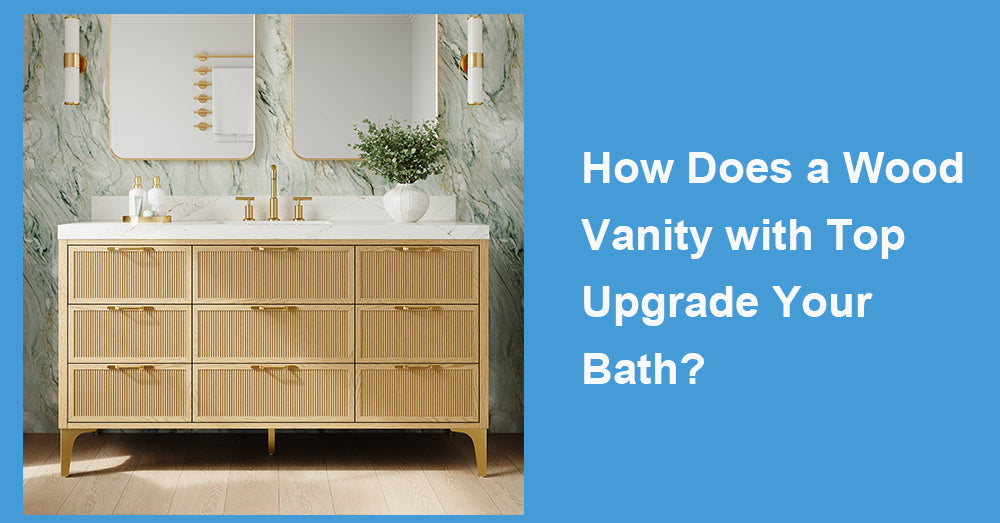
This natural character is especially noticeable on wider cabinets. A 48-inch or 60-inch vanity with continuous grain across several drawer fronts can look more like custom furniture than standard bathroom storage.
Current design research supports this direction. NKBA found that organic and natural design was identified as a popular style by 65% of surveyed professionals, while transitional and timeless design led at 70%.
Industry judgment: Real wood adds value when its grain is treated as part of the design, not hidden beneath unnecessary ornament.
3. Solid Wood Works Across Several Vanity Sizes
Another advantage is flexibility.
A 24-inch or 30-inch wood vanity can bring character to a powder room. A 36-inch cabinet provides a practical single-sink setup, while 48-inch models allow more drawers and countertop space. In a primary bathroom, 60-inch and 72-inch vanities can create a more substantial furniture presence.
Houzz reports that 47% of upgraded vanities measure 48 inches or less. Nineteen percent measure 60 inches, while 14% are 72 inches wide.
This range matters because solid wood is not limited to large luxury bathrooms. It can work just as effectively in a compact room when the cabinet is proportioned correctly.
Light oak is particularly useful in smaller spaces because it adds texture without creating the visual weight of very dark cabinetry.
4. Quality Drawer Construction Adds Long-Term Value
A vanity is only as useful as its drawers and doors.
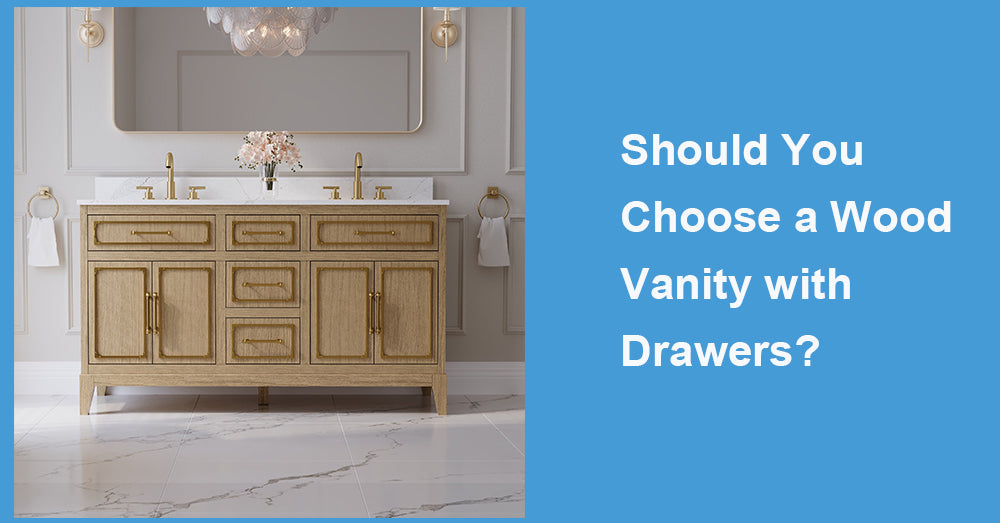
Solid wood drawer fronts may look attractive, but the operating hardware and drawer-box construction determine how the cabinet feels after years of use.
KCMA’s A161.1 cabinet certification provides a useful industry benchmark. Certified drawers are loaded at 15 pounds per square foot and operated through 25,000 cycles. Doors also undergo 25,000 opening-and-closing cycles. They must remain functional without hardware failure or unacceptable loosening.
When comparing vanities, look for:
· Full-extension drawer slides
· Soft-close mechanisms
· Secure drawer bottoms
· Strong corner joints
· Adjustable hinges
· Easily removable drawers
Dovetail joinery can be a good sign of careful drawer construction, but it should be evaluated together with the slide system and drawer materials.
5. The Finish Matters as Much as the Wood Species
Real wood is not naturally immune to bathroom moisture.
Its durability depends heavily on how the surface has been prepared and protected. Clear polyurethane, catalyzed coatings, painted finishes, and other cabinet-grade systems can reduce moisture penetration and make the surface easier to clean.
KCMA’s finish testing demonstrates the conditions cabinetry may need to tolerate. One test exposes a cabinet door to 120 degrees Fahrenheit and 70% relative humidity for 24 hours. Other tests expose finished surfaces to household liquids and detergents.
When inspecting a vanity, pay attention to more than the front:
· Door edges should be finished
· Drawer edges should be sealed
· Plumbing cutouts should not expose raw material
· Cabinet interiors should have protective surfaces
· Lower edges should be protected from floor moisture
A beautiful oak door will not compensate for poorly sealed areas beneath the sink.
6. Moisture Control Still Has to Be Part of the Bathroom Plan
Even a well-finished vanity should not remain damp.
The EPA recommends keeping indoor relative humidity below 60%, ideally between 30% and 50%. It also recommends drying wet or damp areas within 24 to 48 hours after leaks or spills.
Practical habits include:
· Running the exhaust fan during showers
· Drying standing water around the sink
· Checking the P-trap for slow leaks
· Inspecting supply lines periodically
· Replacing damaged caulk
· Avoiding wet towels against cabinet doors
Water leaking continuously beneath the sink is far more damaging than normal short-term bathroom humidity.

7. Solid Wood Can Be Repaired More Easily Than Some Surfaces
Repairability is an overlooked advantage.
Minor scratches in a stained wood surface may sometimes be touched up or refinished. Small dents can occasionally be repaired without replacing an entire cabinet panel. Painted solid wood can also be sanded and recoated when the finish eventually shows wear.
By contrast, damage to some thin surface films, edge-banded panels, or laminated finishes may be harder to make visually seamless.
This does not mean solid wood is maintenance-free. A deep water stain or severely swollen component can still require professional repair. The advantage is that real wood often gives the owner more options before replacement becomes necessary.
8. Wood Can Adapt When the Bathroom Style Changes
A solid wood vanity has a useful ability to move between design styles.
Light oak with a white quartz top feels organic and contemporary. Walnut paired with brushed nickel can look more architectural. A maple Shaker cabinet works naturally in a transitional bathroom.
NKBA’s 2026 data shows why that flexibility matters. Neutrals were identified as the dominant bath color family by 96% of respondents. Off-white reached 58%, light brown or tan 54%, and white 40%.
Wood works easily with those colors. Hardware, mirrors, lighting, and wall paint can change while the cabinet remains relevant.
9. Higher Initial Cost Should Be Judged Against Construction
Solid wood vanities often cost more than entry-level cabinets, but price alone does not determine value.
A higher-priced vanity should justify its cost through:
· Better cabinet construction
· Stronger drawers
· Quality hardware
· More carefully matched grain
· Consistent finishing
· Better moisture protection
· Greater repairability
A poorly built “solid wood” vanity can still disappoint. Meanwhile, a thoughtfully engineered cabinet using solid wood and quality plywood may offer excellent performance.
Industry judgment: Material is only one part of value. Construction quality determines whether the material’s advantages are actually delivered.
10. The Best Choice Combines Wood With Good Engineering
A solid wood bathroom vanity is worth it when the natural material is supported by appropriate cabinet engineering.
Houzz’s finding that solid wood appears in 74% of upgraded vanities and NKBA’s report that wood-faced cabinetry has risen to 62% both suggest that natural wood remains central to current bathroom design rather than moving to the sidelines.
The strongest choice is not necessarily the cabinet with the highest percentage of solid timber. Look instead for a solid wood frame or doors, stable cabinet panels, carefully built drawers, sealed edges, a bathroom-ready finish, and hardware tested for repeated use.
When those elements come together, a wood vanity offers more than visual warmth. It provides a substantial piece of furniture that can handle daily storage, adapt to future style changes, and develop character rather than simply looking worn.









































Leave a comment
This site is protected by hCaptcha and the hCaptcha Privacy Policy and Terms of Service apply.