














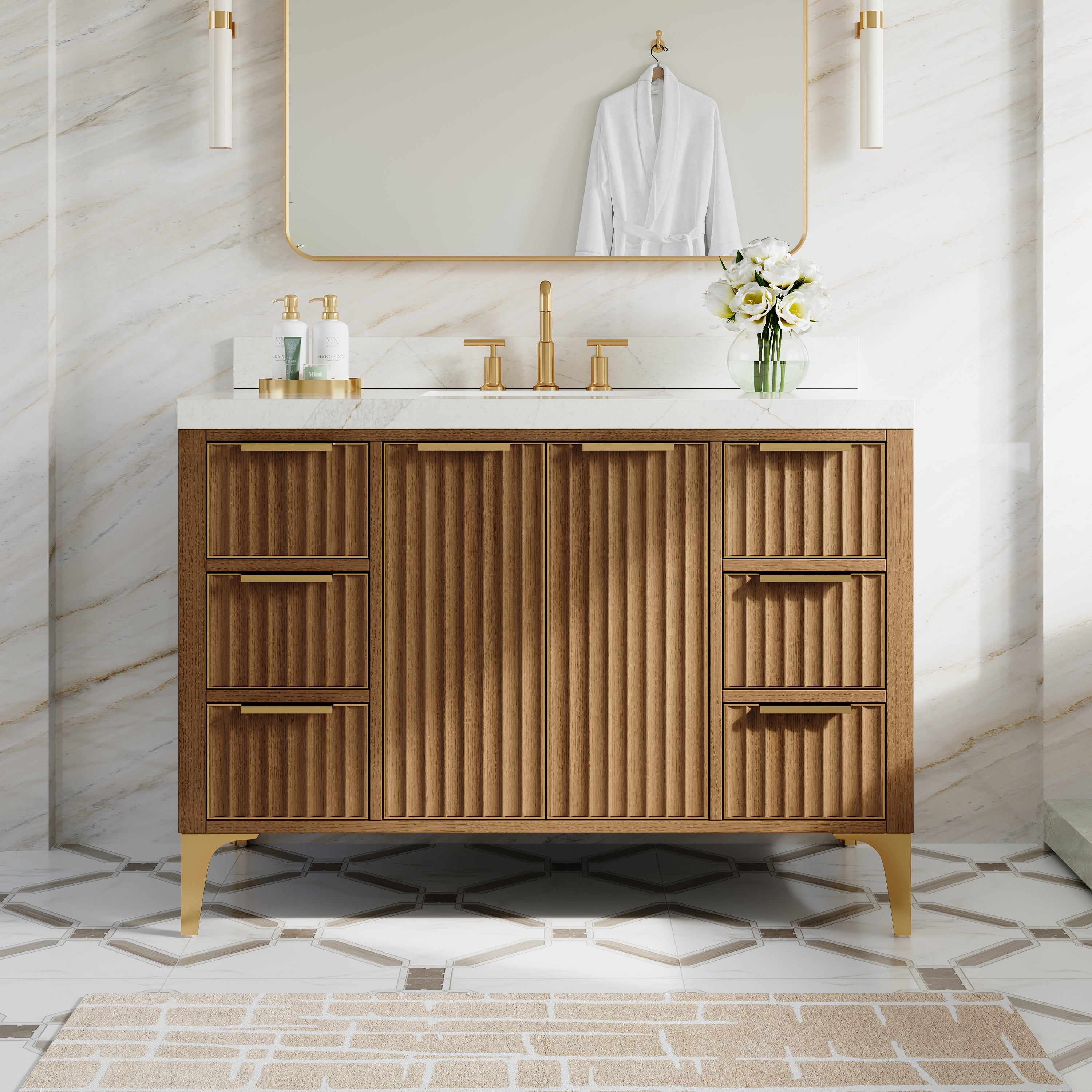
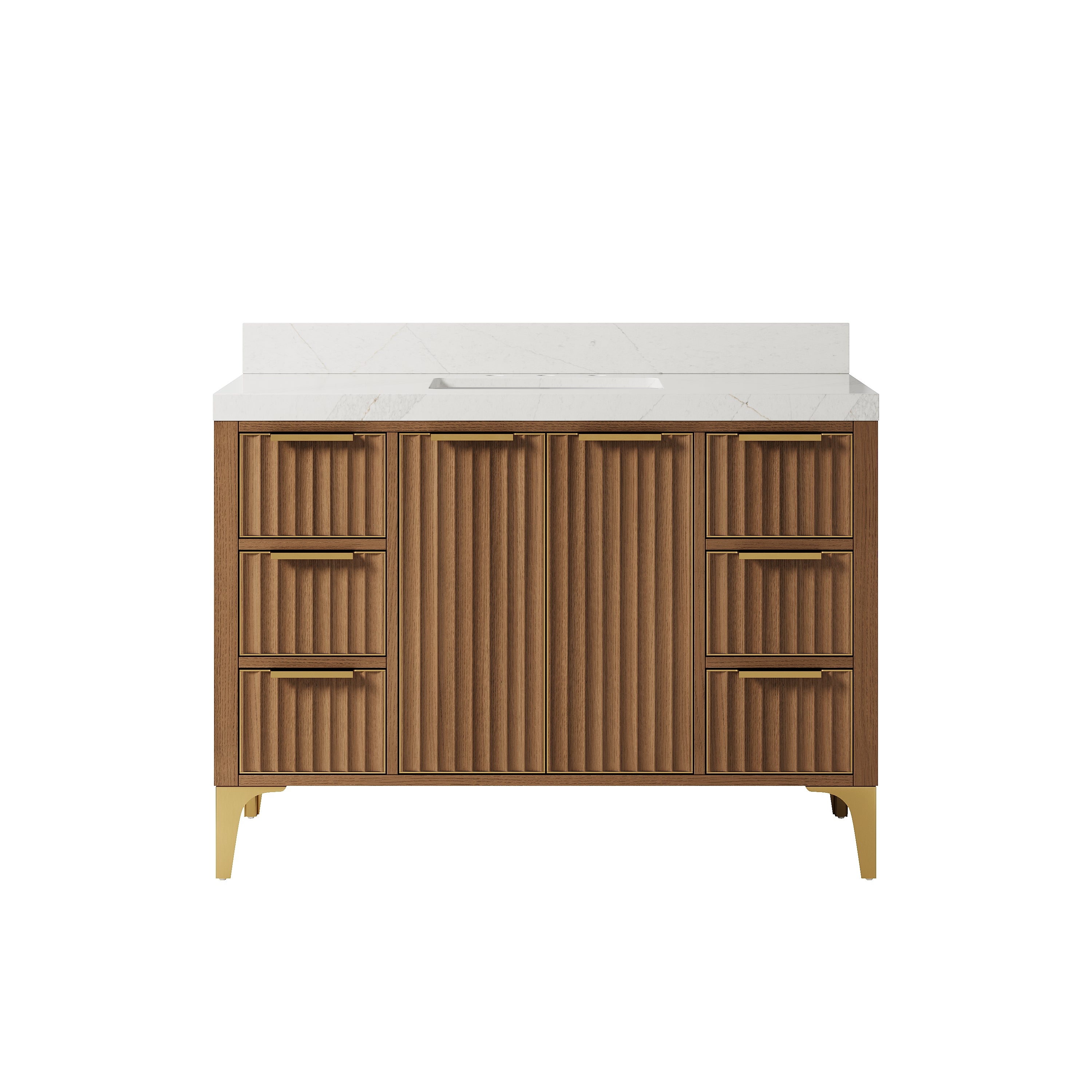


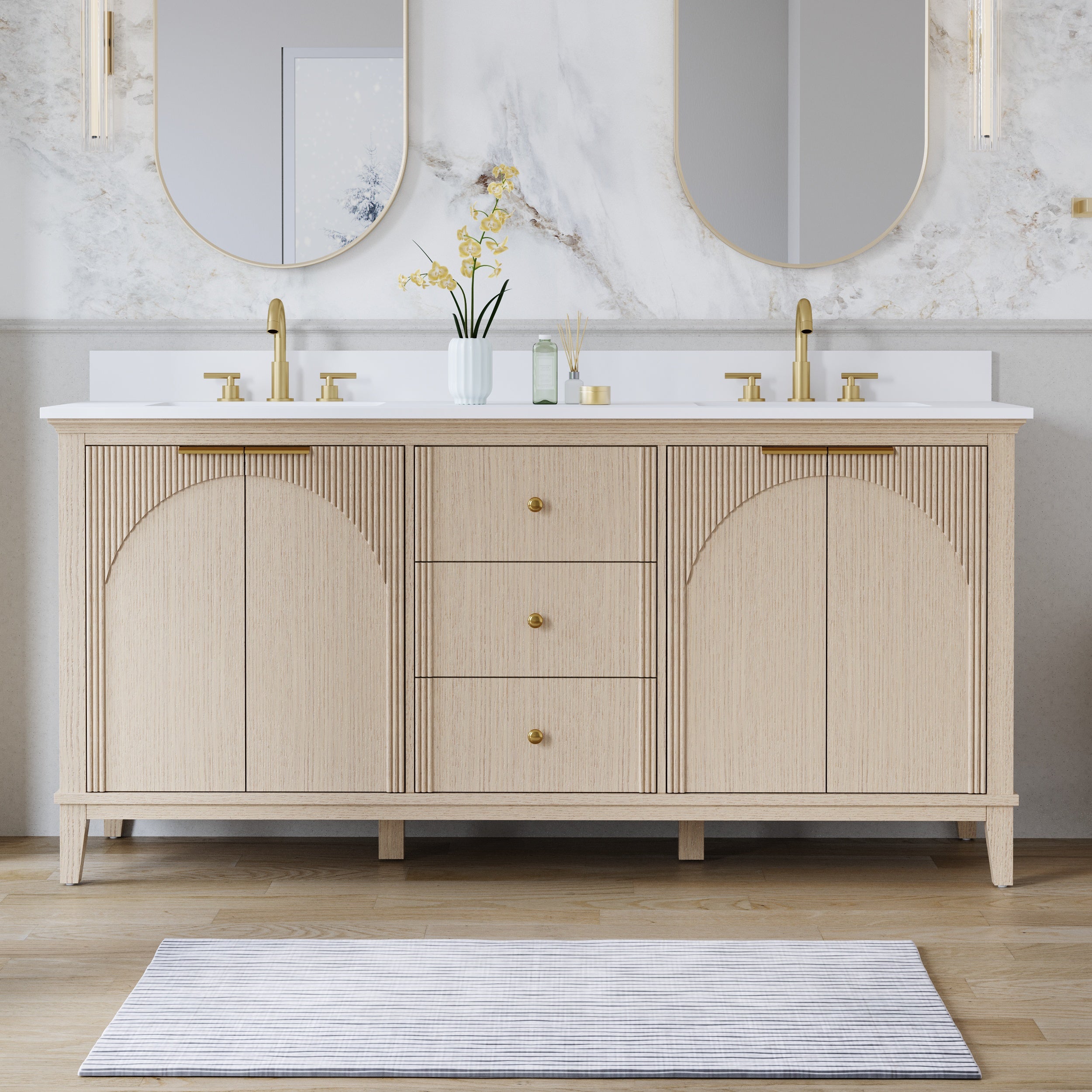
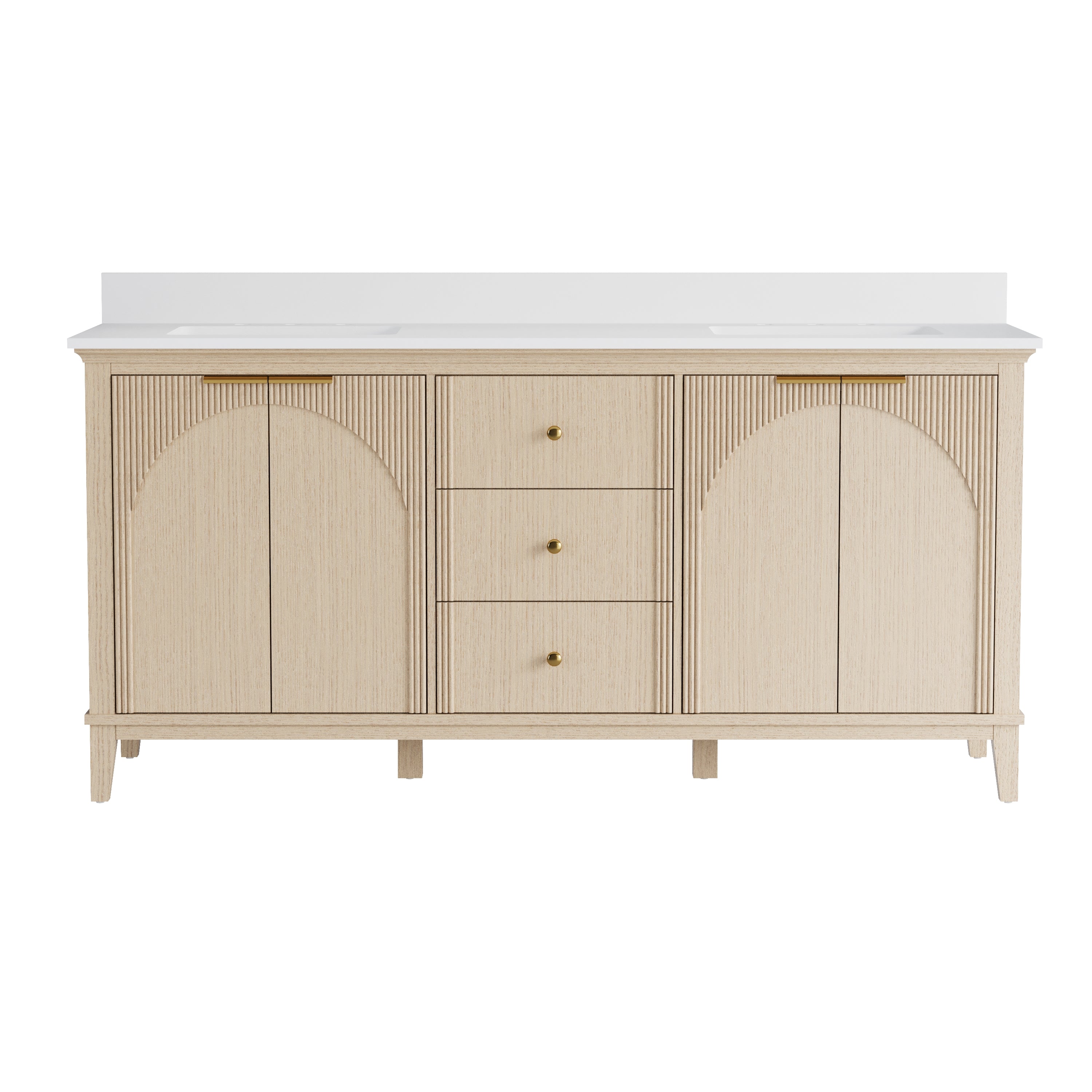
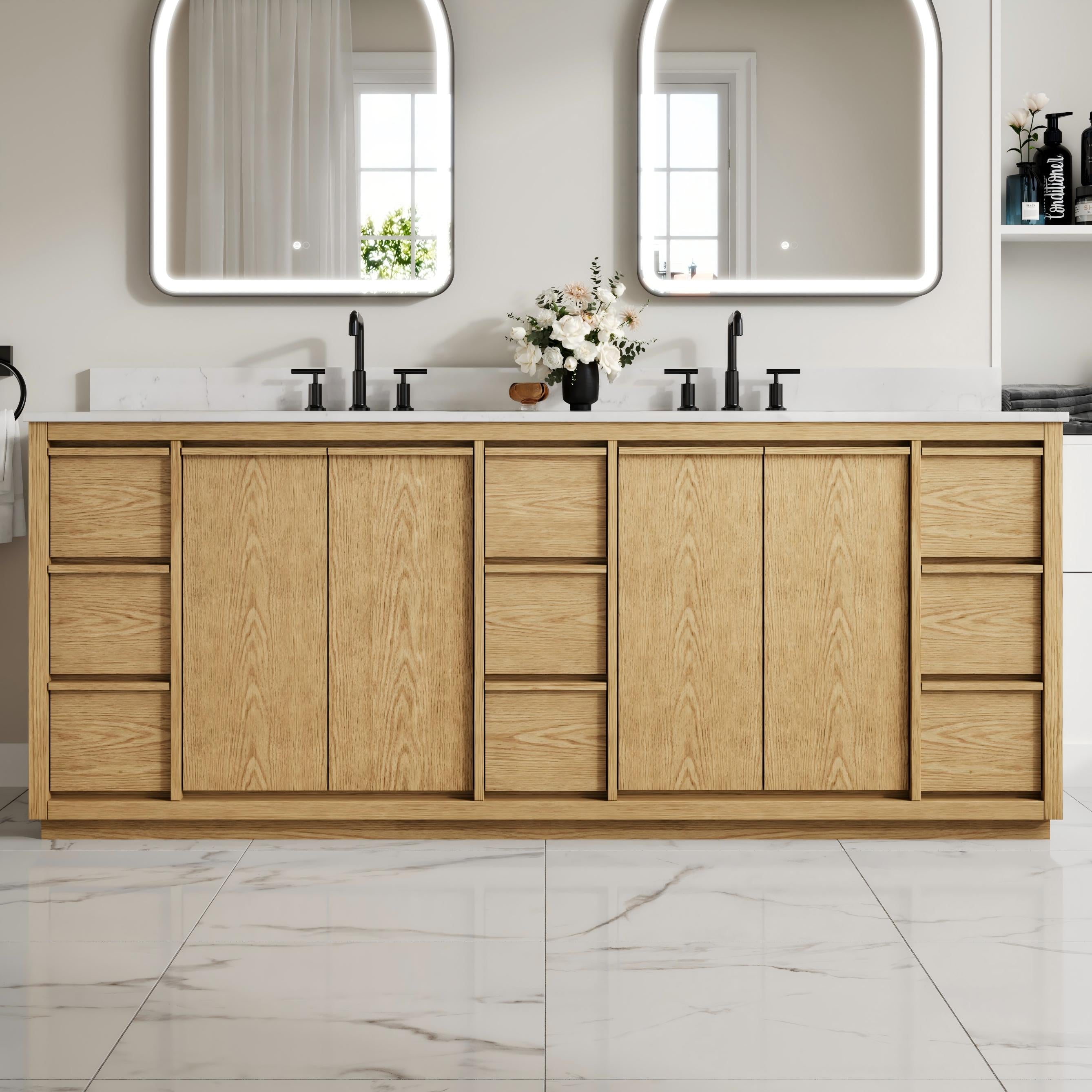
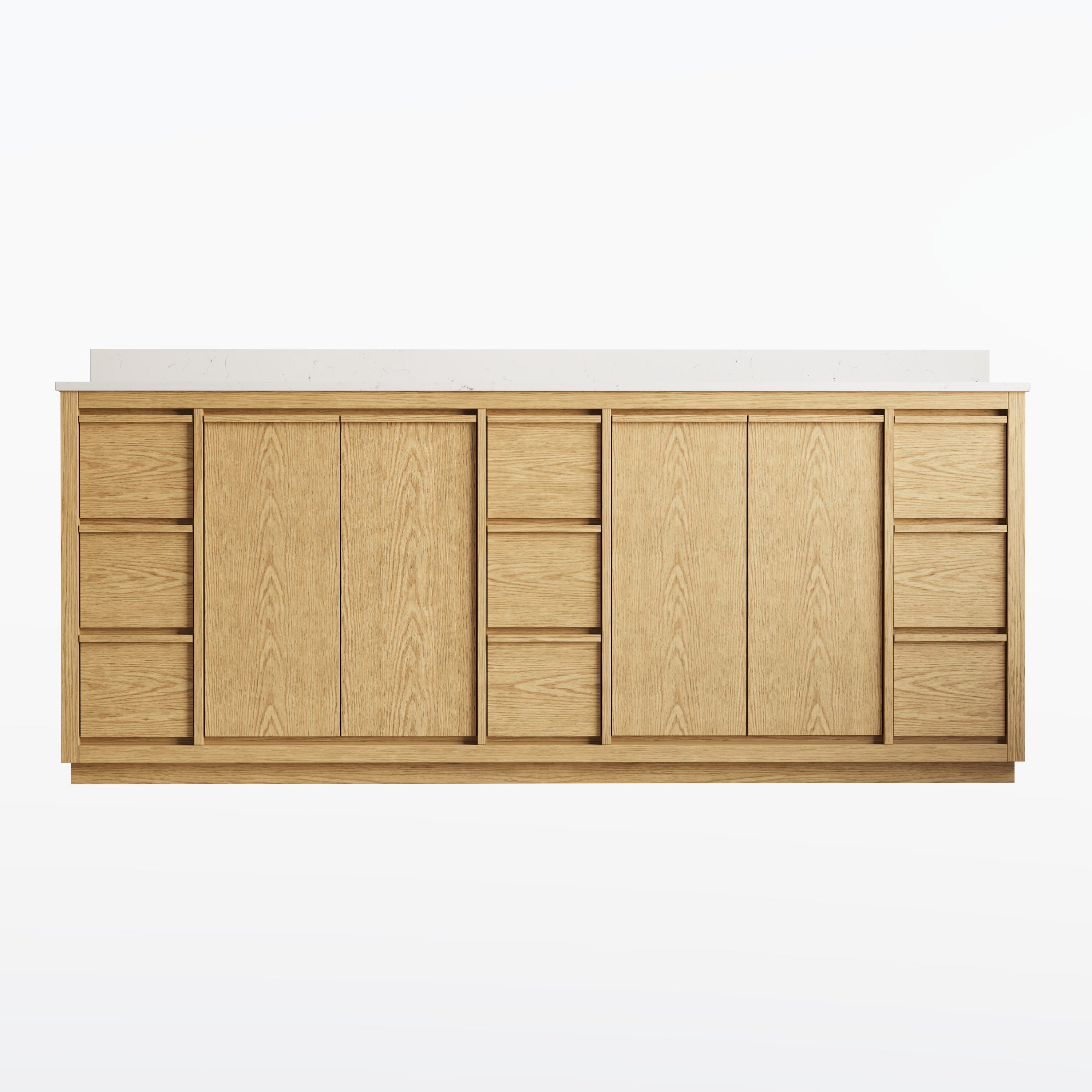

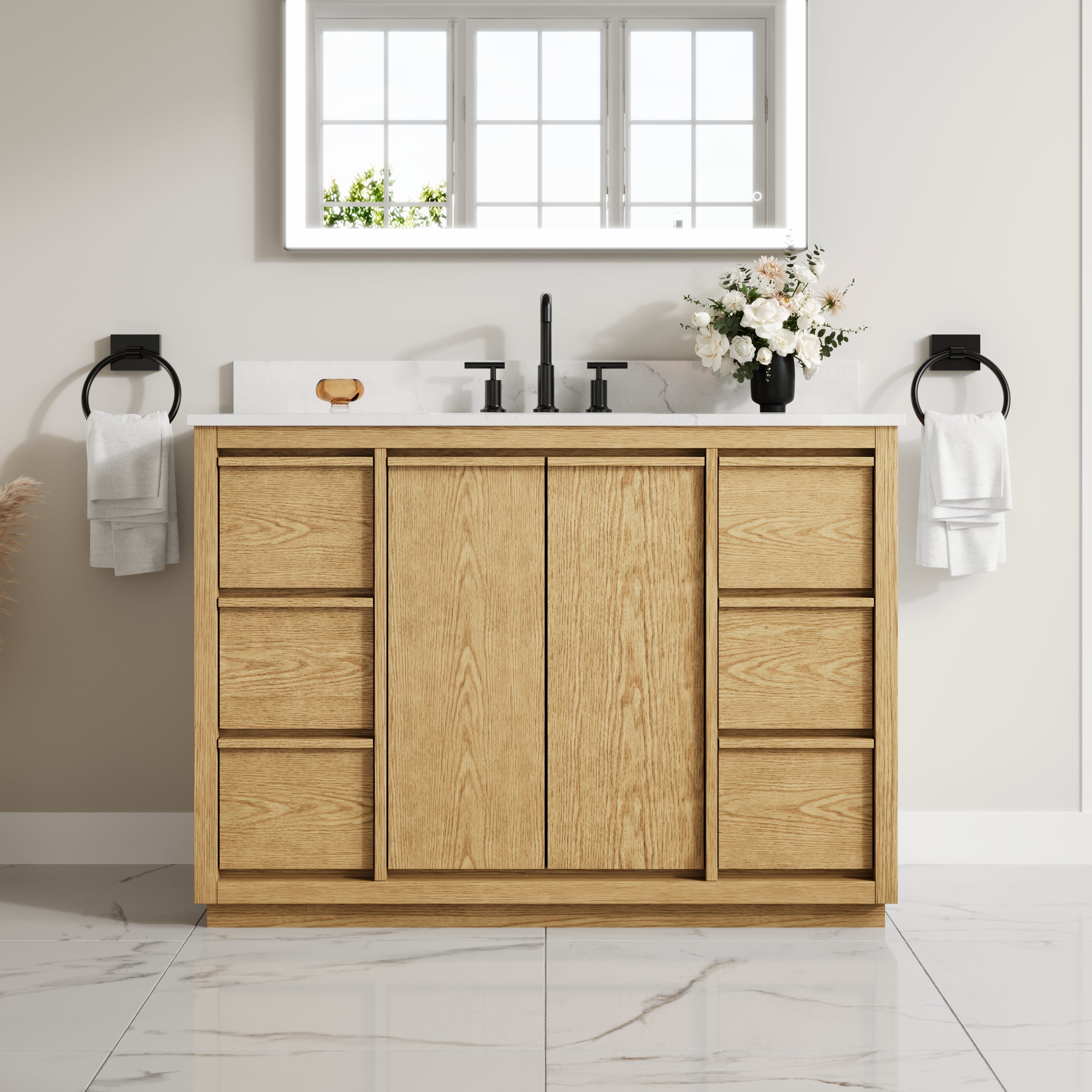
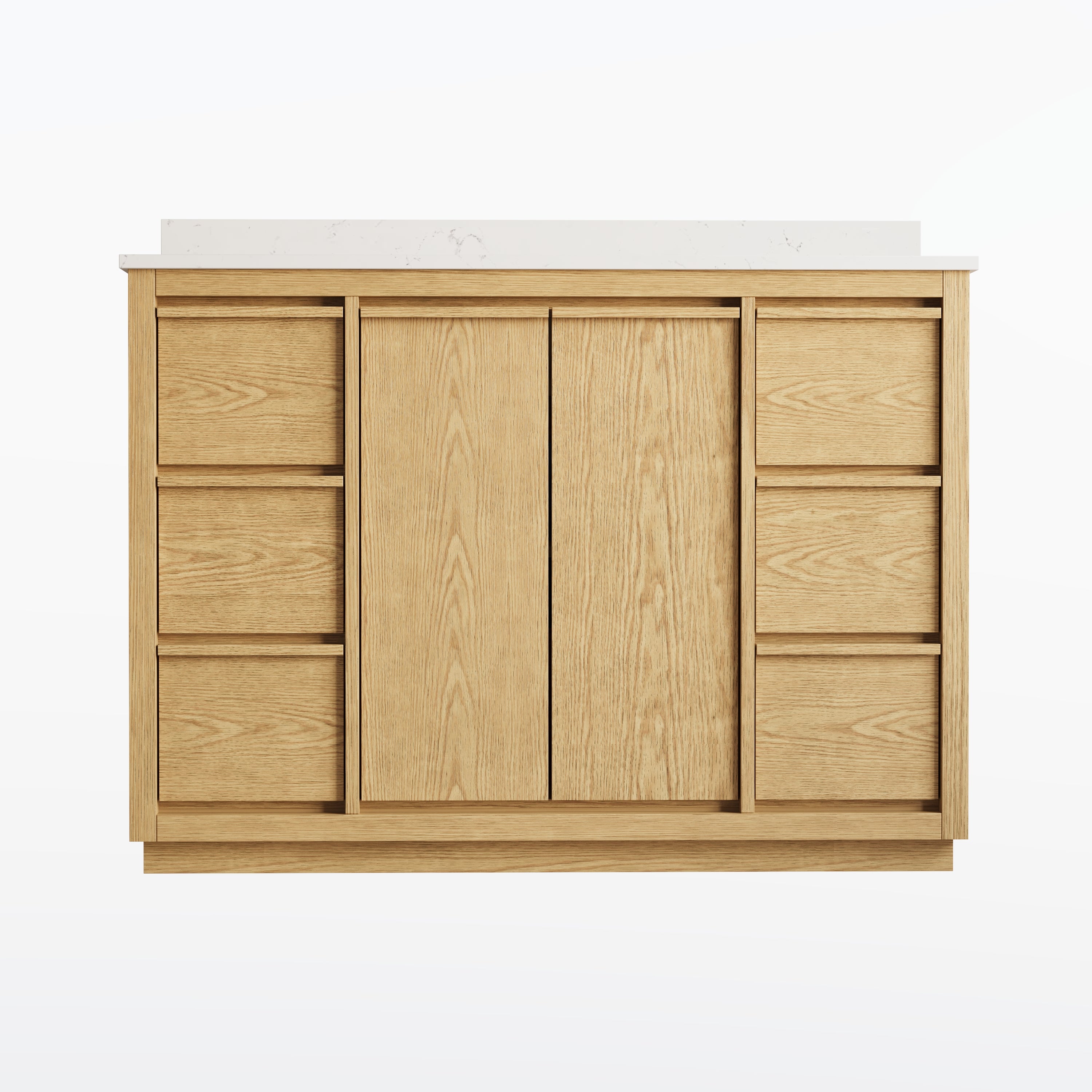
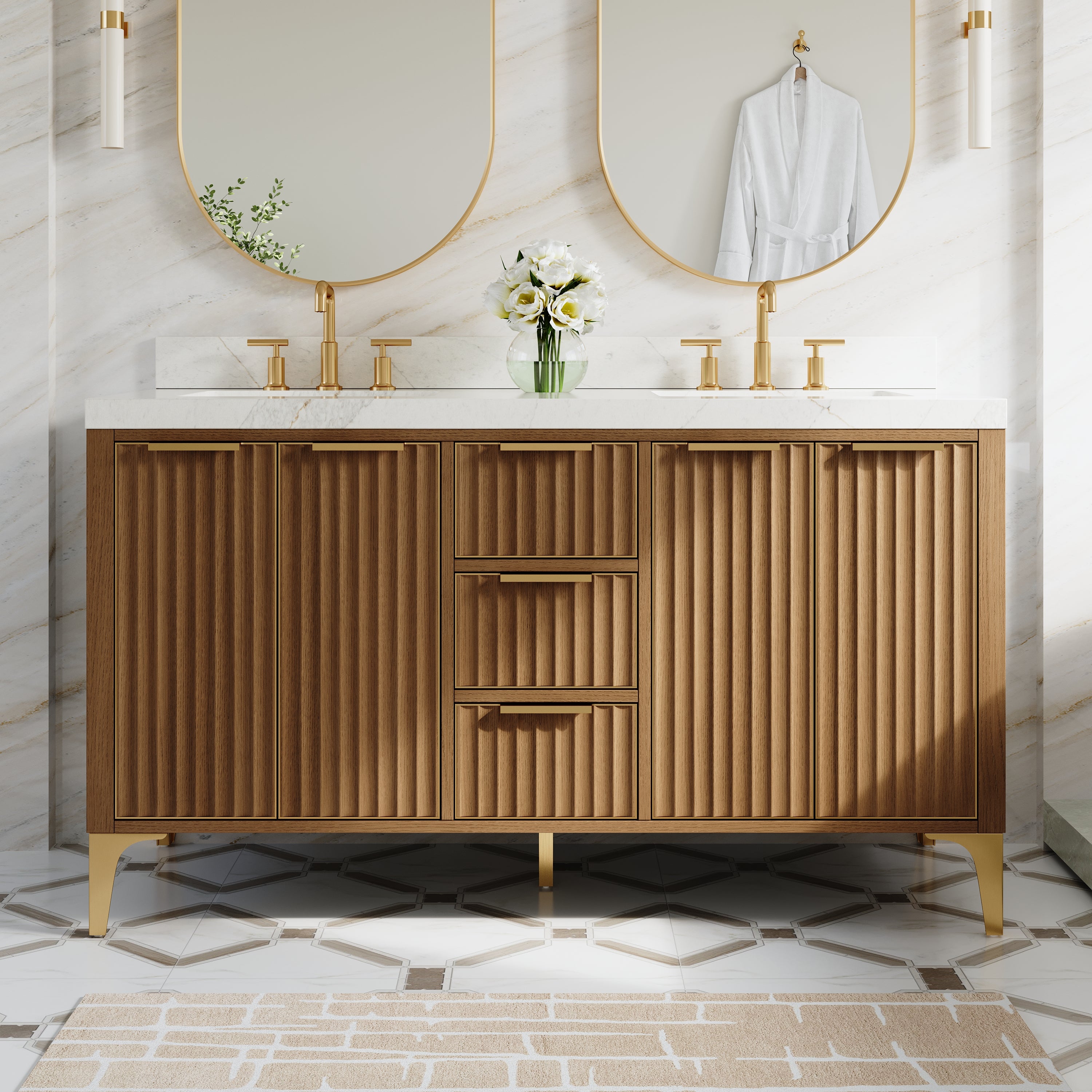
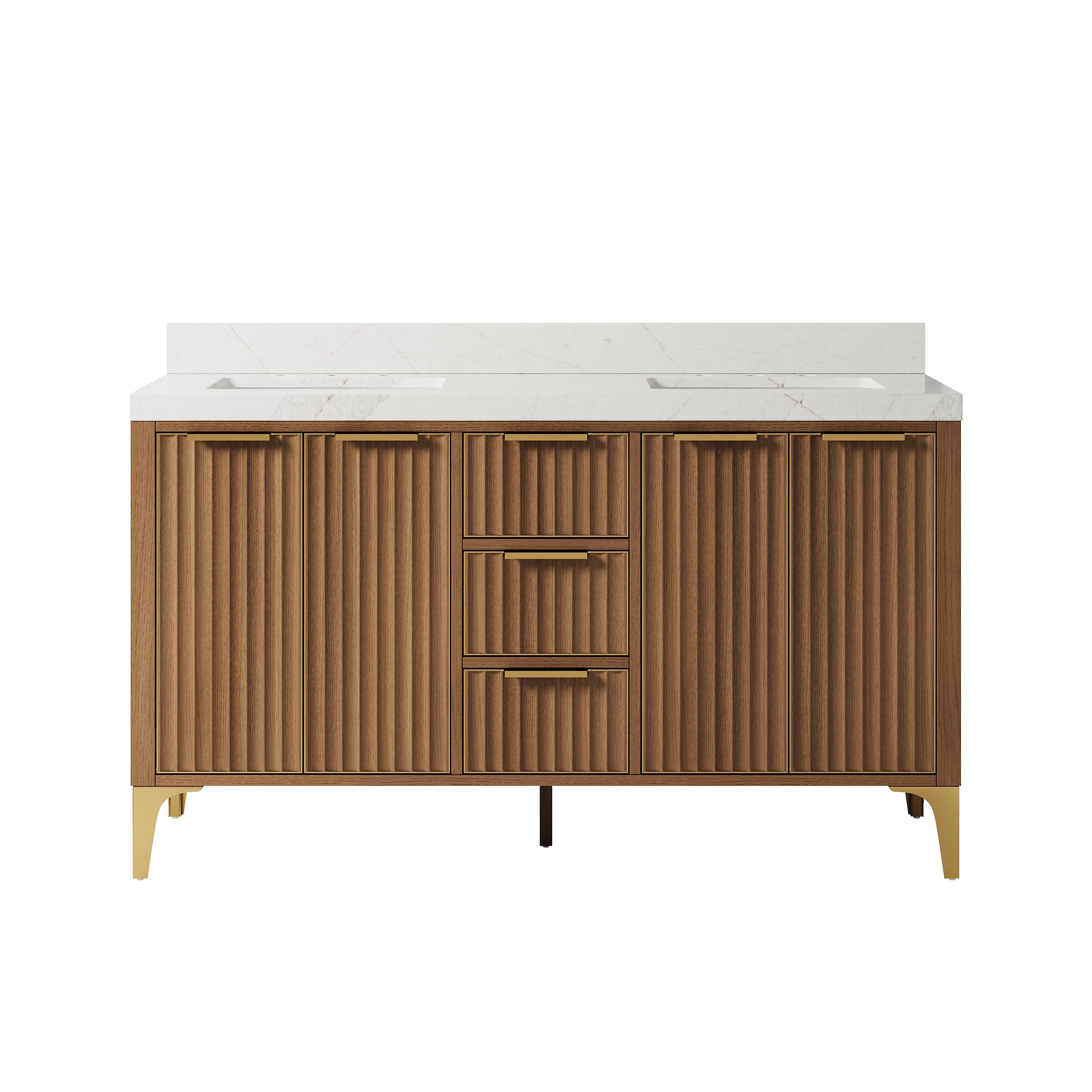
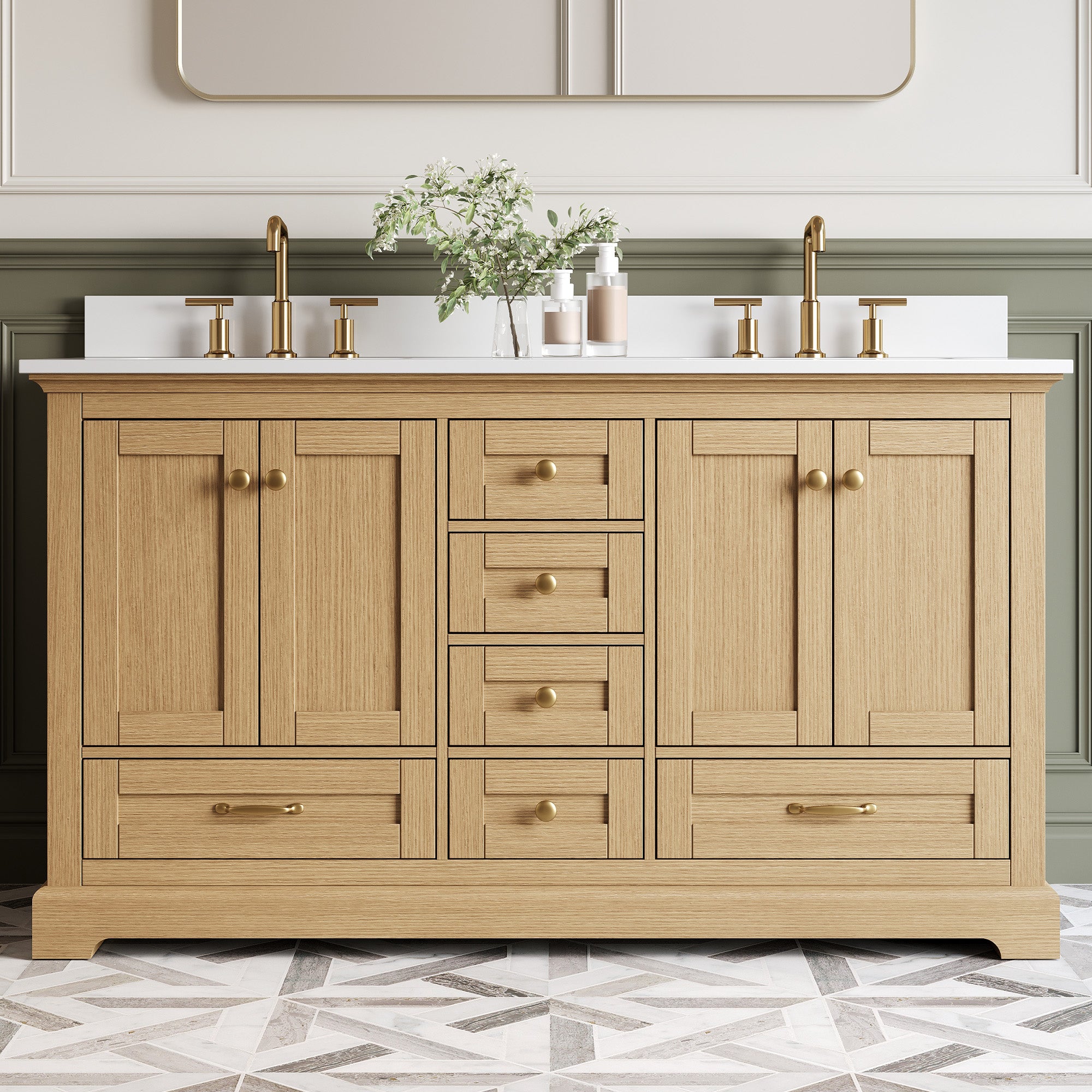
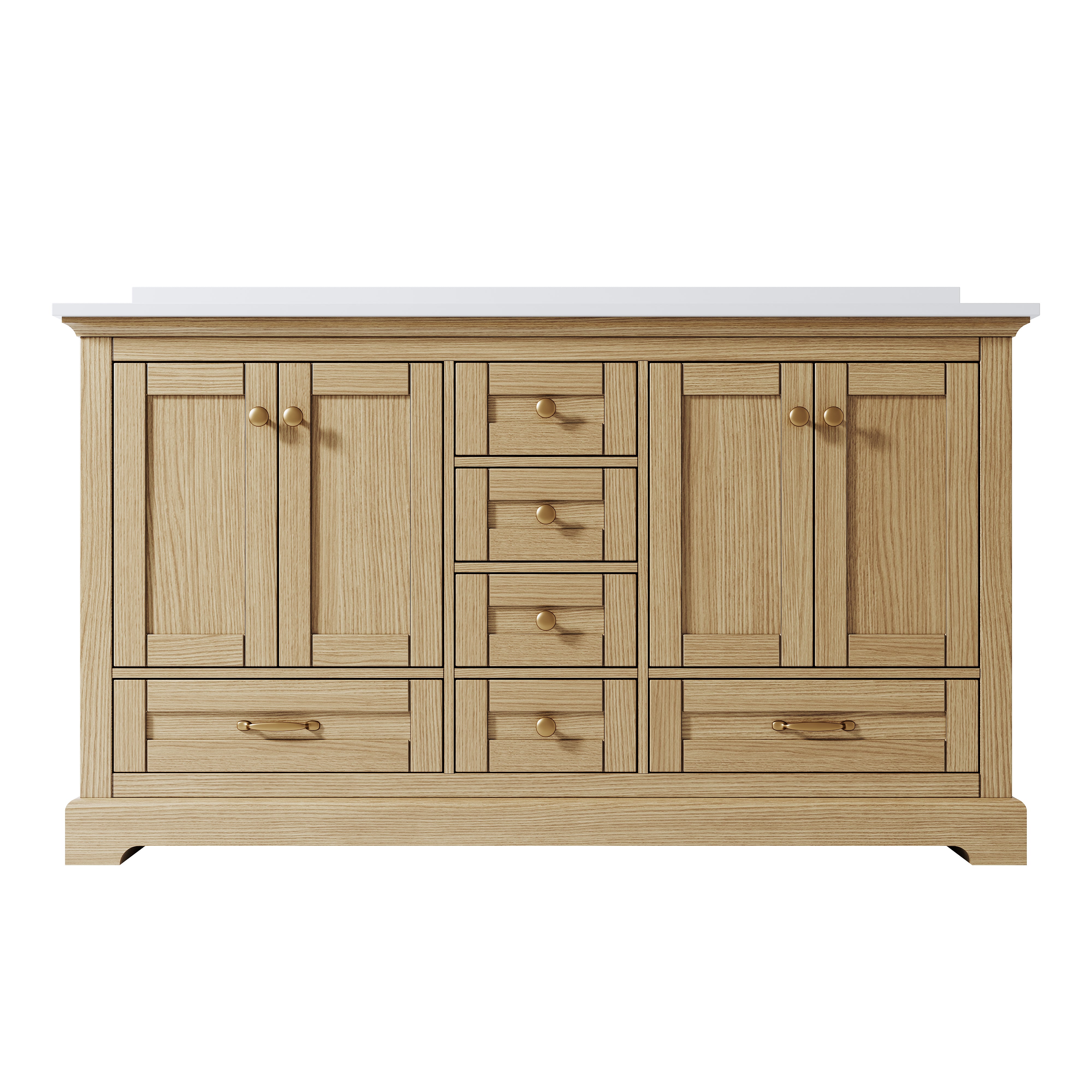
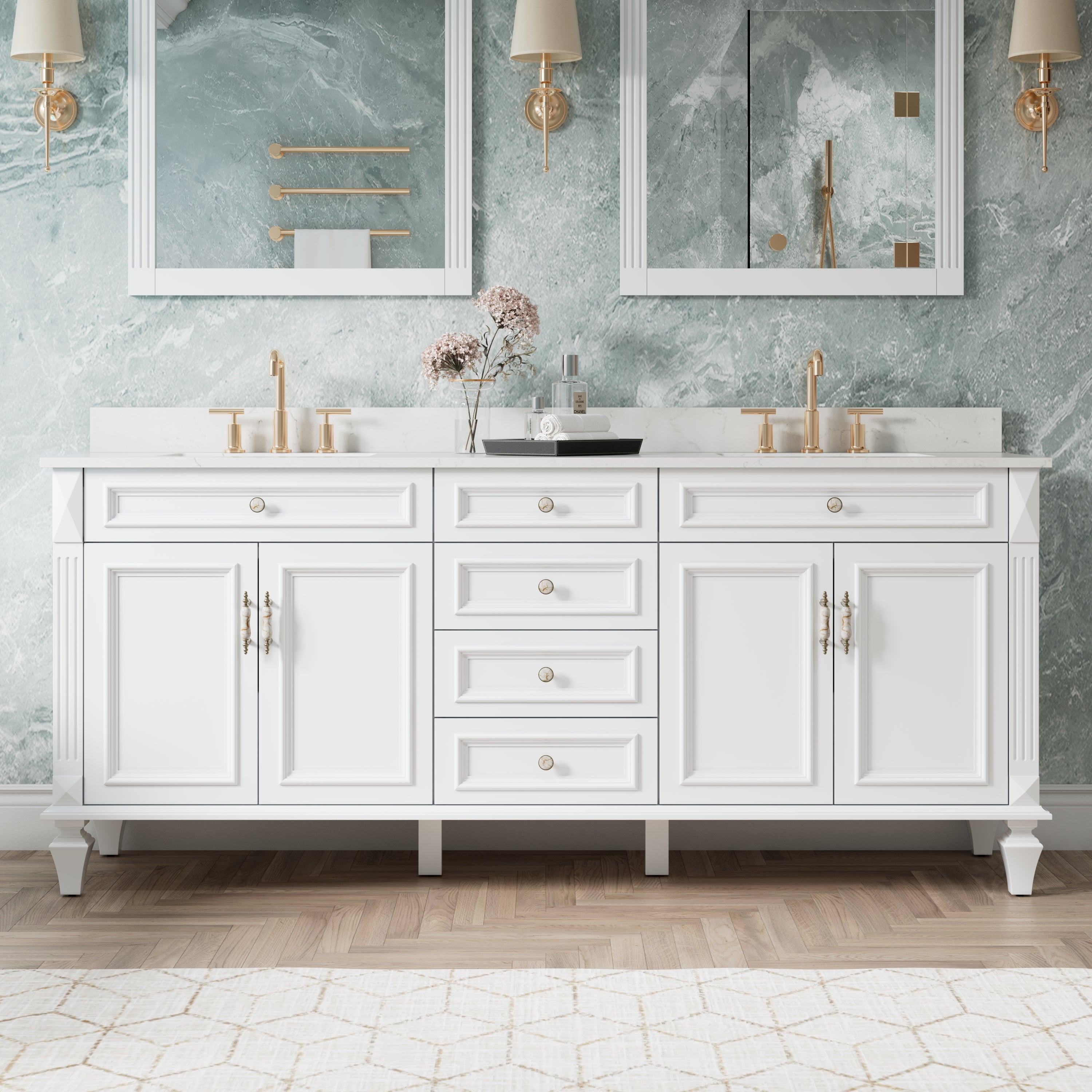
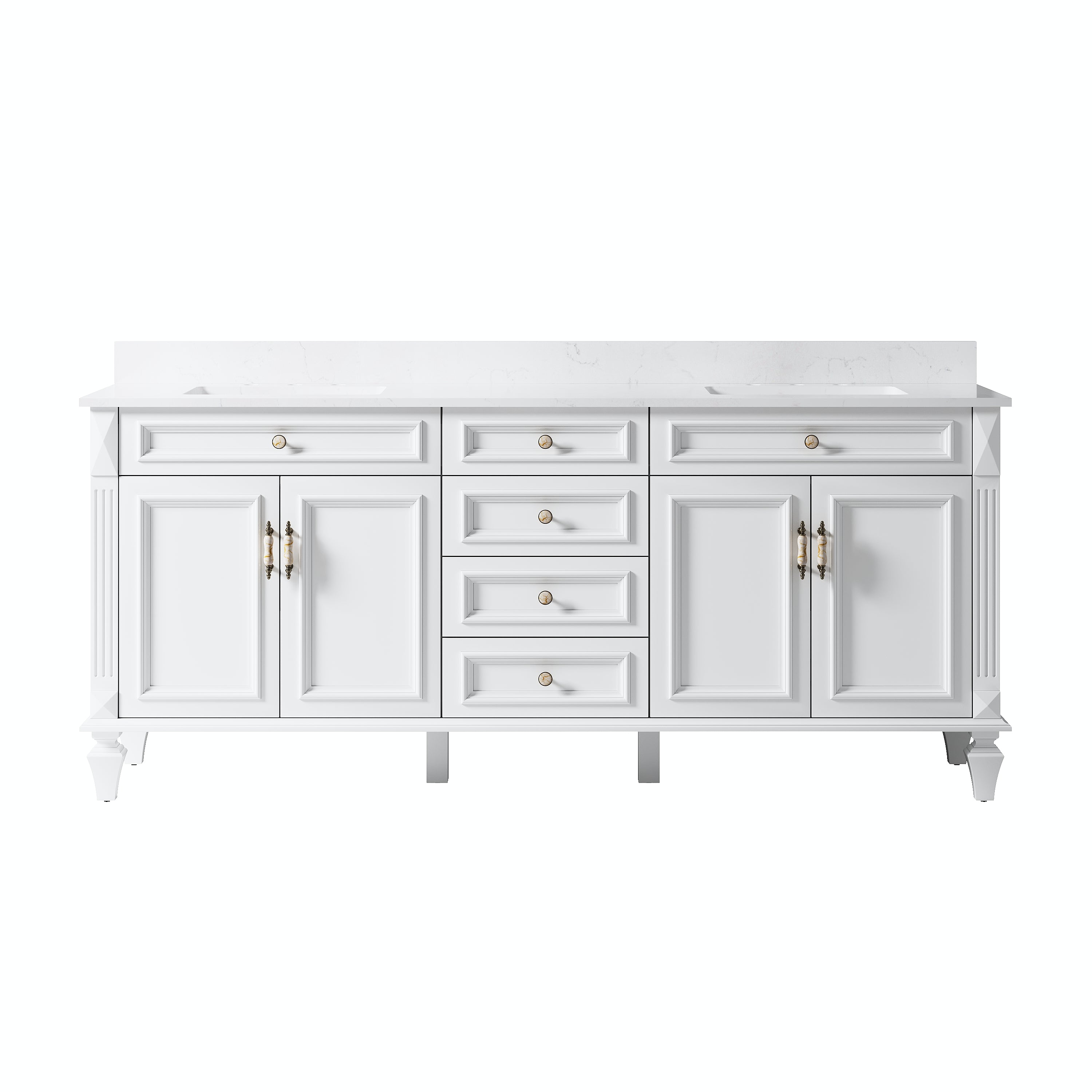
A wood vanity with drawers is increasingly attractive to homeowners who want natural material, useful storage, and a cabinet that feels more like furniture than basic bathroom equipment. The appeal is supported by current renovation data. Houzz's 2025 Bathroom Trends Study found that solid wood was used in 74% of upgraded vanities, while wood tones were the leading vanity color category at 28%. NKBA's 2026 Bath Trends Report also found that wood-faced vanities reached 62% in popularity, ahead of painted cabinetry at 53%. The question, then, is less about whether wood is fashionable and more about whether drawers make that wood vanity work better every day.
Drawers Make Daily Products Easier to Reach
Traditional vanity cabinets often place one large open compartment below the sink. That gives plenty of volume, but small items can quickly disappear behind bottles, plumbing, and cleaning supplies.
Drawers change the way that space is used. Instead of reaching into the back of a cabinet, the contents come toward you.
A shallow upper drawer can hold toothbrushes, razors, cosmetics, or skin-care products. A medium drawer can manage hair tools and folded washcloths, while a deeper lower drawer can hold towels and larger refill bottles.
This matters particularly in 30-inch, 36-inch, and 48-inch vanities, where every inch of storage has to earn its place.
Industry judgment: Drawer storage usually delivers more usable organization than an equally sized empty cabinet because access is as important as total volume.
The Sink Position Determines How Useful the Drawers Are
Not every drawer layout is equally efficient.
A centered sink creates a balanced appearance, but the basin and P-trap occupy the most valuable area in the middle of the vanity. Some cabinets solve this with U-shaped drawers that wrap around the plumbing.
An offset sink can be even more efficient. It may allow a complete drawer bank on one side while the plumbing remains behind a separate door on the other.
Before buying, look at an interior drawing rather than judging only from the front. Some apparent drawers are actually false fronts, while others may be shallower than expected because the sink extends downward into the cabinet.
On a 36-inch vanity, these differences can determine whether you gain three useful drawers or only one.
Full-Extension Slides Are Worth Looking For
Drawer count is not enough. The hardware determines whether the storage remains comfortable after years of use.
Full-extension slides allow most or all of the drawer box to move outside the cabinet, making items stored at the back easier to see. Soft-close hardware reduces slamming and gives the vanity a more controlled feel.
KCMA's A161.1 cabinet performance standard provides a useful benchmark for understanding drawer durability. In testing, drawers are uniformly loaded at 15 pounds per square foot and operated through 25,000 opening-and-closing cycles. At the end, the drawer must remain functional without failure of the operating system or drawer assembly.
Bathroom vanities are not automatically KCMA-certified, but the testing shows why quality slides matter in furniture that is opened several times a day.

Wood Gives Drawer Fronts More Visual Character
Painted drawers create a consistent surface. Wood adds grain, color variation, and texture.
Houzz found that maple was the leading solid-wood vanity choice at 29%, followed by white oak at 23%, birch at 12%, and walnut at 9%.
Each species creates a different effect.
White oak suits flat-panel drawers and modern interiors because its grain can become part of the decoration. Maple is quieter and works well when the countertop or backsplash has a stronger pattern. Walnut creates a richer, darker furniture look.
On wider 48-inch, 60-inch, or 72-inch vanities, grain matching across multiple drawer fronts can make a major difference. Carefully aligned grain makes the cabinet look intentional instead of assembled from unrelated panels.
Drawer Construction Matters as Much as Wood Species
A beautiful drawer front says little about the drawer box behind it.
Look at the corners, bottom panel, slide attachment, and interior finish. Dovetail joinery can indicate careful construction, but it should not be treated as the only quality signal.
A good drawer should stay square when fully extended and should not twist noticeably when loaded. The bottom should feel secure, and the front should remain aligned with neighboring drawers.
KCMA also includes a drawer-front impact test. A 3-pound weight is dropped 8 inches against the drawer assembly 10 times, after which there should be no structural damage or looseness that interferes with operation.
For a frequently used bathroom, this type of structural performance is more meaningful than decorative terminology.
Custom Organizers Are Becoming More Important
The bathroom vanity is increasingly being designed around routines rather than generic storage.
NKBA's 2026 Bath Trends Report, based on a survey of nearly 700 industry professionals, highlights configurable vanity storage as an important direction. Examples include custom dividers, built-in compartments for hair tools, makeup and medications, electrical integration, and charging stations inside the cabinetry.
Drawers are particularly well suited to these features.
A shallow compartment can separate cosmetics. A deeper drawer can incorporate heat-resistant storage for a hair dryer. An interior outlet may allow an electric toothbrush or grooming tool to charge without remaining on the countertop.
The advantage is not simply having more accessories. It is keeping frequently used objects in predictable places.
A Drawer-Heavy Vanity Can Keep the Counter Clear
Bathroom styling often focuses on the countertop, but storage determines whether that surface stays attractive after the first week.
When hair products, cosmetics, toothbrushes, and chargers have no practical home, they naturally migrate onto the vanity top.
Well-designed drawers make it easier to maintain an uncluttered counter. That has an additional benefit in smaller rooms because uninterrupted surfaces can make a 30-inch or 36-inch vanity feel less crowded.
Houzz found that 47% of upgraded vanities measure 48 inches or less, so efficient storage remains highly relevant to a large share of remodeling projects.
A smaller cabinet with excellent drawers may therefore be more practical than a larger vanity filled with poorly organized open space.
Moisture Protection Cannot Be Ignored
Wood and bathrooms can work well together, but drawers add more edges and joints that need protection.
Look for finished drawer sides, sealed drawer fronts, coated cabinet interiors, and protected plumbing cutouts. The cabinet floor below the drain also deserves attention because a slow P-trap leak can remain unnoticed behind stored products.
KCMA finish tests expose cabinet components to demanding conditions, including 120 degrees Fahrenheit at 70% relative humidity, as well as household substances and detergents. These tests underline how important a durable finish is to long-term cabinet performance.
No finish, however, should be treated as a substitute for ventilation and leak prevention.
















Leave a comment
This site is protected by hCaptcha and the hCaptcha Privacy Policy and Terms of Service apply.