
















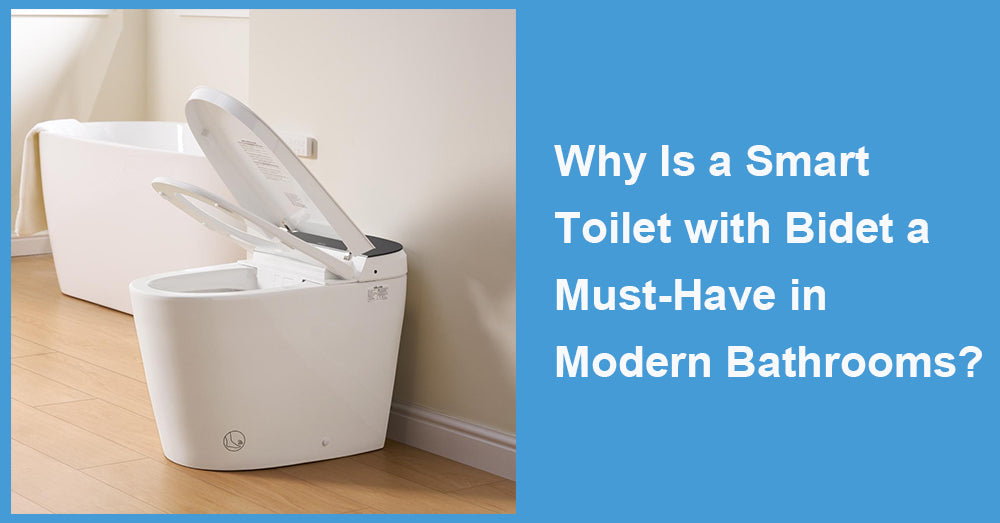
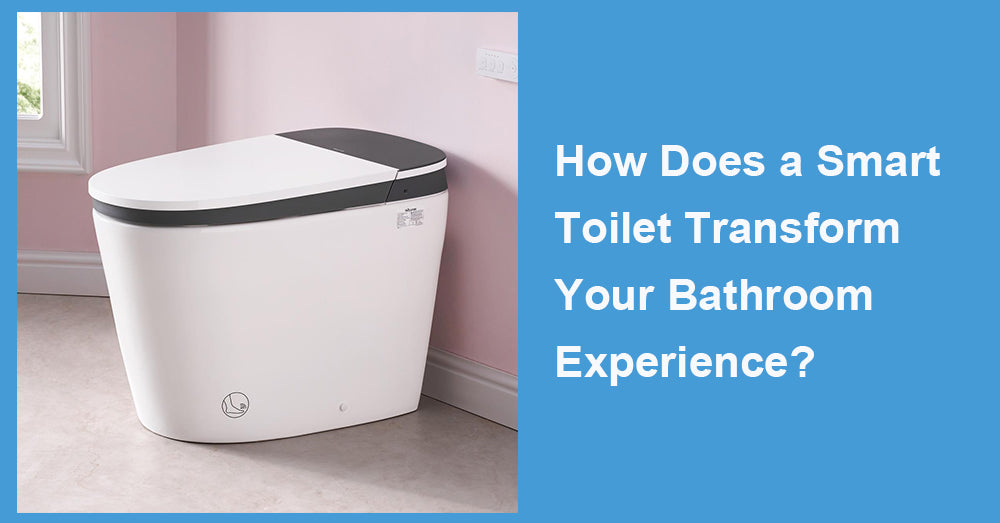
Against the backdrop of the continuous evolution of contemporary residential spaces towards "functional integration" and "experience upgrading, smart toilet with bidet are gradually shifting from high-end options to core configurations in many modern bathroom renovations. It is no longer just a simple bathroom equipment, but a comprehensive solution that integrates cleaning, comfort, health management, and energy-saving concepts. From an industry perspective, the popularity of smart toilets is not a temporary trend but the result of multiple long-term trends converging.
1. The transformation of bathroom roles: from "functional areas" to "private and comfortable spaces."
In the past, bathrooms were seen more as functional areas that met basic physiological needs. But in recent years, there has been a significant shift in residential design and home consumption trends: bathrooms have been redefined as essential spaces for daily relaxation, energy conservation, and self-care.
Industry research shows that in residential renovation projects, investment in bathrooms has steadily increased, second only to kitchens. Among them, the toilet, as the most frequently used item, directly determines the overall bathroom experience in terms of comfort and hygiene. The limitations of traditional toilets in terms of cleaning methods, comfort, and personalized experience are gradually exposed, which is the starting point of the transformation brought by smart toilets.
2. From "wiping" to "washing": structural upgrade of cleaning methods
The flushing system installed in smart toilets is considered a core feature. Compared to a single-tissue wiping method, water washing offers significant advantages in cleaning efficiency, comfort, and skin-friendliness.
From an engineering design perspective, mainstream smart toilets are typically equipped with dual- or multi-nozzle systems that can adjust water pressure, water temperature, and nozzle position, thereby adapting to different usage scenarios. The nozzle often features a self-cleaning design that automatically flushes before and after each use, reducing the risk of cross-contamination.
Industry data shows that introducing a water-washing function can significantly reduce the amount of toilet paper required for daily cleaning, improving the user experience and reducing dependence on consumables over the long term.
3. Ergonomics and Comfort: Details Determine Long-Term Experience
Modern smart toilets are optimized for ergonomics, with attention to size, seat design, and usage logic. The height of standard seat rings is usually set at about 16-17 inches, which is more in line with the natural sitting posture of adults and places less pressure on the knee joints and waist.
In addition, the seat heating function has almost become a standard feature of smart toilets. The temperature usually supports multiple adjustments, which can be set according to the season and personal preferences. In cold environments, this detail significantly enhances user comfort and is also considered an essential factor in improving user satisfaction.
4. Health and hygiene management: not just "cleaner."
With improved health awareness, bathroom products have begun to take on more auxiliary functions related to physical health. Smart toilets use a steady, gentle water flow to clean, reducing the friction and irritation that traditional wiping can cause, making them particularly friendly to sensitive populations.
Some advanced models also introduce sterilization nozzle materials, automatic deodorization systems, and seat ring antibacterial coatings to reduce the possibility of bacterial growth from a product structure perspective. For long-term users, this "passive health management" is not explicit, but it reflects value over time.
5. Water and Energy Conservation: Hidden Returns from Technological Progress
In terms of energy-saving design, smart toilets are not synonymous with high-energy-consuming devices. On the contrary, with the maturity of control systems and sensor technology, the energy consumption of mainstream products in standby mode has been compressed to extremely low levels.
The flushing system usually uses dual-speed or intelligent sensing flushing logic, which automatically adjusts the water volume based on the usage situation. Industry test data show that, compared to traditional single-water flushing methods, overall water-use efficiency is higher in the long term, especially suitable for high-frequency household environments.
6. Intelligent experience: from "buttons" to "seamless operation."
The "intelligence" of smart toilets is not only reflected in the number of functions, but also in the optimization of usage logic. The design features an induction flip cover, automatic flushing, and soft night lighting, making the user experience more coherent and natural.
Among them, the night light function usually uses low-brightness LED sources, with the lighting concentrated on the ground and the interior of the toilet to avoid dazzling, intense light interfering with night vision. This type of detailed design is often highly praised in practice, but it isn't easy to achieve with traditional products.
7. The impact on the value of modern residential buildings
In the overall configuration of residential buildings, the upgrade of bathroom equipment has gradually been linked to spatial value. As a high-perception product, the existence of smart toilets itself represents an improvement in living quality.
The proportion of smart toilets in new residential construction and high-end renovation projects continues to rise. The industry generally believes that it not only improves the daily experience but also enhances the attractiveness of residential properties in the secondary market to a certain extent, especially for types that emphasize quality of life and health.
8. Why is it becoming a "mandatory" option
Overall, smart toilets are not a stack of single functions, but rather an intersection of cleaning methods, comfort experiences, health concepts, and energy-saving technologies. It solves the long-standing but overlooked problems of traditional toilets: whether cleaning is gentle enough, use is comfortable enough, and daily life is worry-free enough.
With the advancement of technology and increased user awareness, smart toilets are no longer just trial products but are gradually integrated into the basic configuration of modern bathrooms. For those who pursue long-term optimization of living experience, choosing a toilet with a reliable cleaning function and a mature intelligent system is a rational and sustainable decision.

9. Conclusion
As the bathroom evolves from a purely functional space into a private place focused on comfort, health, and efficiency, the value of smart toilets is also re-recognized. It is not an optional upgrade, but a natural result of adapting to modern lifestyles. Therefore, a smart toilet with a bidet has gradually become an indispensable presence in contemporary bathroom design.




















Leave a comment
This site is protected by hCaptcha and the hCaptcha Privacy Policy and Terms of Service apply.