






















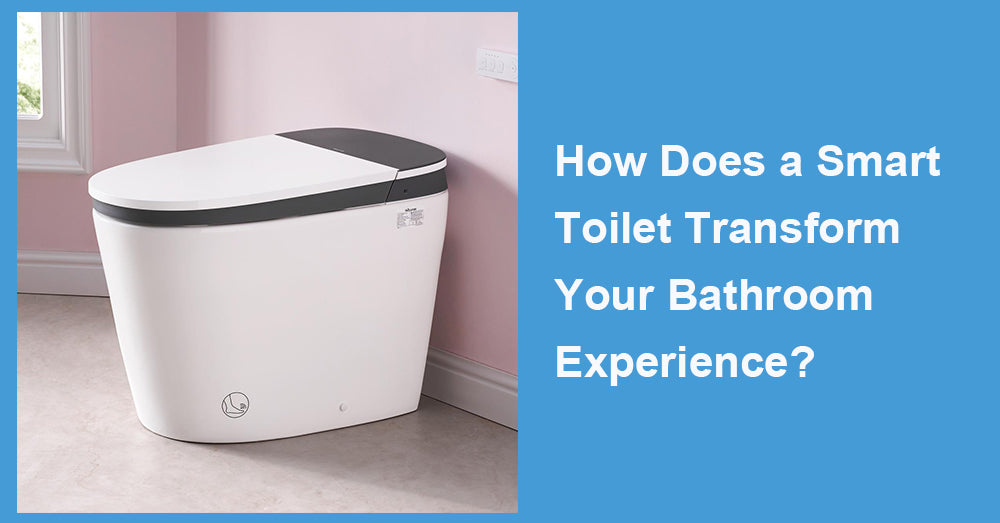
As contemporary living spaces continue to evolve, smart toilets are quietly changing people's overall perception of the bathroom experience. It is no longer just a "flushing device", but a comprehensive product that integrates cleaning methods, comfort, health concepts, and intelligent technology. From an industry perspective, the emergence of smart toilets is not accidental, but the result of long-term lifestyle changes, technological maturity, and improved living quality.
1. The transformation from basic functions to experience orientation
Traditional bathroom design has long revolved around "usability, as long as it meets basic functions. But in recent years, bathrooms have been endowed with more attributes - privacy, relaxation, order, and health. Smart toilets have entered the mainstream view in this context.
Industry research shows that over the past decade, bathrooms have become one of the fastest-growing spaces in residential upgrade projects, and toilets, as the most frequently used item, directly affect residential satisfaction with the experience. This also prompts product design to shift from "usability" to "ease of use, long-term comfort.
2. The fundamental change in cleaning methods: from contact to non-contact
The most intuitive change in smart toilets comes from the cleaning logic itself. The water-washing system replaces single-tissue wiping, making the cleaning process more thorough, gentle, and controllable.
Mainstream smart toilets are usually equipped with multiple levels of water pressure and temperature adjustment, and the nozzle position can be fine-tuned to suit different usage needs. The nozzle will automatically clean before and after use, reducing hygiene hazards caused by direct contact. Industry tests have shown that introducing a washing system significantly improves overall cleanliness and comfort ratings while substantially reducing skin irritation.
This "non-contact" cleaning method is one of the core values that distinguishes smart toilets from traditional products.
3. The daily comfort brought by ergonomic design
From a structural design perspective, smart toilets are more ergonomic in terms of seat height, seat support, and standing angle. The standard design height is concentrated around 16-17 inches, which is closer to natural sitting and standing posture, reducing the burden on knees and waist.
In addition, heated seat rings have become almost standard on smart toilets. The temperature usually allows multiple adjustments, which can be set based on seasonal changes or personal preferences. For long-term users, this comfort is not a temporary novelty, but an experience that is repeatedly perceived and enhanced every day.
4. Transforming "hygiene" into a systemic capability
The improvement in hygiene from smart toilets is not limited to flushing; it extends throughout the entire usage cycle. The automatic deodorization system can operate continuously, reducing odor retention in the air. The antibacterial seat ring material and nozzle design effectively inhibit bacterial growth from a structural perspective.
Some models also use enclosed waterways and independent nozzle structures to reduce the possibility of cross-contamination. For long-term household use environments, this "invisible hygiene management" is often more important than a single cleaning.
5. Intelligent control makes usage more "convenient."
The actual intelligent experience is not about the number of functions, but about whether the operation is natural. The smart toilet is particularly evident in this regard.
The functions of automatic flip cover, automatic flushing, and seat departure sensing make the entire usage process almost thoughtless. When used at night, low-brightness lighting will automatically turn on, directing light downward or into internal areas to avoid glare and intense light affecting the line of sight. This non-invasive design transforms the toilet from a "device that needs to be operated" to a "behavior-responsive system.
6. Water conservation and energy efficiency are not contradictory
One of the initial misunderstandings that many people have about smart toilets is the concern about increased energy and water consumption. But from the perspective of industry technological development, the fact is precisely the opposite.
The current mainstream smart toilets mostly use intelligent flushing logic that automatically adjusts water volume based on usage. Compared to traditional single-water flushing methods, the overall water-use efficiency is higher in the long term. Standby power consumption is also kept at an extremely low level, and the impact on the household energy structure from daily use is minimal.
The ability to control consumption while enhancing the experience is an essential reason for the continued popularity of smart toilets.
7. Enhancing the overall sense of order in the bathroom
The changes brought by smart toilets are not only reflected in functionality, but also in spatial experience. The concise integrated appearance and hidden circuit design make the bathroom visually cleaner and more orderly.
In modern bathroom design, whether equipment appears high-end often depends on whether details are properly hidden. Smart toilets integrate functions and reduce the number of external accessories, creating a more unified space in line with contemporary aesthetic trends.
8. The transition from "trying" to "relying" in usage
Many users often approach smart toilets with a trial-and-error mindset when they first encounter them. However, based on long-term usage feedback, once adapted to washing and intelligent operation, few people are willing to return to traditional modes.
Industry surveys show that among households that have installed smart toilets, overall satisfaction and willingness to repurchase are high. This stickiness does not stem from complex functions, but from the convenience and comfort repeatedly verified in daily life.

9. Conclusion: How smart toilets can genuinely change the bathroom experience
Smart toilets are not simply about "making toilets more complex", but rather solving long-standing but overlooked problems in traditional use through technological means: whether the cleaning is gentle enough, whether the use is comfortable enough, and whether the process is worry-free enough.
As the bathroom gradually becomes an essential space for improving quality of life, the upgraded experience offered by smart toilets is no longer an optional add-on but a natural result of adapting to changes in modern living habits. This is precisely the fundamental reason why smart toilets can continually transform the bathroom experience and gradually move towards mainstream adoption.









































Leave a comment
This site is protected by hCaptcha and the hCaptcha Privacy Policy and Terms of Service apply.