














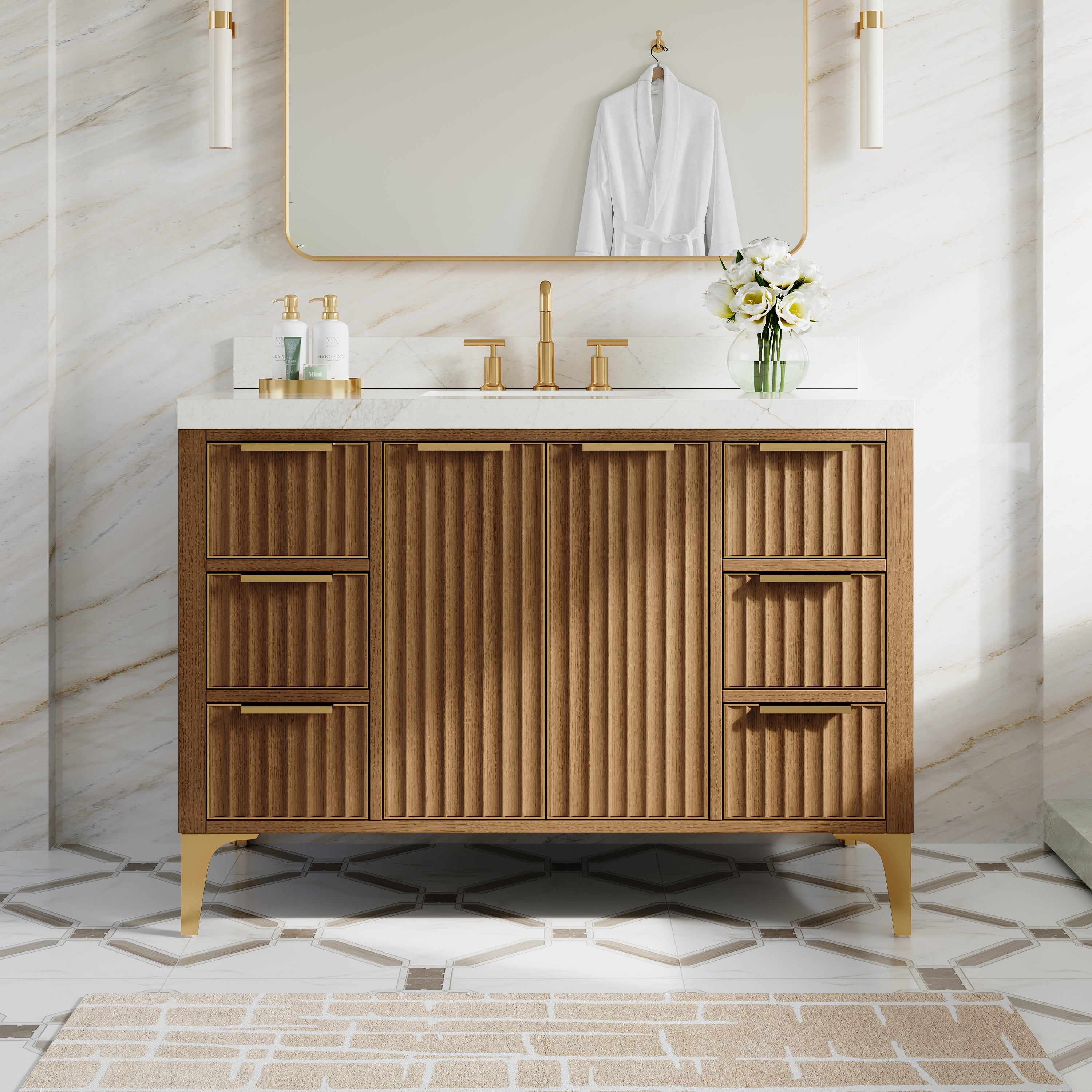
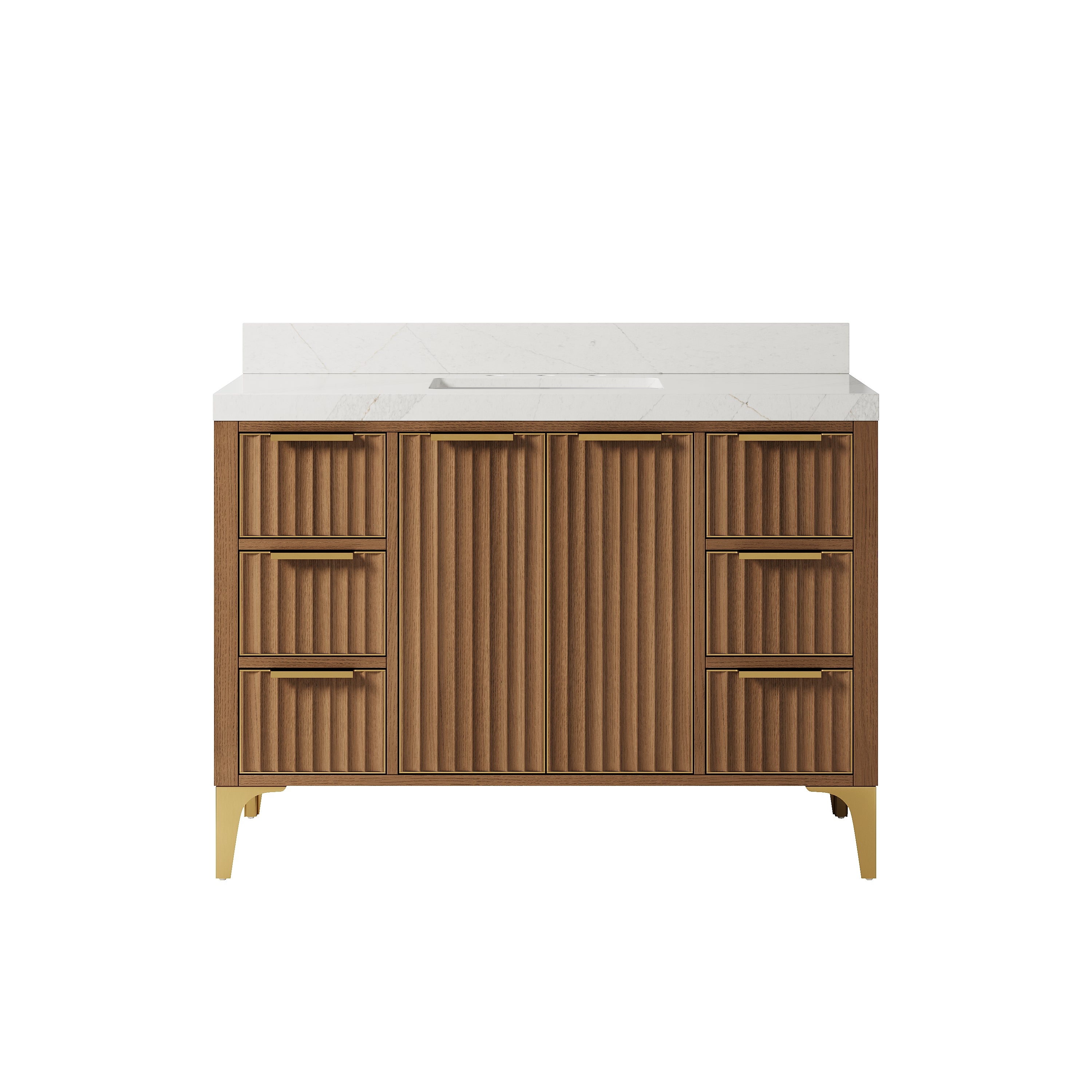


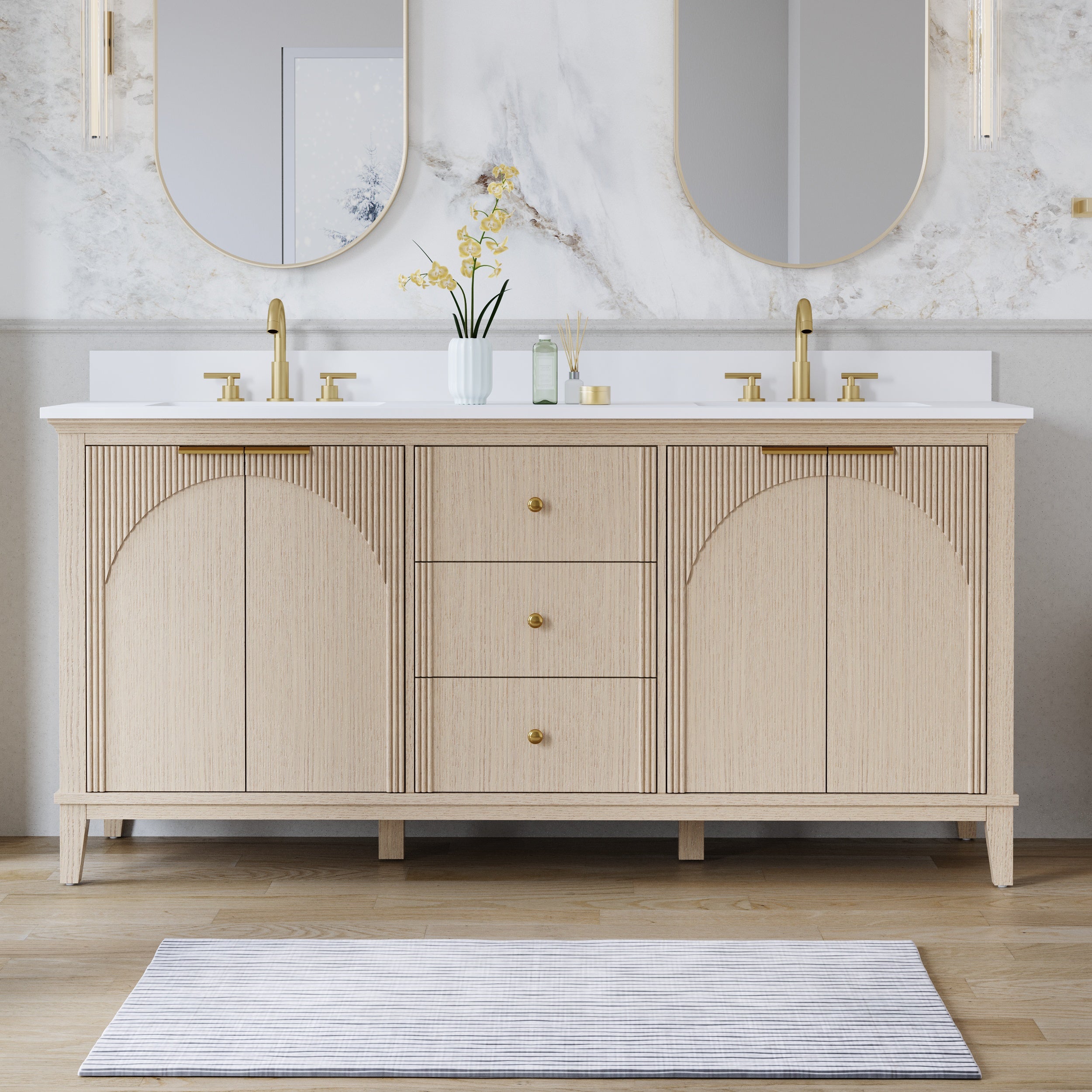
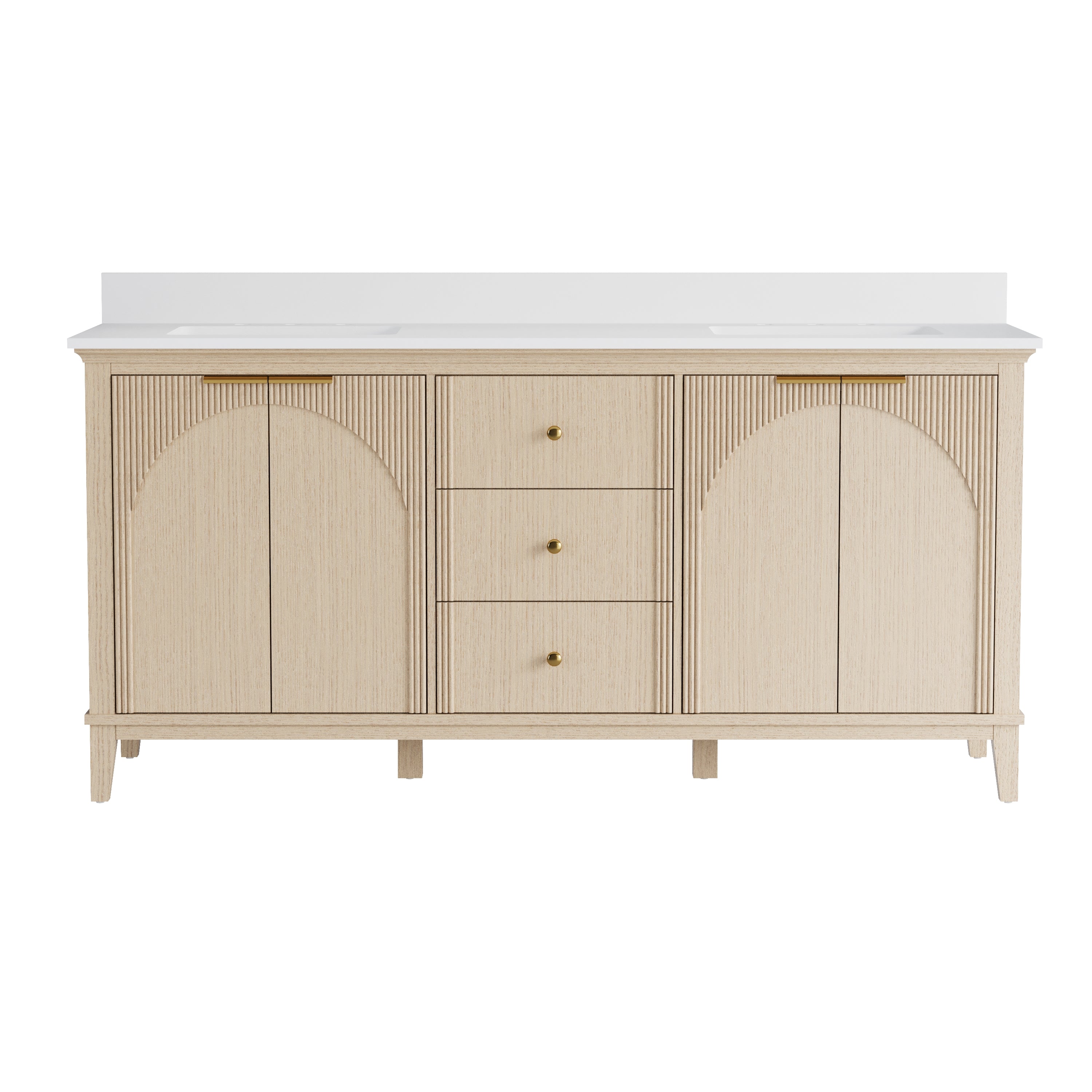
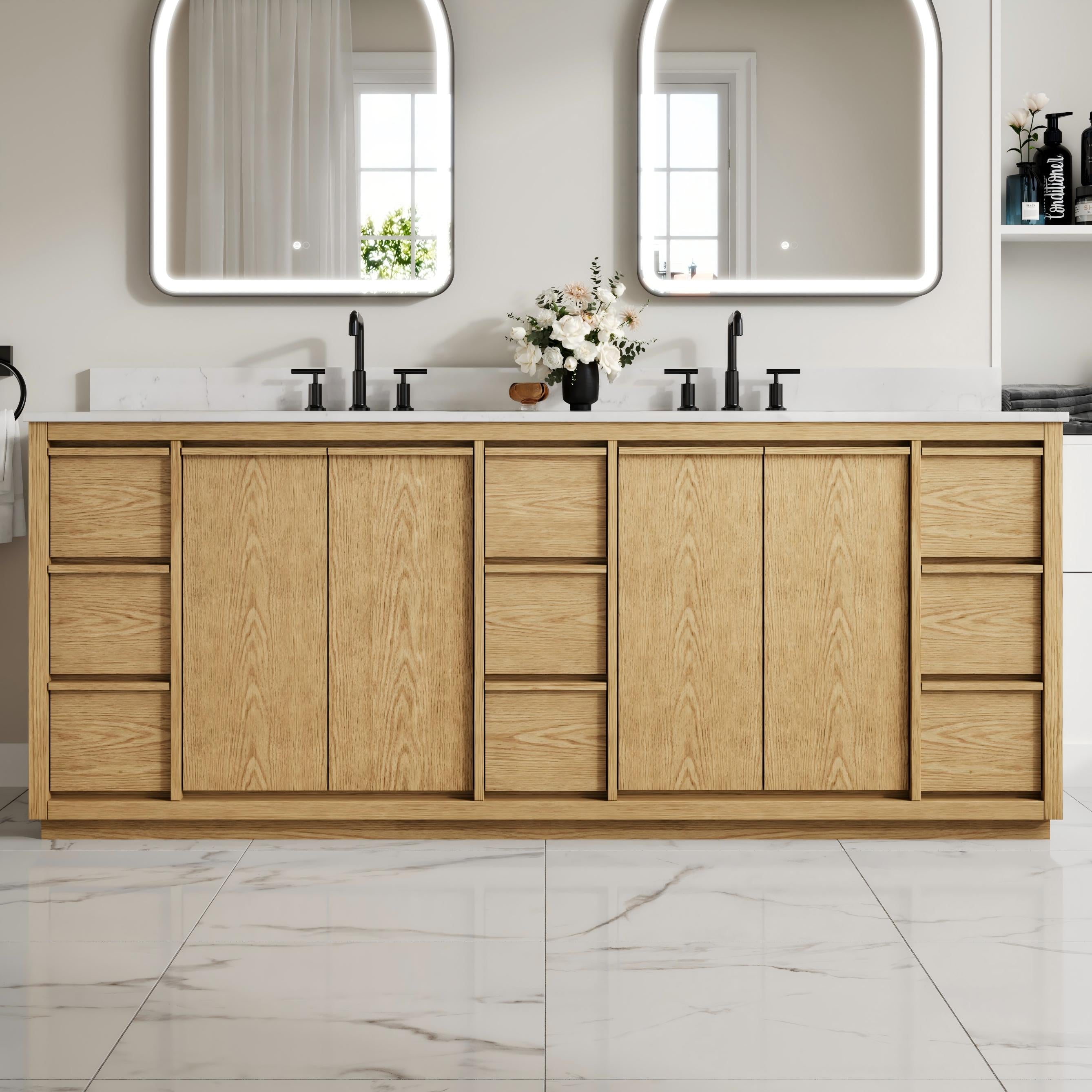
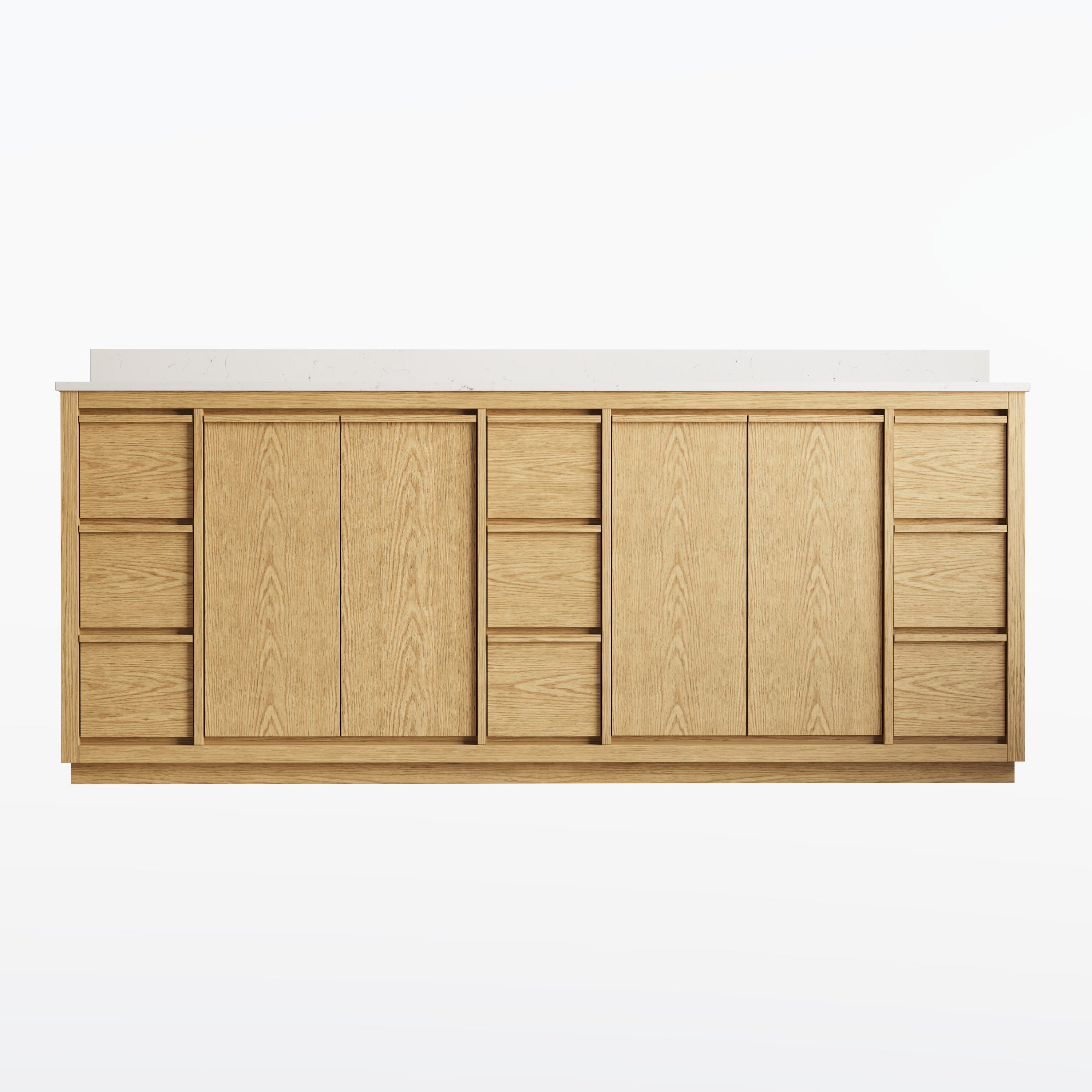
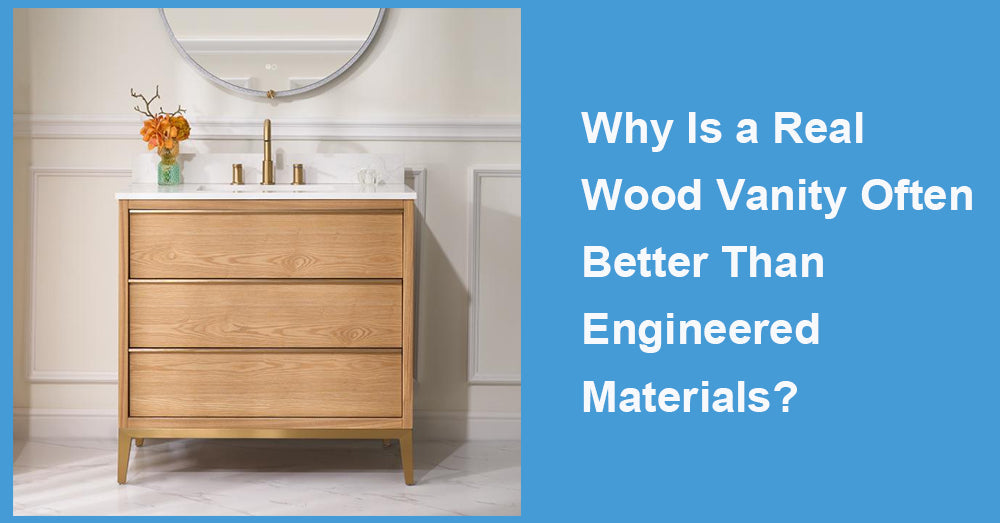
A real wood vanity continues to attract attention in bathroom design because it brings something engineered materials cannot fully reproduce: natural texture, depth, and long-term character. While MDF, particleboard, and other engineered panels have improved significantly, many designers and homeowners still view solid wood construction as a worthwhile investment for bathrooms where durability and visual quality matter.
The debate is no longer simply about “natural versus manufactured.” Modern bathroom furniture is judged by how it performs over years of humidity changes, daily cleaning, storage demands, and style updates. A well-built vanity must do more than look attractive on installation day.
Industry judgment: engineered materials have become smarter and more affordable, but real wood remains the benchmark when craftsmanship, repairability, and timeless appearance are priorities.
1. Real Wood Brings Natural Strength and Long-Term Value
The biggest advantage of real wood is not only strength. It is the way the material ages.
Solid wood has a natural grain structure that gives each vanity a unique appearance. Small variations in color and texture create a furniture-like quality that flat manufactured panels often struggle to match.
For bathroom vanities, commonly used hardwood options include oak, maple, walnut, and birch. These species offer different visual personalities, from light Scandinavian-inspired tones to deeper traditional finishes.
A well-constructed real wood vanity is typically built with stronger joinery methods, thicker structural components, and repairable surfaces. Scratches, minor dents, or finish wear can often be sanded and refinished instead of requiring complete replacement.
The Forest Products Laboratory’s Wood Handbook explains that wood performance depends heavily on moisture control, species selection, and proper construction methods. When properly manufactured and installed, wood products can maintain stable performance for long periods. (Source: USDA Forest Products Laboratory)
The important point is that real wood is not automatically better simply because it is natural. Quality construction determines whether the material reaches its potential.
2. Moisture Management Is the Real Bathroom Challenge
Bathrooms create a difficult environment for any cabinet material. Steam from showers, water splashes around sinks, and daily humidity changes constantly challenge vanity construction.
According to the EPA, indoor humidity should ideally remain between 30% and 50% to reduce moisture-related problems. Proper ventilation and moisture control are essential regardless of cabinet material. (Source: EPA)
Real wood responds to humidity by naturally expanding and contracting. This movement is expected behavior, not necessarily a failure. High-quality manufacturers account for this by using properly dried lumber, protective coatings, sealed edges, and stable construction techniques.
Engineered materials behave differently. MDF and particleboard are built from wood fibers or particles bonded with adhesives, building a more uniform panel. Their advantage is dimensional consistency, but exposed edges and unsealed areas can be vulnerable when moisture enters the core.
The better question is not “Does wood resist water?” The better question is “How well is the vanity designed to manage water exposure?”
3. Engineered Materials Offer Efficiency, But Have Limitations
Engineered materials have changed the bathroom furniture industry. They allow manufacturers to create consistent panels, reduce material waste, and produce modern designs at accessible price points.
MDF is especially popular for painted finishes because it creates a smooth surface without visible grain variation. This makes it ideal for contemporary white, gray, and matte-color bathroom vanities.
Particleboard and MDF can also make good performance when properly sealed and used in suitable environments.
However, the weakness appears when water reaches unfinished edges or damaged surfaces. Unlike solid wood, swollen engineered panels usually cannot be restored easily once the internal structure has expanded.
This difference becomes important in bathroom furniture because the most vulnerable areas are often hidden:
· Cabinet bottoms near plumbing
· Drawer edges
· Sink cutout areas
· Interior corners
A vanity may look perfect from the outside while moisture damage develops internally.

4. Real Wood Creates a More Premium Bathroom Experience
Bathroom design has moved closer to residential furniture styling. Vanities are no longer treated as simple storage boxes. They have become visual anchors similar to kitchen cabinetry and bedroom furniture.
Recent NKBA trend research shows increasing interest in natural materials and warmer, organic design directions in kitchen and bath spaces. Wood finishes continue to gain attention because they create a connection with natural textures and softer interiors. (Source: NKBA Bath Trends Report)
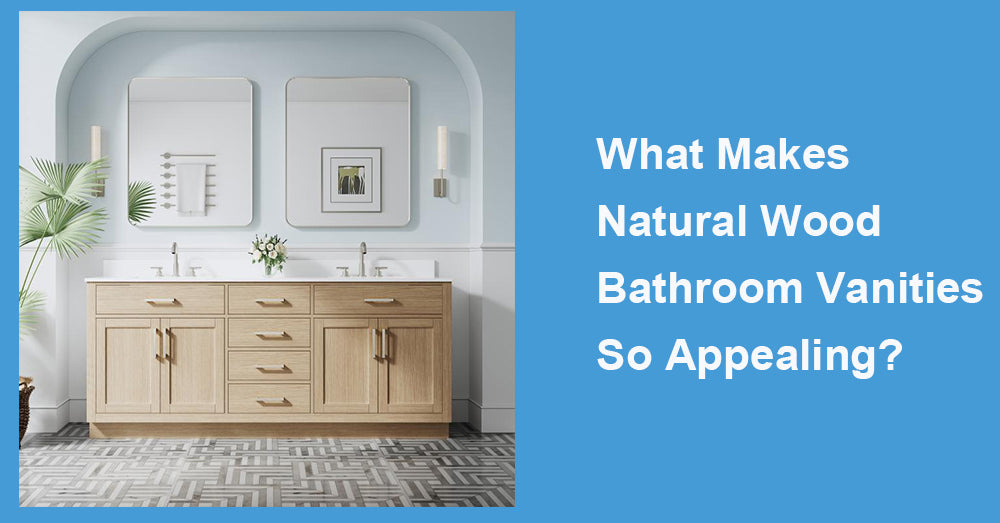
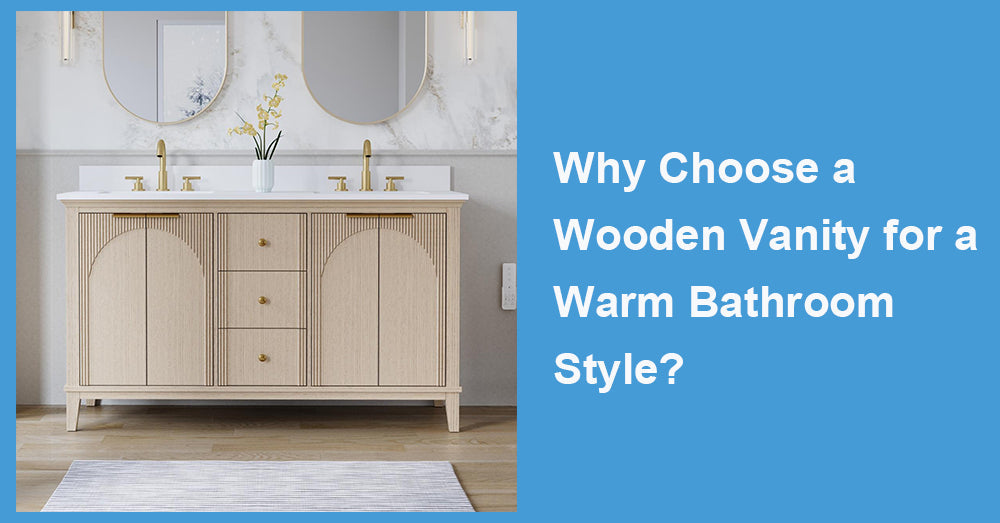
A real wood vanity works especially well with:
· Quartz countertops
· Brushed metal hardware
· Large-format tiles
· Warm lighting
· Natural stone accents
The combination creates a more layered appearance than a purely manufactured surface.
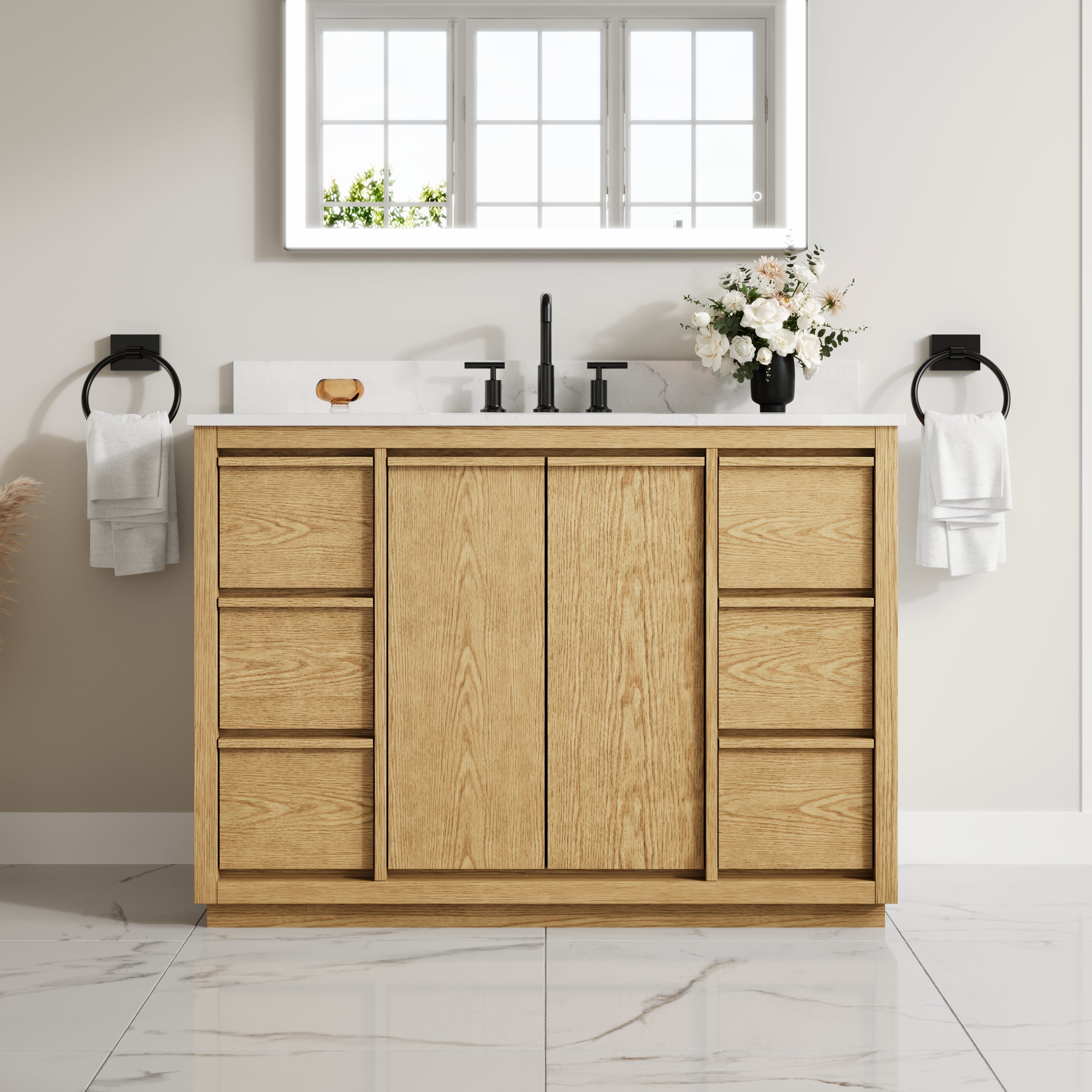
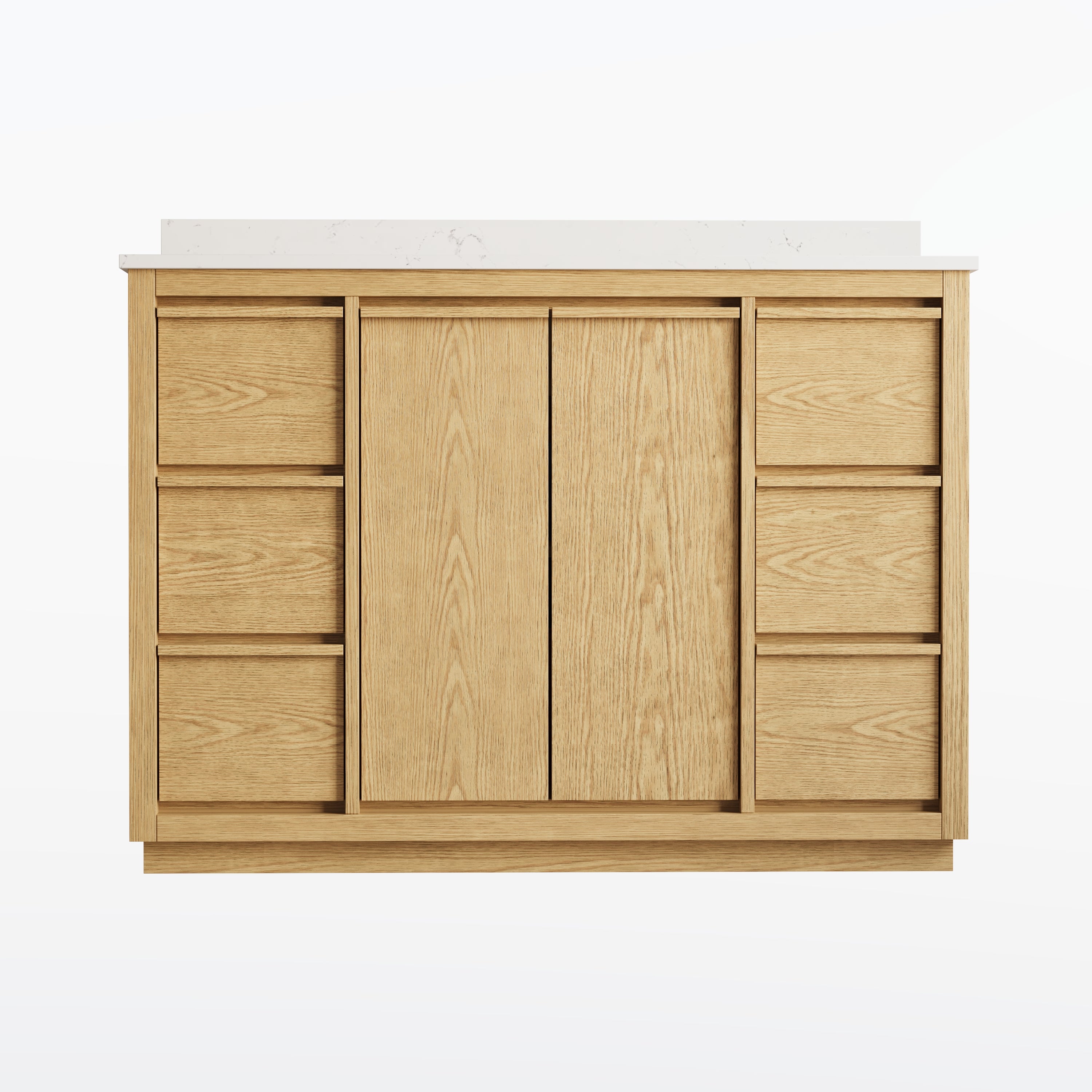
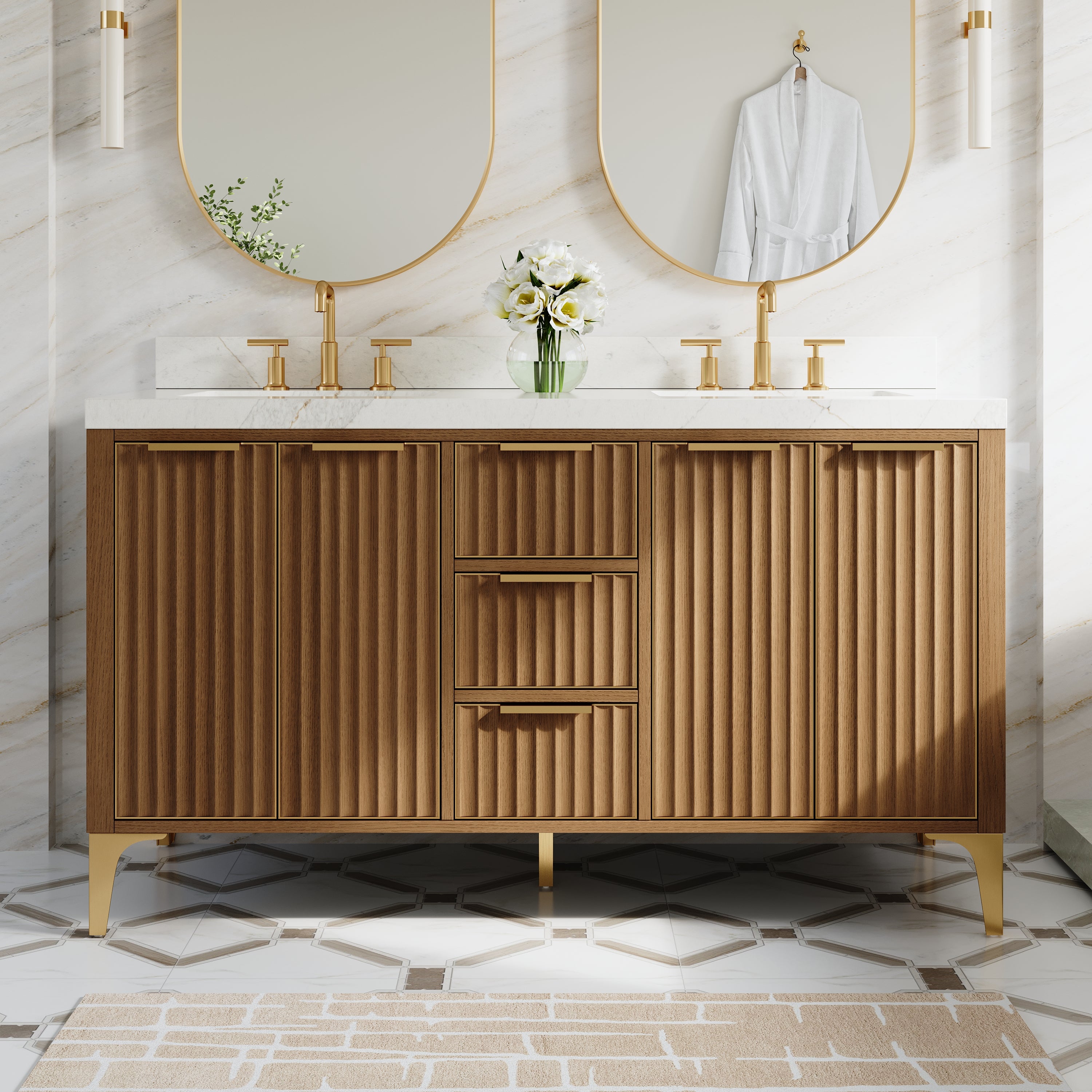
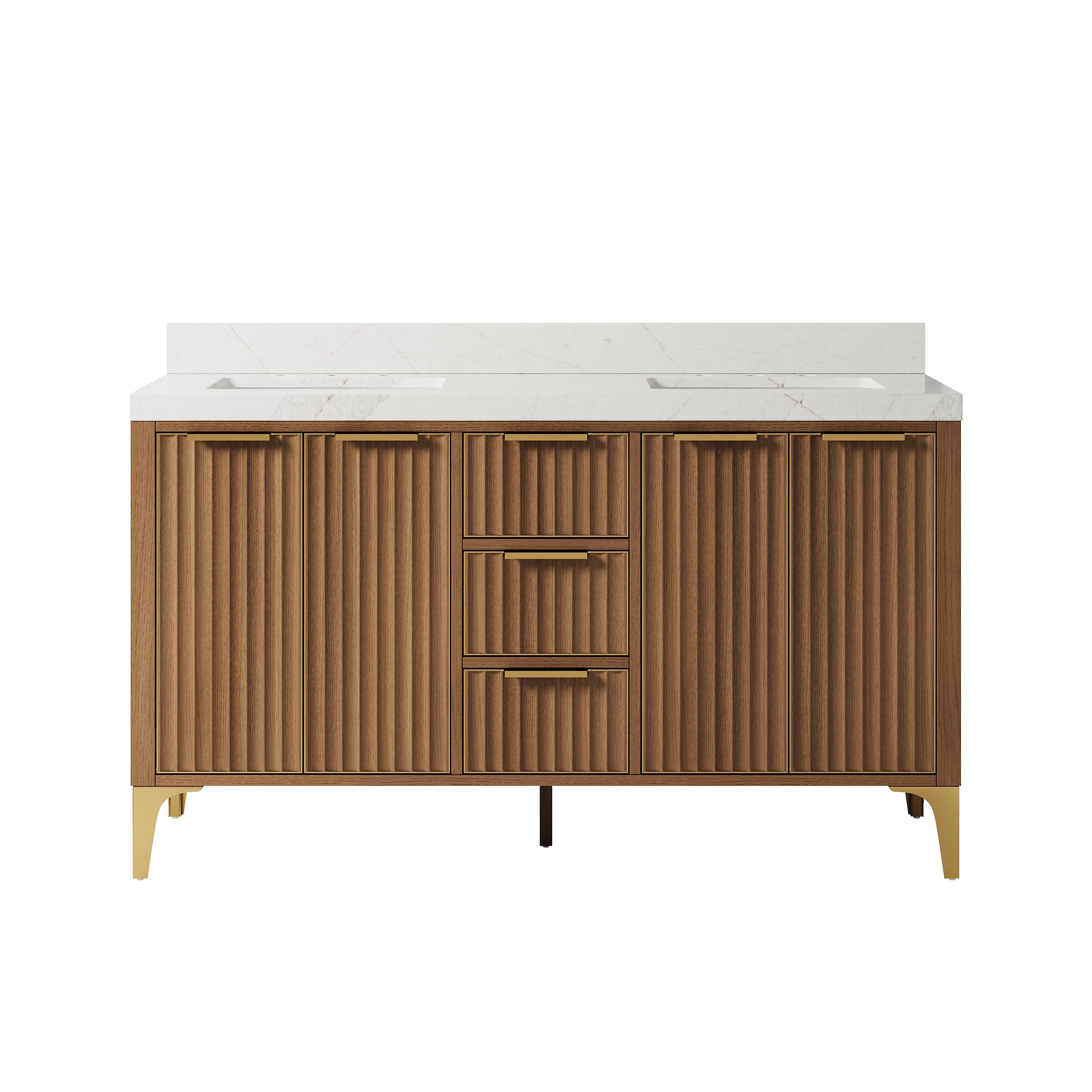
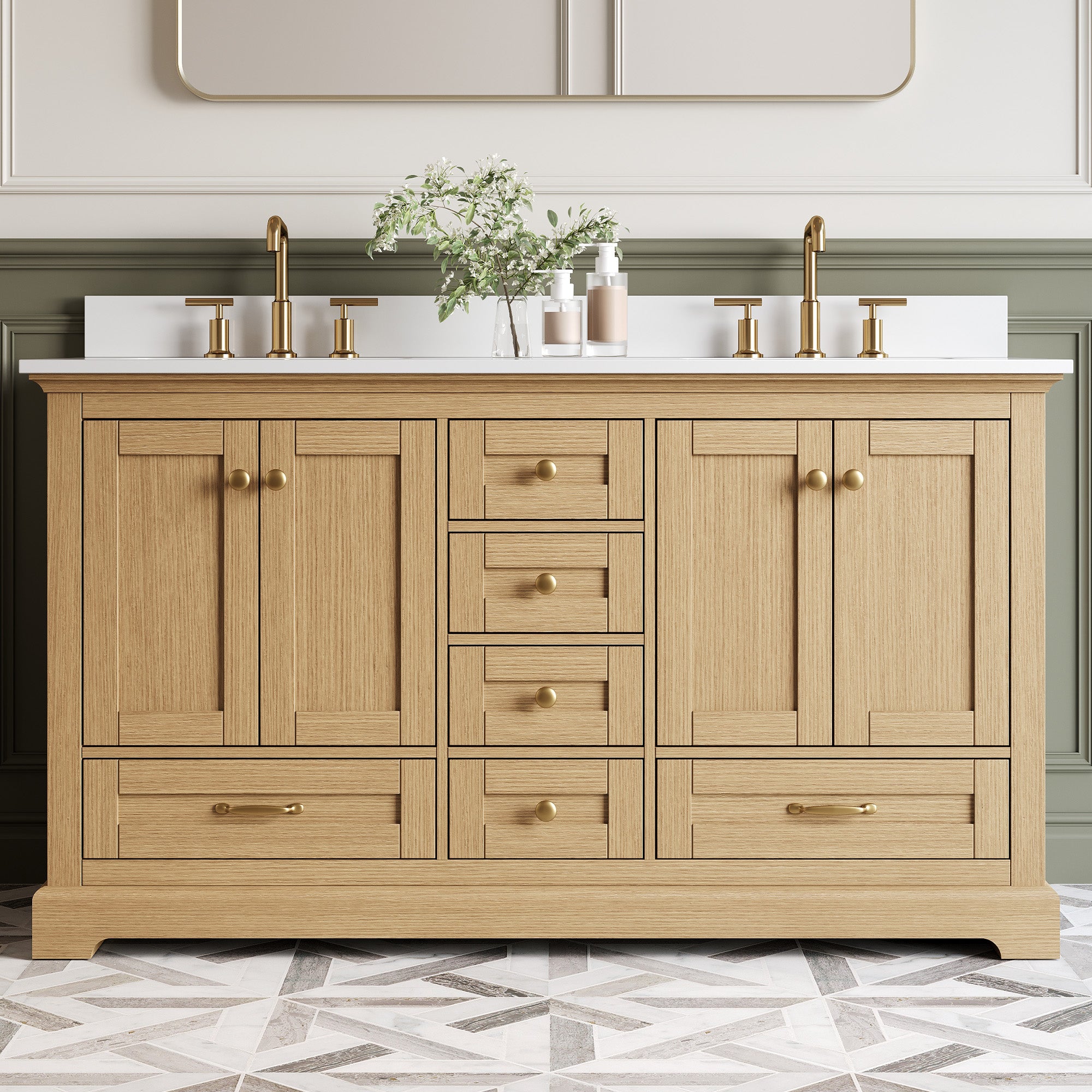
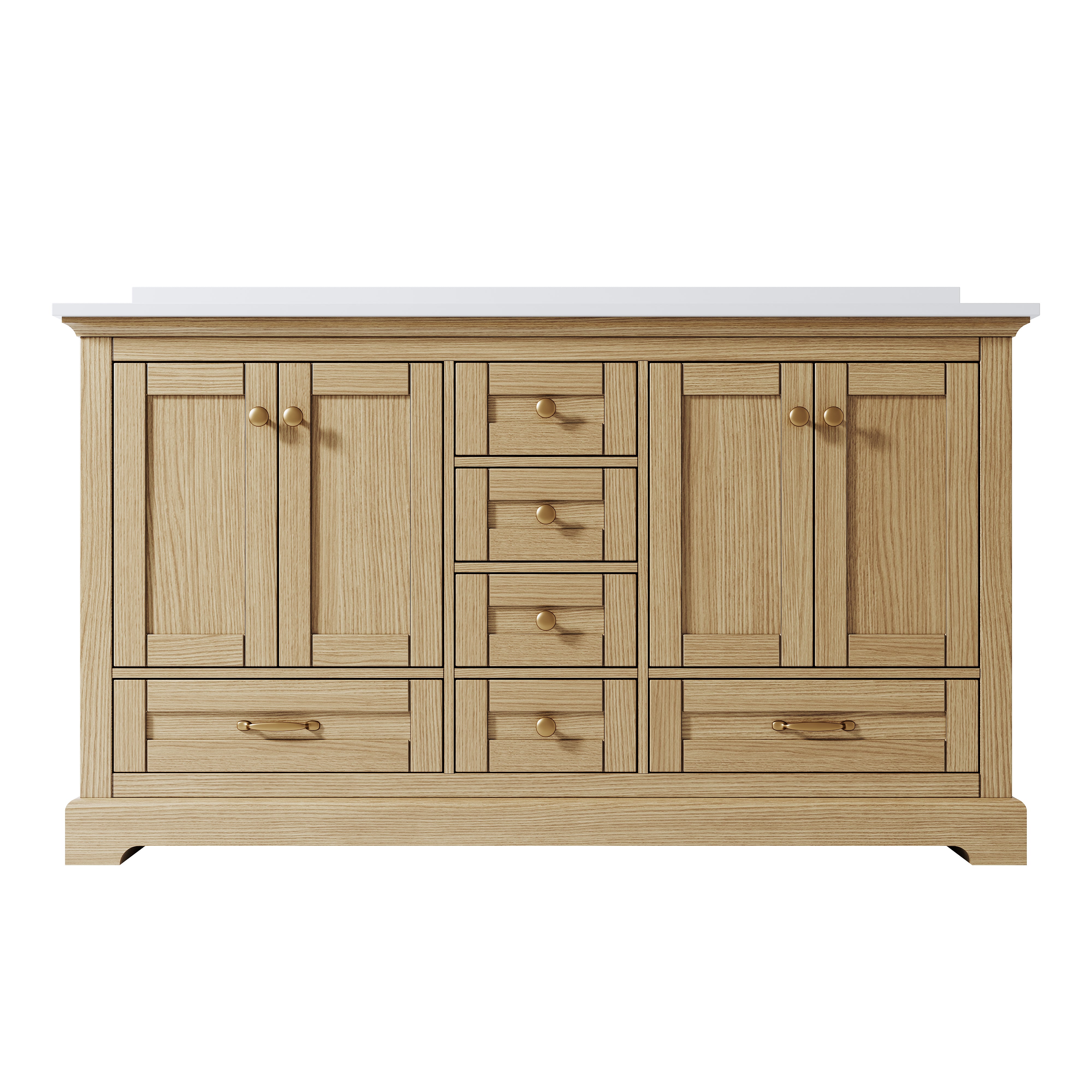
For example, a 48-inch or 60-inch oak vanity with a quartz top can create a high-end furniture impression, while a smaller 36-inch vanity can still achieve a custom look through wood grain and craftsmanship.
5. Repairability Separates Wood From Many Alternatives
One overlooked advantage of real wood is life cycle value.
Bathrooms experience constant contact with water, cosmetics, cleaning products, and temperature degrees. Over time, even quality furniture may show signs of use.
A real wood vanity can often be:
· Refinished
· Re-stained
· Repaired
· Updated with new hardware
This flexibility extends the useful life of the product.
Engineered materials generally perform well during their intended service period, but repairs are often more limited. Once the core material is damaged, replacement of the affected component is usually the practical solution.
For homeowners planning long-term bathroom use, repairability becomes part of the overall value calculation.
6. Construction Quality Matters More Than the Material Label
A poorly built solid wood vanity can still fail, while a well-designed engineered vanity can perform reliably.
When evaluating a bathroom vanity, material should only be one part of the decision.
Important factors include:
· Solid wood frame construction
· Sealed interior surfaces
· Quality hinges and drawer slides
· Proper moisture-resistant coatings
· Adjustable leveling feet
· Strong countertop support
The best manufacturers combine material selection with thoughtful engineering.
A real wood vanity with weak finishing will struggle. An engineered vanity with excellent construction may outperform expectations.
7. Which Choice Makes More Sense?
For high-use primary bathrooms, luxury renovations, and long-term homes, real wood often provides the strongest combination of beauty, durability, and future flexibility.
For budget-focused projects, rental properties, or bathrooms with lower moisture exposure, engineered materials can still be a practical choice.
The decision should match the purpose of the space.
Final Takeaway
A real wood vanity is often considered better than engineered materials because it offers natural beauty, stronger repair potential, and a furniture-quality appearance that improves with time.
Engineered materials are not outdated. They provide efficiency, consistency, and affordability. But when the goal is a bathroom centerpiece designed to last for years, real wood remains one of the most trusted choices.
The future of bathroom design is not simply about choosing the most expensive material. It is about selecting construction that fits the way the space will actually be used. A well-made vanity, regardless of material, should handle daily routines while maintaining its appearance long after installation.














Leave a comment
This site is protected by hCaptcha and the hCaptcha Privacy Policy and Terms of Service apply.