














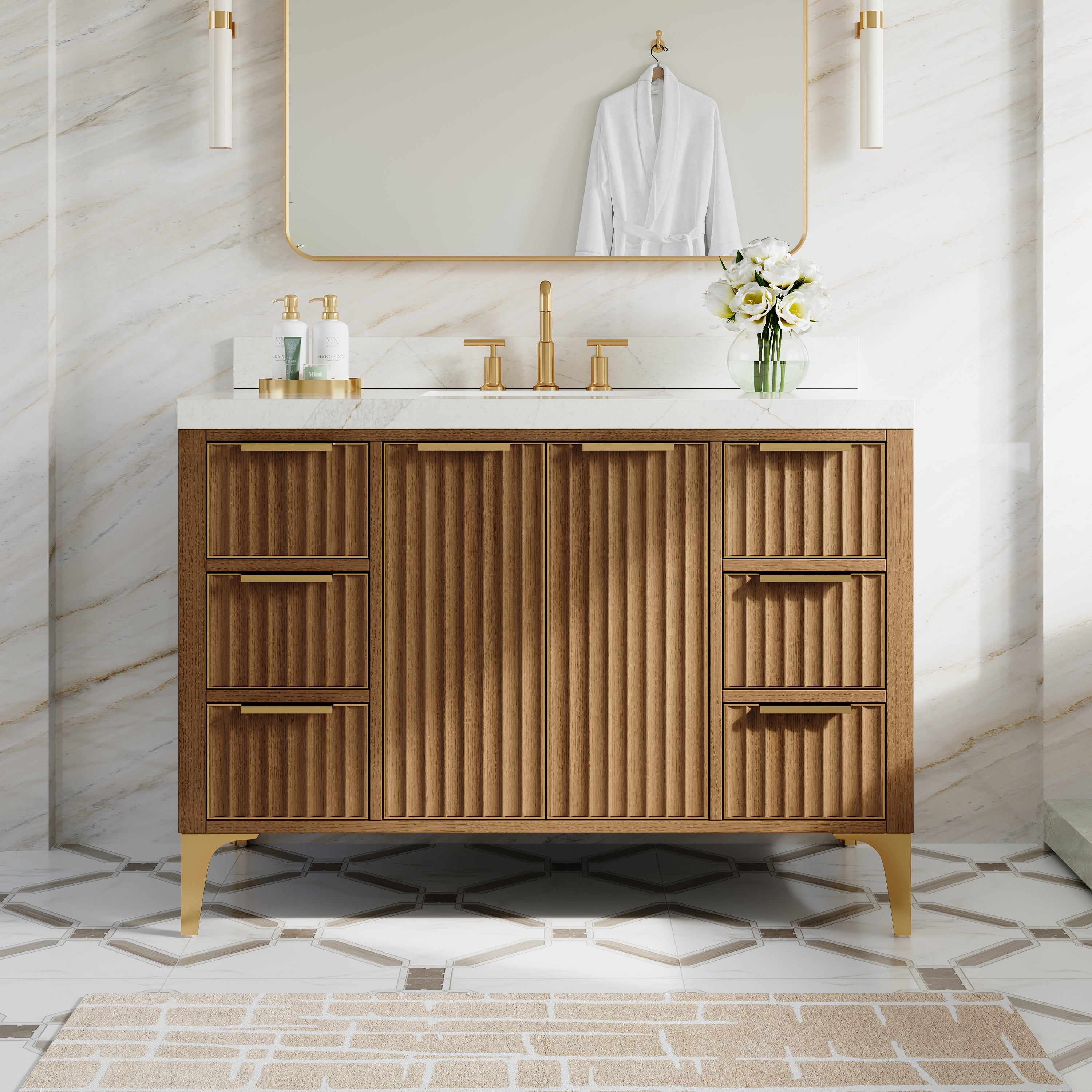
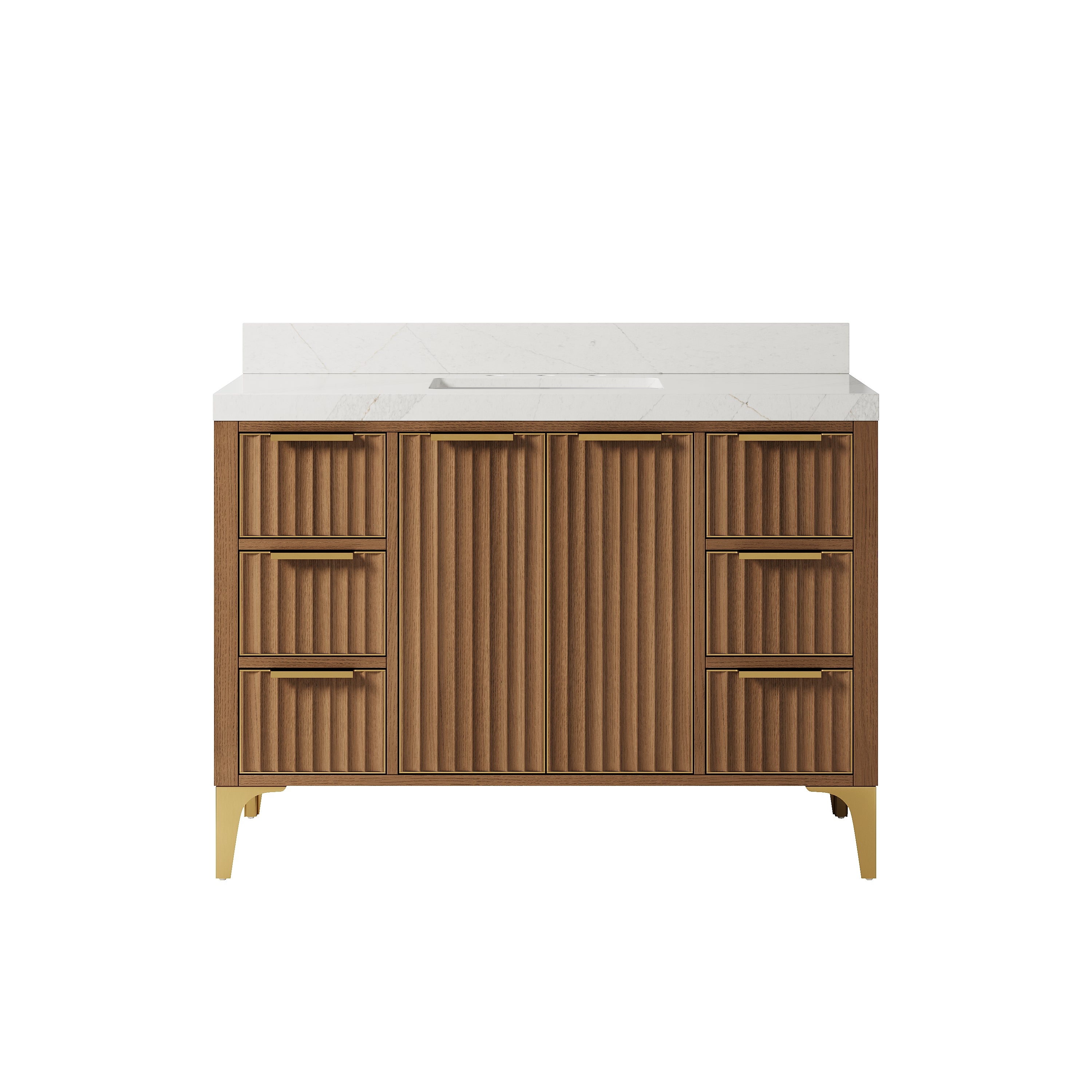


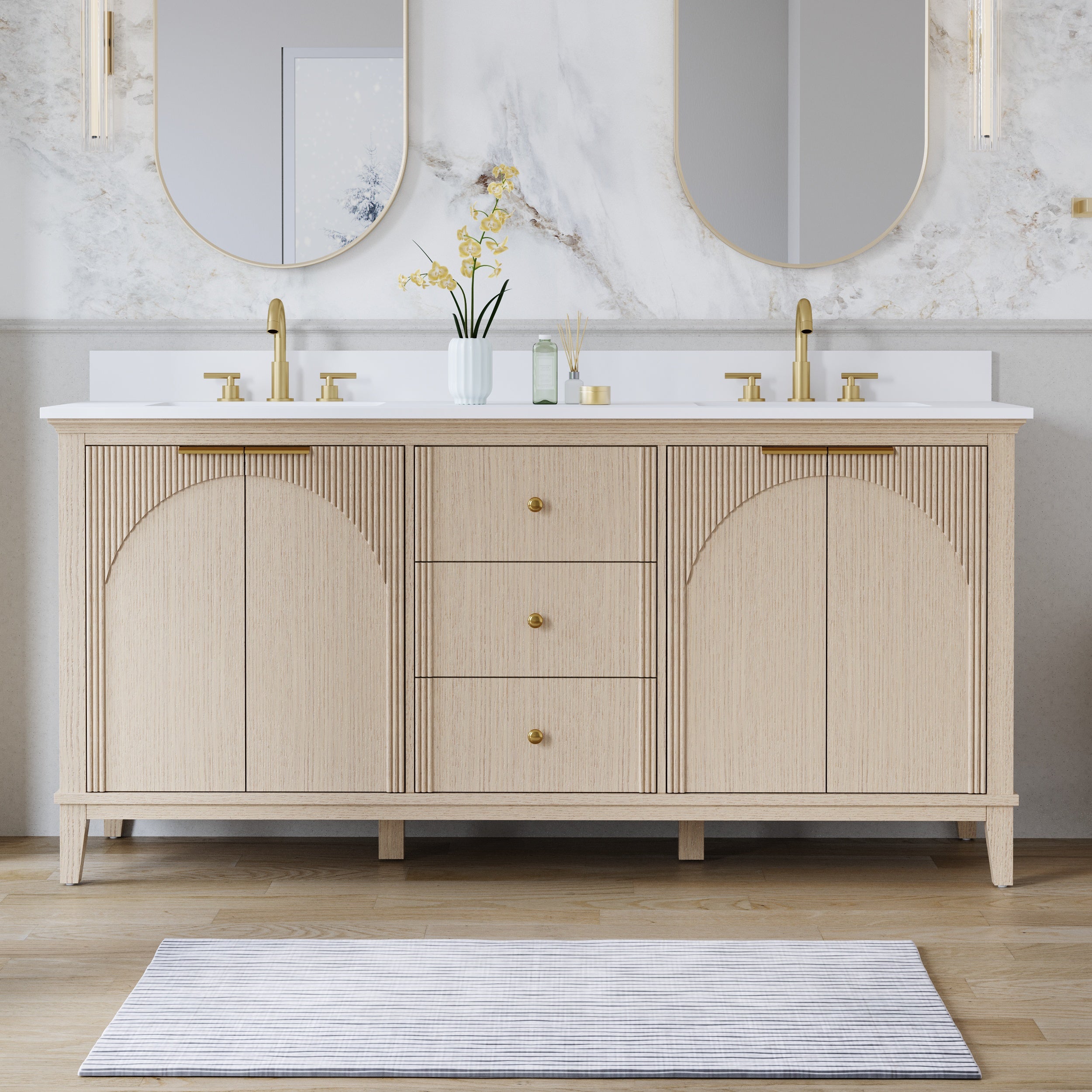
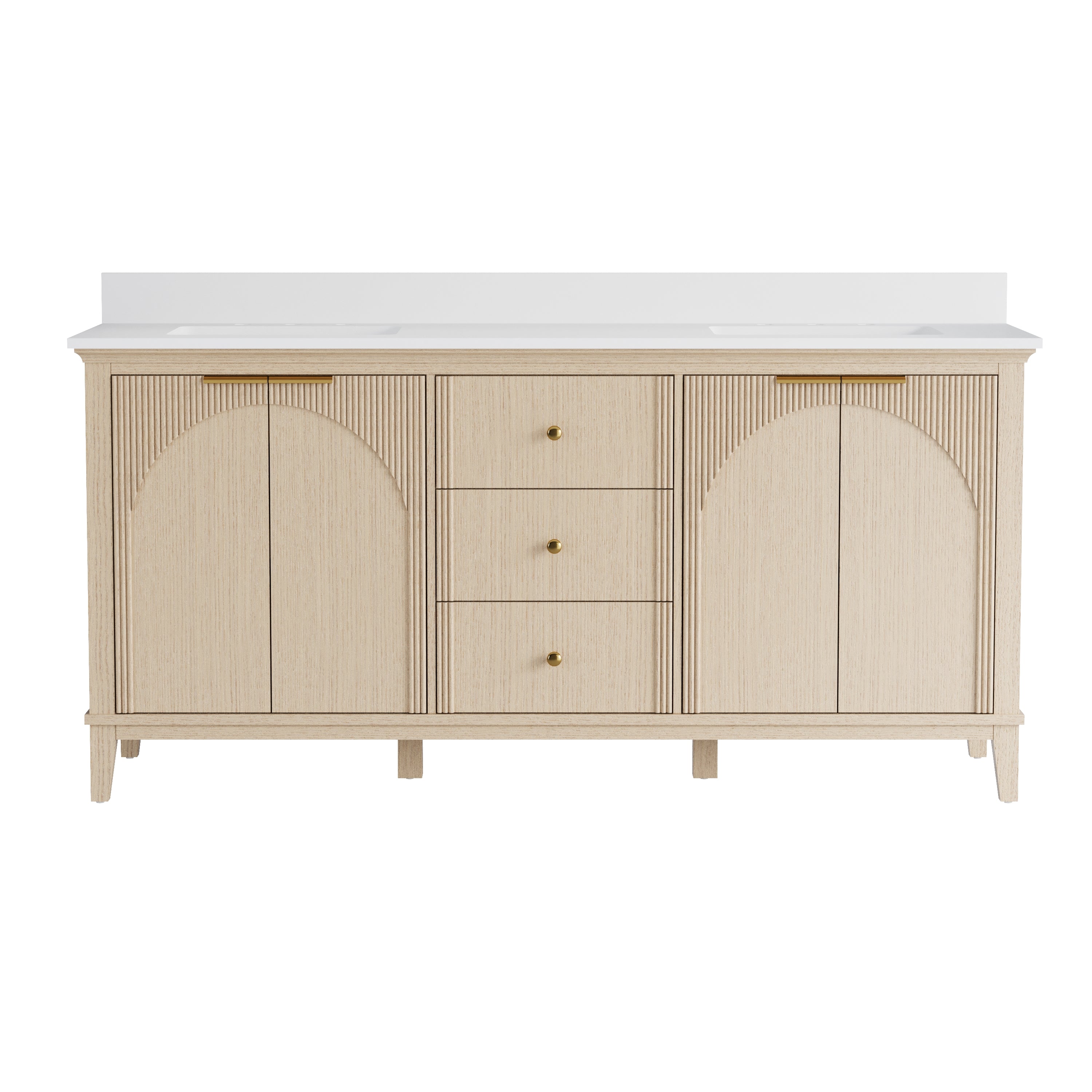
Natural wood bathroom vanities have become a noticeable change in modern bathroom design. The reason is simple: bathrooms are no longer treated as purely functional spaces. More homeowners and designers are looking for materials that bring warmth and personality into rooms that have traditionally relied heavily on tile, porcelain, and stone.
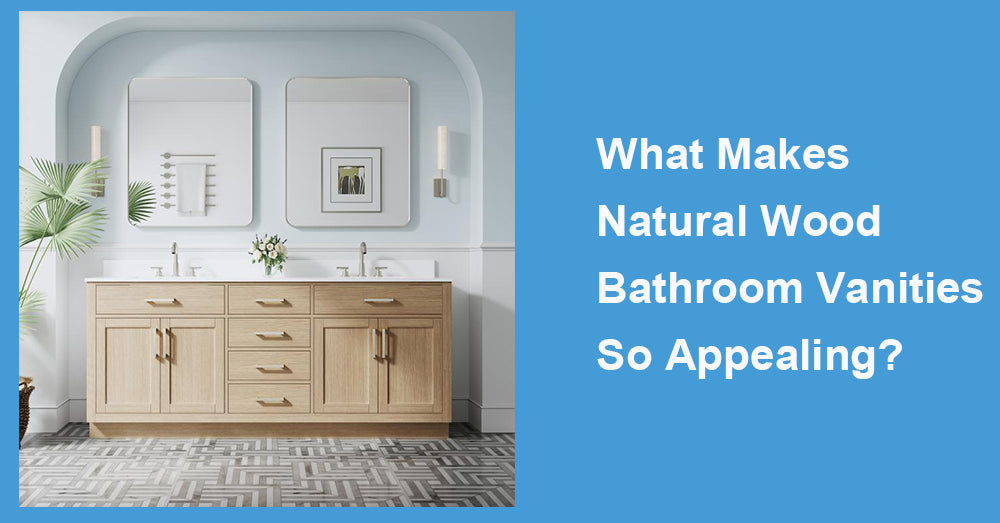
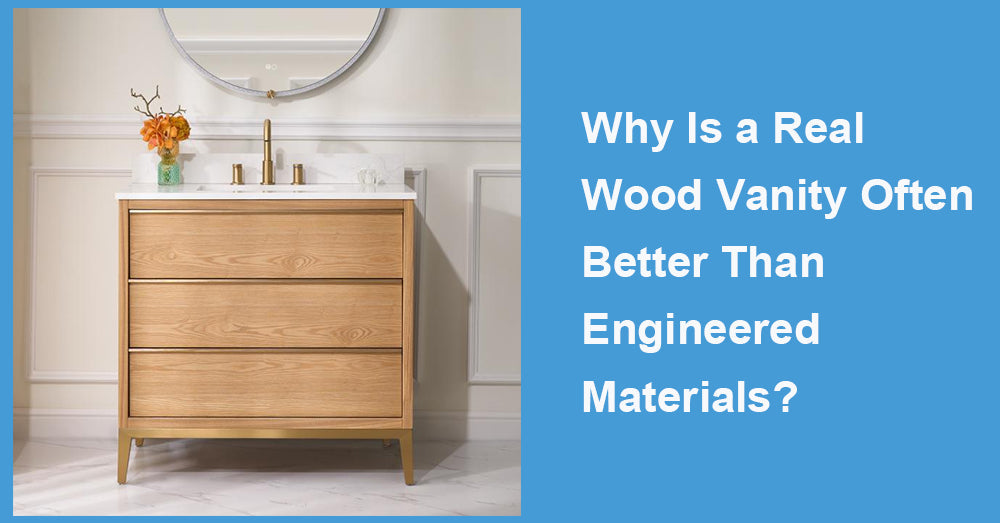
Wood helps soften the visual balance of a bathroom. A space filled with hard surfaces can sometimes feel cold, while a natural wood vanity adds depth and a more residential character. Whether it is a compact 36-inch vanity in a guest bathroom or a larger 72-inch double vanity in a primary suite, wood creates a stronger connection between the bathroom and the rest of the home.
From a design perspective, the popularity of natural wood is not just a trend. It reflects a broader movement toward bathrooms that feel comfortable, personal, and less like purely utility areas.
1. Why Natural Wood Feels Different From Other Vanity Finishes
One of the biggest reasons people choose natural wood is the way it looks and feels over time.
Painted cabinets and engineered finishes can create a clean appearance, but real wood offers natural variation. Grain patterns, small color differences, and surface texture give each vanity its own identity.
This is especially valuable in modern bathrooms where many elements are intentionally simple. When walls, floors, and countertops use neutral colors, the vanity often becomes the feature that introduces warmth.
The National Kitchen & Bath Association (NKBA) has reported continued interest in natural materials and organic design approaches in kitchen and bath spaces. Wood finishes have become an important part of this movement because they create a softer, more balanced interior atmosphere. (Source: NKBA Bath Trends Report)
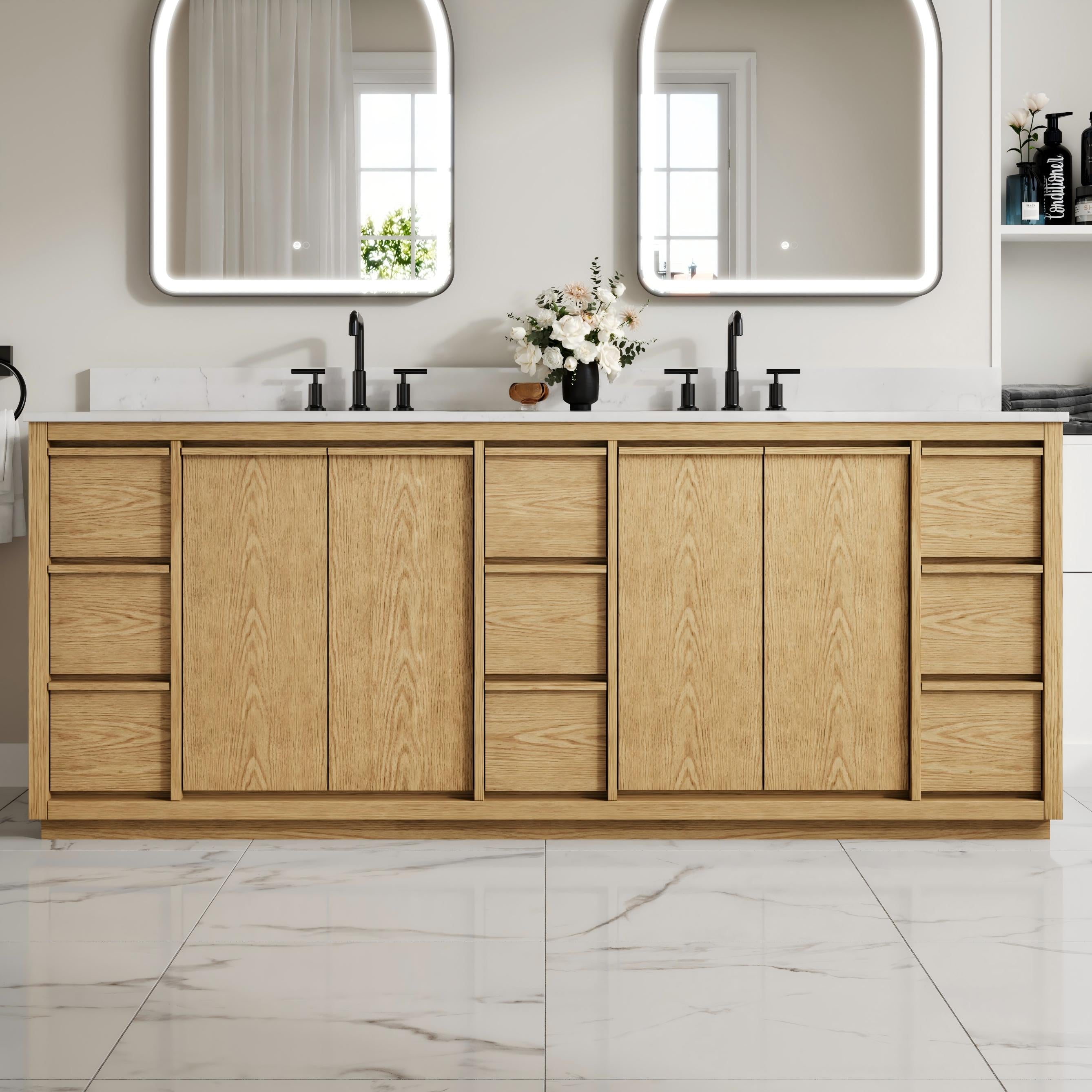
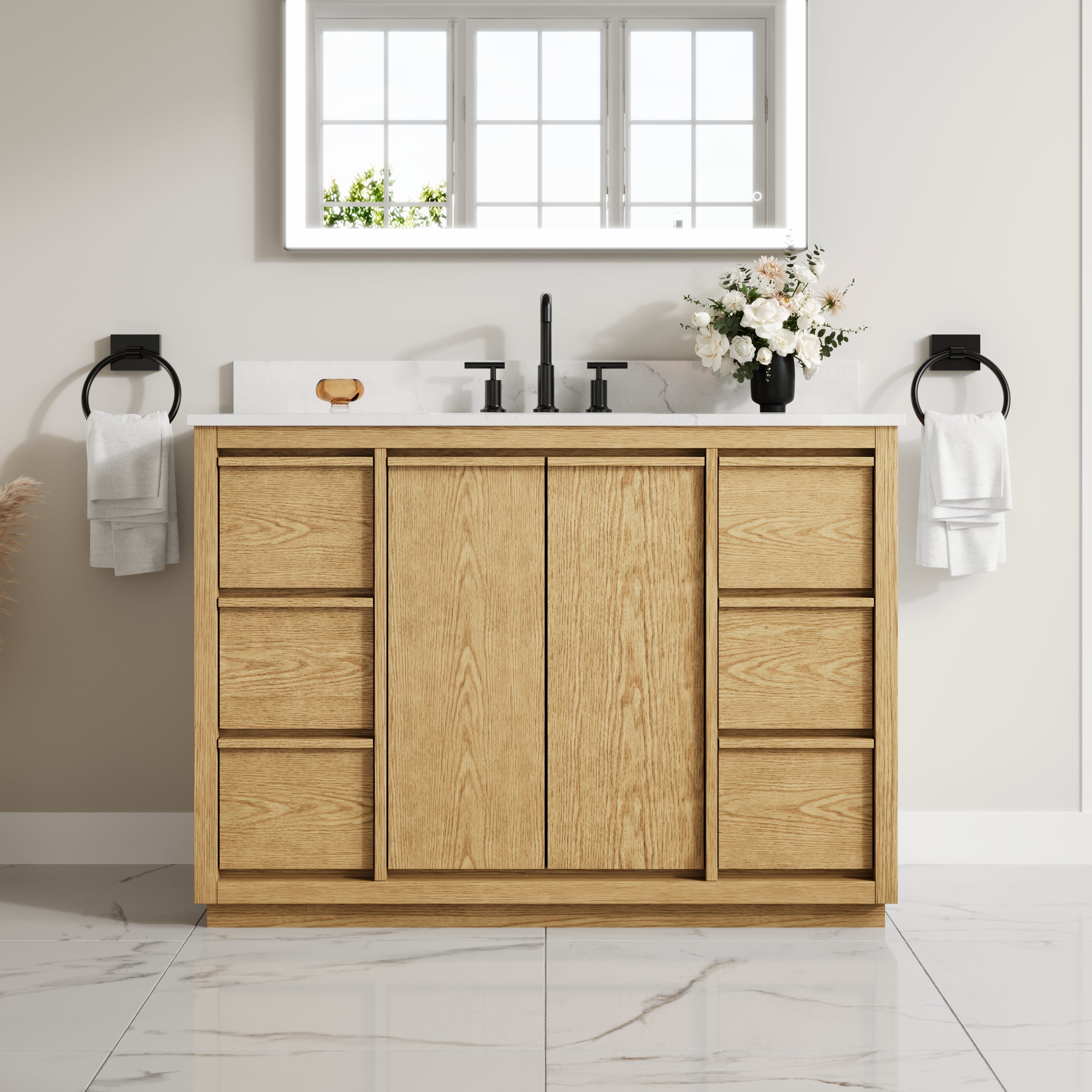
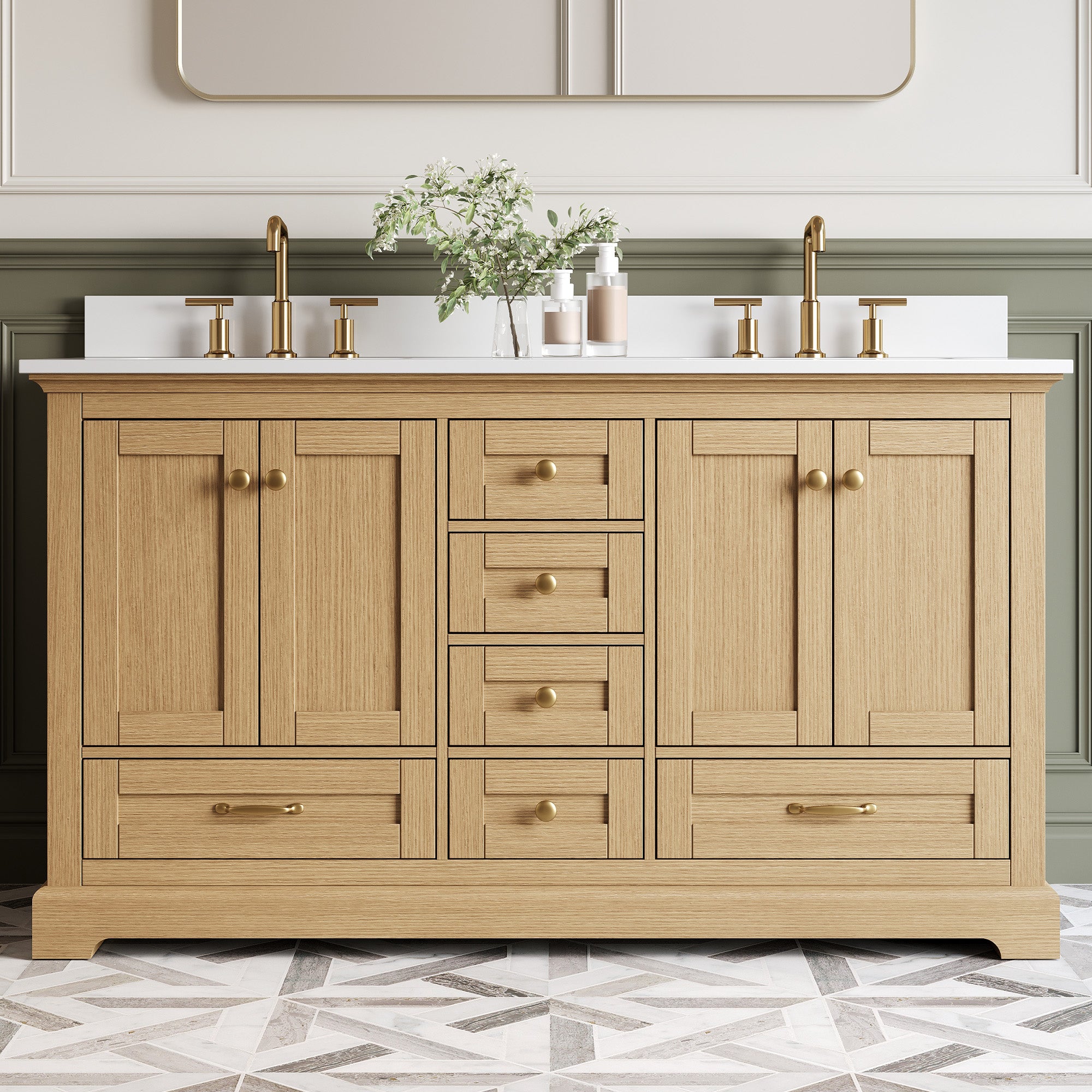
A white quartz countertop paired with an oak vanity is a good example. The stone provides a clean surface, while the wood prevents the room from feeling too sterile.
2. Bathroom Vanities Are Becoming More Like Furniture
The role of the bathroom vanity has changed.Years ago, vanities were mainly viewed as storage cabinets hidden beneath the sink. Today, they often function as one of the main visual elements of the room.
This change has pushed manufacturers toward more furniture-style construction, including:
· Solid wood frames
· Wood veneer panels
· Dovetail drawer construction
· Soft-close hardware
· Finished cabinet interiors
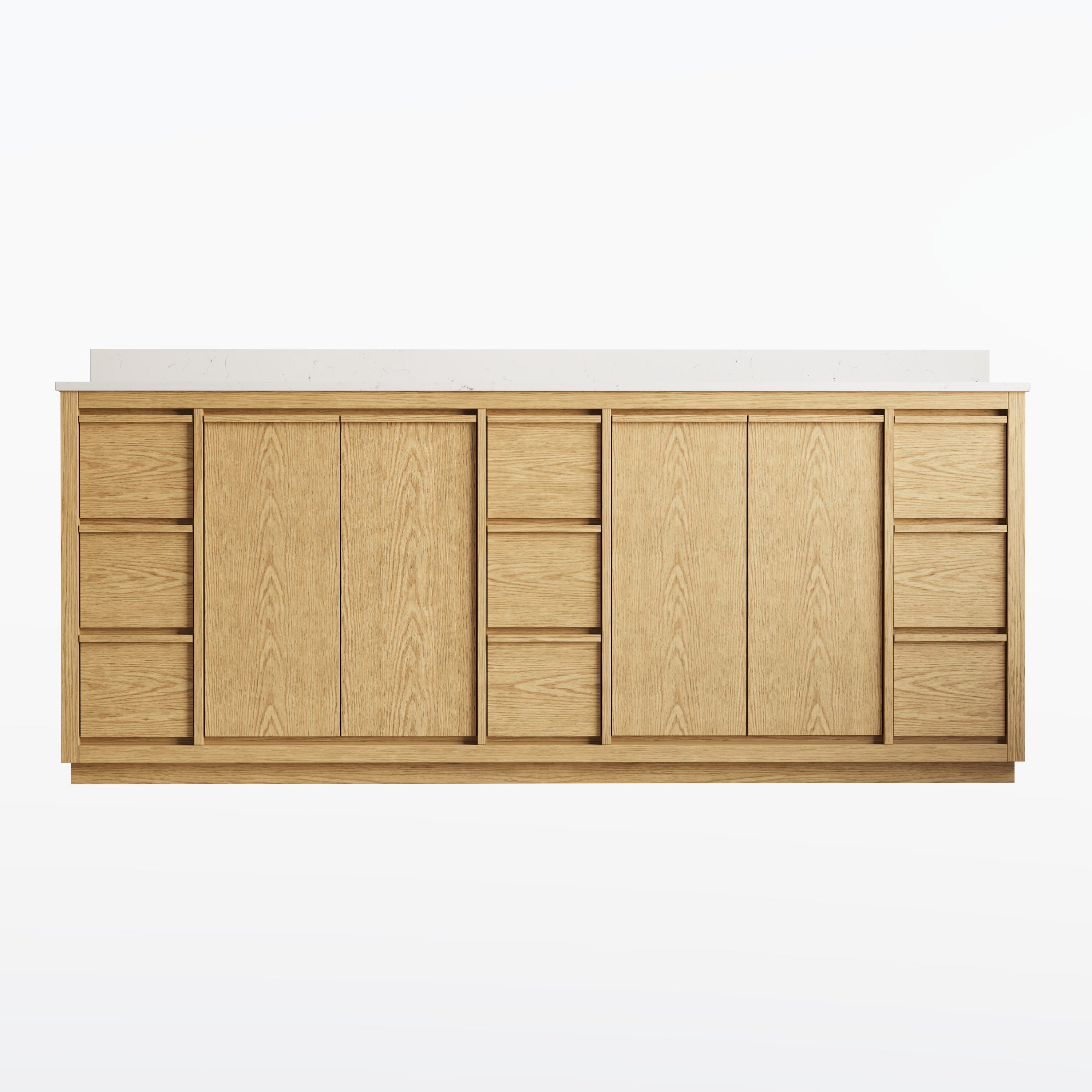
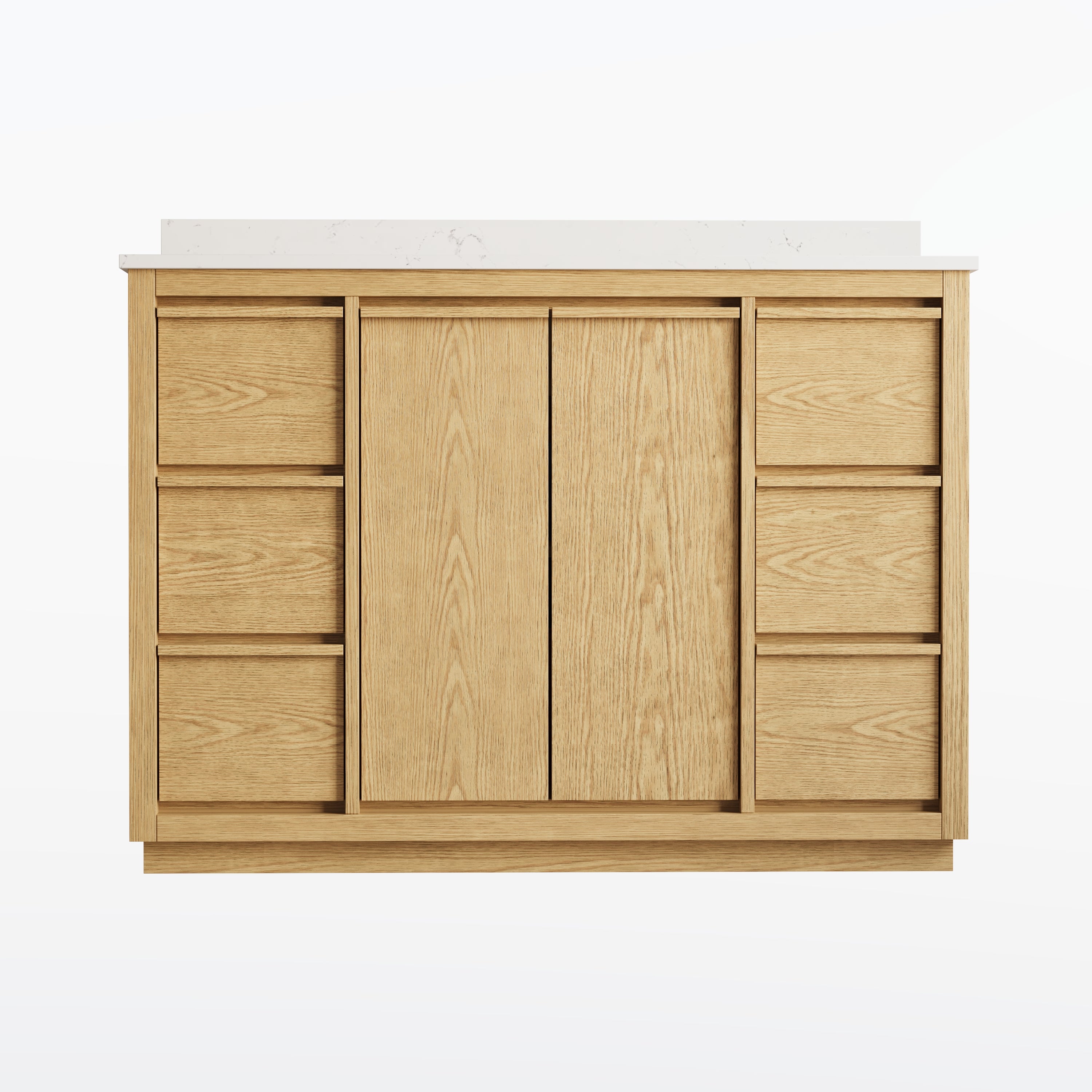
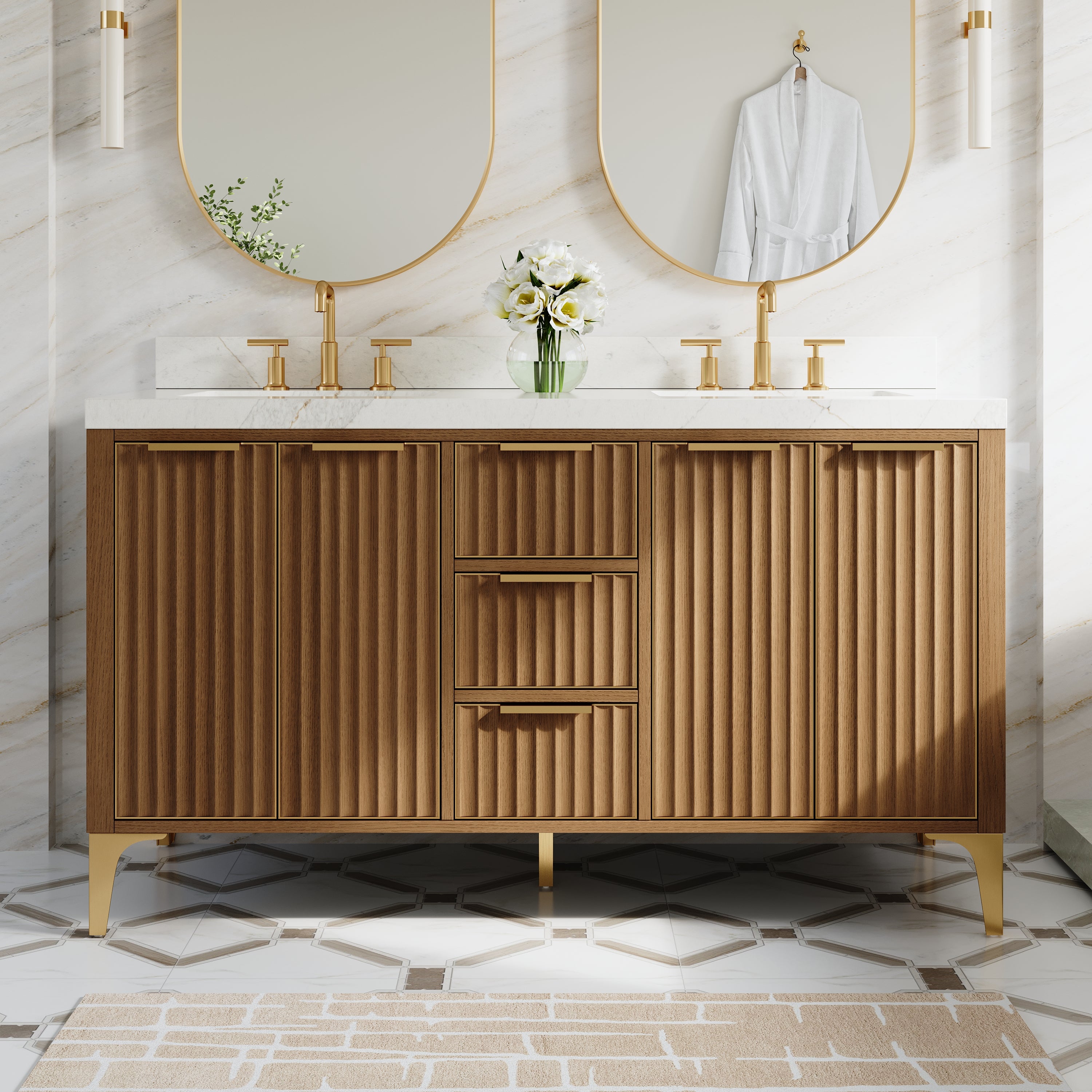
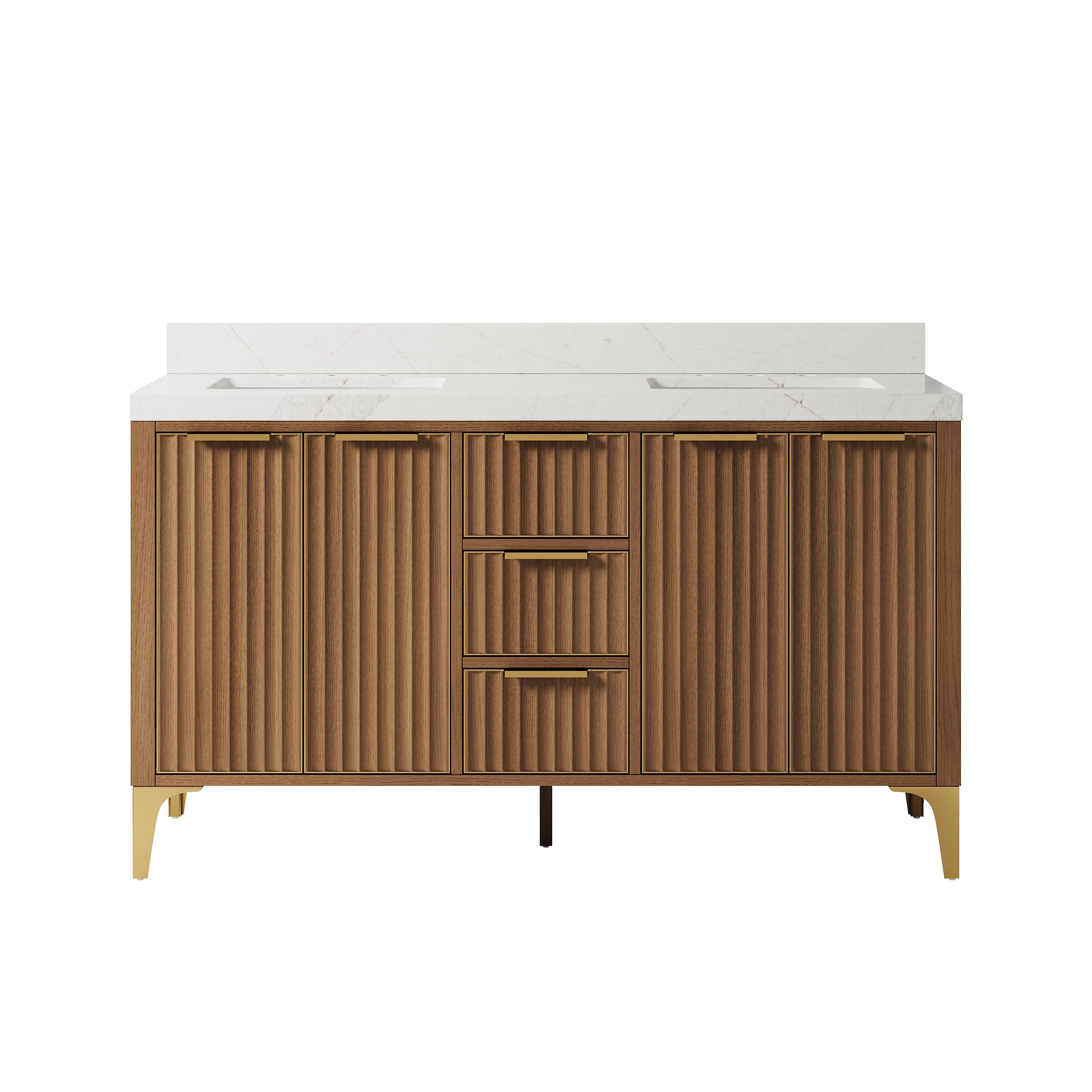
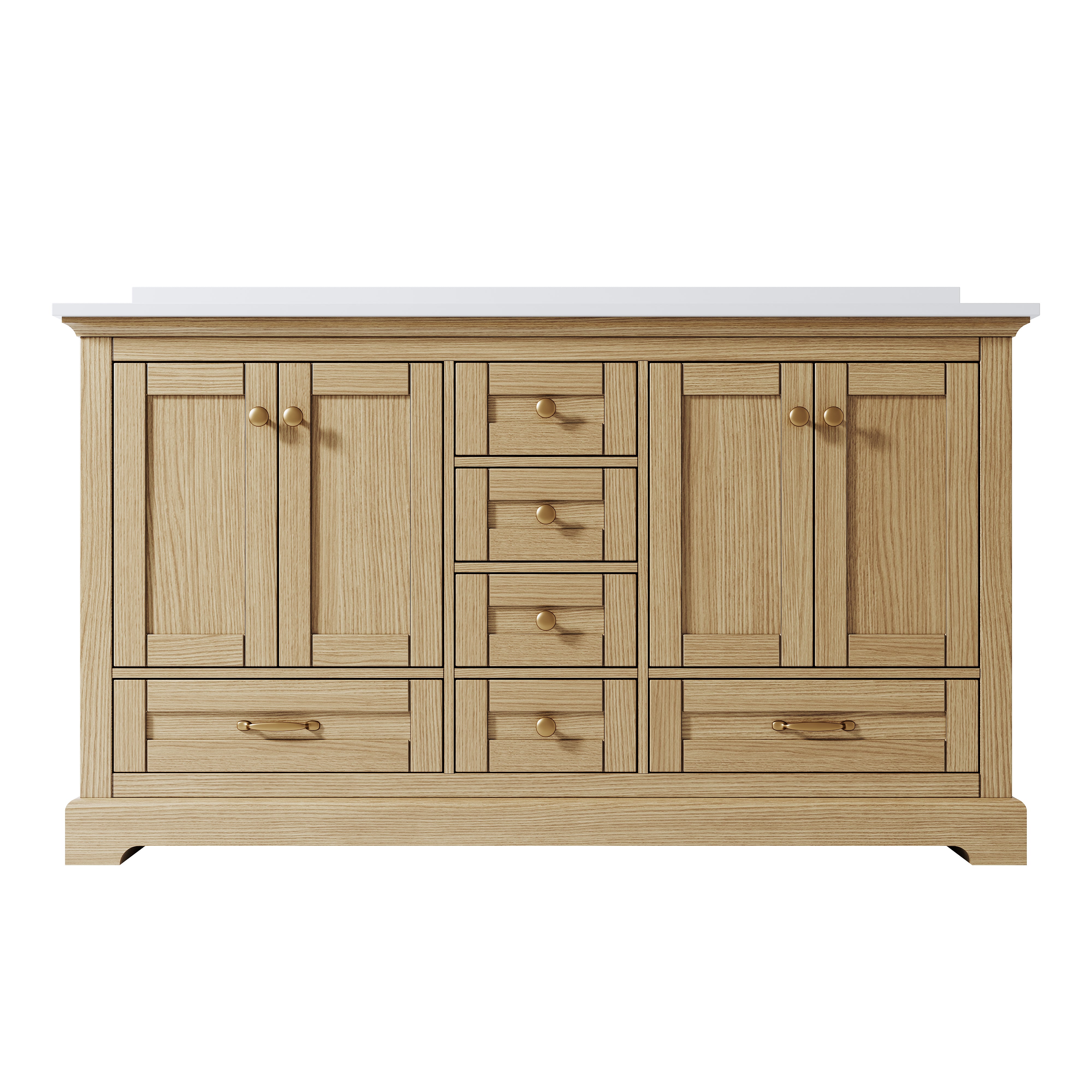
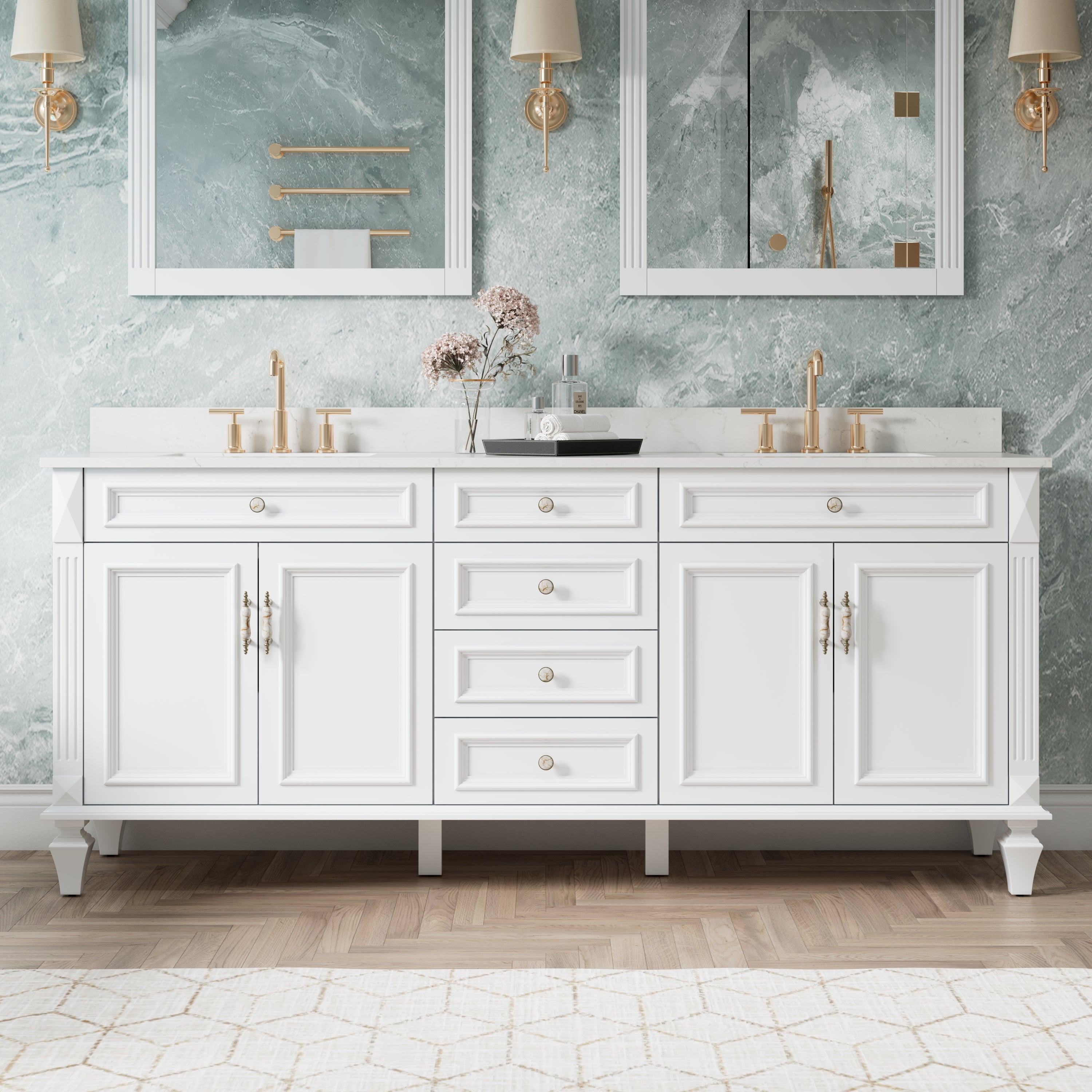
The difference becomes especially noticeable on larger sizes such as 60-inch and 72-inch vanities. With more visible surface area, the wood grain becomes part of the overall bathroom design rather than just a cabinet finish.
A well-made vanity should feel intentional when you open the drawers, touch the surface, and use the storage every day.
That is why many higher-end bathroom projects now treat the vanity closer to a furniture investment rather than a basic fixture.
3. Natural Wood Fits Multiple Design Styles
Another reason wood remains popular is flexibility.Unlike some finishes that are strongly tied to a specific trend, wood works across many design directions.
Light oak can support:
· Scandinavian-inspired bathrooms
· Modern farmhouse spaces
· Minimalist interiors
Walnut and darker wood tones can create:
· More traditional bathrooms
· Luxury spa-inspired spaces
· Contemporary designs with stronger contrast
Wood also pairs naturally with popular bathroom materials, including quartz countertops, matte black fixtures, brushed gold hardware, and large-format porcelain tile.
Houzz bathroom trend research shows that wood tones continue to be among the preferred vanity finishes, reflecting continued interest in warmer cabinet appearances. (Source: Houzz Bathroom Trends Study)
The reason wood remains relevant is not because it follows one trend. It is because it adapts when the surrounding design changes.

4. Good Construction Matters More Than the Word “Wood”
A common concern is whether natural wood is suitable for bathrooms because of humidity.
The reality is more complicated.Wood naturally responds to moisture by expanding and contracting. According to the USDA Forest Products Laboratory Wood Handbook, wood exchanges moisture with surrounding air, and dimensional movement depends on moisture conditions and material properties. (Source: USDA Forest Products Laboratory)This is why quality construction matters.
A bathroom-ready wood vanity should include:
· Properly dried wood
· Protective finishes
· Sealed edges
· Quality hardware
· Correct installation
Many bathroom cabinet problems are not caused by wood itself. They are usually related to water leaks, poor ventilation, unfinished edges, or prolonged moisture exposure.
The EPA recommends controlling indoor humidity and reducing moisture sources to help protect building materials and prevent mold-related issues. (Source: EPA Moisture Control Guidance)
In other words, the question is not “Can wood survive in a bathroom?” The better question is “Was the vanity built for bathroom conditions?”
5. Repairability Adds Long-Term Value
Another advantage of natural wood is what happens years after installation.
Bathrooms experience daily wear. Water splashes, cleaning products, and frequent use eventually affect almost any cabinet material.
The difference is that real wood can often be refreshed.
Depending on the finish, owners may be able to:
· Refinish the surface
· Change the stain color
· Repair minor scratches
· Replace hardware for a new look
Engineered materials such as MDF and particleboard can perform well, especially in painted applications. However, once moisture reaches the internal core, repair options are usually more limited.
For long-term homeowners, the ability to restore a vanity instead of replacing it can significantly improve overall value.
6. Storage Features Are Just as Important as Appearance
A beautiful vanity still needs to work well every day.
Modern natural wood vanities increasingly combine traditional craftsmanship with practical storage solutions, including:
· Full-extension drawers
· Adjustable shelving
· Hidden organizers
· Soft-close mechanisms
Houzz research shows soft-close drawers and doors remain among the most requested vanity upgrades, with 78% selecting soft-close drawers and 75% selecting soft-close doors in renovation projects. (Source: Houzz Bathroom Trends Study)
This reflects a larger change in bathroom expectations. People are not only looking for attractive materials. They want products that make daily routines easier.
7. Why Natural Wood Remains a Long-Term Bathroom Trend
The appeal of natural wood bathroom vanities comes from the balance they create.
They add warmth without making a bathroom feel outdated. They provide character without requiring excessive decoration. They work with both modern and traditional styles.
As bathrooms continue moving toward more comfortable, personalized spaces, natural materials are likely to remain an important part of the design conversation.
The strongest results come from combining good material choices with proper engineering. A wood vanity with a durable countertop, quality hardware, and moisture protection can deliver both visual impact and dependable daily performance.
Final Takeaway
Natural wood bathroom vanities are appealing because they offer more than storage. They bring texture, craftsmanship, and a sense of permanence that many manufactured finishes struggle to reproduce.
However, the best vanity is not always the most expensive option. It is the one that matches the bathroom environment, usage habits, and expected lifespan.
When thoughtful design meets quality construction, natural wood can create a bathroom that feels warmer today and continues to look valuable years later.













Leave a comment
This site is protected by hCaptcha and the hCaptcha Privacy Policy and Terms of Service apply.