














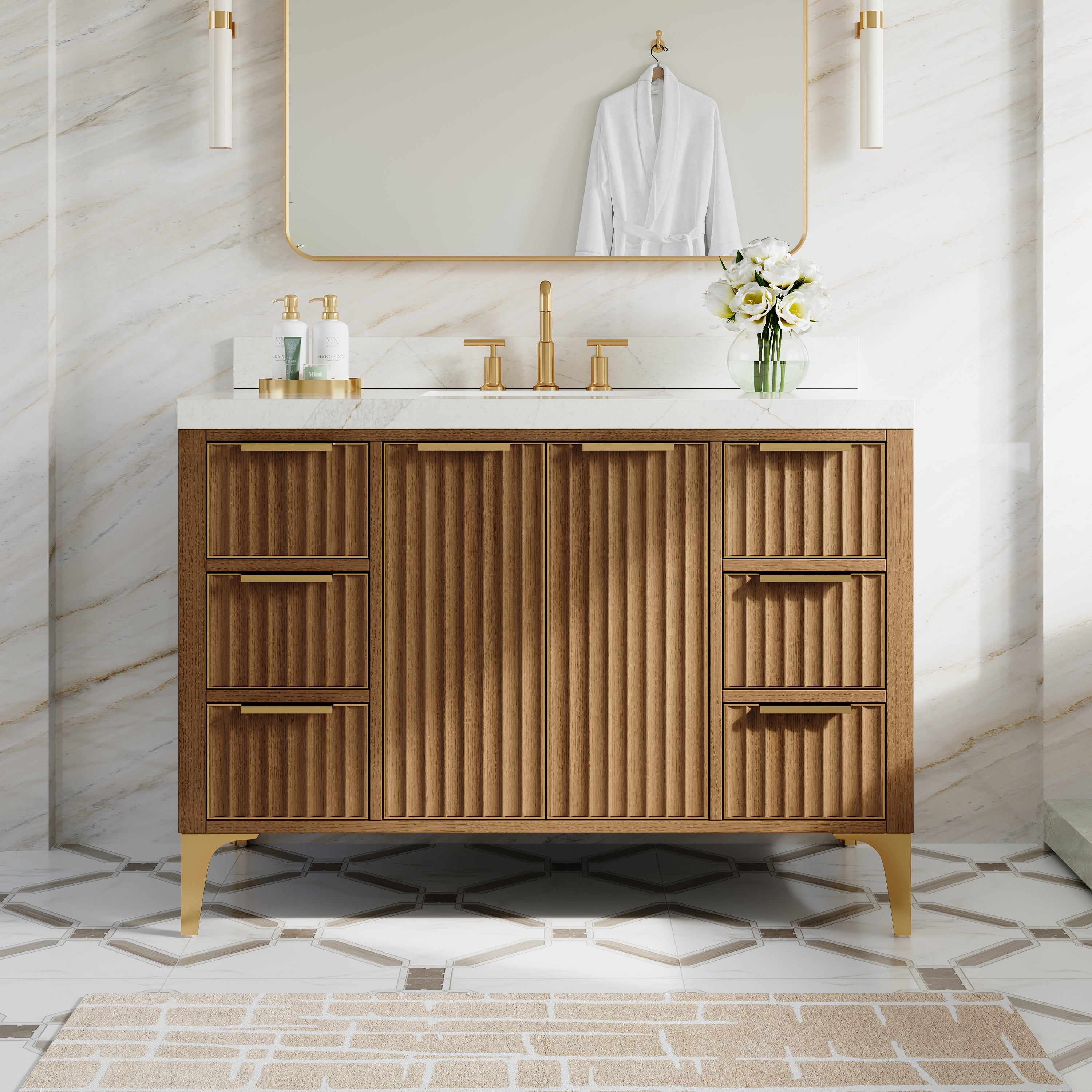
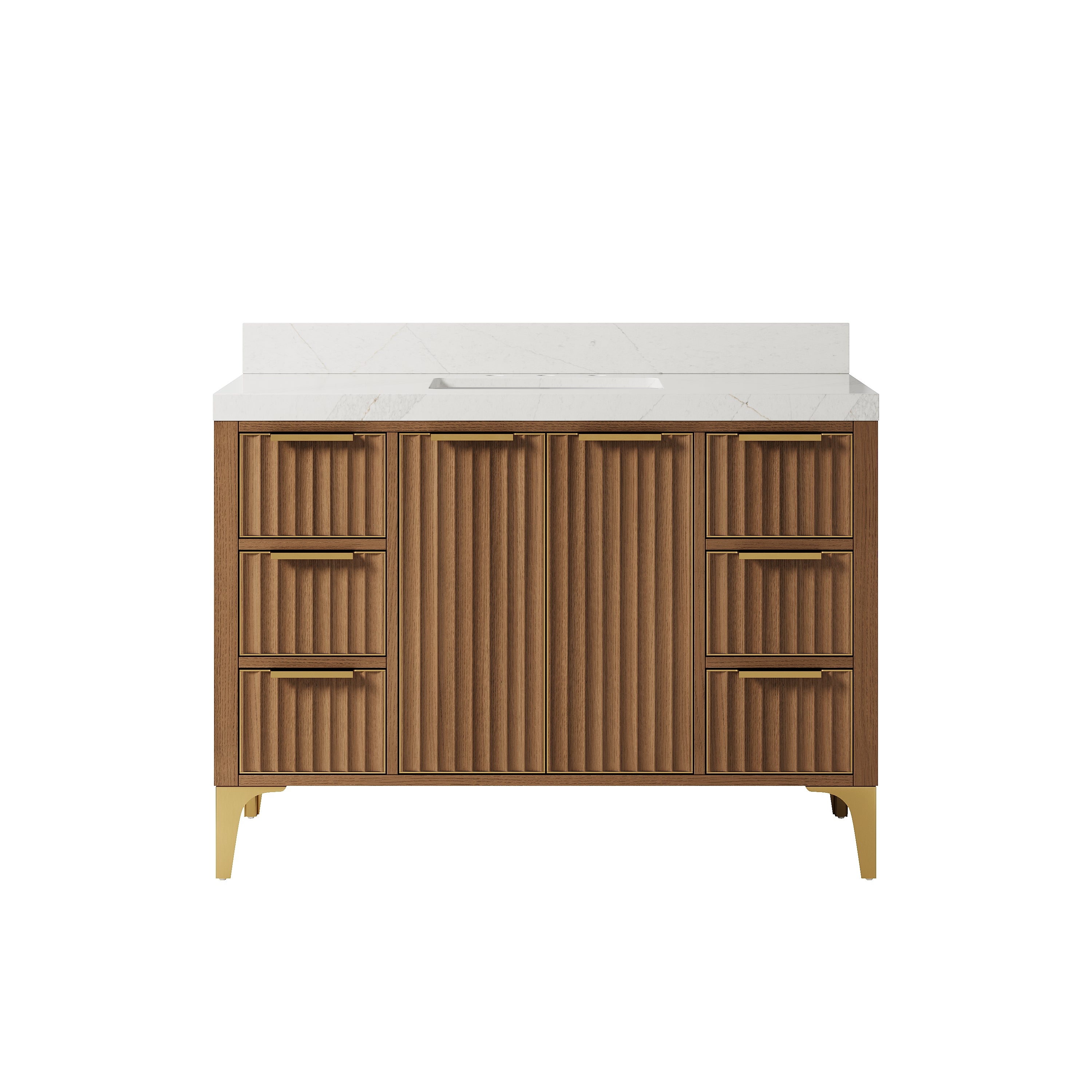


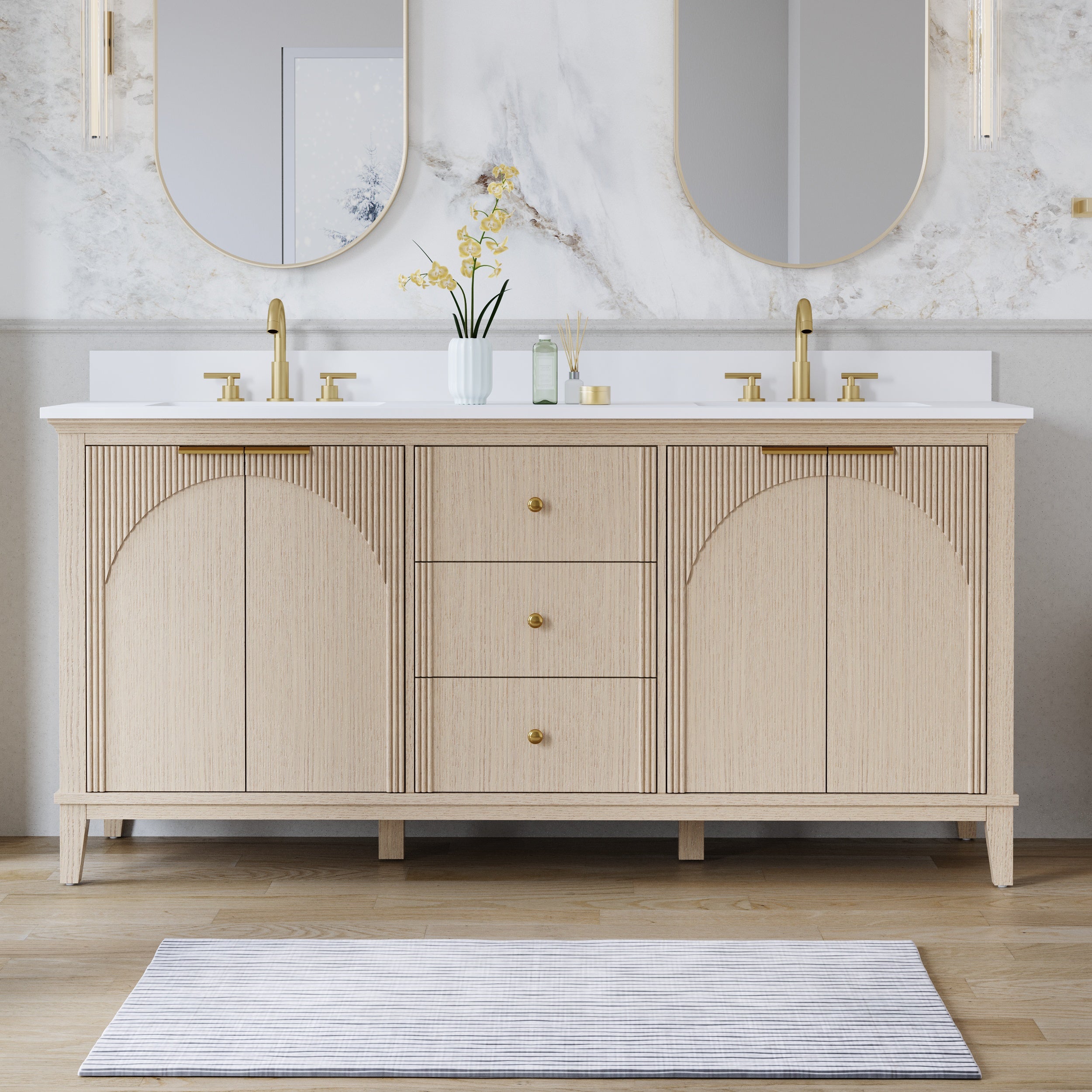
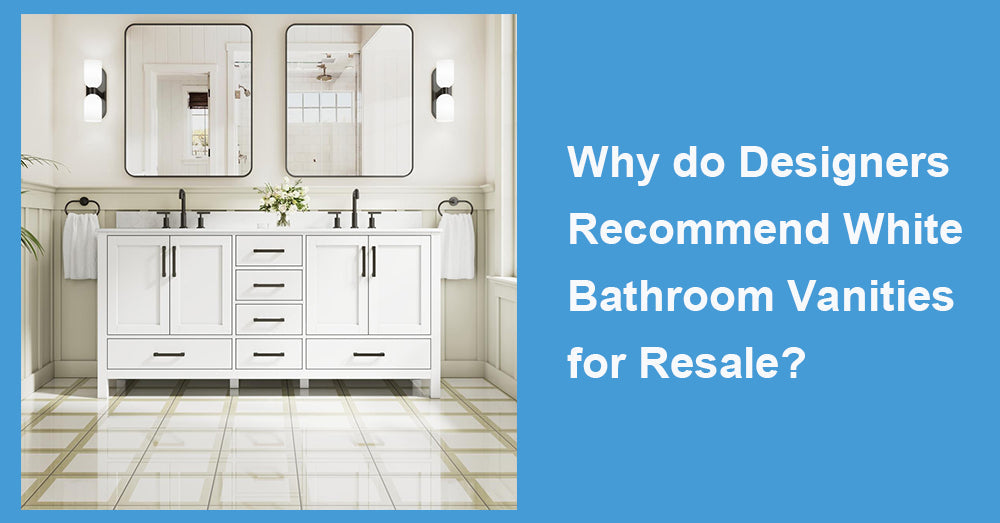
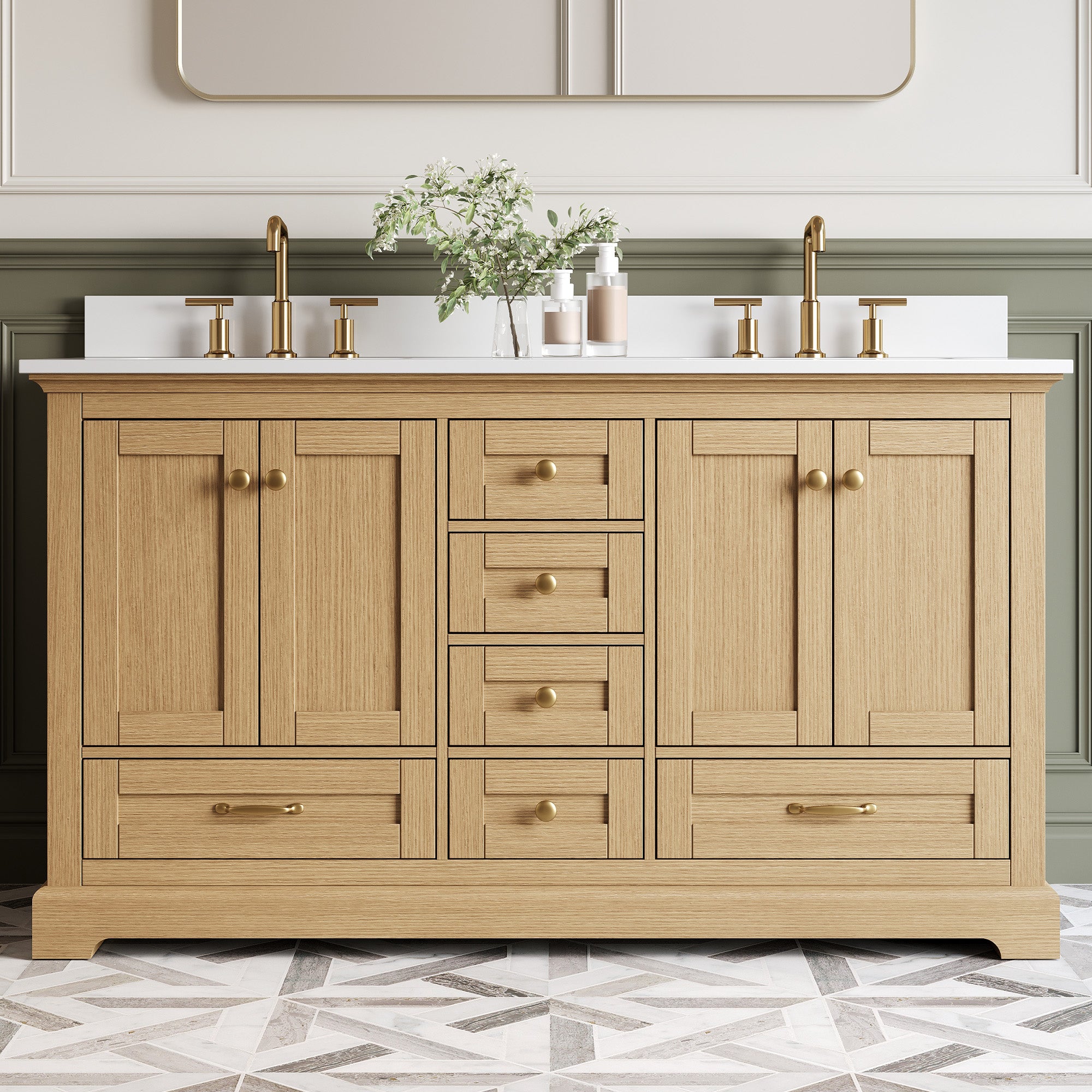
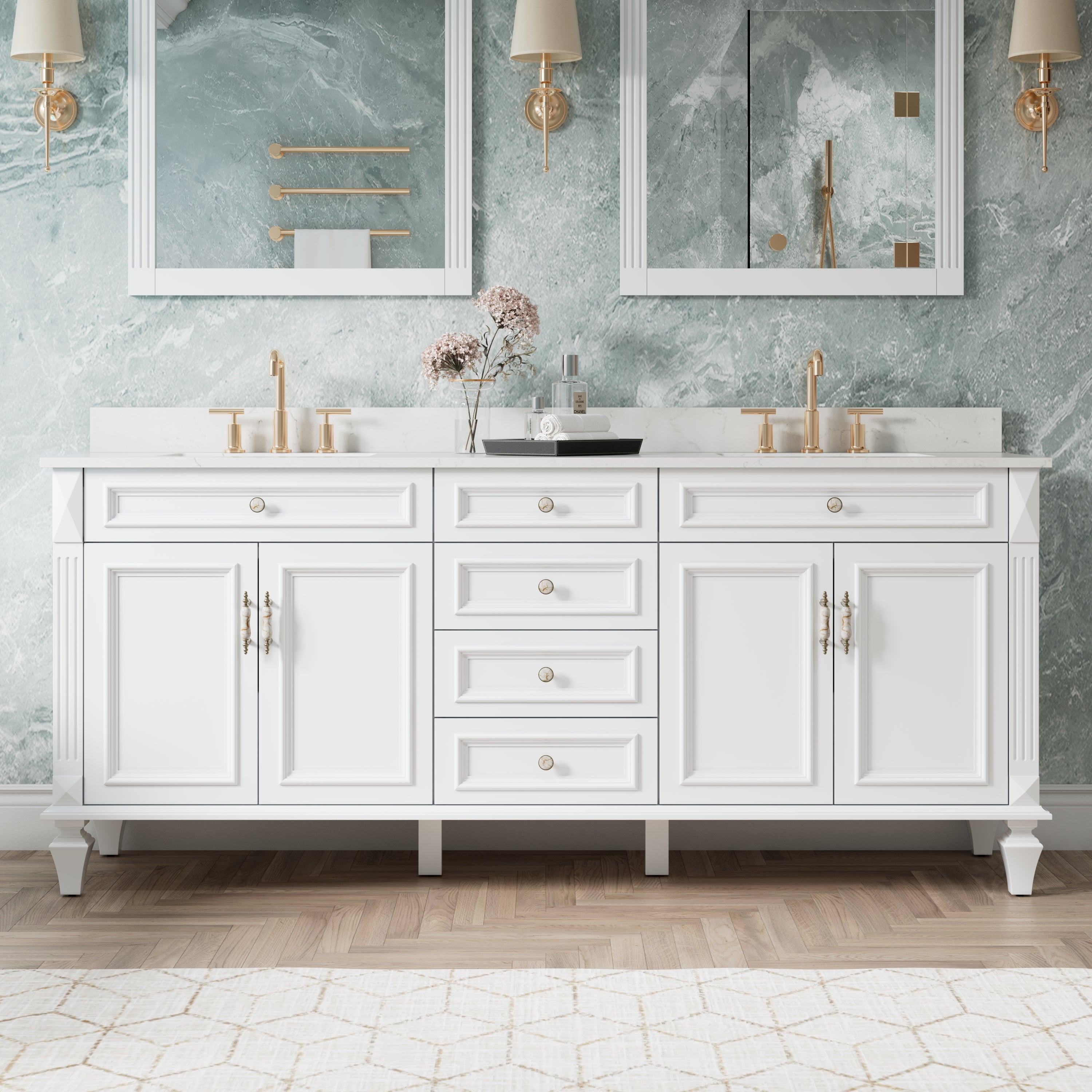
Many agents suggest using white bathroom vanities before selling a home, as they reduce the chance that the bathroom will be deemed undesirable at first glance by buyers. White cabinets are suitable for all types of bathrooms, whether they are designed in warm tile or cool stone texture, patterned flooring, or brushed metal or matte black fixtures. White vanities also help to achieve good photographs of a bathroom and visually increase the space of a smaller bathroom. Although the vanity alone will not set the price of a bathroom, it helps keep the bathroom looking neat and makes it look more flexible and ready for personal adjustments.
1. White Works With More Design Preferences
Strong vanity colors create a specific look. Navy, dark green, black, and heavily distressed wood may appeal to some buyers while appearing difficult to update to others.
White is less restrictive. It can fit transitional, modern, coastal, farmhouse, and traditional bathrooms without forcing the rest of the room into one style. Buyers can imagine changing the mirror, wall color, towels, or hardware without immediately planning to replace the cabinet.
Houzz reports that wood tones lead upgraded vanity colors at 28%, followed by white at 20% and off-white at 10%. White is not the only popular option, but it remains one of the largest individual color categories.
2. It Helps Small Bathrooms Look Brighter
Bathrooms often receive less natural light than kitchens and living spaces. Dark cabinetry can create a heavy visual block near the floor, especially in a narrow room or a bathroom without a window.
A white vanity reflects more of the available light and reduces the contrast between the cabinet, wall, and countertop. In a bathroom measuring around 5 ft by 8 ft, this can make the layout feel less enclosed without changing its actual dimensions.
The effect is useful in listing photography as well. Light surfaces keep cabinet details visible and make the sink area easier to read. Warm white generally works better than a stark blue-white finish because it coordinates more naturally with beige tile, light wood, and LEDs around 3000K to 3500K.
3. Light Countertops Create a Coordinated Appearance
White cabinetry is frequently paired with white or off-white countertops because the combination looks clean and move-in ready. Houzz found that white appears on 48% of upgraded vanity countertops, while off-white accounts for another 20%. Engineered quartz leads countertop materials at 45%, followed by quartzite at 20%, granite at 14%, and marble at 13%.
For resale, subtle quartz veining is usually easier to present than a dramatic stone pattern. Fine gray, beige, or taupe lines add movement without tying the bathroom to a narrow design trend.
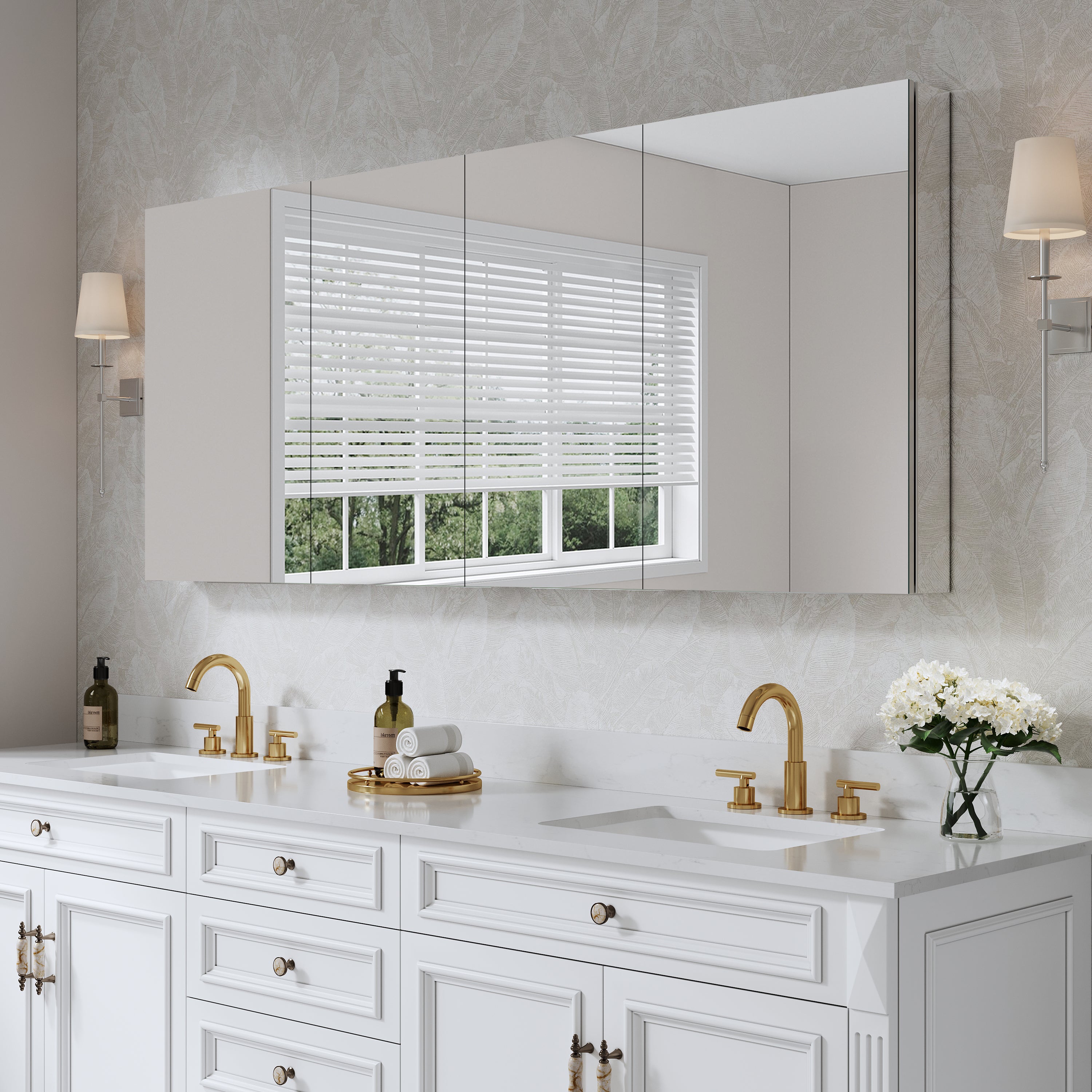
Proportion remains important. A 36-inch single vanity generally works well with an undermount sink and a top around 1 inch to 1 1/4 inches thick. Larger 60-inch or 72-inch cabinets can support more visible stone movement and double-sink layouts.
4. White Makes Smaller Updates More Effective
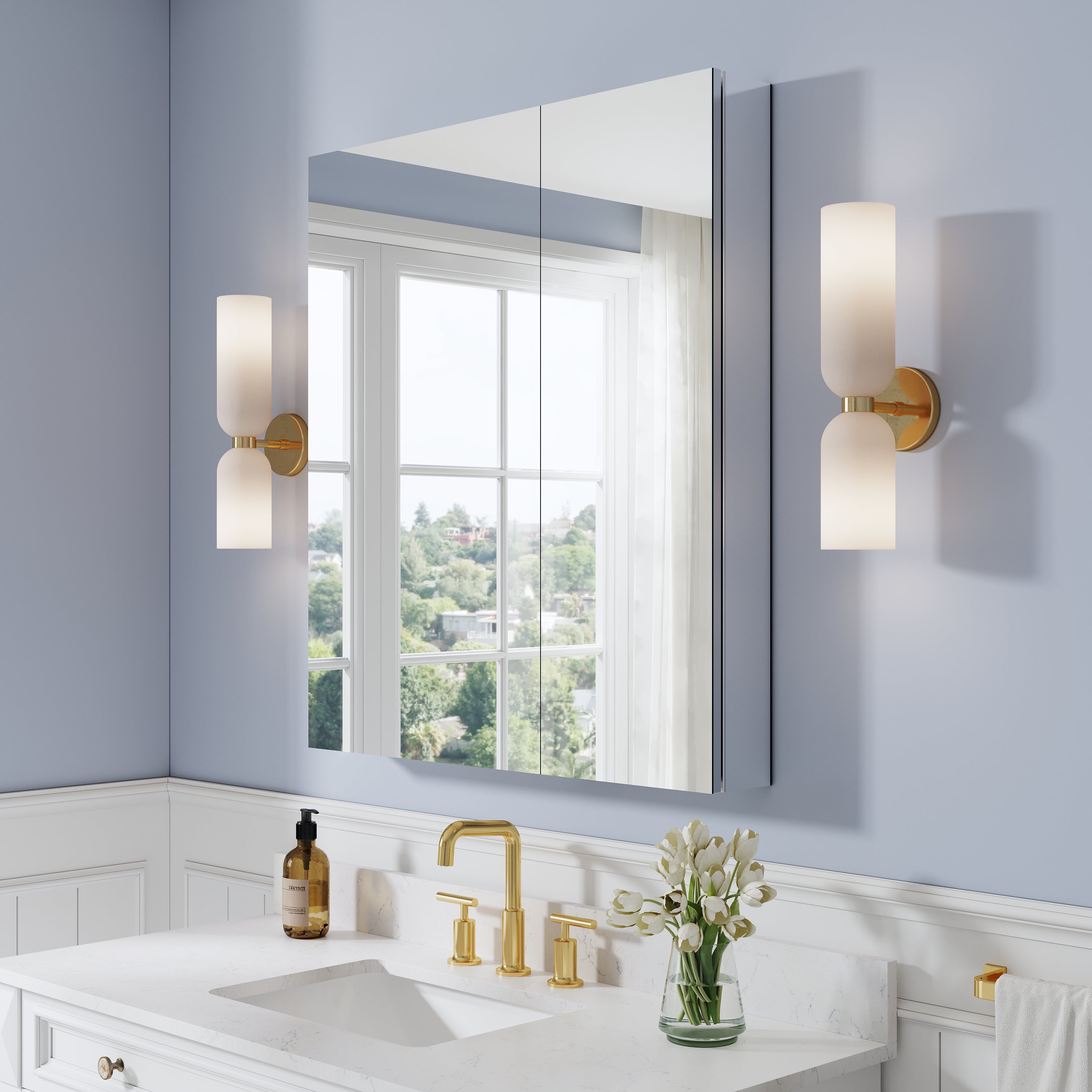
A white cabinet can often be refreshed without replacing the full vanity. New pulls, a faucet, a mirror, or improved lighting may be enough to change the room’s appearance.
Brushed nickel keeps the look neutral. Matte black adds definition, while muted brass warms the cabinet and works well with beige stone or wood accents. Because white does not compete strongly with these finishes, sellers can choose hardware that coordinates with the rest of the property.
This is often more practical than completing a highly customized bathroom shortly before listing. The 2025 Remodeling Impact Report estimates that a bathroom renovation recovers around 50% of its cost at resale. It also found that 18% of remodeling consumers were preparing to sell within the following two years.

5. Condition Matters More Than a Dramatic Style
A white finish makes chipped paint, stained caulk, and damaged panels easier to notice. Before resale, that can be useful because it encourages sellers to correct visible problems rather than hide them.
Buyers may not know the cabinet material or hinge brand, but they notice loose doors, uneven drawer fronts, swollen panels, cracked countertops, and leaking plumbing.
Bathroom renovation demand has also increased. In the NAR report, 35% of real estate professionals observed growing demand for bathroom renovations during the previous two years. The same research found that homeowners place strong value on improved functionality, durable materials, and better appearance.
6. Common Sizes Make Replacement Easier
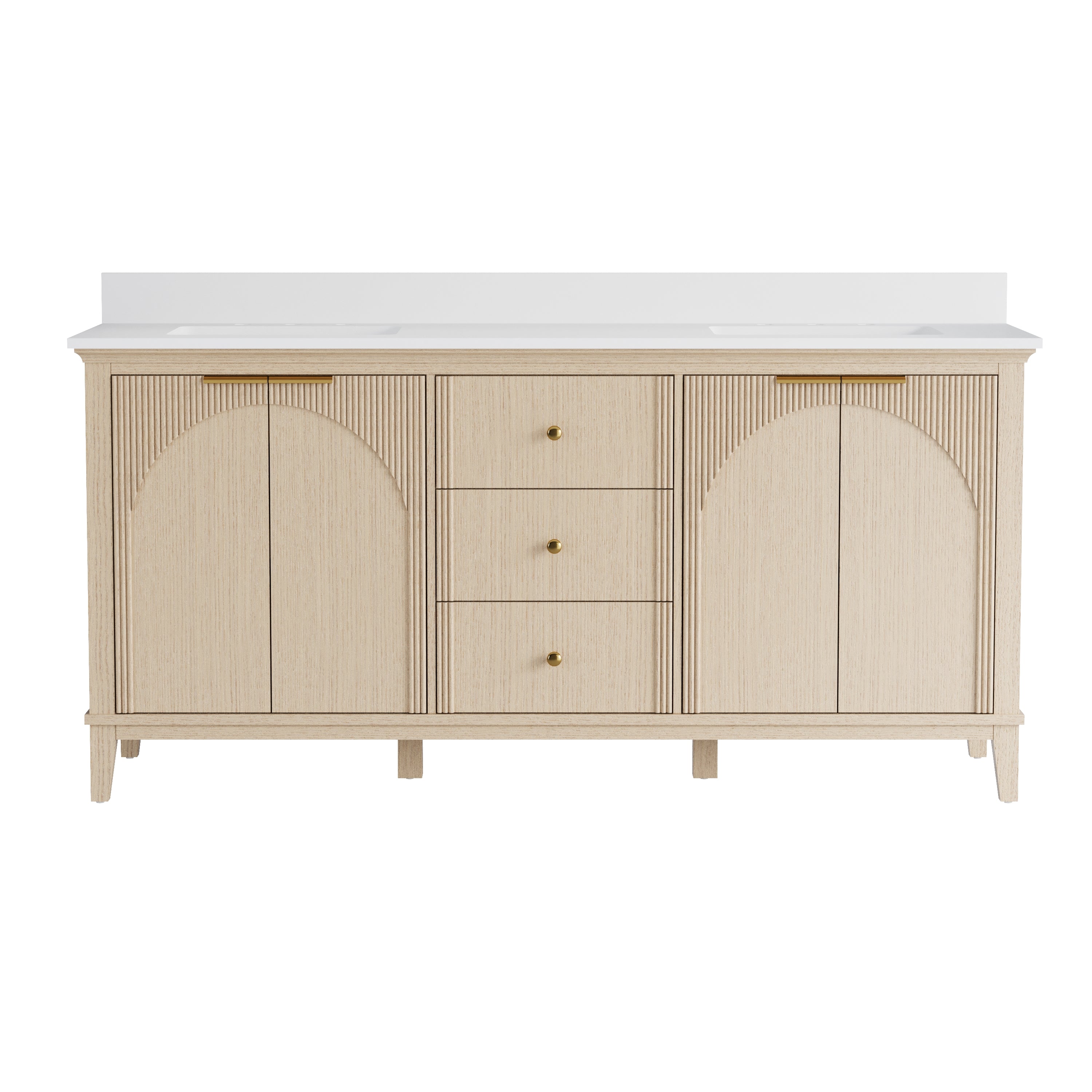
White vanities are widely available in standard widths, allowing an outdated cabinet to be replaced without redesigning the entire bathroom. A 24-inch or 30-inch cabinet can fit a powder room. A 36-inch vanity provides a practical single-sink layout, while 48-inch models offer additional storage. Double vanities commonly begin around 60 inches.
Nearly half of renovators, 47%, choose vanities measuring 48 inches or less. Nineteen percent select 60-inch models, while 14% choose 72 inches.
For resale, the cabinet should fit comfortably rather than fill every available inch. Clearance around the toilet, shower entrance, and door swing often matters more than maximum vanity width.
7. Storage Adds More Value Than Decoration
The cabinet still has to work after the viewing is over. Full-extension drawers, adjustable shelves, soft-close hardware, and a plumbing-friendly center compartment can make the vanity feel better planned.
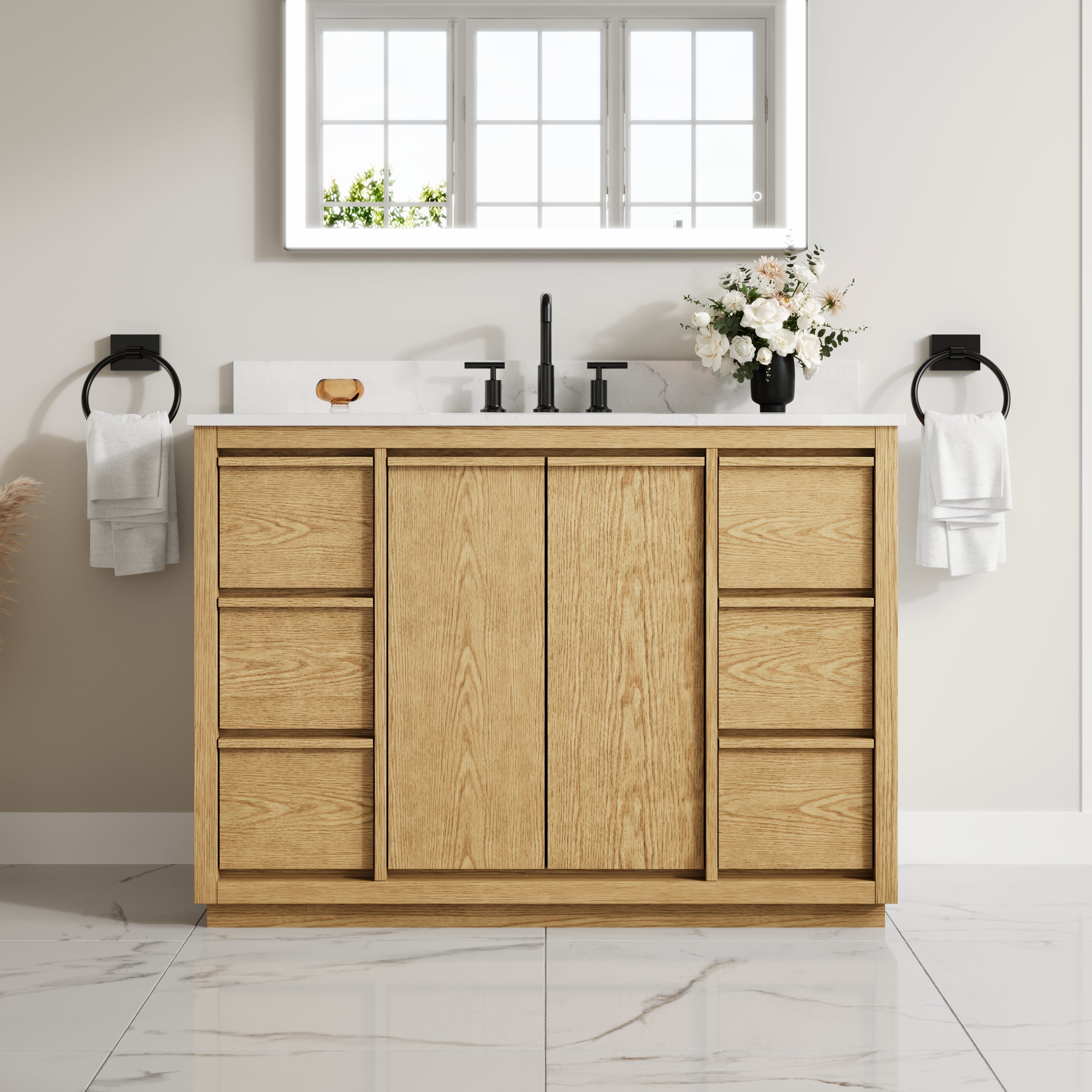
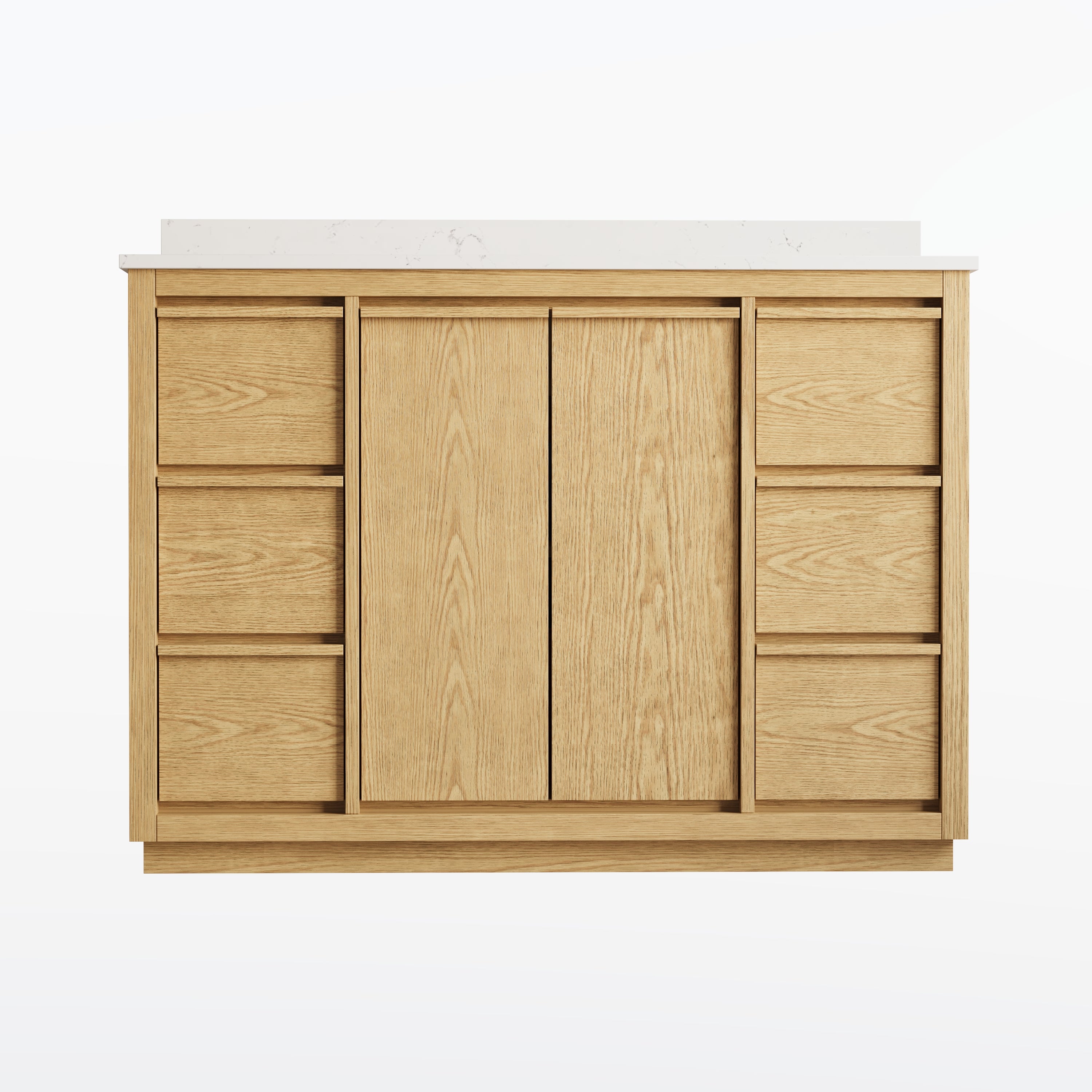
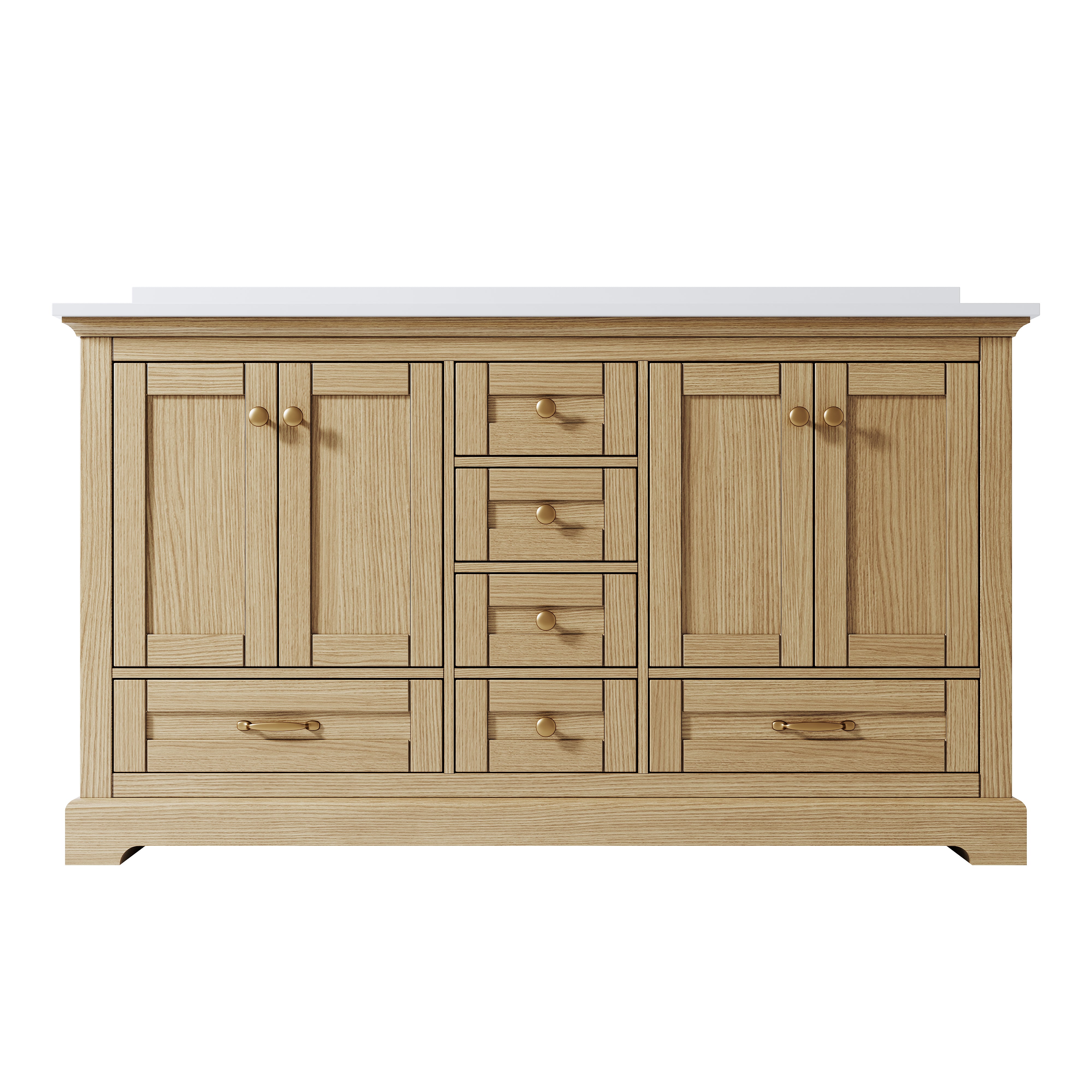
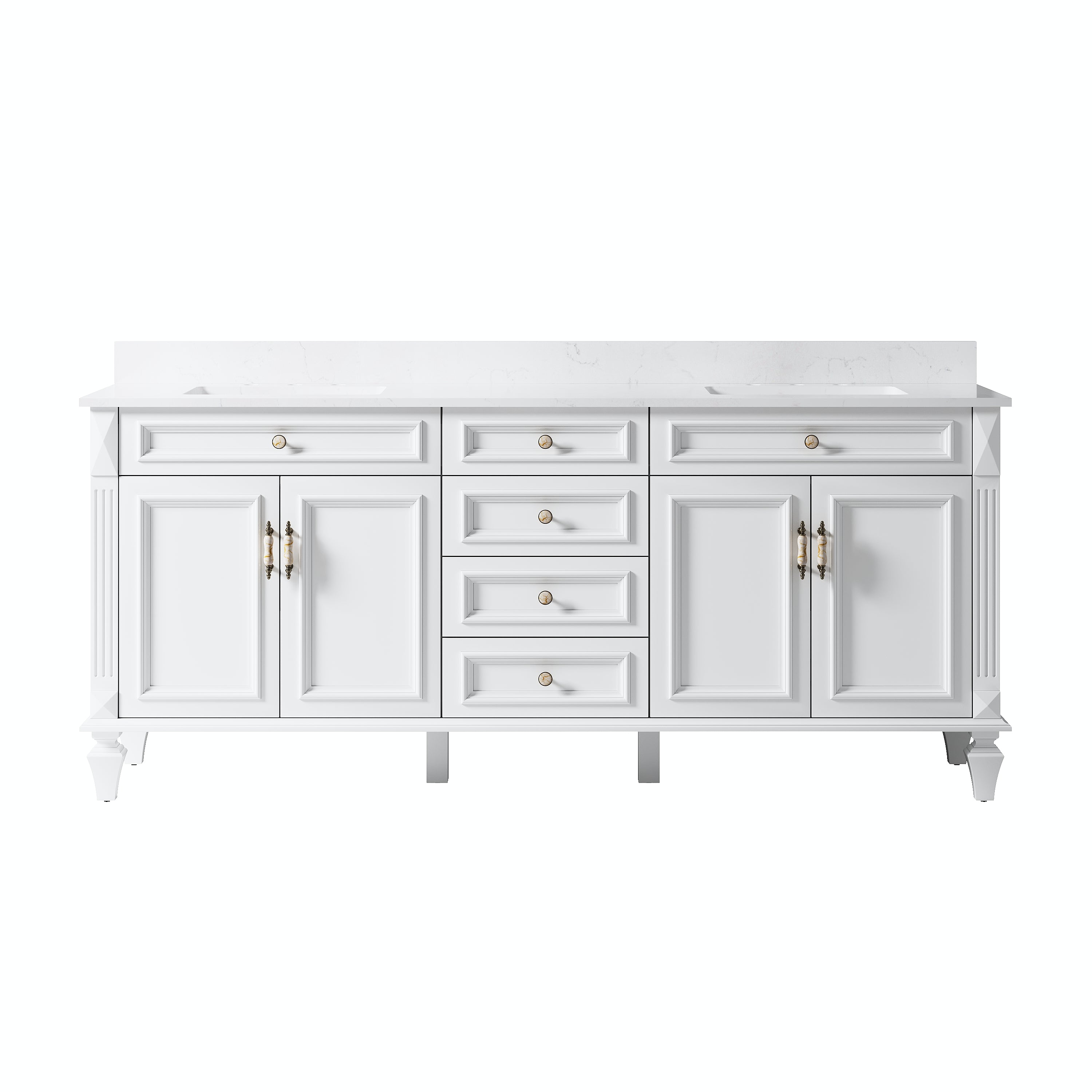
A 36-inch model with drawers on one side and a door section below the sink often provides a useful balance. Larger vanities can use symmetrical drawer banks to make shared storage easier.
The countertop should remain mostly clear during photography and showings. Closed storage keeps bottles, cords, and cleaning products out of sight, allowing the white finish and countertop to remain visible.
8. Neutral Does Not Have to Look Generic
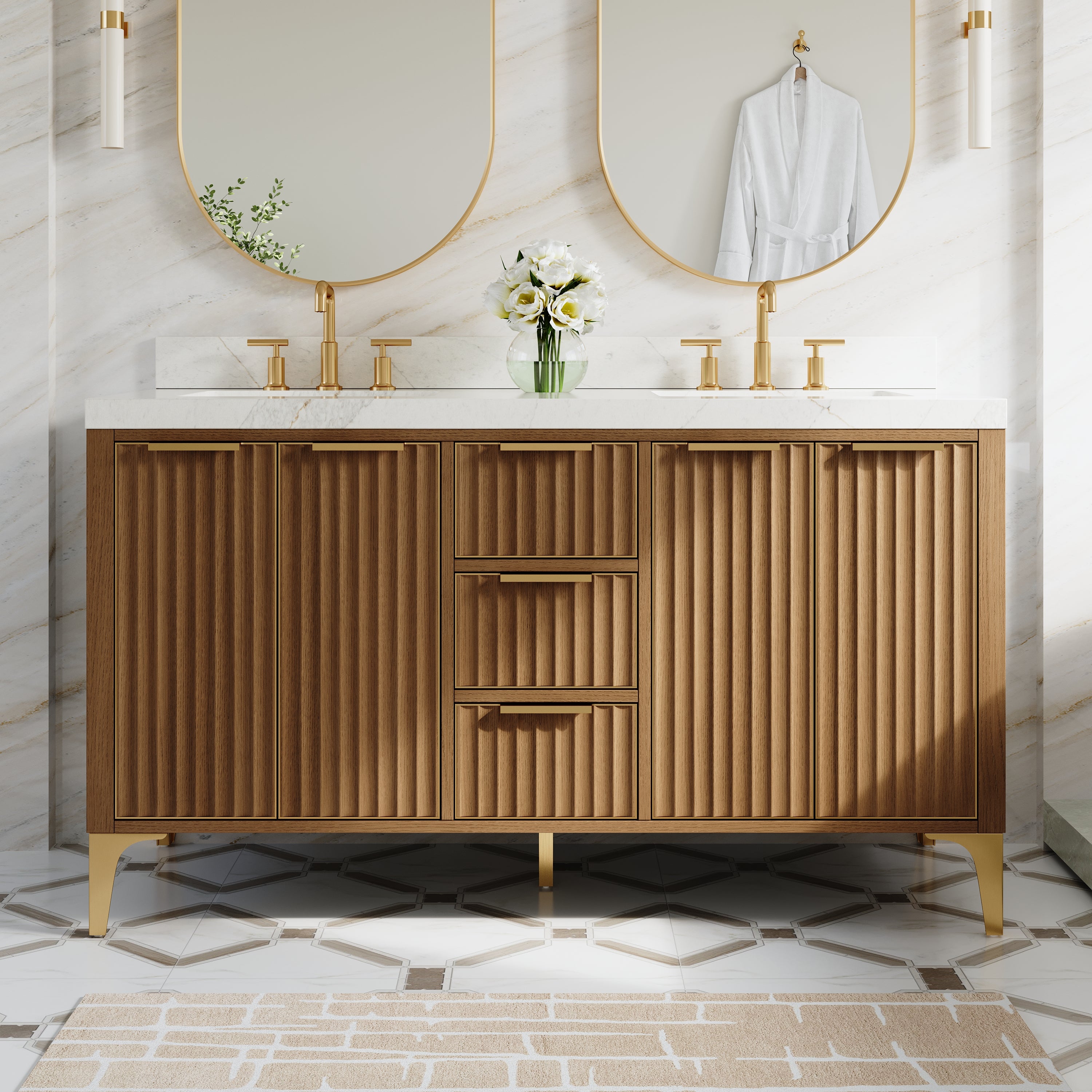
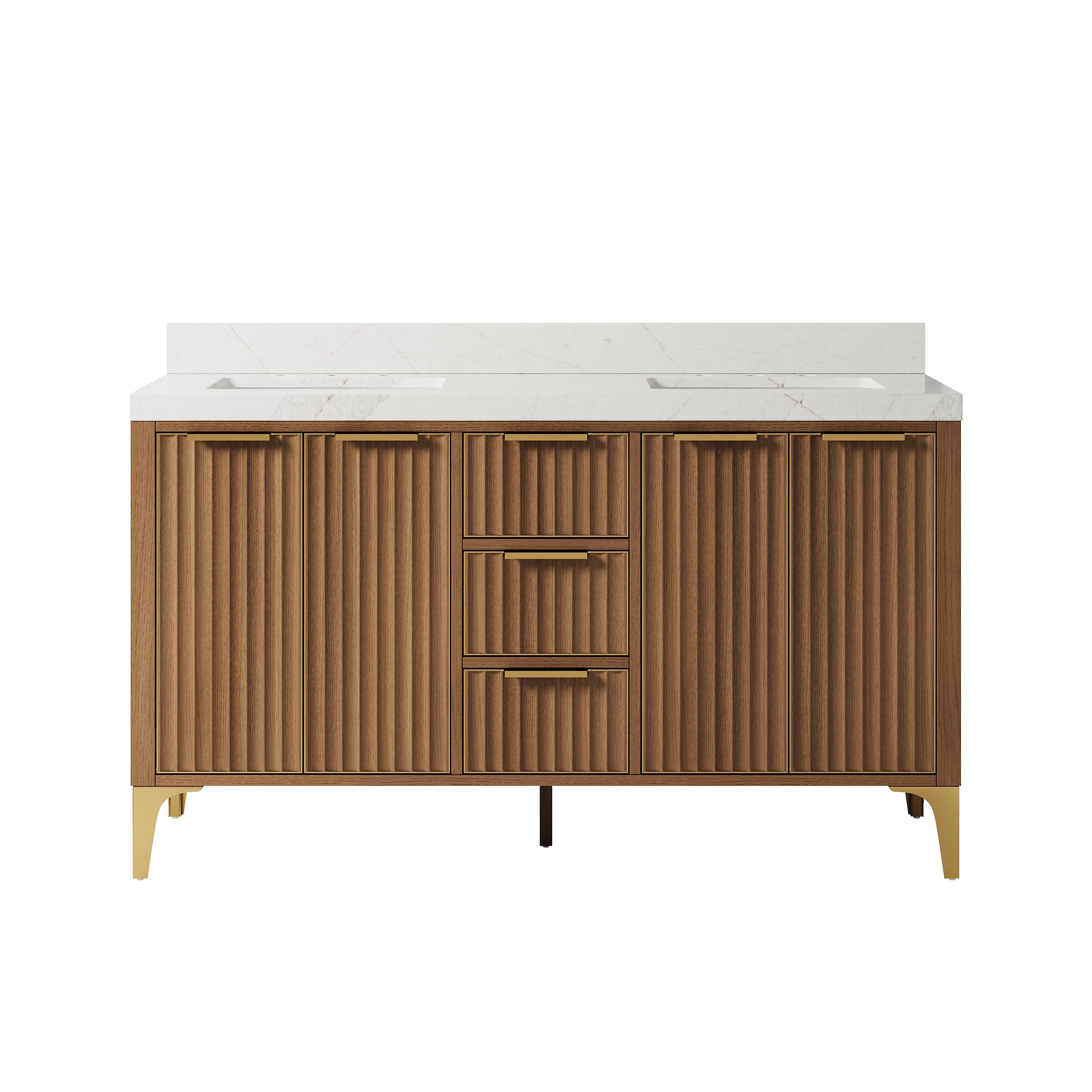
Even a white vanity can still bring character to the bathroom. There are different ways to introduce detail into the room by having a countertop with rounded corners, fluted drawers, and slim shaker doors.
We do not need to make a bathroom that looks amazing. We need to make a space that is functional, clean, and easy for the future owner. When the cabinet is well-suited to the bathroom area, provides proper storage, and meets the tile and fixture design, it can be considered a good design solution.













Leave a comment
This site is protected by hCaptcha and the hCaptcha Privacy Policy and Terms of Service apply.