














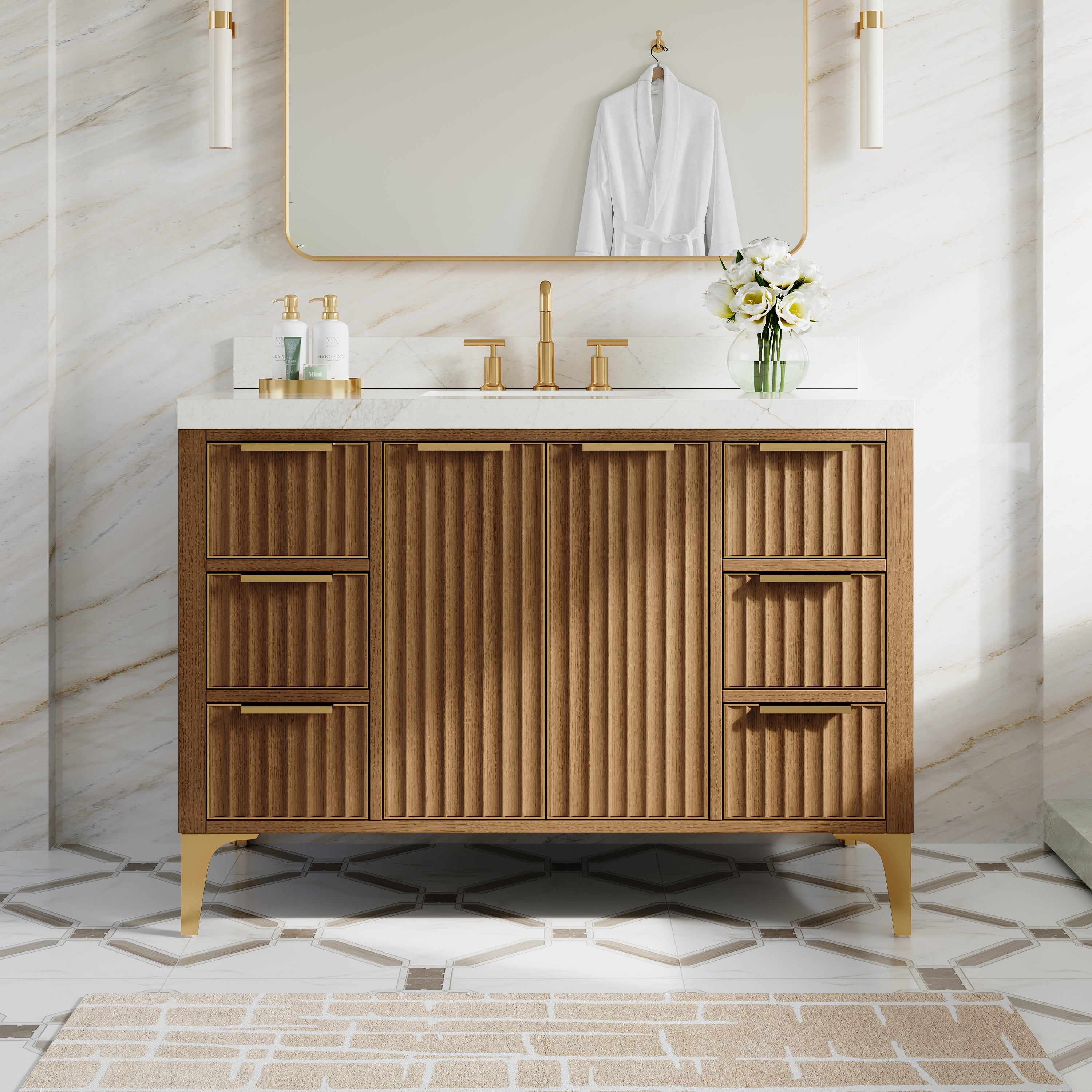
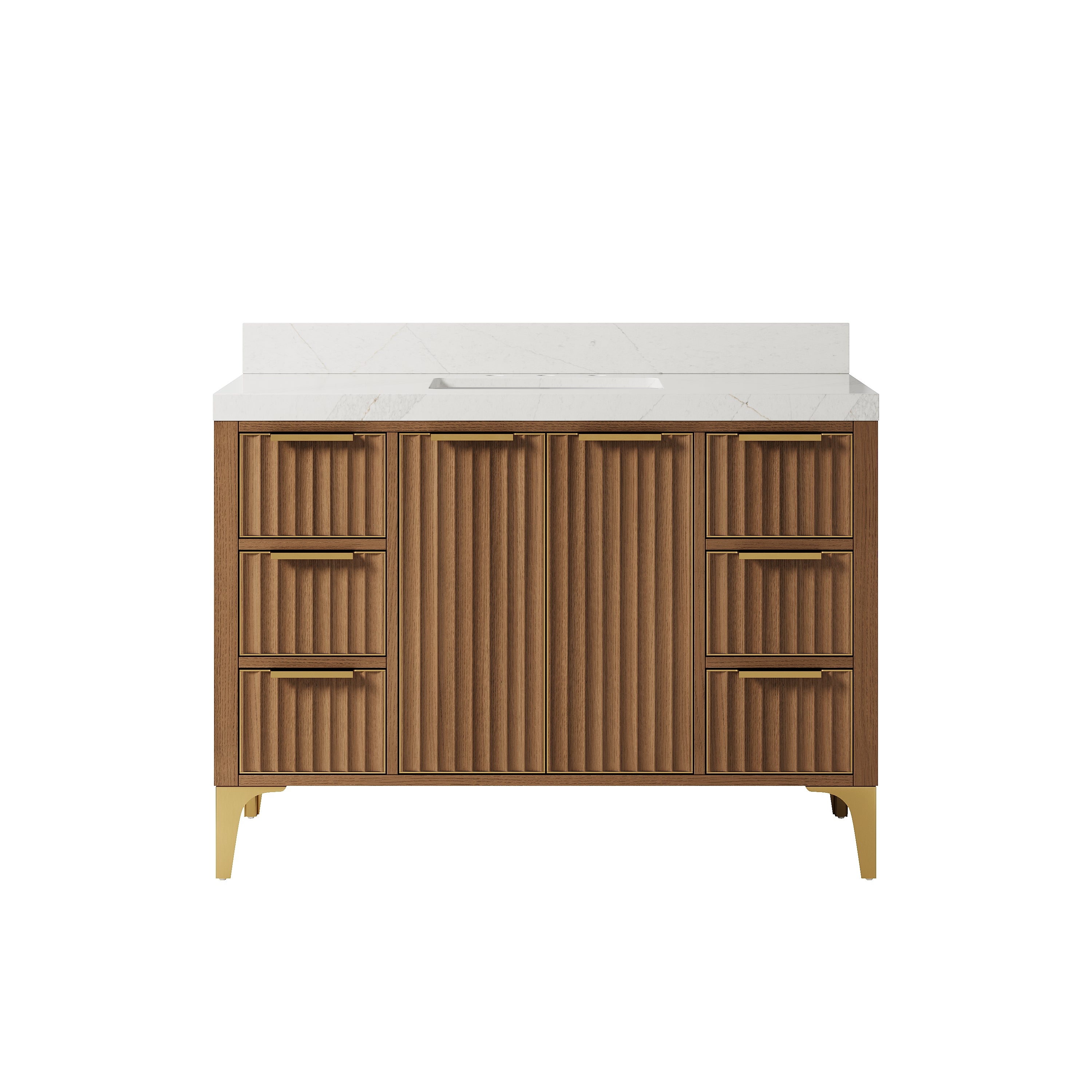


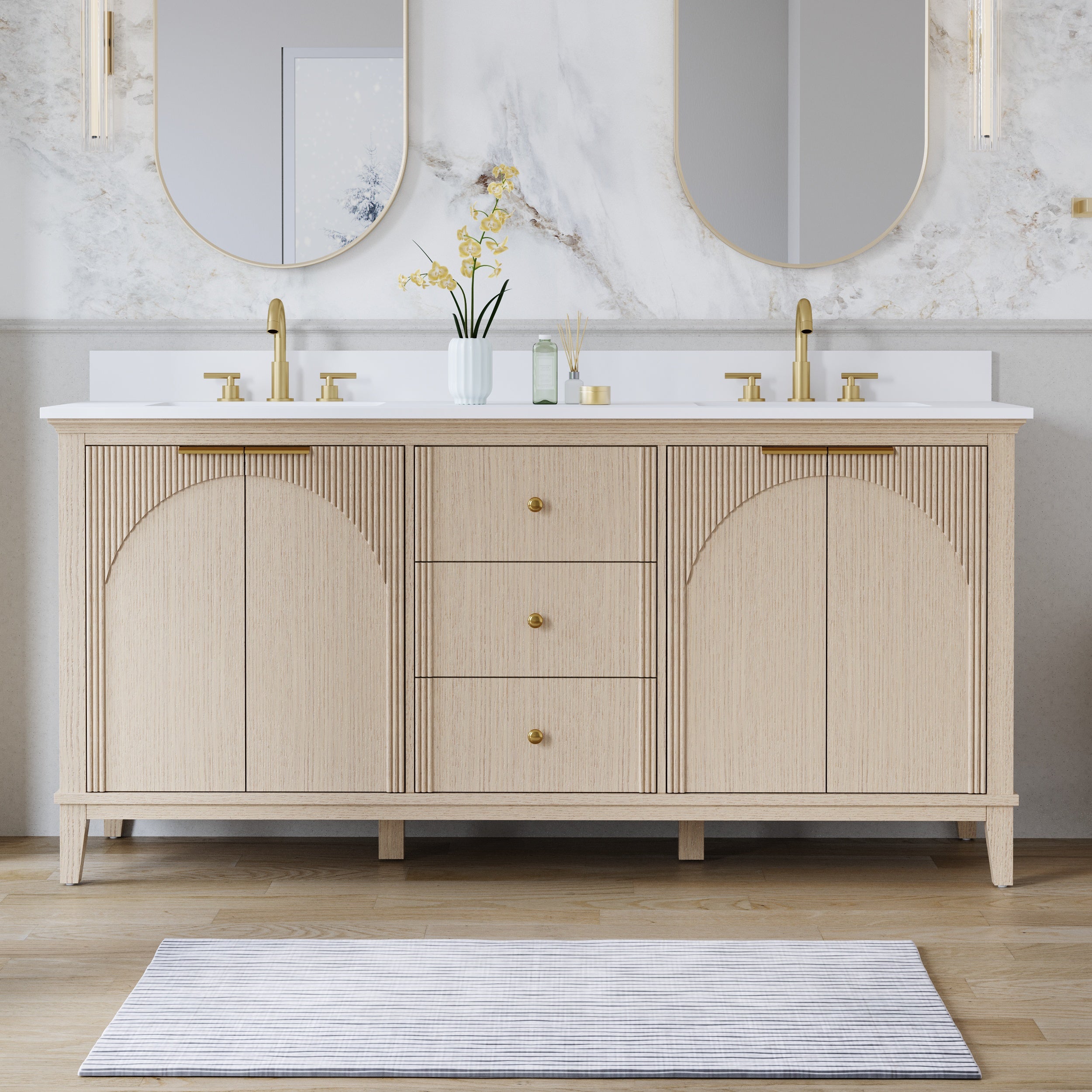
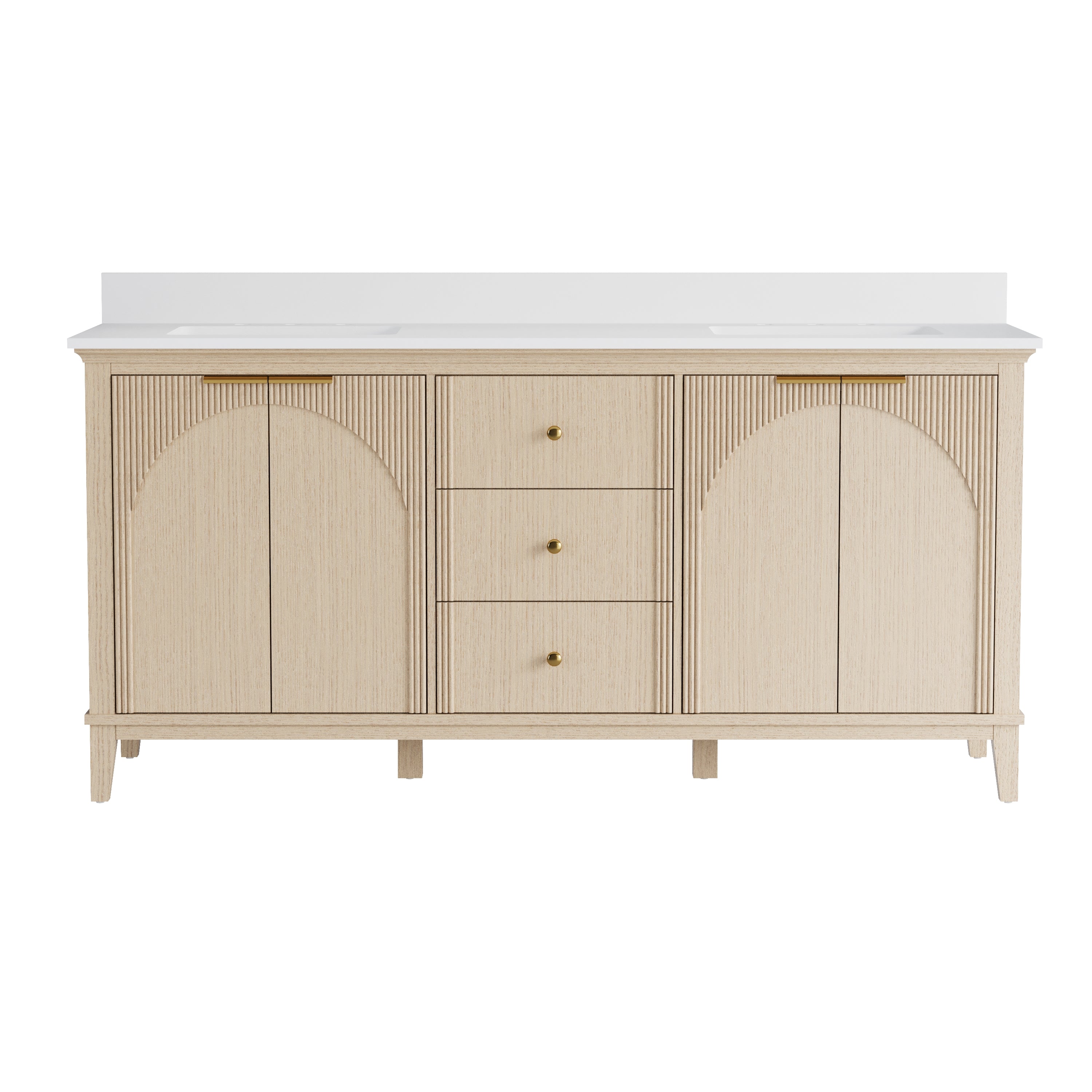


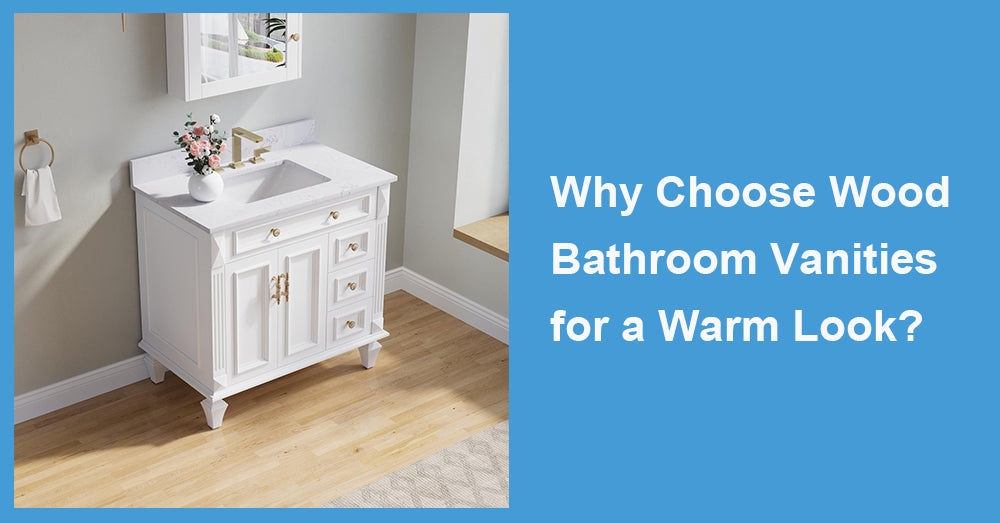
In recent years' discussions on bathroom renovations and residential upgrades, wood bathroom vanities have gradually evolved from a "traditional option" to an essential design tool for creating a sense of space and temperature. Compared with high-gloss coatings or metal materials, wooden bathroom cabinets do not present a single style but rather a space that can continuously convey comfort and stability over the long term. From an industry perspective, choosing wooden bathroom cabinets is not just about aesthetic preferences. Still, it involves a comprehensive judgment of spatial psychology, structural performance, material craftsmanship, and long-term use value.
1. The advantages of wooden materials from the perspective of visual temperature and spatial psychology
In residential space design research, wood-grain surfaces have been shown to reduce the environmental coolness index significantly. When the width of the main cabinet in the washing area falls within 30-60 inches, the wooden facade can create a continuous texture on a small scale, making the space more visually coherent.
Industry research shows that under the same space area conditions, bathrooms with wooden facade configurations have an average "space comfort score" about 15% higher than those with glossy coating schemes. This difference mainly comes from the natural rhythm and color gradient of wood grain, which forms a more stable visual anchor for the human eye.
In mainstream bathroom cabinet configurations with a height of 34-36 inches, wooden materials are particularly suitable for creating a relaxing atmosphere for morning and night use, reducing the tension caused by cold light reflection.
2. Design stability from the perspective of scale proportion and volume balance
The standard depth of bathroom cabinets is 21-22 inches, while the large double-basin scheme can be extended to 24 inches. The volume control ability of wooden surfaces is particularly prominent in this scale range.
When the width of the cabinet is 48-72 inches, solid-color cabinet doors tend to create a large expanse of monotonous surface, while wood-grain textures can naturally divide the visual area, making large cabinets appear lighter.
Industry data shows that in double-basin projects exceeding 60 inches, the proportion of wooden surfaces is significantly higher than that in the glossy coating scheme, which is closely related to its stable performance in large spaces.
3. Long-term value from the perspective of material structure and durability performance
Modern wooden bathroom cabinets are no longer limited to solid wood as the entire structure, but have developed various technological systems, such as multi-layer solid wood panels, finger-jointed wood cores, and composite substrates covered with wood veneer.
In mainstream 18-21 inch cabinet-depth structures, multi-layer solid wood substrates have significantly better deformation resistance than traditional solid wood panels, and their wet expansion and shrinkage are more stable.
Industry tests have shown that under constant humidity and alternating cold and hot environments, the service life of high-quality composite wood cabinet bodies can reach 12-15 years, which is essentially on par with high-end coated panels. For the main satellite space, which sees frequent long-term use, this stability is particularly critical.
4. Detail the advantages from the perspective of tactile sensation and daily user experience
Bathroom cabinets are one of the few fixed furniture categories that require frequent contact. The advantage of wooden materials in terms of tactile temperature is undeniable.
In standard 34-inch countertop-height configurations, the surface tactile temperature difference between wooden drawers and cabinet doors during low-temperature seasons is significantly lower than that of metal or high-gloss paint, which helps improve comfort during morning and evening use.
Research has shown that under the same environmental temperature conditions, the initial tactile temperature of wooden surfaces is about 6-8 °F higher than that of metal surfaces. Although this difference is slight, it continues to affect experience evaluation in high-frequency use.
5. Long-term design elasticity from the perspective of style extensibility
Another core advantage of wooden bathroom cabinets is their ability to adapt to a wide range of styles.
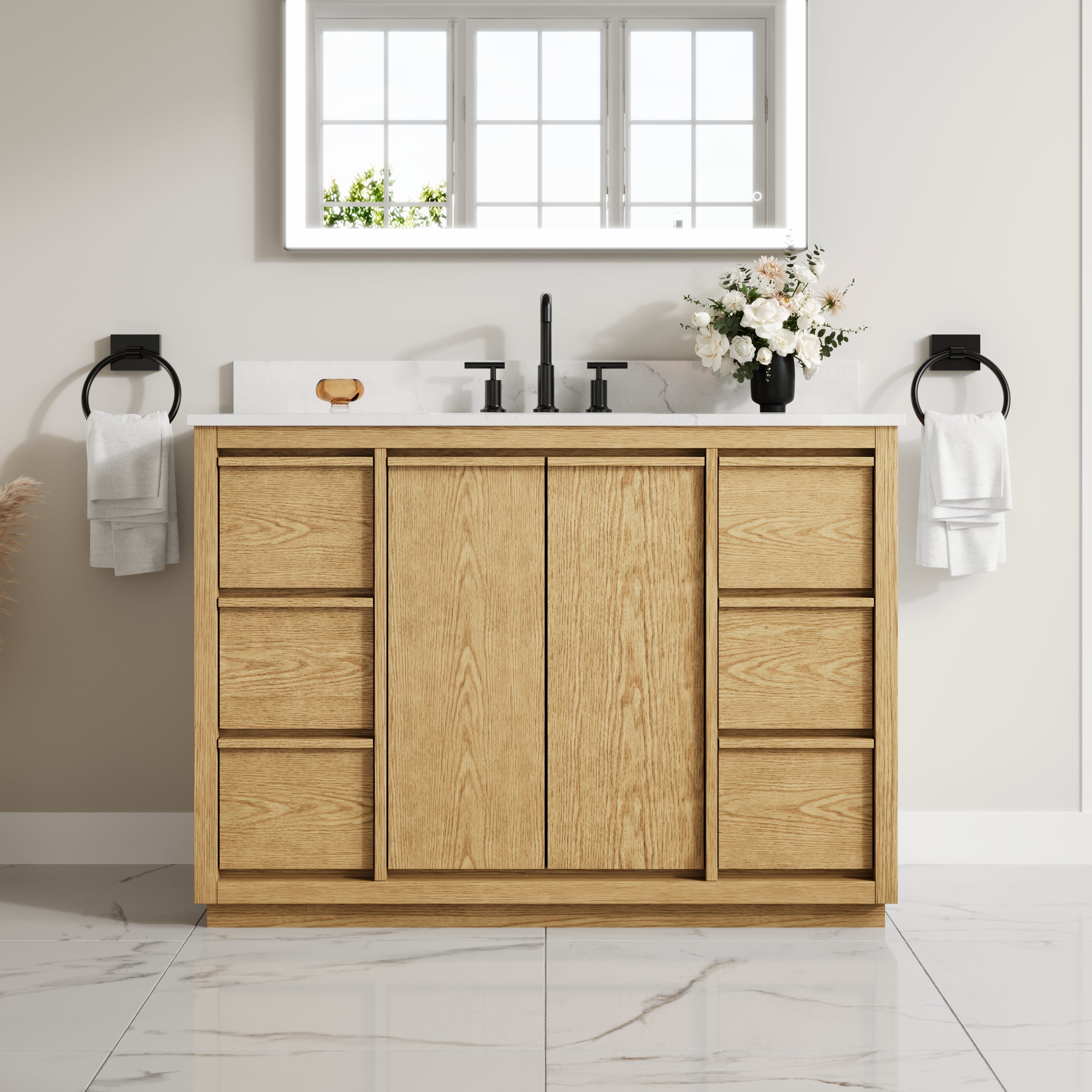
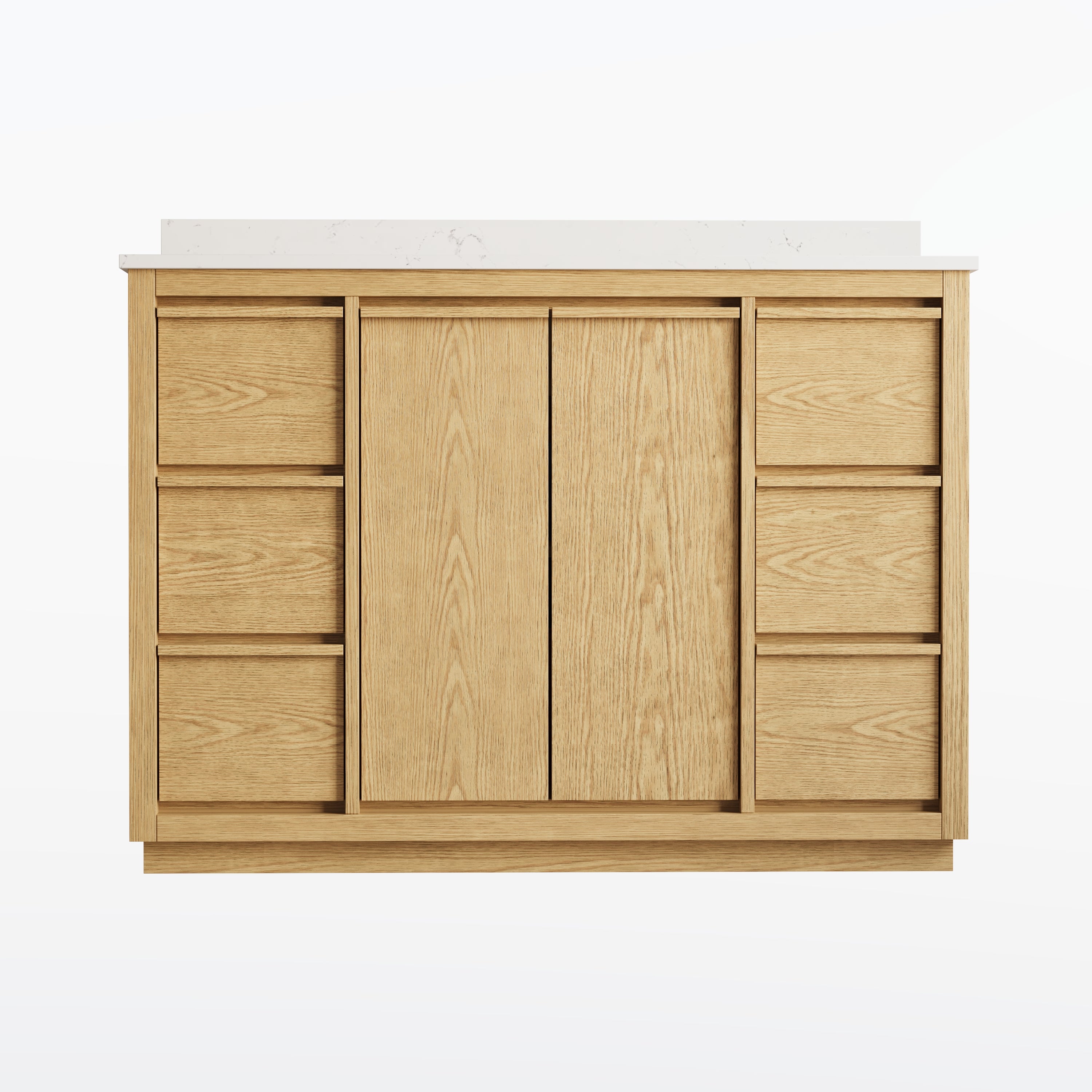
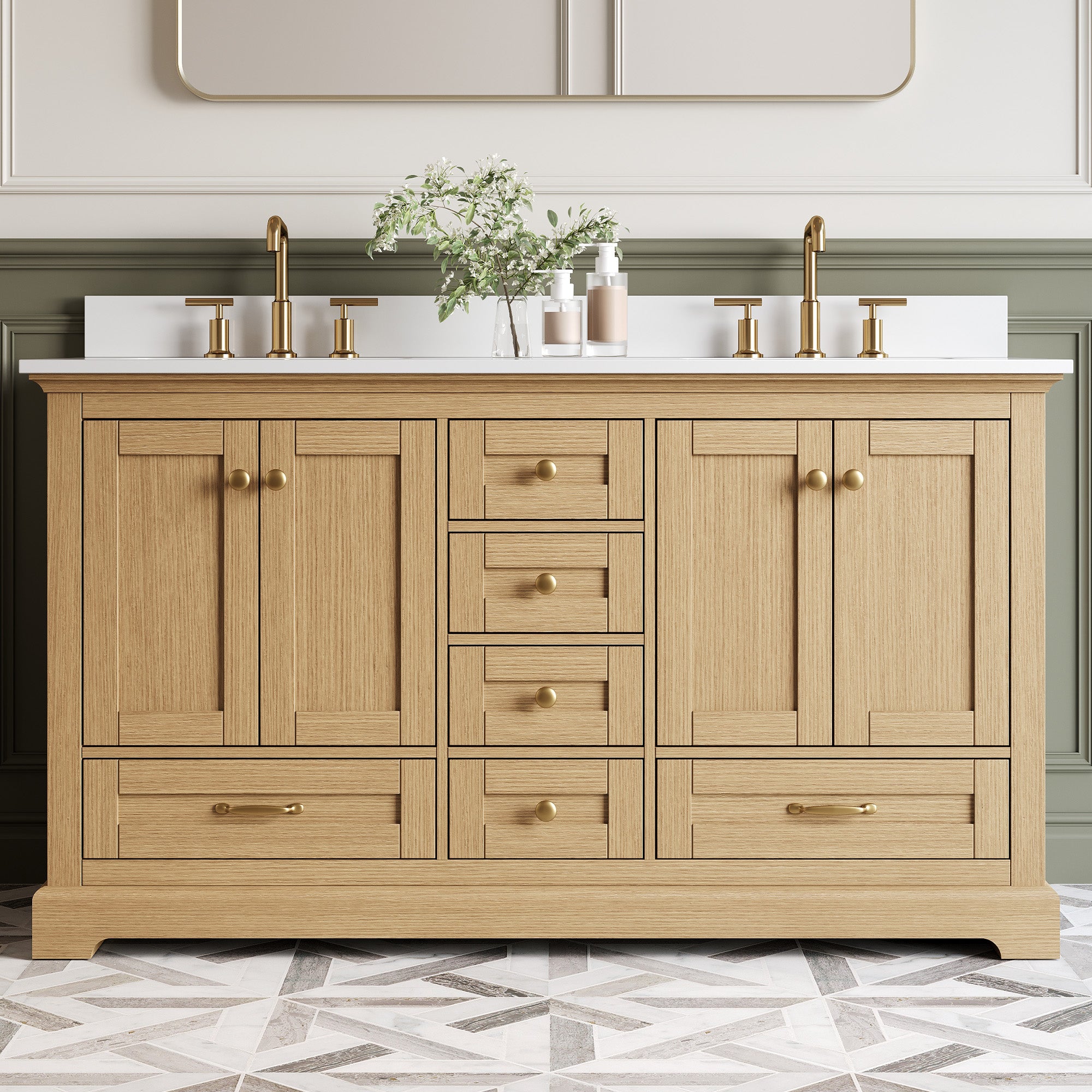
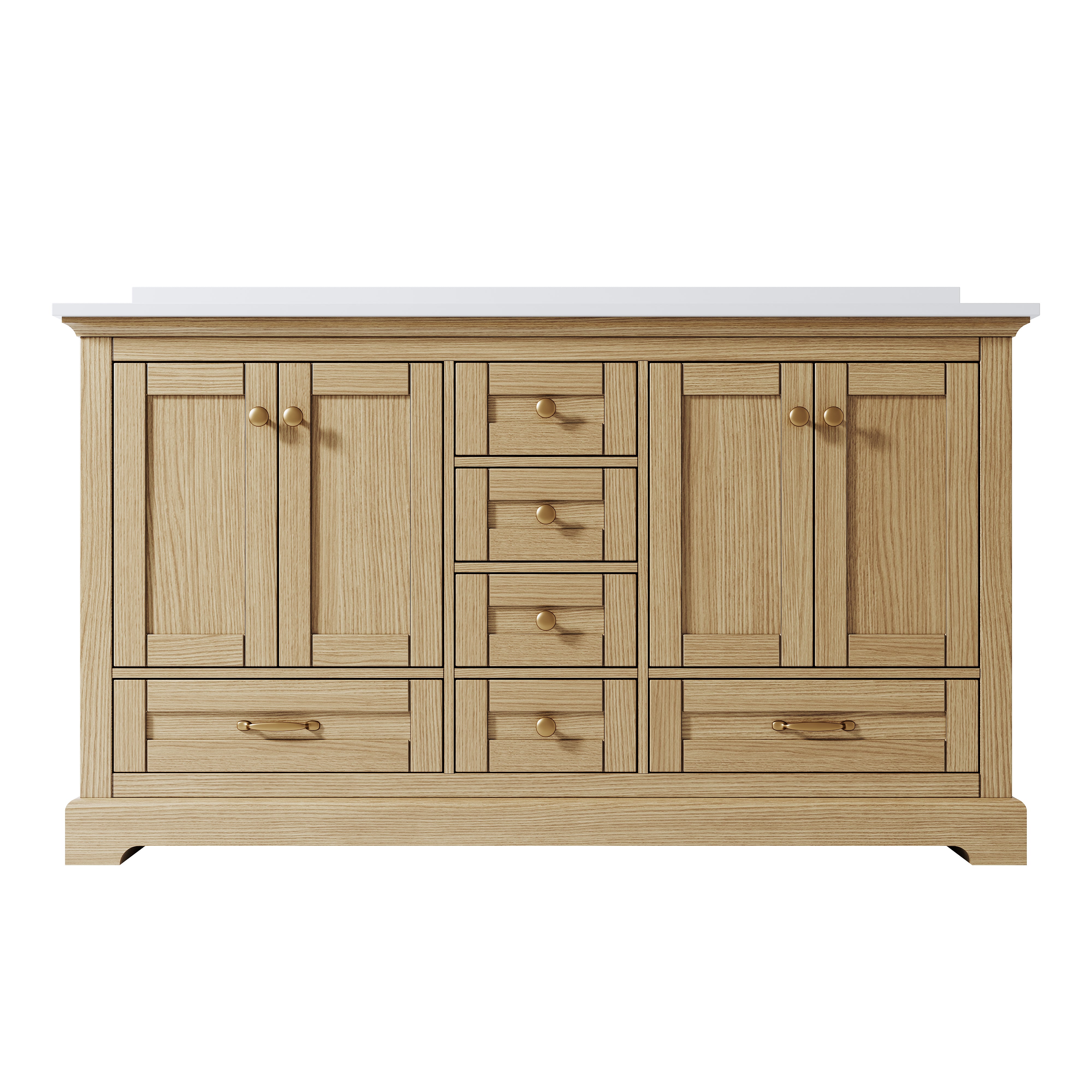
Light colored oak and white quartz countertop combination, suitable for modern and Nordic systems
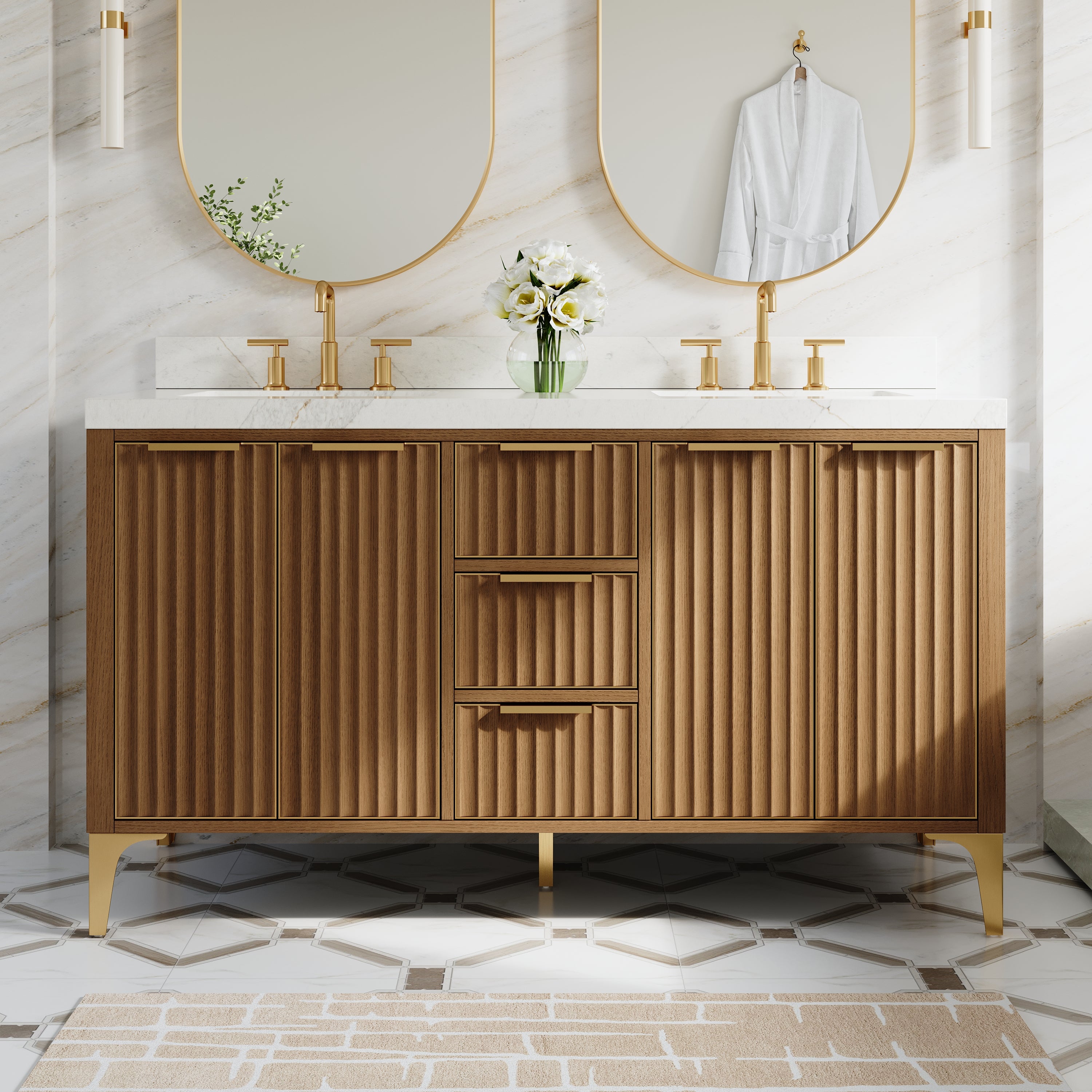
Deep walnut paired with brushed metal hardware, suitable for light luxury and traditional style
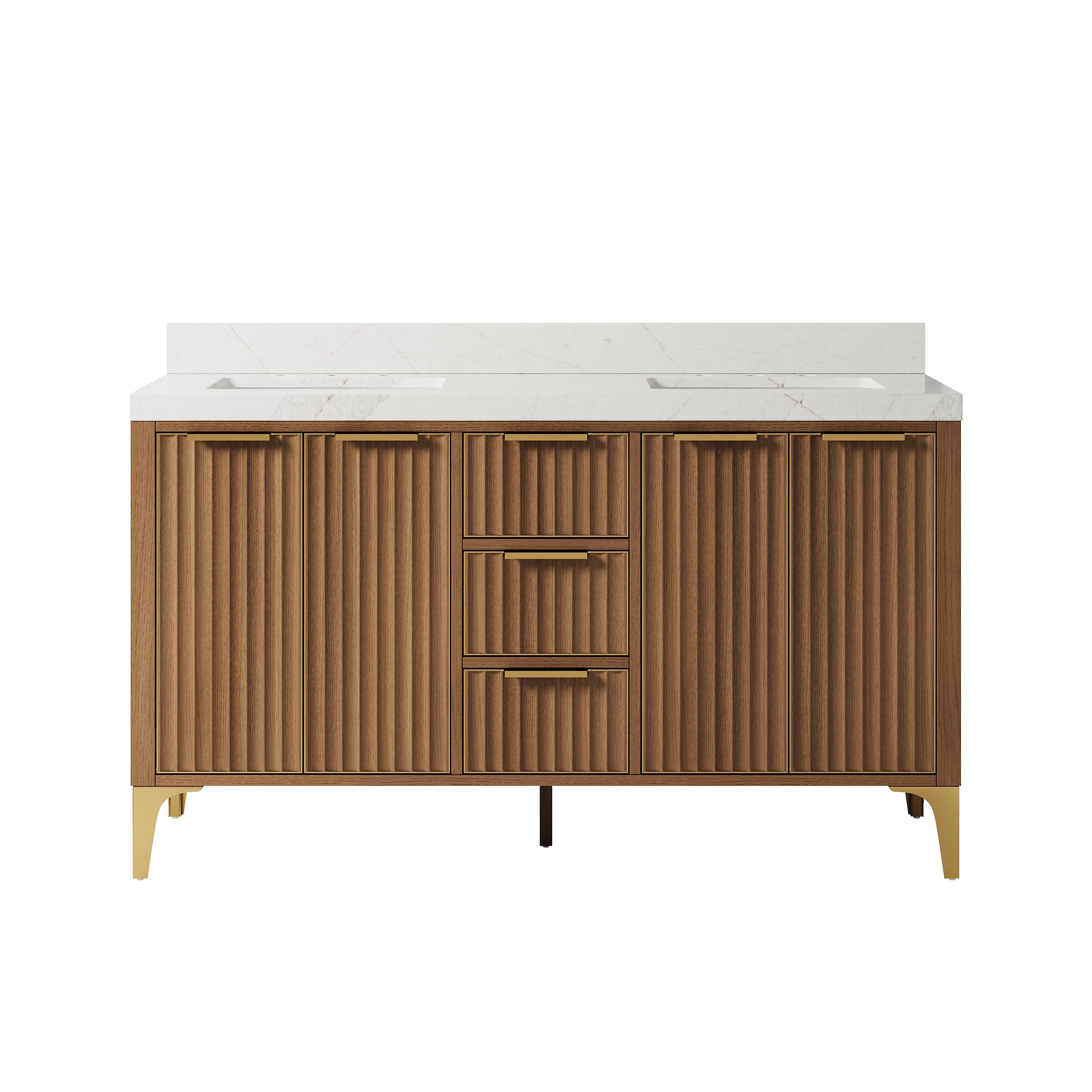
A combination of straight-grain wood veneer and a minimalist linear handle, suitable for modern minimalist spaces
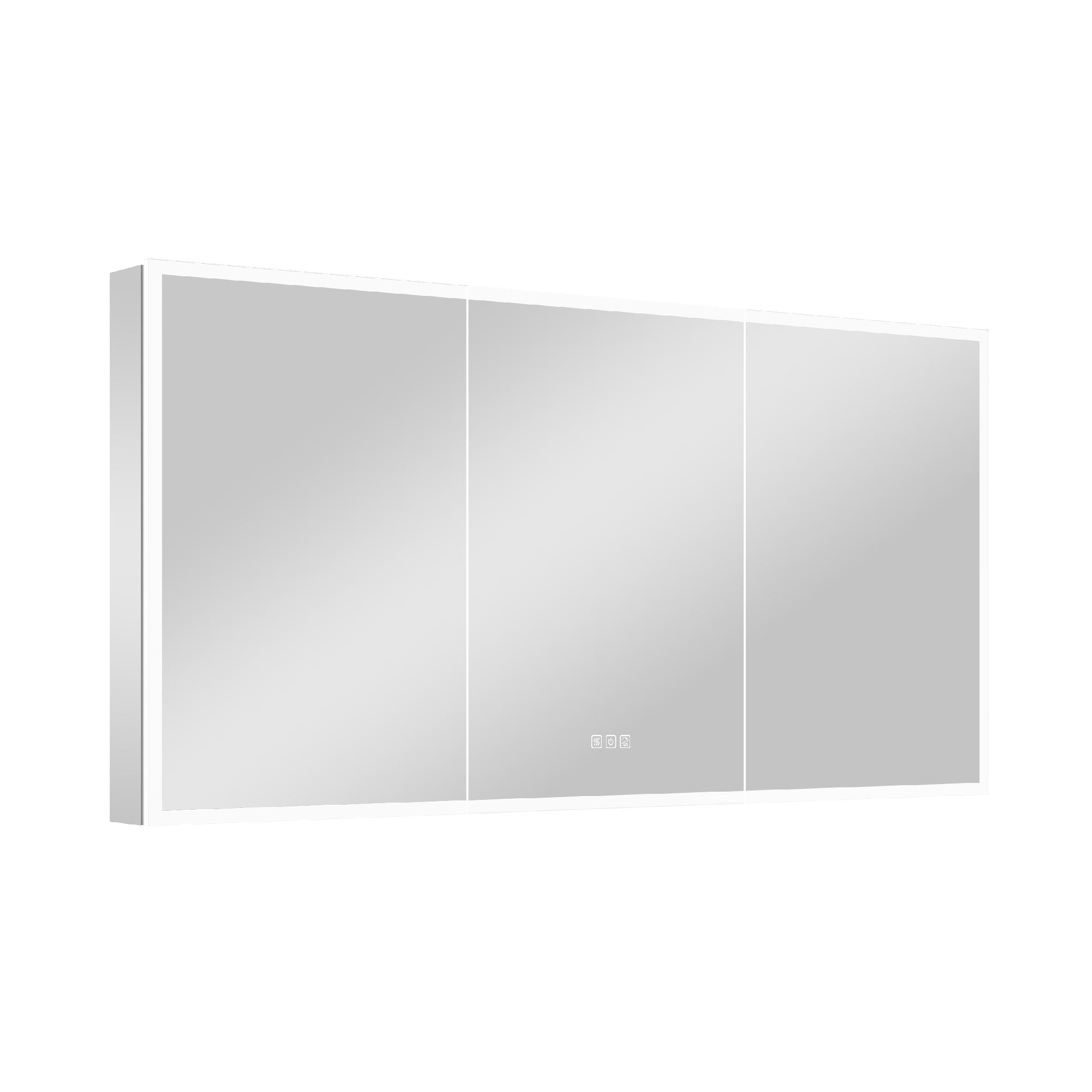
In the mainstream size range of 30-48 inches, wooden cabinets have almost no restrictions on mirror cabinet form, lighting layout, or hardware color upgrades, leaving ample space for later partial renovations.
6. Hidden value from the perspective of acoustics and spatial quietness
In the bathroom, the sound experience of drawer opening and closing, cabinet doors closing, and placing items on the countertop is often overlooked. Wooden structures have natural advantages in acoustic absorption performance.
Industry evaluations show that under the same hardware conditions, the average peak transient noise of wooden cabinets when closing doors is about 20%-25% lower than that of metal cabinets.
In the layout adjacent to the main bathroom and bedroom, this difference significantly reduces interference from nighttime use on rest, making it one of the important reasons for choosing wooden solutions in high-end projects.
7. Long-term aesthetic stability from the perspective of maintenance and aging trajectory
Unlike high-gloss coatings, which are prone to noticeable scratches, subtle wear on wooden surfaces often transforms into "natural use marks".
Over a usage cycle of more than 10 years, the aging trajectory of wood-grain cabinets is closer to the natural evolution of the furniture body than to apparent surface damage.
Industry surveys show that under the same service-life conditions, the "acceptable aging degree score" of wooden bathroom cabinets is significantly higher than that of high-gloss white-painted cabinets, which is also a key reason for their long-term, stable presence in high-end residential buildings.
8. Are all spaces suitable for wooden bathroom cabinets
Although wooden bathroom cabinets have significant advantages, caution should still be exercised in the following situations:
Old spaces with extremely high humidity and insufficient ventilation
Near the long-term direct water splashing area
Public high-frequency usage scenarios with extremely low cleaning frequency requirements
In these environments, it is preferable to choose solutions with high-water-resistant coatings or stone-cladding structures, or to balance risks by raising the cabinet base and strengthening the waterproofing.

9. Conclusion: Why can wood continue to be the core carrier of "temperature-based design"
From visual temperature, scale balance, structural stability, tactile experience, and acoustic performance to aging trajectory, wooden bathroom cabinets simultaneously affect the long-term living experience in multiple dimensions.
It is not only a choice of style but also a spatial material that continuously delivers value in daily, high-frequency use.
In a core furniture category with an update cycle often exceeding 10 years, wood bathroom vanities are not a short-lived, popular element but a rational choice that can continuously bring a "warm perception" to life.





























Leave a comment
This site is protected by hCaptcha and the hCaptcha Privacy Policy and Terms of Service apply.