






















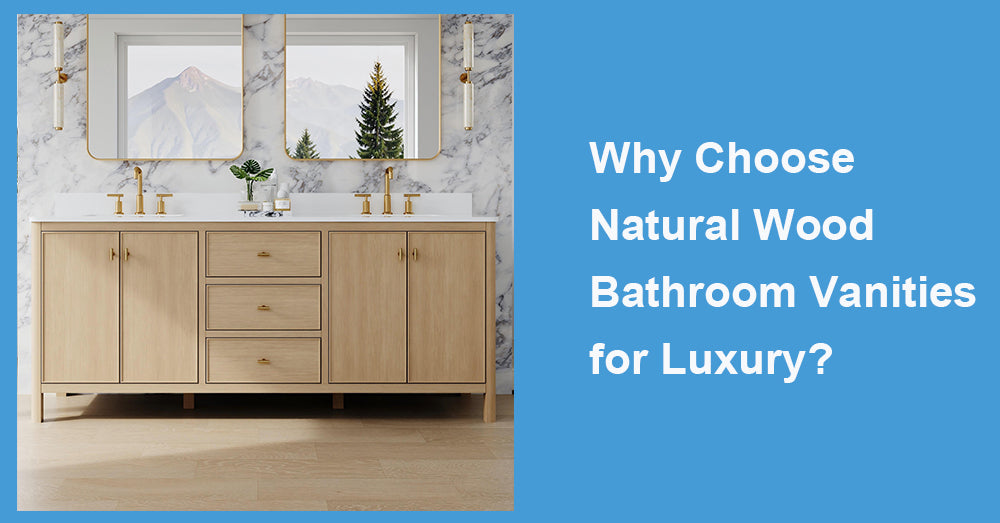
Natural wood bathroom vanities are becoming a stronger choice in luxury bath design because they bring warmth, texture, and a more personal feeling into a space that can otherwise look cold or overly polished. In recent remodeling activity, visible bathroom upgrades have carried real weight. Census Bureau and HUD data from the 2023 American Housing Survey shows that 51.6 million homeowners made improvements between 2021 and 2023, with total spending reaching $827 billion. Bathroom remodels had a median expenditure of $5,000, which helps explain why long-lasting, highly visible pieces such as vanities are being chosen more carefully.
They bring natural warmth into a luxury bathroom
Natural wood has a visual softness that painted cabinets often cannot fully create.
· Light oak can make a bathroom feel calm, open, and spa-like
· Walnut can create a richer and more architectural mood
· White oak works well with quiet luxury, organic modern, and transitional interiors
· Wood grain adds movement without needing strong color or heavy ornament
· Natural finishes help balance stone, glass, tile, and metal surfaces
Luxury bathroom design is moving away from rooms that feel only glossy and decorative. The stronger direction is tactile, comfortable, and grounded. NKBA trend coverage has highlighted warm neutrals, natural woods, and handcrafted details as part of the shift toward more livable kitchen and bath spaces.
They make the vanity feel like furniture
A natural wood vanity often looks closer to a custom furniture piece than a basic bathroom cabinet.
This matters because the vanity usually sits at eye level and becomes one of the first things noticed in the room. A good wood cabinet can create the same kind of presence as a well-made dresser, console, or built-in storage piece.
Important design details include:
· Realistic grain direction
· Balanced drawer spacing
· Clean door gaps
· Soft-close hardware
· Finished side panels
· Solid-feeling drawer boxes
· Proportional legs or toe-kick design
For luxury bathrooms, the cabinet should not look like an afterthought under the sink. It should feel intentionally designed into the room.
They pair naturally with stone countertops
Wood and stone are one of the most reliable luxury pairings.
· White quartz keeps the look clean and bright
· Marble-look quartz adds a more refined surface
· Quartzite creates natural variation and depth
· Beige or cream stone warms up oak and walnut tones
· Dark stone creates contrast when the bathroom has enough light
Houzz trend coverage has reported engineered quartz as the top material choice among many renovating homeowners, with natural stones such as quartzite, granite, and marble also making up a significant share of bathroom countertop selections.
The reason this pairing works is simple: wood adds warmth, while stone adds structure. Together, they can make a bathroom feel finished without relying on decorative excess.

They support the quiet luxury look
Quiet luxury is less about obvious decoration and more about material quality, proportion, and restraint.
Natural wood fits that direction because it does not need a strong color to look expensive. A simple white oak vanity with a clean quartz top, a wide mirror, and brushed nickel or brushed gold hardware can look more elevated than a heavily detailed cabinet with a glossy finish.
Key quiet luxury details include:
· Flat or softly framed drawer fronts
· Subtle wood grain
· Low-sheen finishes
· Integrated or simple pulls
· Neutral countertops
· Balanced lighting
· Minimal clutter on the counter
The luxury effect comes from calm coordination, not from making every detail loud.
They work well with wellness-focused bathrooms
Bathrooms are increasingly designed as recovery spaces, not only utility rooms.
Natural wood supports that direction because it brings visual warmth and a connection to organic materials. NKBA has reported that wellness has become a major theme in bath design, with natural wood tones, warmer neutrals, and comfort-focused layouts becoming more important.
Natural wood vanities fit this shift in several ways:
· They soften the look of white tile and glass shower doors
· They pair well with warm lighting
· They support spa-inspired materials such as stone, linen, and ceramic
· They make the bathroom feel less clinical
· They work with plants, woven baskets, and natural accessories
A luxury bathroom should feel good to use every day, not just impressive in photos.
They can make compact bathrooms feel more expensive
Luxury is not only for large bathrooms. A well-chosen wood vanity can make a smaller room feel more finished.
For example:
· A 30-inch wood vanity can elevate a compact guest bath
· A 36-inch vanity can provide practical storage without crowding the room
· A 48-inch vanity can create a strong single-sink focal point
· A floating wood vanity can expose more floor and make the space feel lighter
· A freestanding wood vanity can feel more traditional and furniture-like
Depth matters as much as width. Many bathroom vanities are about 20 to 22 inches deep, while compact models may be closer to 18 inches. In a narrow bathroom, a few inches can affect walkway comfort, drawer access, and how heavy the cabinet feels visually.
They offer more design flexibility than painted cabinets
Painted vanities can look beautiful, but they often tie the room to one color direction. Natural wood is more flexible.
A wood vanity can work with:
· White walls
· Cream tile
· Gray stone
· Black hardware
· Brushed nickel faucets
· Brushed gold lighting
· Matte ceramic accessories
· Fluted glass or reeded cabinet details
Light wood can lean Scandinavian, organic modern, coastal, or transitional. Walnut can feel mid-century, modern luxury, or traditional depending on the countertop and hardware. This flexibility makes wood a smart choice for bathrooms that may need to stay stylish for many years.
They help hardware look more intentional
Hardware stands out more clearly against wood than against many painted finishes.
· Matte black hardware creates crisp contrast on light oak
· Brushed nickel keeps the look soft and practical
· Brushed gold adds warmth to walnut and white oak
· Chrome works well in brighter rooms with glass and polished fixtures
· Bronze can suit rustic, traditional, or warmer transitional designs
The best luxury bathrooms usually repeat metal finishes in a controlled way. Cabinet pulls, faucets, towel bars, mirror frames, and lighting do not need to match perfectly, but they should look planned.
They can support long-term value when built well
Natural wood looks best when the construction quality supports the finish.
Buyers should pay attention to:
· Solid wood frames
· Plywood side panels
· Properly sealed edges
· Dovetail or well-built drawer boxes
· Smooth drawer slides
· Soft-close hinges
· Moisture-resistant finishes
· Finished interiors
Bathrooms expose cabinetry to humidity, splashes, cleaning products, and daily use. A wood vanity should therefore be judged by construction, not just color. A beautiful finish over weak materials will not feel luxurious for long.
The broader repair and remodeling sector remains significant, with Harvard’s Joint Center for Housing Studies noting that home maintenance and improvement spending exceeds $600 billion annually. That scale reflects how much attention continues to go into preserving and upgrading existing homes.









































Leave a comment
This site is protected by hCaptcha and the hCaptcha Privacy Policy and Terms of Service apply.